

The DOI matches its Crossref record; 53 of the 57 references it cites were found in a registry or an index.
Analysis of NUDIX enzymes across fungi reveals previously unrecognized diversity
Open accessPublished version of a preprint
Abstract
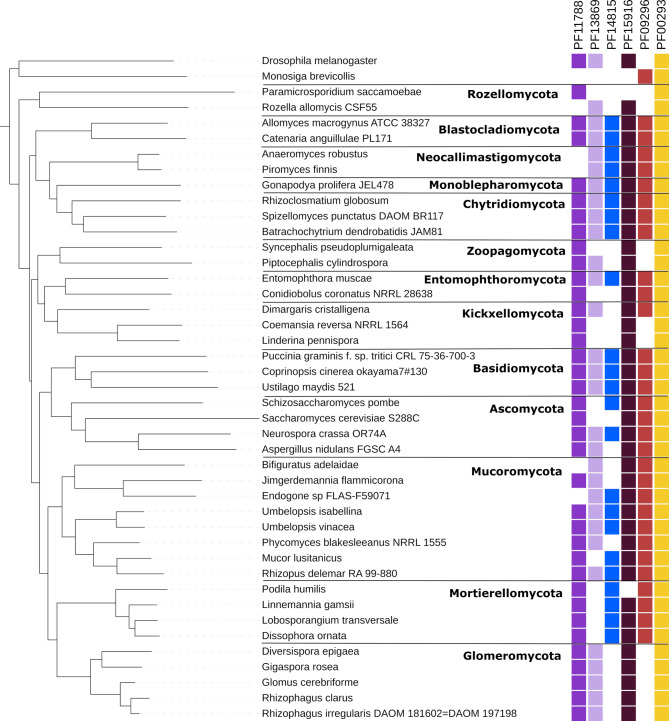
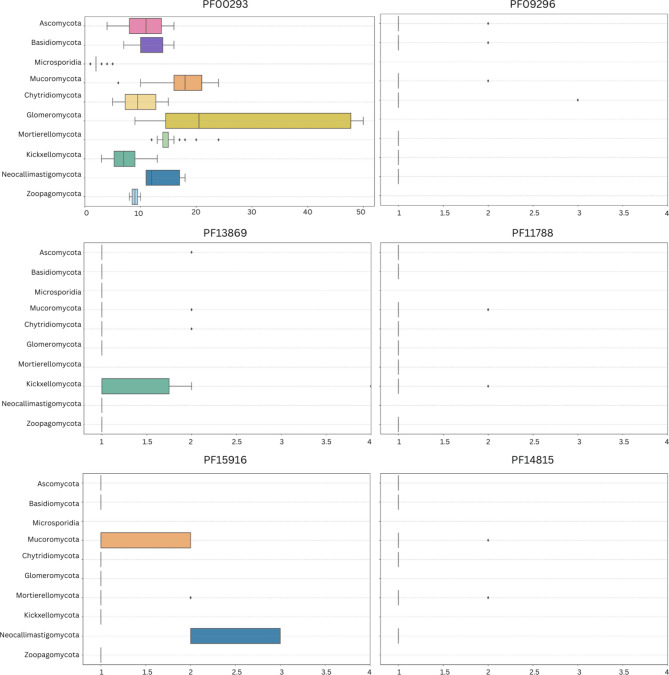
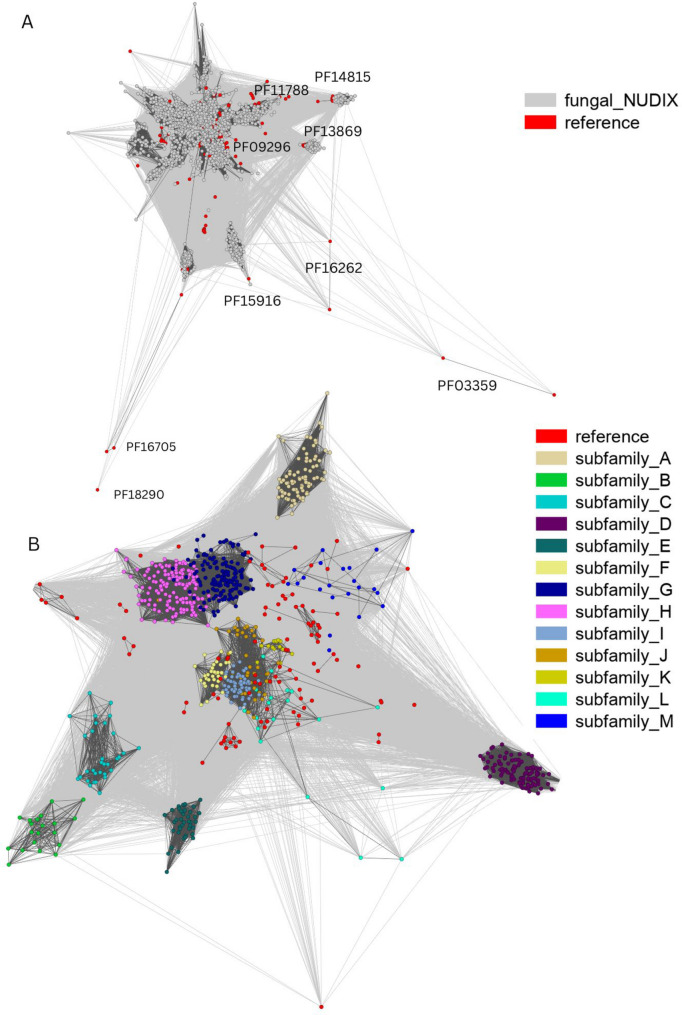
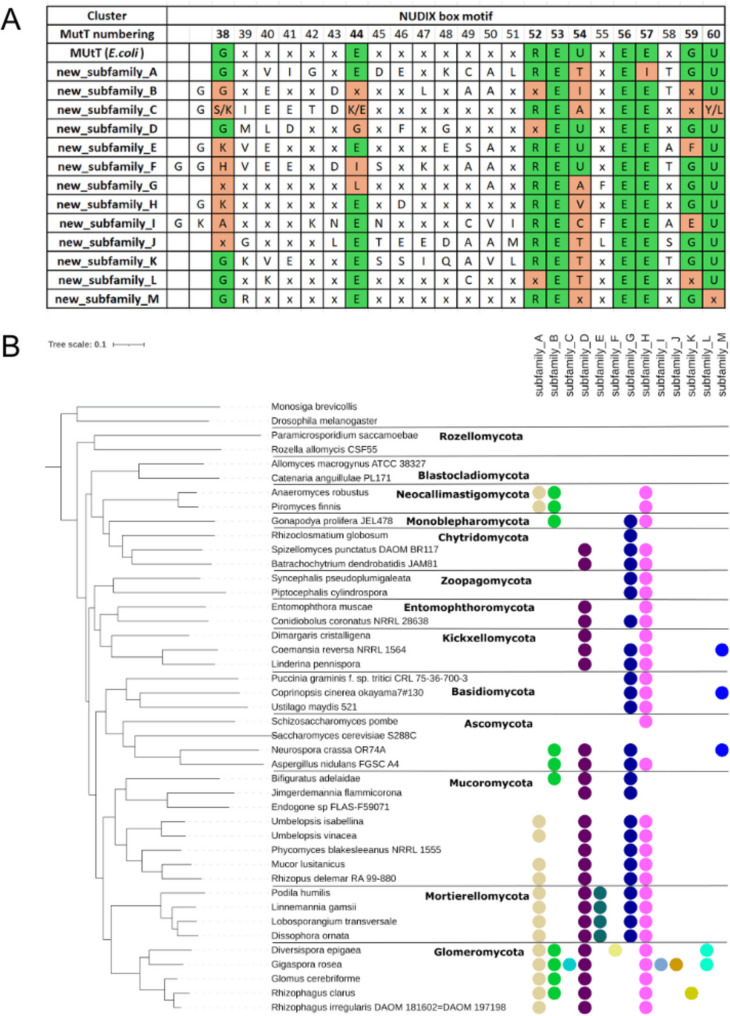
Background: The NUDIX superfamily encompasses highly diverse enzymes involved in a plethora of biological functions such as mRNA metabolism, DNA repair, and lipid peroxidation. These hydrolases are found in all domains of life and show surprising versatility in terms of the substrates that they process. The knowledge about the diversity of fungal NUDIX proteins is fragmentary, being largely limited to a small number of characterized enzymes from yeasts. To address this knowledge gap systematically, we performed a detailed analysis of the NUDIX hydrolases across 183 fungal proteomes. Results: Members of six of the known NUDIX families were present in fungi being particularly abundant in Glomeromycota. Phylogenetic analysis and sequence clustering grouped fungal NUDIX enzymes in 25 subfamilies, 13 of which did not cluster with previously known enzymes. These 13 newly identified subfamilies all belong to the canonical NUDIX family, and structural comparison revealed a typical NUDIX fold with α-β-α sandwich structure. Molecular docking suggested Ap3A and Ap4A as substrates with the highest binding affinity, but their possible cellular roles remain unclear. We also found evidence of expression of most of the genes that encode these enzymes, suggesting physiological relevance. Conclusions: Our analysis offers a comprehensive perspective on the structural and sequence relationships of the NUDIX superfamily across fungi with potential to guide experimental characterization of their biological functions.
Overview
The claims and statistics of this paper haven’t been checked yet.
Run the check — free, no account needed. It reads the open-access text and checks the sources it cites.
Integrity signals
Registry
Cites
Statistics
Figures
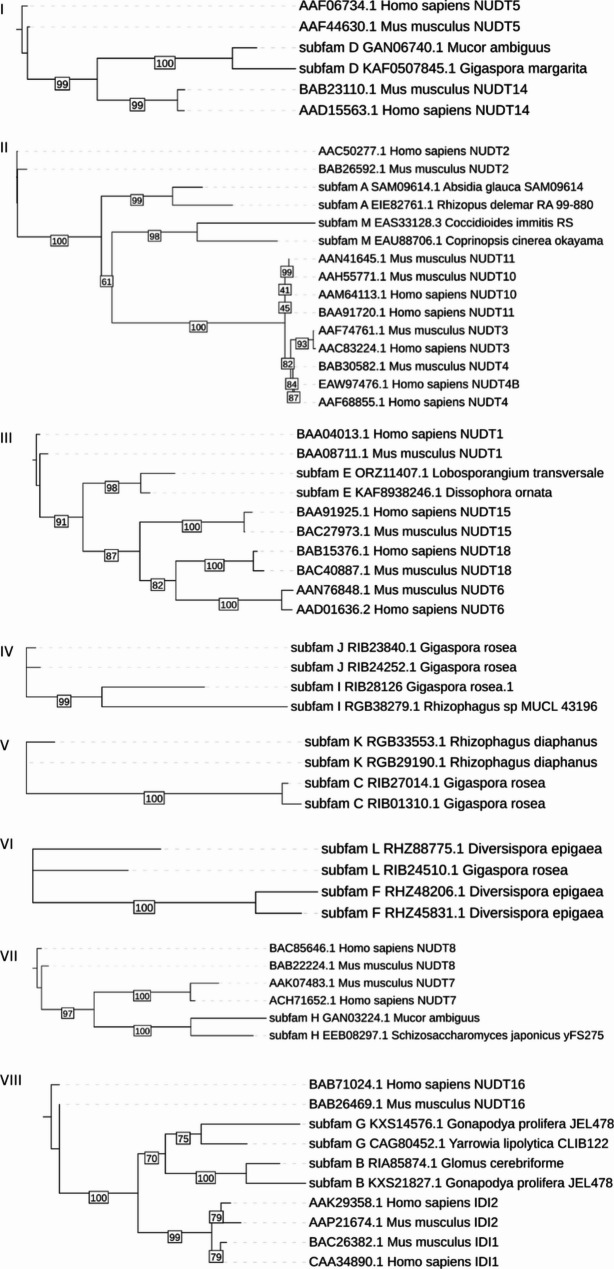
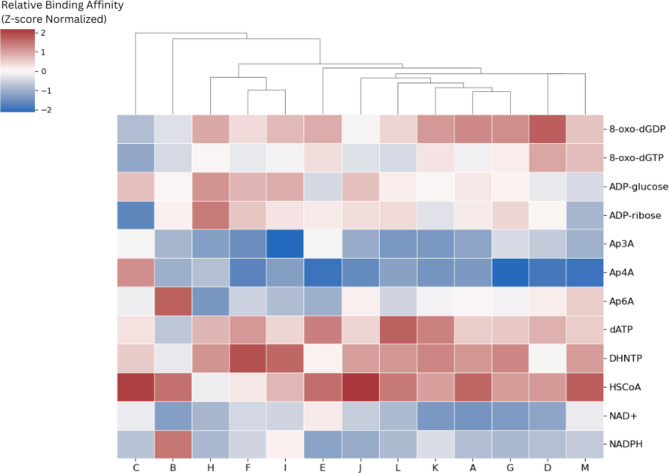
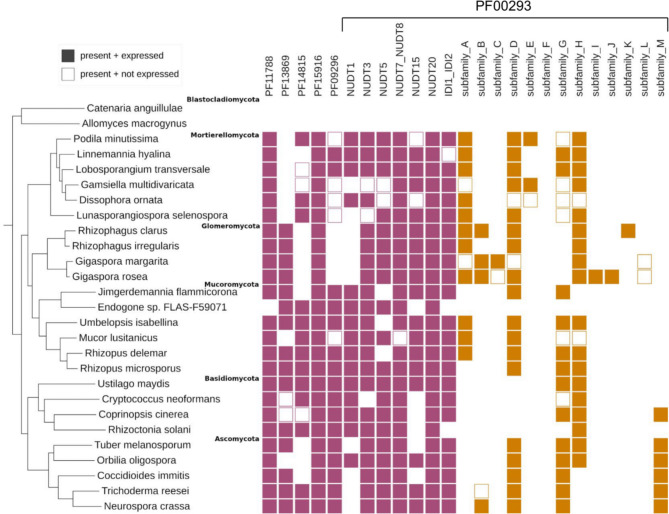
Verification
Claims the paper makes
The claims and statistics of this paper haven’t been checked yet.
Run the check — free, no account needed. It reads the open-access text and checks the sources it cites.
Self-check
Percentages, sums and reported differences re-computed from the paper’s own numbers.
The self-check needs the paper’s full text.
Citations
Cites
Basic local alignment search tool
Altschul, S. F., Gish, W., Miller, W., Myers, E. W., & Lipman, D. J. (1990) · Journal of Molecular Biology · doi:10.1006/jmbi.1990.9999 · Cited by 98,669 · cited 2×
“…taxonomic representation of the newly identified subfamilies, we extended the sequence search by using the newly identified fungal NUDIX sequences d as queries in a blastp v. 2.13.0 + search [15] against the NCBI non-redundant (NR) database with an e-value cutoff of 0.001 to collect all homologs.”
InfluentialThe Sequence Alignment/Map format and SAMtools
Li, H., Handsaker, B., Wysoker, A., Fennell, T., Ruan, J., Homer, N., Marth, G., Abecasis, G., Durbin, R., & 1000 Genome Project Data Processing Subgroup (2009) · Bioinformatics · doi:10.1093/bioinformatics/btp352 · Cited by 62,041 · cited 1×
“The SAM alignment files were compressed into binary format (BAM) using samtools (v.10) [39].”
Berman, H. M. (2000) · Nucleic Acids Research · doi:10.1093/nar/28.1.235 · Cited by 40,196
Trott, O., & Olson, A. J. (2010) · Journal of Computational Chemistry · doi:10.1002/jcc.21334 · Cited by 38,412 · cited 1×
“2.5 [32, 33] was performed for the twelve most common NUDIX substrates: 8-oxo-dGDP, 8-oxo-dGTP, ADP-glucose, ADP-ribose, Ap3 A, Ap4 A, Ap6 A, dATP, DHNTP, HSCoA, NAD + and NADPH.”
Influentialfastp: an ultra-fast all-in-one FASTQ preprocessor
Chen, S., Zhou, Y., Chen, Y., & Gu, J. (2018) · Bioinformatics · doi:10.1093/bioinformatics/bty560 · Cited by 29,721 · cited 1×
“19.6) with default settings [37].”
InfluentialHISAT: a fast spliced aligner with low memory requirements
Kim, D., Langmead, B., & Salzberg, S. L. (2015) · Nature Methods · doi:10.1038/nmeth.3317 · Cited by 24,112 · cited 1×
“1.0) [38].”
InfluentialIQ-TREE 2: New Models and Efficient Methods for Phylogenetic Inference in the Genomic Era
Minh, B. Q., Schmidt, H. A., Chernomor, O., Schrempf, D., Woodhams, M. D., von Haeseler, A., & Lanfear, R. (2020) · Molecular Biology and Evolution · doi:10.1093/molbev/msaa015 · Cited by 16,873 · cited 1×
“The phylogenetic tree was inferred for each of the alignments by maximum likelihood with IQTREE2 [16], considering 1000 bootstrap replicates (parameters: -”
StringTie enables improved reconstruction of a transcriptome from RNA-seq reads
Pertea, M., Pertea, G. M., Antonescu, C. M., Chang, T.-C., Mendell, J. T., & Salzberg, S. L. (2015) · Nature Biotechnology · doi:10.1038/nbt.3122 · Cited by 14,406
Krogh, A., Larsson, B., von Heijne, G., & Sonnhammer, E. L. L. (2001) · Journal of Molecular Biology · doi:10.1006/jmbi.2000.4315 · Cited by 12,654
WebLogo: A Sequence Logo Generator: Figure 1Preprint
Crooks, G. E., Hon, G. C., Chandonia, J., & Brenner, S. E. (2004) · Genome Research · doi:10.1101/gr.849004 · Cited by 12,480
Cd-hit: a fast program for clustering and comparing large sets of protein or nucleotide sequences
Li, W.-Z., & Godzik, A. (2006) · Bioinform. · doi:10.1093/bioinformatics/btl158 · Cited by 10,996 · cited 1×
“The redundancy across the identified NUDIX sequences was first reduced with cd-hit (70% sequence identity, 90% coverage, 5 letters word length) [10].”
Open Babel: An open chemical toolbox
O'Boyle, N. M., Banck, M. S., James, C. A. J., Morley, C., Vandermeersch, T., & Hutchison, G. R. (2011) · Journal of Cheminformatics · doi:10.1186/1758-2946-3-33 · Cited by 10,745 · cited 1×
“The substrates were obtained from the ChEBI database in SMILES format [28] and converted into three-dimensional PDBQT structures with Open Babel 3.1.1 [34] (parameters: --gen3D -p xx -opdbqt ).”
InfluentialInteractive Tree Of Life (iTOL) v5: an online tool for phylogenetic tree display and annotation
Letunic, I., & Bork, P. (2021) · Nucleic Acids Res. · doi:10.1093/nar/gkab301 · Cited by 9,915 · cited 1×
“Trees were visualized and rendered in iToL [18].”
AutoDock Vina 1.2.0: New Docking Methods, Expanded Force Field, and Python Bindings
Eberhardt, J., Santos‐Martins, D., Tillack, A. F., & Forli, S. (2021) · Journal of Chemical Information and Modeling · doi:10.1021/acs.jcim.1c00203 · Cited by 8,292
OrthoFinder: phylogenetic orthology inference for comparative genomics
Emms, D. M., & Kelly, S. (2019) · Genome Biology · doi:10.1186/s13059-019-1832-y · Cited by 7,676 · cited 1×
“The phylogenetic tree at the species level was generated with OrthoFinder [17] (parameters: mmseqs and dendroblast) for 41 species spanning the taxonomic diversity of the whole fungal kingdom.”
Pfam: The protein families database in 2021
Mistry, J., Chuguransky, S., Williams, L., Qureshi, M., Salazar, G. A., Sonnhammer, E. L. L., Tosatto, S. C. E., Paladin, L., Raj, S., Richardson, L. J., et al. (2021) · Nucleic Acids Research · doi:10.1093/nar/gkaa913 · Cited by 7,452 · cited 1×
“To characterize the sequence and structural properties of all fungal NUDIX subfamilies, all of the sequences were scanned against all Pfam family definitions with pfams-can.pl [19] to confirm the presence of the NUDIX domain (PF00293), and look for other coexisting domains.”
Parasuraman, S. (2012) · Journal of Pharmacology and Pharmacotherapeutics · doi:10.4103/0976-500x.103704 · Cited by 7,021 · cited 1×
“As a reference set of NUDIX enzymes, all human proteins with NUDIX domains were retrieved from the UniProt database (status reviewed) and all NUDIX domain-containing proteins with resolved structures were obtained from PDB [14].”
Predicting coiled coils from protein sequences.
Lupas, A., Van Dyke, M., & Stock, J. (1991) · Science · doi:10.1126/science.252.5009.1162 · Cited by 3,953 · cited 1×
“Low complexity regions were predicted with the SEG tool [22], coiled-coil regions with EMBOSS pepcoil [23], disordered protein regions with IUPred3 [24], subcellular localization with WoLF PSORT [25], and transmembrane regions were identified with TMHMM [26].”
The Pfam protein families database
Bateman, A. (2004) · Nucleic Acids Research · doi:10.1093/nar/gkh121 · Cited by 3,127 · cited 1×
“To identify NUDIX enzymes across the fungal tree, we first searched all Pfam families in a set of 183 fungal pro-teomes (Supplementary file S1, sheet S1) by amino acid sequence similarity using pfam_scan.pl with default settings against Pfam database v. 36 [9].”
Fast and accurate protein structure search with Foldseek
van Kempen, M., Kim, S. S., Tumescheit, C., Mirdita, M., Lee, J., Gilchrist, C. L. M., Söding, J., & Steinegger, M. (2024) · Nature Biotechnology · doi:10.1038/s41587-023-01773-0 · Cited by 2,596
Varadi, M., Bertoni, D., Magana, P., Paramval, U., Pidruchna, I., Radhakrishnan, M., Tsenkov, M., Nair, S., Mirdita, M., Yeo, J., et al. (2024) · Nucleic Acids Research · doi:10.1093/nar/gkad1011 · Cited by 2,052 · cited 1×
“Each of the subfamilies was represented by two selected sequences and their AlphaFold2 3D structure models [28, 29].”
Dolinsky, T. J., Czodrowski, P., Li, H., Nielsen, J., Jensen, J. H., Klebe, G., & Baker, N. A. (2007) · Nucleic Acids Res. · doi:10.1093/nar/gkm276 · Cited by 2,018 · cited 1×
“Structures were trimmed to the NUDIX domain region in PyMOL and prepared for the molecular docking using pdb2pqr (parameters: --ff AMBER --ph-calc-method = propka --with-ph = xx) [31].”
The conserved domain database in 2023
Wang, J., Chitsaz, F., Derbyshire, M. K., Gonzales, N. R., Gwadz, M., Lu, S., Marchler, G. H., Song, J. S., Thanki, N., Yamashita, R. A., et al. (2023) · Nucleic Acids Research · doi:10.1093/nar/gkac1096 · Cited by 1,277 · cited 1×
“Where available, we used NCBI Conserved Domain Database (CDD) [20] annotations for the subfamilies, since CDD enables the identification of conserved domains across multiple protein sequences and defines a more detailed classification of subfamilies of the NUDIX proteins than the Pfam database.”
ChEBI in 2016: Improved services and an expanding collection of metabolites
Hastings, J., Owen, G., Dekker, A., Ennis, M., Kale, N., Muthukrishnan, V., Turner, S., Swainston, N., Mendes, P., & Steinbeck, C. (2016) · Nucleic Acids Research · doi:10.1093/nar/gkv1031 · Cited by 1,083 · cited 2×
“The substrates were obtained from the ChEBI database in SMILES format [28] and converted into three-dimensional PDBQT structures with Open Babel 3.1.1 [34] (parameters: --gen3D -p xx -opdbqt ).”
InfluentialClustering of highly homologous sequences to reduce the size of large protein databases
Li, W.-Z., Jaroszewski, L., & Godzik, A. (2001) · Bioinform. · doi:10.1093/bioinformatics/17.3.282 · Cited by 1,021
MAFFT-DASH: integrated protein sequence and structural alignment
Rozewicki, J., Li, S., Amada, K. M., Standley, D. M., & Katoh, K. (2019) · Nucleic Acids Research · doi:10.1093/nar/gkz342 · Cited by 835 · cited 3×
“407 [12].”
Bessman, M., Frick, D. N., & O’Handley, S. (1996) · Journal of Biological Chemistry · doi:10.1074/jbc.271.41.25059 · Cited by 691 · cited 2×
“Human Dcp2, NUDT2, NUDT12, and NUDT16 can be used to characterize 5 ′ capped RNA transcripts [1], while OsNUDX14 from Oryza sativa is thought to be a grain quality regulator and to determine plant development, being strongly expressed in mature leaves [5].”
The Nudix hydrolase superfamily
McLennan, A. G. (2005) · Cellular and Molecular Life Sciences · doi:10.1007/s00018-005-5386-7 · Cited by 645 · cited 1×
“In agreement with the wide range of functions that they perform, the diversity of the substrates of these enzymes is high, including di-and triphosphates, nucleotide sugars, dinucleosides, diphosphoinositol polyphosphates, and RNA caps [4].”
Erdős, G., Pajkos, M., & Dosztányi, Z. (2021) · Nucleic Acids Res. · doi:10.1093/nar/gkab408 · Cited by 560 · cited 1×
“Low complexity regions were predicted with the SEG tool [22], coiled-coil regions with EMBOSS pepcoil [23], disordered protein regions with IUPred3 [24], subcellular localization with WoLF PSORT [25], and transmembrane regions were identified with TMHMM [26].”
Non-globular Domains in Protein Sequences: Automated Segmentation Using Complexity Measures
Wootton, J. (1994) · Computers and Chemistry · doi:10.1016/0097-8485(94)85023-2 · Cited by 537 · cited 1×
“Low complexity regions were predicted with the SEG tool [22], coiled-coil regions with EMBOSS pepcoil [23], disordered protein regions with IUPred3 [24], subcellular localization with WoLF PSORT [25], and transmembrane regions were identified with TMHMM [26].”
Drefahl, A. (2011) · Journal of Cheminformatics · doi:10.1186/1758-2946-3-1 · Cited by 415
Structures and mechanisms of Nudix hydrolases.
Mildvan, A., Xia, Z.-Y., Azurmendi, H., Saraswat, V., Legler, P., Massiah, M., Gabelli, S., Bianchet, M., Kang, L., & Amzel, L. (2005) · Archives of Biochemistry and Biophysics · doi:10.1016/j.abb.2004.08.017 · Cited by 320 · cited 2×
“All newly identified subfamilies have a well-preserved NUDIX signature motif with at least two glutamates acting as metal ligands and lysine and arginine residues that strengthen catalytic forces [7] (Fig.”
Xue, Q., Xian, L., Russell, P. J., Li, J., Pan, W., Fu, J., & Zhang, A. (2022) · Ecotoxicology and Environmental Safety · doi:10.1016/j.ecoenv.2022.113323 · Cited by 242
Ribose-Map: a bioinformatics toolkit to map ribonucleotides embedded in genomic DNA
Gombolay, A. L., Vannberg, F. O., & Storici, F. (2019) · Nucleic Acids Research · doi:10.1093/nar/gky874 · Cited by 204
A comprehensive structural, biochemical and biological profiling of the human NUDIX hydrolase family
Puigvert, J. C., Žitnik, M., Jemth, A., Carter, M., Unterlass, J. E., Hallström, B. M., Loseva, O., Karem, Z., Calderón‐Montaño, J. M., Lindskog, C., et al. (2017) · Nature Communications · doi:10.1038/s41467-017-01642-w · Cited by 176 · cited 3×
“NUDIX enzymes with feasible druggable sites have also been identified, and therefore they could represent novel drug targets for human diseases, especially in cancer cells [2].”
Diet of Arbuscular Mycorrhizal Fungi: Bread and Butter?
Rich, M., Nouri, E., Courty, P., & Reinhardt, D. (2017) · Trends in Plant Science · doi:10.1016/j.tplants.2017.05.008 · Cited by 162
Processing of protein ADP-ribosylation by Nudix hydrolases
Palazzo, L., Thomas, B., Jemth, A., Colby, T., Leidecker, O., Feijs, K. L. H., Žaja, R., Loseva, O., Puigvert, J. C., Matić, I., et al. (2015) · Biochemical Journal · doi:10.1042/bj20141554 · Cited by 146 · cited 1×
“ADP-ribosylation is often found as a posttranslational modification of proteins [46].”
The Impact of Software Used and the Type of Target Protein on Molecular Docking Accuracy
Ivanova, L. B., & Karelson, M. M. (2022) · Molecules · doi:10.3390/molecules27249041 · Cited by 112 · cited 1×
“AutoDock Vina predicts the receptor-ligand binding conformations and ranks them according to the predicted change in free energy during binding [35].”
The Evolution of Function within the Nudix homology Clan
Srouji, J. R., Xu, A.-T., Park, A., Kirsch, J., & Brenner, S. (2017) · Proteins: Structure, Function, and Bioinformatics · doi:10.1002/prot.25223 · Cited by 72 · cited 4×
“NUDIX enzymes are ubiquitous in all kingdoms of life and viruses [3, 6, 8], and although these proteins are evolutionarily related, they exhibit significant sequence divergence.”
InfluentialSheikh, S., O’Handley, S., Dunn, C. A., & Bessman, M. (1998) · Journal of Biological Chemistry · doi:10.1074/jbc.273.33.20924 · Cited by 54 · cited 2×
“NUDIX enzymes are ubiquitous in all kingdoms of life and viruses [3, 6, 8], and although these proteins are evolutionarily related, they exhibit significant sequence divergence.”
Nudix hydrolase 23 post-translationally regulates carotenoid biosynthesis in plants
Rao, S., Cao, H., O’Hanna, F. J., Zhou, X., Lui, A. C. W., Wrightstone, E. A., Fish, T. L., Yang, Y., Thannhauser, T. W., Cheng, L., et al. (2024) · The Plant Cell · doi:10.1093/plcell/koae030 · Cited by 43 · cited 1×
“Subfamily F is not present in the available transcriptomes as orchestrators of carotenoid biosynthesis in plants [54].”
Xu, W.-L., Gauss, P., Shen, J., Dunn, C. A., & Bessman, M. (2002) · Journal of Biological Chemistry · doi:10.1074/jbc.m203325200 · Cited by 39 · cited 1×
“NUDIX enzymes are ubiquitous in all kingdoms of life and viruses [3, 6, 8], and although these proteins are evolutionarily related, they exhibit significant sequence divergence.”
Oka, K., Suzuki, T., Onodera, Y., Miki, Y., Takagi, K., Nagasaki, S., Akahira, J., Ishida, T., Watanabe, M., Hirakawa, H., et al. (2011) · International Journal of Cancer · doi:10.1002/ijc.25505 · Cited by 36 · cited 1×
“…are considered to be alar-mones, triggering a stress response that [43] influences a variety of cellular processes such as gene expression and DNA repair [43, 44] Therefore, it is possible that the enzymes of the newly identified subfamilies may modulate the response to cellular stress in fungi.”
The ADP-ribose hydrolase NUDT5 is important for DNA repair.
Qi, H., Wright, R. H. G., Beato, M., & Price, B. (2022) · Cell Reports · doi:10.1016/j.celrep.2022.111866 · Cited by 33 · cited 1×
“On the other hand, poly-ADP-ribose can accumulate when DNA is damaged [47].”
Innate immunity in fungi: Is regulated cell death involved?
Gaspar, M. L., & Pawlowska, T. E. (2022) · PLoS Pathogens · doi:10.1371/journal.ppat.1010460 · Cited by 20 · cited 1×
“Programmed cell death types differ among fungi [45] including apoptosis-like process, heterokaryon incompatibility, and ferroptosis which is a consequence of iron release and lipid peroxidation.”
The mysterious diadenosine tetraphosphate (AP4A)
Zegarra, V., Mais, C., Freitag, J., & Bange, G. (2023) · microLife · doi:10.1093/femsml/uqad016 · Cited by 16
Nudix hydrolase 14 influences plant development and grain chalkiness in rice
Liu, Y., Zhang, W., Wang, Y.-Q., Xie, L., Zhang, Q., Zhang, J.-J., Li, W., Wu, M.-H., Cui, J., Wang, W., et al. (2022) · Frontiers in Plant Science · doi:10.3389/fpls.2022.1054917 · Cited by 14 · cited 1×
“Human Dcp2, NUDT2, NUDT12, and NUDT16 can be used to characterize 5 ′ capped RNA transcripts [1], while OsNUDX14 from Oryza sativa is thought to be a grain quality regulator and to determine plant development, being strongly expressed in mature leaves [5].”
Venice, F., Desirò, A., Silva, G., Salvioli, A., & Bonfante, P. (2020) · Frontiers in Microbiology · doi:10.3389/fmicb.2020.581313 · Cited by 14 · cited 1×
“Fungi in this phylum are known to lack several DNA repair and replication genes [48] which could be associated with the abundance of NUDIX enzymes.”
What can be lost? Genomic perspective on the lipid metabolism of Mucoromycota
Sokołowska, B., Orłowska, M., Okrasińska, A., Piłsyk, S., Pawłowska, J., & Muszewska, A. (2023) · IMA Fungus · doi:10.1186/s43008-023-00127-4 · Cited by 9
Self-citationLee, K.-T., Kwon, H., Lee, D., & Bahn, Y. (2014) · Mycobiology · doi:10.5941/myco.2014.42.1.52 · Cited by 8 · cited 1×
“Although much less is known about fungal pathogens, NUDIX hydrolases have been implicated in the oxidative stress response of Cryptococcus neoformans [53].”
Nudix proteins affecting microbial pathogenesis.
Kraszewska, E., & Drabinska, J. (2020) · Microbiology · doi:10.1099/mic.0.000993 · Cited by 6 · cited 1×
“NUDIX hydrolases are known to be involved in the pathogenicity of a variety of bacteria [51], and there have been attempts to use them as antimicrobial targets [52].”
Sharma, A., Tendulkar, A., & Wangikar, P. (2011) · Bioinformation · doi:10.6026/97320630005341 · Cited by 5 · cited 1×
“NUDIX hydrolases are known to be involved in the pathogenicity of a variety of bacteria [51], and there have been attempts to use them as antimicrobial targets [52].”
García-Saura, A., Zapata-Pérez, R., Martínez-Moñino, A., Hidalgo, J. F., Morte, A., Pérez-Gilabert, M., & Sánchez-Ferrer, Á. (2019) · Scientific Reports · doi:10.1038/s41598-019-53138-w · Cited by 3
Research works printed but not linked: 3
- Waterhouse AM, Procter JB, Martin DMA, Clamp M, Barton GJ. Jalview version 2—a multiple sequence alignment editor and analysis workbench. Bioinformatics. 2009;25:1189–91. · DOI
- Horton P, Park K-J, Obayashi T, Fujita N, Harada H, Adams-Collier CJ, et al. WoLF PSORT: protein localization predictor. Nucleic Acids Res. 2007;35(Web Server issue):W585. · DOI
- Kans J. Entrez direct: E-utilities on the Unix command line. Entrez programming utilities help. Bethesda: National Center for Biotechnology Information (US); 2024. https://www.ncbi.nlm.nih.gov/books/NBK179288/.
Cited by
Sorted by citations
Rolfes, R. J. (2026) · FEBS Letters · doi:10.1002/1873-3468.70394 · Cited by 3
“The DIPP subfamily is found across eukaryotes including vertebrates, invertebrates, fungi, and plants but is not found in protists, indicating a later evolution after the divergence of the major domains of life [165,166].”
Structural basis for ITP-selective hydrolysis by a CRISPR-associated Nudix hydrolase
Wu, W.-Q., Xia, S.-L., Li, D., Lin, J.-C., Cao, C.-H., Kong, J.-P., Lu, M.-L., Xiao, Y.-B., & Li, Z.-X. (2026) · Journal of Bacteriology · doi:10.1128/jb.00280-26
“The structure of Lng NH exhibits the conserved α/β/α sandwich fold typical of Nudix family proteins (34), comprising five α-helices (α1–α5) and nine β-strands (β1–β9) (Fig.”
A conserved minimal core and modular extensions make the fungal flagellum
Kossakowski, A., Barua, D., & Muszewska, A. (2026) · Scientific Reports · doi:10.1038/s41598-026-52644-y
“The RNASeq data analysis was carried out based on the steps described by Pasterny et al., 2025 92 .”
Self-citation
Metadata
- Authors
- Pasterny, Z., Barua, D., Mancera, E., & Muszewska, A.
- Affiliations
- Wrocław University of Science and Technology (PL)
- Institute of Biochemistry and Biophysics, Polish Academy of Sciences (PL)
- Corresponding author
- Muszewska, Anna
- Venue
- BMC Genomics
- Published
- 2025-07-01
- Volume
- 26
- Issue
- 1
- Pages
- 606-606
- ISSN
- 1471-2164 (ISSN-L)
- PMC
- PMC12210691
- OpenAlex
- W4411905592
- Cited by
- 2
- References
- 57
- Citations by year
- 2026: 2
- FWCI
- 0.60
- Type
- journal article
- Language
- en
- Open access
- gold
- doi.org
- Locations
- BMC Genomics (publishedVersion, cc-by)
- PubMed Central (publishedVersion, cc-by)
- PubMed (publishedVersion)
- DOAJ (DOAJ: Directory of Open Access Journals) (submittedVersion, cc-by-sa)
- Funders
- Consejo Nacional de Humanidades, Ciencias y Tecnologías (I0200/111/2024)
- Narodowe Centrum Nauki (#2021/41/B/NZ2/02426)
- Topics
- Life Sciences › Biochemistry, Genetics and Molecular Biology › Molecular Biology › Fungal and yeast genetics research
- Life Sciences › Biochemistry, Genetics and Molecular Biology › Molecular Biology › Genomics and Phylogenetic Studies
- Life Sciences › Biochemistry, Genetics and Molecular Biology › Molecular Biology › Biochemical and Molecular Research
- Keywords
- Nudix hydrolase, fungal proteome, Glomeromycota, Ap3A, diadenosine tetraphosphate, enzyme substrate specificity, fungal gene expression
- MeSH terms
- Nudix Hydrolases, Fungal Proteins, Fungi, Multigene Family, Phylogeny, Molecular Docking Simulation
About these checks
Registry, retraction, Cites and statistics results are computed, not judged, with one exception: a printed reference that no index lists is read once by a model before it counts as a citation error. Claims are extracted by a model and kept only when their quote appears verbatim in the text; each cited source is then checked, with a model’s help, for whether it says what the claim relies on. Those verdicts can be wrong — read the claim’s quote and the cited source before relying on one.
Statistics and arithmetic are recomputed, not judged.
Confidence bands are shown only for fields calibrated on our annotated test set. None is calibrated yet, so no band is shown.
What counts as a claim ›How we measure confidence ›How we check this ›
Are you an author, or do you see a problem with this page? Request a review
