

Evidence for the involvement of cofilin in Aspergillus fumigatus internalization into type II alveolar epithelial cells
Open accessThe DOI matches its Crossref record; 35 of the 36 references it cites were found in a registry or an index.
Abstract
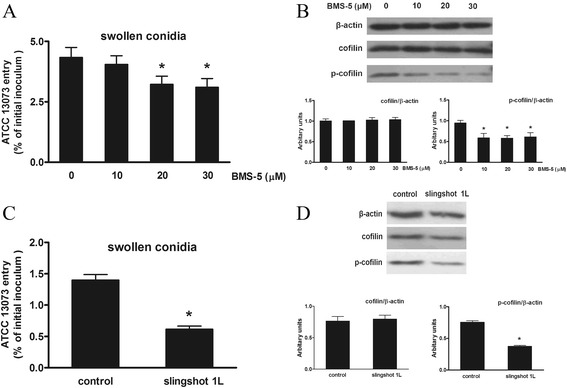
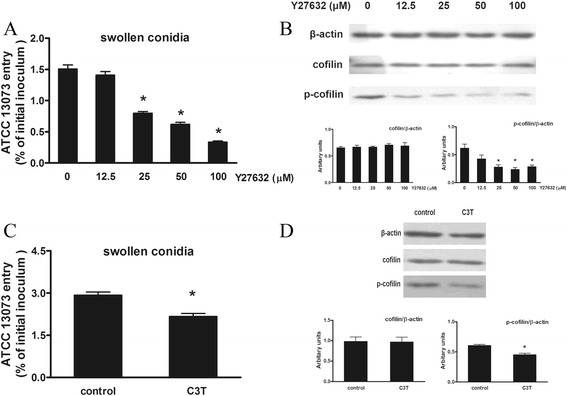
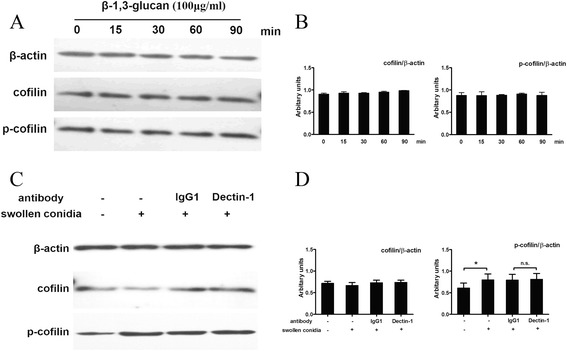
BACKGROUND: The internalization of Aspergillus fumigatus into alveolar epithelial cells (AECs) is tightly controlled by host cellular actin dynamics, which require close modulation of the ADF (actin depolymerizing factor)/cofilin family. However, the role of cofilin in A. fumigatus internalization into AECs remains unclear. RESULTS: Here, we demonstrated that germinated A. fumigatus conidia were able to induce phosphorylation of cofilin in A549 cells during the early stage of internalization. The modulation of cofilin activity by overexpression, knockdown, or mutation of the cofilin gene in A549 cells decreased the efficacy of A. fumigatus internalization. Reducing the phosphorylation status of cofilin with BMS-5 (LIM kinase inhibitor) or overexpression of the slingshot phosphatases also impeded A. fumigatus internalization. Both the C. botulimun C3 transferase (a specific RhoA inhibitor) and Y27632 (a specific ROCK inhibitor) reduced the internalization of A. fumigatus and the level of phosphorylated cofilin. β-1,3-glucan (the major component of the conidial cell wall) and its host cell receptor dectin-1 did not seem to be associated with cofilin phosphorylation during A. fumigatus infection. CONCLUSION: These results indicated that cofilin might be involved in the modulation of A. fumigatus internalization into type II alveolar epithelial cells through the RhoA-ROCK-LIM kinase pathway.
Overview
The claims and statistics of this paper haven’t been checked yet.
Free: it reads the open-access text and checks the first 5 claims that cite a source we can check. Create a free account to check every claim.
Integrity signals
Registry
Cites
Statistics
Figures
Verification
Claims the paper makes
The claims and statistics of this paper haven’t been checked yet.
Free: it reads the open-access text and checks the first 5 claims that cite a source we can check. Create a free account to check every claim.
Claims other papers make about this one
Each is checked against this paper’s own text: does it say what the citing paper says it does?
The cited source says what the claim attributes to it.
In the citing paper
“Following adherence, A. fumigatus is endocytosed in an actin-dependent manner [174–178]. The fungal invasin calcineurin A (calA) promotes this internalization through interactions with integrin α5β1 on host cells [179].”
From Mechanisms of fungal dissemination (2021) · cites this paper as [175]
Self-check
Percentages, sums and reported differences re-computed from the paper’s own numbers.
The self-check needs the paper’s full text.
Citations
Cites
Signaling from Rho to the Actin Cytoskeleton Through Protein Kinases ROCK and LIM-kinase
Maekawa, M., Ishizaki, T., Boku, S., Watanabe, N., Fujita, A., Iwamatsu, A., Obinata, T., Ohashi, K., Mizuno, K., & Narumiya, S. (1999) · Science · doi:10.1126/science.285.5429.895 · Cited by 1,636
Fusion PCR and gene targeting in Aspergillus nidulans
Szewczyk, E., Nayak, T., Oakley, C. E., Edgerton, H., Xiong, Y., Taheri-Talesh, N., Osmani, S. A., & Oakley, B. R. (2006) · Nature Protocols · doi:10.1038/nprot.2006.405 · Cited by 766 · cited 1×
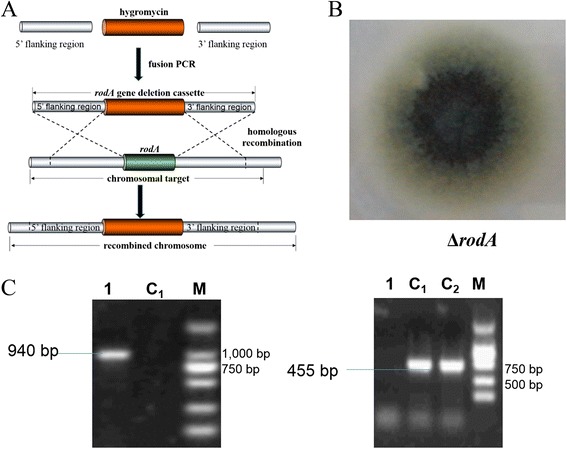
“The ΔrodA mutant was generated as described previously [17] using a method based on homologous recombination.”
MethodADF/Cofilin: a functional node in cell biology
Bernstein, B. W., & Bamburg, J. R. (2010) · Trends in Cell Biology · doi:10.1016/j.tcb.2010.01.001 · Cited by 704 · cited 1×
“In mammalian cells, the ADF/cofilin family consists of three similar members: cofilin-1, cofilin-2 (distributed specifically in muscle cells) and ADF (destrin) [5, 6].”
BackgroundCofilin Promotes Actin Polymerization and Defines the Direction of Cell Motility
Ghosh, M., Song, X., Mouneimne, G., Sidani, M., Lawrence, D. S., & Condeelis, J. S. (2004) · Science · doi:10.1126/science.1094561 · Cited by 657 · cited 1×
“The dynamic processes of the actin cytoskeleton have been proposed to be highly regulated by various factors, among which the ADF (actin depolymerizing factor)/ cofilin family plays an essential and conserved role [4].”
BackgroundFunctions of cofilin in cell locomotion and invasion
Bravo-Cordero, J. J., Magalhaes, M. A. O., Eddy, R. J., Hodgson, L., & Condeelis, J. (2013) · Nature Reviews Molecular Cell Biology · doi:10.1038/nrm3609 · Cited by 461 · cited 7×
“Cofilin binds the minus end of actin and inhibits the formation of actin filaments (F-actin), * Correspondence: xzhou53@163.com; hanlicdc@163.com †Equal contributors 1Department of Respiratory Medicine, Shanghai first people’s hospital, Shanghai Jiao Tong University, No. 100, Haining Road, Shanghai 200080, China 2Depa…”
BackgroundInfluentialAspergillus fumigatus Triggers Inflammatory Responses by Stage-Specific β-Glucan Display
Hohl, T. M., Van Epps, H. L., Rivera, A., Morgan, L. A., Chen, P. L., Feldmesser, M., & Pamer, E. G. (2005) · PLoS Pathogens · doi:10.1371/journal.ppat.0010030 · Cited by 428 · cited 1×
“fumigatus conidia swelling was accompanied by surface stage-specific exposure of β-1,3-glucan polymers [24].”
BackgroundEpidermal growth factor receptor is a cellular receptor for human cytomegalovirus
Wang, X., Huong, S.-M., Chiu, M. L., Raab-Traub, N., & Huang, E.-S. (2003) · Nature · doi:10.1038/nature01818 · Cited by 416 · cited 1×
“For instance, EGFR (epidermal growth factor receptor) is a critical receptor on epithelial cells that has been reported to be involved in the uptake of several pathogens into epithelial cells [31, 32].”
BackgroundSignaling mechanisms and functional roles of cofilin phosphorylation and dephosphorylation
Mizuno, K. (2013) · Cellular Signalling · doi:10.1016/j.cellsig.2012.11.001 · Cited by 396 · cited 1×
“Accordingly, dephosphorylation by the slingshot phosphatases (SSH) results in reactivation of the actin binding activity of cofilin [9].”
BackgroundIns and outs of ADF/cofilin activity and regulation
Van Troys, M., Huyck, L., Leyman, S., Dhaese, S., Vandekerkhove, J., & Ampe, C. (2008) · European Journal of Cell Biology · doi:10.1016/j.ejcb.2008.04.001 · Cited by 329 · cited 2×
“In mammalian cells, the ADF/cofilin family consists of three similar members: cofilin-1, cofilin-2 (distributed specifically in muscle cells) and ADF (destrin) [5, 6].”
BackgroundLIM kinases: function, regulation and association with human disease
Scott, R. W., & Olson, M. F. (2007) · Journal of Molecular Medicine · doi:10.1007/s00109-007-0165-6 · Cited by 318 · cited 1×
“The LIMK are activated by phosphorylation through divergent Rho GTPase pathways: Rac/Cdc42 acts through p21-activated kinase (PAK) 1 and PAK4, while RhoA (Ras homologue gene family, member A) acts through ROCK (Rho-associated coiledcoil-containing kinase) [10, 11].”
BackgroundYoder, A., Yu, D., Dong, L., Iyer, S. R., Xu, X., Kelly, J., Liu, J., Wang, W., Vorster, P. J., Agulto, L., et al. (2008) · Cell · doi:10.1016/j.cell.2008.06.036 · Cited by 295
Arp2/3-Mediated Actin-Based Motility: A Tail of Pathogen Abuse
Welch, M. D., & Way, M. (2013) · Cell Host & Microbe · doi:10.1016/j.chom.2013.08.011 · Cited by 218 · cited 7×
“Cofilin binds the minus end of actin and inhibits the formation of actin filaments (F-actin), * Correspondence: xzhou53@163.com; hanlicdc@163.com †Equal contributors 1Department of Respiratory Medicine, Shanghai first people’s hospital, Shanghai Jiao Tong University, No. 100, Haining Road, Shanghai 200080, China 2Depa…”
BackgroundInfluentialA role for cofilin and LIM kinase in Listeria-induced phagocytosis
Bierne, H., Gouin, E., Roux, P., Caroni, P., Yin, H. L., & Cossart, P. (2001) · The Journal of Cell Biology · doi:10.1083/jcb.200104037 · Cited by 194 · cited 1×
“monogenes internalization into Vero epithelial cells was controlled by the status of cofilin phosphorylation [28].”
BackgroundChen, S. H. M., Stins, M. F., Huang, S.-H., Chen, Y. H., Kwon-Chung, K. J., Chang, Y., Kim, K. S., Suzuki, K., & Jong, A. Y. (2003) · Journal of Medical Microbiology · doi:10.1099/jmm.0.05230-0 · Cited by 189 · cited 1×
“Chen and colleagues demonstrated that the dephosphorylated form of cofilin was increased during cryptococcal adherence to human brain microvascular endothelial cells concomitant with actin rearrangement through the ROCK-LIMK-cofilin pathway [13].”
BackgroundWasylnka, J. A., & Moore, M. M. (2002) · Infection and Immunity · doi:10.1128/iai.70.6.3156-3163.2002 · Cited by 188 · cited 1×
“fumigatus induced visible alterations in the host actin cytoskeleton during internalization into nonprofessional phagocytic cells [20].”
BackgroundAspergillus fumigatus conidia survive and germinate in acidic organelles of A549 epithelial cells
Wasylnka, J. A., & Moore, M. M. (2003) · Journal of Cell Science · doi:10.1242/jcs.00329 · Cited by 161 · cited 1×
“fumigatus into epithelial cells has been reported to be dependent on the dynamic assembly of the actin cytoskeleton, which induces the invagination of the host cell membrane and engulfs the conidia using pseudopods [2, 3].”
BackgroundInternalization of Aspergillus fumigatus conidia by epithelial and endothelial cells
Paris, S., Boisvieux-Ulrich, E., Crestani, B., Houcine, O., Taramelli, D., Lombardi, L., & Latgé, J. P. (1997) · Infection and Immunity · doi:10.1128/iai.65.4.1510-1514.1997 · Cited by 149 · cited 1×
“fumigatus into epithelial cells has been reported to be dependent on the dynamic assembly of the actin cytoskeleton, which induces the invagination of the host cell membrane and engulfs the conidia using pseudopods [2, 3].”
BackgroundAgerer, F., Michel, A., Ohlsen, K., & Hauck, C. R. (2003) · Journal of Biological Chemistry · doi:10.1074/jbc.m302096200 · Cited by 134 · cited 1×
“For instance, EGFR (epidermal growth factor receptor) is a critical receptor on epithelial cells that has been reported to be involved in the uptake of several pathogens into epithelial cells [31, 32].”
BackgroundCell wall α1-3glucans induce the aggregation of germinating conidia of Aspergillus fumigatus
Fontaine, T., Beauvais, A., Loussert, C., Thevenard, B., Fulgsang, C. C., Ohno, N., Clavaud, C., Prevost, M.-C., & Latgé, J.-P. (2010) · Fungal Genetics and Biology · doi:10.1016/j.fgb.2010.04.006 · Cited by 126
Zheng, K., Xiang, Y., Wang, X., Wang, Q., Zhong, M., Wang, S., Wang, X., Fan, J., Kitazato, K., & Wang, Y. (2014) · mBio · doi:10.1128/mbio.00958-13 · Cited by 118 · cited 1×
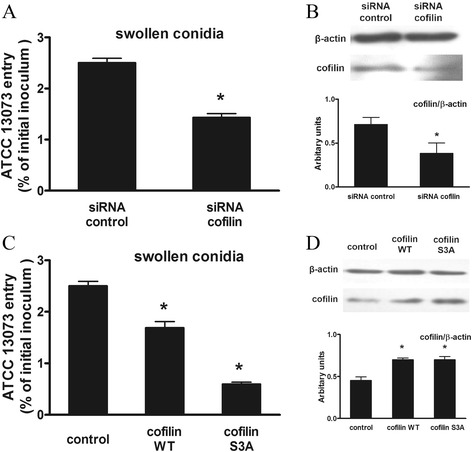
“Overexpression of wild-type cofilin (cofilin WT) has been reported to increase cofilin activity, and the expression of a mutant carrying the S3A substitution has also been successfully used to mimic active cofilin [21].”
MethodVorster, P. J., Guo, J., Yoder, A., Wang, W., Zheng, Y., Xu, X., Yu, D., Spear, M., & Wu, Y. (2011) · Journal of Biological Chemistry · doi:10.1074/jbc.m110.182238 · Cited by 104 · cited 1×
“Knockdown of LIMK through siRNA decreases filamentous actin, increases CXCR4 trafficking, and diminishes viral DNA synthesis [12, 15].”
BackgroundBalloy, V., Sallenave, J.-M., Wu, Y., Touqui, L., Latgé, J.-P., Si-Tahar, M., & Chignard, M. (2008) · Journal of Biological Chemistry · doi:10.1074/jbc.m803149200 · Cited by 102 · cited 2×
“inflammatory cells that may help protect against the conidia [26, 34].”
BackgroundResultDirect stimulation of receptor‐controlled phospholipase D1 by phospho‐cofilin
Han, L., Stope, M. B., de Jesús, M. L., Weernink, P. A. O., Urban, M., Wieland, T., Rosskopf, D., Mizuno, K., Jakobs, K. H., & Schmidt, M. (2007) · The EMBO Journal · doi:10.1038/sj.emboj.7601852 · Cited by 100 · cited 1×
“fumigatus internalization is also worth further investigation because PLD might serve as the down-stream effector of p-cofilin in the acetylcholine receptor signalling pathway [33].”
BackgroundSelf-citationBacterial subversion of host actin dynamics at the plasma membrane
Carabeo, R. A. (2011) · Cellular Microbiology · doi:10.1111/j.1462-5822.2011.01651.x · Cited by 72 · cited 1×
“Although actin reorganization during the entry of microbial pathogens has been reported in several other cell lines [25], the mechanism underlying this phenomenon has remained largely uncertain, especially with regard to the internalization of A.”
BackgroundThirone, A. C. P., Speight, P., Zulys, M., Rotstein, O. D., Szászi, K., Pedersen, S. F., & Kapus, A. (2009) · American Journal of Physiology-Cell Physiology · doi:10.1152/ajpcell.00467.2008 · Cited by 67 · cited 2×
“However, ROCK phosphorylates LIMK, which in turn converts cofilin into the phosphorylated form [11, 23].”
BackgroundXiang, Y., Zheng, K., Ju, H., Wang, S., Pei, Y., Ding, W., Chen, Z., Wang, Q., Qiu, X., Zhong, M., et al. (2012) · Journal of Virology · doi:10.1128/jvi.00609-12 · Cited by 64 · cited 3×
“Abbreviations AECs: Alveolar epithelial cells; ADF: Actin depolymerizing factor; F-actin: Actin filaments; LIMK: LIM kinases; SSH: Slingshot; PAK: p21-activated kinase; RhoA: Ras homologue gene family member A; ROCK: Rho-associated coiled-coil-containing kinase; HIV: Human immunodeficiency virus; ATCC: America Type Cu…”
BackgroundInfluentialHan, X., Yu, R., Zhen, D., Tao, S., Schmidt, M., & Han, L. (2011) · PLoS ONE · doi:10.1371/journal.pone.0021468 · Cited by 62
Self-citationTruttmann, M. C., Rhomberg, T. A., & Dehio, C. (2010) · Cellular Microbiology · doi:10.1111/j.1462-5822.2010.01535.x · Cited by 61 · cited 1×
“, Herpes simplex virus 1 (HSV-1) [18] and Bartonella henselae [19]), A.”
BackgroundAspergillus fumigatus conidia induce interferon-β signalling in respiratory epithelial cells
Beisswenger, C., Hess, C., & Bals, R. (2012) · European Respiratory Journal · doi:10.1183/09031936.00096110 · Cited by 56 · cited 1×
“fumigatus, but can also be invaded by conidia, thereby serving as reservoirs for evasion from immune attack and dissemination throughout the host [1].”
BackgroundMashiach, E., Rak, R., Elad‐Sfadia, G., Haklai, R., Carmeli, S., Kloog, Y., & Wolfson, H. J. (2012) · Oncotarget · doi:10.18632/oncotarget.525 · Cited by 51 · cited 5×
“A549 cells were either treated with BMS-5 (the pharmacological inhibitor of LIMK) at the indicated doses for 1 h or transfected with pCDNA3.”
MethodInfluentialYang, L., Li, F., Han, Y.-C., Jia, B., & Ding, Y. (2015) · Mediators of Inflammation · doi:10.1155/2015/362126 · Cited by 38 · cited 1×
“Furthermore, Yang and colleagues proved that stimulation with cannabinoid Δ9-tetrahydrocannabinol (THC) induced the reduction of proinflammatory cytokine release by inhibiting cofilin expression in the MG-63 cell osteoarthritis model stimulated by LPS; in turn, cofilin overexpression abolished THC-induced anti-inflamm…”
BackgroundSharon, H., Amar, D., Levdansky, E., Mircus, G., Shadkchan, Y., Shamir, R., & Osherov, N. (2011) · PLoS ONE · doi:10.1371/journal.pone.0017509 · Cited by 35 · cited 1×
“inflammatory cells that may help protect against the conidia [26, 34].”
BackgroundHan, X., Yu, R., Ji, L., Zhen, D., Tao, S., Li, S., Sun, Y., Huang, L., Feng, Z., Li, X., et al. (2011) · Molecular Microbiology · doi:10.1111/j.1365-2958.2011.07726.x · Cited by 24 · cited 1×
“Our previous study showed that the internalization of Listeria monocytogenes into Vero cells was tightly controlled by the phospho-cycling of cofilin, which mediated PLD1 activation during the internalization procedure [14].”
BackgroundSelf-citationZeidan, A., Gan, X. T., Thomas, A., & Karmazyn, M. (2013) · Molecular and Cellular Biochemistry · doi:10.1007/s11010-013-1832-2 · Cited by 23 · cited 1×
“Zeidan and Karmazyn reported that prevention of RhoA-ROCK-LIMKcofilin-controlled actin polymerization mediated the anti-hypertrophic effect of adenosine receptor agonists in angiotensin II- and endothelin-1-treated cardiomyocytes [29].”
BackgroundWang, L., Wang, T., Song, M., & Pan, J. (2013) · Archives of Oral Biology · doi:10.1016/j.archoralbio.2013.11.004 · Cited by 15 · cited 1×
“Wang and colleagues also showed the important role of the Rho-ROCK-LIMK-cofilin pathway in TGFβ1-induced proliferation and cytoskeleton rearrangement in human periodontal ligament cells [30].”
Background
Cited by
Interactions of Aspergillus fumigatus Conidia with Airway Epithelial Cells: A Critical Review
Croft, C. A., Culibrk, L., Moore, M. M., & Tebbutt, S. J. (2016) · Frontiers in Microbiology · doi:10.3389/fmicb.2016.00472 · Cited by 142
Pathogenicity and virulence of Aspergillus fumigatus
Earle, K., Valero, C., Conn, D. P., Vere, G., Cook, P. C., Bromley, M., Bowyer, P., & Gago, S. (2023) · Virulence · doi:10.1080/21505594.2023.2172264 · Cited by 132
“To date, it has been suggested that uptake of A. fumigatus by airway epithelial cells depends on actin, Dectin-1, cofilin and Phospholipase D (PLD) [205,206].”
BackgroundMechanisms of fungal dissemination
Strickland, A. B., & Shi, M. (2021) · Cellular and Molecular Life Sciences · doi:10.1007/s00018-020-03736-z · Cited by 127
Ecotoxic heavy metals transformation by bacteria and fungi in aquatic ecosystem
Chaturvedi, A. D., Pal, D., Penta, S., & Kumar, A. (2015) · World Journal of Microbiology and Biotechnology · doi:10.1007/s11274-015-1911-5 · Cited by 103
Anti-Aspergillus Activities of the Respiratory Epithelium in Health and Disease
Bertuzzi, M., Hayes, G., Icheoku, U., Van Rhijn, N., Denning, D., Osherov, N., & Bignell, E. (2018) · Journal of Fungi · doi:10.3390/jof4010008 · Cited by 64
“Spore internalisation is dependent on two crucial regulators of host actin dynamics, phospholipase D (PLD) and cofilin-1, whose activation and phosphorylation state, respectively, are modulated by exposure to β-1,3-glucan on the surface of germinating conidia [9,33] (Figure 1).”
Background
Metadata
- Authors
- Bao, Z., Han, X., Chen, F., Jia, X., Zhao, J., Zhang, C., Yong, C., Tian, S., Zhou, X., & Han, L.
- Affiliations
- Shanghai Jiao Tong University (CN)
- Academy of Military Medical Sciences (CN)
- Corresponding author
- Zhou, Xin
- Han, Li
- Venue
- BMC Microbiology
- Published
- 2015-08-13
- Volume
- 15
- Issue
- 1
- Pages
- 161-161
- ISSN
- 1471-2180 (ISSN-L)
- PMC
- PMC4542120
- OpenAlex
- W1931517584
- Cited by
- 26
- References
- 36
- Citations by year
- 2026: 2 · 2024: 1 · 2023: 3 · 2022: 1 · 2021: 3 · 2020: 2 · 2019: 3 · 2018: 6 · 2017: 2 · 2016: 1 · 2015: 2
- FWCI
- 2.85
- Type
- journal article
- Language
- en
- Open access
- gold
- doi.org
- Licence
- cc-by
- Locations
- BMC Microbiology (publishedVersion, cc-by)
- Europe PMC (PubMed Central) (publishedVersion, cc-by)
- PubMed Central (publishedVersion, cc-by)
- PubMed (publishedVersion)
- Topics
- Health Sciences › Medicine › Infectious Diseases › Antifungal resistance and susceptibility
- Life Sciences › Biochemistry, Genetics and Molecular Biology › Molecular Biology › Fungal and yeast genetics research
- Life Sciences › Biochemistry, Genetics and Molecular Biology › Cell Biology › Cellular Mechanics and Interactions
- Keywords
- Aspergillus fumigatus, cofilin, cofilin phosphorylation, alveolar epithelial cells, alveolar type II cells, actin dynamics, LIM kinase, RhoA/ROCK signaling, Dectin-1, β-1,3-glucan, A549 cells, invasive aspergillosis
- MeSH terms
- Aspergillus fumigatus, Cell Line, Endocytosis, Epithelial Cells, Humans, Actin Depolymerizing Factors, Host-Pathogen Interactions
About these checks
Registry, retraction, Cites and statistics results are computed, not judged, with one exception: a printed reference that no index lists is read once by a model before it counts as a citation error. Claims are extracted by a model and kept only when their quote appears verbatim in the text; each cited source is then checked, with a model’s help, for whether it says what the claim relies on. Those verdicts can be wrong — read the claim’s quote and the cited source before relying on one.
Statistics and arithmetic are recomputed, not judged.
Confidence bands are shown only for fields calibrated on our annotated test set. None is calibrated yet, so no band is shown.
What counts as a claim ›How we measure confidence ›How we check this ›
Are you an author, or do you see a problem with this page? Request a review
Data sources
Bibliographic data: Semantic Scholar, OpenAlex, Crossref.
Contains information from the Semantic Scholar Academic Graph Datasets, made available under the ODC Attribution License (ODC-BY 1.0).
Semantic Scholar’s data is described in: Kinney, R., et al. (2023). The Semantic Scholar Open Data Platform. arXiv:2301.10140.
