

Selection of Streptomyces against soil borne fungal pathogens by a standardized dual culture assay and evaluation of their effects on seed germination and plant growth
Open accessThe DOI matches its Crossref record; 59 of the 60 references it cites were found in a registry or an index.
Abstract
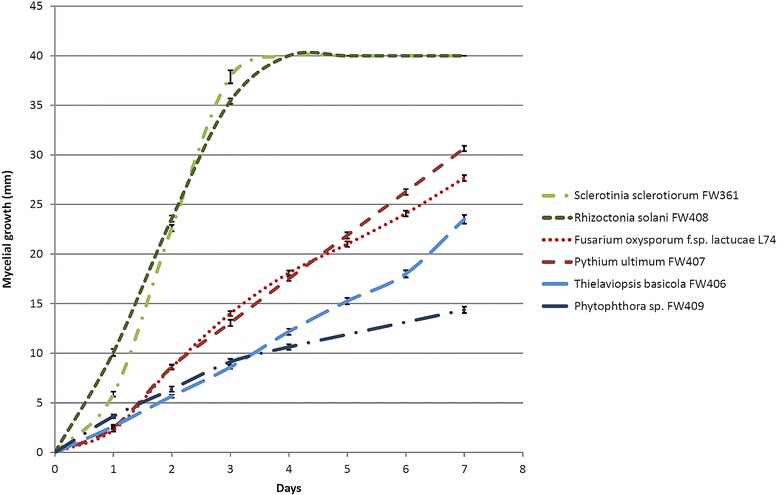
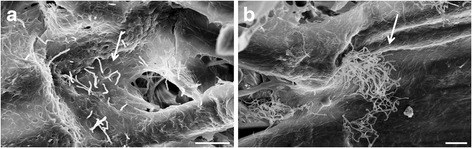
BACKGROUND: In the search for new natural resources for crop protection, streptomycetes are gaining interest in agriculture as plant growth promoting bacteria and/or biological control agents. Because of their peculiar life cycle, in which the production of secondary metabolites is synchronized with the development of aerial hyphae and sporulation, the commonly used methods to screen for bacterial antagonists need to be adapted. RESULTS: The dual culture assay was standardized in terms of inoculation timing of Streptomyces antagonist and pathogen, and growth rate of different fungal pathogens. In case of fast-growing fungi, inoculation of the antagonist 2 or 3 days prior to the pathogen resulted in significantly stronger inhibition of mycelium growth. One hundred and thirty Streptomyces strains were evaluated against six destructive soil borne pathogens. The activity of strains varied from broad-spectrum to highly specific inhibition of individual pathogens. All strains inhibited at least one tested pathogen. Three strains, which combined the largest broad-spectrum with the highest inhibition activity, were selected for further characterization with four vegetable species. All of them were able to colonize seed surface of all tested vegetable crops. They mostly improved radicle and hypocotyl growth in vitro, although no statistically significant enhancement of biomass weight was observed in vivo. Occasionally, transient negative effects on germination and plant growth were observed. CONCLUSIONS: The adapted dual culture assay allowed us to compare the inhibition of individual Streptomyces strains against six fungal soil borne pathogens. The best selected strains were able to colonize the four vegetable crops and have a potential to be developed into biocontrol products. Although they occasionally negatively influenced plant growth, these effects did not persist during the further development. Additional in vivo studies are needed to confirm their potential as biological control or plant growth promoting agents.
Overview
The claims and statistics of this paper haven’t been checked yet.
Free: it reads the open-access text and checks the first 5 claims that cite a source we can check. Create a free account to check every claim.
Integrity signals
Registry
Cites
Statistics
Figures
Verification
Claims the paper makes
The claims and statistics of this paper haven’t been checked yet.
Free: it reads the open-access text and checks the first 5 claims that cite a source we can check. Create a free account to check every claim.
Self-check
Percentages, sums and reported differences re-computed from the paper’s own numbers.
The self-check needs the paper’s full text.
Citations
Cites
R: A Language and Environment for Statistical Computing
R Core Team (2025) · doi:10.32614/r.manuals · Cited by 352,181
Universal chemical assay for the detection and determination of siderophores
Schwyn, B., & Neilands, J. B. (1987) · Analytical Biochemistry · doi:10.1016/0003-2697(87)90612-9 · Cited by 6,549 · cited 1×
“After 14 days of incubation at 24 °C in the dark, the Streptomyces colony was overlaid by 15 mL of the chrome azurol S agar [59] as proposed by Pérez-Miranda et al.”
Plant-Growth-Promoting Rhizobacteria
Lugtenberg, B., & Kamilova, F. (2009) · Annual Review of Microbiology · doi:10.1146/annurev.micro.62.081307.162918 · Cited by 3,987
Berg, G. (2009) · Applied Microbiology and Biotechnology · doi:10.1007/s00253-009-2092-7 · Cited by 1,648 · cited 1×
“Biological control and PGP are two different but linked components associated with beneficial plantmicrobe interactions [38], and can share the same molecular mechanisms.”
Plant growth-promoting rhizobacteria (PGPR): their potential as antagonists and biocontrol agents
Beneduzi, A., Ambrosini, A., & Passaglia, L. M. P. (2012) · Genetics and Molecular Biology · doi:10.1590/s1415-47572012000600020 · Cited by 1,463
How many antibiotics are produced by the genus Streptomyces ?
Watve, M., Tickoo, R., Jog, M., & Bhole, B. (2001) · Archives of Microbiology · doi:10.1007/s002030100345 · Cited by 923 · cited 1×
“These observations, the ability of Streptomyces to produce a huge variety of antimicrobial secondary products [24] and their presence in soil make them promising candidates for the selection and development as plant protection products and biofertilizers.”
M OLECULAR D ETERMINANTS OF R HIZOSPHERE C OLONIZATION BY P SEUDOMONAS
Lugtenberg, B. J. J., Dekkers, L., & Bloemberg, G. V. (2001) · Annual Review of Phytopathology · doi:10.1146/annurev.phyto.39.1.461 · Cited by 804
Beneficial bacteria of agricultural importance
Babalola, O. O. (2010) · Biotechnology Letters · doi:10.1007/s10529-010-0347-0 · Cited by 781 · cited 1×
“- have been tested as BCAs, mostly studying the antagonism as the mechanism of action to suppress pathogen growth through the production of antifungal compounds [40, 45].”
Indole-3-acetic acid in plant–microbe interactions
Duca, D., Lorv, J., Patten, C. L., Rose, D., & Glick, B. R. (2014) · Antonie van Leeuwenhoek · doi:10.1007/s10482-013-0095-y · Cited by 774
Antibiotics produced by Streptomyces
de Lima Procópio, R. E., da Silva, I. R., Martins, M. K., de Azevedo, J. L., & de Araújo, J. M. (2012) · The Brazilian Journal of Infectious Diseases · doi:10.1016/j.bjid.2012.08.014 · Cited by 735 · cited 1×
“However, until now they have been exploited mostly in pharmaceutical industry for the production of antibiotics, antitumorals or immunosuppressives [47, 48].”
Research works printed but not linked: 3
- Trejo-Estrada SR Sepulveda IR Crawford DL In vitro and in vivo antagonism of Streptomyces violaceusniger YCED9 against fungal pathogens of turfgrass World J Microbiol Biotechnol 1998 14 865 72 10.1023/A:1008877224089 · doi:10.1023/a:1008877224089
- Koch E Effect of biocontrol agents on plant growth in the absence of pathogens IOBC/WPRS Bull 2001 24 81 9
- Faria JC Jelihovschi EG Allaman IB Conventinal Tukey Test 2014 Ilheus Universidade Estadual de Santa Cruz
Cited by
Abbasi, S., Safaie, N., Sadeghi, A., & Shams‐Bakhsh, M. (2019) · Frontiers in Microbiology · doi:10.3389/fmicb.2019.01505 · Cited by 136
“5 cm diameter) was inoculated at the center of PDA plate (Kunova et al., 2016) and then incubated for 4 days.”
MethodYun, T. Y., Feng, R., Zhou, D. B., Pan, Y. Y., Chen, Y., Wang, F., Yin, L., Zhang, Y. D., & Xie, J. H. (2018) · PLoS ONE · doi:10.1371/journal.pone.0206497 · Cited by 102
Chaurasia, A., Meena, B. R., Tripathi, A., Pandey, K. K., RAI, A. B., & Singh, B. (2018) · World Journal of Microbiology and Biotechnology · doi:10.1007/s11274-018-2517-5 · Cited by 82
Hong, C. E., Kim, J.-U., Lee, J. W., Bang, K.-H., & Jo, I.-H. (2019) · 3 Biotech · doi:10.1007/s13205-019-1838-x · Cited by 71
An Endophytic Bacterial Strain Isolated from Eucommia ulmoides Inhibits Southern Corn Leaf Blight
Ding, T., Su, B., Chen, X., Xie, S., Gu, S., Wang, Q., Huang, D., & Jiang, H. (2017) · Frontiers in Microbiology · doi:10.3389/fmicb.2017.00903 · Cited by 68
“The inhibitory effect of endophytic bacterium DZSY21 on the growth of B. maydis was evaluated by the plate dual-culture method (Kunova et al., 2016).”
MethodSelf-citationAbbasi, S., Spor, A., Sadeghi, A., & Safaie, N. (2021) · Scientific Reports · doi:10.1038/s41598-021-88495-y · Cited by 70
Wang, Y., Liang, J., Zhang, C., Wang, L., Gao, W., & Jiang, J. (2020) · Frontiers in Microbiology · doi:10.3389/fmicb.2020.01602 · Cited by 64
Singh, R. P., Manchanda, G., Maurya, I. K., Maheshwari, N. K., Tiwari, P. K., & Rai, A. R. (2019) · Biocatalysis and Agricultural Biotechnology · doi:10.1016/j.bcab.2019.01.014 · Cited by 54
Thilagam, R., & Hemalatha, N. (2019) · Journal of Applied Microbiology · doi:10.1111/jam.14259 · Cited by 59
“Recently streptomycetes are gaining interest in agriculture as PGP bacteria and BCA (Kunova et al. 2016).”
BackgroundInfluentialAbbasi, S., Safaie, N., Sadeghi, A., & Shams‐Bakhsh, M. (2020) · PLoS ONE · doi:10.1371/journal.pone.0230531 · Cited by 41
“capsici was inoculated at the center of PDA plates [26].”
Sudha, A., Durgadevi, D., Archana, S., Muthukumar, A., Raj, T. S., Nakkeeran, S., Poczai, P., Nasif, O., Ansari, M. J., & Sayyed, R. Z. (2022) · Frontiers in Microbiology · doi:10.3389/fmicb.2022.923360 · Cited by 43
The Plant Host Induces Antibiotic Production To Select the Most-Beneficial Colonizers
Ogran, A., Yardeni, E. H., Keren‐Paz, A., Bucher, T., Jain, R., Gilhar, O., & Kolodkin‐Gal, I. (2019) · Applied and Environmental Microbiology · doi:10.1128/aem.00512-19 · Cited by 41
The Role of Phyllosphere Bacteria in Improving Cotton Growth and Yield Under Drought Conditions
Sharath, S. R., Triveni, S., Nagaraju, Y., Latha, P. C., & Vidyasagar, B. (2021) · Frontiers in Agronomy · doi:10.3389/fagro.2021.680466 · Cited by 36
Carlucci, A., Raimondo, M. L., Colucci, D., & Lops, F. (2022) · Plants · doi:10.3390/plants11111420 · Cited by 35
Biocontrol Agents: Toolbox for the Screening of Weapons against Mycotoxigenic Fusarium
Pellan, L., Dieye, C., Durand, N., Fontana, A., Strub, C., & Schorr‐Galindo, S. (2021) · Journal of Fungi · doi:10.3390/jof7060446 · Cited by 38
Kaari, M., Joseph, J., Manikkam, R., Sreenivasan, A., Gopikrishnan, V., Balamurugan, A., & Krishnan, S. (2022) · Current Microbiology · doi:10.1007/s00284-022-02832-6 · Cited by 25
“Also, Streptomyces isolates ZEA17I, CMJ58I, and VT111I promoted both shoot and root length of solanaceae plants in in vitro [34].”
BackgroundZalila-Kolsi, I., Kessentini, S., Tounsi, S., & Jamoussi, K. (2022) · Microorganisms · doi:10.3390/microorganisms10040830 · Cited by 24
Biocontrol of Fusarium verticillioides using organic amendments and their actinomycete isolates
Nguyen, P.-A., Strub, C., Durand, N., Alter, P., Fontana, A., & Schorr‐Galindo, S. (2017) · Biological Control · doi:10.1016/j.biocontrol.2017.12.006 · Cited by 29
Ansari, W. A., Krishna, R., Zeyad, M. T., Singh, S., & Yadav, A. (2020) · Springer eBooks · doi:10.1007/978-981-15-3028-9_10 · Cited by 32
Evaluation of in-vitro methods to select effective streptomycetes against toxigenic fusaria
Colombo, E. M., Pizzatti, C., Kunova, A., Gardana, C., Saracchi, M., Cortesi, P., & Pasquali, M. (2019) · PeerJ · doi:10.7717/peerj.6905 · Cited by 23
“Importance of fungal population diversity for BCA identification The spectrum of activity of an antagonistic strain is often tested against a variety of fungal species (Koch & Löffler, 2009; Al-Askar, Khair & Rashad, 2011; Solans et al., 2016; Kunova et al., 2016).”
BackgroundSelf-citationEl-Sayed, M. H., Kobisi, A. E.-N. A., Elsehemy, I. A., & El-Sakhawy, M. A.-M. (2023) · Journal of Microbiology and Biotechnology · doi:10.4014/jmb.2301.01001 · Cited by 25
Eakjamnong, W., Keawsalong, N., & Dethoup, T. (2020) · Biological Control · doi:10.1016/j.biocontrol.2020.104454 · Cited by 22
Cattò, C., Vincenti, L. D., Borgonovo, G., Bassoli, A., Marai, S. V., Villa, F., Cappitelli, F., & Saracchi, M. (2019) · Journal of Environmental Management · doi:10.1016/j.jenvman.2019.05.096 · Cited by 22
Self-citationAl-Shuaibi, B. K., Kazerooni, E. A., Al-Maqbali, D., Al‐Kharousi, M., Al-Yahya’ei, M. N., Hussain, S., Velazhahan, R., & Al-Sadi, A. M. (2024) · Journal of Fungi · doi:10.3390/jof10040284 · Cited by 25
“By comparing the percentage of mycelium growth inhibition to the control, the antagonistic activity was shown [61].”
BackgroundRehan, M., Alsohim, A. S., ABIDOU, H., Rasheed, Z., & Abdulmonem, W. A. (2021) · Polish Journal of Microbiology · doi:10.33073/pjm-2021-023 · Cited by 27
“…active natural resources and to find friendly environmental solutions for yield increase and crop protection, Actinobacteria (especially Streptomyces) are gaining great interest in agriculture concerning plant growth-promoting and/or biological control (Kunova et al. 2016; Vurukonda et al. 2018).”
BackgroundNew seed coating containing Trichoderma viride with anti-pathogenic properties
Turkan, S., Mierek‐Adamska, A., Kulasek, M., Konieczna, W., & Dąbrowska, G. B. (2023) · PeerJ · doi:10.7717/peerj.15392 · Cited by 19
Peng, C., Zhuang, X., Gao, C., Wang, Z., Zhao, J., Huang, S., Liu, C., & Xiang, W. (2021) · Antonie van Leeuwenhoek · doi:10.1007/s10482-021-01561-3 · Cited by 16
Streptomyces eurocidicus promotes soybean growth and protects it from fungal infections
Bercovich, B., Villafañe, D. L., Bianchi, J. S., Taddia, C., Gramajo, H. C., Chiesa, M. A., & Rodrı́guez, E. (2021) · Biological Control · doi:10.1016/j.biocontrol.2021.104821 · Cited by 13
Zhang, H., Bai, X., Han, Y., & Han, L. (2023) · Current Microbiology · doi:10.1007/s00284-023-03297-x · Cited by 13
“albidoflavus VT111I significantly promoted radicle development of roquette and tomato seeds, and all inoculated strains were able to colonize and grow on the seed surface after 24 h [41].”
BackgroundNguyen, P.-A., Strub, C., Lagrée, M., Bertrand‐Michel, J., Schorr‐Galindo, S., & Fontana, A. (2019) · Folia Microbiologica · doi:10.1007/s12223-019-00725-z · Cited by 16
Biocontrol of rice sheath blight with microorganisms obtained in rice cultivated soils
Zambrano, E. C., Parra, A. S., & Ortiz, Á. M. M. (2021) · Bragantia · doi:10.1590/1678-4499.20200356 · Cited by 12
Environmental interactions are regulated by temperature in Burkholderia seminalis TC3.4.2R3
Selari, P. J. R. G., Denman, C. C., Ferreira, A. J., Tsui, S., Brocchi, M., Wren, B. W., & Araújo, W. L. (2019) · Scientific Reports · doi:10.1038/s41598-019-41778-x · Cited by 12
Jayaprakashvel, M., Chitra, C., & Mathivanan, N. (2019) · Springer eBooks · doi:10.1007/978-981-13-5862-3_15 · Cited by 14
Al-Shuaibi, B. K., Kazerooni, E. A., Hussain, S., Velazhahan, R., & Al-Sadi, A. M. (2023) · Pathogens · doi:10.3390/pathogens12111275 · Cited by 11
Galić, I., Bez, C., Bertani, I., Venturi, V., & Stankovic, N. (2024) · Environmental Microbiome · doi:10.1186/s40793-024-00654-6 · Cited by 19
“Two different assays were used to evaluate biocontrol activity: a dual culture plate assay [51, 52] for antifungal activity and an agar well-diffusion assay [53] for antibacterial activity.”
Su, X., Wu, S., Liu, L., Lu, G., Liu, H., Jin, X., Wang, Y., Guo, H., Wang, C., & Cheng, H. (2021) · Cells · doi:10.3390/cells10123588 · Cited by 14
Pérez-Corral, D. A., Ornelas‐Paz, J. D. J., Olivas, G. I., Acosta‐Muñiz, C. H., Salas‐Marina, M. Á., Reyes, D., Sepulveda, D. R., de León, Y. M.-P., & Ríos-Velasco, C. (2022) · Plants · doi:10.3390/plants11070875 · Cited by 15
“Fortunately, the interest in environmentally friendly and sustainable agricultural practices is increasing, and the use of beneficial microorganisms with fertilizing activities is becoming popular among farmers [2].”
BackgroundActinoalloteichus cyanogriseus: a broad spectrum bio-agent against mulberry root rot pathogens
Saratha, M., Angappan, K., Karthikeyan, S., Marimuthu, S., & Chozhan, K. (2022) · Egyptian Journal of Biological Pest Control · doi:10.1186/s41938-022-00532-8 · Cited by 10
“In the life of cycle of actinobacteria, bioactive metabolites production was coordinated with sporulation and it was increased during stress condition (Kunova et al. 2016).”
BackgroundArfaoui, A., Hadrami, A. E., Adam, L. R., & Daayf, F. (2020) · BioControl · doi:10.1007/s10526-020-10000-7 · Cited by 10
Soni, K., & Bagaria, A. (2024) · Journal of Experimental Marine Biology and Ecology · doi:10.1016/j.jembe.2024.152026 · Cited by 9
Kunova, A., Cortesi, P., Saracchi, M., Migdal, G., & Pasquali, M. (2021) · Annals of Microbiology · doi:10.1186/s13213-020-01616-2 · Cited by 9
“…were maintained on Malt-Extract Agar medium (MEA: 30 g/L malt extract, Difco Laboratories, Detroit, MI, USA; 15 g/L agar, Applichem, Darmstadt, Germany) at 20 °C. Dual culture assay in vitro The biological activity of the two Streptomyces strains was evaluated as described in Kunova et al. 2016.”
MethodSelf-citationWang, Y., Zhang, C., Wu, L., Wang, L., Gao, W., Jiang, J., & Wu, Y. (2019) · bioRxiv (Cold Spring Harbor Laboratory) · doi:10.1101/751131 · Cited by 11
Youseif, S. H., El-Megeed, F. H. A., Salous, M. S., & Mohamed, A. H. (2023) · Journal of Applied Microbiology · doi:10.1093/jambio/lxad156 · Cited by 9
Streptomyces spp. Strains as Potential Biological Control Agents against Verticillium Wilt of Olive
Díaz‐Díaz, M., Antón‐Domínguez, B. I., Raya, M. C., Cabrera, A. B., Medina, R., Casas, A. T., & Agustí‐Brisach, C. (2024) · Journal of Fungi · doi:10.3390/jof10020138 · Cited by 12
“Several studies have demonstrated the potential of Streptomyces spp. against a broad diversity of soil-borne fungal pathogens [30,31,42,58].”
BackgroundBudi, M. B. S., Giyanto, G., & Tondok, E. T. (2022) · Biodiversitas Journal of Biological Diversity · doi:10.13057/biodiv/d231145 · Cited by 13
Root Exudates of Wedelia trilobata Suppress Soil-Borne Pathogenic Fungi and Increase Its Invasion
Yan, X. Q., Javed, Q., Wu, Y., Bo, Y., Dai, Z., Huang, P., Sun, J., & Du, D. (2023) · Polish Journal of Environmental Studies · doi:10.15244/pjoes/168421 · Cited by 6
“As described above, a 5-mm agar plug of each soil-borne pathogen, taken from a 7-dayold potato dextrose agar (PDA) culture, was inoculated at the centre of the plate and incubated at a suitable temperature [52, 53].”
MethodKariyanna, B., & Panda, S. (2025) · Discover Life · doi:10.1007/s11084-025-09704-6 · Cited by 5
“…, S. albidoflavus , and S. anula-tus strains, not only act as biocontrol agents against soil borne fungal pathogens such as Rhizoctonia solani , Sclerotinia sclerotiorum , F. oxysporum , but also significantly promote the radicles and hypocotyls growth of cultivated tomato and lamb lettuce [81].”
Only mass migration of fungi runs through the biotopes of soil, phyllosphere, and feces
Zhao, Q., Wang, Y., Ayele, G. T., Xu, Z. H., & Yu, Z. (2021) · Journal of Soils and Sediments · doi:10.1007/s11368-020-02873-z · Cited by 5
The enhancement of soil fertility and baby maize output by Streptomyces panayensis and vermicompost
Trang, N. N. P., & Chuong, N. V. (2025) · EURASIAN JOURNAL OF SOIL SCIENCE (EJSS) · doi:10.18393/ejss.1630363 · Cited by 16
Rootzone mixture affects the population of root-invading fungi in zoysiagrass
Liu, T., Li, J., & Zhang, J. (2018) · Urban forestry & urban greening · doi:10.1016/j.ufug.2018.04.007 · Cited by 5
Studies on Endophytic Actinobacteria as Plant Growth Promoters and Biocontrol Agents
Paul, S., & Chakraborty, A. P. (2022) · IntechOpen eBooks · doi:10.5772/intechopen.105169 · Cited by 5
Otto-Hanson, L. K., & Kinkel, L. L. (2019) · Microbial Ecology · doi:10.1007/s00248-019-01443-2 · Cited by 5
Kaewkla, O., Kiakhunthod, K., Chookhampaeng, S., Chutiman, N., Klankeo, P., Pachanakarn, N., & Franco, C. M. M. (2025) · Frontiers in Agronomy · doi:10.3389/fagro.2025.1665930 · Cited by 4
Native bacteria from a Mediterranean greenhouse associated to soil health and suppressiveness
Marín-Guirao, J. I., & García, M. D. C. (2025) · Frontiers in Microbiology · doi:10.3389/fmicb.2025.1484219 · Cited by 5
Rahayu, G., Surono, S., & Octaviani, D. (2021) · IOP Conference Series Earth and Environmental Science · doi:10.1088/1755-1315/948/1/012074 · Cited by 4
Song, L., Shen, Y. M., Zhang, H., Zhang, H., Zhang, Y., Wang, M., Zhang, M., Wang, F., Zhou, L., Wen, C., et al. (2024) · BMC Microbiology · doi:10.1186/s12866-024-03519-7 · Cited by 4
“The antifungal efficacy of this isolate against pathogenic fungi was evaluated through a dual culture assay [24].”
Byers, A. K., Condron, L. M., O’Callaghan, M., Waipara, N. W., & Black, A. (2021) · Proceedings of the New Zealand Weed Control Conference · doi:10.30843/nzpp.2021.74.11736 · Cited by 4
“Dual culture bioassays were selected as the primary form of bioassay because they were a fast and easily reproducible method to screen many microbial isolates against P. agathidicida (Kunova et al. 2016; Zohara et al. 2016).”
BackgroundExploration of Novel Scaffolds Targeting Cytochrome b of Pyricularia oryzae
Pinna, C., Laurenzi, T., Forlani, F., Palazzolo, L., Nolan, C. B., Christodoulou, M. S., Cortesi, P., Pinto, A., Eberini, I., Kunova, A., et al. (2023) · International Journal of Molecular Sciences · doi:10.3390/ijms24032705 · Cited by 4
“The inhibitory activity of the novel compound fungicides on the mycelium growth of the different fungi was evaluated as described previously [11,32], with slight modifications.”
BackgroundSelf-citationSong, L., Wang, F., Liu, C., Guan, Z., Wang, M., Zhong, R., Xi, H., Zhao, Y., & Wen, C. (2023) · Microorganisms · doi:10.3390/microorganisms11122988 · Cited by 4
“The antifungal activity of the isolate against these pathogenic fungi was examined by dual culture assay [28].”
BackgroundWati, C., Nawangsih, A. A., Wahyudi, A. T., Wiyono, S., & Munif, A. (2023) · Biodiversitas Journal of Biological Diversity · doi:10.13057/biodiv/d241003 · Cited by 4
Imaningsih, W., Mariana, M., Junaidi, A. B., & Rasyidah, R. (2021) · AGRIVITA Journal of Agricultural Science · doi:10.17503/agrivita.v1i1.2458 · Cited by 5
“The inhibitory effect was obtained by dividing the difference between the diameter of the control pathogen colony and the diameter of the treatment pathogen colony by the diameter of the control pathogen multiplied by 100% (Kunova et al., 2016).”
BackgroundMethodGu, Y., Deng, J., Li, Y., & Liu, D. (2025) · Journal of Fungi · doi:10.3390/jof11120879 · Cited by 4
“The antagonistic activity of the isolated strain was evaluated using the dual-culture method [23].”
Hasan, K. A., Soliman, H. M., Ghoneem, K. M., & Shabana, Y. M. (2026) · Scientific Reports · doi:10.1038/s41598-026-41567-3 · Cited by 5
“Plates were incubated at 25 ± 2 °C for six days under a 12-hour photoperiod 100 .”
Actinomycetes as the Basis of Probiotics for Plants
Ryabova, O. V., & Gagarina, A. A. (2022) · Applied Biochemistry and Microbiology · doi:10.1134/s0003683822070055 · Cited by 3
Actinomycetes as growth promoters and bioprotectors for plant health improvement
Chakraborty, A., Ray, P., Chakraborty, U., & Chakraborty, B. (2023) · Journal of Mycopathological research · doi:10.57023/jmycr.61.2.2023.157 · Cited by 5
Pseudomonas: A Quorum Sensing System for Improved Crop Production
Rekadwad, B. N., & Ghosh, P. K. (2018) · Springer eBooks · doi:10.1007/978-981-13-0848-2_12 · Cited by 4
Salwan, R., & Sharma, V. (2021) · Elsevier eBooks · doi:10.1016/b978-0-12-822919-4.00010-7 · Cited by 4
Vazquez-Hernandez, L., la Vega-Camarillo, E. D., Hernández-García, J. A., Villa‐Tanaca, L., & Hernández-Rodríguez, C. (2025) · BMC Microbiology · doi:10.1186/s12866-025-04297-6 · Cited by 2
“Antagonistic effects against Fusarium oxysporum ENCB-FP-03, Helminthosporium maydis ENCB-FP-07, and Col-letotrichum gloeosporoides ENCB-FP-09 were evaluated using the dual culture technique on potato dextrose agar (PDA) [49].”
Mattei, V., Sergeant, K., Saracchi, M., Bulgari, D., Kunova, A., Pizzatti, C., Cortesi, P., Renaut, J., & Pasquali, M. (2026) · Frontiers in Plant Science · doi:10.3389/fpls.2026.1759226 · Cited by 2
“A dual-culture method was used to test DEF17 and DEF19 antifungal activity against Fol growth following the protocol from Kunova et al. (2016).”
Self-citationDíaz-Herrera, R., Gómez‐García, R., Duarte, R., Vasconcelos, M. W., Alvarez-Pérez, O. B., Arredondo-Valdés, R., Ventura-Sobrevilla, J. M., & Pintado, M. (2026) · Plants · doi:10.3390/plants15050796 · Cited by 2
“Modern systems aim to ensure sustainable crop production, driving the search for environmentally friendly solutions to enhance crop protection and yield [11].”
Pandiyan, K., Kushwaha, P., Karthikeyan, N., Singh, A., & Saxena, A. K. (2026) · National Academy Science Letters · doi:10.1007/s40009-026-02071-4 · Cited by 2
Characterization of Bacillus stercoris JK-6 as an Antifungal Agent Against Crop Fungal Diseases
Ouyang, Q., Wang, J., Liu, X., Wang, S., Chen, Z., Zhou, H., Chen, X., Lu, X., Xiong, Q. P., Su, J., et al. (2026) · Journal of Fungi · doi:10.3390/jof12070467 · Cited by 2
“We then used a cross-culture assay to evaluate their ability to inhibit the growth of the rice blast fungus M. oryzae Guy11 [32].”
Self-citationKim, S.-Y., Jo, M., An, S., Park, J., Park, J.-W., Hong, S., Kim, J., Cha, J., Roh, Y., Kim, D. S., et al. (2024) · Research in Plant Disease · doi:10.5423/rpd.2024.30.1.66 · Cited by 2
Identification of seed-borne diseases in sugar beet and applying bioagents to enhance seed quality
Döölotkeldieva, T., & Zamirbekova, A. (2025) · Archives of Phytopathology and Plant Protection · doi:10.1080/03235408.2025.2511342 · Cited by 2
“The method used a modified version of the developed version (Kunova et al. 2016).”
Activities Profile of Irradiated Streptomyces Alfalfae Strain XY25 in Vitro
Zaghloul, R., Galal, Y. G. M., Aziz, H. A., Abdelrahman, H., Salem, A., Mousa, A., & Weesa, S. E. (2021) · Environment, Biodiversity and Soil Security · doi:10.21608/jenvbs.2021.104220.1151 · Cited by 2
Alloun, W., Kecis, H., Chaoua, S., Cornu, B., Djelid, H., Gares, M., & Chaouche, N. K. (2023) · Notulae Scientia Biologicae · doi:10.55779/nsb15411602 · Cited by 2
Sánchez-García, B. M., Ramírez-Pimentel, J. G., Rodríguez-Guerra, R., Guevara-Acevedo, L. P., Raya-Pérez, J. C., Covarrubias-Prieto, J., & Avilés, M. A. M. (2022) · Agrociencia · doi:10.47163/agrociencia.v56i5.2793 · Cited by 1
Suárez, M. B., González-García, M., González-Hernández, A. I., Gómez-Sánchez, M. Á., Andreo‐Jiménez, B., & Morales‐Corts, M. R. (2026) · Biological Control · doi:10.1016/j.biocontrol.2026.105989 · Cited by 1
Biocontrol of Chrysanthemum wilt by Bacillus velezensis HSX-1 and its antifungal mechanism
Wang, J., Wang, Y., Yu, W., Chen, J., Dai, Y., Li, Z., Wu, H., Hu, X., & Bi, S. (2026) · Biological Control · doi:10.1016/j.biocontrol.2026.105993 · Cited by 1
Ahmed, A. I. S. (2017) · International Journal of Pharma and Bio Sciences · doi:10.22376/ijpbs.2017.8.3.b394-403 · Cited by 1
ANTAGONISTIC ACTIVITY OF BLACK SEA ACTINOBACTERIA AGAINST PHYTOPATHOGENIC MICROORGANISMS
Андрющенко, О. В., Страшнова, І. В., Ivanytsia, T. V., Ракитська, С. І., & Галкін, М. Б. (2024) · Microbiology&Biotechnology · doi:10.18524/2307-4663.2024.3(62).316631 · Cited by 1
Álvarez-Orozco, S., Torres, D., Querales, P. J., Valera, R. E., Pacheco-Pacheco, J. D., & Buñay, T. C. G. (2021) · TecnoLógicas · doi:10.22430/22565337.1730 · Cited by 2
Rehan, M., Alsohim, A. S., & Abidou, H. (2021) · Research Square · doi:10.21203/rs.3.rs-277273/v1 · Cited by 1
Isolation, identification, and growth-promotion function of Streptomyces sp. in wetland rhizospherePreprint
Zhang, H., Bai, X., Han, Y., & Han, L. (2022) · Research Square · doi:10.21203/rs.3.rs-2112434/v1 · Cited by 1
Selari, P. J. R. G. (2017) · Digital Library of Theses and Dissertations (Universidade de São Paulo) · doi:10.11606/t.42.2017.tde-05102017-163314 · Cited by 1
Lera, L. C. (2017) · Gredos (University of Salamanca) · doi:10.14201/gredos.137337
Actinomycetes as the basis of Probiotics for Plants
Gagarina, A. A. (2021) · Biotekhnologiya · doi:10.21519/0234-2758-2021-37-2-3-19
González-García, S. (2019) · Buleria (Universidad de León) · doi:10.18002/10612/10990
Only fungal migration runs through the biotopes of soil, phyllosphere and faecesPreprint
Zhao, Q., Wang, Y., Cui, X., Xu, Z. H., & Yu, Z. (2019) · doi:10.21203/rs.2.19643/v1
Méndez-Trujillo, V., González-Mendoza, D., Grimaldo-Juárez, O., Ceceña-Durán, C., Tzintzun-Camacho, O., & Durán-Hernández, D. (2022) · Revista colombiana de investigaciones agroindustriales · doi:10.23850/24220582.4357
Only mass migration of fungi runs through the biotopes of soil, phyllosphere and faecesPreprint
Zhao, Q., Wang, Y., Ayele, G. T., Xu, Z. H., & Yu, Z. (2020) · doi:10.22541/au.160133576.68129632
Molecular diagnosis of Streptomyces genus and bioactive potential against pathogenic microbes
alhialy, S. K., & Thanoon, A. S. (2022) · Bionatura · doi:10.21931/rb/2022.07.02.24
Antimicrobial potential of Streptomyces isolates from Con Dao National Forest
Thuong, L. P. N., Thien, T. H., & Hang, T. T. (2022) · Vietnam Journal of Biotechnology · doi:10.15625/1811-4989/14384
Khang, W. W. (2022) · International Journal of Agriculture Environment and Biotechnology · doi:10.30954/0974-1712.03.2022.7
“The dual culture technique (Kunova et al. 2016) was employed to assess the bio-efficacy of Trichoderma species.”
Mulani, R. (2022) · Egyptian Journal of Agricultural Research · doi:10.21608/ejar.2022.172606.1294
“= n/N, where n is the number of germinated seeds and N is the number of seeds (Kunova et al., 2016).”
BackgroundPansomsuay, R., Duangupama, T., Pittayakhajonwut, P., Intaraudom, C., Suriyachadkun, C., He, Y., Tanasupawat, S., & Thawai, C. (2023) · INTERNATIONAL JOURNAL OF SYSTEMATIC AND EVOLUTIONARY MICROBIOLOGY · doi:10.1099/ijsem.0.005765
Metadata
- Authors
- Kunova, A., Bonaldi, M., Saracchi, M., Pizzatti, C., Chen, X., & Cortesi, P.
- Affiliations
- University of Milan (IT)
- Corresponding author
- Kunova, Andrea
- Venue
- BMC Microbiology
- Published
- 2016-11-09
- Volume
- 16
- Issue
- 1
- Pages
- 272-272
- ISSN
- 1471-2180 (ISSN-L)
- PMC
- PMC5103511
- OpenAlex
- W2550759246
- Cited by
- 118
- References
- 60
- Citations by year
- 2026: 14 · 2025: 13 · 2024: 8 · 2023: 16 · 2022: 17 · 2021: 19 · 2020: 7 · 2019: 14 · 2018: 4 · 2017: 6
- FWCI
- 9.35
- Type
- journal article
- Language
- en
- Open access
- gold
- doi.org
- Licence
- cc-by
- Locations
- BMC Microbiology (publishedVersion, cc-by)
- Europe PMC (PubMed Central) (publishedVersion, cc-by)
- PubMed Central (publishedVersion, cc-by)
- PubMed (publishedVersion)
- Archivio Istituzionale della Ricerca (Universita Degli Studi Di Milano) (submittedVersion, other-oa)
- Funders
- Regione Lombardia
- Topics
- Life Sciences › Agricultural and Biological Sciences › Plant Science › Plant-Microbe Interactions and Immunity
- Life Sciences › Agricultural and Biological Sciences › Plant Science › Plant Disease Management Techniques
- Life Sciences › Immunology and Microbiology › Applied Microbiology and Biotechnology › Microbial Natural Products and Biosynthesis
- Keywords
- Streptomyces, biological control, soil-borne fungal pathogens, dual culture assay, plant growth-promoting bacteria, seed germination, vegetable crops, mycelial growth inhibition, inoculation timing, biocontrol products
- MeSH terms
- Antibiosis, Fungi, Indoleacetic Acids, Plant Diseases, Seeds, Soil Microbiology, Streptomyces, Plant Roots, Hypocotyl, Crops, Agricultural, Mycelium, Hyphae, Biological Control Agents
About these checks
Registry, retraction, Cites and statistics results are computed, not judged, with one exception: a printed reference that no index lists is read once by a model before it counts as a citation error. Claims are extracted by a model and kept only when their quote appears verbatim in the text; each cited source is then checked, with a model’s help, for whether it says what the claim relies on. Those verdicts can be wrong — read the claim’s quote and the cited source before relying on one.
Statistics and arithmetic are recomputed, not judged.
Confidence bands are shown only for fields calibrated on our annotated test set. None is calibrated yet, so no band is shown.
What counts as a claim ›How we measure confidence ›How we check this ›
Are you an author, or do you see a problem with this page? Request a review
Data sources
Bibliographic data: Semantic Scholar, OpenAlex, Crossref.
Contains information from the Semantic Scholar Academic Graph Datasets, made available under the ODC Attribution License (ODC-BY 1.0).
Semantic Scholar’s data is described in: Kinney, R., et al. (2023). The Semantic Scholar Open Data Platform. arXiv:2301.10140.
