

Epidemiological and clinical profiles of acute poisoning in patients admitted to the intensive care unit in eastern Iran (2010 to 2017)
Open accessThe DOI matches its Crossref record; 45 of the 46 references it cites were found in a registry or an index.
Abstract
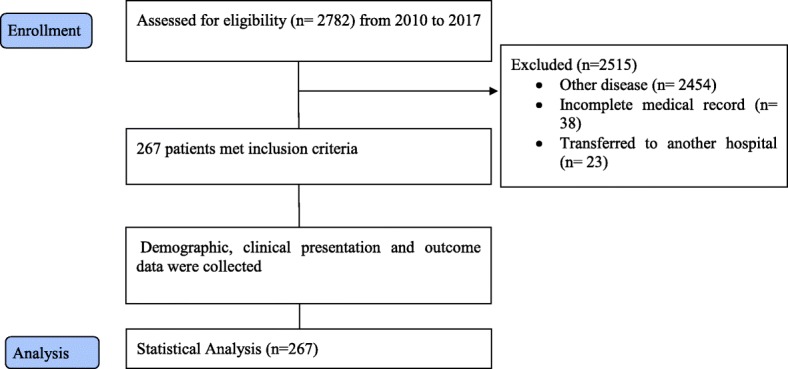
BACKGROUND: Acute poisoning is a common chief complaint leading to emergency department visits and hospital admissions in developing countries such as Iran. Data describing the epidemiology of different poisonings, characteristics of the clinical presentations, and the predictors of outcome are lacking. Such data can help develop more efficient preventative and management strategies to decrease morbidity and mortality related to these poisonings. This manuscript describes the epidemiology of acute poisoning among patients admitted to the intensive care unit (ICU) in Birjand, Iran. METHODS: This retrospective, cross-sectional study was conducted to characterize acute poisonings managed in the ICU during a 7-year period from March 2010 to March 2017 in a single center in Birjand, Iran. Patient characteristics, suspected exposure, the route of exposure, and outcome data were collected from hospital medical records. RESULTS: During the study period, 267 (64% male and 36% female) patients met inclusion criteria. Pharmaceutical medication (36.6%), opioids (26.2%) followed by pesticides (13.9%) were the most common exposures 38.2% of these cases were identified as suicide attempts. There were different frequencies in terms of xenobiotic exposure in relation to gender (p = 0.04) and the survival (p = 0.001). There was a significant difference between various xenobiotics identified as the cause of poisoning (p = 0.001). Mortality rate in our study was 19.5%. The incidence of outcomes was significantly higher in patients poisoned with opioids, pesticides, benzodiazepines, and tricyclic antidepressants (p < 0.05). The median length of hospital stay was higher in pesticide-poisoned patients (p = 0.04). CONCLUSION: Opioids and pesticides were the most common exposures. The mortality rate of the poisoned patients in the ICU was proportionately high. The mortality rate due to opioid poisoning is a major concern and the most significant cause death due to poisoning in the region. Further monitoring and characterization of acute poisoning in Birjand, Iran is needed. These data can help develop educational and preventative programs to reduce these exposures and improve management of exposures in the prehospital and hospital settings.
Overview
The claims and statistics of this paper haven’t been checked yet.
Free: it reads the open-access text and checks the first 5 claims that cite a source we can check. Create a free account to check every claim.
Integrity signals
Registry
Cites
Statistics
Figures
Verification
Claims the paper makes
The claims and statistics of this paper haven’t been checked yet.
Free: it reads the open-access text and checks the first 5 claims that cite a source we can check. Create a free account to check every claim.
Claims other papers make about this one
Each is checked against this paper’s own text: does it say what the citing paper says it does?
In the citing paper
“An Iranian source reported that paracetamol accounted for only 0.7% of ICU poisonings [186].”
From Paracetamol (acetaminophen) overdose and hepatotoxicity: mechanism, treatment, prevention measures, and estimates of burden of disease (2023) · cites this paper as [186]
Self-check
Percentages, sums and reported differences re-computed from the paper’s own numbers.
The self-check needs the paper’s full text.
Citations
Cites
Adverse drug reactions: definitions, diagnosis, and management
Edwards, I. R., & Aronson, J. K. (2000) · The Lancet · doi:10.1016/s0140-6736(00)02799-9 · Cited by 2,979
Patterns and problems of deliberate self-poisoning in the developing world
Eddleston, M. (2000) · QJM · doi:10.1093/qjmed/93.11.715 · Cited by 828
Annual Summary of Vital Statistics: 2010–2011
Hamilton, B. E., Hoyert, D. L., Martin, J. A., Strobino, D. M., & Guyer, B. (2013) · Pediatrics · doi:10.1542/peds.2012-3769 · Cited by 375
Indian Journal of Forensic Medicine & Toxicology
Chidananda, P., Nadaf, A. A., Deepak Kumar, B., Kg, R., Mr, V., Ragab, A. R., Zaki, N. S., & Jaiswal, A. (2013) · Cited by 294
A Systematic Review of Aluminium Phosphide Poisoning
Mehrpour, O., Jafarzadeh, M., & Abdollahi, M. (2012) · Archives of Industrial Hygiene and Toxicology · doi:10.2478/10004-1254-63-2012-2182 · Cited by 221
Self-citationPattern of acute poisoning in Tehran-Iran in 2003
Shadnia, S., Esmaily, H., Sasanian, G., Pajoumand, A., Hassanian-Moghaddam, H., & Abdollahi, M. (2007) · Human & Experimental Toxicology · doi:10.1177/0960327107083017 · Cited by 158 · cited 2×
“For example, in developed countries the most common cause of acute poisoning is the abuse of commercially available pharmaceuticals [7], in contrast, in developing countries, insecticides are the most common [8].”
BackgroundA Restrospective Study of Poisoning in Tehran
Abdollahi, M., Jalali, N., Sabzevari, O., Hoseini, R., & Ghanea, T. (1997) · Journal of Toxicology: Clinical Toxicology · doi:10.3109/15563659709043371 · Cited by 133 · cited 1×
“For example, in developed countries the most common cause of acute poisoning is the abuse of commercially available pharmaceuticals [7], in contrast, in developing countries, insecticides are the most common [8].”
BackgroundAn epidemiological study of poisoning in northern Islamic Republic of Iran
Moghadamnia, A. A., & Abdollahi, M. (2002) · Eastern Mediterranean Health Journal · doi:10.26719/2002.8.1.88 · Cited by 131
A Narrative Review of Acute Adult Poisoning in Iran.
Alinejad, S., Zamani, N., Abdollahi, M. R., & Mehrpour, O. (2017) · PubMed Central · Cited by 124
Self-citationAcute adult and adolescent poisoning in Tehran, Iran; the epidemiologic trend between 2006 and 2011.
Hassanian‐Moghaddam, H., Zamani, N., Rahimi, M., Shadnia, S., Pajoumand, A., & Sarjami, S. (2014) · PubMed · Cited by 91
Research works printed but not linked: 1
- Kamau MS Kipbichii CA Ruiru MH Intensive care management of poisoning in a resource-limited health care setting in Western Kenya Int J Humanit Soc Sci 2014 4 189 189 194
Cited by
Chidiac, A. S., Buckley, N. A., Noghrehchi, F., & Cairns, R. (2023) · Expert Opinion on Drug Metabolism & Toxicology · doi:10.1080/17425255.2023.2223959 · Cited by 215
Impact of chronic lead exposure on liver and kidney function and haematologic parameters
Nakhaee, S., Amirabadizadeh, A., Brent, J., & Mehrpour, O. (2018) · Basic & Clinical Pharmacology & Toxicology · doi:10.1111/bcpt.13179 · Cited by 111
Self-citationTramadol use and public health consequences in Iran: a systematic review and meta‐analysis
Abadi, Y. R., Gholami, J., Amin‐Esmaeili, M., Safarcherati, A., Mojtabai, R., Ghadirzadeh, M. R., Rahimi, H., & Rahimi‐Movaghar, A. (2020) · Addiction · doi:10.1111/add.15059 · Cited by 54
Diquat Poisoning: Care Management and Medico-Legal Implications
Basilicata, P., Pieri, M. C., Simonelli, A., Capasso, E., Casella, C., Noto, T., Policino, F., & Lorenzo, P. D. (2022) · Toxics · doi:10.3390/toxics10040166 · Cited by 40
“Exposure to chemicals represents a major source of accidents and hospitalizations; applications for compensation may derive from incorrect patient management [1,2].”
BackgroundSalimi, A., Jamali, Z., & Shabani, M. (2021) · Frontiers in Pharmacology · doi:10.3389/fphar.2021.719081 · Cited by 35
“In developing countries such as Iran and India, AlP is emerging as a common selfpoisoning agent (Etemadi-Aleagha et al., 2015; Mehrpour et al., 2018).”
BackgroundElgazzar, F. M., Afifi, A. M., Shama, M. A., Askary, A. E., & El‐Sarnagawy, G. N. (2021) · Basic & Clinical Pharmacology & Toxicology · doi:10.1111/bcpt.13619 · Cited by 34
Evidence for an increase in cannabis use in Iran – A systematic review and trend analysis
Abadi, Y. R., Gholami, J., Amin‐Esmaeili, M., Baheshmat, S., Hamzehzadeh, M., Rafiemanesh, H., Nasserbakht, M., Ghalichi, L., Safarcherati, A., Taremian, F., et al. (2021) · PLoS ONE · doi:10.1371/journal.pone.0256563 · Cited by 35
Prevalence, Predictors and Treatment Outcome of Acute Poisoning in Western Ethiopia
Tefera, G. M., & Teferi, L. G. (2020) · Open Access Emergency Medicine · doi:10.2147/oaem.s277269 · Cited by 37
Sharif, A. F., & Fayed, M. M. (2021) · Environmental Science and Pollution Research · doi:10.1007/s11356-021-13655-6 · Cited by 23
“Increased white blood cell count might be attributed to the inflammatory response and allergic reactions after Dormex exposure (Mitani et al. 2005).”
BackgroundNigussie, S., Bayou, F. D., Getachew, M., & Amare, F. (2022) · SAGE Open Medicine · doi:10.1177/20503121221078155 · Cited by 22
Acute pesticide poisoning in the central part of Iran: A 4-year cross-sectional study
Eizadi‐Mood, N., Mahvari, R., Savari, M. A., Mohammadbeigi, E., Feizi, A., Mirmoghtadaei, P., Sami, R., & Meamar, R. (2023) · SAGE Open Medicine · doi:10.1177/20503121221147352 · Cited by 27
Validation of Corrected and Dispersed QT as Predictors of Adverse Outcomes in Acute Cardiotoxicities
El‐Sarnagawy, G. N., Shaban, A. E., & Lashin, H. I. (2021) · Cardiovascular Toxicology · doi:10.1007/s12012-020-09629-8 · Cited by 20
Naseri, K., Kiani, Z., Sajadi, Z. S., Mehrpour, O., Javadmoosavi, S. Y., Forouzanfar, F., & Sadeghi, M. (2023) · Scientific Reports · doi:10.1038/s41598-023-28353-1 · Cited by 21
Self-citationCowans, C., Love, A., Tangiisuran, B., & Jacob, S. A. (2023) · Pharmacy · doi:10.3390/pharmacy11060184 · Cited by 27
Minimum data set development for a drug poisoning registry system
Hajesmaeel‐Gohari, S., Bahaadinbeigy, K., Tajoddini, S., & Kalhori, S. R. N. (2019) · Digital Health · doi:10.1177/2055207619897155 · Cited by 17
Yazdipour, A. B., Moshiri, M., Dadpour, B., Sarbaz, M., Miri, H. H., Khaniki, S. H., & Kimiafar, K. (2022) · Health Science Reports · doi:10.1002/hsr2.587 · Cited by 14
A 9-year retrospective study of poisoning-related deaths in Southwest China (Sichuan)
Xiao, L., Ye, Y., Wang, Y., Dai, X., Fang, S., Wei, Y., Zheng, Y., Wu, H., Fu, Y., & Liao, L. (2021) · Forensic Science International · doi:10.1016/j.forsciint.2020.110558 · Cited by 14
Çevik, C., Özdemir, R., & Ari, S. (2020) · La Medicina del Lavoro · doi:10.23749/mdl.v111i4.9394 · Cited by 35
“Self-inflicted poisonings are also a serious public health problem in many parts of the world, with ingestion of pesticides being one of the most common methods of suicide deaths and suicide attempts (18, 28).”
BackgroundAcute poisonings presenting to King Edward VIII hospital intensive care unit in Durban, South Africa
Goga, R., Vasconcellos, K. D., & Singh, D. (2021) · Southern African Journal of Critical Care · doi:10.7196/sajcc.2021.v37i1.408 · Cited by 17
Rodríguez, F. M., López‐Izquierdo, R., Villamor, M. Á. C., Martín‐Conty, J. L., Herrero-Antón, R. M., Vegas, C. D. P., Guillén-Gil, D., & Dueñas‐Laita, A. (2020) · Australian Critical Care · doi:10.1016/j.aucc.2020.07.004 · Cited by 14
Waktola, L. G., Melese, E. B., Mesfin, N., Altaye, K. D., & Legese, G. L. (2023) · Frontiers in Public Health · doi:10.3389/fpubh.2023.1160182 · Cited by 21
Zaghary, M. M. S., Radwan, R., & Elsayed, R. M. (2021) · The Egyptian Journal of Hospital Medicine · doi:10.21608/ejhm.2021.189851 · Cited by 12
Gharouni, K., Ardalan, A., Araban, M., Ebrahimzadeh, F., Bakhtiar, K., Almasian, M., & Bastami, F. (2020) · BMC Public Health · doi:10.1186/s12889-020-09425-7 · Cited by 16
Age- and gender-specific acute poisoning with drugs and medications affecting nervous system
Mesgarpour, B., Faridfar, S., Rezaei, M., Abdollahiasl, A., Shadnia, S., Mahdavinejad, A., & Abdollahi, M. R. (2024) · BMC Pharmacology and Toxicology · doi:10.1186/s40360-024-00759-1 · Cited by 15
“The prevalence of poisoning was higher among men in various age groups, except for the 6 to 19 years age group, which was contrary to other studies with smaller sample sizes [33–35].”
ResultEpidemiology of poisoning in Syria (1999 through 2020)
Kouli, M., Houri, H. N. A., Jomaa, S., Issa, A., Arrouk, D. M. N., Alhouri, A., Almhanni, G., Alhouri, A. N., Wardeh, R., & Kouli, M. (2022) · Clinical Toxicology · doi:10.1080/15563650.2022.2156882 · Cited by 12
Rahimi, M., Afrash, M. R., Shadnia, S., Mostafazadeh, B., Evini, P. E. T., Bardsiri, M. S., & Ramezani, M. (2024) · BMC Medical Informatics and Decision Making · doi:10.1186/s12911-024-02443-0 · Cited by 11
“Research indicates that intoxication is prevalent globally among individuals visiting emergency rooms [2–4].”
BackgroundShama, W. S., El-Gharbawy, D., Wahdan, A., & Hashem, A. A. (2021) · Tanta Medical Journal · doi:10.4103/tmj.tmj_107_21 · Cited by 11
Development a national minimum data set for poisoning registry in Iran
Yazdipour, A. B., Sarbaz, M., Dadpour, B., Moshiri, M., & Kimiafar, K. (2020) · The International Journal of Health Planning and Management · doi:10.1002/hpm.3045 · Cited by 10
Eizadi‐Mood, N., Sanjari, H., Feizi, A., Yazdi, R., Dorostkar, A., Mahvari, R., Mirmoghtadaee, P., & Meamar, R. (2024) · Scientific Reports · doi:10.1038/s41598-024-61411-w · Cited by 9
“In another study in Iran between 2010 and 2018, Mehrpour et al. reported that pharmaceutical medications were the most common poisoning among patients admitted to the intensive care unit 4 .”
BackgroundA Clinical-Epidemiological Study on Beta-Blocker Poisonings Based on the Type of Drug Overdose
Eizadi‐Mood, N., Adib, M., Otroshi, A., Dorooshi, G., & Meamar, R. (2023) · Journal of Toxicology · doi:10.1155/2023/1064955 · Cited by 9
Althobaiti, B. M., El-Readi, M. Z., Althubiti, M., Alhindi, Y. Z., Alzahrani, A. R., Al-Ghamdi, S. S., Ayoub, N., Refaat, B., & Eid, S. Y. (2023) · Frontiers in Pediatrics · doi:10.3389/fped.2023.1087095 · Cited by 11
Factors associated with prolonged intensive care stay among self-poisoned patients
Naïm, G., Lacoste-Palasset, T., M’Rad, A., Sütterlin, L., Lehalleur, A., Grant, C., Ekherian, J. M., Deye, N., Malissin, I., Voicu, S., et al. (2022) · Clinical Toxicology · doi:10.1080/15563650.2022.2064870 · Cited by 8
Impact of COVID-19 on poisoning-related mortality in Iran: An interrupted time series study
Behnoush, A. H., Bazmi, E., Forouzesh, M., Koehler, S. A., Monabati, S. J., & Behnoush, B. (2023) · International Journal of Drug Policy · doi:10.1016/j.drugpo.2023.104051 · Cited by 11
Rashid, E. A. M. A., Mahdy, N. M. E., Shalaby, E., Karoube, H. S., & Badawy, S. M. (2020) · Eurasian Journal of Emergency Medicine · doi:10.4274/eajem.galenos.2019.64935 · Cited by 13
Épidémiologie des intoxications aiguës
Fabresse, N., & Alvarez, J. (2020) · Annales de Toxicologie Analytique · doi:10.1016/j.toxac.2020.06.004 · Cited by 20
Acute toxic exposures in Egypt population: analysis of a five-year registry from 2015 to 2019
Abdelhamid, W. G., Wahdan, M. M., & Zaafar, D. K. (2022) · Toxicology and Environmental Health Sciences · doi:10.1007/s13530-022-00134-9 · Cited by 10
“The present study revealed that pharmaceutical drugs were the primary causative agent for poisoning, as reported in different studies [16, 25, 27, 28].”
BackgroundResultInfluentialRanking the acute poisoning etiologies in Iran: A systematic review and meta-analysis
Derhami, S., Bolvardi, E., Akhavan, R., Foroughian, M., Shahi, B., Hakemi, A., Rahmanian, Z., & Abiri, S. (2020) · Journal of Emergency Practice and Trauma · doi:10.34172/jept.2020.40 · Cited by 7
“Awareness of the pattern of poisoning in a particular area will play an important role in identifying risk factors and early detection of poisoning (2-4).”
BackgroundKovačić, V., Kvartuc, L., Mikačić, M., Jerković, I., Begović, T. I., Maras, M., & Nazlić, J. (2023) · Toxicology Research · doi:10.1093/toxres/tfad054 · Cited by 9
Fatalities Due to Poisoning with Aluminum Phosphide (Rice Pill) and Methadone
Astaraki, P., Ahadi, M., Salehinejad, F., & Honardoost, V. (2021) · Drug Research · doi:10.1055/a-1647-2222 · Cited by 7
“Pharmaceutical products are the main cause of acute poisoning in developed countries whereas, in under-developed countries, insecticides and pesticides are common cause of poisoning [3].”
BackgroundMbongwe, B., Moinami, J., Masupe, T., Tapera, R., Molefe, T., Erick, P., Godman, B., & Massele, A. (2020) · Hospital Practice · doi:10.1080/21548331.2020.1739415 · Cited by 6
Alva, J., Devi, E. S., Chandrababu, R., Abraham, J., & Balakrishnan, J. M. (2025) · Clinical Epidemiology and Global Health · doi:10.1016/j.cegh.2025.101932 · Cited by 6
Reda, G. B., Abate, H. K., Mekonnen, H. M., Gared, A. Z., & Beko, Z. W. (2023) · Open Access Emergency Medicine · doi:10.2147/oaem.s414743 · Cited by 5
“19,20 It affects the productive age group and the task forces of agricultural development, leading to low economic growth and poor agricultural reproduction yield.”
BackgroundBremen, K., Wirtz, T. H., Brozat, J. F., Jhaisha, S. A., Hohlstein, P., Pollmanns, M. R., Buendgens, L., Trautwein, C., & Koch, A. H. (2022) · Medizinische Klinik - Intensivmedizin und Notfallmedizin · doi:10.1007/s00063-022-00937-1 · Cited by 5
Intoxicaciones por benzodiacepinas y antidepresivos, una realidad preocupante
Rojas, J. P. C., & Müller-Ramírez, C. (2023) · Revista médica de Chile · doi:10.4067/s0034-98872023000400453 · Cited by 5
Muhammad, S., Ahmad, R., Rajpoot, P. L., Tabassum, R., Khaskheli, M. S., Abbas, J., Sultana, R., Tabassum, S., & Kumar, N. (2024) · Sudan Journal of Medical Sciences · doi:10.18502/sjms.v19i2.13906 · Cited by 6
Data Infrastructure for a Poisoning Registry with Designing Data Elements and a Minimum Data Set
Sabahi, A., Asadi, F., Shadnia, S., Rabiei, R., & Hosseini, A. (2022) · Shiraz E-Medical Journal · doi:10.5812/semj.116103 · Cited by 5
“Annually, more than 1 million people worldwide suffer from different poisoning-related problems, ranging from mild to severe diseases, which require admission to the intensive care unit (ICU) (1).”
BackgroundInfluentialEizadi‐Mood, N., Heshmat, R., Meamar, R., & Motamedi, N. (2022) · Advanced Biomedical Research · doi:10.4103/abr.abr_290_21 · Cited by 6
Nemati, K., Mirzaee, N., Babak, A., & Eizadi‐Mood, N. (2023) · Advanced Biomedical Research · doi:10.4103/abr.abr_125_22 · Cited by 3
Shokrzadeh, M., Jafari, D., Hoseinpoor, R., Delaram, A., Sadr, A. P., Masodi, E., Deylami, M., Lashkarboloki, G., Shayeste, Y., Fatemi, N. S., et al. (2021) · Journal of Research Development in Nursing and Midwifery · doi:10.52547/jgbfnm.18.1.26 · Cited by 3
George, A. V., Sharma, A. D., Rodha, M. S., Choudhary, B., Bohra, G. K., Rohila, A. K., & Goel, A. D. (2023) · Indian Journal of Community Medicine · doi:10.4103/ijcm.ijcm_92_23 · Cited by 3
“[23] showed that most patients with poisoning presented to the emergency had a GCS score of less than 9.”
BackgroundIntoxication-Related Deaths in a Poisoning Center in Isfahan: Demographic and Other-Related Factors
Dorooshi, G., Meamar, R., Kalantar, K., & Amini, Z. (2022) · Advanced Biomedical Research · doi:10.4103/abr.abr_61_21 · Cited by 4
ElMehy, A. E., El‐Sarnagawy, G. N., & Adel, B. (2025) · Toxicology Research · doi:10.1093/toxres/tfaf050 · Cited by 4
Shokrzadeh, M., Hoseinpoor, R., Jafari, D., Delaram, A., Sadr, A. P., Deylami, M., & Shayeste, Y. (2019) · Journal of Clinical and Basic Research · doi:10.29252/jcbr.3.2.8 · Cited by 3
Take-home naloxone program is a priority in Iran
Mehrpour, O. (2019) · Journal of Research in Medical Sciences · doi:10.4103/jrms.jrms_480_19 · Cited by 3
Self-citationDrug-Related Poisonings among Chilean Adult Population
Schulz-Bañares, B., González-Norambuena, C., & Müller-Ramírez, C. (2023) · Iranian Journal of Public Health · doi:10.18502/ijph.v52i5.12714 · Cited by 3
Muhammad, S., Almani, K. F., Mughal, U.-U.-R., Khaskheli, M. S., Sultana, R., Tabassum, R., Ahmed, S., Ahmad, R., & Kumar, N. (2025) · BMJ Open · doi:10.1136/bmjopen-2025-099837 · Cited by 3
“18 20 Though there are studies that have been conducted in Pakistan, these studies are more urban-centred and cover only certain geographical areas.”
Sarker, S. K., Salim, M., Ahmed, A., Mahjaben, M., & Tumpa, B. S. (2020) · Journal of the Bangladesh Society of Anaesthesiologists · doi:10.3329/jbsa.v33i2.67529 · Cited by 2
Jangjou, A., Ramezani, M., Rahimi, M., Mostafazadeh, B., Evini, P. E. T., & Shadnia, S. (2024) · International Journal of Medical Toxicology and Forensic Medicine · doi:10.32598/ijmtfm.v14i03.44759 · Cited by 2
Providing a Population Based Registry Model of Drug Poisoning in Iran
Sabahi, A., Asadi, F., Rabiei, R., & Paydar, S. (2022) · Iranian journal of pharmaceutical research · doi:10.5812/ijpr-130124 · Cited by 2
“Meanwhile, acute poisoning is the most common type in the emergency departments worldwide and is classified into unintentional or intentional categories (6).”
Paudyal, N., & Sapkota, K. (2020) · Kathmandu University Medical Journal · doi:10.3126/kumj.v18i1.33361 · Cited by 2
Casali, M. B., Travaini, G. V., Francesco, C. V. D., & Genovese, U. R. (2022) · Healthcare · doi:10.3390/healthcare10020263 · Cited by 8
Clinico-epidemiological Analysis of Adult Patients With Acute Poisoning
Soltaninejad, F., Beigi, G., Golshiri, P., & Eizadi‐Mood, N. (2021) · International Journal of Medical Toxicology and Forensic Medicine · doi:10.32598/ijmtfm.v11i3.33533 · Cited by 1
“Most of the explored patients were men, similar to other studies [13-15].”
BackgroundResultInfluentialNarzikulov, R. A., Lodyagin, A. N., Sinenchenko, A. G., Batotsyrenov, C. B., Rustamov, B. R., Лисица, И. А., & Zapasnikov, N. D. (2023) · Toxicological Review · doi:10.47470/0869-7922-2023-31-3-150-156 · Cited by 1
YOĞUN BAKIMDA İNTOKSİKASYON OLGULARININ RETROSPEKTİF ANALİZİ
AYDIN, G., Atasever, M., Gençay, İ., Çolak, S., & Büyükkoçak, Ü. (2018) · Kırıkkale Üniversitesi Tıp Fakültesi Dergisi · doi:10.24938/kutfd.468723 · Cited by 1
Kazemifar, A. M., Mirakbari, S. M., Yazdi, Z., Bitazar, B., & Soleimani, P. (2020) · Journal of Preventive Epidemiology · doi:10.34172/jpe.2020.15 · Cited by 2
“In the study conducted by Mehrpour et al, 50.2% of poisonings have occurred in these seasons (17).”
BackgroundResultInfluentialJamshidi, F., Tehrani, M. V., & Ghorbani, A. (2021) · Pakistan Journal of Medical and Health Sciences · doi:10.53350/pjmhs211572348 · Cited by 1
Prospective analysis of intoxicated patients developing shock and/or organ failure
TEKİN, F., Akpınar, A. A., Taşkın, Ö., Akday, U., Dişel, N. R., & Karakoç, E. (2022) · TURKISH JOURNAL OF MEDICAL SCIENCES · doi:10.55730/1300-0144.5508 · Cited by 1
The Impact of COVID-19 on Intoxication Pattern by Drugs of Abuse in Egypt
Aboubakr, H. M., Kotb, N. A., Shaban, F., Elattar, H. M. S., & Shalaby, E. (2023) · International Journal of Medical Toxicology and Forensic Medicine · doi:10.32598/ijmtfm.v13i1.39497 · Cited by 1
Abdelnoor, A. A., El‐Sarnagawy, G. N., Abuelfadl, A. A., & El-Mehallawi, I. H. (2023) · Tanta Medical Journal · doi:10.4103/tmj.tmj_60_20 · Cited by 1
Profile of intoxications served at the 24-hour emergency service unit
Palma, A. C. A. T. D., Sales, T. L. S., Alves, G. C. D. S., Fook, S. M. L., Otoni, A., Sanches, C., & Chequer, F. M. D. (2020) · Revista de ciencias farmaceuticas · doi:10.4322/2179-443x.0680 · Cited by 3
“In countries such as Germany (Sorge et al., 2015) and Iran (Mehrpour et al., 2018) this pattern was also observed; in India a different pattern was found, where the main causative agent was organophosphates, and secondly, prescription drugs (Bhowmick et al., 2019).”
BackgroundInfluentialJung, Y. Y., Ha, C. M., Jung, S. T., & Lee, H. J. (2020) · Journal of the Korean society of clinical toxicology · doi:10.22537/jksct.2020.18.2.94 · Cited by 1
Tousi, S. S., Jabbari, R., Dadpour, B., Khiabani, H. R., Salari, R., & Golpour, P. (2022) · International Journal of Medical Toxicology and Forensic Medicine · doi:10.32598/ijmtfm.v12i2.36738
Githinji, J. M., Mungoma, M., Fossa, K., Ngugi, J., Ondiek, S., Juttla, P. K., Odongo, A. O., Ndiritu, M., & Mwancha-Kwasa, M. (2023) · Toxicology Research and Application · doi:10.1177/23978473231208760
Assessment and evaluation of poisoning cases
-, R. P. B., -, N. S., & Jayappa, M. K. B. (2023) · International Journal For Multidisciplinary Research · doi:10.36948/ijfmr.2023.v05i06.9419
CLINICAL PROFILE OF PATIENTS WITH POISONING ADMITTED TO TERTIARY CARE CENTRE OF NEPAL
Jahan, F., Singh, R. P., Tiwari, B., Rijal, G., Lama, D., Kurmi, R. N., & Mandal, L. (2023) · Journal of Chitwan Medical College · doi:10.54530/jcmc.1358
Ghaleb, S. S., Mohamed, R. N., Kenawy, M. K. M., & Elrewieny, N. M. (2024) · The Egyptian Journal of Forensic Sciences and Applied Toxicology · doi:10.21608/ejfsat.2024.274756.1320
Bavandipour, A., Safaee, M., Tarrahi, M. J., & Eizadi‐Mood, N. (2024) · Advanced Biomedical Research · doi:10.4103/abr.abr_218_22
“[19,20] The main reason for poisoning was suicide (59.3%), which was less than that in other studies.”
ResultInfluentialSadeghi, M., Vatanpour, H., & Hassanian‐Moghaddam, H. (2024) · Research Square · doi:10.21203/rs.3.rs-5270380/v1
Morsy, Y. S., Wahdan, A., El-Noor, M. M. A., & Kabbash, A. (2025) · Tanta Medical Journal · doi:10.4103/tmj.tmj_100_20
Farabi, R., Javan-Molaei, A., Farzaneh, E., Ahari, S. S., & Mostafalou, S. (2024) · مجله دانشگاه علوم پزشکی اردبیل · doi:10.61186/jarums.24.2.196
Prasad, M., Kumar, S., Kumar, N., Goel, N., & Kumar, A. (2024) · ASEAN Journal of Psychiatry · doi:10.54615/2231-7805.143357
Yousefian, N., Samsamshariat, S., Dorooshi, G., & Eizadi‐Mood, N. (2025) · medRxiv · doi:10.1101/2025.08.14.25333683 · Cited by 1
“Factors associated with the risk of fatal poisoning include age, gender, suicidal intent, unintentional poisoning, socioeconomic status, and regional variation (Mehrpour et al., 2018).”
InfluentialSociodemographic and Toxico-clinical Characteristics of Patients with Opioid/Stimulant Poisoning
Eizadi‐Mood, N., Abdi, E., Feizi, A., & Meamar, R. (2025) · Addiction and Health · doi:10.34172/ahj.1565
Nemati, A., Etemad, L., Dadpour, B., Wong, A., Gholami, M., Mousavi, S. R., Ghamsari, A. A., Mousavi, S. H., Toussi, A. G., Kimiafar, K., et al. (2025) · International Journal of Emergency Medicine · doi:10.1186/s12245-025-01045-5
“While, In Khorramabad and Hamedan, opium was the most common type of intoxication [27, 43].”
InfluentialPereira, M., Chircop, R., & Mifsud, J. (2025) · Clinical Toxicology · doi:10.1080/15563650.2025.2584620
Mesgarpour, B., Faridfar, S., Rezaei, M., Abdollahiasl, A., Shadnia, S., Mahdavinejad, A., & Abdollahi, M. (2024) · Figshare · doi:10.6084/m9.figshare.26741066
Ayalew, F. B., & Nora, W. T. (2026) · Journal of Public Health Research · doi:10.1177/22799036261448928
“25, 28 Only 20.3 Despite pharmaceuticals being the most frequent agents in our setting which is supported by studies from St. Peter Hospital, Iran and Egypt, 24,29,30 organophosphates remained the leading cause of mortality, accounting for 62.5% of deaths.”
InfluentialRahro, A., Nazemi‐Rafi, M., & Bagheri, F. (2026) · Majallah-i dānishgāh-i ̒ulum-i pizishkī-i Kirmān. · doi:10.34172/jkmu.3936
“Opioids and pesticides are the leading causes of fatal poisoning (32).”
Metadata
- Authors
- Mehrpour, O., Akbari, A., Jahani, F., Amirabadizadeh, A., Allahyari, E., Mansouri, B., & Ng, P. C.
- Affiliations
- Birjand University of Medical Sciences (IR)
- Corresponding author
- Mehrpour, Omid
- Venue
- BMC Emergency Medicine
- Published
- 2018-09-19
- Volume
- 18
- Issue
- 1
- Pages
- 30-30
- ISSN
- 1471-227X (ISSN-L)
- PMC
- PMC6146606
- OpenAlex
- W2890641181
- Cited by
- 88
- References
- 46
- Citations by year
- 2026: 2 · 2025: 8 · 2024: 11 · 2023: 20 · 2022: 14 · 2021: 12 · 2020: 16 · 2019: 3 · 2018: 2
- FWCI
- 10.08
- Type
- journal article
- Language
- en
- Open access
- gold
- doi.org
- Licence
- cc-by
- creativecommons.org/licenses/by/4.0/ (tdm)
- Locations
- BMC Emergency Medicine (publishedVersion, cc-by)
- Europe PMC (PubMed Central) (publishedVersion, other-oa)
- PubMed Central (publishedVersion, cc-by)
- PubMed (publishedVersion)
- DOAJ (DOAJ: Directory of Open Access Journals) (submittedVersion, cc-by-sa)
- Funders
- Birjand University of Medical Sciences (95/739)
- Topics
- Health Sciences › Medicine › Emergency Medicine › Poisoning and overdose treatments
- Life Sciences › Pharmacology, Toxicology and Pharmaceutics › Pharmacology › Plant-based Medicinal Research
- Life Sciences › Pharmacology, Toxicology and Pharmaceutics › Toxicology › Forensic Toxicology and Drug Analysis
- Keywords
- acute poisoning, intensive care unit admission, opioid toxicity, pesticide poisoning, suicide attempts, xenobiotic exposure, mortality, length of hospital stay, benzodiazepines, tricyclic antidepressants, clinical outcome predictors
- MeSH terms
- Acute Disease, Adolescent, Adult, Age Factors, Aged, Analgesics, Opioid, Cross-Sectional Studies, Drug Administration Routes, Female, Humans, Intensive Care Units, Iran, Male, Middle Aged, Pesticides, Poisoning, Retrospective Studies, Sex Factors, Socioeconomic Factors, Hospital Mortality, Prescription Drugs, Young Adult
About these checks
Registry, retraction, Cites and statistics results are computed, not judged, with one exception: a printed reference that no index lists is read once by a model before it counts as a citation error. Claims are extracted by a model and kept only when their quote appears verbatim in the text; each cited source is then checked, with a model’s help, for whether it says what the claim relies on. Those verdicts can be wrong — read the claim’s quote and the cited source before relying on one.
Statistics and arithmetic are recomputed, not judged.
Confidence bands are shown only for fields calibrated on our annotated test set. None is calibrated yet, so no band is shown.
What counts as a claim ›How we measure confidence ›How we check this ›
Are you an author, or do you see a problem with this page? Request a review
Data sources
Bibliographic data: Semantic Scholar, OpenAlex, Crossref.
Contains information from the Semantic Scholar Academic Graph Datasets, made available under the ODC Attribution License (ODC-BY 1.0).
Semantic Scholar’s data is described in: Kinney, R., et al. (2023). The Semantic Scholar Open Data Platform. arXiv:2301.10140.
