

Advancing complexity science in healthcare research: the logic of logic models
Open accessThe DOI matches its Crossref record; 28 of the 28 references it cites were found in a registry or an index.
Abstract
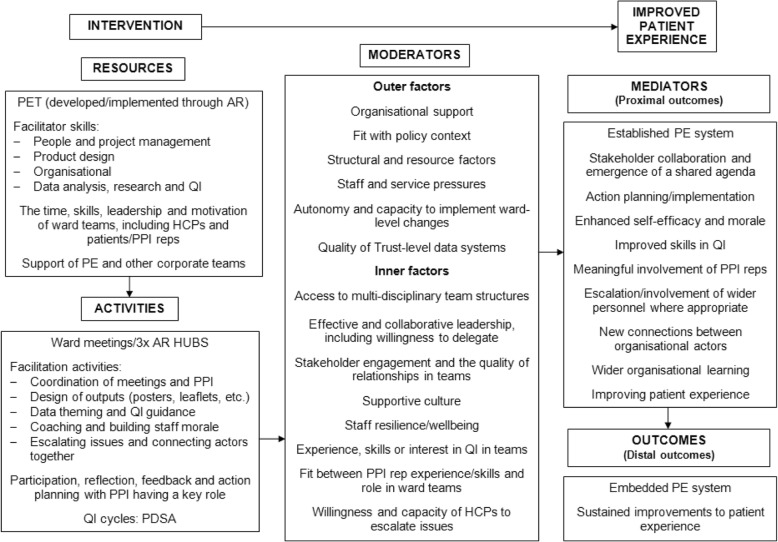
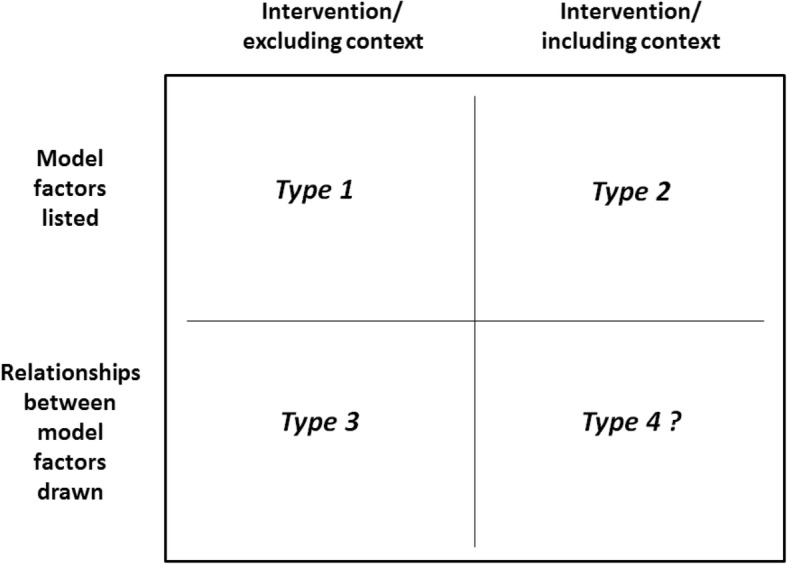
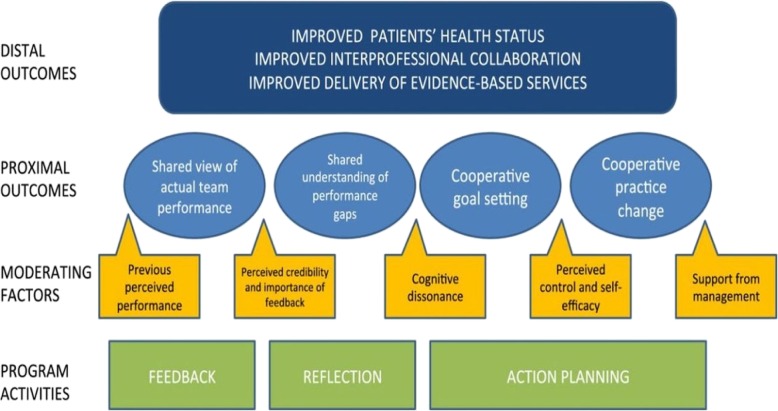
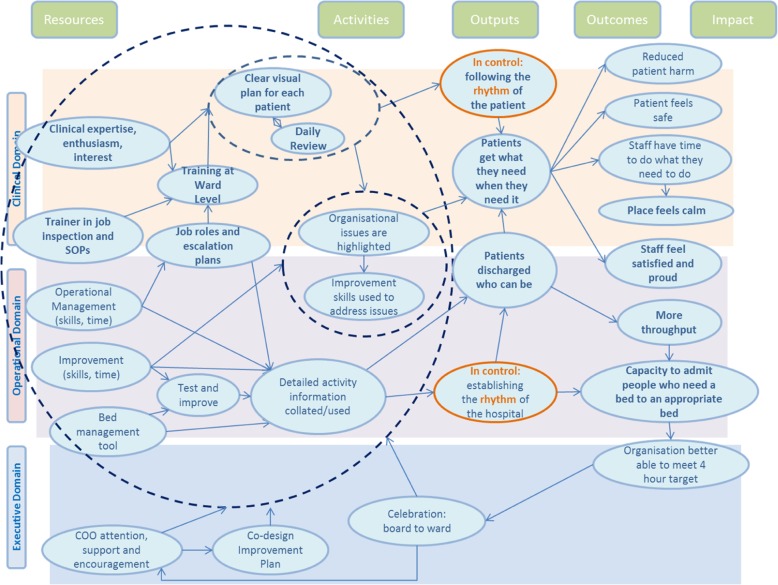
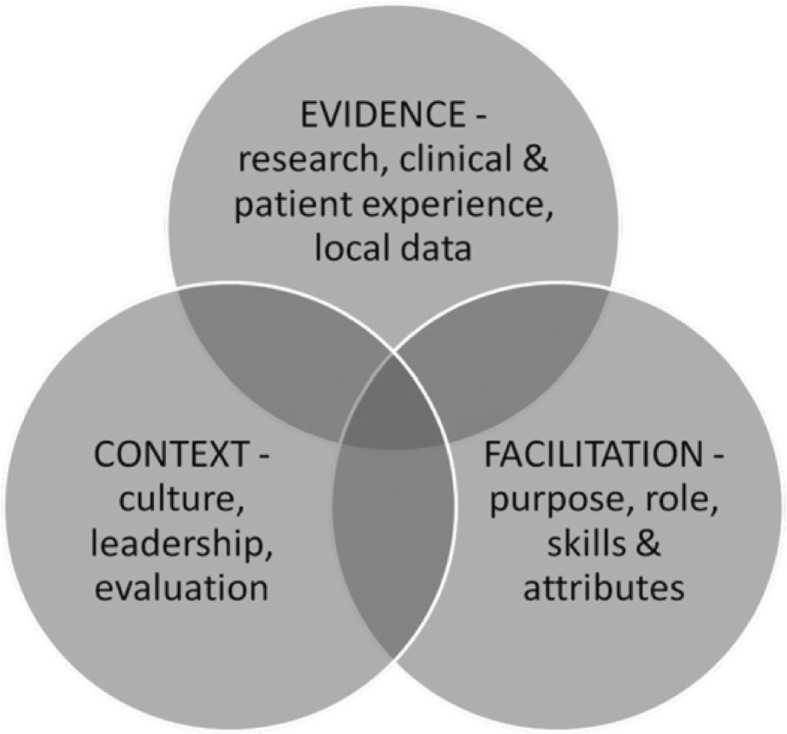
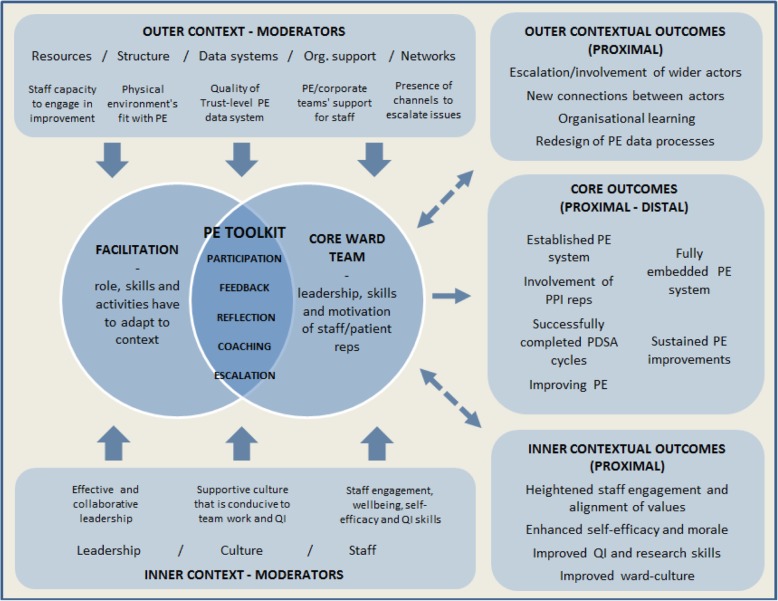
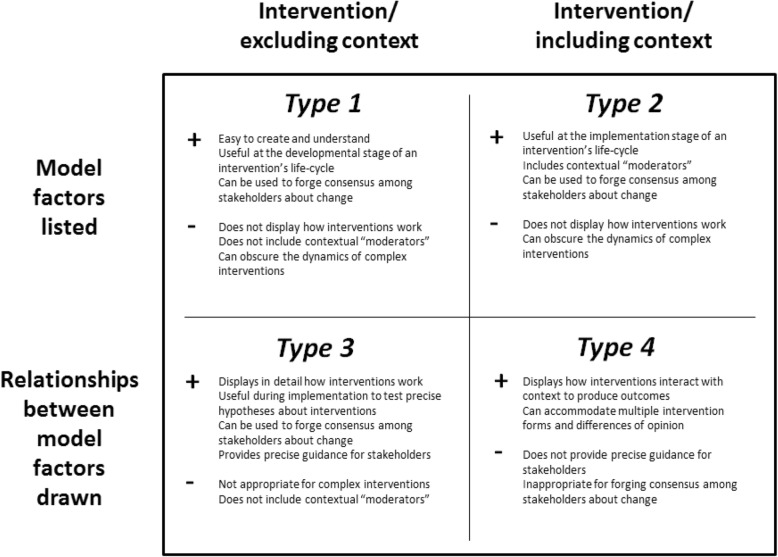
BACKGROUND: Logic models are commonly used in evaluations to represent the causal processes through which interventions produce outcomes, yet significant debate is currently taking place over whether they can describe complex interventions which adapt to context. This paper assesses the logic models used in healthcare research from a complexity perspective. A typology of existing logic models is proposed, as well as a formal methodology for deriving more flexible and dynamic logic models. ANALYSIS: Various logic model types were tested as part of an evaluation of a complex Patient Experience Toolkit (PET) intervention, developed and implemented through action research across six hospital wards/departments in the English NHS. Three dominant types of logic model were identified, each with certain strengths but ultimately unable to accurately capture the dynamics of PET. Hence, a fourth logic model type was developed to express how success hinges on the adaption of PET to its delivery settings. Aspects of the Promoting Action on Research Implementation in Health Services (PARIHS) model were incorporated into a traditional logic model structure to create a dynamic "type 4" logic model that can accommodate complex interventions taking on a different form in different settings. CONCLUSION: Logic models can be used to model complex interventions that adapt to context but more flexible and dynamic models are required. An implication of this is that how logic models are used in healthcare research may have to change. Using logic models to forge consensus among stakeholders and/or provide precise guidance across different settings will be inappropriate in the case of complex interventions that adapt to context. Instead, logic models for complex interventions may be targeted at facilitators to enable them to prospectively assess the settings they will be working in and to develop context-sensitive facilitation strategies. Researchers should be clear as to why they are using a logic model and experiment with different models to ensure they have the correct type.
Overview
The claims and statistics of this paper haven’t been checked yet.
Free: it reads the open-access text and checks the first 5 claims that cite a source we can check. Create a free account to check every claim.
Integrity signals
Registry
Cites
Statistics
Figures
Verification
Claims the paper makes
The claims and statistics of this paper haven’t been checked yet.
Free: it reads the open-access text and checks the first 5 claims that cite a source we can check. Create a free account to check every claim.
Claims other papers make about this one
Each is checked against this paper’s own text: does it say what the citing paper says it does?
In the citing paper
“Logic models illustrate causal relationships between service inputs, resultant activities, outputs and goals, emphasising the contributory factors to successful programmes.101”
Self-check
Percentages, sums and reported differences re-computed from the paper’s own numbers.
The self-check needs the paper’s full text.
Citations
Cites
Dilemmas in a general theory of planning
Rittel, H. W. J., & Webber, M. M. (1973) · Policy Sciences · doi:10.1007/bf01405730 · Cited by 16,338
Scoping studies: advancing the methodology
Levac, D., Colquhoun, H., & O'Brien, K. K. (2010) · Implementation Science · doi:10.1186/1748-5908-5-69 · Cited by 15,268
Gale, N. K., Heath, G., Cameron, E., Rashid, S., & Redwood, S. (2013) · BMC Medical Research Methodology · doi:10.1186/1471-2288-13-117 · Cited by 10,865
Process evaluation of complex interventions: Medical Research Council guidance
Moore, G. F., Audrey, S., Barker, M., Bond, L., Bonell, C., Hardeman, W., Moore, L., O'Cathain, A., Tinati, T., Wight, D., et al. (2015) · BMJ · doi:10.1136/bmj.h1258 · Cited by 6,204 · cited 3×
“For their advocates, they can be useful to help evaluators develop understanding of exactly how interventions produce outcomes [1, 3], to organise empirical data and specify process and outcome measures for the purposes of evaluation [8] and/or to provide a talking point for stakeholders to forge consensus on the need…”
BackgroundMethodInfluentialMaking sense of implementation theories, models and frameworks
Nilsen, P. (2015) · Implementation Science · doi:10.1186/s13012-015-0242-0 · Cited by 4,447
Theorising interventions as events in systems
Hawe, P., Shiell, A., & Riley, T. (2009) · American Journal of Community Psychology · doi:10.1007/s10464-009-9229-9 · Cited by 1,143
Pfadenhauer, L. M., Gerhardus, A., Mozygemba, K., Lysdahl, K. B., Booth, A., Hofmann, B., Wahlster, P., Polus, S., Burns, J., Brereton, L., et al. (2017) · Implementation Science · doi:10.1186/s13012-017-0552-5 · Cited by 1,016 · cited 1×
“However, because complex interventions adapt to contexts through a flexible facilitation function, making them “inextricably linked” to implementation and context [29], a new role for type 4 logic models emerges: to guide how future users of complex interventions adapt them to context.”
BackgroundUsing Programme Theory to Evaluate Complicated and Complex Aspects of Interventions
Rogers, P. J. (2008) · Evaluation · doi:10.1177/1356389007084674 · Cited by 999
Studying complexity in health services research: desperately seeking an overdue paradigm shift
Greenhalgh, T., & Papoutsi, C. (2018) · BMC Medicine · doi:10.1186/s12916-018-1089-4 · Cited by 962
Purposeful Program Theory: Effective Use of Theories of Change and Logic Models
Funnell, S., & Rogers, P. (2011) · RMIT Research Repository (RMIT University Library) · Cited by 897
Research works printed but not linked: 2
- Bakewell O, Garbutt A. The use and abuse of the logical framework approach: a review of international development NGO’s experiences. 2015. https://www.alnap.org/help-library/the-use-and-abuse-of-the-logical-framework-approach. Accessed 08 March 2019.
- Cochrane Developing Logic Models, Cochrane Infectious Diseases, Effective Healthcare Research Consortium 2016
Cited by
Skivington, K., Matthews, L., Simpson, S. A., Craig, P., Baird, J., Blazeby, J. M., Boyd, K. A., Craig, N., French, D. P., McIntosh, E., et al. (2021) · Health Technology Assessment · doi:10.3310/hta25570 · Cited by 522
Adapting interventions to new contexts—The ADAPT guidance
Moore, G., Campbell, M., Copeland, L., Craig, P., Movsisyan, A., Hoddinott, P., Littlecott, H., O’Cathain, A., Pfadenhauer, L., Rehfuess, E., et al. (2021) · BMJ · doi:10.1136/bmj.n1679 · Cited by 511
Grindell, C., Coates, E., Croot, L., & O’Cathain, A. (2022) · BMC Health Services Research · doi:10.1186/s12913-022-08079-y · Cited by 409
Howarth, M., Brettle, A., Hardman, M., & Maden, M. (2020) · BMJ Open · doi:10.1136/bmjopen-2020-036923 · Cited by 198
Fylan, B., Tomlinson, J., Raynor, D. K., & Silcock, J. (2021) · Research in Social and Administrative Pharmacy · doi:10.1016/j.sapharm.2021.06.004 · Cited by 121
Overview of the Integrative Review
Toronto, C. E. (2020) · Springer eBooks · doi:10.1007/978-3-030-37504-1_1 · Cited by 111
Reed, H., Couturiaux, D., Davis, M., Edwards, A., Janes, E. H., Kim, H. S., Meléndez‐Torres, G. J., Murphy, S., Rotevatn, T. A., Smith, J. L., et al. (2020) · Prevention Science · doi:10.1007/s11121-020-01182-8 · Cited by 100
Baxter, R., Shannon, R., Murray, J., O'Hara, J. K., Sheard, L., Cracknell, A. L., & Lawton, R. (2020) · BMC Health Services Research · doi:10.1186/s12913-020-05641-4 · Cited by 97
Self-citationIntegrated Care Models and Child Health: A Meta-analysis
Wolfe, I., Satherley, R.-M., Scotney, E., Newham, J., & Lingam, R. (2020) · Pediatrics · doi:10.1542/peds.2018-3747 · Cited by 90
O'Hara, J. K., Baxter, R., & Hardicre, N. (2020) · Applied Ergonomics · doi:10.1016/j.apergo.2020.103060 · Cited by 84
Evans, R., Moore, G. F., Movsisyan, A., & Rehfuess, E. A. (2020) · Journal of Epidemiology & Community Health · doi:10.1136/jech-2020-214468 · Cited by 65
Program Evaluation for Health Professionals: What It Is, What It Isn’t and How to Do It
Adams, J., & Neville, S. J. (2020) · International Journal of Qualitative Methods · doi:10.1177/1609406920964345 · Cited by 59
van Dale, D., Lemmens, L. C., Hendriksen, M. A. H., Savolainen, N., Nagy, P., Marosi, E., Eigenmann, M., Stegemann, I., & Rogers, H. L. (2020) · International Journal of Environmental Research and Public Health · doi:10.3390/ijerph17186474 · Cited by 55
Nevedal, A., Kowalski, C. P., Finley, E. P., Fix, G. M., Hamilton, A. B., & Koenig, C. J. (2025) · Implementation Science · doi:10.1186/s13012-025-01474-z · Cited by 53
Yip, O., Huber, E., Stenz, S., Zullig, L. L., Zeller, A., Geest, S. D., & Deschodt, M. (2021) · International Journal of Integrated Care · doi:10.5334/ijic.5607 · Cited by 48
Duan, Y., Iaconi, A., Wang, J., Perez, J. S., Song, Y., Chamberlain, S. A., Shrestha, S., Choroschun, K., Hoben, M., Beeber, A., et al. (2022) · Implementation Science · doi:10.1186/s13012-022-01254-z · Cited by 46
“Some articles integrated the (i-)PARIHS framework with complex system perspectives and broader theoretical knowledge in implementation science and other disciplines [15, 49, 50].”
BackgroundMethodInfluentialKnowles, S. E., Ercia, A., Caskey, F. J., Rees, M., Farrington, K., & van der Veer, S. N. (2021) · BMC Health Services Research · doi:10.1186/s12913-021-06702-y · Cited by 43
A cross-sectional study of mental health and suicidality among trans women in São Paulo, Brazil
Reis, A. C., Sperandei, S., de Carvalho, P. G. C., Pinheiro, T. F., de Moura, F. D., Gomez, J. L., Porchat, P., Bastos, F. I., McFarland, W., Wilson, E. C., et al. (2021) · BMC Psychiatry · doi:10.1186/s12888-021-03557-9 · Cited by 41
Taylor, N. J., McKay, S., Long, J. C., Gaff, C., North, K. N., Braithwaite, J., Francis, J., & Best, S. (2023) · Implementation Science · doi:10.1186/s13012-023-01284-1 · Cited by 33
Fundamental challenges in assessing the impact of research infrastructure
Zakaria, S., Grant, J., & Luff, J. (2021) · Health Research Policy and Systems · doi:10.1186/s12961-021-00769-z · Cited by 33
Barriers and enablers to care-leavers engagement with multi-agency support: A scoping review
Prendergast, L. M., Davies, C., Seddon, D., Hartfiel, N., & Edwards, R. T. (2024) · Children and Youth Services Review · doi:10.1016/j.childyouth.2024.107501 · Cited by 31
Kamvura, T. T., Turner, J., Chiriseri, E., Dambi, J. M., Verhey, R., & Chibanda, D. (2021) · BMC Health Services Research · doi:10.1186/s12913-021-06957-5 · Cited by 28
Mills, T., Shannon, R., O'Hara, J. K., Lawton, R., & Sheard, L. (2022) · Evaluation · doi:10.1177/13563890211068869 · Cited by 28
Self-citationShannon, S., Shevlin, M. E., Brick, N., & Breslin, G. (2022) · Journal of Affective Disorders · doi:10.1016/j.jad.2022.12.063 · Cited by 29
del Cura-González, I., López-Rodríguez, J. A., Leiva-Fernández, F., Miguel, A. G., Poblador‐Plou, B., López-Verde, F., Lozano-Hernández, C., Pico-Soler, V., Bujalance-Zafra, M. J., Gimeno-Feliú, L. A., et al. (2022) · Journal of Personalized Medicine · doi:10.3390/jpm12050752 · Cited by 28
Leiva-Fernández, F., Prados-Torres, J. D., Prados‐Torres, A., del Cura-González, I., Castillo-Jimena, M., López-Rodríguez, J. A., Blanco, M. E. R., Lozano-Hernández, C., López-Verde, F., Bujalance-Zafra, M. J., et al. (2020) · Mechanisms of Ageing and Development · doi:10.1016/j.mad.2020.111354 · Cited by 28
Papoutsi, C., A’Court, C., Wherton, J., Shaw, S., & Greenhalgh, T. (2020) · Trials · doi:10.1186/s13063-020-04817-x · Cited by 26
Eskytė, I., Gray‐Burrows, K. A., Owen, J., Sykes‐Muskett, B., Pavitt, S. H., West, R., Marshman, Z., & Day, P. F. (2021) · Frontiers in Public Health · doi:10.3389/fpubh.2021.578168 · Cited by 26
Baxter, R., Murray, J., O'Hara, J. K., Hewitt, C. E., Richardson, G. A., Cockayne, S., Sheard, L., Mills, T., & Lawton, R. (2020) · Pilot and Feasibility Studies · doi:10.1186/s40814-020-00655-5 · Cited by 25
Self-citationProgram Evaluation Through the Use of Logic Models
Carrion, A. J., Miles, J. D., Thompson, M. D., Journee, B., & Nelson, E. (2021) · Currents in Pharmacy Teaching and Learning · doi:10.1016/j.cptl.2021.03.006 · Cited by 25
Holden, M. A., Murphy, M., Simkins, J., Thomas, M. J., Huckfield, L., Quicke, J. G., Halliday, N., Birrell, F. N., Borrelli, B., Callaghan, M. J., et al. (2024) · Osteoarthritis and Cartilage · doi:10.1016/j.joca.2024.08.010 · Cited by 25
Dickens, G. L., Johnson, A., Steel, K., Everett, B., & Tonkin, M. (2022) · SAGE Open Nursing · doi:10.1177/23779608221124291 · Cited by 22
Scott, V. C., Chagnon, E., & Wandersman, A. H. (2024) · Evaluation & the Health Professions · doi:10.1177/01632787241285561 · Cited by 21
Family-Centered Early Intervention Deaf/Hard of Hearing (FCEI-DHH): Call to Action
Szarkowski, A., Birdsey, B. C., Smith, T., Moeller, M. P., Gale, E., Moodie, S., Carr, G., Stredler-Brown, A., Yoshinaga‐Itano, C., & Holzinger, D. (2024) · The Journal of Deaf Studies and Deaf Education · doi:10.1093/deafed/enad041 · Cited by 21
Binger, C., Douglas, N., & Kent-Walsh, J. (2021) · American Journal of Speech-Language Pathology · doi:10.1044/2021_ajslp-21-00085 · Cited by 20
Monnelly, K., Marshall, J., Dipper, L. T., & Cruice, M. N. (2023) · Disability and Rehabilitation · doi:10.1080/09638288.2023.2274877 · Cited by 19
Cultural adaptation of two school-based smoking prevention programs in Bogotá, Colombia
Sánchez-Franco, S., Arias, L. F., Jaramillo, J., Murray, J., Hunter, R. F., Llorente, B. A., Bauld, L., Good, S., West, J., Kee, F., et al. (2021) · Translational Behavioral Medicine · doi:10.1093/tbm/ibab019 · Cited by 19
Baker, P. N., Coole, C., Drummond, A. E., Khan, S., McDaid, C., Hewitt, C. E., Kottam, L., Ronaldson, S. J., Coleman, E., McDonald, D. A., et al. (2020) · Health Technology Assessment · doi:10.3310/hta24450 · Cited by 20
Darville, G., Burns, J. C., Chavanduka, T., & Anderson‐Lewis, C. (2021) · JMIR Serious Games · doi:10.2196/21303 · Cited by 19
Huiberts, I., Singh, A. S., van Lenthe, F. J., Chinapaw, M. J. M., & Collard, D. C. M. (2022) · International Journal of Behavioral Nutrition and Physical Activity · doi:10.1186/s12966-022-01271-7 · Cited by 20
Backhouse, M. R., Parker, D., Morison, S. C., Anderson, J., Cockayne, S., & Adamson, J. (2022) · Trials · doi:10.1186/s13063-022-06251-7 · Cited by 19
Mills, T., Madden, M., Stewart, D., Gough, B., & McCambridge, J. (2022) · BMJ Open · doi:10.1136/bmjopen-2022-066025 · Cited by 18
Self-citationLarsson-Lund, M., Lexell, E. M., & Nyman, A. (2021) · Scandinavian Journal of Occupational Therapy · doi:10.1080/11038128.2021.1950206 · Cited by 18
Hernantes, N., Bermejo‐Martins, E., Øvergård, K. I., Pumar‐Méndez, M. J., López‐Dicastillo, O., Iriarte‐Roteta, A., Baztán, E. A., & Mujika, A. (2022) · Journal of Advanced Nursing · doi:10.1111/jan.15247 · Cited by 18
Bauer, A., Best, S., Malley, J., Christiansen, H., Goodyear, M. J., Zechmeister‐Koss, I., & Paul, J. L. (2021) · Frontiers in Psychiatry · doi:10.3389/fpsyt.2021.741225 · Cited by 17
A qualitative descriptive study of a novel nurse-led skin cancer screening model in rural Australia
Glenister, K., Witherspoon, S. A., & Crouch, A. (2022) · BMC Health Services Research · doi:10.1186/s12913-022-08411-6 · Cited by 17
Construção e validação de modelo lógico para Centros Especializados em Reabilitação
Valentim, R. D. S., Dantas, T. H. D. M., Machado, F. C. D. A., Araújo, C. M., da Silva, M. S., Castaneda, L., & Dantas, D. D. S. (2021) · Revista de Saúde Pública · doi:10.11606/s1518-8787.2021055002976 · Cited by 17
Shannon, S., Carlin, A., Woods, C. B., Nevill, A. M., Murphy, N. M., & MURPHY, M. H. (2022) · Health Promotion International · doi:10.1093/heapro/daac083 · Cited by 16
Im, H., Verbillis-Kolp, S., Atiyeh, S., Bonz, A. G., Eadeh, S., George, N., & Wadu, A. M. (2023) · Health & Social Care in the Community · doi:10.1155/2023/6696415 · Cited by 16
von Lengerke, T., Tomsic, I., Krosta, K. M. E., Ebadi, E., Keil, V., Buchta, F., Luz, J. K., Schaumburg, T., Kolbe-Busch, S., & Chaberny, I. F. (2023) · Frontiers in Health Services · doi:10.3389/frhs.2022.960854 · Cited by 16
Voß, S., Bauer, J., Coenen, M., Jung‐Sievers, C., Moore, G. F., & Rehfuess, E. A. (2025) · BMC Public Health · doi:10.1186/s12889-025-23171-8 · Cited by 16
Silcock, J., Marques, I., Olaniyan, J., Raynor, D. K., Baxter, H., Gray, N. J., Zaidi, S. T. R., Peat, G., Fylan, B., Breen, L., et al. (2022) · Health Expectations · doi:10.1111/hex.13669 · Cited by 16
Characterizing the PrEP Continuum for Black and Latinx Sexual and Gender Minority Youth
Bonett, S., Dowshen, N., Bauermeister, J. A., Meanley, S., Wirtz, A. L., Celentano, D. D., Galai, N., Arrington‐Sanders, R., & the PUSH Study Group (2021) · AIDS and Behavior · doi:10.1007/s10461-021-03476-6 · Cited by 16
Seidl, K. L., Gingold, D. B., Stryckman, B., Landi, C., Sokan, O., Fletcher, M., & Marcozzi, D. E. (2021) · Population Health Management · doi:10.1089/pop.2020.0038 · Cited by 16
Batten, M., Kosari, S., Koerner, J., Naunton, M., & Cargo, M. (2022) · Research in Social and Administrative Pharmacy · doi:10.1016/j.sapharm.2022.05.006 · Cited by 15
Fox, S. T., Janda, M., & Hubbard, R. E. (2022) · Aging Clinical and Experimental Research · doi:10.1007/s40520-022-02305-7 · Cited by 14
Brunner, J., Farmer, M. M., Bean‐Mayberry, B., Coffinier, C., Than, C. T., Hamilton, A. B., & Finley, E. P. (2022) · Frontiers in Health Services · doi:10.3389/frhs.2022.946802 · Cited by 13
McNally, P., Taggart, L., & Shevlin, M. E. (2023) · Journal of Policy and Practice in Intellectual Disabilities · doi:10.1111/jppi.12457 · Cited by 13
Chamberlain, C., Gray, P., Herrman, H., Mensah, F. K., Andrews, S., Krakouer, J., McCalman, P., Elliott, A., Atkinson, J., O'Dea, B., et al. (2022) · Child Abuse Review · doi:10.1002/car.2760 · Cited by 14
Gernert, M., Schuber, A. A., & Schaller, A. (2023) · Evaluation and Program Planning · doi:10.1016/j.evalprogplan.2023.102347 · Cited by 13
Five ways to get a grip on the drawbacks of logic models in program evaluation
Onyura, B., Mullins, H., & Hamza, D. M. (2021) · Canadian Medical Education Journal · doi:10.36834/cmej.71966 · Cited by 13
Rimmer, B., Dutton, L., Lewis, J., Burns, R., Gallagher, P., Williams, S., Araujo-Soares, V., Finch, T., & Sharp, L. (2020) · BMJ Open · doi:10.1136/bmjopen-2020-041465 · Cited by 12
on behalf of the ISCOMAT Programme Team, Fylan, B., Ismail, H., Hartley, S., Gale, C. P., Farrin, A. J., Gardner, P. H., Silcock, J., & Alldred, D. P. (2021) · Pilot and Feasibility Studies · doi:10.1186/s40814-021-00819-x · Cited by 12
Narayanasamy, M. J., Thomson, L., Coole, C., Nouri, F., & Drummond, A. E. (2020) · The Journal of Mental Health Training Education and Practice · doi:10.1108/jmhtep-12-2019-0064 · Cited by 12
Scourfield, J., Evans, R., Pallmann, P., Petrou, S., Robling, M. R., Au, K.-M., Jones-Willams, D., Lugg-Widger, F. V., Meindl, M., Schroeder, L., et al. (2024) · PLoS ONE · doi:10.1371/journal.pone.0300834 · Cited by 12
Everson-Hock, E., Franklin, M. K., Baxter, S. K., Clowes, M., Chilcott, J. B., & Gillespie, D. (2023) · NIHR Open Research · doi:10.3310/nihropenres.13427.1 · Cited by 12
Turki, S. A. A., Skaff, D., Mujlli, G., Özdemir, B., Maghraby, N., Iskandarani, L. S., Diab, C., Ashour, M. N., AlMass, A. A. M., Othman, A., et al. (2025) · BMC Medical Education · doi:10.1186/s12909-025-07971-5 · Cited by 12
Chakraborty, S., Rao, S. R., & Poddar, A. (2025) · Humanities and Social Sciences Communications · doi:10.1057/s41599-025-06288-4 · Cited by 12
The REHAB-LAB model for individualized assistive device co-creation and production
Lamontagne, M., Pellichero, A., Tostain, V., Routhier, F., Flamand, V. H., Campeau‐Lecours, A., Gherardini, F., Thébaud, M., Coignard, P., & Allègre, W. (2023) · Assistive Technology · doi:10.1080/10400435.2023.2229880 · Cited by 12
Maaß, L., Hrynyschyn, R., Lange, M., Löwe, A., Burdenski, K., Butten, K., Vorberg, S., Hachem, M., Gorga, A., Grieco, V., et al. (2024) · Journal of Medical Internet Research · doi:10.2196/54814 · Cited by 11
Porserud, A., Karlsson, P., Rydwik, E., Aly, M., Henningsohn, L., Nygren‐Bonnier, M., & Hagströmer, M. (2020) · BMC Cancer · doi:10.1186/s12885-020-07140-5 · Cited by 11
Meesters, S., Ohler, K., Voltz, R., Schulz‐Nieswandt, F., Eichberg, S., Strupp, J., & Kremeike, K. (2024) · Annals of Palliative Medicine · doi:10.21037/apm-23-598 · Cited by 11
Marcos, T., Crutzen, R., Leitner, V., Smeddinck, J. D., Strumegger, E.-M., Wurhofer, D., & Kulnik, S. T. (2024) · Digital Health · doi:10.1177/20552076241260974 · Cited by 10
Ausserhofer, D., Bragadóttir, H., Dhaini, S., Harvey, C. L., Lehocki, F., & Schubert, M. (2021) · Springer eBooks · doi:10.1007/978-3-030-71073-6_7 · Cited by 10
Witzig-Brändli, V., Zech, L., Lange, C., Adlbrecht, L., Gschwend, S., Mayer, H., & Köhler, M. (2023) · Evaluation and Program Planning · doi:10.1016/j.evalprogplan.2023.102302 · Cited by 10
Rasmussen, L. G., Nielsen, R. O., Kallestrup, P., Hawkins, J. L., & Ryom, K. (2022) · Scandinavian Journal of Public Health · doi:10.1177/14034948221098929 · Cited by 9
Anderson, A. M., McHugh, G. A., Comer, C. M., Joseph, J. A., Smith, T. O., Yardley, L., & Redmond, A. C. (2023) · Health Expectations · doi:10.1111/hex.13855 · Cited by 9
Francis, D., Pizarro, A. B., Sathe, N. A., Dewidar, O., Viswanathan, M., Welch, V. A., Duque, T. G., Heyn, P. C., Terhune, E., Ali, R., et al. (2024) · Journal of Clinical Epidemiology · doi:10.1016/j.jclinepi.2024.111583 · Cited by 9
Longitudinal evaluation of a programme for safety culture change in a mental health service
Dickens, G. L., Salamonson, Y., Johnson, A., Ramjan, L. M., Steel, K., Taylor, M., & Everett, B. (2020) · Journal of Nursing Management · doi:10.1111/jonm.13205 · Cited by 9
Currie, C. C., Walburn, J., Hackett, K. L., McCabe, R., Sniehotta, F. F., O’Keeffe, S., Jong, N. B.-D., & Araújo‐Soares, V. (2021) · Elsevier eBooks · doi:10.1016/b978-0-12-818697-8.00177-1 · Cited by 8
Jacobsen, J. S., Nielsen, R. O., Jessen, N. H., Skjerning, H. T., Skejø, S. D., Rasmussen, L. G., Andelius, D. K., Bueno, S. V., Kallestrup, P., Christensen, J. R., et al. (2025) · Health & Social Care in the Community · doi:10.1155/hsc/3898705 · Cited by 8
Broc, G., Brunel, L., & Lareyre, O. (2024) · International Journal of Environmental Research and Public Health · doi:10.3390/ijerph21040432 · Cited by 8
Lindgren, L. H., Thomsen, T., de Thurah, A. L., Aadahl, M., Hetland, M. L., Kristensen, S. D., & Esbensen, B. A. (2023) · BMC Health Services Research · doi:10.1186/s12913-022-09007-w · Cited by 9
Hospital at home (virtual wards): developing a logic model and dark logic model
Yahya, F., Cooper, M., & Nazar, H. (2025) · BMC Health Services Research · doi:10.1186/s12913-025-12872-w · Cited by 8
Madden, M., Morris, S. L., Stewart, D., Atkin, K. M., Gough, B., Mills, T., & McCambridge, J. (2021) · SSM - Qualitative Research in Health · doi:10.1016/j.ssmqr.2021.100012 · Cited by 8
Self-citationCrowley, T., Weyers, L., Petinger, C., & Tokwe, L. (2024) · Information Development · doi:10.1177/02666669241299768 · Cited by 8
Corriveau, J., St-Jacques, M., Yeung, S., Carli, F., Liberman, A. S., Watson, D., Fleming, R., Guigui, A., Picard, M., Fiore, J. F., et al. (2025) · Annals of Nutrition and Metabolism · doi:10.1159/000546272 · Cited by 8
Jones, B., Mitchell, A. G., Haynes, E., Howard, N. J., Wade, V., Pears, C., Rossingh, B., Gatti, J., Ramadani, S., Corpus, E., et al. (2025) · BMC Health Services Research · doi:10.1186/s12913-025-12255-1 · Cited by 8
How context links to best practice use in long-term care homes: a mixed methods study
Duan, Y., Wang, J., Lanham, H. J., Berta, W. B., Chamberlain, S. A., Hoben, M., Choroschun, K., Iaconi, A., Song, Y., Perez, J. S., et al. (2024) · Implementation Science Communications · doi:10.1186/s43058-024-00600-0 · Cited by 7
Langerman, C., Forbes, A., & Robert, G. (2024) · PLoS ONE · doi:10.1371/journal.pone.0302516 · Cited by 7
Exploring the content and delivery of feedback facilitation co-interventions: a systematic review
Sykes, M., Rosenberg-Yunger, Z. R. S., Quigley, M., Gupta, L., Thomas, O., Robinson, L., Caulfield, K., Ivers, N., & Alderson, S. (2024) · Implementation Science · doi:10.1186/s13012-024-01365-9 · Cited by 7
Thompson, W. (2019) · White Rose eTheses Online (University of Leeds, The University of Sheffield, University of York) · Cited by 7
Lerche, A. F., Mathiassen, S. E., Rasmussen, C. L., Straker, L. M., Søgaard, K., & Holtermann, A. (2022) · BMC Public Health · doi:10.1186/s12889-022-12643-w · Cited by 7
Research for impact: three keys for research implementation
Jones, K., & Bice, S. (2021) · Policy Design and Practice · doi:10.1080/25741292.2021.1936761 · Cited by 7
Mills, T., Evans, J., Jenkins, C. L., Grimes, J., Reavey, P., Wills, J., & Sykes, S. (2024) · Global Health Promotion · doi:10.1177/17579759241293453 · Cited by 6
Self-citationHugh‐Jones, S., Prabhu, S. G., Arelingaiah, M., Podiya, J. K., Lakshman, K., Nag, R., Warriner, L., Palmer, A., Hudson, K., Fazel, M. S., et al. (2025) · Frontiers in Public Health · doi:10.3389/fpubh.2025.1670439 · Cited by 6
Designing complex health interventions using experience-based co-design
Fylan, B., Tomlinson, J., Raynor, D. K., & Silcock, J. (2022) · Elsevier eBooks · doi:10.1016/b978-0-323-91888-6.00043-0 · Cited by 6
PAJER, K. A., Honeywell, C. R., Howley, H. E. A., Sheridan, N., Affleck, W., Terekhov, I., & Radhakrishnan, D. (2024) · Frontiers in Health Services · doi:10.3389/frhs.2024.1405426 · Cited by 6
Toft, B. S., Ellegaard, T., Nielsen, B. K., Rossen, C. B., Hørlück, J., Ludvigsen, M. S., Bekker, H., & Rodkjær, L. Ø. (2024) · BMC Health Services Research · doi:10.1186/s12913-024-11904-1 · Cited by 6
Colvin, C. J. (2021) · Social Science & Medicine · doi:10.1016/j.socscimed.2021.114678 · Cited by 6
Metadata
- Authors
- Mills, T., Lawton, R., & Sheard, L.
- Affiliations
- Bradford Royal Infirmary (GB)
- Corresponding author
- Mills, Thomas
- Venue
- BMC Medical Research Methodology
- Published
- 2019-03-12
- Volume
- 19
- Issue
- 1
- Pages
- 55-55
- ISSN
- 1471-2288 (ISSN-L)
- PMC
- PMC6419426
- OpenAlex
- W2930947912
- Cited by
- 190
- References
- 28
- Citations by year
- 2026: 18 · 2025: 30 · 2024: 32 · 2023: 26 · 2022: 29 · 2021: 32 · 2020: 22 · 2019: 1
- FWCI
- 15.02
- Type
- journal article
- Language
- en
- Open access
- gold
- doi.org
- Licence
- cc-by
- creativecommons.org/licenses/by/4.0/ (tdm)
- Locations
- BMC Medical Research Methodology (publishedVersion, cc-by)
- Europe PMC (PubMed Central) (publishedVersion, other-oa)
- PubMed Central (publishedVersion, cc-by)
- PubMed (publishedVersion)
- White Rose Research Online (University of Leeds, The University of Sheffield, University of York) (acceptedVersion)
- Research Open (London South Bank University) (acceptedVersion, cc-by)
- DOAJ (DOAJ: Directory of Open Access Journals) (submittedVersion, cc-by-sa)
- Research Open (London South Bank University) (submittedVersion, cc-by)
- Funders
- Health Services and Delivery Research Programme (14/156/32)
- Topics
- Social Sciences › Public Administration › Evaluation and Performance Assessment
- Health Sciences › Health Professions › General Health Professions › Health Policy Implementation Science
- Physical Sciences › Mathematics › Statistics and Probability › Advanced Causal Inference Techniques
- Keywords
- logic model, complex interventions, complexity science, intervention evaluation, facilitation techniques, health care research
- MeSH terms
- Data Collection, Delivery of Health Care, Health Resources, Health Services Research, Humans, Logic, Models, Theoretical, Research Design, Qualitative Research
About these checks
Registry, retraction, Cites and statistics results are computed, not judged, with one exception: a printed reference that no index lists is read once by a model before it counts as a citation error. Claims are extracted by a model and kept only when their quote appears verbatim in the text; each cited source is then checked, with a model’s help, for whether it says what the claim relies on. Those verdicts can be wrong — read the claim’s quote and the cited source before relying on one.
Statistics and arithmetic are recomputed, not judged.
Confidence bands are shown only for fields calibrated on our annotated test set. None is calibrated yet, so no band is shown.
What counts as a claim ›How we measure confidence ›How we check this ›
Are you an author, or do you see a problem with this page? Request a review
Data sources
Bibliographic data: Semantic Scholar, OpenAlex, Crossref.
Contains information from the Semantic Scholar Academic Graph Datasets, made available under the ODC Attribution License (ODC-BY 1.0).
Semantic Scholar’s data is described in: Kinney, R., et al. (2023). The Semantic Scholar Open Data Platform. arXiv:2301.10140.
