

Advancing complexity science in healthcare research: the logic of logic models
Open accessThe DOI matches its Crossref record; 28 of the 28 references it cites were found in a registry or an index.
Abstract
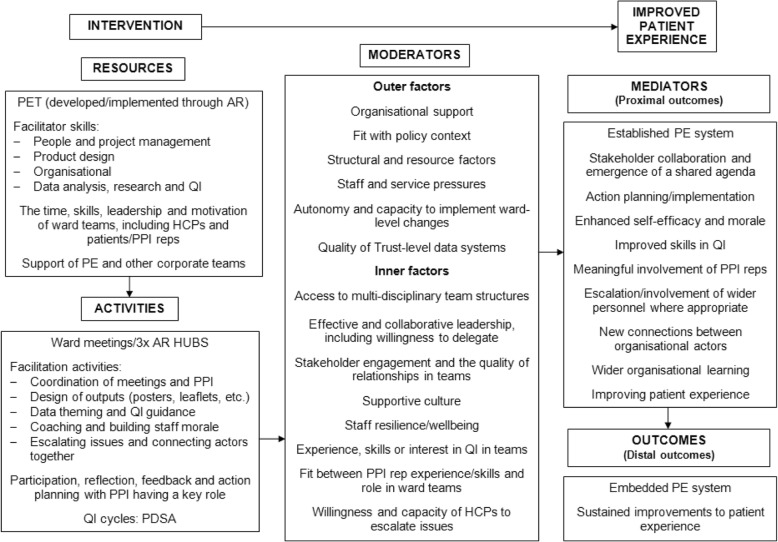
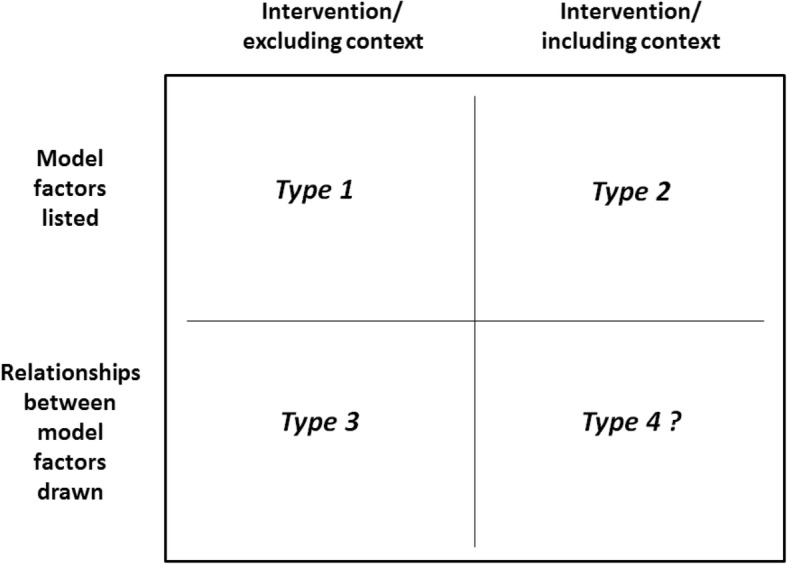
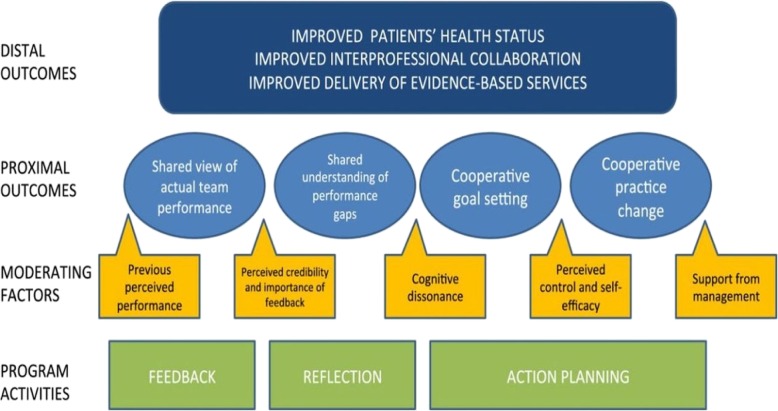
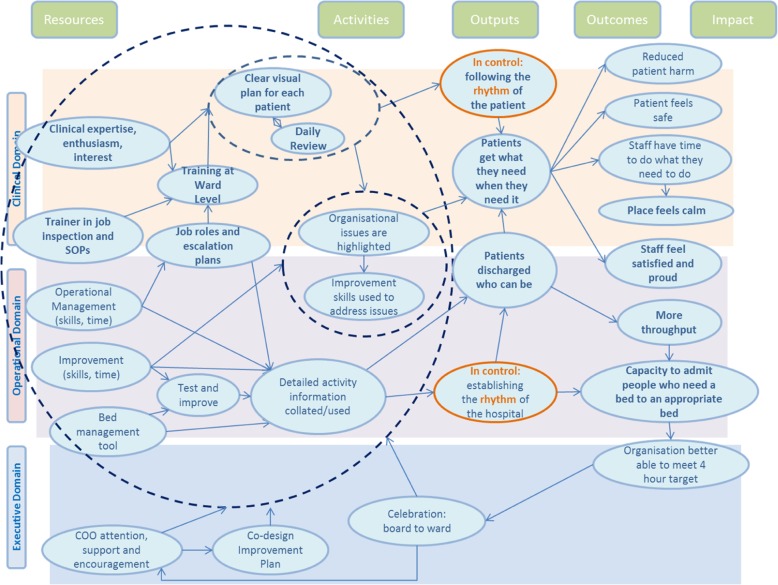
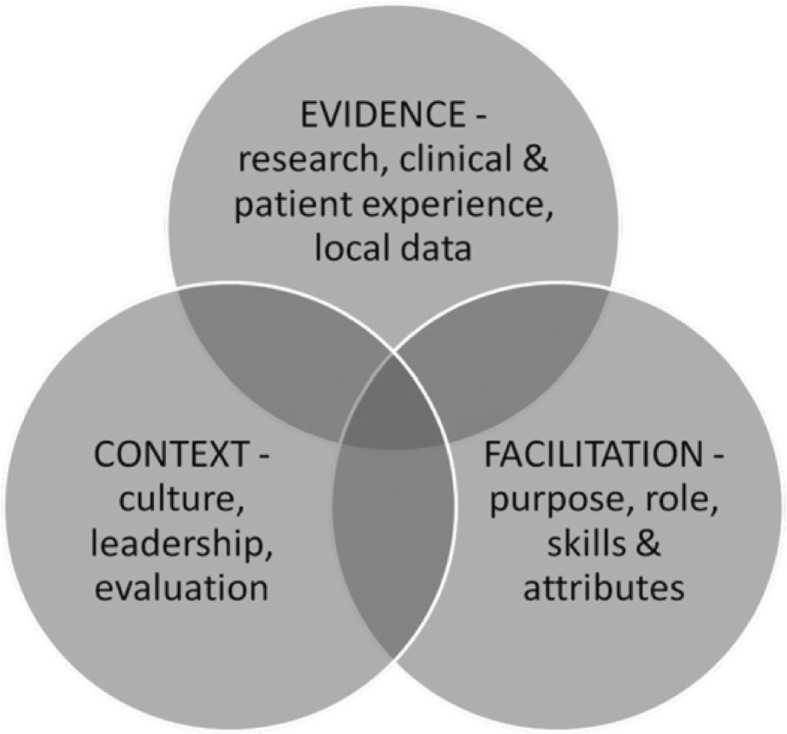
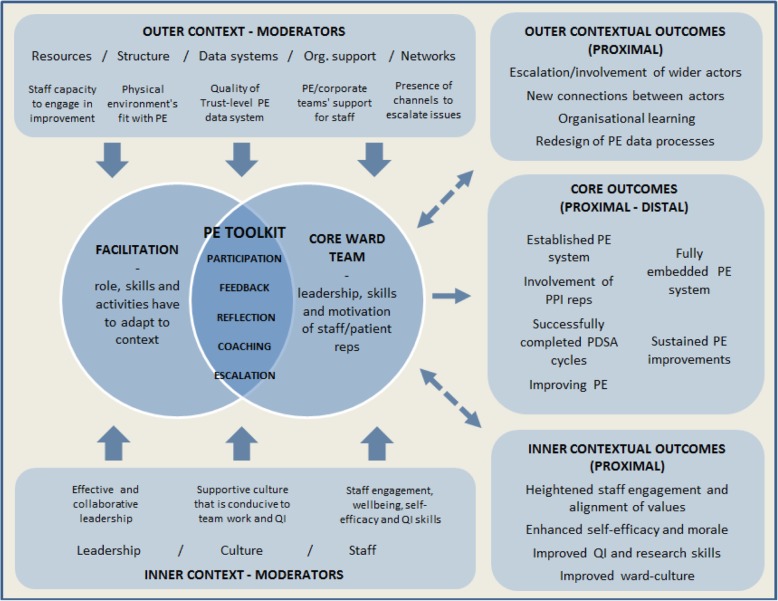
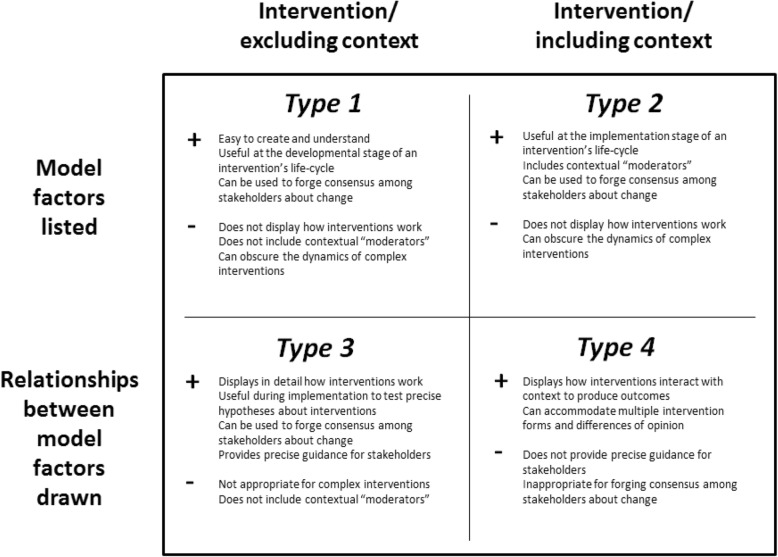
BACKGROUND: Logic models are commonly used in evaluations to represent the causal processes through which interventions produce outcomes, yet significant debate is currently taking place over whether they can describe complex interventions which adapt to context. This paper assesses the logic models used in healthcare research from a complexity perspective. A typology of existing logic models is proposed, as well as a formal methodology for deriving more flexible and dynamic logic models. ANALYSIS: Various logic model types were tested as part of an evaluation of a complex Patient Experience Toolkit (PET) intervention, developed and implemented through action research across six hospital wards/departments in the English NHS. Three dominant types of logic model were identified, each with certain strengths but ultimately unable to accurately capture the dynamics of PET. Hence, a fourth logic model type was developed to express how success hinges on the adaption of PET to its delivery settings. Aspects of the Promoting Action on Research Implementation in Health Services (PARIHS) model were incorporated into a traditional logic model structure to create a dynamic "type 4" logic model that can accommodate complex interventions taking on a different form in different settings. CONCLUSION: Logic models can be used to model complex interventions that adapt to context but more flexible and dynamic models are required. An implication of this is that how logic models are used in healthcare research may have to change. Using logic models to forge consensus among stakeholders and/or provide precise guidance across different settings will be inappropriate in the case of complex interventions that adapt to context. Instead, logic models for complex interventions may be targeted at facilitators to enable them to prospectively assess the settings they will be working in and to develop context-sensitive facilitation strategies. Researchers should be clear as to why they are using a logic model and experiment with different models to ensure they have the correct type.
Overview
The claims and statistics of this paper haven’t been checked yet.
Free: it reads the open-access text and checks the first 5 claims that cite a source we can check. Create a free account to check every claim.
Integrity signals
Registry
Cites
Statistics
Figures
Verification
Claims the paper makes
The claims and statistics of this paper haven’t been checked yet.
Free: it reads the open-access text and checks the first 5 claims that cite a source we can check. Create a free account to check every claim.
Claims other papers make about this one
Each is checked against this paper’s own text: does it say what the citing paper says it does?
In the citing paper
“Logic models illustrate causal relationships between service inputs, resultant activities, outputs and goals, emphasising the contributory factors to successful programmes.101”
Self-check
Percentages, sums and reported differences re-computed from the paper’s own numbers.
The self-check needs the paper’s full text.
Citations
Cites
Dilemmas in a general theory of planning
Rittel, H. W. J., & Webber, M. M. (1973) · Policy Sciences · doi:10.1007/bf01405730 · Cited by 16,338
Scoping studies: advancing the methodology
Levac, D., Colquhoun, H., & O'Brien, K. K. (2010) · Implementation Science · doi:10.1186/1748-5908-5-69 · Cited by 15,268
Gale, N. K., Heath, G., Cameron, E., Rashid, S., & Redwood, S. (2013) · BMC Medical Research Methodology · doi:10.1186/1471-2288-13-117 · Cited by 10,865
Process evaluation of complex interventions: Medical Research Council guidance
Moore, G. F., Audrey, S., Barker, M., Bond, L., Bonell, C., Hardeman, W., Moore, L., O'Cathain, A., Tinati, T., Wight, D., et al. (2015) · BMJ · doi:10.1136/bmj.h1258 · Cited by 6,204 · cited 3×
“For their advocates, they can be useful to help evaluators develop understanding of exactly how interventions produce outcomes [1, 3], to organise empirical data and specify process and outcome measures for the purposes of evaluation [8] and/or to provide a talking point for stakeholders to forge consensus on the need…”
BackgroundMethodInfluentialMaking sense of implementation theories, models and frameworks
Nilsen, P. (2015) · Implementation Science · doi:10.1186/s13012-015-0242-0 · Cited by 4,447
Theorising interventions as events in systems
Hawe, P., Shiell, A., & Riley, T. (2009) · American Journal of Community Psychology · doi:10.1007/s10464-009-9229-9 · Cited by 1,143
Pfadenhauer, L. M., Gerhardus, A., Mozygemba, K., Lysdahl, K. B., Booth, A., Hofmann, B., Wahlster, P., Polus, S., Burns, J., Brereton, L., et al. (2017) · Implementation Science · doi:10.1186/s13012-017-0552-5 · Cited by 1,016 · cited 1×
“However, because complex interventions adapt to contexts through a flexible facilitation function, making them “inextricably linked” to implementation and context [29], a new role for type 4 logic models emerges: to guide how future users of complex interventions adapt them to context.”
BackgroundUsing Programme Theory to Evaluate Complicated and Complex Aspects of Interventions
Rogers, P. J. (2008) · Evaluation · doi:10.1177/1356389007084674 · Cited by 999
Studying complexity in health services research: desperately seeking an overdue paradigm shift
Greenhalgh, T., & Papoutsi, C. (2018) · BMC Medicine · doi:10.1186/s12916-018-1089-4 · Cited by 962
Purposeful Program Theory: Effective Use of Theories of Change and Logic Models
Funnell, S., & Rogers, P. (2011) · RMIT Research Repository (RMIT University Library) · Cited by 897
Research works printed but not linked: 2
- Bakewell O, Garbutt A. The use and abuse of the logical framework approach: a review of international development NGO’s experiences. 2015. https://www.alnap.org/help-library/the-use-and-abuse-of-the-logical-framework-approach. Accessed 08 March 2019.
- Cochrane Developing Logic Models, Cochrane Infectious Diseases, Effective Healthcare Research Consortium 2016
Cited by
Items 201–246 of 246
Duan, Y., Wang, J., Lanham, H. J., Berta, W. B., Chamberlain, S. A., Hoben, M., Choroschun, K., Iaconi, A., Song, Y., Perez, J. S., et al. (2024) · Figshare · doi:10.6084/m9.figshare.25996995
Backhouse, M. R., Parker, D., Morison, S. C., Anderson, J., Cockayne, S., & Adamson, J. A. (2022) · Figshare · doi:10.6084/m9.figshare.19582224
Interdisciplinary Approaches to Enhancing Child and Adolescent Mental Health in Schools
(2026) · Frontiers research topics · doi:10.3389/978-2-8325-8053-0
Understanding the impact of design thinking on organizations and individuals
Mayer, S. (2024) · publish.UP (University of Potsdam) · doi:10.25932/publishup-65154
Investigating Variation in Six-Month Post-Stroke Reviews
Holmes, R. (2026) · Lancaster EPrints (Lancaster University) · doi:10.17635/lancaster/thesis/3295
Petersen, A. P., Schmid, J. M., Hviid‐Vyff, B., Hoffmann, H. J., & Finderup, J. (2026) · Scandinavian Journal of Caring Sciences · doi:10.1111/scs.70208
Jones, N. (2024) · White Rose eTheses Online (University of Leeds, The University of Sheffield, University of York)
Astrup, K., Dreyer, P., Nedergaard, H. K., Rolving, N., Svenningsen, H., Alrø, A. B., Jørgensen, M. M., Hanifa, A. L. B., Jensen, H. I., Ågård, A. S., et al. (2026) · BMC Health Services Research · doi:10.1186/s12913-026-15036-6
Pensamiento e instrumentalización de la complejidad universitaria en el mundo VUCA
Álvarez, D., Ocampo, A. L. M., & García, D. N. M. (2025) · REVISTA GEN · doi:10.52043/gen.v2i8.250
Lernpsychologische Perspektive
von Lengerke, T., & Franzkowiak, P. (2026) · doi:10.5680/bioeg:lb-i074-1.0
Coldwell, M., Culliney, M., & Moore, N. (2026) · Edward Elgar Publishing eBooks · doi:10.4337/9781035326785.00028
von Mandelsloh, F. (2026) · Media (https://www.suub.uni-bremen.de/) · doi:10.26092/elib/6511
Ammenwerth, E., Hörhammer, I., & Bindel, M. (2026) · JMIR Medical Informatics · doi:10.2196/87848
Sun, Y., Li, H., Tekin, A., Bogojevic, M., Flurin, L., Heise, K. J., Kashyap, R., Finch, A. J., Niven, A., Gajic, O., et al. (2021) · Research Square · doi:10.21203/rs.3.rs-708566/v1
Young, D. K. (2026) · UEA Digital Repository (University of East Anglia)
Muhammad, D. G., Foster, N. E., Pelaez, M., O'Leary, K. T., Ackerman, I. N., & Quicke, J. G. (2026) · Arthritis Care & Research · doi:10.1002/acr.80196
Redgate, S. (2020) · Northumbria Research Link (Northumbria University)
Lampridou, S. (2026) · Spiral (Imperial College London) · doi:10.25560/131213
Skene, I. (2024) · Queen Mary Research Online (Queen Mary University of London)
A different kind of evidence: A public health intervention study implemented in a legal setting
McDonald, G. (2024) · Otago University Research Archive (University of Otago)
Trim, P. R. J., Trim, R. C. L., & Lee, Y. (2026) · Strategic Change · doi:10.1002/jsc.70137
How can deprescribing be safely and routinely implemented within primary care?
Okeowo, D. A. (2023) · White Rose eTheses Online (University of Leeds, The University of Sheffield, University of York)
Blomqvist, A. (2024) · Linköping University medical dissertations · doi:10.3384/9789180757508
Alshaibani, F. (2024) · Nottingham ePrints (University of Nottingham)
Bird, E. L. (2020) · UWE Research Repository (UWE Bristol)
Buck, D., O’Neill, A., Mulligan, L. D., Ware, S. R., Shaw, J. J., Robinson, C., Lennox, C., Robinson, L., Senior, J., Heathcote, L., et al. (2026) · Mental Health Science · doi:10.1002/mhs2.70041
Optimising the delivery of substance use interventions for young people in rural communities
Snowdon, N. (2024) · UNSWorks (University of New South Wales, Sydney, Australia) · doi:10.26190/unsworks/28789
Detollenaere, J., Lenoir, D., Vos, B., D’Hollander, K., Goossens, L., Verbeken, S., & Leroy, R. (2026) · doi:10.57598/r431c
Additional file 1 of Fundamental challenges in assessing the impact of research infrastructure
Zakaria, S., Grant, J., & Luff, J. (2021) · Figshare · doi:10.6084/m9.figshare.15253701
Additional file 2 of Fundamental challenges in assessing the impact of research infrastructure
Zakaria, S., Grant, J., & Luff, J. (2021) · Figshare · doi:10.6084/m9.figshare.15253707
Launholt, T. L., Larsen, P., & Kristensen, H. K. (2026) · Primary Health Care Research & Development · doi:10.1017/s1463423626101996
The Research Logic Model Process: A Pragmatic Approach to Planning a Research Trajectory
Baker, N. A., & Coster, W. (2026) · International Medical Education · doi:10.3390/ime5040113
Über den Einsatz logischer Modelle in der Pflegeforschung
Silies, K., & Balzer, K. (2020) · Pflege · doi:10.1024/1012-5302/a000721
Verheyden, M., Burgraff, B. J., & Wanzer, D. L. (2022) · Evaluation and Program Planning · doi:10.1016/j.evalprogplan.2022.102101
Validação do modelo lógico da assistência integral às crianças com síndrome congênita da Zika
de Freitas, D. A., Souza‐Santos, R., Dias, S., Domingues, R. M. S. M., & Wakimoto, M. D. (2025) · Cadernos de Saúde Pública · doi:10.1590/0102-311xpt051924
การพัฒนาตัวชี้วัดศักยภาพชุมชนในการส่งเสริมการออกกำลังกาย
ต่วนชะเอม, ก. (2022) · Academic Journal of Thailand National Sports University · doi:10.14456/tnsujournal.2022.82
Kamvura, T. T., Turner, J., Chiriseri, E., Dambi, J. M., Verhey, R., & Chibanda, D. (2021) · Figshare · doi:10.6084/m9.figshare.16576104
Bridge, G., Wills, J., Oha, J. T., Mills, T., Radomska, A., & Sykes, S. (2026) · Health Expectations · doi:10.1111/hex.70650
Self-citation日本の森林吸収源対策のロジックの整理—ネットゼロエミッションの達成に必要な森林吸収源の評価に向けて—
Makoto, E., Takuya, F., Takeshi, T., Akiko, H., Hisao, S., Kitahara, F., Takuya, M., Shigehiro, I., Takashi, Y., Shoji, H., et al. (2025) · Institutional Repositories DataBase (IRDB)
Application of Deep Learning Algorithm in Visual Communication for Learning Behavior
Zhou, G. (2026) · International Journal of Information Technologies and Systems Approach · doi:10.4018/ijitsa.411703
Kusuma, L. P., Praswati, A. N., & Romadhon, Y. A. (2026) · Proceeding ISETH (International Summit on Science Technology and Humanity) · doi:10.23917/iseth.7087
Bauer, A., Best, S., Malley, J., Christiansen, H., Goodyear, M., Zechmeister-Koss, I., & Paul, J. (2021) · doi:10.3389/fpsyt.2021.741225.s001
Metadata
- Authors
- Mills, T., Lawton, R., & Sheard, L.
- Affiliations
- Bradford Royal Infirmary (GB)
- Corresponding author
- Mills, Thomas
- Venue
- BMC Medical Research Methodology
- Published
- 2019-03-12
- Volume
- 19
- Issue
- 1
- Pages
- 55-55
- ISSN
- 1471-2288 (ISSN-L)
- PMC
- PMC6419426
- OpenAlex
- W2930947912
- Cited by
- 190
- References
- 28
- Citations by year
- 2026: 18 · 2025: 30 · 2024: 32 · 2023: 26 · 2022: 29 · 2021: 32 · 2020: 22 · 2019: 1
- FWCI
- 15.02
- Type
- journal article
- Language
- en
- Open access
- gold
- doi.org
- Licence
- cc-by
- creativecommons.org/licenses/by/4.0/ (tdm)
- Locations
- BMC Medical Research Methodology (publishedVersion, cc-by)
- Europe PMC (PubMed Central) (publishedVersion, other-oa)
- PubMed Central (publishedVersion, cc-by)
- PubMed (publishedVersion)
- White Rose Research Online (University of Leeds, The University of Sheffield, University of York) (acceptedVersion)
- Research Open (London South Bank University) (acceptedVersion, cc-by)
- DOAJ (DOAJ: Directory of Open Access Journals) (submittedVersion, cc-by-sa)
- Research Open (London South Bank University) (submittedVersion, cc-by)
- Funders
- Health Services and Delivery Research Programme (14/156/32)
- Topics
- Social Sciences › Public Administration › Evaluation and Performance Assessment
- Health Sciences › Health Professions › General Health Professions › Health Policy Implementation Science
- Physical Sciences › Mathematics › Statistics and Probability › Advanced Causal Inference Techniques
- Keywords
- logic model, complex interventions, complexity science, intervention evaluation, facilitation techniques, health care research
- MeSH terms
- Data Collection, Delivery of Health Care, Health Resources, Health Services Research, Humans, Logic, Models, Theoretical, Research Design, Qualitative Research
About these checks
Registry, retraction, Cites and statistics results are computed, not judged, with one exception: a printed reference that no index lists is read once by a model before it counts as a citation error. Claims are extracted by a model and kept only when their quote appears verbatim in the text; each cited source is then checked, with a model’s help, for whether it says what the claim relies on. Those verdicts can be wrong — read the claim’s quote and the cited source before relying on one.
Statistics and arithmetic are recomputed, not judged.
Confidence bands are shown only for fields calibrated on our annotated test set. None is calibrated yet, so no band is shown.
What counts as a claim ›How we measure confidence ›How we check this ›
Are you an author, or do you see a problem with this page? Request a review
Data sources
Bibliographic data: Semantic Scholar, OpenAlex, Crossref.
Contains information from the Semantic Scholar Academic Graph Datasets, made available under the ODC Attribution License (ODC-BY 1.0).
Semantic Scholar’s data is described in: Kinney, R., et al. (2023). The Semantic Scholar Open Data Platform. arXiv:2301.10140.
