

The DOI matches its Crossref record; 28 of the 28 references it cites were found in a registry or an index.
Improving design choices in Delphi studies in medicine: the case of an exemplary physician multi-round panel study with 100% response
Open accessAbstract
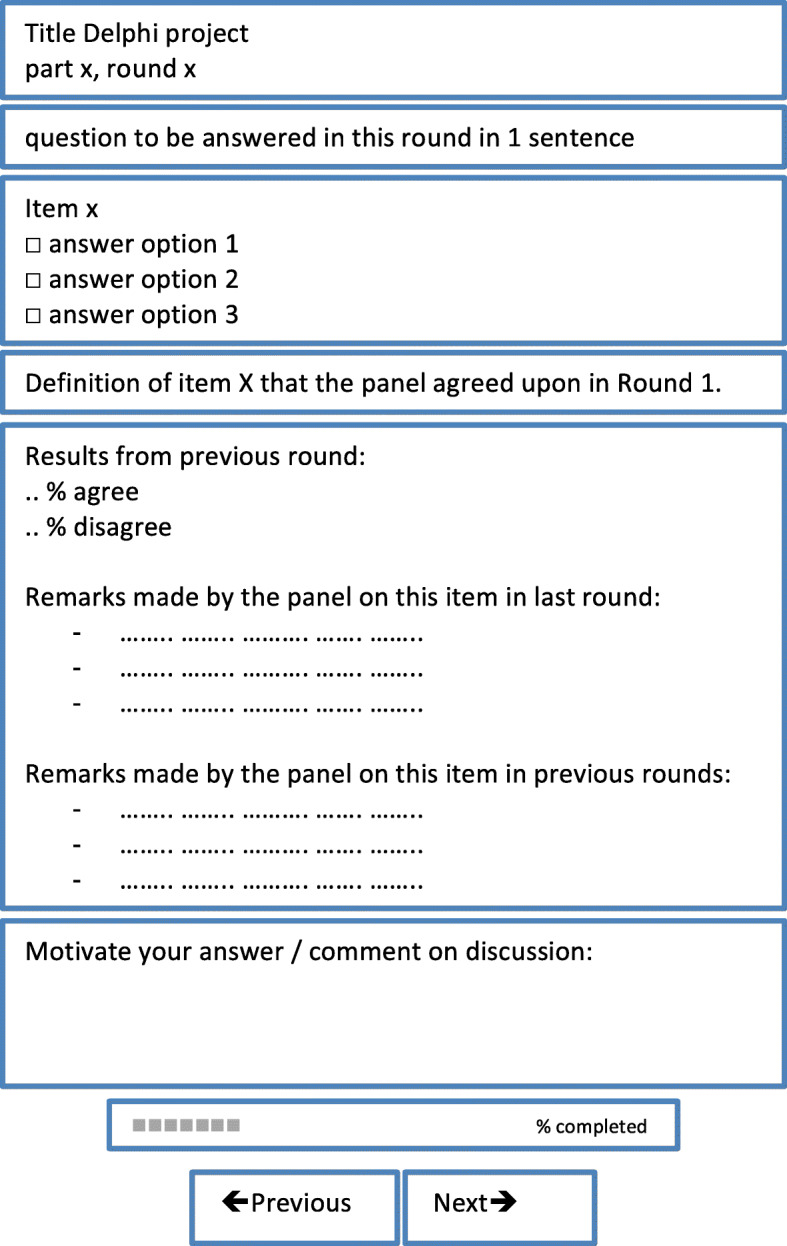
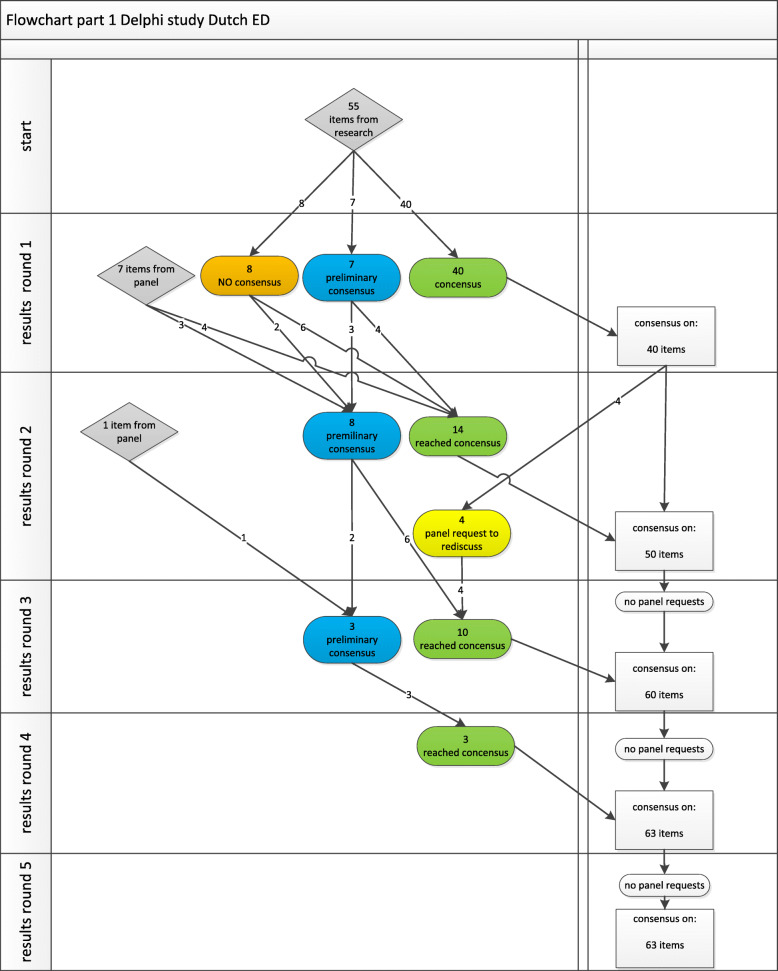
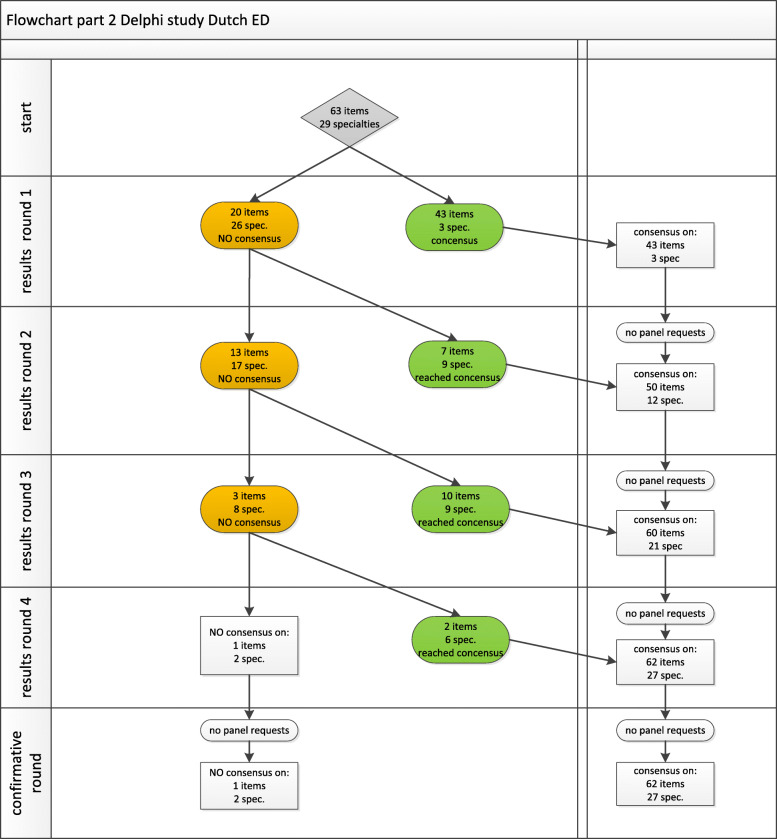
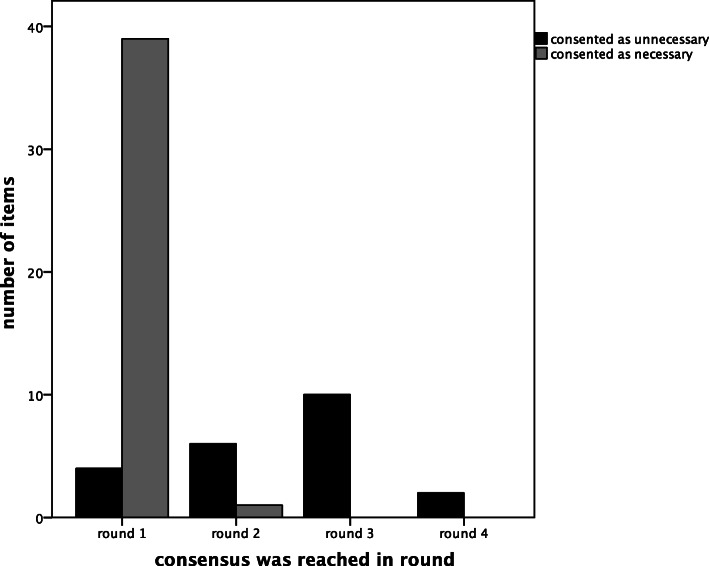
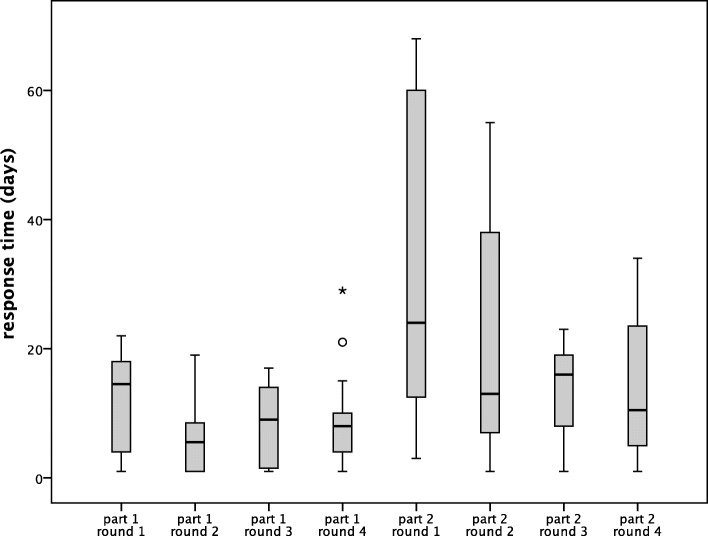
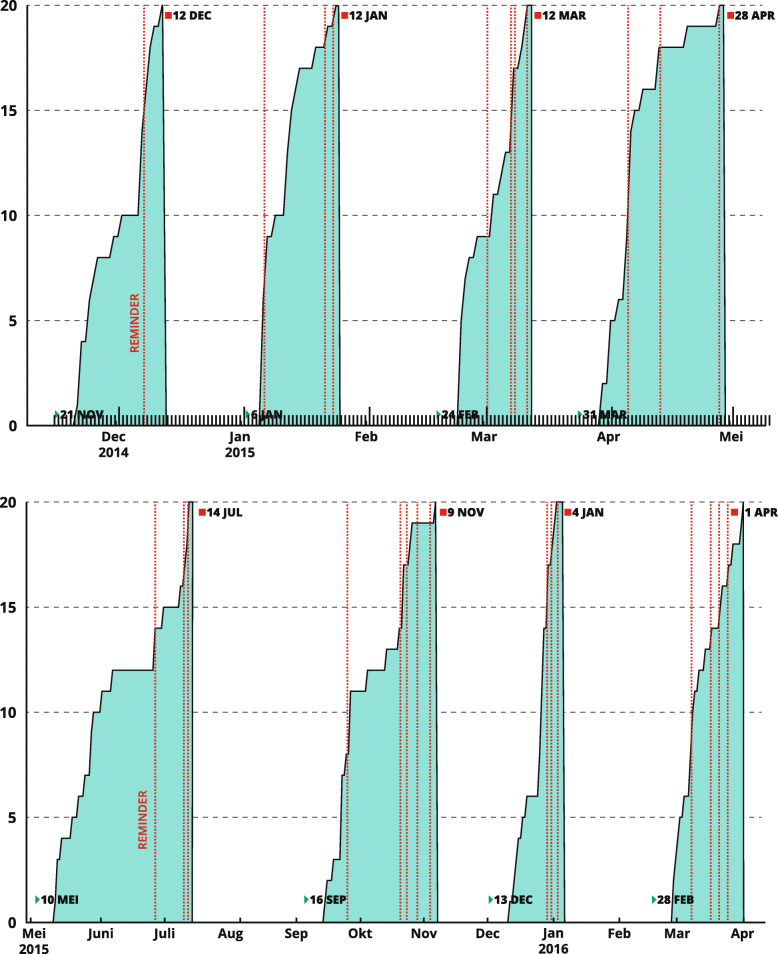
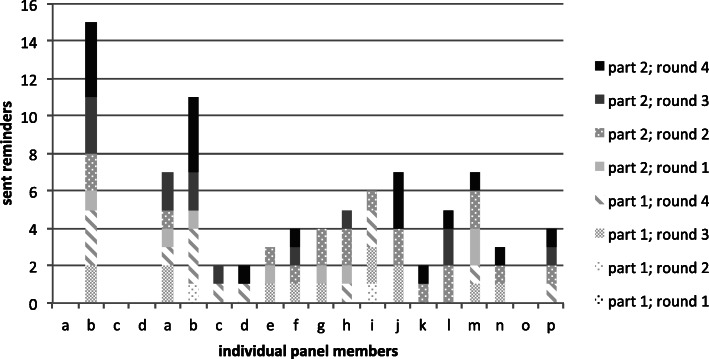
BACKGROUND: A proper application of the Delphi technique is essential for obtaining valid research results. Medical researchers regularly use Delphi studies, but reports often lack detailed information on methodology and controlled feedback: in the medical literature, papers focusing on Delphi methodology issues are rare. Since the introduction of electronic surveys, details on response times remain scarce. We aim to bridge a number of gaps by providing a real world example covering methodological choices and response times in detail. METHODS: The objective of our e(lectronic)-Delphi study was to determine minimum standards for emergency departments (EDs) in the Netherlands. We opted for a two-part design with explicit decision rules. Part 1 focused on gathering and defining items; Part 2 addressed the main research question using an online survey tool. A two-person consensus rule was applied throughout: even after consensus on specific items was reached, panellists could reopen the discussion as long as at least two panellists argued similarly. Per round, the number of reminders sent and individual response times were noted. We also recorded the methodological considerations and evaluations made by the research team prior to as well as during the study. RESULTS: The study was performed in eight rounds and an additional confirmation round. Response rates were 100% in all rounds, resulting in 100% consensus in Part 1 and 96% consensus in Part 2. Our decision rules proved to be stable and easily applicable. Items with negative advice required more rounds before consensus was reached. Response delays were mostly due to late starts, but once panellists started, they nearly always finished the questionnaire on the same day. Reminders often yielded rapid responses. Intra-individual differences in response time were large, but quick responders remained quick. CONCLUSIONS: We advise those considering Delphi study to follow the CREDES guideline, consider a two-part design, invest in personal commitment of the panellists, set clear decision rules, use a consistent lay-out and send out your reminders early. Adopting this overall approach may assist researchers in future Delphi studies and may help to improve the quality of Delphi designs in terms of improved rigor and higher response rates.
Overview
The claims and statistics of this paper haven’t been checked yet.
Run the check — free, no account needed. It reads the open-access text and checks the sources it cites.
Integrity signals
Registry
Cites
Statistics
Figures
Verification
Claims the paper makes
The claims and statistics of this paper haven’t been checked yet.
Run the check — free, no account needed. It reads the open-access text and checks the sources it cites.
Claims other papers make about this one
Each is checked against this paper’s own text: does it say what the citing paper says it does?
The cited source doesn’t support the claim as written.
In the citing paper
“Although the Delphi method does not state a predetermined number of panelists, the recommended number to achieve consensus in healthcare is 20 (39).”
From Identifying social media professionalism competencies in Vietnamese medical students: a modified Delphi method (2026) · cites this paper as [39]
Checked by a reasoning model — may be wrong.
Experimental — accuracy not yet measured
Self-check
Percentages, sums and reported differences re-computed from the paper’s own numbers.
The self-check needs the paper’s full text.
Citations
Cites
Social Influence: Compliance and Conformity
Cialdini, R. B., & Goldstein, N. J. (2004) · Annual Review of Psychology · doi:10.1146/annurev.psych.55.090902.142015 · Cited by 6,077
An Experimental Application of the DELPHI Method to the Use of Experts
Dalkey, N., & Helmer, O. (1963) · Management Science · doi:10.1287/mnsc.9.3.458 · Cited by 6,061
Research guidelines for the Delphi survey technique
Hasson, F. (2000) · Journal of Advanced Nursing · doi:10.1046/j.1365-2648.2000.01567.x · Cited by 5,951
The Delphi method as a research tool: an example, design considerations and applications
Okoli, C., & Pawlowski, S. D. (2004) · Information & Management · doi:10.1016/j.im.2003.11.002 · Cited by 4,771
Diamond, I. R., Grant, R. C., Feldman, B. M., Pencharz, P. B., Ling, S. C., Moore, A. M., & Wales, P. W. (2014) · Journal of Clinical Epidemiology · doi:10.1016/j.jclinepi.2013.12.002 · Cited by 3,740
The Delphi Method: Techniques and Applications
J., J. E., Linstone, H. A., & Turoff, M. (1976) · Technometrics · doi:10.2307/1268751 · Cited by 2,277
Jünger, S., Payne, S. A., Brine, J., Radbruch, L., & Brearley, S. G. (2017) · Palliative Medicine · doi:10.1177/0269216317690685 · Cited by 2,210
Boulkedid, R., Abdoul, H., Loustau, M., Sibony, O., & Alberti, C. (2011) · PLoS ONE · doi:10.1371/journal.pone.0020476 · Cited by 2,045
Consulting the oracle: ten lessons from using the Delphi technique in nursing research
Keeney, S., Hasson, F., & McKenna, H. (2006) · Journal of Advanced Nursing · doi:10.1111/j.1365-2648.2006.03716.x · Cited by 1,511
Current validity of the Delphi method in social sciences
Landeta, J. (2006) · Technological Forecasting and Social Change · doi:10.1016/j.techfore.2005.09.002 · Cited by 1,353
Research works printed but not linked: 1
- Helmer O. Social technology. New York: Basic Books; 1966.
Cited by
Sorted by citations
Kocak, B., Baessler, B., Bakas, S., Cuocolo, R., Fedorov, A., Maier-Hein, L., Mercaldo, N., Müller, H., Orlhac, F., Pinto dos Santos, D., et al. (2023) · Insights into Imaging · doi:10.1186/s13244-023-01415-8 · Cited by 471
Gattrell, W. T., Hungin, A. P. S., Price, A. I., Winchester, C., Tovey, D. I., Hughes, E. L., van Zuuren, E. J., Goldman, K., Logullo, P., Matheis, R. J., et al. (2022) · Research Integrity and Peer Review · doi:10.1186/s41073-022-00122-0 · Cited by 115
Rongo, R., Ekberg, E., Nilsson, I., Al‐Khotani, A., Alstergren, P. J., Conti, P. C. R., Durham, J., Goulet, J., Hirsch, C., Kalaykova, S., et al. (2021) · Journal of Oral Rehabilitation · doi:10.1111/joor.13175 · Cited by 115
How to Reduce Stigma and Bias in Clinical Communication: a Narrative Review
Healy, M. E., Richard, A., & Kidia, K. K. (2022) · Journal of General Internal Medicine · doi:10.1007/s11606-022-07609-y · Cited by 132
Logullo, P., van Zuuren, E. J., Winchester, C., Tovey, D. I., Gattrell, W. T., Price, A. I., Harrison, N., Goldman, K., Chisholm, A., Walters, K., et al. (2024) · PLoS Medicine · doi:10.1371/journal.pmed.1004390 · Cited by 77
Giagio, S., Salvioli, S., Innocenti, T., Gava, G., Vecchiato, M., Pillastrini, P., & Turolla, A. (2022) · British Journal of Sports Medicine · doi:10.1136/bjsports-2022-105985 · Cited by 47
RAND Methodological Guidance for Conducting and Critically Appraising Delphi Panels
Khodyakov, D., Grant, S., Kroger, J., & Bauman, M. (2023) · RAND Corporation eBooks · doi:10.7249/tla3082-1 · Cited by 55
Revising the advanced access model pillars: a multimethod study
Breton, M., Gaboury, I., Beaulieu, C., Sasseville, M., Hudon, C., Malham, S. A., Maillet, L., Duhoux, A., Rodrigues, I., & Haggerty, J. L. (2022) · CMAJ Open · doi:10.9778/cmajo.20210314 · Cited by 44
Hirzallah, M., Lochner, P., Hafeez, M. U., Lee, A. G., Krogias, C., Dongarwar, D., Manchanda, R., Ouellette, L., Hartman, N. D., Ertl, M., et al. (2022) · Journal of Neuroimaging · doi:10.1111/jon.13018 · Cited by 40
Developing ESG Evaluation Guidelines for the Tourism Sector: With a Focus on the Hotel Industry
Bae, J.-H. (2022) · Sustainability · doi:10.3390/su142416474 · Cited by 34
Anderson, A. M., Comer, C. M., Smith, T. O., Drew, B. T., Pandit, H. G., Antcliff, D., Redmond, A. C., & McHugh, G. A. (2021) · BMC Musculoskeletal Disorders · doi:10.1186/s12891-021-04160-5 · Cited by 36
Framework for Adoption of Next-Generation Sequencing (NGS) Globally in the Oncology Area
Horgan, D., Hamdi, Y., Lal, J. A., Nyawira, T., Meyer, S., Kondji, D., Francisco, N. M., Guzman, R. B. D., Paul, A., Bernard, B., et al. (2023) · Healthcare · doi:10.3390/healthcare11030431 · Cited by 35
La motivación docente para obtener calidad educativa en instituciones de educación superior
Franco-López, J. A. (2021) · Revista Virtual Universidad Católica del Norte · doi:10.35575/rvucn.n64a7 · Cited by 33
Niederberger, M., & Homberg, A. (2023) · MethodsX · doi:10.1016/j.mex.2023.102156 · Cited by 28
Consenso experto en tiempos de COVID-19: aplicaciones del método Delphi en materia de salud
Perales-Torres, A. L., Bustamante-Fuentes, A., Díaz-Badillo, Á., Nava‐González, E. J., López-Sosa, E. B., García-Oropesa, E. M., Síntevi, G., Martínez‐Ezquerro, J. D., López-Alvarenga, J. C., Pérez-Navarro, L. M., et al. (2020) · Cirugía y Cirujanos · doi:10.24875/ciru.20000936 · Cited by 23
Media competencies for nurses: A Delphi study
Myers, C. R., Muñoz, L. R., Mason, D. J., & Glickstein, B. A. (2022) · Nursing Outlook · doi:10.1016/j.outlook.2022.03.008 · Cited by 19
Nguyen, P.-H. (2022) · Mathematical Problems in Engineering · doi:10.1155/2022/4249079 · Cited by 19
Global Practices in Cardiac Imaging for Cardiac Sarcoidosis
Kafil, T. S., Neto, M. L. R., Judson, M. A., Cooper, L. T., Kron, J., Grutters, J. C., BIRNIE, D. H., Witteles, R. M., Joyce, E., Miller, E. J., et al. (2025) · JACC. Cardiovascular imaging · doi:10.1016/j.jcmg.2025.02.010 · Cited by 18
Proposal for a critical appraisal tool for studies using the Delphi method (DCAT)
Grant, S., & Khodyakov, D. (2025) · BMJ · doi:10.1136/bmj-2025-084509 · Cited by 21
Fu, Q., Liu, Y., Chen, S., Zhang, L.-Z., Liu, W., Liu, Z., Liu, Y., Xie, Y., Fu, L., Liu, M., et al. (2024) · Phytomedicine · doi:10.1016/j.phymed.2024.155487 · Cited by 16
Chopra, D., Anand, N. C., Brito, S., Coutts, P. M., George, R., Kimball, A. B., Kirsner, R. S., Alavi, A., & Lev‐Tov, H. A. (2023) · Journal of the American Academy of Dermatology · doi:10.1016/j.jaad.2023.07.1037 · Cited by 15
Birchall, O., Bennett, M., Lawson, N., Cotton, S., & Vogel, A. P. (2021) · Dysphagia · doi:10.1007/s00455-021-10296-2 · Cited by 14
Breton, M., Gaboury, I., Sasseville, M., Beaulieu, C., Malham, S. A., Hudon, C., Rodrigues, I., Maillet, L., Duhoux, A., Deville‐Stoetzel, N., et al. (2021) · BMJ Open · doi:10.1136/bmjopen-2020-046411 · Cited by 13
Kıral, I. A. (2025) · Buildings · doi:10.3390/buildings15203806 · Cited by 12
Standards for Scaffolding in Health Sciences Programmes: A Delphi Consensus Study
Masava, B., Nyoni, C. N., & Botma, Y. (2023) · Journal of Medical Education and Curricular Development · doi:10.1177/23821205231184045 · Cited by 12
Davids, J. R., Shilt, J., Kay, R. M., Dreher, T., Shore, B. J., McCarthy, J. J., Shrader, M. W., Graham, H. K., Veerkamp, M. W., Narayanan, U. G., et al. (2022) · Journal of Children s Orthopaedics · doi:10.1177/18632521221084183 · Cited by 13
Es, M. K.-V., Erasmus, C. E., Voet, N. B. M., van den Engel-Hoek, L., & van der Wees, P. J. (2023) · International Journal of Speech-Language Pathology · doi:10.1080/17549507.2023.2181224 · Cited by 13
Martins, A. I., Santinha, G. A. D. S., Almeida, A. M., Ribeiro, Ó. M., Silva, T., Rocha, N. P., & Silva, A. G. (2023) · Journal of Medical Internet Research · doi:10.2196/44326 · Cited by 12
van der Scheer, J. W., Woodward, M., Ansari, A., Draycott, T. J., Winter, C., Martin, G. P., Kuberska, K., Richards, N., Kern, R., Dixon‐Woods, M., et al. (2021) · BMC Medical Research Methodology · doi:10.1186/s12874-021-01288-9 · Cited by 14
Nawagi, F., Munabi, I. G., Vyt, A., Kiguli, S., Rabin, T. L., Waggie, F., & Mubuuke, A. G. (2023) · Frontiers in Medicine · doi:10.3389/fmed.2023.1225475 · Cited by 11
Fontrier, A.-M., Kamphuis, B. W., & Kanavos, P. G. (2023) · The European Journal of Health Economics · doi:10.1007/s10198-023-01637-z · Cited by 10
Blended Learning Delivery Methods for a Sustainable Learning Environment: A Delphi Study
Alammary, A. S. (2024) · Sustainability · doi:10.3390/su16083269 · Cited by 10
Tardive dyskinesia versus tardive syndrome. What is in a name?
Frei, K. P., Scott, A., Caroff, S. N., Jankovic, J. J., Ondo, W. G., Citrome, L., Hauser, R. A., Friedman, J. H., Bhidayasiri, R., Sajatovic, M., et al. (2025) · Parkinsonism & Related Disorders · doi:10.1016/j.parkreldis.2025.107295 · Cited by 10
Tan, X., Ning, N., Hua, N., Wiley, J. A., & Sun, M. (2023) · Nurse Education in Practice · doi:10.1016/j.nepr.2023.103654 · Cited by 10
Heeren, P., Lombaert, L., Janssens, P., Islam, F., Flamaing, J., Sabbe, M. B., & Milisen, K. (2023) · BMC Geriatrics · doi:10.1186/s12877-023-03994-z · Cited by 10
Alammary, A. S. (2024) · Sustainability · doi:10.3390/su16124923 · Cited by 10
de Haan, F., Boon, W., Amaratunga, C., & Dondorp, A. M. (2022) · BMC Public Health · doi:10.1186/s12889-022-13212-x · Cited by 12
Larouche, R., Abadi, M. R. H., Aubert, S., Bhawra, J., Brazo‐Sayavera, J., Carson, V., Colley, R. C., Nyström, C. D., Esliger, D., Harper-Brown, R., et al. (2024) · BMJ Open · doi:10.1136/bmjopen-2023-082275 · Cited by 13
Klaver, Y. L. B., Hoogeman, M. S., Lu, Q. R., Bradley, J. D., Choi, J. I., Ferris, M. J., Grau, C., Guha, C., Lin, H., Lin, L., et al. (2025) · International Journal of Radiation Oncology*Biology*Physics · doi:10.1016/j.ijrobp.2025.03.047 · Cited by 9
Consensus on evidence-based medicine curriculum contents for healthcare schools in Brazil
de Araújo, G. A., Correia, L. C. L., Siqueira, J. R., Nogueira, L. A. C., Meziat‐Filho, N., Costa, L. O. P., & dos Reis, F. J. J. (2021) · BMJ Evidence-Based Medicine · doi:10.1136/bmjebm-2020-111397 · Cited by 9
Mersha, A. G., Kennedy, M., Eftekhari, P., Lee, K. S., Upton, P., Segan, C., Jackson, M. A., Jennings, K., & Gould, G. S. (2023) · BMC Public Health · doi:10.1186/s12889-023-16278-3 · Cited by 9
Development and validation of the Telehealth Etiquette Competency Checklist: A Delphi study
Pittmann, R., Danaher‐Garcia, N., White, B. A. A., & Thompson, A. (2024) · Journal of Telemedicine and Telecare · doi:10.1177/1357633x241279494 · Cited by 9
Reilly, J. J., Andrew, R., Abdeta, C., Azevedo, L. B., Aguilar-Farías, N., Barak, S., Bardid, F., Bizzozero‐Peroni, B., Brazo‐Sayavera, J., Cagas, J. Y., et al. (2024) · Sports Medicine · doi:10.1007/s40279-024-02104-2 · Cited by 8
Porat‐Dahlerbruch, J., Clark, R. R. S., Dutchess, B., Blumenthal, N. P., & Ellen, M. (2025) · BMC Health Services Research · doi:10.1186/s12913-025-12929-w · Cited by 12
Campana, L. G., Farronato, S., Hodgetts, J., Odili, J., Vecchiato, A., Bracken, A., Baier, S., Bechara, F. G., Borgognoni, L., Caracò, C., et al. (2023) · British journal of surgery · doi:10.1093/bjs/znad105 · Cited by 8
Veldman, A., Kiewiet, M. B. G., Westra, D., Bosch, A. M., Brands, M. M. M. G., de Coo, I. F. M., Derks, T. G. J., Fuchs, S. A., van den Hout, J. M. P., Huidekoper, H. H., et al. (2023) · International Journal of Neonatal Screening · doi:10.3390/ijns9040056 · Cited by 8
Caring for the careers: A psychosocial support model for healthcare workers during a pandemic
Moyo, I., Tshivhase, L., & Mavhandu‐Mudzusi, A. H. (2023) · Curationis · doi:10.4102/curationis.v46i1.2430 · Cited by 10
Senerth, E., Whaley, P., Akl, E. A., Beverly, B., Alonso‐Coello, P., Jalil, E., Khattar, J., Palmer, N. R., Rooney, A. A., Schünemann, H. J., et al. (2024) · Environment International · doi:10.1016/j.envint.2024.109209 · Cited by 9
Zhao, M., Cheng, Z., Chen, Z., Wang, Q., & Liu, J. (2025) · BMC Public Health · doi:10.1186/s12889-025-21768-7 · Cited by 7
The participation of lifeworld experts in Delphi processes: A reflection on method and practice
Niederberger, M., & Sonnberger, M. (2025) · MethodsX · doi:10.1016/j.mex.2025.103274 · Cited by 8
Social Prescribing Outcomes for Trials (SPOT): Protocol for a modified Delphi study on core outcomes
Esfandiari, E., Chudyk, A. M., Grover, S., Lau, E. Y., Hoppmann, C. A., Mortenson, W. B., Mulligan, K., Newton, C., Pauly, T., Pitman, B., et al. (2023) · PLoS ONE · doi:10.1371/journal.pone.0285182 · Cited by 9
Volling, C., Thomas, S., Johnstone, J., Maltezou, H. C., Mertz, D., Stuart, R. L., Jamal, A. J., Kandel, C. E., Ahangari, N., Coleman, B. L., et al. (2020) · Journal of Hospital Infection · doi:10.1016/j.jhin.2020.08.024 · Cited by 6
Arcellana, A. E., Lim, K. W., Arcegono, M., & Jimeno, C. (2022) · Journal of the ASEAN Federation of Endocrine Societies · doi:10.15605/jafes.037.01.03 · Cited by 7
Zhang, Q., & Abdullah, F. (2025) · Frontiers in Communication · doi:10.3389/fcomm.2025.1702657 · Cited by 16
The Essential Elements of the Clinical Reasoning Process
Joplin-Gonzales, P., & Rounds, L. R. (2022) · Nurse Educator · doi:10.1097/nne.0000000000001202 · Cited by 5
Rouse, D., McDonald, D., & Tynan, A. (2023) · International Journal of Healthcare Management · doi:10.1080/20479700.2023.2168329 · Cited by 6
Heeren, P., Islam, F., Desruelles, D., Flamaing, J., Sabbe, M. B., Milisen, K., the Belgian URGENT Delphi Group, Heerinckx, P., Hubloue, I., Tran, T. L., et al. (2023) · BMC Geriatrics · doi:10.1186/s12877-023-04474-0 · Cited by 6
Key considerations and recommendations for recruiting older adults in physical activity studies
Lee, S., Cyma-Wejchenig, M., Alcan, V., Morais, A., Langeard, A., Attoh-Mensah, E., Epiphaniou, E., Mack, M., Gözüm, S., Ilgaz, A., et al. (2025) · BMC Medical Research Methodology · doi:10.1186/s12874-025-02659-2 · Cited by 5
Soliman, C., Thomas, B., Santaguida, P. L., Lawrentschuk, N., Mertens, E., Giannarini, G., Wuethrich, P. Y., Wu, M., Khan, M. S., Nair, R., et al. (2022) · BJUI Compass · doi:10.1002/bco2.173 · Cited by 5
van Engen, V., Bonfrer, I., Ahaus, K., & Buljac‐Samardžić, M. (2023) · Patient Education and Counseling · doi:10.1016/j.pec.2023.107642 · Cited by 5
Consensus Methods for Health Research in a Global Setting
Carter, S. A., Tong, A., Craig, J. C., Teixeira-Pinto, A. M., & Manera, K. (2023) · Springer eBooks · doi:10.1007/978-3-031-25110-8_65 · Cited by 5
Fotobiomodulação na habilitação e reabilitação vocal: consenso Delphi baseado em especialistas
Pontes, É. S., Vaiano, T., Bastos, R. S. D. A., Duarte, J. M. D. T., Santana, É. R., & Lopes, L. W. (2025) · CoDAS · doi:10.1590/2317-1782/e20230356pt · Cited by 6
Lapp, L., Bouamrane, M.-M., Roper, M., Kavanagh, K., & Schraag, S. (2022) · JMIR Perioperative Medicine · doi:10.2196/39907 · Cited by 7
Chen, C., Zheng, X., Zhang, M., Zhang, L., Chen, W., He, S., Mu, H., Hu, X., & Lang, H. (2025) · BMC Nursing · doi:10.1186/s12912-025-03050-8 · Cited by 4
Towards an agreed approach to investigate children with developmental regression
Furley, K., Hunter, M. F., Gawade, G., Absoud, M., Mehra, C., Goin‐Kochel, R. P., Fahey, M. C., & Williams, K. (2025) · BMJ Paediatrics Open · doi:10.1136/bmjpo-2025-003594 · Cited by 4
Park, Y. S., Jeon, D., Shi, S., Sheu, E. G., Tavakkoli, A., Nimeri, A. A., & Han, A. (2025) · International Journal of Surgery · doi:10.1097/js9.0000000000003631 · Cited by 5
The SMHP™ position statement on therapeutic carbohydrate reduction for type 1 diabetes
Kalayjian, T., McNally, B. J., Calkins, M. W., Cucuzzella, M. T., Cywes, R., Dikeman, H., Dikeman, D. T., Bourdua-Roy, E., Rice, S. M., Lake, I., et al. (2024) · Journal of Metabolic Health · doi:10.4102/jmh.v7i1.100 · Cited by 4
Consensus on the content of an instrument to measure person‐centred teamwork: An e‐Delphi study
Viljoen, A., Leech, R., & Heyns, T. (2024) · Journal of Clinical Nursing · doi:10.1111/jocn.17042 · Cited by 4
Lombe, D. C., Mwamba, M., Simwinga, M., Bond, V. A., Ssemata, A. S., Muhumuza, R., Seeley, J., Lishimpi, K., Mapulanga, V., Kachimba, J. S., et al. (2024) · BMJ Oncology · doi:10.1136/bmjonc-2023-000172 · Cited by 4
Cruise, D., Jaana, M., Sinden, D., & Garcia, L. (2024) · Journal of Aging & Social Policy · doi:10.1080/08959420.2024.2415172 · Cited by 4
Koh, W. Q., Casey, D., Hoel, V., & Toomey, E. C. (2022) · Implementation Science Communications · doi:10.1186/s43058-022-00308-z · Cited by 4
Liu, W., Chan, A. P. C., Darko, A., Zhang, F., Chan, M. W., & Adabre, M. A. (2025) · Engineering Construction & Architectural Management · doi:10.1108/ecam-07-2024-0931 · Cited by 3
Niederberger, M., Dieudonné, J., Schifano, J., & Vogt, S. (2025) · BMJ Open · doi:10.1136/bmjopen-2025-105878 · Cited by 3
Kaya, V. H., Bulut, M. A., & Göçen, A. (2026) · Humanities and Social Sciences Communications · doi:10.1057/s41599-026-06823-x · Cited by 4
Derendorf, L., Stock, S., Simić, D., & Lemmen, C. (2023) · BMC Health Services Research · doi:10.1186/s12913-023-09604-3 · Cited by 4
An Acupuncture Protocol for the Treatment of Erectile Dysfunction: A Delphi Process
Dahle, M. L., Alræk, T., & Musial, F. (2024) · Complementary Medicine Research · doi:10.1159/000538750 · Cited by 3
Ahmad, T., Schreyer, L., Fung, R., & Yu, C. H. Y. (2024) · PLoS ONE · doi:10.1371/journal.pone.0301603 · Cited by 3
McMahon, J., Thompson, D. R., Wilson, C. B., Hill, L., Tierney, P., Cameron, J., Yu, D. S. F., Moser, D. K., Spilsbury, K., Srisuk, N., et al. (2024) · Healthcare · doi:10.3390/healthcare12151546 · Cited by 3
Protocol to Develop a Core Outcomes Set for Peripheral Nerve Injury
Dy, C. J., Horowitz, R. S., & Brogan, D. M. (2024) · The Journal of Hand Surgery (Asian-Pacific Volume) · doi:10.1142/s2424835525500043 · Cited by 3
Mukurunge, E., Nyoni, C. N., & Hugo, L. (2024) · Nurse Education in Practice · doi:10.1016/j.nepr.2024.104240 · Cited by 3
Development of a Core Outcomes Set for Peripheral Nerve Injury
Dy, C. J., Antes, A. L., Baltzer, H. L., Chim, H., Dengler, J., Gfrerer, L., Kozin, S. H., Liu, Y. K., Novak, C. B., Power, H. A., et al. (2025) · Journal of Hand Surgery Global Online · doi:10.1016/j.jhsg.2025.02.014 · Cited by 5
Larouche, R., de Oliveira, S. N., Abadi, M. R. H., Benavides-Castro, J. K., Sarmiento, O. L., Angulo-Garay, G., Argumedo, G., Ashaolu, J. O., Baghestani, A., Bhawra, J., et al. (2025) · Journal of sport and health science/Journal of Sport and Health Science · doi:10.1016/j.jshs.2025.101074 · Cited by 3
Williams, K., Hartley, S., & Taylor, P. J. (2021) · Mindfulness · doi:10.1007/s12671-021-01706-5 · Cited by 3
A model for enhancing prevention of mother to child HIV transmission in a low resource setting
Moyo, I., & Mavhandu‐Mudzusi, A. H. (2021) · International Journal of Africa Nursing Sciences · doi:10.1016/j.ijans.2021.100359 · Cited by 3
Clinical recommendations for chronic musculoskeletal pain in South African primary health care
Ernstzen, D. V., Parker, R., Ras, T., Pressentin, K. B. V., & Louw, Q. A. (2023) · African Journal of Primary Health Care & Family Medicine · doi:10.4102/phcfm.v15i1.3929 · Cited by 3
Molder, M. E. M. T., Onsem, S. V., Smolders, J. M. H., Dowsey, M. M., Rolfson, O., Singh, J. A., de Kleuver, M., Heesterbeek, P. J. C., & van den Ende, C. H. M. (2024) · Archives of Orthopaedic and Trauma Surgery · doi:10.1007/s00402-024-05515-y · Cited by 3
Hassan, D., Rehman, S. S. U., Khalid, S. S., Tipu, I., & Husnain, M. (2024) · PLoS ONE · doi:10.1371/journal.pone.0311766 · Cited by 3
Tada, Y., Imafuku, S., Sugiura, K., Fujita, H., Tsuruta, N., MITSUMA, T., Yoshizaki, A., Abe, M., Yamaguchi, Y., & Morita, A. (2025) · Dermatology and Therapy · doi:10.1007/s13555-025-01377-3 · Cited by 3
Hogan, S. P. (2021) · Journal of Allergy and Clinical Immunology · doi:10.1016/j.jaci.2021.04.031 · Cited by 3
Gatimel, N., Barbotin, A., Mery, L., Beauvillard, D., Bendayan, M., Boursier, A., Boueilh, T., Pereira, B., Chammas, J., Jacquet, J., et al. (2026) · Andrology · doi:10.1111/andr.70134 · Cited by 2
Development of a pain self-management intervention framework for people with spinal cord injury
Mashola, M. K., Korkie, E., & Mothabeng, J. (2023) · African Journal of Primary Health Care & Family Medicine · doi:10.4102/phcfm.v15i1.4039 · Cited by 2
Identifying teaching competencies for medical residents using a modified Delphi method
Hashimoto, T., & Kikukawa, M. (2024) · Korean Journal of Medical Education · doi:10.3946/kjme.2024.284 · Cited by 1
Fernandes, J. B., Fernandes, S., Romão, A., Domingos, J., Ferreira, R., Amador, C., Pardal, N., Malato, D., Barroco, A., Félix, A., et al. (2024) · Frontiers in Public Health · doi:10.3389/fpubh.2024.1384498 · Cited by 2
Practical social media recommendations for dementia prevention researchers
Hrincu, V. M., Roy, K. T., & Robillard, J. M. (2024) · Alzheimer s & Dementia Translational Research & Clinical Interventions · doi:10.1002/trc2.12496 · Cited by 2
What all physicians should know about women’s health: a Delphi study
Heer, M., Benedetto, C., Bjegovic-Mikanovic, V. M., Baleišienė, I. B. , Perdiou, M., Gerdts, E., Kautzky‐Willer, A., Mazières, J., McGregor, A. J., Newman, C. B., et al. (2025) · BMJ Public Health · doi:10.1136/bmjph-2024-001786 · Cited by 2
Boer, L. R., Huijsman, R., & van Wijngaarden, J. D. H. (2024) · International Journal of Integrated Care · doi:10.5334/ijic.7583 · Cited by 2
de Oliveira, G. D., Vicente, L. C. C., Mourão, A. M., Santos, S. H. G. P. D., Friche, A. A. D. L., & Bicalho, M. A. C. (2024) · Journal of Cross-Cultural Gerontology · doi:10.1007/s10823-024-09510-z · Cited by 3
A consensus definition of creativity in surgery: A Delphi study protocol
Thabane, A., McKechnie, T., Staibano, P., Arora, V., Calic, G., Busse, J. W., Parpia, S., & Bhandari, M. (2024) · PLoS ONE · doi:10.1371/journal.pone.0314445 · Cited by 2
García, C. C., Torres, I., Formigo-Couceiro, J., Guirao, L., Romero-Torres, M. D., Villaverde, S. O., Herrera, A., Santa, C., & Mena-Rodríguez, A. (2025) · Toxins · doi:10.3390/toxins17010040 · Cited by 2
Photobiomodulation on vocal training and rehabilitation: Delphi consensus based on experts
Pontes, É. S., Vaiano, T., Bastos, R. S. D. A., Duarte, J. M. D. T., Santana, É. R., & Lopes, L. W. (2025) · CoDAS · doi:10.1590/2317-1782/e20230356en · Cited by 3
Metadata
- Authors
- Veugelers, R., Gaakeer, M. I., Patka, P., & Huijsman, R.
- Affiliations
- Admiraal De Ruyter Ziekenhuis (NL)
- Erasmus MC (NL)
- Erasmus University Rotterdam (NL)
- Corresponding author
- Veugelers, Rebekka
- Venue
- BMC Medical Research Methodology
- Published
- 2020-06-15
- Volume
- 20
- Issue
- 1
- Pages
- 156-156
- ISSN
- 1471-2288 (ISSN-L)
- PMC
- PMC7294633
- OpenAlex
- W3035611753
- Cited by
- 189
- References
- 28
- Citations by year
- 2026: 28 · 2025: 35 · 2024: 38 · 2023: 42 · 2022: 20 · 2021: 23 · 2020: 2
- FWCI
- 29.07
- Type
- journal article
- Language
- en
- Open access
- gold
- doi.org
- Locations
- BMC Medical Research Methodology (publishedVersion, cc-by)
- PubMed Central (publishedVersion, cc-by)
- PubMed (publishedVersion)
- EUR Research Repository (Erasmus University Rotterdam) (publishedVersion, other-oa)
- EUR Research Repository (Erasmus University Rotterdam) (submittedVersion, other-oa)
- RePub (Erasmus University Rotterdam) (submittedVersion, other-oa)
- DOAJ (DOAJ: Directory of Open Access Journals) (submittedVersion, cc-by-sa)
- Funders
- Stichting Achmea Health (Z634)
- Topics
- Social Sciences › Sociology and Political Science › Delphi Technique in Research
- Social Sciences › Sociology and Political Science › Survey Methodology and Nonresponse
- Social Sciences › Decision Sciences › Statistics, Probability and Uncertainty › Reliability and Agreement in Measurement
- Keywords
- Delphi method, electronic surveys, response time, decision rules
- MeSH terms
- Delphi Technique, Humans, Medicine, Netherlands, Physicians, Consensus
About these checks
Registry, retraction, Cites and statistics results are computed, not judged, with one exception: a printed reference that no index lists is read once by a model before it counts as a citation error. Claims are extracted by a model and kept only when their quote appears verbatim in the text; each cited source is then checked, with a model’s help, for whether it says what the claim relies on. Those verdicts can be wrong — read the claim’s quote and the cited source before relying on one.
Statistics and arithmetic are recomputed, not judged.
Confidence bands are shown only for fields calibrated on our annotated test set. None is calibrated yet, so no band is shown.
What counts as a claim ›How we measure confidence ›How we check this ›
Are you an author, or do you see a problem with this page? Request a review
