

The DOI matches its Crossref record; 28 of the 28 references it cites were found in a registry or an index.
Improving design choices in Delphi studies in medicine: the case of an exemplary physician multi-round panel study with 100% response
Open accessAbstract
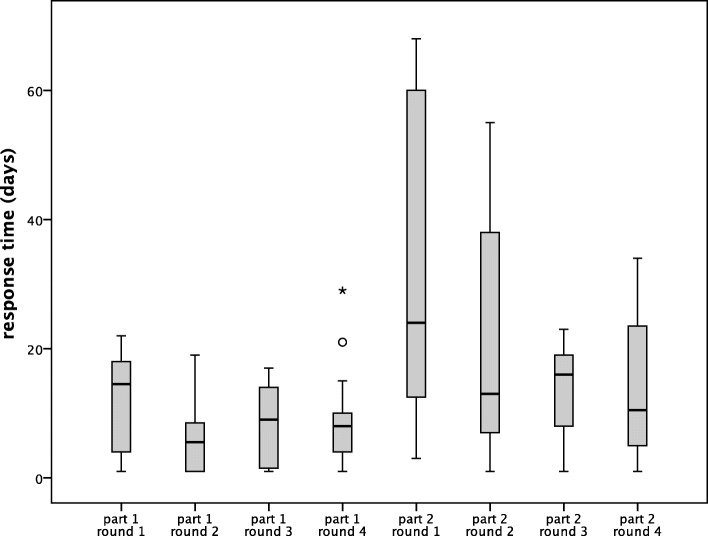
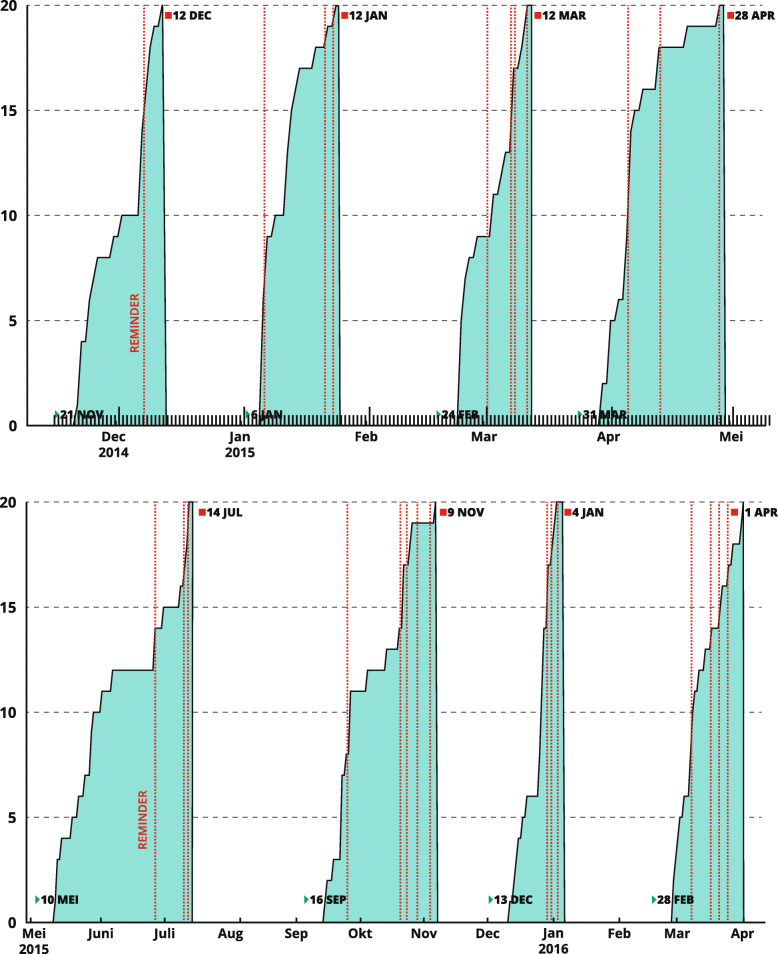
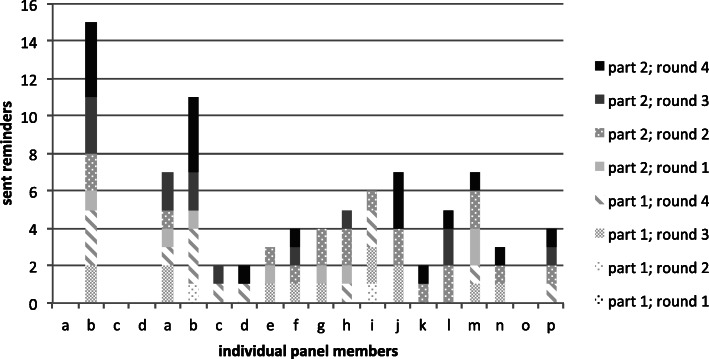
BACKGROUND: A proper application of the Delphi technique is essential for obtaining valid research results. Medical researchers regularly use Delphi studies, but reports often lack detailed information on methodology and controlled feedback: in the medical literature, papers focusing on Delphi methodology issues are rare. Since the introduction of electronic surveys, details on response times remain scarce. We aim to bridge a number of gaps by providing a real world example covering methodological choices and response times in detail. METHODS: The objective of our e(lectronic)-Delphi study was to determine minimum standards for emergency departments (EDs) in the Netherlands. We opted for a two-part design with explicit decision rules. Part 1 focused on gathering and defining items; Part 2 addressed the main research question using an online survey tool. A two-person consensus rule was applied throughout: even after consensus on specific items was reached, panellists could reopen the discussion as long as at least two panellists argued similarly. Per round, the number of reminders sent and individual response times were noted. We also recorded the methodological considerations and evaluations made by the research team prior to as well as during the study. RESULTS: The study was performed in eight rounds and an additional confirmation round. Response rates were 100% in all rounds, resulting in 100% consensus in Part 1 and 96% consensus in Part 2. Our decision rules proved to be stable and easily applicable. Items with negative advice required more rounds before consensus was reached. Response delays were mostly due to late starts, but once panellists started, they nearly always finished the questionnaire on the same day. Reminders often yielded rapid responses. Intra-individual differences in response time were large, but quick responders remained quick. CONCLUSIONS: We advise those considering Delphi study to follow the CREDES guideline, consider a two-part design, invest in personal commitment of the panellists, set clear decision rules, use a consistent lay-out and send out your reminders early. Adopting this overall approach may assist researchers in future Delphi studies and may help to improve the quality of Delphi designs in terms of improved rigor and higher response rates.
Overview
The claims and statistics of this paper haven’t been checked yet.
Run the check — free, no account needed. It reads the open-access text and checks the sources it cites.
Integrity signals
Registry
Cites
Statistics
Figures
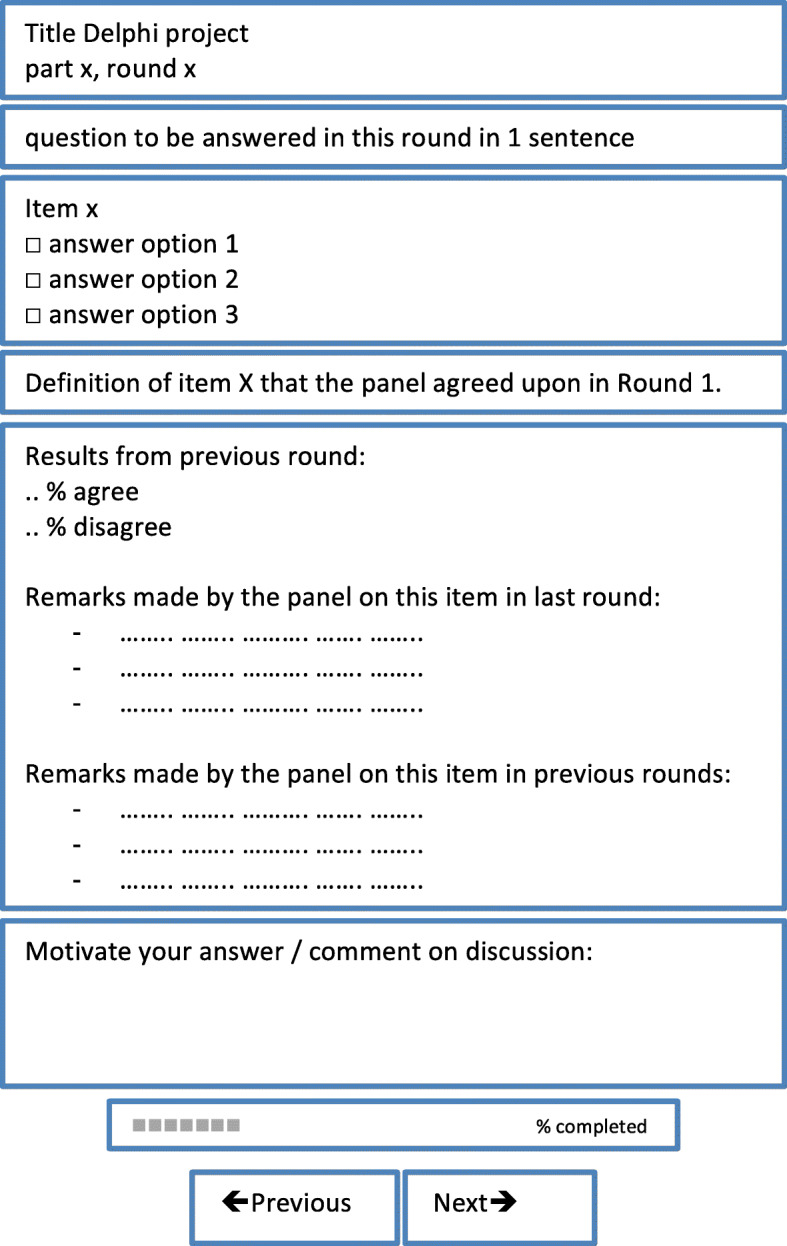
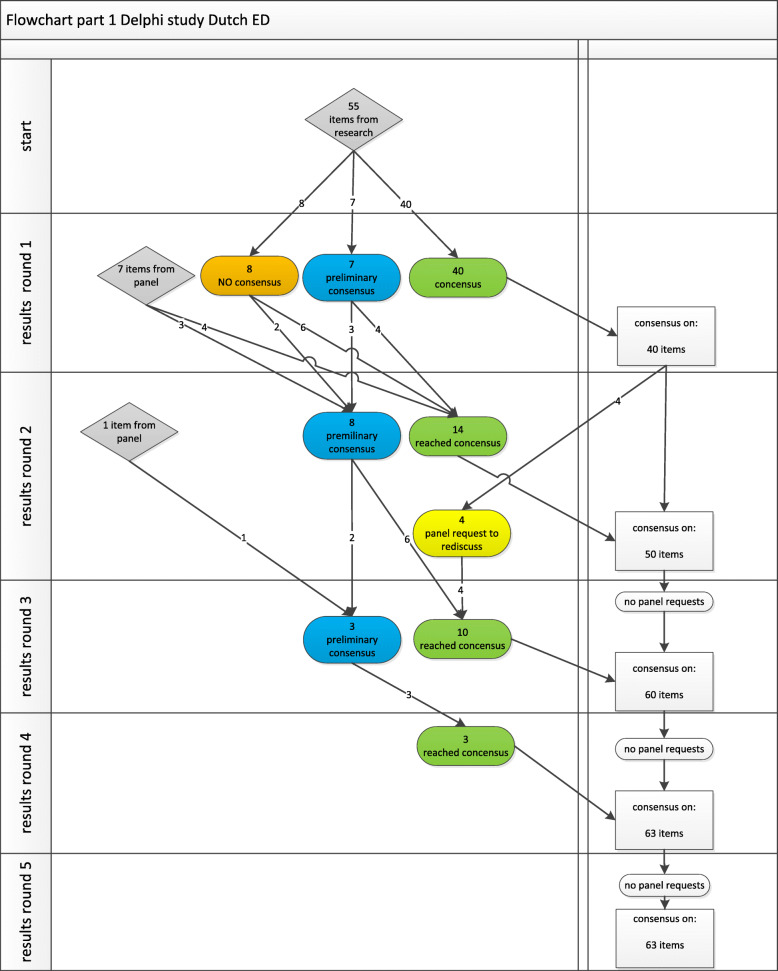
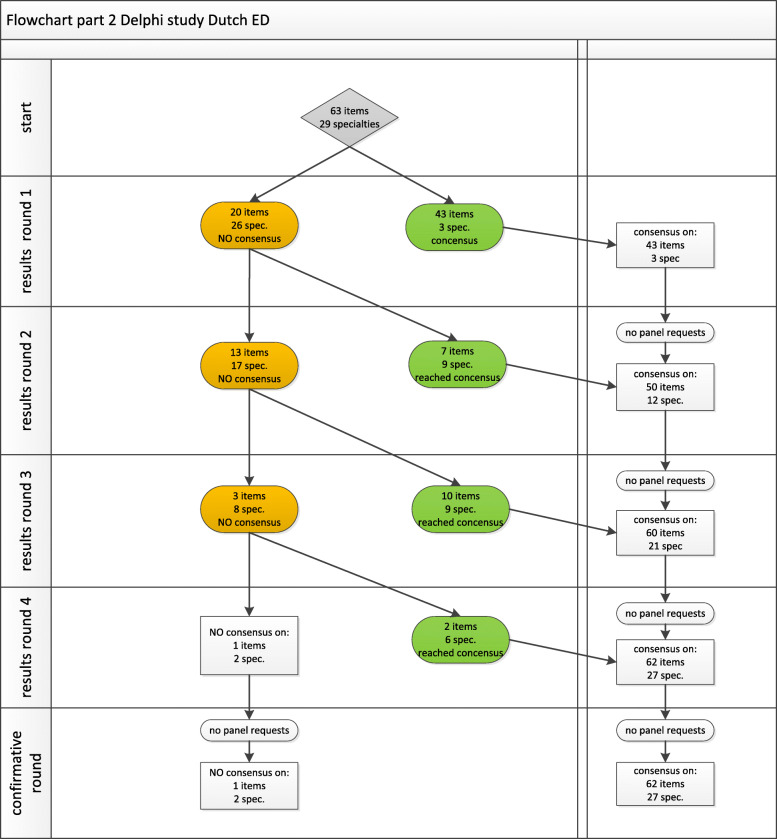
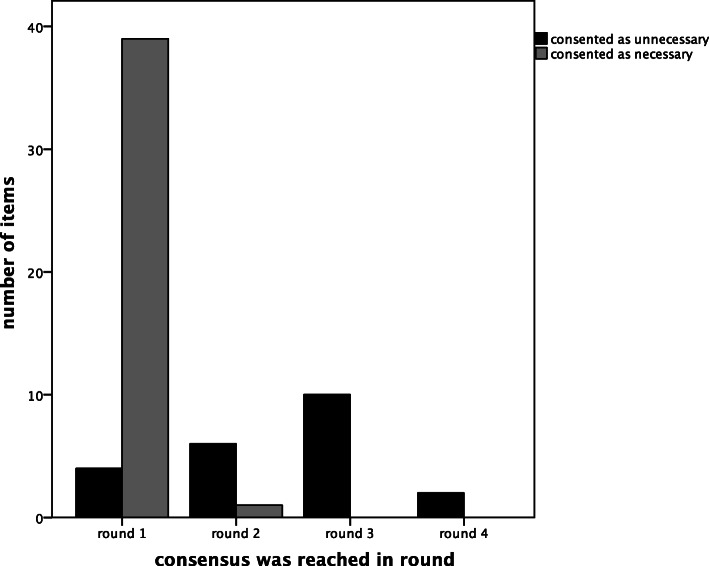
Verification
Claims the paper makes
The claims and statistics of this paper haven’t been checked yet.
Run the check — free, no account needed. It reads the open-access text and checks the sources it cites.
Claims other papers make about this one
Each is checked against this paper’s own text: does it say what the citing paper says it does?
The cited source doesn’t support the claim as written.
In the citing paper
“Although the Delphi method does not state a predetermined number of panelists, the recommended number to achieve consensus in healthcare is 20 (39).”
From Identifying social media professionalism competencies in Vietnamese medical students: a modified Delphi method (2026) · cites this paper as [39]
Checked by a reasoning model — may be wrong.
Experimental — accuracy not yet measured
Self-check
Percentages, sums and reported differences re-computed from the paper’s own numbers.
The self-check needs the paper’s full text.
Citations
Cites
Social Influence: Compliance and Conformity
Cialdini, R. B., & Goldstein, N. J. (2004) · Annual Review of Psychology · doi:10.1146/annurev.psych.55.090902.142015 · Cited by 6,077
An Experimental Application of the DELPHI Method to the Use of Experts
Dalkey, N., & Helmer, O. (1963) · Management Science · doi:10.1287/mnsc.9.3.458 · Cited by 6,061
Research guidelines for the Delphi survey technique
Hasson, F. (2000) · Journal of Advanced Nursing · doi:10.1046/j.1365-2648.2000.01567.x · Cited by 5,951
The Delphi method as a research tool: an example, design considerations and applications
Okoli, C., & Pawlowski, S. D. (2004) · Information & Management · doi:10.1016/j.im.2003.11.002 · Cited by 4,771
Diamond, I. R., Grant, R. C., Feldman, B. M., Pencharz, P. B., Ling, S. C., Moore, A. M., & Wales, P. W. (2014) · Journal of Clinical Epidemiology · doi:10.1016/j.jclinepi.2013.12.002 · Cited by 3,740
The Delphi Method: Techniques and Applications
J., J. E., Linstone, H. A., & Turoff, M. (1976) · Technometrics · doi:10.2307/1268751 · Cited by 2,277
Jünger, S., Payne, S. A., Brine, J., Radbruch, L., & Brearley, S. G. (2017) · Palliative Medicine · doi:10.1177/0269216317690685 · Cited by 2,210
Boulkedid, R., Abdoul, H., Loustau, M., Sibony, O., & Alberti, C. (2011) · PLoS ONE · doi:10.1371/journal.pone.0020476 · Cited by 2,045
Consulting the oracle: ten lessons from using the Delphi technique in nursing research
Keeney, S., Hasson, F., & McKenna, H. (2006) · Journal of Advanced Nursing · doi:10.1111/j.1365-2648.2006.03716.x · Cited by 1,511
Current validity of the Delphi method in social sciences
Landeta, J. (2006) · Technological Forecasting and Social Change · doi:10.1016/j.techfore.2005.09.002 · Cited by 1,353
Research works printed but not linked: 1
- Helmer O. Social technology. New York: Basic Books; 1966.
Cited by
Sorted by citations
Kocak, B., Baessler, B., Bakas, S., Cuocolo, R., Fedorov, A., Maier-Hein, L., Mercaldo, N., Müller, H., Orlhac, F., Pinto dos Santos, D., et al. (2023) · Insights into Imaging · doi:10.1186/s13244-023-01415-8 · Cited by 471
Gattrell, W. T., Hungin, A. P. S., Price, A. I., Winchester, C., Tovey, D. I., Hughes, E. L., van Zuuren, E. J., Goldman, K., Logullo, P., Matheis, R. J., et al. (2022) · Research Integrity and Peer Review · doi:10.1186/s41073-022-00122-0 · Cited by 115
Rongo, R., Ekberg, E., Nilsson, I., Al‐Khotani, A., Alstergren, P. J., Conti, P. C. R., Durham, J., Goulet, J., Hirsch, C., Kalaykova, S., et al. (2021) · Journal of Oral Rehabilitation · doi:10.1111/joor.13175 · Cited by 115
How to Reduce Stigma and Bias in Clinical Communication: a Narrative Review
Healy, M. E., Richard, A., & Kidia, K. K. (2022) · Journal of General Internal Medicine · doi:10.1007/s11606-022-07609-y · Cited by 132
Logullo, P., van Zuuren, E. J., Winchester, C., Tovey, D. I., Gattrell, W. T., Price, A. I., Harrison, N., Goldman, K., Chisholm, A., Walters, K., et al. (2024) · PLoS Medicine · doi:10.1371/journal.pmed.1004390 · Cited by 77
Metadata
- Authors
- Veugelers, R., Gaakeer, M. I., Patka, P., & Huijsman, R.
- Affiliations
- Admiraal De Ruyter Ziekenhuis (NL)
- Erasmus MC (NL)
- Erasmus University Rotterdam (NL)
- Corresponding author
- Veugelers, Rebekka
- Venue
- BMC Medical Research Methodology
- Published
- 2020-06-15
- Volume
- 20
- Issue
- 1
- Pages
- 156-156
- ISSN
- 1471-2288 (ISSN-L)
- PMC
- PMC7294633
- OpenAlex
- W3035611753
- Cited by
- 189
- References
- 28
- Citations by year
- 2026: 28 · 2025: 35 · 2024: 38 · 2023: 42 · 2022: 20 · 2021: 23 · 2020: 2
- FWCI
- 29.07
- Type
- journal article
- Language
- en
- Open access
- gold
- doi.org
- Locations
- BMC Medical Research Methodology (publishedVersion, cc-by)
- PubMed Central (publishedVersion, cc-by)
- PubMed (publishedVersion)
- EUR Research Repository (Erasmus University Rotterdam) (publishedVersion, other-oa)
- EUR Research Repository (Erasmus University Rotterdam) (submittedVersion, other-oa)
- RePub (Erasmus University Rotterdam) (submittedVersion, other-oa)
- DOAJ (DOAJ: Directory of Open Access Journals) (submittedVersion, cc-by-sa)
- Funders
- Stichting Achmea Health (Z634)
- Topics
- Social Sciences › Sociology and Political Science › Delphi Technique in Research
- Social Sciences › Sociology and Political Science › Survey Methodology and Nonresponse
- Social Sciences › Decision Sciences › Statistics, Probability and Uncertainty › Reliability and Agreement in Measurement
- Keywords
- Delphi method, electronic surveys, response time, decision rules
- MeSH terms
- Delphi Technique, Humans, Medicine, Netherlands, Physicians, Consensus
About these checks
Registry, retraction, Cites and statistics results are computed, not judged, with one exception: a printed reference that no index lists is read once by a model before it counts as a citation error. Claims are extracted by a model and kept only when their quote appears verbatim in the text; each cited source is then checked, with a model’s help, for whether it says what the claim relies on. Those verdicts can be wrong — read the claim’s quote and the cited source before relying on one.
Statistics and arithmetic are recomputed, not judged.
Confidence bands are shown only for fields calibrated on our annotated test set. None is calibrated yet, so no band is shown.
What counts as a claim ›How we measure confidence ›How we check this ›
Are you an author, or do you see a problem with this page? Request a review
