

Effectiveness of exercise intervention on fall-related fractures in older adults: a systematic review and meta-analysis of randomized controlled trials
Open accessThe DOI matches its Crossref record; 58 of the 58 references it cites were found in a registry or an index.
Abstract
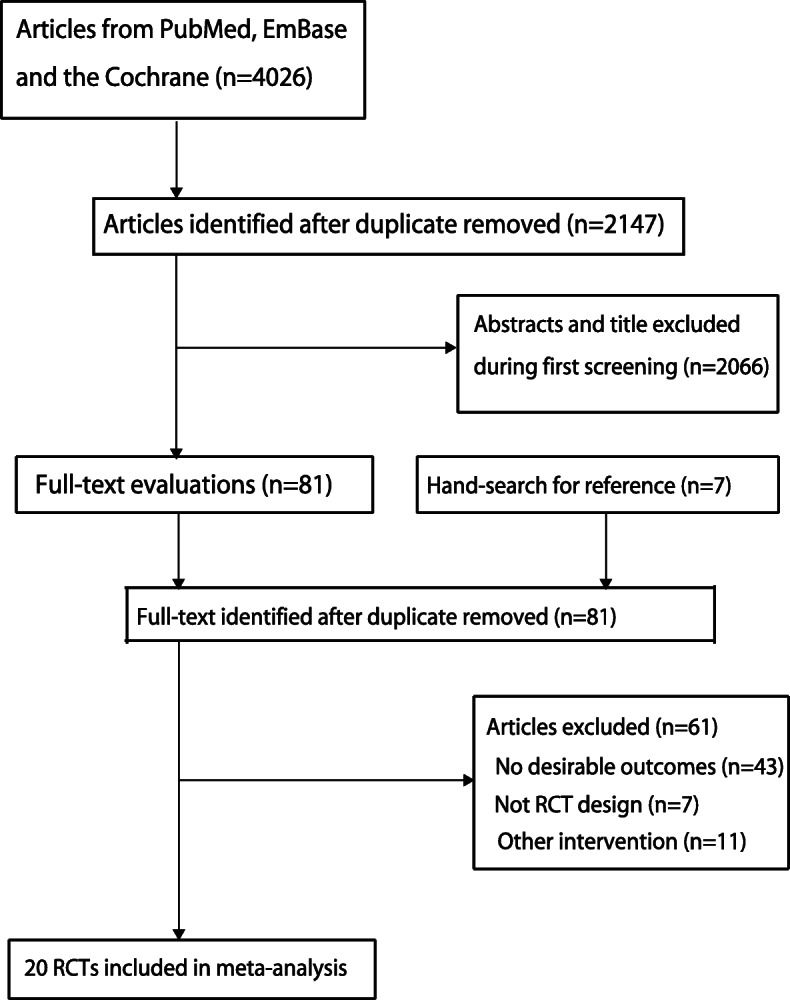
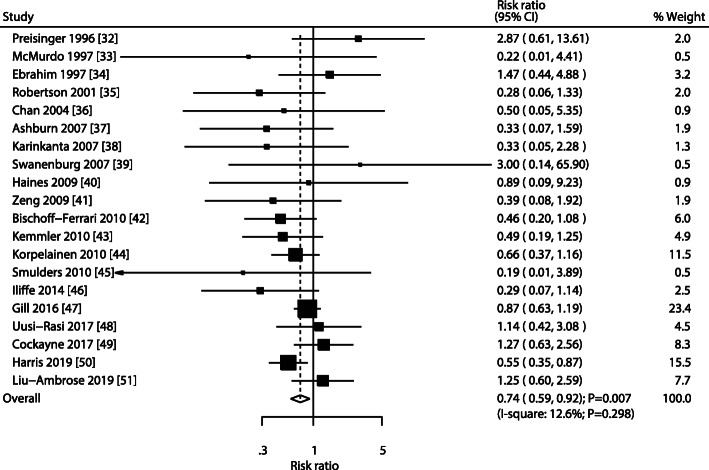
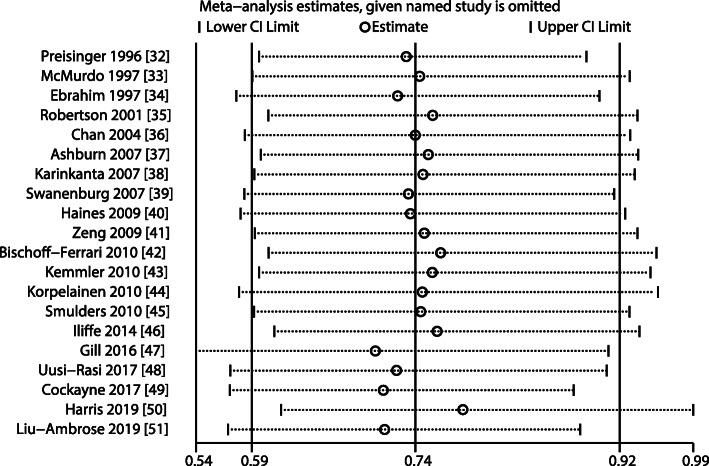
Background: Exercise intervention can significantly improve physical function and bone strength; however, the effect of exercise on fall-related fractures in older adults remains controversial. This study aimed to assess the effectiveness of exercise intervention on fall-related fractures in older adults by conducting a meta-analysis of randomized controlled trials (RCTs). Methods: PubMed, EMBASE, and Cochrane databases were systematically searched for RCTs through November 24, 2019 to investigate the effectiveness of exercise intervention on fall-related fractures in older adults. Pooled relative risk (RR) with 95% confidence interval (CI) was calculated using the random-effects model. Sensitivity, subgroup, and publication bias analyses were also conducted. Results: A total of 7704 older adults and 428 fall-related fracture events from 20 RCTs were selected for the final meta-analysis. The follow-up duration across included trials ranged from 6.0 months to 7.0 years. The pooled RR suggested that exercise intervention was associated with a reduced fall-related fracture risk in older adults (RR: 0.74; 95% CI: 0.59–0.92; P = 0.007; I2 = 12.6%). The pooled conclusion was robust and not affected by any individual trial. Subgroup analysis revealed that the significant effect of exercise intervention on fall-related fractures was mainly detected when the study reported results from both male and female subjects, when it did not report the baseline body mass index, when individuals received both home- and center-based interventions, when the follow-up duration was > 1.0 year, and when it was a high-quality study. Conclusions: Regular exercise intervention could prevent fall-related fractures in older adults. Further large-scale RCTs should be conducted to assess the effectiveness of different exercise programs on fall-related fractures at various sites.
Overview
The claims and statistics of this paper haven’t been checked yet.
Free: it reads the open-access text and checks the first 5 claims that cite a source we can check. Create a free account to check every claim.
Integrity signals
Registry
Cites
Statistics
Figures
Verification
Claims the paper makes
The claims and statistics of this paper haven’t been checked yet.
Free: it reads the open-access text and checks the first 5 claims that cite a source we can check. Create a free account to check every claim.
Claims other papers make about this one
Each is checked against this paper’s own text: does it say what the citing paper says it does?
The cited source says what the claim attributes to it.
In the citing paper
“a recent meta-analysis of 20 randomized controlled trials found that exercise intervention was even more importantly associated with a 26 percent reduction of fall-related fractures in older adults [310].”
From Global consensus on optimal exercise recommendations for enhancing healthy longevity in older adults (ICFSR) (2025) · cites this paper as [310]
Self-check
Percentages, sums and reported differences re-computed from the paper’s own numbers.
The self-check needs the paper’s full text.
Citations
Cites
Preferred Reporting Items for Systematic Reviews and Meta-Analyses: the PRISMA statement
Moher, D., Liberati, A., Tetzlaff, J., Altman, D. G., & for the PRISMA Group (2009) · BMJ · doi:10.1136/bmj.b2535 · Cited by 83,823
Preferred Reporting Items for Systematic Reviews and Meta-Analyses: The PRISMA Statement
Moher, D., Liberati, A., Tetzlaff, J., Altman, D. G., & The PRISMA Group (2009) · PLoS Medicine · doi:10.1371/journal.pmed.1000097 · Cited by 64,042 · cited 1×
“Methods Data sources, search strategy, and selection criteria This study was conducted and reported in accordance to the Preferred Reporting Items for Systematic Reviews and Meta-Analysis Statement issued in 2009 [22].”
Measuring inconsistency in meta-analyses
Higgins, J. P. T., Thompson, S. G., Deeks, J. J., & Altman, D. G. (2003) · BMJ · doi:10.1136/bmj.327.7414.557 · Cited by 63,139
Bias in meta-analysis detected by a simple, graphical test
Egger, M., Smith, G. D., Schneider, M., & Minder, C. (1997) · BMJ · doi:10.1136/bmj.315.7109.629 · Cited by 56,722
Preferred reporting items for systematic reviews and meta-analyses: the PRISMA Statement.
(2009) · PubMed Central · Cited by 44,859
Meta-analysis in clinical trials
DerSimonian, R., & Laird, N. (1986) · Controlled Clinical Trials · doi:10.1016/0197-2456(86)90046-2 · Cited by 39,552 · cited 1×
“Pooled RR with 95% CI was calculated using the random-effects model due to the underlying variations across the included studies [24, 25].”
MethodWang, G., Ma, R., Qiao, G., Wada, K., Aizawa, Y., & Satoh, T. (2015) · Integrative Medicine International · doi:10.1159/000368408 · Cited by 18,657
Assessing the quality of reports of randomized clinical trials: Is blinding necessary?
Jadad, A. R., Moore, R. A., Carroll, D., Jenkinson, C., Reynolds, D. J. M., Gavaghan, D. J., & McQuay, H. J. (1996) · Controlled Clinical Trials · doi:10.1016/0197-2456(95)00134-4 · Cited by 17,582 · cited 1×
“The quality of included studies was evaluated using the Jadad scale based on randomization, blinding, allocation concealment, withdrawals and dropouts, and the use of intention-to-treat analysis [23].”
MethodOperating characteristics of a rank correlation test for publication bias
Begg, C. B., & Mazumdar, M. (1994) · Biometrics · doi:10.2307/2533446 · Cited by 16,955 · cited 1×
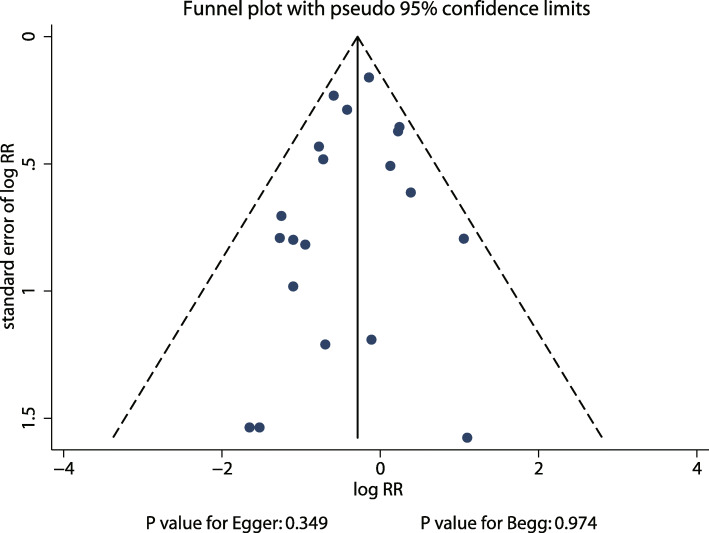
“Publication bias was assessed qualitatively using funnel plot and quantitatively using the Egger’s and Begg’s tests [30, 31].”
MethodZhang, Q., Wang, C., Zheng, M., Li, Y., Li, J., Zhang, L., Shang, X., & Yan, C. (2015) · Cerebrovascular Diseases · doi:10.1159/000369778 · Cited by 11,533
Research works printed but not linked: 1
- Zeng Y Zhu H Guo L The Effect of Tai Chi Exercise on Balance and Fractures in Older People 2009 Hang Zhou Rehabilitation Medicine Society of Chinese Medical Doctor Association
Cited by
Izquierdo, M., de Souto Barreto, P., Arai, H., Bischoff-Ferrari, H. A., Cadore, E. L., Cesari, M., Chen, L.-K., Coen, P. M., Courneya, K. S., Duque, G., et al. (2025) · The Journal of nutrition, health and aging · doi:10.1016/j.jnha.2024.100401 · Cited by 273
Hoffmann, I., Kohl, M., von Stengel, S., Jakob, F., Kerschan-Schindl, K., Lange, U., Peters, S., Schoene, D., Sieber, C., Thomasius, F., et al. (2023) · Osteoporosis International · doi:10.1007/s00198-022-06592-8 · Cited by 49
Conforto, R., Rizzo, V., Russo, R., Mazza, E., Maurotti, S., Pujia, C., Succurro, E., Arturi, F., Ferro, Y., Sciacqua, A., et al. (2024) · Metabolism · doi:10.1016/j.metabol.2024.156052 · Cited by 48
Hoffmann, I., Shojaa, M., Kohl, M., von Stengel, S., Becker, C., Gosch, M., Jakob, F. J., Kerschan‐Schindl, K., Kladny, B., Clausen, J., et al. (2020) · Journal of Bone and Mineral Research · doi:10.1002/jbmr.4683 · Cited by 61
“Indeed, the few meta-analyses on this issue provide positive evidence for the fracture-preventing effect of exercise in older adults.((5-8)) In detail, however, effect sizes vary considerably between the analyses.”
BackgroundShishov, N., Elabd, K., Komisar, V., Chong, H., & Robinovitch, S. N. (2021) · PLOS ONE · doi:10.1371/journal.pone.0258923 · Cited by 42
Nørgaard, J. E., Jørgensen, M. G., Ryg, J., Andreasen, J., Danielsen, M. B., Steiner, D. K., & Andersen, S. (2021) · Age and Ageing · doi:10.1093/ageing/afab105 · Cited by 46
Muscle parameters in fragility fracture risk prediction in older adults: A scoping review
Vendrami, C., Shevroja, E., Rodríguez, E. G., Gatineau, G., Elmers, J., Reginster, J., Harvey, N. C., Lamy, O., & Hans, D. B. (2024) · Journal of Cachexia Sarcopenia and Muscle · doi:10.1002/jcsm.13418 · Cited by 43
“105 However, the relationship between low muscle mass and fractures has been repeatedly questioned.”
BackgroundBallin, M., & Nordström, P. (2021) · Journal of Internal Medicine · doi:10.1111/joim.13353 · Cited by 47
Rodrigues, F. F., Amaro, N., Matos, R. M. N., Mendes, D., Monteiro, D., & Morouço, P. (2022) · Frontiers in Physiology · doi:10.3389/fphys.2022.1039131 · Cited by 34
“Its effects are not limited to functional capacity but also have positive implications for reducing fall risk and fall-related injuries (Wang et al., 2020), reducing clinical depression (Miller et al.”
BackgroundVranken, L., Wyers, C. E., van der Velde, R. Y., Janzing, H. M. J., Kaarsemakers, S., Driessen, J. H. M., Eisman, J. A., Nguyen, T. V., Tran, T. S., Bliuc, D., et al. (2022) · BMJ Open · doi:10.1136/bmjopen-2021-058983 · Cited by 26
Cagliari, M., Bressi, B., Bassi, M. C., Fugazzaro, S., Prati, G., Iotti, C., & Costi, S. (2021) · Physical Therapy · doi:10.1093/ptj/pzab288 · Cited by 24
Ong, T. I. W., Lim, L., Chan, S. P., Chee, W. S. S., Ch’ng, A. S. H., Chong, E. G. M., Damodaran, P., Hew, F. L., Ibrahim, L., Khor, H. M., et al. (2023) · Osteoporosis and Sarcopenia · doi:10.1016/j.afos.2023.06.002 · Cited by 23
“Exercise has also been shown to reduce the likelihood of sustaining a fracture by 26e46% [28,31,32].”
BackgroundRodrigues, F. F., Jacinto, M., Figueiredo, N., Monteiro, A. M., & Forte, P. M. (2023) · Medicina · doi:10.3390/medicina59020371 · Cited by 30
Exercise for Postmenopausal Bone Health – Can We Raise the Bar?
Kumar, S., Smith, C., Clifton-Bligh, R. J., Beck, B. R., & Girgis, C. M. (2025) · Current Osteoporosis Reports · doi:10.1007/s11914-025-00912-7 · Cited by 21
“Meta-analyses of trials in community-dwelling older adults (predominantly women) have indicated exercise interventions can reduce falls-related fractures and major osteoporotic fractures by ~ 20–30% compared with control groups [47–51].”
Diabetes and osteoporosis – Treating two entities: A challenge or cause for concern?
Rasmussen, N. H., & Vestergaard, P. (2022) · Best Practice & Research Clinical Rheumatology · doi:10.1016/j.berh.2022.101779 · Cited by 20
Boyraz, B., İbişoğlu, E., & Aslan, B. (2022) · Aging Clinical and Experimental Research · doi:10.1007/s40520-021-02039-y · Cited by 15
Moradell, A., Rodríguez‐Gómez, I., Fernández‐García, Á. I., Navarrete‐Villanueva, D., Marín-Puyalto, J., Pérez‐Gómez, J., Villa, G., González‐Gross, M., Ara, I., Casajús, J. A., et al. (2021) · International Journal of Environmental Research and Public Health · doi:10.3390/ijerph18073757 · Cited by 13
“Concretely, the implementation of multitask and strength exercise has been demonstrated to be effective in the reduction of falls and fractures [62–64].”
BackgroundBody composition, balance, functional capacity and falls in older women
Nordling, Y., Sund, R., Sirola, J. P., Kröger, H., Isanejad, M., & Rikkonen, T. (2024) · Aging Clinical and Experimental Research · doi:10.1007/s40520-024-02719-5 · Cited by 17
“It has particularly been shown that regular strength and balance training can reduce the risk of falls in the elderly by 15–30% [22, 23] and fall-related fractures [16, 24].”
BackgroundDennis, S. M., Kwok, W. S., Alison, J. A., Hassett, L. M., Nisbet, G., Refshauge, K. M., Sherrington, C., & Williams, A. (2024) · BMC Family Practice · doi:10.1186/s12875-024-02570-7 · Cited by 9
“A group exercise program consisting of 45 to 60 min, 1 to 3 times per week for 12 to 30 weeks was effective in reducing the number of falls and rate of falls in older people who were at a high risk of falls [90–92 , 94 ].”
MethodSchoene, D., Groß, M., von Stengel, S., Kohl, M., Kladny, B., Gosch, M., Sieber, C. C., Peters, S., Kiesswetter, E., Becker, C., et al. (2023) · Osteologie/Osteology · doi:10.1055/a-2110-7105 · Cited by 11
Sheng, Y., Wang, C., Wang, Y., Pan, L., Zhang, M., Liu, D., & Gao, W. (2025) · Frontiers in Public Health · doi:10.3389/fpubh.2024.1498451 · Cited by 15
Exercise intervention for the risk of falls in older adults
Zhang, Q., Liu, Y., Li, D., Jia, Y., Zhang, W., Chen, B., & Wan, Z. (2021) · Medicine · doi:10.1097/md.0000000000024548 · Cited by 8
Kim, J., Han, K., Jung, J., Ha, J., Jeong, C., Heu, J.-Y., Lee, S., Lee, J., Lim, Y., Kim, M. K., et al. (2023) · Frontiers in Endocrinology · doi:10.3389/fendo.2023.1173781 · Cited by 11
Huta-Osiecka, A., Wochna, K., Stemplewski, R., Marciniak, K., Podgórski, T., Kasprzak, Z., Leszczyński, P., & Nowak, A. (2022) · PeerJ · doi:10.7717/peerj.13643 · Cited by 9
“Furthermore, individualised and regular physical activities have been shown to prevent adverse changes associated with the aging process (Wang et al., 2020;Woods et al., 2012).”
BackgroundWalsh, J. P., Hsiao, M. S., Rosevear, L., McDermott, R., Gupta, S., & Watson, T. S. (2023) · Journal of Orthopaedic Surgery and Research · doi:10.1186/s13018-023-04124-6 · Cited by 6
“Preventive intervention like the introduction of regular exercise regimens to older adults was found to prevent fall-related fractures, with a 0.74 RR calculated in a meta-analysis of randomized controlled trials [26].”
MethodInfluentialHonda, H., Ashizawa, R., Kameyama, Y., Hirase, T., Arizono, S., & Yoshimoto, Y. (2024) · European Geriatric Medicine · doi:10.1007/s41999-024-00965-4 · Cited by 7
“Under Japan’s LTCI system, eligible patients are screened using a 74-item questionnaire on the activities of daily living, and decisions are made by the Long-Term Care Certi�cation Board based on a computerized initial judgment, a home visit report, and a physician’s written opinion [21].”
Update der S3-Leitlinie Diagnostik, Prophylaxe und Therapie der Osteoporose
Drey, M., Otto, S., Thomasius, F. E., & Schmidmaier, R. (2024) · Die Orthopädie · doi:10.1007/s00132-024-04522-6 · Cited by 5
Investigating the Role of Exercise in Improving Bone Health Among Elderly Women with Osteopenia
Kotsili, K., Michou, V., Κουτλιάνος, Ν., Dalkiranis, A., Kouidi, E. J., & Deligiannis, A. P. (2025) · Journal of Functional Morphology and Kinesiology · doi:10.3390/jfmk10040451 · Cited by 4
“…evidence from community-dwelling older adults, which shows that exercise, particularly balance and functional training, whether done alone or combined with resistance training, can reduce the risk of falls and major osteoporotic fractures by approximately 20–30% compared to usual care [68–70].”
Tamminen, A.-E., Honkanen, R., Koivumaa-Honkanen, H. T., Sirola, J. P., Sund, R., Kröger, H., & Rikkonen, T. (2025) · Scientific Reports · doi:10.1038/s41598-025-88205-y · Cited by 5
“In the elderly, this kind of multi-component intervention has proven efficient in preventing falls, injuries, and fractures 23,24,26 .”
Haxhi, J., Mattia, L., Vitale, M., Pisarro, M., Conti, F., & Pugliese, G. (2022) · International Journal of Bone Fragility · doi:10.57582/ijbf.220201.020 · Cited by 4
“The first included 20 RCTs involving 7,704 older adults and showed a reduced fall-related fracture risk; the significant effect of intervention was detected for studies with longer follow-up and of higher quality [20].”
BackgroundBalducci, S., Haxhi, J., Mattia, L., Vitale, M., Pugliese, L., Argento, G., Sacchetti, M., Orlando, G., Bollanti, L., Biase, N. D., et al. (2026) · Diabetes Research and Clinical Practice · doi:10.1016/j.diabres.2026.113303 · Cited by 3
Update der S3-Leitlinie Diagnostik, Prophylaxe und Therapie der Osteoporose
Drey, M., Otto, S., Thomasius, F. E., & Schmidmaier, R. (2023) · Zeitschrift für Gerontologie und Geriatrie · doi:10.1007/s00391-023-02245-5 · Cited by 3
Shojaa, M., Hoffmann, I., Kohl, M., von Stengel, S., Becker, C., Gosch, M., Jakob, F. J., Kerschan‐Schindl, K., Kladny, B., Lange, U., et al. (2023) · Osteologie/Osteology · doi:10.1055/a-2067-4323 · Cited by 2
“5406 [30] Wang Q, Jiang X, Shen Y et al.”
InfluentialMohebi, R., von Stengel, S., Kohl, M., Jakob, F. J., Kerschan‐Schindl, K., Lange, U., Peters, S., Schöne, D., Thomasius, F. E., Becker, C., et al. (2023) · Osteologie/Osteology · doi:10.1055/a-2075-7106 · Cited by 3
“Tatsächlich belegen systematische Übersichtsarbeiten und Meta-Analysen einen signifikant positiven Effekt körperlichen Trainings auf sturzinduzierte Frakturen [4, 5], niedrigtraumatische Gesamtfrakturen [6–8] sowie osteoporotische Hauptfrakturen [6, 7].”
BackgroundInfluentialDie aktuelle Leitlinie für Osteoporose
Drey, M., Otto, S., Thomasius, F. E., & Schmidmaier, R. (2024) · MMW - Fortschritte der Medizin · doi:10.1007/s15006-024-4207-6 · Cited by 2
Ng, C., Mulhern, B. J., Akanksha, A., Bahrampour, M., Jansons, P., Mesinovic, J., Gandham, A., Glavas, C., Ebeling, P. R., Viney, R. C., et al. (2025) · Journal of Applied Gerontology · doi:10.1177/07334648251316633 · Cited by 1
“…targeting improvements in physical function and body composition have been shown to reduce the rate of fall-related fractures in older adults by 26% (relative risk: 0.74, 95% con fi dence interval: 0.59 – 0.92) (Wang et al., 2020) and may thus alleviate this health burden (Zhao, Feng, & Wang, 2017).”
InfluentialPark, D., Koh, H.-S., Kim, S. K., Park, J., Han, K., & Choi, Y. (2025) · Osteoporosis International · doi:10.1007/s00198-025-07766-w · Cited by 1
“Improved neuromuscular control and balance from consistent moderate-intensity and multimodal exercise regimens further explain reduced fracture risk by enhancing proprio-ception and coordination, thereby minimizing fall-related injuries [24, 25].”
Grech, S., Cuschieri, A., Mintoff, F., Pisani, D., & Cuschieri, S. (2025) · Injury · doi:10.1016/j.injury.2025.112950 · Cited by 1
KEMMLER, W. K., Schoene, D., Kohl, M., Thomasius, F. E., Jakob, F., Kerschan‐Schindl, K., Lange, U., Peters, S., & von Stengel, S. (2026) · BMC Endocrine Disorders · doi:10.1186/s12902-026-02194-1 · Cited by 1
“It is noteworthy, however, that training protocols designed for fall prevention also positively influence fall-related injuries, including fractures [82, 83], especially when programs incorporate fast reaction, including cognitive information processing speed and rapid and powerful movements.”
KEMMLER, W. K. (2024) · Springer eBooks · doi:10.1007/978-3-031-67256-9_4 · Cited by 1
Schoene, D., Groß, M., Finger, B., Lahmann, N., Raeder, K., Vorwerg, S., König, H., Grochtdreis, T., Stöger, D., Handschuh, A., et al. (2025) · BMJ Open · doi:10.1136/bmjopen-2025-105969 · Cited by 2
Las publicaciones médicas por dentro
de Antioquia, U., & Jaimes, F. A. (2025) · Editorial Universidad de Antioquia eBooks · doi:10.17533/udea.978-958-501-247-9
Walsh, J. P., Hsiao, M. S., Rosevear, L., McDermott, R., Gupta, S., & Watson, T. S. (2024) · Figshare · doi:10.6084/m9.figshare.26614471
Avaliação e prescrição de exercícios físicos para grupos especiais (osteoporose)
de Oliveira, R. V., Martins, M. S., & Miranda, V. P. N. (2025) · Cuadernos de Educación y Desarrollo · doi:10.55905/cuadv17n12-100
Development of Deep Learning Models for Prediction of Bone Fracture and Its Severity Levels
Shetty, M. P., Bisht, G. B., Shetty, S., & Hrithvika (2026) · Lecture notes in networks and systems · doi:10.1007/978-981-96-7140-3_28
He, W., Yu, Z., Ding, J., Jiang, J., Zhang, H., Hu, C., Liu, Q., Gu, H., & Chen, H. (2026) · Frontiers in Endocrinology · doi:10.3389/fendo.2025.1727636 · Cited by 1
Nguyen, S., Crandall, C. J., Bellettiere, J., LaMonte, M. J., & LaCroix, A. Z. (2026) · Journal of Aging and Physical Activity · doi:10.1123/japa.2024-0233 · Cited by 3
Sobrinho, A. C. D. S., Rodrigues, G. D. S., Gomes, G., & Bueno, C. (2026) · Clinical Interventions in Aging · doi:10.2147/cia.s571735
“7,31,32 Where reported, fear of falling declined alongside functional gains, supporting a mechanism of improved self-efficacy.”
Iwamae, M., Tamai, K., Ikebuchi, M., Takahashi, S., Higuchi, Y., Uemura, K., Ueda, M., Okazaki, K., Yokoyama, H., Kawabata, H., et al. (2026) · BMC Geriatrics · doi:10.1186/s12877-026-07344-7
“Additionally, a systematic review and meta-analysis of randomized controlled trials found that exercise interventions significantly reduced the risk of fall-related fractures [53, 54].”
Riebe, D. A., Magal, M., Kaminsky, L. A., Ross, R. R., Phillips, S. M., Alhassan, S., Arena, R. A., Behm, D. G., Camhi, S. M., Church, T. S., et al. (2026) · Medicine & Science in Sports & Exercise · doi:10.1249/mss.0000000000003997 · Cited by 5
Park, D., Koh, H.-S., Jeong, S., Park, J., Han, K., & Choi, Y. (2026) · Healthcare · doi:10.3390/healthcare14172812
“Regular physical activity may contribute to bone strength and also influence muscle function and balance through mechanical loading and muscle-bone interactions [11,18,28,29].”
Berg, J., Tømmerdal, K. H., Coombes, J. S., Follestad, T., Salvesen, Ø. O., Madssen, E., Selbæk, G., Dalen, H., Bjørnelv, G. M. W., Devlin, B. L., et al. (2026) · medRxiv · doi:10.64898/2026.09.23.26363212
Park, D., Koh, H.-S., Jeong, S., Park, J., Han, K., & Choi, Y.-H. (2026) · Research Square · doi:10.21203/rs.3.rs-9591747/v1
Metadata
- Authors
- Wang, Q., Jiang, X., Shen, Y., Yao, P., Chen, J., Zhou, Y., Gu, Y., Qian, Z., & Cao, X.
- Affiliations
- Nanjing University of Chinese Medicine (CN)
- Corresponding author
- Jiang, Xiaowei
- Venue
- BMC Geriatrics
- Published
- 2020-09-04
- Volume
- 20
- Issue
- 1
- Pages
- 322-322
- ISSN
- 1471-2318 (ISSN-L)
- PMC
- PMC7650290
- OpenAlex
- W3083158096
- Cited by
- 53
- References
- 58
- Citations by year
- 2026: 11 · 2025: 10 · 2024: 10 · 2023: 8 · 2022: 7 · 2021: 6 · 2020: 1
- FWCI
- 1.28
- Type
- journal article
- Language
- en
- Open access
- gold
- doi.org
- Licence
- cc-by
- creativecommons.org/licenses/by/4.0 (tdm)
- creativecommons.org/licenses/by/4.0 (vor)
- Locations
- BMC Geriatrics (publishedVersion, cc-by)
- PubMed Central (publishedVersion, cc-by)
- PubMed (publishedVersion)
- DOAJ (DOAJ: Directory of Open Access Journals) (submittedVersion, cc-by-sa)
- Topics
- Health Sciences › Health Professions › Physical Therapy, Sports Therapy and Rehabilitation › Balance, Gait, and Falls Prevention
- Health Sciences › Medicine › Orthopedics and Sports Medicine › Bone health and osteoporosis research
- Health Sciences › Medicine › Surgery › Hip and Femur Fractures
- Keywords
- exercise intervention, fall-related fractures, older adults, fracture prevention, bone strength, physical function, home-based exercise, sex differences
- MeSH terms
- Accidental Falls, Aged, Exercise Therapy, Female, Humans, Male, Exercise, Randomized Controlled Trials as Topic, Fractures, Bone
About these checks
Registry, retraction, Cites and statistics results are computed, not judged, with one exception: a printed reference that no index lists is read once by a model before it counts as a citation error. Claims are extracted by a model and kept only when their quote appears verbatim in the text; each cited source is then checked, with a model’s help, for whether it says what the claim relies on. Those verdicts can be wrong — read the claim’s quote and the cited source before relying on one.
Statistics and arithmetic are recomputed, not judged.
Confidence bands are shown only for fields calibrated on our annotated test set. None is calibrated yet, so no band is shown.
What counts as a claim ›How we measure confidence ›How we check this ›
Are you an author, or do you see a problem with this page? Request a review
Data sources
Bibliographic data: Semantic Scholar, OpenAlex, Crossref.
Contains information from the Semantic Scholar Academic Graph Datasets, made available under the ODC Attribution License (ODC-BY 1.0).
Semantic Scholar’s data is described in: Kinney, R., et al. (2023). The Semantic Scholar Open Data Platform. arXiv:2301.10140.
