

Physician assistants in geriatric medical care
Open accessPublished version of a preprint
The DOI matches its Crossref record; 8 of the 8 references it cites were found in a registry or an index.
Abstract
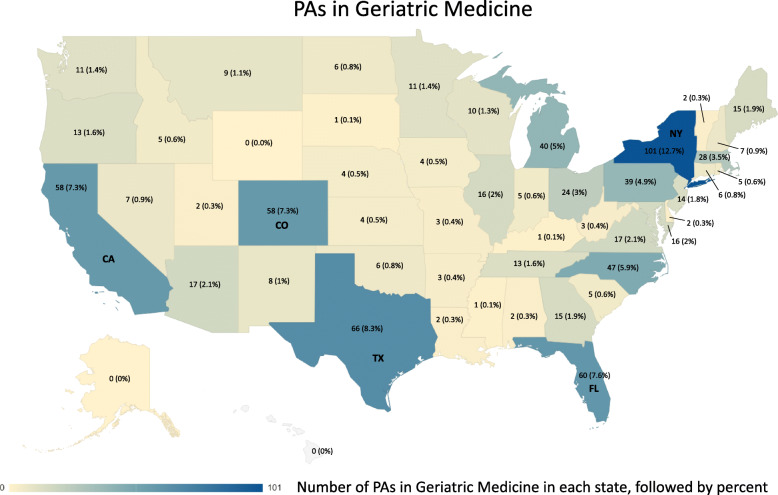
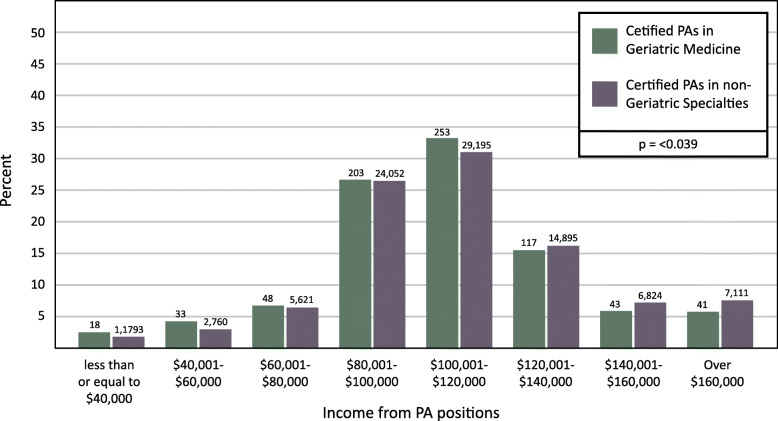
Background: The US population is maturing. As of 2020, over 52 million (16%) people are age 65 or older. With a citizenry that is increasingly “gray,” the nation is short of medical providers who specialize in geriatric medical care. For example, the number of geriatrician physicians per 10,000 adults 65 years and older has decreased since 2000, with approximately 5300 in 2018. Nurse practitioners in geriatric medical care numbered 598 in 2018. Considering that the projected needs by 2030 will be over 30,000, the trajectory of geriatricians is becoming increasingly inadequate for the aging population. Physician assistants (PA) are another class of providers that are filling this geriatric medical care role, although little has been published. To address this role of PAs a study was undertaken. Methods: The National Commission on Certification of Physician Assistants databank provided the number and characteristics of PAs in geriatric medicine and compared them to all other certified PAs. Analyses included descriptive statistics, Chi-Square, and Wilcoxon Rank Sum tests for comparisons between PAs practicing in geriatric medical care vs. all other PA specialties. Where a comparison between PAs in geriatrics and other specialties was made, a P value of .05 or less was considered statistically significant. Results: As of 2018, there were 794 certified PAs, or 0.8% of the certified PA workforce, in geriatric medical care. This cadre has grown significantly since 2013, both in total number (increasing over 373%) and as a percentage of the PA workforce. The median age of certified PAs in geriatrics is 45 years, and 79% are female. Almost half (46%) of PAs in geriatric medicine work in extended care facilities or nursing homes, which differs from PAs in non-geriatric care. Another 8% work in government facilities and 8% in rehabilitation facilities. In 2018, the mean annual income for this PA group was $106,680. Conclusions: As the American population continues to age, the relative growth of PAs in geriatric medicine makes them a natural part of the solution to the projected physician geriatrician deficit. The role of PAs in geriatric medical care remains to be explored.
Overview
The claims and statistics of this paper haven’t been checked yet.
Free: it reads the open-access text and checks the first 5 claims that cite a source we can check. Create a free account to check every claim.
Integrity signals
Registry
Cites
Statistics
Figures
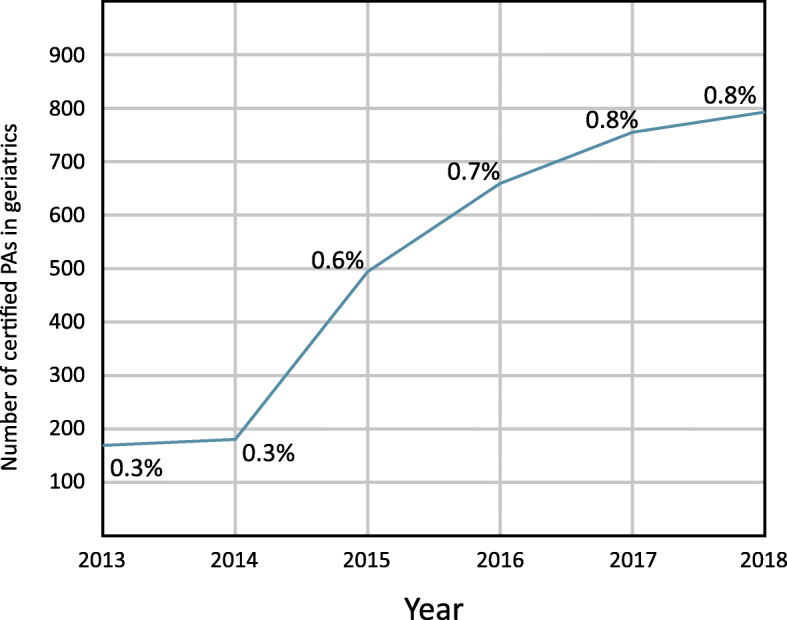
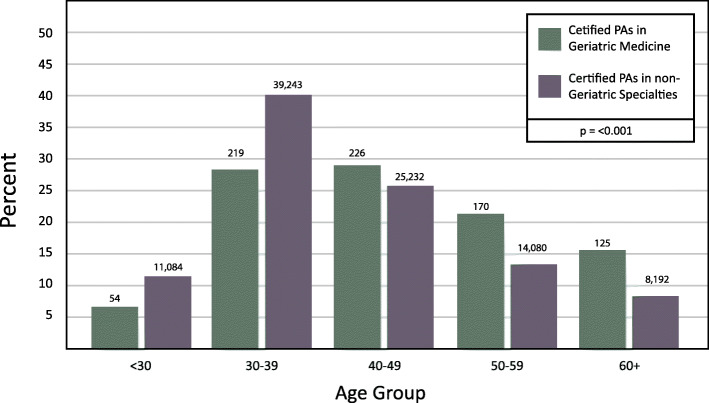
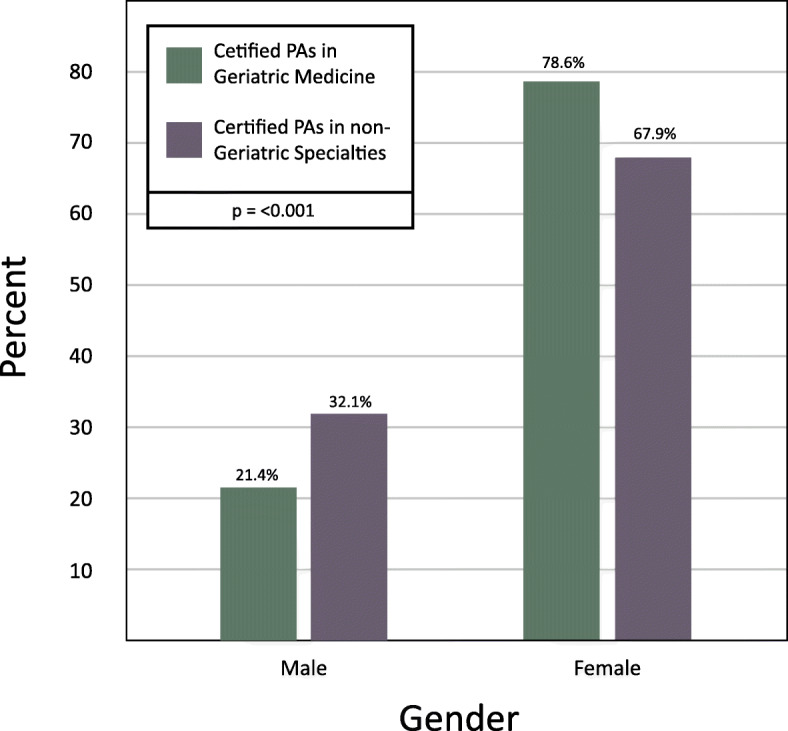
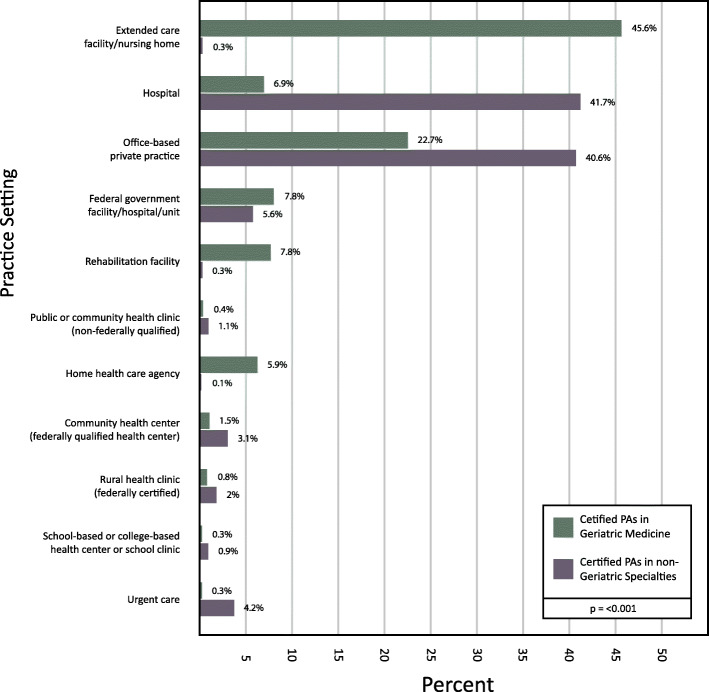
Verification
Claims the paper makes
The claims and statistics of this paper haven’t been checked yet.
Free: it reads the open-access text and checks the first 5 claims that cite a source we can check. Create a free account to check every claim.
Claims other papers make about this one
Each is checked against this paper’s own text: does it say what the citing paper says it does?
The source backs part of the claim, not all of it — or backs it for a different population, condition or comparison.
In the citing paper
“Nurse practitioners, physician assistants and other care providers can play a greater role in dementia care delivery, particularly for rural and underserved communities.643,698”
From 2023 Alzheimer's disease facts and figures (2023) · cites this paper as [643]
Experimental — accuracy not yet measuredThe source backs part of the claim, not all of it — or backs it for a different population, condition or comparison.
In the citing paper
“As of 2018, less than 1% of physician assistants were certified in geriatric medical care.”
From 2024 Alzheimer's disease facts and figures (2024) · cites this paper as [739]
Experimental — accuracy not yet measuredThe source backs part of the claim, not all of it — or backs it for a different population, condition or comparison.
In the citing paper
“Nurse practitioners, physician assistants and other care providers can also play a greater role in dementia care delivery, particularly for rural and underserved communities. 739 , 844”
From 2024 Alzheimer's disease facts and figures (2024) · cites this paper as [739]
Experimental — accuracy not yet measuredThe cited source says what the claim attributes to it.
In the citing paper
“Although this figure represents a nearly 400% increase in the absolute number of physician assistants specializing in geriatric care since 2013 (indicating a positive trend),”
From 2024 Alzheimer's disease facts and figures (2024) · cites this paper as [739]
Self-check
Percentages, sums and reported differences re-computed from the paper’s own numbers.
The self-check needs the paper’s full text.
Citations
Cites
Preparing for better health and health care for an aging population
Rowe, J. W., Fulmer, T., & Fried, L. (2016) · JAMA · doi:10.1001/jama.2016.12335 · Cited by 163
Medical Care Delivery in U.S. Nursing Homes: Current and Future Practice
Katz, P. R., Ryskina, K. L., Saliba, D., Costa, A. P., Jung, H., Wagner, L. M., Unruh, M. A., Smith, B. J., Moser, A. L., Spetz, J., et al. (2020) · The Gerontologist · doi:10.1093/geront/gnaa141 · Cited by 54 · cited 1×
“An important practice distinction for PAs in geriatric medicine is their presence in long term care facilities – almost half (46%) identify working in an extended care or nursing home facility [8].”
BackgroundPhysician Assistants: From Pipeline to Practice
Glicken, A. D., & Miller, A. A. (2013) · Academic Medicine · doi:10.1097/acm.0000000000000009 · Cited by 46
Rowe, J. W., Berkman, L. F., Fried, L. P., Fulmer, T. T., Jackson, J., Naylor, M., Novelli, W. D., Olshanksy, J., Stone, R., & LeadingAge (2016) · NAM Perspectives · doi:10.31478/201609n · Cited by 36 · cited 2×
“The National Academy of Medicine recommends that comprehensive humanistic medical education in geriatrics be integrated throughout the curricula of medical schools along with physician assistant (PA) and NP education programs [2].”
BackgroundLovink, M. H., Persoon, A., van Vught, A., Schoonhoven, L., Koopmans, R. T. C. M., & Laurant, M. G. H. (2017) · BMJ Open · doi:10.1136/bmjopen-2016-015134 · Cited by 33
Physician Assistants Employed by the Federal Government
Smith, N. E., Kozikowski, A., & Hooker, R. S. (2020) · Military Medicine · doi:10.1093/milmed/usaa034 · Cited by 14
Self-citationThe role of PAs in providing mental health care
Mauldin, S. G., Morton-Rias, D., Barnhill, G. C., Kozikowski, A., & Hooker, R. S. (2020) · JAAPA · doi:10.1097/01.jaa.0000694988.35913.1a · Cited by 10 · cited 1×
“This study draws upon data from NCCPA’s PA Professional Profile, which is the most comprehensive national collection of workforce data on PAs [11].”
MethodSelf-citationPA practice analysis: Multidisciplinary tasks, knowledge, and skills
Barnhill, G. C., Dallas, A. D., Mauldin, S. G., & Hooker, R. S. (2018) · JAAPA · doi:10.1097/01.jaa.0000547750.31052.5a · Cited by 9
Self-citation
Research works printed but not linked: 5
- United States Department of Health and Human Services Brief summary results from the 2018 national sample survey of registered nurses 2019
- United States Department of Health and Human Services National and regional projections of supply and demand for geriatricians: 2013-2025. Natl Cent Heal Work Anal 2017
- National Commission on Certification of the Physician Assistant 2017 Statistical Profile of Certified Physician Assistants 2018
- United States Census Bureau 65 and older population grows rapidly as baby boomers age. US Census Bureau Newsroom 2020
- American Association of Medical Colleges The complexities of physician supply and demand: projections from 2017–2032 2019
Cited by
2023 Alzheimer's disease facts and figures
(2023) · Alzheimer's & Dementia · doi:10.1002/alz.13016 · Cited by 3,212
2024 Alzheimer's disease facts and figures
(2024) · Alzheimer's & Dementia · doi:10.1002/alz.13809 · Cited by 2,536
Retooling for an aging America: building the health care workforce
(2009) · Choice Reviews Online · doi:10.5860/choice.46-5066 · Cited by 688
2025 Alzheimer's disease facts and figures
(2025) · Alzheimer's & Dementia · doi:10.1002/alz.70235 · Cited by 474
2026 Alzheimer's disease facts and figures
Alzheimer's, T. S. O. A. D. A. A. W. S. C. I. T. B. I., neurons, T. B. N. A. E. A. A. H. A. B. H. B. O., long, E. W., connections, B. E. T. E. E. I. N. T. F. C. W. O. N. A. S., synapses, C., memories, I. F. I. T. B. O. C. T. A. R. B. O. N. A. T. U. B. A. N. T. B. C. T. O. S. T. A. S. T. T. R. T. T. B. T. S. F. T. C. B. O., thoughts, sensations, emotions, & skills., M. A. (2026) · Alzheimer s & Dementia · doi:10.1002/alz.71345 · Cited by 126
Metadata
- Authors
- Kozikowski, A., Honda, T., Segal-Gidan, F., & Hooker, R. S.
- Affiliations
- Northeastern University (US)
- Northern Arizona University (US)
- Corresponding author
- Hooker, Roderick S.
- Venue
- BMC Geriatrics
- Published
- 2020-11-04
- Volume
- 20
- Issue
- 1
- Pages
- 449-449
- ISSN
- 1471-2318 (ISSN-L)
- PMC
- PMC7643446
- OpenAlex
- W3096183538
- Cited by
- 13
- References
- 8
- Citations by year
- 2026: 1 · 2025: 2 · 2024: 5 · 2023: 2 · 2022: 1
- FWCI
- 0.78
- Type
- journal article
- Language
- en
- Open access
- gold
- doi.org
- Licence
- cc-by
- creativecommons.org/licenses/by/4.0/ (tdm)
- creativecommons.org/licenses/by/4.0/ (vor)
- Locations
- BMC Geriatrics (publishedVersion, cc-by)
- Research Square (acceptedVersion, cc-by)
- PubMed Central (publishedVersion, cc-by)
- PubMed (publishedVersion)
- DOAJ (DOAJ: Directory of Open Access Journals) (submittedVersion, cc-by-sa)
- Topics
- Health Sciences › Health Professions › General Health Professions › Nursing Roles and Practices
- Social Sciences › Gender Studies › Diversity and Career in Medicine
- Health Sciences › Health Professions › General Health Professions › Interprofessional Education and Collaboration
- Keywords
- physician assistants, geriatrics, geriatrician shortage, population aging, nursing homes, long-term care facilities, age and sex distribution
- MeSH terms
- Workforce, Aged, Aging, Female, Geriatrics, Humans, Male, Physician Assistants, United States
About these checks
Registry, retraction, Cites and statistics results are computed, not judged, with one exception: a printed reference that no index lists is read once by a model before it counts as a citation error. Claims are extracted by a model and kept only when their quote appears verbatim in the text; each cited source is then checked, with a model’s help, for whether it says what the claim relies on. Those verdicts can be wrong — read the claim’s quote and the cited source before relying on one.
Statistics and arithmetic are recomputed, not judged.
Confidence bands are shown only for fields calibrated on our annotated test set. None is calibrated yet, so no band is shown.
What counts as a claim ›How we measure confidence ›How we check this ›
Are you an author, or do you see a problem with this page? Request a review
Data sources
Bibliographic data: Semantic Scholar, OpenAlex, Crossref.
Contains information from the Semantic Scholar Academic Graph Datasets, made available under the ODC Attribution License (ODC-BY 1.0).
Semantic Scholar’s data is described in: Kinney, R., et al. (2023). The Semantic Scholar Open Data Platform. arXiv:2301.10140.
