

Digital exclusion and cognitive impairment in older people: findings from five longitudinal studies
Open accessThe DOI matches its Crossref record; 46 of the 50 references it cites were found in a registry or an index; 15 of the 17 sources its claims cite were checked for support.
Abstract
Objectives: Older people are more likely to have digital exclusion, which is associated with poor health. This study investigated the relationship between digital exclusion and cognitive impairment in older adults from 23 countries across five longitudinal surveys. Design and measurements: Digital exclusion is defined as self-reported non-use of the Internet. We assessed cognitive impairment on three dimensions: orientation, memory, and executive function. We used generalized estimation equations fitting binary logistic regression with exchangeable correlations to study the relationship between digital exclusion and cognitive impairment, and apply the minimum sufficiently adjusted set of causally directed acyclic graphs as the adjusted variable. Setting and participants: We pooled a nationally representative sample of older adults from five longitudinal studies, including the China Health and Retirement Longitudinal study (CHARLS), the English Longitudinal Study of Ageing (ELSA), the Health and Retirement Study (HRS), the Mexican Health and Ageing Study (MHAS) and the Survey of Health, Ageing and Retirement in European (SHARE). Results: We included 62,413 participants from five longitudinal studies. Digital exclusion varied by country, ranging from 21.69% (SHARE) in Denmark to 97.15% (CHARLS) in China. In the original model, digital exclusion was significantly associated with cognitive impairment in all five studies. In the adjusted model, these associations remained statistically significant: CHARLS (Odds ratio [OR] = 2.81, 95% confidence interval [CI] 1.84–4.28, ELSA (1.92 [1.70–2.18]), HRS(2.48[2.28–2.71), MHAS (1.92 [1.74–2.12]), and SHARE (2.60 [2.34–2.88]). Conclusion: Our research shows that a significant proportion of older people suffer from digital exclusion, especially in China. Digital exclusion was positively correlated with cognitive impairment. These findings suggest that digital inclusion could be an important strategy to improve cognitive function and reduce the risk of cognitive impairment in older adults.
Overview
CoChat Summary
TL;DR
In pooled data from five longitudinal studies across 23 countries, digital exclusion was associated with higher odds of cognitive impairment in older adults. The association persisted after adjustment in all five cohorts, with a random-effects meta-analytic OR of 2.26 (95% CI 1.94–2.62).
Key findings
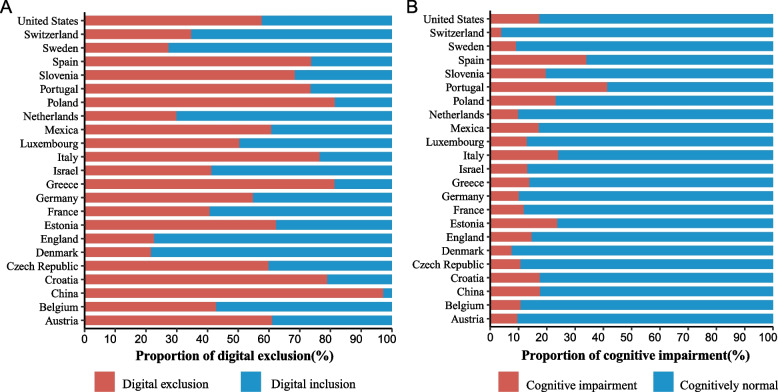
- Among 62,413 participants, digital exclusion ranged from 21.69% in Denmark (SHARE) to 97.15% in China (CHARLS).
- Adjusted for the minimal sufficient adjustment set plus additional covariates (Model 3), digital exclusion was associated with cognitive impairment in CHARLS (OR = 2.81, 95% CI 1.84–4.28), ELSA (1.92 [1.70–2.18]), HRS (2.48 [2.28–2.71]), MHAS (1.92 [1.74–2.12]), and SHARE (2.60 [2.34–2.88]).
- Digital exclusion was also negatively associated with orientation, memory, executive function, and total cognitive scores in all five cohorts in the adjusted model.
- Meta-analysis of the five cohorts using a random-effects model gave an OR of 2.26 (95% CI 1.94–2.62) for digital exclusion and cognitive impairment.
Methods
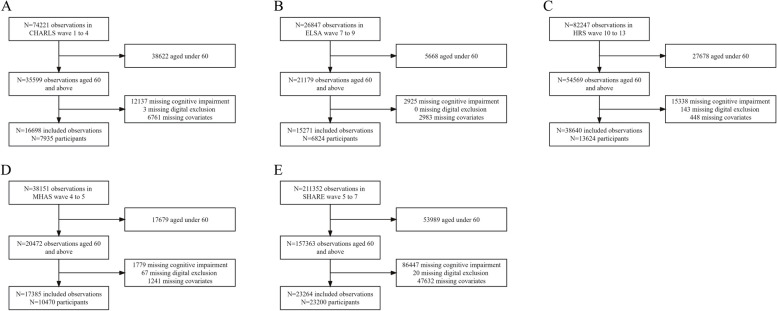
- Pooled nationally representative samples of adults aged ≥60 from CHARLS, ELSA, HRS, MHAS, and SHARE; final analytic samples were 7,935 (CHARLS), 6,824 (ELSA), 13,624 (HRS), 10,470 (MHAS), and 23,560 (SHARE).
- Digital exclusion was self-reported non-use of the Internet; cognitive impairment was defined using aging-associated cognitive decline (at least 1 SD below the age norm) across orientation, memory, and executive function.
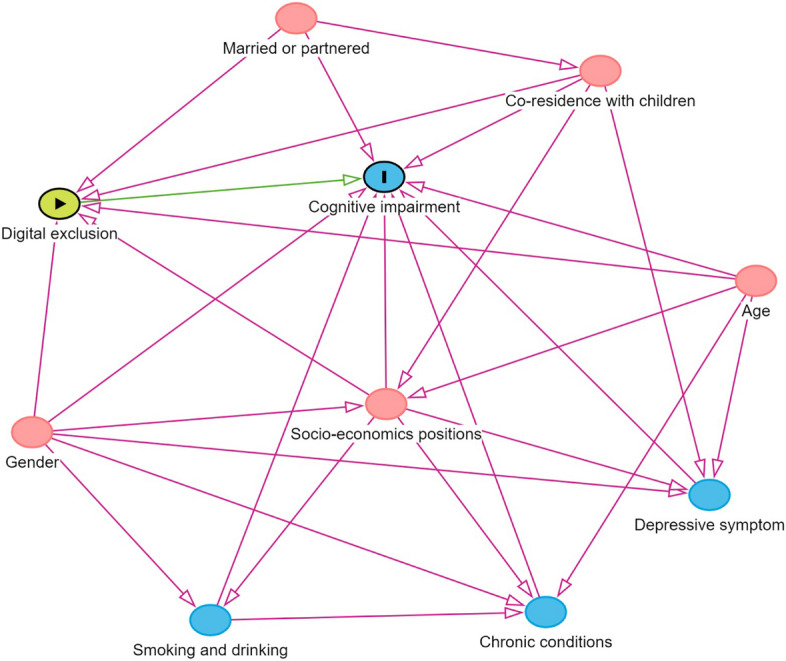
- Generalized estimating equations fitted binary logistic regression with exchangeable correlations; models included unadjusted, DAG-based minimal sufficient adjustment, and fully adjusted versions, with sensitivity analyses using multiple imputation, exclusion of baseline cognitive impairment, and random-effects meta-analysis.
Limitations
- The paper states that it is an observational cross-sectional study, so no causal relationship can be established; it also notes information bias from different exposure measures (individual-level Internet use in CHARLS, ELSA, HRS, and SHARE vs. home-level Internet access in MHAS), differences in cognitive assessment across cohorts, possible unmeasured confounding, and inability to rule out an inverse association.
- Evident from the text: although the study uses longitudinal cohorts, the authors describe the design as cross-sectional, which limits temporal/causal interpretation.
- Evident from the text: Table 1 baseline sample sizes (e.g., CHARLS N = 16,698) are larger than the final analytic sample sizes (e.g., CHARLS N = 7,935), and the text does not fully reconcile these differences.
Model-written summary. Check it against the paper before relying on it.
Integrity signals
Registry
Cites
Statistics
Figures
Verification
Claims the paper makes
11 Valid · 0 Not valid · 0 Not checked · 38 Own results and interpretations
The cited sources support only part of this claim — read each source’s verdict below.
In the paper
“Digital exclusion was associated with cognitive impairment and all three dimensions of cognitive impairment, suggesting that it is a potential risk factor for overall healthy functioning in older adults [10].”
§ Digital exclusion and cognitive impairment in older people: findings from five longitudinal studies > Discussion
What the sources say
- Partly supportedcites [10] Liu X Wang X Zhang H Pei M Li N Relationship between digital exclusion and cognitive impairment in Chinese adults Front Aging Neurosci 2023 15 1194348 10.3389/fnagi.2023.1194348 37465320 PMC10350515 sourceExperimental — accuracy not yet measured
The Results (page unavailable) associate nonuse of WeChat and mobile payments with cognitive impairment, and the Conclusion (page unavailable) describes a positive correlation while calling for longitudinal research. The cited paper supports a potential risk to cognitive health, but the passages do not establish a risk to overall healthy functioning; they also do not report an association with all three dimensions of cognitive impairment. (LLM, conf=0.84)
hedgedstates a possible cause- Asserted: passes — The authors put it forward as true.
- Checkable: passes — It can be checked against evidence.
- Load-bearing: passes — The paper’s conclusions depend on it.
- Based: passes — The paper gives a reason why it holds.
- Partly supported
The cited sources support only part of this claim — read each source’s verdict below.
In the paper
“These tests have been shown to have high validity and reliability in the studies of others [16–18].”
§ Digital exclusion and cognitive impairment in older people: findings from five longitudinal studies > Method > Measurement of cognitive impairment
What the sources say
- Partly supportedcites [16] Zheng F Yan L Yang Z Zhong B Xie W HbA(1c), diabetes and cognitive decline: the English Longitudinal Study of Ageing Diabetologia 2018 61 4 839 848 10.1007/s00125-017-4541-7 29368156 PMC6448974 sourceExperimental — accuracy not yet measured
The Methods > Cognitive assessments section says the immediate and delayed recall tests have good construct validity and consistency, and that the verbal fluency task is reliable and valid. It also uses an orientation test but does not state that test’s validity or reliability, so the claim is supported for some, but not all, of the cognitive tests described. (LLM, conf=0.82)
- Not checked — no full text of the sourcecites [17] Dregan A Stewart R Gulliford MC Cardiovascular risk factors and cognitive decline in adults aged 50 and over: a population-based cohort study Age Ageing 2013 42 3 338 345 10.1093/ageing/afs166 23179255 source
- Supportedcites [18] Ma Y Hua R Yang Z Zhong B Yan L Xie W Different hypertension thresholds and cognitive decline: a pooled analysis of three ageing cohorts BMC Med 2021 19 1 287 10.1186/s12916-021-02165-4 34724953 PMC8561998 source
The Methods > Cognitive assessments section explicitly says that both the validity and reliability of these cognitive tests have been well documented, citing earlier studies [15–18]. This supports the citing sentence’s reference to studies by others. (LLM, conf=0.95)
plain- Asserted: passes — The authors put it forward as true.
- Checkable: passes — It can be checked against evidence.
- Load-bearing: passes — The paper’s conclusions depend on it.
- Based: passes — The paper gives a reason why it holds.
- Partly supported
Every source the paper cites for this claim was checked and supports it.
In the paper
“Digital exclusion, which is the lack of access to or ability to use information and communication technologies, is also common among the elderly [5].”
§ Digital exclusion and cognitive impairment in older people: findings from five longitudinal studies > Introduction
What the sources say
- Supportedcites [5] Greer B Robotham D Simblett S Curtis H Griffiths H Wykes T Digital Exclusion Among Mental Health Service Users: Qualitative Investigation J Med Internet Res 2019 21 1 e11696 10.2196/11696 30626564 PMC6329420 source
The Introduction identifies old age as a factor previously associated with digital exclusion. It also defines digital exclusion broadly as being unable to access or use internet-enabled technology and Web-based services, supporting both parts of the citing sentence. (LLM, conf=0.84)
plain- Asserted: passes — The authors put it forward as true.
- Checkable: passes — It can be checked against evidence.
- Load-bearing: unclear — It is unclear whether the paper’s conclusions depend on it.
- Based: passes — The paper gives a reason why it holds.
- Supported
The cited sources support only part of this claim — read each source’s verdict below.
In the paper
“Social isolation, loneliness, and depression directly affect cardiovascular function, and also affect cognitive function by reducing cerebral blood flow and inhibiting neurovascular coupling, leading to significant impairments in different cognitive dimensions such as memory, computation, orientation, and so on, leading to cognitive impairment [35, 36].”
§ Digital exclusion and cognitive impairment in older people: findings from five longitudinal studies > Discussion
What the sources say
- Partly supportedcites [35] Bhatti AB Haq AU The Pathophysiology of Perceived Social Isolation: Effects on Health and Mortality Cureus 2017 9 1 e994 28382237 PMC5367921 sourceExperimental — accuracy not yet measured
The Review’s “Pathophysiology of the effects of PSI” section describes reduced cerebral blood flow and inhibited neurovascular coupling as a hypothesized pathway from perceived social isolation to cognitive decline, and explicitly says the model has not been tested. The “Psychological/behavioral effects of PSI” section links loneliness with poorer memory and processing ability in older adults. The paper does not establish this pathway as a direct effect of depression or identify computation and orientation as resulting impairments. Page numbers are not available in our copy. (LLM, conf=0.89)
- Could not verifycites [36] Schlomann A Seifer Seifer Zank S Woopen C Rietz C Use of Information and Communication Technology (ICT) Devices Among the Oldest-Old: Loneliness, Anomie, and Autonomy. Innov Aging 2020 4 2 igz050 10.1093/geroni/igz050 31911953 PMC6938466 sourceExperimental — accuracy not yet measured
The Background and Objectives section discusses loneliness in relation to ICT use, while the Measures section describes how loneliness was assessed; neither addresses cognitive impairment. Searches for cerebral blood flow, neurovascular coupling, and cognitive function found no passage in our copy supporting the claimed mechanism or effects on memory, computation, or orientation. The indexed passages provide section labels but no page numbers. (LLM, conf=0.78)
plainstates a cause- Asserted: passes — The authors put it forward as true.
- Checkable: passes — It can be checked against evidence.
- Load-bearing: passes — The paper’s conclusions depend on it.
- Based: passes — The paper gives a reason why it holds.
- Partly supported
A result the paper reports from its own data — it cites no other source for it, so there is none to check. The quote shows it is in the paper.
In the paper
“HRS(2.48[2.28–2.71)”
§ Digital exclusion and cognitive impairment in older people: findings from five longitudinal studies > Abstract > Results
plainstates an association- Asserted: passes — The authors put it forward as true.
- Checkable: passes — It can be checked against evidence.
- Load-bearing: passes — The paper’s conclusions depend on it.
- Based: passes — The paper gives a reason why it holds.
21 more claims
Create a free account to see all 49 claims and to verify the 1 reference still open.
- It may state two separate claims as one. 10
- Probably not a substantial claim. 13
- The quote only partly states this claim. 2
Self-check
Percentages, sums and reported differences re-computed from the paper’s own numbers.
Each contradiction between two passages listed here was confirmed by an independent check.
Rated major: it would touch a result — a value a result rests on, reported and recomputed p-values on opposite sides of the significance level, two passages that conflict with no sign which is right, or a cited work retracted before this paper was published.
In the paper
§ Digital exclusion and cognitive impairment in older people: findings from five longitudinal studies > Discussion
“In the subgroup analysis, the relationship between digital exclusion and cognitive impairment was not found to be more significant in any population.”
§ Digital exclusion and cognitive impairment in older people: findings from five longitudinal studies > Results
“| Age | | 0.532 | | 0.039 | | 0.056 | | 0.008 | | 0.006 | | 60–79 | 2.77 (1.82, 4.22) | | 1.79 (1.56, 2.06) | | 2.48 (2.25, 2.73) | | 2.02 (1.82, 2.25) | | 2.40 (2.16, 2.66) | | | ≥ 80 | —a | | —a | | 3.07 (2.49, 3.79) | | 1.46 (1.13, 1.90) | | 5.25 (2.88, 9.55) | |”
Rated minor: it would not touch a result — a value no result rests on, a p-value that stays on the same side of the significance level, or a conflict that is clerical, resolved elsewhere in the paper, or outside its own findings.
In the paper
§ Digital exclusion and cognitive impairment in older people: findings from five longitudinal studies > Results
“In the adjusted model (Model 3), those associations remained statistically significant in CHARLS (OR = 2.81, 95%CI [1.98,4.47] for cognitive impairment”
§ Digital exclusion and cognitive impairment in older people: findings from five longitudinal studies > Results
“| Cognitive impairment | Model 3 | 2.81 (1.84, 4.28) < 0.001”
Rated minor: it would not touch a result — a value no result rests on, a p-value that stays on the same side of the significance level, or a conflict that is clerical, resolved elsewhere in the paper, or outside its own findings.
In the paper
§ Digital exclusion and cognitive impairment in older people: findings from five longitudinal studies > Discussion
“because this was an observational cross-sectional study, no causal relationship could be established.”
§ Digital exclusion and cognitive impairment in older people: findings from five longitudinal studies > Method > Statistical analysis
“In order to solve the correlation problem of repeated measures in each cohort, the Generalized Estimation Equations (GEE) fitted binary logistic regression with exchangable correlation”
Citations
Cites
mice: Multivariate Imputation by Chained Equations in R
Buuren, S. V., & Groothuis-Oudshoorn, K. (2011) · Journal of Statistical Software · doi:10.18637/jss.v045.i03 · Cited by 13,870
Cohort Profile: The China Health and Retirement Longitudinal Study (CHARLS)
Zhao, Y., Hu, Y., Smith, J. P., Strauss, J., & Yang, G. (2014) · International Journal of Epidemiology · doi:10.1093/ije/dys203 · Cited by 5,266
Data Resource Profile: The Survey of Health, Ageing and Retirement in Europe (SHARE)
Börsch-Supan, A., Brandt, M., Hunkler, C., Kneip, T., Korbmacher, J., Malter, F., Schaan, B., Stuck, S., & Zuber, S. (2013) · International Journal of Epidemiology · doi:10.1093/ije/dyt088 · Cited by 2,377
Cohort Profile: the Health and Retirement Study (HRS)
Sonnega, A., Faul, J. D., Ofstedal, M. B., Langa, K. M., Phillips, J. W., & Weir, D. R. (2014) · International Journal of Epidemiology · doi:10.1093/ije/dyu067 · Cited by 2,318
Cohort profile: The English longitudinal study of ageing
Steptoe, A., Breeze, E., Banks, J., & Nazroo, J. (2013) · International Journal of Epidemiology · doi:10.1093/ije/dys168 · Cited by 1,779
Fatigue and cognitive impairment in Post-COVID-19 Syndrome: a systematic review and meta-analysis
Ceban, F., Ling, S., Lui, L. M. W., Lee, Y., Gill, H., Teopiz, K. M., Rodrigues, N. B., Subramaniapillai, M., Di Vincenzo, J. D., Cao, B., et al. (2022) · Brain, Behavior, and Immunity · doi:10.1016/j.bbi.2021.12.020 · Cited by 1,554 · cited 1×
“In the spread of COVID-19, the general cognitive ability of patients recovering from COVID-19 is lower than that of healthy control group [37, 38].”
BackgroundThe Diagnosis and Management of Mild Cognitive Impairment: A Clinical Review
Langa, K. M., & Levine, D. A. (2014) · JAMA · doi:10.1001/jama.2014.13806 · Cited by 1,337 · cited 1×
“Cognitive decline was once considered the most common and feared side of the aging process [1], which can cause serious health problems and financial burdens to families and health care systems [2–4].”
BackgroundMediterranean diet, stroke, cognitive impairment, and depression: A meta‐analysis
Psaltopoulou, T., Sergentanis, T. N., Panagiotakos, D. B., Sergentanis, I. N., Kosti, R., & Scarmeas, N. (2013) · Annals of Neurology · doi:10.1002/ana.23944 · Cited by 793
Hill, N. T. M., Mowszowski, L., Naismith, S. L., Chadwick, V. L., Valenzuela, M., & Lampit, A. (2017) · American Journal of Psychiatry · doi:10.1176/appi.ajp.2016.16030360 · Cited by 782
Levy (1994) · doi:10.1017/s1041610294001626 · Cited by 706
Cooper, C., Sommerlad, A., Lyketsos, C. G., & Livingston, G. (2015) · American Journal of Psychiatry · doi:10.1176/appi.ajp.2014.14070878 · Cited by 570 · cited 1×
“In addition to Internet-based interventions, interventions such as cognitive training, the Mediterranean diet, and physical activity have also been shown to be positively associated with cognitive outcomes and may also be key to maintaining cognitive health and delaying cognitive decline [43–45].”
BackgroundAlcohol use and dementia: a systematic scoping review
Rehm, J., Hasan, O. S. M., Black, S. E., Shield, K. D., & Schwarzinger, M. (2019) · Alzheimer's Research & Therapy · doi:10.1186/s13195-018-0453-0 · Cited by 450 · cited 1×
“Alcohol consumption was relatively low among participants in MHAS, and alcohol consumption is a high-risk factor for cognitive impairment in older adults [24, 33, 34].”
BackgroundMild cognitive impairment and its management in older people
Ataollahi Eshkoor, S., Mun, C. Y., Ng, C. K., & Hamid, T. A. (2015) · Clinical Interventions in Aging · doi:10.2147/cia.s73922 · Cited by 421
Cohort Profile: The Mexican Health and Aging Study (MHAS)
Wong, R., Michaels-Obregon, A., & Palloni, A. (2017) · International Journal of Epidemiology · doi:10.1093/ije/dyu263 · Cited by 384
Changes in cognitive functioning after COVID-19: a systematic review and meta-analysis
Crivelli, L., Palmer, K., Calandri, I., Guekht, A., Beghi, E., Carroll, W., Frontera, J., García‐Azorín, D., Westenberg, E., Winkler, A. S., et al. (2022) · Alzheimer's & Dementia · doi:10.1002/alz.12644 · Cited by 374 · cited 1×
“In the spread of COVID-19, the general cognitive ability of patients recovering from COVID-19 is lower than that of healthy control group [37, 38].”
BackgroundHbA1c, diabetes and cognitive decline: the English Longitudinal Study of Ageing
Zheng, F., Yan, L., Yang, Z., Zhong, B., & Xie, W. (2018) · Diabetologia · doi:10.1007/s00125-017-4541-7 · Cited by 280
How Has the Internet Reshaped Human Cognition?
Loh, K. K., & Kanai, R. (2016) · The Neuroscientist · doi:10.1177/1073858415595005 · Cited by 272 · cited 1×
“There is ample evidence that the Internet pro-foundly changes people’s thoughts and behaviors [40, 41].”
BackgroundKoch, M., Fitzpatrick, A. L., Rapp, S. R., Nahin, R. L., Williamson, J. D., Lopez, O. L., DeKosky, S. T., Kuller, L. H., Mackey, R. H., Mukamal, K. J., et al. (2019) · JAMA Network Open · doi:10.1001/jamanetworkopen.2019.10319 · Cited by 218 · cited 1×
“Alcohol consumption was relatively low among participants in MHAS, and alcohol consumption is a high-risk factor for cognitive impairment in older adults [24, 33, 34].”
BackgroundCoelho-Júnior, H. J., Trichopoulou, A., & Panza, F. (2021) · Ageing Research Reviews · doi:10.1016/j.arr.2021.101395 · Cited by 216
Dregan, A., Stewart, R., & Gulliford, M. C. (2013) · Age and Ageing · doi:10.1093/ageing/afs166 · Cited by 195
Cognitive Impairment in Older Adults
Pérez Palmer, N., Trejo Ortega, B., & Joshi, P. (2022) · Psychiatric Clinics of North America · doi:10.1016/j.psc.2022.07.010 · Cited by 177
Bhaskar, S., Bradley, S., Chattu, V. K., Adisesh, A., Nurtazina, A., Kyrykbayeva, S., Sakhamuri, S., Moguilner, S., Pandya, S., Schroeder, S., et al. (2020) · Frontiers in Public Health · doi:10.3389/fpubh.2020.00410 · Cited by 176
Lu, X., Yao, Y., & Jin, Y. (2022) · eClinicalMedicine · doi:10.1016/j.eclinm.2022.101708 · Cited by 170
Schlomann, A., Seifert, A., Zank, S., Woopen, C., & Rietz, C. (2020) · Innovation in Aging · doi:10.1093/geroni/igz050 · Cited by 154 · cited 2×
“…cardiovascular function, and also affect cognitive function by reducing cerebral blood flow and inhibiting neurovascular coupling, leading to significant impairments in different cognitive dimensions such as memory, computation, orientation, and so on, leading to cognitive impairment [35, 36].”
BackgroundIntelligent Healthcare: Integration of Emerging Technologies and Internet of Things for Humanity
Dang, V. A., Khanh, Q. V., Nguyen, V.-H., Nguyễn, V. T., & Nguyen, D. C. (2023) · Sensors · doi:10.3390/s23094200 · Cited by 140
Digital Exclusion Among Mental Health Service Users: Qualitative Investigation
Greer, B., Robotham, D., Simblett, S., Curtis, H., Griffiths, H., & Wykes, T. (2019) · Journal of Medical Internet Research · doi:10.2196/11696 · Cited by 135
Cognitive decline in ageing: are AAMI and AACD distinct entities?
Richards, M., Touchon, J., Ledesert, B., & Richie, K. (1999) · International Journal of Geriatric Psychiatry · doi:10.1002/(sici)1099-1166(199907)14:7<534::aid-gps963>3.0.co;2-b · Cited by 120
Exploring incomplete data using visualization techniques
Templ, M., Alfons, A., & Peter Filzmoser, A. (2011) · Advances in Data Analysis and Classification · doi:10.1007/s11634-011-0102-y · Cited by 115
The Pathophysiology of Perceived Social Isolation: Effects on Health and Mortality
Bhatti, A. B., & Haq, A. U. (2017) · Cureus · doi:10.7759/cureus.994 · Cited by 103 · cited 1×
“…cardiovascular function, and also affect cognitive function by reducing cerebral blood flow and inhibiting neurovascular coupling, leading to significant impairments in different cognitive dimensions such as memory, computation, orientation, and so on, leading to cognitive impairment [35, 36].”
BackgroundUsing smartphone technology to improve prospective memory functioning: A randomized controlled trial
Scullin, M. K., Jones, W. E., Phenis, R., Beevers, S., Rosen, S., Dinh, K., Kiselica, A., Keefe, F. J., & Benge, J. F. (2022) · Journal of the American Geriatrics Society · doi:10.1111/jgs.17551 · Cited by 95
Overthrowing barriers to empathy in healthcare: empathy in the age of the Internet
Howick, J., & Rees, S. (2017) · Journal of the Royal Society of Medicine · doi:10.1177/0141076817714443 · Cited by 69
Kim, Y. K., & Han, S. H. (2021) · The Gerontologist · doi:10.1093/geront/gnab149 · Cited by 69
Dura-Perez, E., Goodman‐Casanova, J. M., Vega-Núñez, A., Guerrero-Pertiñez, G., Moreno, E. V., Garolera, M., Quintana, M., Vargas, A. I. C., Barnestein‐Fonseca, P., Sánchez-Lafuente, C. G., et al. (2022) · Journal of Medical Internet Research · doi:10.2196/30598 · Cited by 65
Different hypertension thresholds and cognitive decline: a pooled analysis of three ageing cohorts
Ma, Y., Hua, R., Yang, Z., Zhong, B., Yan, L., & Xie, W. (2021) · BMC Medicine · doi:10.1186/s12916-021-02165-4 · Cited by 64 · cited 1×
“These tests have been shown to have high validity and reliability in the studies of others [16–18].”
BackgroundA research tool for measuring non-participation of older people in research on digital health
Poli, A., Kelfve, S., & Motel-Klingebiel, A. (2019) · BMC Public Health · doi:10.1186/s12889-019-7830-x · Cited by 59
Hedman, A., Lindqvist, E., & Nygård, L. (2016) · BMC Geriatrics · doi:10.1186/s12877-016-0245-y · Cited by 59 · cited 1×
“Over the past decade, as an increasing number of people have been exposed to the Internet, researchers in the field of health have been quick to use it to promote health management [28, 29].”
BackgroundSun, Z., Li, Z., Shi, X., et al. (2021) · Asian Journal of Surgery · doi:10.1016/j.asjsur.2021.02.023 · Cited by 50
Quialheiro, A., Figueiró, T. H., Rech, C. R., Marques, L. P., de Paiva, K. M., Xavier, A. J., & d’Orsi, E. (2021) · Preventive Medicine · doi:10.1016/j.ypmed.2021.106904 · Cited by 33
Li, W., Yue, L., & Xiao, S. (2022) · Frontiers in Public Health · doi:10.3389/fpubh.2022.886974 · Cited by 30 · cited 1×
“Previous research has shown that Internet users have a larger pallidum volume, with the volume on the left being positively associated with changes in MMSE scores, suggesting that pallidum volume may be a protective factor against cognitive decline [31].”
BackgroundInfluence of Lifestyles on Mild Cognitive Impairment: A Decision Tree Model Study
Wang, Z., Hou, J., Shi, Y., Tan, Q., Lin, P., Deng, Z., Wang, Z., & Guo, Z. (2020) · Clinical Interventions in Aging · doi:10.2147/cia.s265839 · Cited by 30
Social and Self-Reflective Use of a Web-Based Personally Controlled Health Management System
Lau, A. Y. S., Dunn, A. G., Mortimer, N., Gallagher, A., Proudfoot, J. G., Andrews, A., Liaw, S.-T., Crimmins, J., Arguel, A., & Coiera, E. W. (2013) · Journal of Medical Internet Research · doi:10.2196/jmir.2682 · Cited by 27
Relationship between digital exclusion and cognitive impairment in Chinese adults
Liu, X., Wang, X., Zhang, H., Pei, M., & Li, N. (2023) · Frontiers in Aging Neuroscience · doi:10.3389/fnagi.2023.1194348 · Cited by 16 · cited 4×
“In addition, Liu et al. investigated the impact of digital rejection on cognitive impairment in Chinese adults and found a positive correlation between digital rejection and cognitive impairment in Chinese adults [10].”
BackgroundMethodInfluentialRisky drinking and cognitive impairment in community residents aged 50 and over
Rao, R., Creese, B., Aarsland, D., Kalafatis, C., Khan, Z., Corbett, A., & Ballard, C. (2022) · Aging & Mental Health · doi:10.1080/13607863.2021.2000938 · Cited by 14
Factores predictores del deterioro cognitivo en personas mayores de 60 años
Rendón-Torres, L. A., Sierra-Rojas, I., Benavides-Guerrero, C., Botello-Moreno, Y., Guajardo-Balderas, V., & García-Perales, L. A. (2020) · Enfermería Clínica · doi:10.1016/j.enfcli.2020.10.026 · Cited by 10
Sex-Influenced Risk Factors for Cognitive Impairment Among Community-Dwelling Older Adults
Pien, L., Tsai, H., Cheng, W., Rias, Y. A., Chou, K., & Chen, S. (2022) · Journal of Gerontological Nursing · doi:10.3928/00989134-20220505-02 · Cited by 9
Predictive factors of cognitive impairment in people over 60
Rendón-Torres, L. A., Sierra-Rojas, I., Benavides-Guerrero, C., Botello-Moreno, Y., Guajardo-Balderas, V., & García-Perales, L. A. (2021) · Enfermería Clínica (English Edition) · doi:10.1016/j.enfcle.2020.10.006 · Cited by 5
Cited by
Digital exclusion in older adults: A scoping review
Ge, H., Li, J., Hu, H., Feng, T., & Wu, X. (2025) · International Journal of Nursing Studies · doi:10.1016/j.ijnurstu.2025.105082 · Cited by 100
A meta-analysis of technology use and cognitive aging
Benge, J. F., & Scullin, M. K. (2025) · Nature Human Behaviour · doi:10.1038/s41562-025-02159-9 · Cited by 116
Luo, Y., YIP, P. S. F., & Zhang, Q. (2024) · Nature Human Behaviour · doi:10.1038/s41562-024-02048-7 · Cited by 67
Determinants of depressive symptoms in multinational middle-aged and older adults
Lu, C., Wan, S., & Liu, Z. (2025) · npj Digital Medicine · doi:10.1038/s41746-025-01905-7 · Cited by 28
Li, S., Ouyang, Y., & Hu, M. (2025) · npj Digital Medicine · doi:10.1038/s41746-025-02076-1 · Cited by 32
Metadata
- Authors
- Wang, Y., Wu, Z., Duan, L., Liu, S., Chen, R., Sun, T., Wang, J., Zhou, J., Wang, H., & Huang, P.
- Affiliations
- Central South University (CN)
- Jinggangshan University (CN)
- First Affiliated Hospital of Wenzhou Medical University (CN)
- Wenzhou Medical University (CN)
- Corresponding author
- Wang, Hongxia
- Huang, Pan
- Venue
- BMC Geriatrics
- Published
- 2024-05-07
- Volume
- 24
- Issue
- 1
- Pages
- 406-406
- ISSN
- 1471-2318 (ISSN-L)
- PMC
- PMC11077883
- OpenAlex
- W4396708371
- Cited by
- 55
- References
- 50
- Citations by year
- 2026: 22 · 2025: 28 · 2024: 5
- FWCI
- 47.03
- Type
- journal article
- Language
- en
- Update notices
- correction (2024-06-21)
- Open access
- gold
- doi.org
- Licence
- cc-by
- creativecommons.org/licenses/by/4.0 (tdm)
- creativecommons.org/licenses/by/4.0 (vor)
- Locations
- BMC Geriatrics (publishedVersion, cc-by)
- PubMed Central (publishedVersion, cc-by)
- PubMed (publishedVersion)
- DOAJ (DOAJ: Directory of Open Access Journals) (submittedVersion, cc-by-sa)
- Funders
- Wenzhou Municipal Science and Technology Bureau (Protocol No. Y20220097)
- Zhejiang University Student Science and Technology Innovation Activity Plan (Grant 2022R413C077)
- Topics
- Health Sciences › Medicine › Geriatrics and Gerontology › Technology Use by Older Adults
- Health Sciences › Medicine › Psychiatry and Mental health › Dementia and Cognitive Impairment Research
- Social Sciences › Health › Health disparities and outcomes
- Keywords
- digital exclusion, cognitive impairment, older adults, digital inclusion, orientation, memory, executive function, cross-national comparison, cognitive function
- MeSH terms
- Internet Use, Aged, Aged, 80 and over, China, Female, Humans, Longitudinal Studies, Male, Middle Aged, Cognitive Dysfunction
About these checks
Registry, retraction, Cites and statistics results are computed, not judged, with one exception: a printed reference that no index lists is read once by a model before it counts as a citation error. Claims are extracted by a model and kept only when their quote appears verbatim in the text; each cited source is then checked, with a model’s help, for whether it says what the claim relies on. Those verdicts can be wrong — read the claim’s quote and the cited source before relying on one.
The claim verdicts this report counts are experimental: their accuracy is not yet measured.
A language model drew the claims from the paper on 2026-10-10, under version 3 of the claim definition (model deepseek-v4.1-flash, prompt extract-v3).
A second model labelled each claim on 2026-10-10 (model jev-1.13-20260917, definition revision gold-guideline-v0.2).
Cited sources are checked with a language model’s help (gpt-6-sol).
Statistics and arithmetic are recomputed, not judged.
Confidence bands are shown only for fields calibrated on our annotated test set. None is calibrated yet, so no band is shown.
What counts as a claim ›How we measure confidence ›How we check this ›
Are you an author, or do you see a problem with this page? Request a review
Data sources
Bibliographic data: Semantic Scholar, OpenAlex, Crossref.
Contains information from the Semantic Scholar Academic Graph Datasets, made available under the ODC Attribution License (ODC-BY 1.0).
Semantic Scholar’s data is described in: Kinney, R., et al. (2023). The Semantic Scholar Open Data Platform. arXiv:2301.10140.
