

Evaluation of treatment response in extrapulmonary tuberculosis in a low-resource setting
Open accessThe DOI matches its Crossref record; 23 of the 23 references it cites were found in a registry or an index.
Abstract
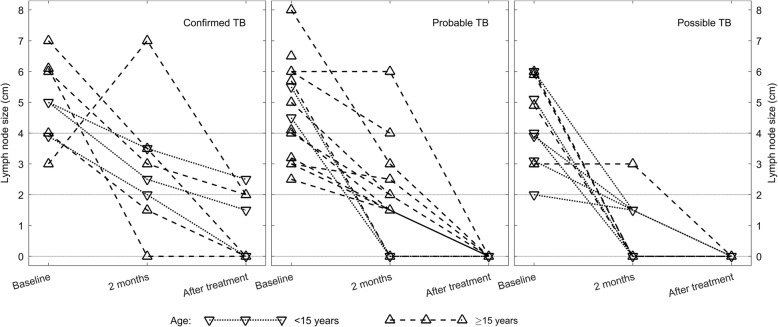
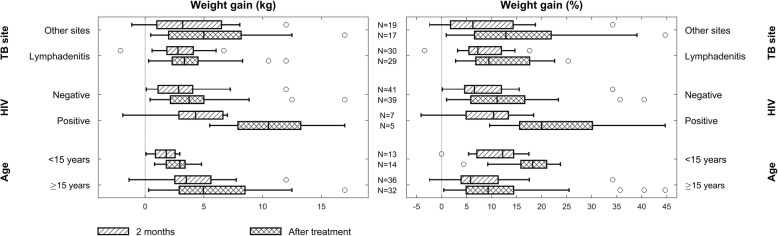
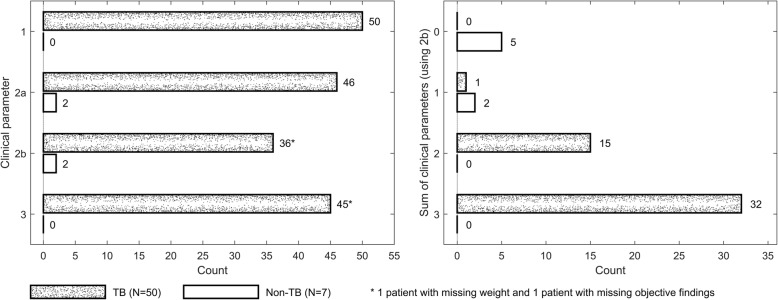
BACKGROUND: Diagnosing extrapulmonary tuberculosis (EPTB) is challenging and many patients are initiated on empirical anti-TB treatment without a laboratory confirmed diagnosis. Monitoring treatment response is thus important to ensure correct diagnosis and proper disease management. The definition of satisfactory response to treatment in EPTB remains unclear. The objectives of this study were to describe the clinical presentation of EPTB and the effect of treatment on clinical parameters. Further, to assess if simple clinical parameters, without laboratory data, could evaluate treatment response. METHODS: Prospective cohort study of presumptive EPTB patients at Mnazi Mmoja Hospital, Zanzibar. By using a composite reference standard, patients were categorized as TB or non-TB cases. The TB patients were followed during anti-TB treatment. RESULTS: There were 64 TB and 62 non-TB cases. The frequency of symptoms at baseline were comparable in TB and non-TB patients, with lymphadenitis and pleuritis as the most common manifestations. Among TB cases, there was a trend towards regression of lymphadenopathy after 2 months, and at treatment completion 24/28 (86%) cases showed full regression. Weight gain ≥5% was reported in 36/49 (73%) of the TB patients at 2 months and in 38/46 (83%) at treatment completion. After 2 months of treatment, a combination of clinical parameters; improvement of symptoms (50/50), ≥5% weight gain (36/49) and regression of physical signs (45/49) correlated with the treatment response. CONCLUSIONS: An algorithm including only simple clinical parameters could be used as an easy tool to assess treatment responses in low-resource settings. However, this needs to be tested on a larger sample size.
Overview
The claims and statistics of this paper haven’t been checked yet.
Free: it reads the open-access text and checks the first 5 claims that cite a source we can check. Create a free account to check every claim.
Integrity signals
Registry
Cites
Statistics
Figures
Verification
Claims the paper makes
The claims and statistics of this paper haven’t been checked yet.
Free: it reads the open-access text and checks the first 5 claims that cite a source we can check. Create a free account to check every claim.
Claims other papers make about this one
Each is checked against this paper’s own text: does it say what the citing paper says it does?
The cited source says what the claim attributes to it.
In the citing paper
“These findings are in agreement with other studies [23, 24], and highlight that these simple parameters can be used to monitor treatment response at a relatively early stage, and non-responders could be managed correctly and can prevent unnecessary continuation of treatment.”
From Improving diagnosis of tuberculous lymphadenitis by combination of cytomorphology and MPT64 immunostaining on cell blocks from the fine needle aspirates (2022) · cites this paper as [23]
Self-check
Percentages, sums and reported differences re-computed from the paper’s own numbers.
The self-check needs the paper’s full text.
Citations
Cites
EuroQol: a new facility for the measurement of health-related quality of life
(1990) · Health Policy · doi:10.1016/0168-8510(90)90421-9 · Cited by 15,736 · cited 1×
“Improvement in symptoms can be assessed by a symptoms count ratio [3], or self-rated health using the EQ-5D 3 level version [8].”
MethodKarnofsky, D. A., Abelmann, W. H., Craver, L. F., & Burchenal, J. H. (1948) · Cancer · doi:10.1002/1097-0142(194811)1:4<634::aid-cncr2820010410>3.0.co;2-l · Cited by 2,248
Müller, M., Wandel, S., Colebunders, R., Attia, S., Furrer, H., & Egger, M. (2010) · The Lancet Infectious Diseases · doi:10.1016/s1473-3099(10)70026-8 · Cited by 755
Paradoxical Worsening of Tuberculosis Following Antiretroviral Therapy in Patients with AIDS
NARITA, M., ASHKIN, D., HOLLENDER, E. S., & PITCHENIK, A. E. (1998) · American Journal of Respiratory and Critical Care Medicine · doi:10.1164/ajrccm.158.1.9712001 · Cited by 608
Paradoxical reactions during tuberculosis treatment in patients with and without HIV co-infection
Breen, R. A. M. (2004) · Thorax · doi:10.1136/thx.2003.019224 · Cited by 367
Cheng, V., Ho, P., Lee, R., Chan, K., Chan, K., Woo, P., Lau, S., & Yuen, K. (2002) · European Journal of Clinical Microbiology & Infectious Diseases · doi:10.1007/s10096-002-0821-2 · Cited by 342
Cheng, V. C. C., Yam, W. C., Woo, P. C. Y., Lau, S. K. P., Hung, I. F. N., Wong, S. P. Y., Cheung, W. C., & Yuen, K. Y. (2003) · European Journal of Clinical Microbiology & Infectious Diseases · doi:10.1007/s10096-003-0998-z · Cited by 186
Lack of Weight Gain and Relapse Risk in a Large Tuberculosis Treatment Trial
Khan, A., Sterling, T. R., Reves, R., Vernon, A., Horsburgh, C. R., & and the Tuberculosis Trials Consortium (2006) · American Journal of Respiratory and Critical Care Medicine · doi:10.1164/rccm.200511-1834oc · Cited by 185
Hawkey, C. R., Yap, T., Pereira, J., Moore, D. A. J., Davidson, R. N., Pasvol, G., Kon, O. M., Wall, R. A., & Wilkinson, R. J. (2005) · Clinical Infectious Diseases · doi:10.1086/429317 · Cited by 170
Paradoxical reactions and immune reconstitution inflammatory syndrome in tuberculosis
Bell, L. C. K., Breen, R. A. M., Miller, R. F., Noursadeghi, M., & Lipman, M. C. I. (2015) · International Journal of Infectious Diseases · doi:10.1016/j.ijid.2014.12.030 · Cited by 126
Research works printed but not linked: 1
- World Health Organization Global tuberculosis report 2016. WHO/HTM/TB/201613 2016 Geneva WHO
Cited by
Clinical features of tuberculous lymphadenitis in a low-incidence country
Mathiasen, V. D., Andersen, P. H., Johansen, I. S., Lillebaek, T., & Wejse, C. (2020) · International Journal of Infectious Diseases · doi:10.1016/j.ijid.2020.07.011 · Cited by 56
Host biomarkers for monitoring therapeutic response in extrapulmonary tuberculosis
Ambreen, A., Khaliq, A., Naqvi, S. Z. H., Tahir, A., Mustafa, M., Chaudhary, S. U., Mirza, S., & Mustafa, T. (2021) · Cytokine · doi:10.1016/j.cyto.2021.155499 · Cited by 24
Self-citationKlingmüller, A., Feldmann, M., Rohr, S., Helmhold, L., Junker, L., Scherer, M., Vehreschild, J. J., Schmidt-Hellerau, K., Hoffmann, A. M., Jantsch, J., et al. (2025) · Infection · doi:10.1007/s15010-025-02500-4 · Cited by 17
“…al. applied a straightforward scoring system in a cohort of EPTB patients in Zanzibar, Tanzania, assigning 1 point each for a reduction in reported symptoms, a minimum 5% weight gain from baseline, and regression of objective findings, such as a decrease in lymph node size observed clinically [12].”
InfluentialEletreby, R., Elsharkawy, A. M., Mohamed, R., Hamed, M., Ibrahim, E. K., & Fouad, R. (2024) · BMC Infectious Diseases · doi:10.1186/s12879-024-09367-0 · Cited by 14
“In a recent study [44] evaluating treatment response in extrapulmonary tuberculosis in a low-resource setting, in TB cases with successful treatment outcomes, ≥ 5% weight gain was noted in 73 and 83% of the cases at 2 months and at treatment completion.”
BackgroundSingh, U. B., Singh, M., Rodrigues, C. S., Christopher, D. J., Mahajan, N., Srivastav, A., Singh, K. J., Kanswal, S., Rao, M. V. V., Kazi, M. I., et al. (2024) · Scientific Reports · doi:10.1038/s41598-024-64688-z · Cited by 19
Ulain, N., Ali, A., Khan, M., Ullah, Z., Shaheen, L., Shareef, N., Yasir, M., & Mustafa, T. (2022) · PLoS ONE · doi:10.1371/journal.pone.0276064 · Cited by 8
“These findings are in agreement with other studies [23, 24], and highlight that these simple parameters can be used to monitor treatment response at a relatively early stage, and non-responders could be managed correctly and can prevent unnecessary continuation of treatment.”
ResultSelf-citationKhalid, S., Ambreen, A., Khaliq, A., Ullah, H., Mustafa, M., & Mustafa, T. (2023) · Scientific Reports · doi:10.1038/s41598-022-26823-6 · Cited by 9
Self-citationAmbreen, A., Tahseen, S., Wali, A., Jamil, M., Naqvi, S. Z. H., Safdar, N., & Mustafa, T. (2021) · PLoS ONE · doi:10.1371/journal.pone.0259801 · Cited by 8
Self-citationSingh, R. P., Naranje, P., Bhalla, A. S., & Pandey, S. (2021) · Lung India · doi:10.4103/lungindia.lungindia_481_20 · Cited by 8
“432 Lung India • Volume 38 • Issue 5 • September-October 2021 status, weight gain during treatment, and resolution of systemic and organ‐based symptoms.[2] Commonly used laboratory tests include monitoring of blood level of acute phase reactants (C‐reactive protein and erythrocyte sedimentation rate).”
BackgroundEldaabossi, S., Saad, M. M., Aljawad, H., & Almuhainy, B. (2022) · BMC Infectious Diseases · doi:10.1186/s12879-022-07203-x · Cited by 6
“Empiric anti-tuberculous treatment may be started with isoniazid, rifampin, and pyrazinamide for two months followed by four months of two drugs (isoniazid and rifampin) until the final diagnosis of extrapulmonary tuberculosis can be confirmed [1, 2].”
BackgroundCurrent tuberculosis progress and molecular methods for identifying Mycobacterium tuberculosis
Madihi, S., Aainouss, A., Messaoudi, M. D. E., & Benani, A. (2026) · The American Journal of the Medical Sciences · doi:10.1016/j.amjms.2026.03.006 · Cited by 5
Grønningen, E., Nanyaro, M.-W. A., Ngadaya, E. S., & Mustafa, T. (2025) · PLoS ONE · doi:10.1371/journal.pone.0320691 · Cited by 5
“Response to treatment was defined as a ≥ 3-point improvement in symptoms as measured by patient (I) or clinician (I), weight gain (I) and improvement of objective findings such as size of lymph nodes, pleural effusions and ascites (I) [14,15,23].”
Self-citationCorrelation of serum amyloid A1 and interleukin-1beta in response to anti-tubercular therapy
Mishra, P., Verma, V. K., Barman, L., Sharma, J., Gupta, P., Mohan, A., & Arya, D. S. (2022) · The American Journal of the Medical Sciences · doi:10.1016/j.amjms.2021.12.014 · Cited by 4
Hassan, S., Mustafa, T., Muller, W., Torres, L., Marijani, M., Ngadaya, E. S., Mfinanga, S., Lema, Y. L., Grønningen, E., Jørstad, M. D., et al. (2024) · PLOS Global Public Health · doi:10.1371/journal.pgph.0003414 · Cited by 3
Self-citationImpact of empirical treatment in patients with extrapulmonary tuberculosis and their outcome
Rajagopal, J., Lavanya, S., & Ruthra kumar, S. (2024) · Egyptian Journal of Bronchology · doi:10.1186/s43168-024-00345-3 · Cited by 3
“Diagnosis often relies on clinical criteria, especially in low-and middle-income countries, where EPTB incidence varies and is prominent among HIV-positive individuals [6–9].”
Valarezo-Sevilla, D., Restrepo-Rodas, G., & Sarzosa-Terán, V. (2020) · Bionatura · doi:10.21931/rb/2020.05.01.10 · Cited by 3
Hassan, S., Purohit, M. R., Kanthali, M., Yaesoubi, R., Jain, S., & Mustafa, T. (2024) · Quality of Life Research · doi:10.1007/s11136-024-03860-4 · Cited by 2
“A similar question - naire has also been used in our two study sites [6 , 18 – 20 ].”
Self-citationPrimary Breast Tuberculosis Mastitis Manifested as Nonhealing Abscess
Hoang, H. H., El-Helou, E., Pop, C., Shall, A., Zaiter, M., Naccour, J., Nguyen, T. T. H., Ho, X. D., & Nguyen, V. C. (2022) · The Surgery Journal · doi:10.1055/s-0042-1749123 · Cited by 2
Sow, M., Camara, A., Sidibé, S., Kaba, I., Leno, N. N., Diallo, B., Camara, I., & Camara, L. M. (2021) · The Open Infectious Diseases Journal · doi:10.2174/1874279302113010011 · Cited by 2
“study at Mnazi Mmoja Hospital in Zanzibar (83%) [23] and the Phan et al.”
BackgroundOrbital tuberculosis: a case report and update on the role of imaging in treatment
Sohail, M., Maniar, A. S., Winn, B. J., Patel, S., Famuyide, A. O., & Glass, L. R. D. (2022) · Orbit · doi:10.1080/01676830.2022.2126499 · Cited by 3
Ismatov, B., Sereda, Y., Sahakyan, S., Gadoev, J., & Parpieva, N. (2021) · International Journal of Environmental Research and Public Health · doi:10.3390/ijerph18094817 · Cited by 2
“Moreover, the definition of a satisfactory response to treatment in EPTB is not well-defined and varies across countries [6].”
BackgroundAdams, E. C., Antel, K. R., Bailey, J. L., Brown, K. L., Chetty, D. R., Richardson, D., & Verburgh, E. R. (2025) · Southern African Journal of HIV Medicine · doi:10.4102/sajhivmed.v26i1.1679 · Cited by 1
Desai, S., & Biswas, J. (2025) · Oman Journal of Ophthalmology · doi:10.4103/ojo.ojo_42_24 · Cited by 1
Metastatic Tuberculous Chest Wall and Massive Psoas Abscesses in an Immunocompetent Patient
Abdulla, M. C. (2020) · International Journal of Mycobacteriology · doi:10.4103/ijmy.ijmy_183_19 · Cited by 1
“Extrapulmonary manifestations can be seen in 15% of the notified incident TB cases globally.[4] Musculoskeletal TB accounts for 1%–3% of tuberculous infections.”
BackgroundSingh, U. B., Ray, Y., Kanswal, S., Sharma, H. P., Aayilliath, A., Wig, N., Ahuja, V., Biswas, A., & Velpandian, T. (2023) · The International Journal of Tuberculosis and Lung Disease · doi:10.5588/ijtld.23.0149 · Cited by 1
Istiharah, T. R., Djannah, F., & Ajmala, I. E. (2022) · Unram Medical Journal · doi:10.29303/jku.v11i4.797 · Cited by 3
Response to Therapy in Abdominal Tuberculosis
Birda, C. L., & Sharma, V. (2022) · Springer eBooks · doi:10.1007/978-981-16-9053-2_21
Ivaturi, N. V., Sashindran, V., Singh, A. R., & Aggarwal, V. (2022) · Journal of Marine Medical Society · doi:10.4103/jmms.jmms_153_21
Evaluation of treatment outcome in extrapulmonary tuberculosis: A mixed method study from Puducherry
Mahendran, R., Ganapathy, K., & Ranganadin, P. (2024) · Indian Journal of Tuberculosis · doi:10.1016/j.ijtb.2024.08.014
Risajaya, S. A., Bramantono, Arfijanto, M. V., & Amifta, R. N. (2026) · Clinical Infection in Practice · doi:10.1016/j.clinpr.2026.100639
Bhagwat, G., Asalampuram, P., Julka, A., Lundborg, C. S., & Purohit, M. R. (2026) · PLOS Global Public Health · doi:10.1371/journal.pgph.0006383
Rokhmah, N. N., Gunawan, D. O., & Ningsih, W. (2025) · Lumbung Farmasi Jurnal Ilmu Kefarmasian · doi:10.31764/lf.v6i1.24712
“Hasil penelitian Jorstad, melissa, davidsen, et al. (2019) Diantara 64 kasus tuberkulosis ekstra paru 10 (16”
Kotwal, A., Sethi, V., Singh, M., Raghuvanshi, S., Jethani, V., & Chandra, S. (2026) · International Journal of Research in Medical Sciences · doi:10.18203/2320-6012.ijrms20264223
Metadata
- Authors
- Jørstad, M. D., Dyrhol-Riise, A. M., Aßmus, J., Marijani, M., Sviland, L., & Mustafa, T.
- Affiliations
- Haukeland University Hospital (NO)
- Government of Tanzania (TZ)
- Corresponding author
- Jørstad, Melissa Davidsen
- Venue
- BMC Infectious Diseases
- Published
- 2019-05-16
- Volume
- 19
- Issue
- 1
- Pages
- 426-426
- ISSN
- 1471-2334 (ISSN-L)
- PMC
- PMC6524265
- OpenAlex
- W2945413152
- Cited by
- 32
- References
- 23
- Citations by year
- 2026: 3 · 2025: 4 · 2024: 7 · 2023: 2 · 2022: 8 · 2021: 5 · 2020: 3
- FWCI
- 3.07
- Type
- journal article
- Language
- en
- Open access
- gold
- doi.org
- Licence
- cc-by
- creativecommons.org/licenses/by/4.0/ (tdm)
- creativecommons.org/licenses/by/4.0/ (vor)
- Locations
- BMC Infectious Diseases (publishedVersion, cc-by)
- Europe PMC (PubMed Central) (publishedVersion, cc-by)
- PubMed Central (publishedVersion, cc-by)
- PubMed (publishedVersion)
- NORA - Norwegian Open Research Archives (submittedVersion, cc-by)
- DOAJ (DOAJ: Directory of Open Access Journals) (submittedVersion, cc-by-sa)
- Funders
- Norges Forskningsråd (project number 234457)
- Haukeland Universitetssjukehus (Not applicable)
- Topics
- Health Sciences › Medicine › Infectious Diseases › Tuberculosis Research and Epidemiology
- Health Sciences › Medicine › Infectious Diseases › Diagnosis and treatment of tuberculosis
- Health Sciences › Medicine › Infectious Diseases › Infectious Diseases and Tuberculosis
- Keywords
- extrapulmonary tuberculosis, treatment response assessment, clinical features, weight gain, lymphadenitis, pleurisy, resource-limited settings, diagnostic algorithm, Zanzibar
- MeSH terms
- Lymphadenopathy, Adolescent, Adult, Antitubercular Agents, Ascitic Fluid, Child, Female, Hospitals, Humans, Male, Middle Aged, Pleural Effusion, Prospective Studies, Tanzania, Tuberculosis, Cohort Studies, Weight Gain
About these checks
Registry, retraction, Cites and statistics results are computed, not judged, with one exception: a printed reference that no index lists is read once by a model before it counts as a citation error. Claims are extracted by a model and kept only when their quote appears verbatim in the text; each cited source is then checked, with a model’s help, for whether it says what the claim relies on. Those verdicts can be wrong — read the claim’s quote and the cited source before relying on one.
Statistics and arithmetic are recomputed, not judged.
Confidence bands are shown only for fields calibrated on our annotated test set. None is calibrated yet, so no band is shown.
What counts as a claim ›How we measure confidence ›How we check this ›
Are you an author, or do you see a problem with this page? Request a review
Data sources
Bibliographic data: Semantic Scholar, OpenAlex, Crossref.
Contains information from the Semantic Scholar Academic Graph Datasets, made available under the ODC Attribution License (ODC-BY 1.0).
Semantic Scholar’s data is described in: Kinney, R., et al. (2023). The Semantic Scholar Open Data Platform. arXiv:2301.10140.
