

A systematic review of cases of meningitis in the absence of cerebrospinal fluid pleocytosis on lumbar puncture
Open accessThe DOI matches its Crossref record; 67 of the 67 references it cites were found in a registry or an index.
Abstract
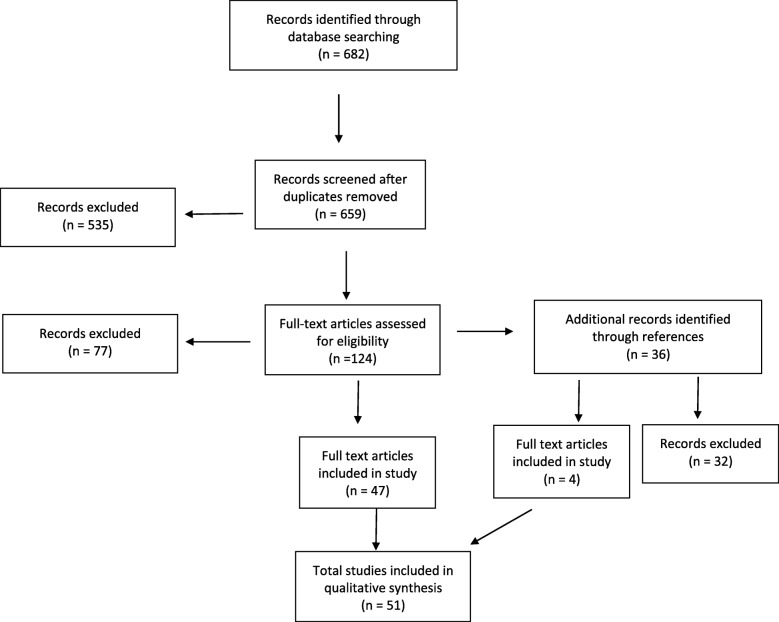
BACKGROUND: Definitive diagnosis of meningitis is made by analysis of cerebrospinal fluid (CSF) culture or polymerase chain reaction (PCR) obtained from a lumbar puncture (LP), which may take days. A timelier diagnostic clue of meningitis is pleocytosis on CSF analysis. However, meningitis may occur in the absence of pleocytosis on CSF. Areas of Uncertainty: A diagnosis of meningitis seems less likely without pleocytosis on CSF, leading clinicians to prematurely exclude this. Further, there is little available literature on the subject. METHODS: Ovid/Medline and Google Scholar search was conducted for cases of CSF culture-confirmed meningitis with lack of pleocytosis. Inclusion criterion was reported cases of CSF culture-positive or PCR positive meningitis in the absence of pleocytosis on LP. Exclusion criteria were pleocytosis on CSF, cases in which CSF cultures/PCR were not performed, and articles that did not include CSF laboratory values. RESULTS: A total of 124 cases from 51 articles were included. Causative organisms were primarily bacterial (99 cases). Outcome was reported in 86 cases, 27 of which died and 59 survived. Mortality in viral, fungal and bacterial organisms was 0, 56 and 31%, respectively. The overall percentage of positive initial CSF PCR/culture for viral, fungal and bacterial organisms was 100, 89 and 82%, respectively. Blood cultures were performed in 79 of the 124 cases, 56 (71%) of which ultimately cultured the causative organism. In addition to bacteremia, concomitant sources of infection occurred in 17 cases. CONCLUSIONS: Meningitis in the absence of pleocytosis on CSF is rare. If this occurs, causative organism is likely bacterial. We recommend ordering blood cultures as an adjunct, and, if clinically relevant, concomitant sources of infection should be sought. If meningitis is suspected, empiric antibiotics/antifungals should be administered regardless of initial WBC count on lumbar puncture.
Overview
The claims and statistics of this paper haven’t been checked yet.
Free: it reads the open-access text and checks the first 5 claims that cite a source we can check. Create a free account to check every claim.
Integrity signals
Registry
Cites
Statistics
Figures
Verification
Claims the paper makes
The claims and statistics of this paper haven’t been checked yet.
Free: it reads the open-access text and checks the first 5 claims that cite a source we can check. Create a free account to check every claim.
Claims other papers make about this one
Each is checked against this paper’s own text: does it say what the citing paper says it does?
The cited source says what the claim attributes to it.
In the citing paper
“We recommend reserving first-line FAME use to community-acquired ME and performing the panel systematically in immunocompromised patients and in children under 2 years, regardless of CSF WBC, because pleocytosis may be absent in these groups (20–22).”
From Optimized use of the FilmArray Meningitis/Encephalitis panel for early discontinuation of antibiotic therapy (2026) · cites this paper as [22]
Self-check
Percentages, sums and reported differences re-computed from the paper’s own numbers.
The self-check needs the paper’s full text.
Citations
Cites
Hayward, R. D., & O'Reilly, G. V. A. (1976) · The Lancet · doi:10.1016/s0140-6736(76)92904-4 · Cited by 647
Tintinalli’s Emergency Medicine: A Comprehensive Study Guide
Dooley-Hash, S. (2011) · JAMA · doi:10.1001/jama.2011.930 · Cited by 556
Bacterial meningitis in children
Sáez-Llorens, X., & McCracken, G. H. (2003) · The Lancet · doi:10.1016/s0140-6736(03)13693-8 · Cited by 533
Tintinalli's Emergency Medicine: A Comprehensive Study Guide
Tintinalli, J. E., Chief, Stapczynski, J. S., John, O. P., Yealy, D. M., Meckler, G. D., & Cline, D. M. (2015) · LA Referencia (Red Federada de Repositorios Institucionales de Publicaciones Científicas) · Cited by 521
Mylonakis, E., Hohmann, E. L., & Calderwood, S. B. (1998) · Medicine · doi:10.1097/00005792-199809000-00002 · Cited by 475
Garges, H. P., Moody, M. A., Cotten, C. M., Smith, P. B., Tiffany, K. F., Lenfestey, R., Li, J. S., Fowler, V. G., & Benjamin, D. K. (2006) · Pediatrics · doi:10.1542/peds.2005-1132 · Cited by 351
Meningitis after Lumbar Puncture in Children with Bacteremia
Teele, D. W., Dashefsky, B., Rakusan, T. A., & Klein, J. O. (1981) · New England Journal of Medicine · doi:10.1056/nejm198110293051810 · Cited by 137
Roberts and Hedges’ Clinical Procedures in Emergency Medicine
Roberts, J. R., Custalow, C. B., Thomsen, T. W., & Hedges, J. R. (2013) · Andalas University Repository (Andalas University) · Cited by 94
'Normal' CSF in Bacterial Meningitis
Onorato, I. M., Wormser, G. P., & Nicholas, P. (1980) · JAMA · doi:10.1001/jama.244.13.1469 · Cited by 81
Neonatal candidiasis, meningitis, andarthritis: Observations and a review of the literature
Klein, J. D., Yamauchi, T., & Horlick, S. P. (1972) · The Journal of Pediatrics · doi:10.1016/s0022-3476(72)80369-x · Cited by 78
Research works printed but not linked: 1
- 14. Alvarez EF, Olarte KE, Ramesh MS. Purpura fulminans secondary to Streptococcus pneumoniae meningitis. Case Rep Infect Dis. 2012;2012:508503.
Cited by
Cerebrospinal fluid in COVID-19: A systematic review of the literature
Lewis, A., Frontera, J., Placantonakis, D. G., Lighter, J., Galetta, S., Balcer, L., & Melmed, K. R. (2021) · Journal of the Neurological Sciences · doi:10.1016/j.jns.2021.117316 · Cited by 169
“However, there have been reports of patients without pleocytosis who had a positive CSF PCR for Enterovirus, Echovirus, Adenovirus and Herpes and CSF can be acellular in the early stages of herpes encephalitis [259,261].”
Li, S., Nguyen, I. P., & Urbanczyk, K. (2020) · Quantitative Imaging in Medicine and Surgery · doi:10.21037/qims-20-886 · Cited by 52
“Other major drawbacks include the laboratory time required for CSF culture (7,8).”
BackgroundAdvances in the Applications of Bioinformatics and Chemoinformatics
Raslan, M. A., Raslan, S. A., Shehata, E. M., Mahmoud, A. S., & Sabri, N. A. (2023) · Pharmaceuticals · doi:10.3390/ph16071050 · Cited by 51
“This condition can be caused by a diverse range of pathogens [40].”
BackgroundHathout, R. M., AbdelHamid, S. G., El-Housseiny, G. S., & Metwally, A. A. (2020) · Scientific Reports · doi:10.1038/s41598-020-78327-w · Cited by 41
Bacterial meningitis presenting with a normal cerebrospinal fluid leukocyte count
van Soest, T. M., Chekrouni, N., van Sorge, N. M., Brouwer, M. C., & van de Beek, D. (2022) · Journal of Infection · doi:10.1016/j.jinf.2022.02.029 · Cited by 36
Intracranial CNS Infections: A Literature Review and Radiology Case Studies
Nguyen, I., Urbanczyk, K., Mtui, E. E., & Li, S. (2019) · Seminars in Ultrasound CT and MRI · doi:10.1053/j.sult.2019.09.003 · Cited by 27
Djukic, M., Lange, P., Erbguth, F., & Nau, R. (2022) · Journal of Neuroinflammation · doi:10.1186/s12974-022-02538-3 · Cited by 25
“For this reason, early in the course of bacterial meningitis, particularly in meningococcal meningitis (and pneumococcal meningitis in splenectomized and otherwise immunocompromised patients), the causative bacterium can be grown in the CSF, whereas the CSF leukocyte density and the CSF protein content are normal or s…”
BackgroundSkudal, H. K., Lorentzen, Å. R., Stenstad, T., Quist‐Paulsen, E., Egeland, J., Fevang, B., Jaioun, K., Hansen, B. Å., Solheim, A. M., Tveten, Y., et al. (2024) · European Journal of Clinical Microbiology & Infectious Diseases · doi:10.1007/s10096-024-04855-2 · Cited by 18
Current methods in the diagnosis of invasive meningococcal disease
Çiftçi, E., ÖCAL, D. N., Somer, A., Tezer, H., Yılmaz, D., Bozkurt, S., Dursun, O. U., Merter, Ş., & Dinleyici, E. Ç. (2025) · Frontiers in Pediatrics · doi:10.3389/fped.2025.1511086 · Cited by 17
“However, reports have also documented cases of bacterial meningitis with a normal CSF WBC count (54).”
Kwizera, R., Kiiza, T. K., Akampurira, A., Kimuda, S., Mugabi, T., & Meya, D. B. (2024) · Open Forum Infectious Diseases · doi:10.1093/ofid/ofae487 · Cited by 14
“Lymphocytes are most often elevated in cryptococcal meningitis; however, 30% to 50% of persons with cryptococcal meningitis will have an absence of CSF pleocytosis [22].”
BackgroundHoriba, K., Suzuki, M., Tetsuka, N., Kawano, Y., Yamaguchi, M., Okumura, T., Suzuki, T., Torii, Y., Kawada, J., Morita, M., et al. (2021) · BMC Infectious Diseases · doi:10.1186/s12879-021-06231-3 · Cited by 13
“result in normal CSF findings and is negative for CSF culture testing due to the small number of bacteria [14].”
BackgroundLuz, A. H. M., Borges, I. S., Terence, L. T., Moreira, M. R., & de Oliveira, S. V. (2020) · Journal Health NPEPS · doi:10.30681/252610104674 · Cited by 8
Teoh, T., Powell, J., O’Keeffe, J., Donlon, E., Dillon, L., Lenihan, M., Mostyn, A., Power, L., Boers, P., Stapleton, P. J., et al. (2022) · PloS One · doi:10.1371/journal.pone.0265187 · Cited by 7
“Furthermore, a systemic review by Troendle and Pettigrew describes the occurrence of meningitis by bacterial, fungal and viral pathogens in the absence of CSF pleocytosis, albeit they concluded that this is a rare occurrence [24].”
BackgroundDiagnostic Utility of Cerebrospinal Fluid Procalcitonin in Neonatal Meningitis
Meghana, N., Bandiya, P., Jagannatha, B., Shivanna, N., Benakappa, N., & Bandyopadhyay, T. (2022) · Journal of Tropical Pediatrics · doi:10.1093/tropej/fmac043 · Cited by 7
Cüce, F., Tulum, G., Isik, M. I., Jalili, M., Girgin, G., Karadaş, Ö., Baş, N., Özcan, B., Savaşçı, Ü., Şakir, S., et al. (2025) · Frontiers in Medicine · doi:10.3389/fmed.2025.1659653 · Cited by 6
“The gold standard for confirming CNSI involves isolating the microbial agent or detecting its antigen in cerebrospinal fluid (CSF), typically via culture or polymerase chain reaction (PCR) analysis following lumbar puncture (LP) (1, 2).”
InfluentialJaber, L., Lévy, C., Ouldali, N., Varon, E., Taha, M., Bonacorsi, S., Béchet, S., Angoulvant, F., Cohen, R., & Rybak, A. (2024) · International Journal of Infectious Diseases · doi:10.1016/j.ijid.2024.107256 · Cited by 5
Acute infections of the central nervous system in children and adults: diagnosis and management
Trujillo-Gómez, J., Navarro, C. E., Atehortúa-Muñoz, S. L., & Flórez, I. D. (2024) · Minerva Medica · doi:10.23736/s0026-4806.24.09097-9 · Cited by 6
Borowiak, A., Safranow, K., Sarna, A., & Łoniewska, B. (2025) · Journal of Clinical Medicine · doi:10.3390/jcm14020414 · Cited by 5
Atypical varicella zoster virus CNS infections: Diagnostic challenges and the role of multiplex PCR
Liu, K.-S., Liu, P., Tseng, C.-H., Liu, C.-W., Huang, W.-H., Huang, H.-P., LI, C.-R., Yang, T.-A., Wang, H. C., & Yeh, T.-K. (2025) · Diagnostic Microbiology and Infectious Disease · doi:10.1016/j.diagmicrobio.2025.116893 · Cited by 4
Rate of bacterial positivity following antibiotic initiation: a systematic review and meta-analysis
Itaeli, A. M., Joseph, P. E., Sunguya, B. F., & Bwire, G. M. (2025) · Systematic Reviews · doi:10.1186/s13643-025-03032-6 · Cited by 4
“For example, blood cultures often yield bacterial growth compared to cerebrospinal fluid (CSF) cultures, which in meningitis cases, may exhibit pleocytosis [30].”
Varicella-Zoster meningitis with normal CSF cellularity: A rare case report
Sabbagh, B., Seijari, M. N., Albuni, M. K., Barakat, M., & Alfitori, G. B. (2022) · IDCases · doi:10.1016/j.idcr.2022.e01484 · Cited by 4
“Whereas viral and fungal infections caused infection with normal cytology at a lower rate [7].”
BackgroundPelkonen, T., Urtti, S., Cardoso, O., Roine, I., Kyaw, M. H., & Peltola, H. (2021) · The Pediatric Infectious Disease Journal · doi:10.1097/inf.0000000000003305 · Cited by 4
“A review of BM in the absence of CSF pleocytosis conclude that immunocompromise, comorbidities or fulminant BM are potential causes of improper immune response.(12) Here, young age and low weight increased the probability of improper host response.”
BackgroundKitamura, A., Nakamura, R., Sugiyama, S., Tamura, R., Tsukamoto, T., Yabata, H., Kobashi, S., Tamaki, Y., Ogawa, N., Yamakawa, I., et al. (2025) · Journal of NeuroVirology · doi:10.1007/s13365-025-01277-4 · Cited by 3
“In a review of meningitis cases without CSF pleocyto - sis, the most frequently identified pathogens were bacterial (99 of 124 cases), followed by viral (26 of 124 cases), and fungal organisms (9 of 124 cases) (Troendle and Pettigrew 2019 ).”
Management of acute bacterial meningitis in a limited resource setting: an Egyptian consensus model
Zaky, S., Elbadry, M., Saeed, M. A., Fathelbab, H., Abdel-Salam, F., Abdel-Hamid, M. G., Eid, A., Bakr, A. A., Maher, A., Abdelrahman, M. M., et al. (2025) · The Egyptian Journal of Internal Medicine · doi:10.1186/s43162-025-00398-w · Cited by 3
“If the initial LP could be normal due to early presentation within hours of the onset of symptoms, these patients may benefit from a second LP as leukocytosis is likely to be present on repeat LP [34].”
Cohen, R., Mahajnah, M. M., Shlonsky, Y., Golan-Shany, O., Romem, A., Halevy, A., Natan, K., & Genizi, J. (2023) · Brain Sciences · doi:10.3390/brainsci13020361 · Cited by 4
“Although both Dandy’s original criteria [22] and the revised criteria [1] exclude CSF pleocytosis, these criteria do not necessarily exclude infection.”
BackgroundPathogenesis of tuberculous meningitis (TBM): a mini-review
Haiga, Y. (2022) · Indonesia Journal of Biomedical Science · doi:10.15562/ijbs.v16i1.379 · Cited by 3
Acute Meningitis in Mansoura Fever Hospital
Monem, S. A., Amely, A. A., Khalifa, N., taha, O., & Sharaf, A. (2021) · Suez Canal University Medical Journal · doi:10.21608/scumj.2022.204007 · Cited by 2
Etiological and predictive factors of Acute Meningitis in Mansoura fever hospital, Egypt
Sameh, M., Shora, H., Aya, M. A. A., Naglaa, A. K., & Ahmed, L. S. (2021) · African Journal of Microbiology Research · doi:10.5897/ajmr2021.9576 · Cited by 2
“Without any treatment, the case-fatality rate can reach 70%, and one in five survivors of bacterial meningitis may be left with permanent disability including hearing loss, neurologic disability, and cognitive dysfunction (Gudina et al., 2018; Tsai et al., 2019).”
BackgroundPretorius, M., & Weichert, I. (2022) · Oxford Medical Case Reports · doi:10.1093/omcr/omab133 · Cited by 2
“His CSF results are not in keeping with acute viral meningitis, but cases with normal cell counts and biochemistry have been reported in a systematic review [1].”
BackgroundMicrobiological Outcomes Associated With Low Leukocyte Counts in Cerebrospinal Fluid
Wald, M., Merisor, S., Zachary, P., Augereau, O., Gravier, S., Jaulhac, B., Briel, D. D., Velay, A., Gregorowicz, G., & Martinot, M. (2020) · Open Forum Infectious Diseases · doi:10.1093/ofid/ofaa597 · Cited by 2
“[8] included similar rates of positivity for N.”
BackgroundNicolau-Guillaumet, N., Moutel, M., Plouzeau-Jayle, C., Pean de Ponfilly, G., Courbin, V., Ranc, A.-G., Revillet, H., Mourvillier, B., Hentzien, M., Muggeo, A., et al. (2026) · Microbiology Spectrum · doi:10.1128/spectrum.00566-26 · Cited by 1
“We recommend reserving first-line FAME use to community-acquired ME and performing the panel systematically in immunocompromised patients and in children under 2 years, regardless of CSF WBC, because pleocytosis may be absent in these groups (20–22).”
Role of lumbar puncture in clinical outcome of suspected acute bacterial meningitis
Saha, A., KANAMGODE, S. S., Malempati, S. C., Chaudhuri, S., & Scott, J. (2023) · World Journal of Neurology · doi:10.5316/wjn.v9.i4.37 · Cited by 1
Investigation on biochemical parameters of cerebrospinal fluid in camels with neurological disorders
Shawaf, T., Nahas, A. E., Melegi, A., Al-Bulushi, S., Aiyan, A. A., & Eljalli, I. (2020) · Journal of Camel Practice and Research · doi:10.5958/2277-8934.2020.00024.7 · Cited by 1
Single Channel Magnetic Induction Measurement for Meningitis Detection
Ahmed, A. A., Zakaria, Z., Ali, M. H., Pusppanathan, J., Rahim, R. A., Muji, S. Z. M., Noor, A. M., Rahiman, M. H. F., Hassan, M. K. A., Safar, M. J. A., et al. (2021) · Lecture notes in mechanical engineering · doi:10.1007/978-981-16-0866-7_15 · Cited by 1
SARS-CoV-2 Neurotropism in a 12-Year-Old Filipino Boy with Focal Encephalitis
Castro, A. D. P., Valencia, M. A. A., & Padua, J. R. (2022) · Annals of Child Neurology · doi:10.26815/acn.2022.00087 · Cited by 1
Akute erregerbedingte Meningoenzephalitiden am Universitätsklinikum Würzburg von 2006-2015
Rost, A.-L. (2021) · Online Publication Service of Würzburg University (Würzburg University) · doi:10.25972/opus-24084 · Cited by 1
Bacterial Meningitis Beyond the Neonatal Period
Kaplan, S. L., & Kim, K. S. (2025) · Elsevier eBooks · doi:10.1016/b978-0-323-82763-8.00031-5 · Cited by 1
Mine, Y., Miyagami, T., Furuya, S., Furusaka, T., Kondo, Y., Arikawa, M., & Naito, T. (2022) · Cureus · doi:10.7759/cureus.32036
“In a previous study of patients with suspected meningitis and initial negative CSF findings, 88% had an elevated CSF cell count on repeat lumbar puncture [10].”
BackgroundJaleel, L. K., Umran, M. A., Kaddo, K. B. J., & Ad'hiah, A. H. (2022) · Iraqi Journal of Science · doi:10.24996/ijs.2023.64.11.12
“Therefore, one LP sample may not be sufficient to diagnose CSF pleocytosis[14].”
BackgroundPCR-positive meningococcal CSF infection without pleocytosis but high IL-6 and IL-8
Dyckhoff-Shen, S., Pfister, H., Koedel, U., & Klein, M. (2024) · Infection · doi:10.1007/s15010-024-02275-0
“Most cases of meningitis which initially lack an elevation of CSF cell count showed CSF pleocytosis on second lumbar puncture, suggesting that CSF was taken too early in the course of infection to detect meningeal inflammation [15].”
BackgroundSharma, S., Acharya, J., Thapa, J., Khadka, D. K., Aryal, S., Kayastha, M., Sharma, S. K., Chalise, B. S., Bhandari, P., Karn, R., et al. (2024) · Journal of Institute of Science and Technology · doi:10.3126/jist.v29i2.67889
“Our finding of pneumococci and meningococci on culture of CSF specimens without pleocytosis was similar to that described elsewhere (Hase et al., 2014; Troendle & Pettigrew, 2019).”
Bacterial Infections of the Nervous System
Dantuluri, K. L., & Ahmed, A. I. (2024) · Elsevier eBooks · doi:10.1016/b978-0-443-10944-7.00133-5
Urzúa, C. A., Vega-Codd, M., Pavesio, C. E., Schlaen, A., Herbort, C. P., Couto, C. A., Arellanes-García, L., Curi, A. L. L., de‐la‐Torre, A., del Río, L. E. C., et al. (2025) · Eye · doi:10.1038/s41433-025-03892-1
“Importantly, CSF pleocytosis is not a reliable indicator of CNS inflammatory disease, as it may be present in subjects without CNS involvement and absent in severe CNS infections [2–4].”
H1N1-associated acute leukoencephalopathy: An unusual presentation in a young adult indian male
Joshi, S., Pai, A. R., & Varma, M. (2025) · IDCases · doi:10.1016/j.idcr.2025.e02312
“Additionally, a repeat CSF sample obtained later during the hospital course showed occasional lymphocytes, which may be due to early CSF sampling with regard to the earlier analysis [6,8,9].”
Kane, A., Kane, M. A., Mbaye, A., Diagne, G., Sow, N. F., Sène, E. S., Sow, A., Dieng, Y. J., Cissé, D. F., Dione, M. P. A., et al. (2025) · Open Journal of Pediatrics · doi:10.4236/ojped.2025.155073
Peng, H., Yuan, R., Zheng, Y., Liu, P., & Li, P. (2025) · Clinical Neurology and Neurosurgery · doi:10.1016/j.clineuro.2025.109276
Boulfouyoul, A., Ettoini, K., & Oulmaati, A. (2026) · Cureus · doi:10.7759/cureus.106504
“Although meningitis without cerebrospinal fluid pleocytosis is uncommon, it has been documented and may lead to false reassurance if clinicians rely primarily on cerebrospinal fluid leukocyte counts to exclude central nervous system infection [4].”
Volpé, T., & Chauvin, A. (2026) · European Journal of Emergency Medicine · doi:10.1097/mej.0000000000001311
RÉ, G. D. D., SCHOENARDIE, G. Z., Lodi, P. G. Z., Neto, J. B. C., & Siqueira, L. D. O. (2026) · doi:10.5335/9786556071213/cap.4
da Silva, E. G. D. M., Nava, B. S., Fardim, L. K., & Siqueira, L. D. O. (2026) · doi:10.5335/9786556071213/cap.10
Provin, E., Martin, A. S., Loss, N. D. R., & Siqueira, L. D. O. (2026) · doi:10.5335/9786556071213/cap.7
SCHOENARDIE, G. Z., LAGO, J. A., RÉ, G. D. D., Neto, J. B. C., & Siqueira, L. D. O. (2026) · doi:10.5335/9786556071213/cap.3
Síntese intratecal de proteínas e imunoglobulinas
GIRARDI, V. S., Neto, H. B. B., Bueno, Y. D. S., & Siqueira, L. D. O. (2026) · doi:10.5335/9786556071213/cap.20
Fardim, L. K., da Silva, E. G. D. M., Neto, J. B. C., & Siqueira, L. D. O. (2026) · doi:10.5335/9786556071213/cap.12
MORAES, M., Kochenborger, L., & Siqueira, L. D. O. (2026) · doi:10.5335/9786556071213/cap.11
Líquido cefalorraquidiano: coleta e cuidados pré-analíticos
Siqueira, L. D. O., & Neto, O. B. C. (2026) · doi:10.5335/9786556071213/cap.2
Loss, N. D. R., Provin, E., Nava, B. S., Neto, J. B. C., & Siqueira, L. D. O. (2026) · doi:10.5335/9786556071213/cap.8
Nava, B. S., Loss, N. D. R., da Silva, E. G. D. M., Neto, J. B. C., & Siqueira, L. D. O. (2026) · doi:10.5335/9786556071213/cap.9
Leitzke, E., Guerra, G. C., LAGO, J. A., Neto, J. B. C., & Siqueira, L. D. O. (2026) · doi:10.5335/9786556071213/cap.18
Silveira, B. D., Dagnese, L. B., Possani, P. Z., Neto, J. B. C., & Siqueira, L. D. O. (2026) · doi:10.5335/9786556071213/cap.15
Introdução e fisiologia do líquor
Lago, J., Fiorentin, J., Kochenborger, L., Neto, J. B. C., & Siqueira, L. D. O. (2026) · doi:10.5335/9786556071213/cap.1
Martin, A. S. S., Lodi, P., Provin, E., & Siqueira, L. D. O. (2026) · doi:10.5335/9786556071213/cap.6
Dagnese, L. B., Soares, E. T., Silveira, B. D., Neto, J. B. C., & Siqueira, L. D. O. (2026) · doi:10.5335/9786556071213/cap.14
Lodi, P. G. Z., RÉ, G. D. D., & Martin, A. S. S. (2026) · doi:10.5335/9786556071213/cap.5
Possani, P. Z., Silveira, B. D., Stolf, T., Neto, J. B. C., & Siqueira, L. D. O. (2026) · doi:10.5335/9786556071213/cap.16
Guerra, G. C., Stolfi, T., Leitzke, E., & Siqueira, L. D. O. (2026) · doi:10.5335/9786556071213/cap.17
Síndrome Infecto-Reacional Lyme-Símile
Soares, E. T., Fardim, L. K., Dagnese, L. B., & Siqueira, L. D. O. (2026) · doi:10.5335/9786556071213/cap.13
Stolfi, T., Possani, P. Z., Guerra, G. C., Neto, J. B. C., & Siqueira, L. D. O. (2026) · doi:10.5335/9786556071213/cap.19
Cerebrospinal fluid analysis for metastatic malignancies
Qayoom, S., & Awasthi, N. P. (2026) · Elsevier eBooks · doi:10.1016/b978-0-443-27426-8.00013-2
Shiina, D., & Zokumasu, K. (2026) · Cureus · doi:10.7759/cureus.116945
“…pleocytosis, including antimicrobial administration prior to lumbar puncture, hematogenous spread from other sites, underlying immunosuppressive states such as diabetes, alcohol dependence, asplenia, use of immunosuppressive agents, or malignancy, as well as hyperacute disease progression [9,10].”
InfluentialHammad, T., Hammour, K. A., Al-Ashwal, F. Y., & Farha, R. K. A. (2026) · Exploration of Medicine · doi:10.37349/emed.2026.1001439
Metadata
- Authors
- Troendle, M., & Pettigrew, A.
- Affiliations
- Virginia Commonwealth University (US)
- Corresponding author
- Troendle, Michelle
- ORCID
- Troendle, Michelle
- Venue
- BMC Infectious Diseases
- Published
- 2019-08-05
- Volume
- 19
- Issue
- 1
- Pages
- 692-692
- ISSN
- 1471-2334 (ISSN-L)
- PMC
- PMC6683453
- OpenAlex
- W2965706892
- Cited by
- 48
- References
- 65
- Citations by year
- 2026: 4 · 2025: 12 · 2024: 6 · 2023: 4 · 2022: 9 · 2021: 6 · 2020: 6 · 2019: 1
- FWCI
- 0.80
- Type
- journal article
- Language
- en
- Open access
- gold
- doi.org
- Licence
- cc-by
- creativecommons.org/licenses/by/4.0/ (tdm)
- creativecommons.org/licenses/by/4.0/ (vor)
- Locations
- BMC Infectious Diseases (publishedVersion, cc-by)
- Europe PMC (PubMed Central) (publishedVersion, cc-by)
- PubMed Central (publishedVersion, cc-by)
- PubMed (publishedVersion)
- VCU Scholars Compass (Virginia Commonwealth University) (submittedVersion, cc-by)
- DOAJ (DOAJ: Directory of Open Access Journals) (submittedVersion, cc-by-sa)
- Topics
- Life Sciences › Immunology and Microbiology › Microbiology › Bacterial Infections and Vaccines
- Health Sciences › Medicine › Infectious Diseases › Infectious Diseases and Tuberculosis
- Health Sciences › Medicine › Microbiology (medical) › Bacterial Identification and Susceptibility Testing
- Keywords
- meningitis, cerebrospinal fluid pleocytosis, lumbar puncture, cerebrospinal fluid culture, cerebrospinal fluid PCR, bacterial meningitis, fungal meningitis, viral meningitis, blood culture, bacteremia, concomitant infection, mortality, empirical antibiotic therapy
- MeSH terms
- Blood Culture, Cerebrospinal Fluid, Diagnostic Tests, Routine, Humans, Leukocyte Count, Leukocytosis, Meningitis, Retrospective Studies, Spinal Puncture, Polymerase Chain Reaction
About these checks
Registry, retraction, Cites and statistics results are computed, not judged, with one exception: a printed reference that no index lists is read once by a model before it counts as a citation error. Claims are extracted by a model and kept only when their quote appears verbatim in the text; each cited source is then checked, with a model’s help, for whether it says what the claim relies on. Those verdicts can be wrong — read the claim’s quote and the cited source before relying on one.
Statistics and arithmetic are recomputed, not judged.
Confidence bands are shown only for fields calibrated on our annotated test set. None is calibrated yet, so no band is shown.
What counts as a claim ›How we measure confidence ›How we check this ›
Are you an author, or do you see a problem with this page? Request a review
Data sources
Bibliographic data: Semantic Scholar, OpenAlex, Crossref.
Contains information from the Semantic Scholar Academic Graph Datasets, made available under the ODC Attribution License (ODC-BY 1.0).
Semantic Scholar’s data is described in: Kinney, R., et al. (2023). The Semantic Scholar Open Data Platform. arXiv:2301.10140.
