

Psychological, cultural and neuroendocrine profiles of risk for preterm birth
Open accessThe DOI matches its Crossref record; 60 of the 60 references it cites were found in a registry or an index.
Abstract
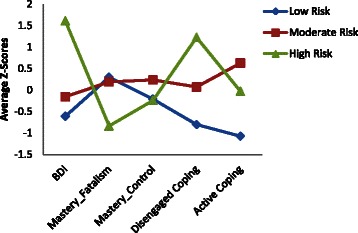
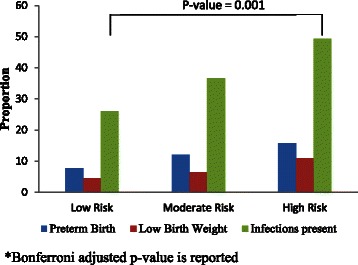
BACKGROUND: Preterm birth remains a major obstetrical problem and identification of risk factors for preterm birth continues to be a priority in providing adequate care. Therefore, the purpose of this study was to elucidate risk profiles for preterm birth using psychological, cultural and neuroendocrine measures. METHODS: From a cross sectional study of 515 Mexican American pregnant women at 22-24 weeks gestation, a latent profile analysis of risk for preterm birth using structural equation modeling (SEM) was conducted. We determined accurate gestational age at delivery from the prenatal record and early ultrasounds. We also obtained demographic and prenatal data off of the chart, particularly for infections, obstetrical history, and medications. We measured depression (Beck Depression Inventory), mastery (Mastery scale), coping (The Brief Cope), and acculturation (Multidimensional Acculturation Scale) with reliable and valid instruments. We obtained maternal whole blood and separated it into plasma for radioimmunoassay of Corticotrophin Releasing Hormone (CRH). Delivery data was obtained from hospital medical records. RESULTS: Using a latent profile analysis, three psychological risk profiles were identified. The "low risk" profile had a 7.7% preterm birth rate. The "moderate risk" profile had a 12% preterm birth rate. The "highest risk" profile had a 15.85% preterm birth rate. The highest risk profile had double the percentage of total infections compared to the low risk profile. High CRH levels were present in the moderate and highest risk profiles. CONCLUSION: These risk profiles may provide a basis for screening for Mexican American women to predict risk of preterm birth, particularly after they are further validated in a prospective cohort study. Future research might include use of such an identified risk profile with targeted interventions tailored to the Hispanic culture.
Overview
The claims and statistics of this paper haven’t been checked yet.
Free: it reads the open-access text and checks the first 5 claims that cite a source we can check. Create a free account to check every claim.
Integrity signals
Registry
Cites
Statistics
Figures
Verification
Claims the paper makes
The claims and statistics of this paper haven’t been checked yet.
Free: it reads the open-access text and checks the first 5 claims that cite a source we can check. Create a free account to check every claim.
Claims other papers make about this one
Each is checked against this paper’s own text: does it say what the citing paper says it does?
The source backs part of the claim, not all of it — or backs it for a different population, condition or comparison.
In the citing paper
“The intervention originally was targeted to address psychological risk factors demonstrated to be a factor in adverse pregnancy outcomes in Latinas [28, 29].”
From The mastery lifestyle intervention to reduce biopsychosocial risks for pregnant Latinas and African Americans and their infants: protocol for a randomized controlled trial (2022) · cites this paper as [28]
Experimental — accuracy not yet measured
Self-check
Percentages, sums and reported differences re-computed from the paper’s own numbers.
The self-check needs the paper’s full text.
Citations
Cites
Power analysis and determination of sample size for covariance structure modeling.
MacCallum, R. C., Browne, M. W., & Sugawara, H. M. (1996) · Psychological Methods · doi:10.1037/1082-989x.1.2.130 · Cited by 10,418 · cited 2×
“80 a sample of at least 375 was needed [35]; data were collected on 515 women to allow for sufficient power after missing data.”
BackgroundMethodPearlin, L. I., & Schooler, C. (1978) · Journal of Health and Social Behavior · doi:10.2307/2136319 · Cited by 7,791 · cited 1×
“Mastery may be considered a psychological resource, an aspect of resilience [23].”
BackgroundYou want to measure coping but your protocol’ too long: Consider the brief cope
Carver, C. S. (1997) · International Journal of Behavioral Medicine · doi:10.1207/s15327558ijbm0401_6 · Cited by 7,361 · cited 1×
“” The scale has both Spanish and English versions [40].”
BackgroundPearlin, L. I., & Schooler, C. (1978) · PubMed · Cited by 6,764
Comparison of Beck Depression Inventories -IA and -II in psychiatric outpatients
Beck, A. T., Steer, R. A., Ball, R., & Ranieri, W. F. (1996) · Journal of Personality Assessment · doi:10.1207/s15327752jpa6703_13 · Cited by 5,965 · cited 2×
“The MPR group, with the highest coping scores in the active subscales of all three profiles, may be best protected from PTB with the pattern of depression scores seen in this group reflective of normal ups and downs of moods [37].”
BackgroundDepression: Causes and treatment
(1973) · Behavior Therapy · doi:10.1016/s0005-7894(73)80054-1 · Cited by 3,152 · cited 5×
“We constructed LPA using the BDI, Mastery, and the Brief Cope to create latent classes; a total of 18 variables (4 BDI, 2 mastery, and 12 brief coping sub-scales) were used.”
MethodInfluentialNational Vital Statistics Reports
(2005) · Encyclopedia of Human Development · doi:10.4135/9781412952484.n432 · Cited by 2,921
(2012) · SpringerReference · doi:10.1007/springerreference_179754 · Cited by 2,089
Grote, N. K., Bridge, J. A., Gavin, A. R., Melville, J. L., Iyengar, S., & Katon, W. J. (2010) · Archives of General Psychiatry · doi:10.1001/archgenpsychiatry.2010.111 · Cited by 1,882
Preterm Birth: Causes, Consequences, and Prevention
Outcomes, A. H., Behrman, R. E., & Butler, A. S. (2007) · Cited by 1,577
The preterm parturition syndrome
Romero, R., Espinoza, J., Kusanovic, J., Gotsch, F., Hassan, S., Erez, O., Chaiworapongsa, T., & Mazor, M. (2006) · BJOG: An International Journal of Obstetrics & Gynaecology · doi:10.1111/j.1471-0528.2006.01120.x · Cited by 1,419 · cited 1×
“The disadvantage of greater acculturation is seen also in the HPR group with double the percentage of total infections noted at the time of data collection, a finding consistent with a large body of evidence supporting the role of infections and PTB [55].”
ResultEndocrine and Paracrine Regulation of Birth at Term and Preterm*
Challis, J. R. G., Matthews, S. G., Gibb, W., & Lye, S. J. (2000) · Endocrine Reviews · doi:10.1210/edrv.21.5.0407 · Cited by 995 · cited 2×
“This finding also confirms finding that have been suggestive of the potentially important role CRH may play in the biological cascade leading to PTB [30].”
BackgroundResultAlder, J., Fink, N., Bitzer, J., Hösli, I., & Holzgreve, W. (2007) · The Journal of Maternal-Fetal & Neonatal Medicine · doi:10.1080/14767050701209560 · Cited by 872
CHROUSOS, G. P. (1998) · Annals of the New York Academy of Sciences · doi:10.1111/j.1749-6632.1998.tb09006.x · Cited by 711
Rini, C. K., Dunkel-Schetter, C., Wadhwa, P. D., & Sandman, C. A. (1999) · Health Psychology · doi:10.1037/0278-6133.18.4.333 · Cited by 667 · cited 1×
“Higher mastery is associated with lower perceived stress and higher birth weight, and indirectly with longer gestation for pregnant women regardless of the level of stress [25].”
BackgroundPrenatal depression effects on early development: A review
Field, T. (2011) · Infant Behavior and Development · doi:10.1016/j.infbeh.2010.09.008 · Cited by 592 · cited 2×
“This result is also important in light of the effects of maternal depression on fetal development and early child development [57] and the increased risk for postpartum depression if prenatal depression is present [16].”
BackgroundResultMartin, J. A., Hamilton, B. E., Ventura, S. J., Osterman, M. J. K., Wilson, E. C., & Mathews, T. J. (2012) · PubMed · Cited by 499
Hobel, C. J., Dunkel-Schetter, C., Roesch, S. C., Castro, L. C., & Arora, C. P. (1999) · American Journal of Obstetrics and Gynecology · doi:10.1016/s0002-9378(99)70712-x · Cited by 457 · cited 1×
“Maternal plasma levels of CRH have been shown to be higher mid-gestation in women who have PTB as compared to those who deliver at term [31].”
BackgroundSandman, C. A., Glynn, L., Schetter, C. D., Wadhwa, P., Garite, T., Chicz-DeMet, A., & Hobel, C. (2006) · Peptides · doi:10.1016/j.peptides.2005.10.002 · Cited by 411
Neurodevelopmental outcomes of preterm infants
Allen, M. C. (2008) · Current Opinion in Neurology · doi:10.1097/wco.0b013e3282f88bb4 · Cited by 369 · cited 1×
“While PTB accounts for 75 % of perinatal deaths, many preterm infants survive but are at risk for long term impairments [2, 3].”
BackgroundNeurodevelopmental outcomes of preterm infants
Song, I. G. (2023) · Clinical and Experimental Pediatrics · doi:10.3345/cep.2022.00822 · Cited by 352
Depression: Causes and Treatment
Beck, M. D., & Alford, P. D. (2009) · doi:10.9783/9780812290882 · Cited by 334
Prepartum, Postpartum, and Chronic Depression Effects on Newborns
Diego, M. A., Field, T., Hernandez-Reif, M., Cullen, C., Schanberg, S., & Kuhn, C. (2004) · Psychiatry: Interpersonal and Biological Processes · doi:10.1521/psyc.67.1.63.31251 · Cited by 280 · cited 1×
“This result is also important in light of the effects of maternal depression on fetal development and early child development [57] and the increased risk for postpartum depression if prenatal depression is present [16].”
BackgroundPrenatal depression restricts fetal growth
Diego, M. A., Field, T., Hernandez-Reif, M., Schanberg, S., Kuhn, C., & Gonzalez-Quintero, V. H. (2009) · Early Human Development · doi:10.1016/j.earlhumdev.2008.07.002 · Cited by 277
Zambrana, R. E., Scrimshaw, S. C., Collins, N., & Dunkel-Schetter, C. (1997) · American Journal of Public Health · doi:10.2105/ajph.87.6.1022 · Cited by 241 · cited 1×
“on the Hispanic paradox [49, 50], whereby more recent Mexican immigrants have more favorable health outcomes.”
BackgroundChristiaens, W., & Bracke, P. (2007) · BMC Pregnancy and Childbirth · doi:10.1186/1471-2393-7-26 · Cited by 237
Rodriguez, N., Mira, C. B., Paez, N. D., & Myers, H. F. (2007) · American Journal of Community Psychology · doi:10.1007/s10464-007-9090-7 · Cited by 212 · cited 2×
“A principal components analysis revealed four factors for this instrument: English proficiency, Spanish proficiency, American cultural identity, and Mexican cultural identity [44].”
BackgroundMethodResearch agenda for preterm birth: Recommendations from the March of Dimes
Green, N. S., the March of Dimes Scientific Advisory Committee on Prematurity, Damus, K., Simpson, J. L., Iams, J., Reece, E. A., Hobel, C. J., Merkatz, I. R., Greene, M. F., & Schwarz, R. H. (2005) · American Journal of Obstetrics and Gynecology · doi:10.1016/j.ajog.2005.02.106 · Cited by 207 · cited 1×
“Background Preterm birth (PTB) is a primary reason for neonatal morbidity and mortality, with serious health and monetary costs [1].”
BackgroundHamilton, J. G., & Lobel, M. (2008) · Journal of Psychosomatic Obstetrics & Gynecology · doi:10.1080/01674820701690624 · Cited by 184
The relationship between psychosocial profile, health practices, and pregnancy outcomes
NEGGERS, Y., GOLDENBERG, R., CLIVER, S., & HAUTH, J. (2006) · Acta Obstetricia et Gynecologica Scandinavica · doi:10.1080/00016340600566121 · Cited by 179 · cited 5×
“Among pregnant women, low mastery is associated with depressive symptoms and an increased risk of PTB and low birth weight (LBW) [10, 24].”
BackgroundInfluentialGiurgescu, C., Penckofer, S., Maurer, M. C., & Bryant, F. B. (2006) · Nursing Research · doi:10.1097/00006199-200609000-00008 · Cited by 177 · cited 2×
“The HPR group had the highest scores for disengaged coping, a finding associated with poor psychological wellbeing [21, 22] and consistent with prior research [17].”
BackgroundResultIbañez, G. E., Charles, M.-A. A., Forhan, A., Magnin, G., Thiébaugeorges, O., Kaminski, M., & Saurel‐Cubizolles, M. (2012) · Early Human Development · doi:10.1016/j.earlhumdev.2012.01.014 · Cited by 158
Torres, L., & Rollock, D. (2004) · Journal of Multicultural Counseling and Development · doi:10.1002/j.2161-1912.2004.tb00368.x · Cited by 122
Anxiety symptoms and coping strategies in the perinatal period
George, A., Luz, R. F., De Tychey, C., Thilly, N., & Spitz, E. (2013) · BMC Pregnancy and Childbirth · doi:10.1186/1471-2393-13-233 · Cited by 121
Social Support and Avoidant Coping: Correlates of Depressed Mood During Pregnancy in Minority Women
Rudnicki, S. R., Graham, J. L., Habboushe, D. F., & Ross, R. D. (2001) · Women & Health · doi:10.1300/j013v34n03_02 · Cited by 108 · cited 2×
“The HPR group had the highest scores for disengaged coping, a finding associated with poor psychological wellbeing [21, 22] and consistent with prior research [17].”
BackgroundResultThreat Appraisal, Coping, and Emotions Across Pregnancy Subsequent to Perinatal Loss
Côté-Arsenault, D. (2007) · Nursing Research · doi:10.1097/01.nnr.0000263970.08878.87 · Cited by 103 · cited 2×
“The HPR group had the highest scores for disengaged coping, a finding associated with poor psychological wellbeing [21, 22] and consistent with prior research [17].”
BackgroundResultAntenatal depressive symptoms increase the likelihood of preterm birth
Straub, H. L., Adams, M. G., Kim, J., & Silver, R. K. (2012) · American Journal of Obstetrics and Gynecology · doi:10.1016/j.ajog.2012.06.033 · Cited by 87
A further examination of the "epidemiologic paradox": birth outcomes among Latinas.
Rosenberg, T. J., Raggio, T. P., & Chiasson, M. A. (2005) · PubMed · Cited by 77
Laryea, G., Arnett, M. G., & Muglia, L. J. (2012) · Behavioral Sciences · doi:10.3390/bs2020135 · Cited by 57 · cited 2×
“This finding is consistent with previous research indicating CRH dysfunction and depression are linked [28, 29].”
BackgroundResultDavey, M.-A., Watson, L., Rayner, J. A., & Rowlands, S. (2015) · Cochrane Database of Systematic Reviews · doi:10.1002/14651858.cd004902.pub5 · Cited by 53
Coping in Healthy Primigravidae Pregnant Women
Borcherding, K. E. (2009) · Journal of Obstetric, Gynecologic & Neonatal Nursing · doi:10.1111/j.1552-6909.2009.01041.x · Cited by 53 · cited 3×
“population, degree of medical risk, age, education, income, race, and marital status of the mother [18] and also by the”
BackgroundResultInfluentialImmune changes in test animals during spaceflight
Lesnyak, A. T., Sonnenfeld, G., Rykova, M. P., Meshkov, D. O., Mastro, A., & Konstantinova, I. (1993) · Journal of Leukocyte Biology · doi:10.1002/jlb.54.3.214 · Cited by 53 · cited 2×
“The HPR group’s 15.8 % approaches the 17.1 % rate of PTB in African Americans [48].”
BackgroundInfluentialLaparoscopic versus open radical hysterectomy for elderly patients with early-stage cervical cancer
Park, J., Kim, D., Kim, J.-H., Kim, Y., Kim, Y., & Nam, J. (2012) · American Journal of Obstetrics and Gynecology · doi:10.1016/j.ajog.2012.06.081 · Cited by 49
Tyson, E. K., Smith, R., & Read, M. (2009) · Endocrinology · doi:10.1210/en.2009-0348 · Cited by 47 · cited 2×
“CRH is produced by the placenta and maternal hypothalamus during pregnancy and is thought to play an important role in maintaining pregnancy and the length of gestation [29, 30].”
BackgroundResultPereira, A. T., Marques, M., Soares, M. J., Maia, B., Bos, S. C., Valente, J., Nogueira, V., Roque, C., Madeira, N. G. G. F., & Macedo, A. (2014) · Journal of Affective Disorders · doi:10.1016/j.jad.2014.04.008 · Cited by 45 · cited 1×
“The BDI has previously been tested in pregnant populations to screen for depression [38, 39].”
MethodAcculturation, depressive symptoms, estriol, progesterone, and preterm birth in Hispanic women
Ruiz, R. J., Marti, C. N., Pickler, R., Murphey, C., Wommack, J., & Brown, C. E. L. (2012) · Archives of Women's Mental Health · doi:10.1007/s00737-012-0258-2 · Cited by 40 · cited 1×
“Data were collected at 22 to 24 weeks gestation, shown in previous evidence by these investigators to be a critical window for the development of the neuroendocrine system in the fetus and when maternal stressors may significantly affect placental functioning and fetal development and infant outcomes at birth [34].”
Self-citationBioassay Research Methodology: Measuring CRH in Pregnancy
Latendresse, G., & Ruiz, R. J. (2008) · Biological Research For Nursing · doi:10.1177/1099800408320970 · Cited by 38 · cited 1×
“The protocol has been previously described [45].”
Self-citationNeuroendocrine aspects of placenta and pregnancy
Bonis, M. D., Torricelli, M., Severi, F. M., Luisi, S. V., Leo, V. D., & Petraglia, F. (2012) · Gynecological Endocrinology · doi:10.3109/09513590.2012.651933 · Cited by 35 · cited 1×
“has been shown to be greatly elevated with preeclampsia [33], thus a possible explanation for this finding.”
ResultPrenatal Care Initiation in Low-income Hispanic Women: Risk and Protective Factors
Luecken, L. J., Purdom, C. L., & Howe, R. (2009) · American Journal of Health Behavior · doi:10.5993/ajhb.33.3.5 · Cited by 34 · cited 1×
“A sense of personal mastery may represent a protective resource related to better mental and physical health among low-income Hispanic women by: a) earlier entry into prenatal care, b) adherence to prenatal care advice, and c) better neonatal outcomes [26].”
BackgroundDavey, M., Watson, L. F., Rayner, J. A., & Rowlands, S. (2011) · Cochrane Database of Systematic Reviews · doi:10.1002/14651858.cd004902.pub4 · Cited by 34 · cited 1×
“Research to identify pregnancies at higher risk for PTB is vital to develop tailored, targeted interventions to prevent PTB occurrence; a recent Cochrane review recommended evaluation of a risk screening tool to predict PTB [5].”
BackgroundBorn Too Soon: The Continuing Challenge of Preterm Labor and Birth in the United States
Reedy, N. J. (2007) · Journal of Midwifery & Women s Health · doi:10.1016/j.jmwh.2007.02.022 · Cited by 33 · cited 1×
“These sociodemographic characteristics are consistent with Reedy’s premise that it is a combination of factors that puts women at risk for PTB [52].”
BackgroundTesting the relationship between self‐agency and enactment of health behaviors
DeSocio, J. E., Kitzman, H. J., & Cole, R. (2003) · Research in Nursing & Health · doi:10.1002/nur.10068 · Cited by 31 · cited 1×
“DeSocio has used the Mastery Scale to demonstrate self-agency in pregnancy [42] and Christiaens to assess personal control in pregnant women [43].”
MethodRuiz, R. J., Stowe, R. P., Brown, A., & Wommack, J. C. (2012) · Advances in Nursing Science · doi:10.1097/ans.0b013e3182626199 · Cited by 26 · cited 1×
“This finding is consistent with recent studies supporting the hypothesis that Mexican born women and women with stronger Mexican affiliation have a perinatal advantage over women of Mexican origin with higher levels of acculturation [53, 54].”
ResultSelf-citationMeasuring Coping in Pregnant Minority Women
Ruiz, R. J., Gennaro, S., O’Connor, C., Marti, C. N., Lulloff, A., Keshinover, T., Gibeau, A., & Melnyk, B. (2015) · Western Journal of Nursing Research · doi:10.1177/0193945914527176 · Cited by 24 · cited 2×
“Description of a factor analysis for the results from this study has been published [20] indicating two major fac-”
BackgroundResultSelf-citationPrematurity--infant mortality: the scourge remains.
Ashton, D. M. (2006) · PubMed · Cited by 18
The Impact of Migration on Pregnancy Outcomes Among Mexican-Origin Women
Hessol, N. A., & Fuentes‐Afflick, E. (2012) · Journal of Immigrant and Minority Health · doi:10.1007/s10903-012-9760-x · Cited by 16 · cited 1×
“This finding is consistent with recent studies supporting the hypothesis that Mexican born women and women with stronger Mexican affiliation have a perinatal advantage over women of Mexican origin with higher levels of acculturation [53, 54].”
ResultAlexander, L. A., Muñoz, M. D. L. F. R., Perry, D. F., & Le, H. (2013) · Maternal and Child Health Journal · doi:10.1007/s10995-013-1343-5 · Cited by 12 · cited 1×
“The BDI has previously been tested in pregnant populations to screen for depression [38, 39].”
MethodSonnenfeld, G., Schaffar, L., Schmitt, D., Koebel, D. A., & Smith, B. A. (1993) · Journal of Interferon Research · doi:10.1089/jir.1993.13.259 · Cited by 7 · cited 1×
“The sociodemographic characteristics of the HPR included a mean income just above the 2012 federally defined poverty level of $23,050 [51].”
BackgroundCOMPARATIVE FREQUENCY OF ANGIOGRAPHIC CORONARY ARTERY DISEASE IN AFRICAN AMERICANS AND HISPANICS
Onwuanyi, A., Abe, O., Quarshie, A., Al-Mahmoud, A., Lapu-Bula, R., Francis, C. K., & Ofili, E. (2006) · PubMed · doi:10.13016/2gjx-becj · Cited by 4
Butterfield, P. (2012) · Advances in Nursing Science · doi:10.1097/ans.0b013e31824538e7 · Cited by 2
Research works printed but not linked: 2
- 24. Mendez T. Family cohesion, mastery, and acculturation of predictors of depression in pregnant Hispanic women. Southern Online J Nursing Res. 2008;8(2):2.
- 46. Muthen LKMB. Mplus User's Guide. 6th ed. Los Angeles: Muthen & Muthen; 2010.
Cited by
Dubey, P., Reddy, S. Y., Manuel, S., & Dwivedi, A. K. (2020) · European Journal of Obstetrics & Gynecology and Reproductive Biology · doi:10.1016/j.ejogrb.2020.07.034 · Cited by 185
“Although these studies did not report the psychological health of the infected women, psychological health especially depression, anxiety, and stress of pregnant women have been associated with preterm birth including low birth weight [90,91].”
BackgroundSelf-citationAssessment of acculturation in minority health research
Fox, M. M., Thayer, Z. M., & Wadhwa, P. D. (2017) · Social Science & Medicine · doi:10.1016/j.socscimed.2017.01.029 · Cited by 139
“that English proficiency, Spanish proficiency, and American cultural identity subscales were significantly related to psychological risk profiles, but Mexican cultural identity was not, and significant differences existed between the low and moderate psychological risk groups for English proficiency, Spanish proficien…”
BackgroundSantos, H., Fried, E. I., Asafu‐Adjei, J., & Ruiz, R. J. (2017) · Research in Nursing & Health · doi:10.1002/nur.21784 · Cited by 115
“As described in detail elsewhere (Ruiz, Dolbier, & Fleschler, 2006; Ruiz et al., 2015, 2012a,b), biomarker samples were obtained from blood drawn from a peripheral vein into an EDTA-treated vacutainer between 2 and 4 PM to avoid confounding effects of diurnal rhythms.”
BackgroundMethodInfluentialSelf-citationShimamoto, K., & Gipson, J. D. (2017) · BMC Pregnancy and Childbirth · doi:10.1186/s12884-017-1499-x · Cited by 49
“Second, although structural equation modeling (SEM) has been used to examine mechanisms influencing pregnancy and child health in studies from higher income countries [31, 32], there are no known studies using The Author(s) BMC Pregnancy and Childbirth 2017, 17(Suppl 2):341 Page 108 of 158”
MethodMicro RNA clusters in maternal plasma are associated with preterm birth and infant outcomes
Wommack, J. C., Trzeciakowski, J. P., Miranda, R. C., Stowe, R. P., & Ruiz, R. J. (2018) · PLoS ONE · doi:10.1371/journal.pone.0199029 · Cited by 39
Self-citation
Metadata
- Authors
- Ruiz, R. J., Dwivedi, A. K., Mallawaarachichi, I., Balcazar, H. G., Stowe, R. P., Ayers, K. S., & Pickler, R.
- Affiliations
- Texas A&M Health Science Center (US)
- Texas Tech University Health Sciences Center (US)
- Microgen (United States) (US)
- The Ohio State University (US)
- Corresponding author
- Ruiz, R. Jeanne
- Venue
- BMC Pregnancy and Childbirth
- Published
- 2015-09-03
- Volume
- 15
- Issue
- 1
- Pages
- 204-204
- ISSN
- 1471-2393 (ISSN-L)
- PMC
- PMC4558793
- OpenAlex
- W2158841831
- Cited by
- 18
- References
- 60
- Citations by year
- 2023: 1 · 2022: 1 · 2021: 3 · 2020: 2 · 2019: 2 · 2018: 3 · 2017: 3 · 2016: 2 · 2015: 1
- FWCI
- 3.21
- Type
- journal article
- Language
- en
- Open access
- gold
- doi.org
- Licence
- Locations
- BMC Pregnancy and Childbirth (publishedVersion, cc-by)
- PubMed Central (publishedVersion, cc-by)
- PubMed (publishedVersion)
- OakTrust (Texas A&M University Libraries) (submittedVersion)
- Funders
- National Institutes of Health
- National Institute of Nursing Research (R01NR0107891, R01NR007891)
- Topics
- Health Sciences › Medicine › Public Health, Environmental and Occupational Health › Maternal Mental Health During Pregnancy and Postpartum
- Health Sciences › Medicine › Obstetrics and Gynecology › Preterm Birth and Chorioamnionitis
- Health Sciences › Medicine › Pediatrics, Perinatology and Child Health › Infant Development and Preterm Care
- Keywords
- preterm birth, maternal depression, coping, acculturation, mastery, corticotropin-releasing factor, neuroendocrine stress response, latent profile analysis, risk screening, prenatal infection, Hispanic culture
- MeSH terms
- Acculturation, Adult, Cross-Sectional Studies, Depressive Disorder, Estriol, Female, Gestational Age, Humans, Infant, Low Birth Weight, Infant, Newborn, Pregnancy, Prospective Studies, Stress, Psychological, United States, Incidence, Ultrasonography, Prenatal, Mexican Americans, Risk Assessment, Premature Birth, Young Adult
About these checks
Registry, retraction, Cites and statistics results are computed, not judged, with one exception: a printed reference that no index lists is read once by a model before it counts as a citation error. Claims are extracted by a model and kept only when their quote appears verbatim in the text; each cited source is then checked, with a model’s help, for whether it says what the claim relies on. Those verdicts can be wrong — read the claim’s quote and the cited source before relying on one.
Statistics and arithmetic are recomputed, not judged.
Confidence bands are shown only for fields calibrated on our annotated test set. None is calibrated yet, so no band is shown.
What counts as a claim ›How we measure confidence ›How we check this ›
Are you an author, or do you see a problem with this page? Request a review
Data sources
Bibliographic data: Semantic Scholar, OpenAlex, Crossref.
Contains information from the Semantic Scholar Academic Graph Datasets, made available under the ODC Attribution License (ODC-BY 1.0).
Semantic Scholar’s data is described in: Kinney, R., et al. (2023). The Semantic Scholar Open Data Platform. arXiv:2301.10140.
