

Constructing maternal morbidity – towards a standard tool to measure and monitor maternal health beyond mortality
Open accessThe DOI matches its Crossref record; 22 of the 23 references it cites were found in a registry or an index; 12 of the 28 sources its claims cite were checked for support.
Abstract
We define maternal morbidity and associated disability as 'any health condition attributed to and/or complicating pregnancy and childbirth that has a negative impact on the woman’s wellbeing and/or functioning.'
Overview
CoChat Summary
TL;DR
This paper describes the WHO Maternal Morbidity Working Group’s consensus definition of maternal morbidity and the development of a maternal morbidity matrix as the foundation for a standard measurement tool beyond near-miss. It proposes a three-dimensional matrix of 121 conditions with identification criteria, intended for pilot testing in primary care and low- and middle-income country settings.
Key findings
- The MMWG defined maternal morbidity and associated disability as “any health condition attributed to and/or complicating pregnancy and childbirth that has a negative impact on the woman’s wellbeing and/or functioning.”
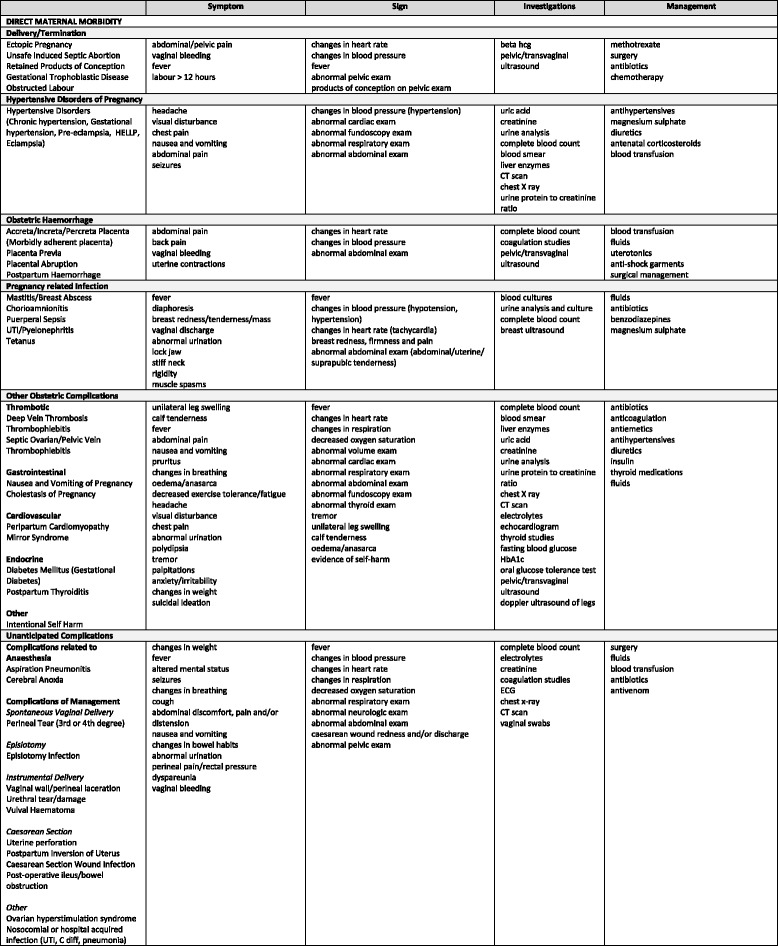
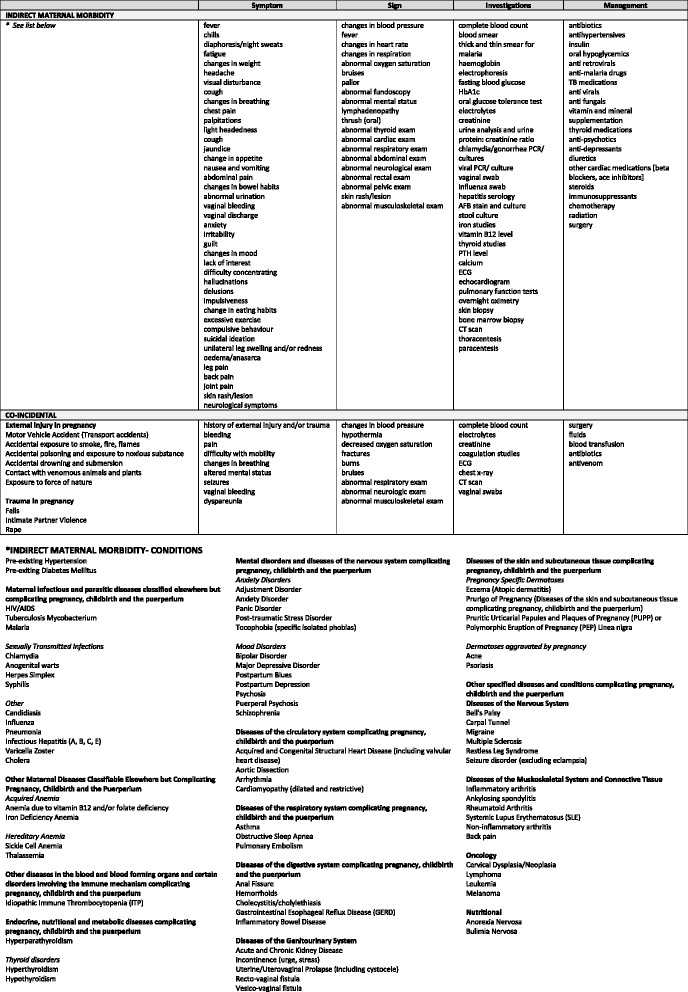
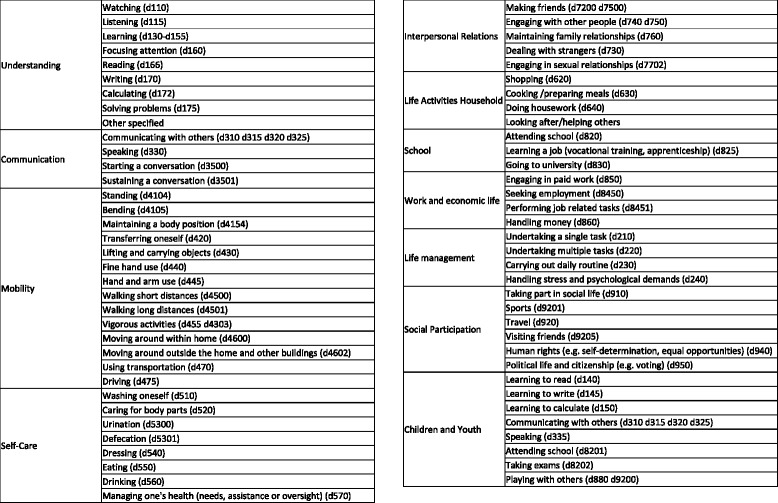
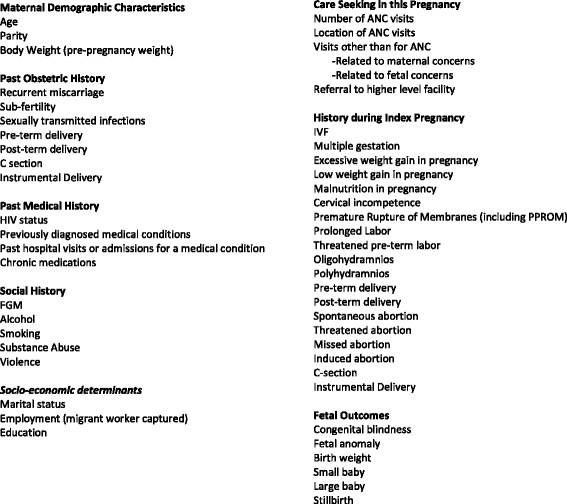
- The maternal morbidity matrix contains 121 conditions and has three dimensions: identified morbidity category, reported functioning impact, and maternal history.
- Identification criteria include 58 symptoms, 29 signs, 44 investigations, and 35 management strategies; conditions consistent with severe maternal morbidity/near-miss were excluded because they are already identified by the maternal near-miss tool.
- The draft tool incorporates validated instruments including the WHO Disability Assessment Schedule 2.0 (12-item version), Generalized Anxiety Disorder-7, and Personal Health Questionnaire-9.
Methods
- Consensus development by the WHO MMWG, composed of obstetricians, physicians, midwives, epidemiologists, medical anthropologists, public health professionals, and patient advocates from high-, middle-, and low-income countries; the group was initially convened in April 2012, with decisions made by consensus during five working group meetings (April and August 2012, February 2013, February and October 2014) and interim electronic communication.
- The matrix was generated through expert meetings, review of ICD-10 and ICD-MM, literature reviews, and application of the agreed definition plus a >0.1% prevalence cut-off; an initial version included 301 conditions cross-referenced with 109 symptoms, 106 signs, 121 clinical tests, and 91 management strategies, later consolidated to 121 conditions with 58 symptoms, 29 signs, 44 investigations, and 35 management strategies.
- The paper reports that modular maternal morbidity assessment tools are being developed and tested in three country settings, with antenatal and postnatal modules and adapted validated scales.
Limitations
- The paper states that the group deliberated a community-level tool but chose to focus on primary facility/lowest facility point-of-care because of time and resource constraints and prior research finding women’s recall of complications has low specificity and would require observation by a trained health or community worker.
- The paper states that when evidence was unavailable, the group used consensus based on expert opinion, and that regional differences in prevalence mean the tool is intended to be revised for regional implementation; pilot testing results are still pending and will direct further refinement.
- Evident from the text: this is a conceptual and development paper, with no empirical validation or pilot results reported; the matrix and tool have not yet been tested for usability, feasibility, and fit for purpose, and the >0.1% cut-off and inclusion decisions are consensus-based.
Model-written summary. Check it against the paper before relying on it.
Integrity signals
Registry
Cites
Statistics
Figures
Verification
Claims the paper makes
11 Valid · 0 Not valid · 8 Not checked · 14 Own results and interpretations
Every source the paper cites for this claim was checked and supports it.
In the paper
“Overall, three major issues have limited valid, routine, and comparable measurements of maternal morbidity, the lack of a common definition and identification criteria, standardized assessment tools especially at primary health care level, and common indicators to measure morbidity [2].”
§ Constructing maternal morbidity – towards a standard tool to measure and monitor maternal health beyond mortality > Background
What the sources say
- Supportedcites [2] Firoz T Chou D von Dadelszen P Agrawal P Vanderkruik R Tuncalp O Measuring maternal health: focus on maternal morbidity Bull World Health Organ 2013 91 10 794 6 10.2471/BLT.13.117564 24115804 PMC3791656 source
On p. 1, the paper identifies the absence of a common definition and standard identification criteria as a chief reason maternal morbidity is difficult to measure accurately. It also says existing estimates lack standard methods and have poor validity. (LLM, conf=0.94)
plainstates a cause- Asserted: passes — The authors put it forward as true.
- Checkable: passes — It can be checked against evidence.
- Load-bearing: passes — The paper’s conclusions depend on it.
- Based: passes — The paper gives a reason why it holds.
- Supported
The cited sources support only part of this claim — read each source’s verdict below.
In the paper
“Overall, three major issues have limited valid, routine, and comparable measurements of maternal morbidity, the lack of a common definition and identification criteria, standardized assessment tools especially at primary health care level, and common indicators to measure morbidity [2].”
§ Constructing maternal morbidity – towards a standard tool to measure and monitor maternal health beyond mortality > Background
What the sources say
- Partly supportedcites [2] Firoz T Chou D von Dadelszen P Agrawal P Vanderkruik R Tuncalp O Measuring maternal health: focus on maternal morbidity Bull World Health Organ 2013 91 10 794 6 10.2471/BLT.13.117564 24115804 PMC3791656 sourceExperimental — accuracy not yet measured
On p. 1, the paper says that estimates lack standard methods and identifies the absence of a common definition and standard identification criteria as a chief obstacle to accurate measurement. On p. 2, it describes work toward a standard assessment tool for routine surveillance. These passages support the broader measurement problem, but do not specifically identify a lack of common morbidity indicators as a separate cause. (LLM, conf=0.78)
plainstates a cause- Asserted: passes — The authors put it forward as true.
- Checkable: passes — It can be checked against evidence.
- Load-bearing: passes — The paper’s conclusions depend on it.
- Based: passes — The paper gives a reason why it holds.
- Partly supported
Every source the paper cites for this claim was checked and supports it.
In the paper
“Overall, three major issues have limited valid, routine, and comparable measurements of maternal morbidity, the lack of a common definition and identification criteria, standardized assessment tools especially at primary health care level, and common indicators to measure morbidity [2].”
§ Constructing maternal morbidity – towards a standard tool to measure and monitor maternal health beyond mortality > Background
What the sources say
- Supportedcites [2] Firoz T Chou D von Dadelszen P Agrawal P Vanderkruik R Tuncalp O Measuring maternal health: focus on maternal morbidity Bull World Health Organ 2013 91 10 794 6 10.2471/BLT.13.117564 24115804 PMC3791656 source
The paper says existing estimates lack standard, well-documented methods and identifies the absence of a common definition and standard identification criteria as a chief obstacle to accurate measurement (p. 1). It proposes developing an assessment tool for community and primary-health-care settings and indicators for population-level tracking (pp. 1–2), supporting the claim about gaps in tools and comparable measurement. (LLM, conf=0.88)
plainstates a cause- Asserted: passes — The authors put it forward as true.
- Checkable: passes — It can be checked against evidence.
- Load-bearing: passes — The paper’s conclusions depend on it.
- Based: passes — The paper gives a reason why it holds.
- Supported
Every source the paper cites for this claim was checked and supports it.
In the paper
“This is particularly essential at the community and primary care levels, where most of the burden of maternal morbidity is believed to be reported [6, 7], yet instruments to quantify and measure it are currently lacking [2].”
§ Constructing maternal morbidity – towards a standard tool to measure and monitor maternal health beyond mortality > Background
What the sources say
- Supportedcites [2] Firoz T Chou D von Dadelszen P Agrawal P Vanderkruik R Tuncalp O Measuring maternal health: focus on maternal morbidity Bull World Health Organ 2013 91 10 794 6 10.2471/BLT.13.117564 24115804 PMC3791656 source
The paper says measurement is particularly unclear at community and primary-care levels (p. 1) and identifies development of an assessment tool for those settings as a project objective (p. 1). Its description of the tool as still requiring piloting and validation (p. 2) supports the claim that an established instrument was lacking. (LLM, conf=0.90)
plain- Asserted: passes — The authors put it forward as true.
- Checkable: passes — It can be checked against evidence.
- Load-bearing: passes — The paper’s conclusions depend on it.
- Based: passes — The paper gives a reason why it holds.
- Supported
The sources with a verdict support this claim; the rest weren’t checked yet, have no full text we could read, or their verdicts aren’t rated yet.
In the paper
“Measuring morbidity can serve as an indicator of the quality of obstetric care [11, 12].”
§ Constructing maternal morbidity – towards a standard tool to measure and monitor maternal health beyond mortality > Background
What the sources say
- Not checked — no full text of the sourcecites [11] Say L Souza JP Pattinson RC Maternal near miss--towards a standard tool for monitoring quality of maternal health care Best Pract Res Clin Obstet Gynaecol 2009 23 3 287 96 10.1016/j.bpobgyn.2009.01.007 19303368 source
- Supportedcites [12] Tuncalp O Were WM MacLennan C Oladapo OT Gulmezoglu AM Bahl R Quality of care for pregnant women and newborns-the WHO vision BJOG 2015 122 8 1045 9 10.1111/1471-0528.13451 25929823 PMC5029576 source
In “Quality of care for pregnant women and newborns—the WHO vision” (page unavailable), the paper links poor facility care to preventable maternal and perinatal morbidity. It also identifies health outcomes as outcomes of quality of care and calls for monitoring indicators. Together, these passages support the qualified claim that measuring morbidity can serve as an indicator of obstetric care quality. (LLM, conf=0.83)
plainstates an association- Asserted: passes — The authors put it forward as true.
- Checkable: passes — It can be checked against evidence.
- Load-bearing: passes — The paper’s conclusions depend on it.
- Based: passes — The paper gives a reason why it holds.
8 more claims · 2 with their cited sources checked
Create a free account to see all 33 claims and every source verdict.
- It may state two separate claims as one. 6
- Probably not a substantial claim. 16
Citations
Cites
Global causes of maternal death: a WHO systematic analysis
Say, L., Chou, D., Gemmill, A., Tunçalp, Ö., Moller, A.-B., Daniels, J., Gülmezoglu, A. M., Temmerman, M., & Alkema, L. (2014) · The Lancet Global Health · doi:10.1016/s2214-109x(14)70227-x · Cited by 6,582 · cited 1×
“The epidemiology of pregnancy and childbirth reflects changing demographic patterns; the latest global estimates on causes of maternal deaths demonstrate the increased role of indirect conditions in causing maternal deaths [19].”
BackgroundSelf-citationMaternal mortality: who, when, where, and why
Ronsmans, C., & Graham, W. J. (2006) · The Lancet · doi:10.1016/s0140-6736(06)69380-x · Cited by 1,801
Quality of care for pregnant women and newborns—the WHO vision
Tunçalp, Ӧ., Were, W., MacLennan, C., Oladapo, O., Gülmezoglu, A., Bahl, R., Daelmans, B., Mathai, M., Say, L., Kristensen, F., et al. (2015) · BJOG: An International Journal of Obstetrics & Gynaecology · doi:10.1111/1471-0528.13451 · Cited by 1,101
Self-citationMaternal near miss – towards a standard tool for monitoring quality of maternal health care
Say, L., Souza, J. P., & Pattinson, R. C. (2009) · Best Practice & Research Clinical Obstetrics & Gynaecology · doi:10.1016/j.bpobgyn.2009.01.007 · Cited by 961 · cited 6×
“Measuring morbidity can serve as an indicator of the quality of obstetric care [11, 12].”
BackgroundMethodInfluentialSelf-citationObstetric transition: the pathway towards ending preventable maternal deaths
Souza, J., Tunçalp, Ö., Vogel, J., Bohren, M., Widmer, M., Oladapo, O., Say, L., Gülmezoglu, A., & Temmerman, M. (2014) · BJOG: An International Journal of Obstetrics & Gynaecology · doi:10.1111/1471-0528.12735 · Cited by 303 · cited 1×
“of individuals with morbidities can only be expected to rise [20].”
BackgroundSelf-citationMeasuring maternal health: focus on maternal morbidity
Firoz, T., Chou, D., von Dadelszen, P., Agrawal, P., Vanderkruik, R., Tunçalp, O., Magee, L. A., van Den Broek, N., Say, L., & for the Maternal Morbidity Working Group (2013) · Bulletin of the World Health Organization · doi:10.2471/blt.13.117564 · Cited by 286 · cited 5×
“It has been suggested that for each maternal death, 20 or 30 women suffer from morbidity; however, these calculations are not based on standard, well documented, and transparent methodologies [2, 3].”
BackgroundInfluentialSelf-citationStrengthening standardised interpretation of verbal autopsy data: the new InterVA-4 tool
Byass, P., Chandramohan, D., Clark, S. J., D'Ambruoso, L., Fottrell, E., Graham, W. J., Herbst, A. J., Hodgson, A., Hounton, S., Kahn, K., et al. (2012) · Global Health Action · doi:10.3402/gha.v5i0.19281 · Cited by 221
Recommendations for the Clinical Evaluation of Men and Women with Sexual Dysfunction
Hatzichristou, D., Rosen, R. C., Derogatis, L. R., Low, W. Y., Meuleman, E. J. H., Sadovsky, R., & Symonds, T. (2010) · The Journal of Sexual Medicine · doi:10.1111/j.1743-6109.2009.01619.x · Cited by 191 · cited 1×
“For example, established sexual dysfunction and mental health scales are employed as part of the 1st dimension, the WHODAS 12-item version as part of the 2nd dimension and substance abuse and intimate partner violence scales as part of the 3rd dimension [18, 23].”
MethodGold, L. H. (2014) · PubMed · Cited by 179
Quality of antenatal services at the primary care level in southwest Nigeria.
Oladapo, O. T., Iyaniwura, C. A., & Sule-Odu, A. (2008) · African Journal of Reproductive Health · Cited by 130
Cited by
Wang, E., Glazer, K. B., Howell, E. A., & Janevic, T. M. (2020) · Obstetrics & Gynecology · doi:10.1097/aog.0000000000003762 · Cited by 353
Diversity and divergence: the dynamic burden of poor maternal health
Graham, W., Woodd, S., Byass, P., Filippi, V., Gon, G., Virgo, S., Chou, D., Hounton, S., Lozano, R., Pattinson, R., et al. (2016) · The Lancet · doi:10.1016/s0140-6736(16)31533-1 · Cited by 309
Self-citationBonet, M., Nogueira Pileggi, V., Rijken, M. J., Coomarasamy, A., Lissauer, D., Souza, J. P., & Gülmezoglu, A. M. (2017) · Reproductive Health · doi:10.1186/s12978-017-0321-6 · Cited by 157
“The new definition also aligns with the WHO definition of maternal morbidity defined as “any health condition attributed to and/or complicating pregnancy and childbirth that has a negative impact on the woman’s wellbeing and/or functioning” [53].”
MethodThe global maternal sepsis study and awareness campaign (GLOSS): study protocol
Bonet, M., Souza, J. P., Abalos, E., Fawole, B., Knight, M., Kouanda, S., Lumbiganon, P., Nabhan, A., Nadisauskiene, R., Brizuela, V., et al. (2018) · Reproductive Health · doi:10.1186/s12978-017-0437-8 · Cited by 116
Vogel, J. P., Jung, J., Lavin, T., Simpson, G., Kluwgant, D., Abalos, E. J., Díaz, V., Downe, S. M., Filippi, V., Gallos, I. D., et al. (2023) · The Lancet Global Health · doi:10.1016/s2214-109x(23)00454-0 · Cited by 161
Self-citationA new conceptual framework for maternal morbidity
Filippi, V., Chou, D., Barreix, M., Say, L., & the WHO Maternal Morbidity Working Group (MMWG) (2018) · International Journal of Gynecology & Obstetrics · doi:10.1002/ijgo.12463 · Cited by 127
Self-citationSheiner, E., Kapur, A., Retnakaran, R. R., Hadar, E., Poon, L. C., McIntyre, D. H., Divakar, H., Staff, A. C., Narula, J., Kihara, A., et al. (2019) · International Journal of Gynecology & Obstetrics · doi:10.1002/ijgo.12926 · Cited by 102
Moller, A., Patten, J. H., Hanson, C., Morgan, A., Say, L., Diaz, T., & Moran, A. C. (2019) · Tropical Medicine & International Health · doi:10.1111/tmi.13313 · Cited by 109
“Maternal morbidity: Any health condition attributed to and/or complicating pregnancy and childbirth that has a negative impact on the woman’s well-being and/or functioning [5].”
BackgroundSelf-citationMayrink, J., Souza, R. T., Silveira, C., Guida, J. P. D. S., Costa, M. L., Parpinelli, M. Â., Pacagnella, R. C., Ferreira, E. C., Sousa, M. H., Say, L., et al. (2018) · International Journal of Gynecology & Obstetrics · doi:10.1002/ijgo.12466 · Cited by 81
Self-citationMaternal morbidity and mortality: an iceberg phenomenon
Leitão, S., Manning, E., Greene, R., Corcoran, P. E., & the Maternal Morbidity Advisory Group* (2021) · BJOG An International Journal of Obstetrics & Gynaecology · doi:10.1111/1471-0528.16880 · Cited by 67
McCauley, M., Zafar, S., & van den Broek, N. R. (2020) · BMC Pregnancy and Childbirth · doi:10.1186/s12884-020-03303-1 · Cited by 70
Self-citationLattof, S. R., Tunçalp, Ö., Moran, A. C., Bucagu, M., Chou, D., Diaz, T., & Gülmezoglu, A. M. (2019) · BMJ Open · doi:10.1136/bmjopen-2018-024130 · Cited by 81
Self-citationThe frequency of maternal morbidity: A systematic review of systematic reviews
Gon, G., Leite, A., Calvert, C., Woodd, S., Graham, W. J., & Filippi, V. (2018) · International Journal of Gynecology & Obstetrics · doi:10.1002/ijgo.12468 · Cited by 69
“rural women, or women with a specific health condition, women giving birth to twins, or women with a previous cesarean delivery); (3) focused only on risk factors or consequences of a certain maternal condition; (4) were not systematic reviews; (5) primarily included interventions for or investigated the effect of a s…”
BackgroundSelf-citationStandardizing the measurement of maternal morbidity: Pilot study results
Barreix, M., Barbour, K. D., McCaw‐Binns, A., Chou, D., Petzold, M., Gichuhi, G. N., Gadama, L. A., Taulo, F., Tunçalp, Ö., Say, L., et al. (2018) · International Journal of Gynecology & Obstetrics · doi:10.1002/ijgo.12464 · Cited by 59
Self-citationMaternal mortality: near-miss events in middle-income countries, a systematic review
Heitkamp, A., Meulenbroek, A., van Roosmalen, J., Gebhardt, G., Vollmer, L., de Vries, J. I. P., Theron, G. B., & van den Akker, T. (2021) · Bulletin of the World Health Organization · doi:10.2471/blt.21.285945 · Cited by 95
van den Broek, N. R. (2020) · Hunter's Tropical Medicine and Emerging Infectious Diseases · doi:10.1016/b978-0-323-55512-8.00016-8 · Cited by 61
Self-citationKim, C. R., Tunçalp, Ö., Ganatra, B., & Gülmezoglu, A. M. (2016) · BMJ Global Health · doi:10.1136/bmjgh-2016-000113 · Cited by 52
Self-citationMaternal near miss in low‐resource areas
Goldenberg, R. L., Saleem, S., Ali, S. A., Moore, J., Lokangako, A., Tshefu, A. K., Mwenechanya, M., Chomba, E., Garcés, A., Figueroa, L., et al. (2017) · International Journal of Gynecology & Obstetrics · doi:10.1002/ijgo.12219 · Cited by 72
“On the other hand, measures of maternal morbidity can be vague, with varying definitions and inconsistent reporting across settings or over time [2].”
BackgroundConsequences of maternal morbidity on health-related functioning: a systematic scoping review
Machiyama, K., Hirose, A., Cresswell, J. A., Barreix, M., Chou, D., Kostanjsek, N. F. I., Say, L., & Filippi, V. (2017) · BMJ Open · doi:10.1136/bmjopen-2016-013903 · Cited by 64
“We added search terms relating to individual maternal health conditions based on the maternal morbidity matrix constructed by Chou et al.(4) The outcome for this review, health-related functioning, encompasses multiple dimensions, such as cognitive, physical, mental, social and economic functions, and the terms relati…”
Self-citationSevere Maternal Outcomes and Quality of Maternal Health Care in South Ethiopia
Beyene, T., Chojenta, C., Smith, R., & Loxton, D. J. (2022) · International Journal of Women s Health · doi:10.2147/ijwh.s341912 · Cited by 44
Maternal morbidity measurement tool pilot: study protocol
Say, L., Barreix, M., Chou, D., Tunçalp, Ö., Cottler, S., McCaw-Binns, A., Gichuhi, G. N., Taulo, F., & Hindin, M. (2016) · Reproductive Health · doi:10.1186/s12978-016-0164-6 · Cited by 47
“The detailed methodology of the group’s work is documented elsewhere [7].”
MethodSelf-citationMuhwava, L. S., Murphy, K., Zarowsky, C., & Levitt, N. (2020) · BMC Women's Health · doi:10.1186/s12905-020-01093-4 · Cited by 46
Severe maternal morbidity in the Asia Pacific: a systematic review and meta-analysis
Silva, M. D., Panisi, L., Lindquist, A., Cluver, C. A., Middleton, A., Koete, B., Vogel, J. P., Walker, S. P., Tong, S., & Hastie, R. M. (2021) · The Lancet Regional Health - Western Pacific · doi:10.1016/j.lanwpc.2021.100217 · Cited by 44
Silveira, C., Souza, R. T., Costa, M. L., Parpinelli, M. Â., Pacagnella, R. C., Ferreira, E. C., Mayrink, J., Guida, J. P. D. S., Sousa, M. H., Say, L., et al. (2018) · International Journal of Gynecology & Obstetrics · doi:10.1002/ijgo.12465 · Cited by 46
Self-citationExtreme heat, pregnancy and women’s well-being in Burkina Faso: an ethnographical study
Kadio, K., Filippi, V., Congo, M., Scorgie, F., Roos, N., Lusambili, A. M., Nakstad, B., Kovats, S. R., & Kouanda, S. (2024) · BMJ Global Health · doi:10.1136/bmjgh-2023-014230 · Cited by 54
Self-citationSmith, H. C., Saxena, S. K., & Petersen, I. (2020) · BMJ Open · doi:10.1136/bmjopen-2020-036835 · Cited by 37
“17 20 We found no contemporary studies showing patterns of primary care use for women following childbirth.”
Backgroundthe PRECISE Network, von Dadelszen, P., Flint-O’Kane, M., Lucilla, P., Craik, R., Russell, D., Tribe, R. M., D’Alessandro, U., Roca, A., Jah, H., et al. (2020) · Reproductive Health · doi:10.1186/s12978-020-0872-9 · Cited by 37
Self-citationArnolds, D. E., Smith, A., Banayan, J. M., Holt, R., & Scavone, B. M. (2018) · Anesthesia & Analgesia · doi:10.1213/ane.0000000000003889 · Cited by 38
Maternal near miss: reaching the last mile
Mohan Kumar, M., & Naik, G. (2020) · Journal of Obstetrics and Gynaecology · doi:10.1080/01443615.2020.1820467 · Cited by 35
Souza, R. T., Mayrink, J., Leite, D. F. B., Costa, M. L., Calderon, I. D. M. P., Filho, E. A. R., Vettorazzi, J., Feitosa, F. E. D. L., & Cecatti, J. G. (2019) · Clinics · doi:10.6061/clinics/2019/e894 · Cited by 35
“Clinical tools are being studied to identify, measure, and monitor maternal morbidity (113,115,116).”
BackgroundSelf-citationMaternal morbidity: Time for reflection, recognition, and action
Say, L., Chou, D., & the WHO Maternal Morbidity Working Group (MMWG) (2018) · International Journal of Gynecology & Obstetrics · doi:10.1002/ijgo.12499 · Cited by 35
Self-citationMcCauley, M., White, S. A., Bar‐Zeev, S., Godia, P., Mittal, P., Zafar, S., & van den Broek, N. R. (2022) · BMJ Open · doi:10.1136/bmjopen-2021-050287 · Cited by 24
Self-citationAngelini, C. R., Pacagnella, R. C., Parpinelli, M. Â., Silveira, C., Andreucci, C. B., Ferreira, E. C., dos Santos, J. P., Zanardi, D. M. T., Souza, R. T., Sousa, M. H., et al. (2018) · BioMed Research International · doi:10.1155/2018/9348647 · Cited by 38
“This screening can be performed in the puerperium by specific instruments such as SF-36 or with specific instruments, as recently proposed by the World Health Organization's maternal morbidity WorkingGroup [48].”
MethodSelf-citationCresswell, J. A., Barbour, K. D., Chou, D., McCaw‐Binns, A., Filippi, V., Cecatti, J. G., Barreix, M., Petzold, M., Kostanjsek, N. F. I., Cottler-Casanova, S., et al. (2020) · BMC Pregnancy and Childbirth · doi:10.1186/s12884-020-03216-z · Cited by 29
Self-citationLange, I. L., Ghérissi, A., Chou, D., Say, L., & Filippi, V. (2019) · PLoS ONE · doi:10.1371/journal.pone.0214199 · Cited by 32
“The WHO maternal morbidity definition is accompanied by a comprehensive matrix of conditions, symptoms, signs and management [7] which clarifies what it includes and which we used during the searching and screening process.”
BackgroundMethodInfluentialSelf-citationHealth-Related Quality-of-Life and Associated Factors Among Post-Partum Women in Arba Minch Town
Kelecha, Y. T., Ayele, G., Sidamo, N. B., Yihune, M., Gethahun, F., & Gebru, Z. (2021) · International Journal of Women s Health · doi:10.2147/ijwh.s295325 · Cited by 29
Malhamé, I., Danilack, V. A., Raker, C., Hardy, E. J., Spalding, H., Bouvier, B. A., Hurlburt, H., Vrees, R., Savitz, D. A., & Mehta, N. (2020) · BJOG An International Journal of Obstetrics & Gynaecology · doi:10.1111/1471-0528.16512 · Cited by 30
Hypertensive Disorders and Cardiovascular Severe Maternal Morbidity in the US, 2015-2019
Malhamé, I., Nerenberg, K. A., McLaughlin, K., Grandi, S. M., Daskalopoulou, S. S., & Metcalfe, A. (2024) · JAMA Network Open · doi:10.1001/jamanetworkopen.2024.36478 · Cited by 31
The maternal health of American Indian and Alaska Native people: A scoping review
Burns, A., DeAtley, T., & Short, S. E. (2022) · Social Science & Medicine · doi:10.1016/j.socscimed.2022.115584 · Cited by 31
Malaju, M. T., Alene, G. D., & Azale, T. (2022) · BMJ Global Health · doi:10.1136/bmjgh-2021-007483 · Cited by 24
Serruya, S. J., Mucio, B. D., Martínez, G., Mainero, L., de Francisco, A., Say, L., Sousa, M. H., Souza, R. T., Costa, M. L., Mayrink, J., et al. (2017) · BioMed Research International · doi:10.1155/2017/8271042 · Cited by 23
“This was mainly based on the recently issuedmaternalmorbidity matrix, in its dimension one, including symptoms, signs, investigations, and managements related to both direct and indirect causes of maternal morbidity [11].”
BackgroundSelf-citationIndicators for maternal near miss: an observational study, India
Balachandran, D. M., Karuppusamy, D., Maurya, D. K., Kar, S. S., & Keepanasseril, A. (2022) · Bulletin of the World Health Organization · doi:10.2471/blt.21.287737 · Cited by 27
Mothers’ views of health problems in the 12 months after childbirth: A concept mapping study
Rouhi, M., Stirling, C., & Crisp, E. P. (2019) · Journal of Advanced Nursing · doi:10.1111/jan.14187 · Cited by 28
Kern‐Goldberger, A. R., Howell, E. A., Srinivas, S. K., & Levine, L. D. (2023) · American Journal of Obstetrics & Gynecology MFM · doi:10.1016/j.ajogmf.2023.100882 · Cited by 24
Cardiovascular Severe Maternal Morbidity and Mortality at Delivery in the United States
Malhamé, I., Czuzoj‐Shulman, N., & Abenhaim, H. A. (2022) · JACC Advances · doi:10.1016/j.jacadv.2022.100121 · Cited by 22
Trajectories of Postpartum Recovery: What is Known and Not Known
Daly, D., Higgins, A., Hannon, S., O’Malley, D., Wuytack, F., Moran, P. S., Cusack, C., & Begley, C. (2022) · Clinical Obstetrics & Gynecology · doi:10.1097/grf.0000000000000726 · Cited by 26
Multidimensional assessment of women after severe maternal morbidity: the COMMAG cohort study
Ferreira, E. C., Costa, M. L., Pacagnella, R. C., Silveira, C., Andreucci, C. B., Zanardi, D. M. T., dos Santos, J. P., Angelini, C. R., Souza, R. T., Parpinelli, M. Â., et al. (2020) · BMJ Open · doi:10.1136/bmjopen-2020-041138 · Cited by 22
Self-citationWidyaningsih, V., & Khotijah (2019) · KnE Life Sciences · doi:10.18502/kls.v4i12.4173 · Cited by 20
“Maternal complications can be defined as “any health condition attributed to and/or complicating pregnancy and childbirth that has a negative impact on a woman’s well-being and/or functioning” [2], The effects of maternal complications influence not only the biological and physical wellbeing of themother and newborn,…”
BackgroundMcCauley, M., Avais, A. R., Agrawal, R., Saleem, S., Zafar, S., & van den Broek, N. R. (2020) · BMJ Open · doi:10.1136/bmjopen-2018-028760 · Cited by 20
Self-citationMcKinney, J. L., Kelm, N., Windsor, B. A., & Keyser, L. E. (2024) · Physical Therapy · doi:10.1093/ptj/pzae136 · Cited by 20
“39,48 Disparities in maternal health care and birth outcomes increase risk.”
Lamus, M. N., Pabón, S., MPoca, C., Guida, J. P. D. S., Parpinelli, M. Â., Cecatti, J. G., Vidarte, M. F. E., Say, L., Chou, D., & Costa, M. L. (2021) · BMC Pregnancy and Childbirth · doi:10.1186/s12884-021-03727-3 · Cited by 16
“The MMWG further developed an instrument called WOICE, to measure maternal morbidity, focusing on the health and well-being perception that women have about themselves [1, 6, 7].”
BackgroundMethodSelf-citationWidyaningsih, V., Khotijah, & Balgis (2017) · Global Health Action · doi:10.1080/16549716.2017.1339534 · Cited by 19
“complicating pregnancy and childbirth that has a negative impact on a woman’s well-being and/or functioning' [9].”
BackgroundSevere maternal morbidity in the high income setting: a systematic review of composite definitions
Henderson, I., Lynch, R., Gerry, S., McLeish, J., Watkinson, P., & Knight, M. (2025) · EClinicalMedicine · doi:10.1016/j.eclinm.2025.103105 · Cited by 17
Alemu, S. S., Hajure, M., Gejo, N. G., Jarso, H., Yohannes, D., Bekele, F., Gezimu, W., Demsash, A. W., Teferi, S. M., Kitil, G. W., et al. (2024) · Frontiers in Psychiatry · doi:10.3389/fpsyt.2024.1470819 · Cited by 15
Baykemagn, F. T., Abreha, G. F., Zelelow, Y. B., Berhe, A. K., & Kahsay, A. B. (2024) · BMC Pregnancy and Childbirth · doi:10.1186/s12884-023-06199-9 · Cited by 20
“As a result, there is increasing agreement on the use of monitoring the rate of potentially life-threatening conditions (PLTC) as an additional or alternative measure for assessing the effectiveness of maternal health care services [15, 16].”
BackgroundHabte, A., Tamene, A., & Woldeyohannes, D. (2023) · PLoS ONE · doi:10.1371/journal.pone.0282792 · Cited by 9
Value in maternal care: Using the Learning Health System to facilitate action
Callander, E. J., Teede, H. J., & Enticott, J. (2022) · Birth · doi:10.1111/birt.12684 · Cited by 12
Kumar, P. P., Srivastava, S., Maurya, C., & Dhillon, P. (2021) · BMC Pregnancy and Childbirth · doi:10.1186/s12884-021-03997-x · Cited by 15
Overall Maternal Morbidity during Pregnancy Identified with the WHO‐WOICE Instrument
Pabón, S., Parpinelli, M. Â., Lamus, M. N., Charles, C. M., Guida, J. P. D. S., Escobar, M. F., Cecatti, J. G., & Costa, M. L. (2020) · BioMed Research International · doi:10.1155/2020/9740232 · Cited by 13
“The MMWG conducted a pilot study in institutions of different levels of care in three different low-income countries (Jamaica, Kenya, and Malawi), where the first version of the WOICE was applied to 750 women in the antenatal period (ANC) and 740 women in the postnatal period (PPC) [4, 7], highlighting not only clinic…”
MethodSelf-citationGlobal, regional and national estimates of obstetric fistula prevalence
Ahmed, S., Genadry, R. R., Asiamah, B., Liang, M., Tripathi, V., & Anastasi, E. (2025) · BMJ Global Health · doi:10.1136/bmjgh-2025-020877 · Cited by 16
Adejoorin, M. V., Salman, K. K., Adenegan, K. O., Obi-Egbedi, O., Dairo, M. D., & Omotayo, A. O. (2024) · Health Economics Review · doi:10.1186/s13561-024-00515-5 · Cited by 25
Reece, J., McCauley, M., McCaw‐Binns, A., White, S. A., Samms‐Vaughan, M. E., & van den Broek, N. R. (2019) · Psychology Health & Medicine · doi:10.1080/13548506.2019.1691243 · Cited by 6
“This will complement existing guidelines for severe acute maternal morbidity or ‘ near misses ’ (Chou et al., 2016; Say, Souza, & Pattinson, 2009).”
MethodSelf-citationNgepah, N. N., Saba, C. S., Mouteyica, A. E. N., & Ohonba, A. (2025) · Globalization and Health · doi:10.1186/s12992-025-01135-2 · Cited by 10
“This finding under-scores the heightened risks faced by pregnant women with underlying health conditions, aligning with previous research on maternal health vulnerabilities [2, 31].”
Measurement of maternal morbidity during postpartum with the WHO-WOICE tools in Morocco
Hababa, H., & Assarag, B. (2023) · BMC Pregnancy and Childbirth · doi:10.1186/s12884-023-05615-4 · Cited by 13
“WHO conducted a pilot study for the first time, in three different countries to test the WOICE in pregnant and postpartum women, with a total sample of 1490 women [1, 2, 6].”
BackgroundBorde, M. T., Loha, E., & Lindtjørn, B. (2020) · PLoS ONE · doi:10.1371/journal.pone.0237852 · Cited by 9
Hirose, A., Al‐beity, F. M. A., Atuhairwe, S., Morris, J. L., Pembe, A. B., Kaharuza, F. M., Marrone, G., & Hanson, C. (2018) · International Journal of Gynecology & Obstetrics · doi:10.1002/ijgo.12689 · Cited by 9
Gazeley, U., Polizzi, A., Prieto, J. R., Aburto, J. M., Reniers, G., & Filippi, V. (2024) · The Lancet Global Health · doi:10.1016/s2214-109x(24)00322-x · Cited by 14
Self-citationLifetime risk of maternal near miss morbidity: a novel indicator of maternal health
Gazeley, U., Polizzi, A., Prieto, J. R., Aburto, J. M., Reniers, G., & Filippi, V. (2023) · International Journal of Epidemiology · doi:10.1093/ije/dyad169 · Cited by 9
“11,21 The LTR-MNM is a novel indicator to estimate the risk that a 15-year-old girl will experience an MNM complication in her reproductive lifetime.”
BackgroundSelf-citationMakuei, G., Abdollahian, M., & Marion, K. E. (2020) · Journal of Pregnancy · doi:10.1155/2020/2793960 · Cited by 16
Garcia Vilaplana, E., Petignat, P., Benski, A.-C., Soaroby, A., Sormani, J., Vassilakos, P., & Schmidt, N. C. (2020) · International Journal of Women's Health · doi:10.2147/ijwh.s260894 · Cited by 7
Ayawine, A., & Atinga, R. A. (2023) · Heliyon · doi:10.1016/j.heliyon.2023.e15250 · Cited by 9
Ahmed, S., Curtis, S., Jamil, K., Nahar, Q., Rahman, M. M., Huda, S. N., Mannan, I. I., Khan, S., Alam, A., Weaver, E. H., et al. (2022) · The Lancet Global Health · doi:10.1016/s2214-109x(22)00276-5 · Cited by 7
Obstetric Sepsis: A Review Article
Nayak, A. H., & Khade, S. A. (2022) · The Journal of Obstetrics and Gynecology of India · doi:10.1007/s13224-022-01706-y · Cited by 7
“Pregnancy-related physiological, mechanical, and immunological changes render women more vulnerable to infection [9].”
BackgroundHuang, A. K., Soled, K. R. S., Chen, L., Schulte, A. R., Hall, M.-F. E., McLaughlin, C., Srinivasan, S., Jahan, A. B., Mita, C., & Charlton, B. M. (2023) · BMJ Open · doi:10.1136/bmjopen-2023-075443 · Cited by 5
“40–46”
Medical abortion in India – An imperative need for task sharing
Arora, N., & Singh, N. (2022) · Journal of Family Medicine and Primary Care · doi:10.4103/jfmpc.jfmpc_86_22 · Cited by 7
Keyser, L. E., McKinney, J. L., Hosterman, L., & Chen, C. C. G. (2021) · International Urogynecology Journal · doi:10.1007/s00192-021-04845-4 · Cited by 5
“a chronic health condition, and includes persistent postoperative physical and mental health concerns for many [50, 51].”
BackgroundKoucký, M., Kamel, R., Vištějnová, L., Kališ, V., & Ismail, K. M. (2020) · The Journal of Maternal-Fetal & Neonatal Medicine · doi:10.1080/14767058.2020.1839879 · Cited by 5
Postpartum psychoactive substance abuse after severe maternal morbidity
Pereira, C. M., Pacagnella, R. C., Parpinelli, M. Â., Andreucci, C. B., Zanardi, D. M. T., Souza, R. T., Angelini, C. R., Silveira, C., & Cecatti, J. G. (2019) · International Journal of Gynecology & Obstetrics · doi:10.1002/ijgo.12967 · Cited by 9
Self-citationMortality-weighted severe maternal morbidity: a novel approach to assessing maternal health outcomes
Kilday, D., Tatum, D., Korvink, M., et al. (2025) · BMC Pregnancy and Childbirth · doi:10.1186/s12884-025-08526-8 · Cited by 4
“As a binary measure, the CDC’s approach to SMM obscures underlying drivers of variation in maternal mortality and lacks sufficient granularity to stratify across a spectrum of maternal acuity [12, 13].”
Johnson, J. E., Roman, L., Key, K., Meulen, M. V., Raffo, J. E., Luo, Z., Margerison, C. E., Olomu, A. B., Johnson‐Lawrence, V., White, J. M., et al. (2022) · SSRN Electronic Journal · doi:10.1016/j.cct.2022.106894 · Cited by 5
Keyser, L. E., Myer, E. N. B., McKinney, J. L., Maroyi, R., Mukwege, D. M., & Chen, C. C. G. (2021) · International Journal of Gynecology & Obstetrics · doi:10.1002/ijgo.13740 · Cited by 5
Borde, M. T., Loha, E., Johansson, K. A., & Lindtjørn, B. (2019) · PLoS ONE · doi:10.1371/journal.pone.0215195 · Cited by 5
“In this regard, this study coincides with the World Health Organisation’s matrix for assessing illnesses during pregnancy [2].”
BackgroundMethodResultInfluentialOptimal profile limits for maternal mortality rate (MMR) in South Sudan
Makuei, G., Abdollahian, M., & Marion, K. E. (2018) · BMC Pregnancy and Childbirth · doi:10.1186/s12884-018-1892-0 · Cited by 7
Gomora, D., Kene, C., Embiale, A., Tekalegn, Y., Geta, G., Seyoum, K., Beressa, G., Atlaw, D., Sahiledengle, B., Desta, F., et al. (2024) · Heliyon · doi:10.1016/j.heliyon.2024.e27843 · Cited by 4
Overall maternal morbidity during pregnancy using the WHO-WOICE tools
Hababa, H., & Assarag, B. (2023) · PLoS ONE · doi:10.1371/journal.pone.0275882 · Cited by 4
“The maternal morbidity measurement questionnaire called WOICE includes several tools that have already been previously translated and adapted to French [8].”
MethodInfluentialYargawa, J., Hill, Z. E., & Fottrell, E. F. (2022) · BMC Pregnancy and Childbirth · doi:10.1186/s12884-022-04916-4 · Cited by 3
“However, our findings show that these issues also require attention and it is encouraging to see the inclusion of vomiting in the Maternal Morbidity Matrix [17].”
BackgroundMethodYargawa, J., Fottrell, E. F., & Hill, Z. E. (2021) · BMJ Open · doi:10.1136/bmjopen-2020-047711 · Cited by 4
Andreucci, C. B., Filippi, V., & Cecatti, J. G. (2021) · BMJ Open · doi:10.1136/bmjopen-2020-042667 · Cited by 3
Self-citationNam, J. Y. (2025) · Scientific Reports · doi:10.1038/s41598-025-98310-7 · Cited by 5
Workineh, Y., Alene, G. D., & Fekadu, G. A. (2023) · BMJ Open · doi:10.1136/bmjopen-2023-074215 · Cited by 2
“25 26 In 2013, WHO established the Maternal Mortality Surveillance and Response unit, which concentrates on continuous evaluation of the reasons and factors that lead to maternal mortality.”
Background‘Fallacy of normalcy’ in post-childbirth maternal morbidities: a feminist-pragmatist exploration
Rouhi, M., Nicholson, P., Crisp, E. P., Bettiol, S. S., & Stirling, C. (2023) · British Journal of Midwifery · doi:10.12968/bjom.2023.31.9.488 · Cited by 3
Intimate Partner Violence During Pregnancy and Maternal Morbidity in South Ethiopia: A Cohort Study
Utaile, M. M., Ahmed, A., & Worku, A. (2023) · Journal of Multidisciplinary Healthcare · doi:10.2147/jmdh.s421208 · Cited by 3
“The World Health Organization (WHO) defines maternal morbidity as any health condition attributed to and/or aggravated by pregnancy and childbirth that negatively affects a woman’s well-being and/or functioning.(4) Maternal morbidity is attributed to many factors, such as poor health services, and economic and socio-c…”
Backgroundda Silva, J. M. D. P., Kale, P. L., Fonseca, S. C., et al. (2023) · Revista Brasileira de Saúde Materno Infantil · doi:10.1590/1806-9304202300000135-en · Cited by 2
Ke, J. X. C., Vidler, M., Dol, J., Carvalho, B., Blake, L., George, R. B., Bone, J. N., Seligman, K. M., Coombs, M., Chau, A. M. T., et al. (2022) · JBI Evidence Synthesis · doi:10.11124/jbies-21-00437 · Cited by 2
Lamus, M. N., Lozano, S. P., MPoca, C., et al. (2021) · Research Square · doi:10.21203/rs.3.rs-26017/v3 · Cited by 2
Self-citationPregnancy morbidity: Situation and determinants in the province of Essaouira - Morocco-
Manoussi, A., Baali, A., Amor, H., & Ouzennou, N. (2021) · SHS Web of Conferences · doi:10.1051/shsconf/202111906004 · Cited by 2
Ansiedade e Depressão na Morbidade Materna Grave e Near Miss
Silveira, M. S., Galvão, L. P. L., Gurgel, R. Q., Barreto, Í. D. D. C., & Vargas, M. M. (2019) · Psicologia Teoria e Pesquisa · doi:10.1590/0102.3772e35442 · Cited by 11
Psychological perspectives on fear of birth : heterogeneity, mechanisms and treatment
Rondung, E. (2018) · Publications (Mid Sweden University) · Cited by 2
Dong, S., Zhang, C., Chen, M., Wang, X., Lan, S., Sun, L. L., Xu, Q., & Gu, C. (2025) · BMJ Open · doi:10.1136/bmjopen-2024-098624 · Cited by 1
Severe Maternal Morbidity: Fundamental Concepts
Joseph, K. S., Lisonkova, S., Muraca, G. M., Henderson, I., Wainstock, T., Razaz, N., Carmichael, S. L., Knight, M., & Yoles, I. (2025) · Current Epidemiology Reports · doi:10.1007/s40471-025-00373-7 · Cited by 2
Metadata
- Authors
- on behalf of the Maternal Morbidity Working Group, Chou, D., Tunçalp, Ö., Firoz, T., Barreix, M., Filippi, V., von Dadelszen, P., van den Broek, N., Cecatti, J. G., & Say, L.
- Affiliations
- World Health Organization (CH)
- University of British Columbia (CA)
- Corresponding author
- Chou, Doris
- Venue
- BMC Pregnancy and Childbirth
- Published
- 2016-03-02
- Volume
- 16
- Issue
- 1
- Pages
- 45-45
- ISSN
- 1471-2393 (ISSN-L)
- PMC
- PMC4774187
- OpenAlex
- W2290239272
- Cited by
- 156
- References
- 23
- Citations by year
- 2026: 12 · 2025: 13 · 2024: 17 · 2023: 18 · 2022: 23 · 2021: 15 · 2020: 23 · 2019: 14 · 2018: 12 · 2017: 6 · 2016: 3
- FWCI
- 13.56
- Type
- journal article
- Language
- en
- Open access
- gold
- doi.org
- Licence
- Locations
- BMC Pregnancy and Childbirth (publishedVersion, cc-by)
- Europe PMC (PubMed Central) (publishedVersion, cc-by)
- PubMed Central (publishedVersion, cc-by)
- PubMed (publishedVersion)
- Americanae (AECID Library) (publishedVersion, other-oa)
- Research Portal (King's College London) (publishedVersion, cc-by)
- LA Referencia (Red Federada de Repositorios Institucionales de Publicaciones Científicas) (publishedVersion, other-oa)
- LSTM Online Archive (Liverpool School of Tropical Medicine) (acceptedVersion)
- St George's Online Research Archive (St George's University of London) (acceptedVersion)
- LSHTM Research Online (London School of Hygiene and Tropical Medicine) (acceptedVersion)
- Americanae (AECID Library) (submittedVersion, other-oa)
- cIRcle (University of British Columbia) (submittedVersion, cc-by)
- Open Collections
- Funders
- Bill and Melinda Gates Foundation
- World Health Organization
- UNICEF
- Topics
- Health Sciences › Medicine › Pediatrics, Perinatology and Child Health › Maternal and fetal healthcare
- Health Sciences › Medicine › Pediatrics, Perinatology and Child Health › Global Maternal and Child Health
- Health Sciences › Medicine › Pediatrics, Perinatology and Child Health › Maternal and Neonatal Healthcare
- Keywords
- maternal morbidity, functional impact, identification criteria, ICD-10, universal health coverage, Sustainable Development Goals, maternal health monitoring
- MeSH terms
- Maternal Health, Female, Humans, Morbidity, Terminology as Topic, Pregnancy, Pregnancy Complications
About these checks
Registry, retraction, Cites and statistics results are computed, not judged, with one exception: a printed reference that no index lists is read once by a model before it counts as a citation error. Claims are extracted by a model and kept only when their quote appears verbatim in the text; each cited source is then checked, with a model’s help, for whether it says what the claim relies on. Those verdicts can be wrong — read the claim’s quote and the cited source before relying on one.
The claim verdicts this report counts are experimental: their accuracy is not yet measured.
A language model drew the claims from the paper on 2026-10-10, under version 3 of the claim definition (model deepseek-v4.1-flash, prompt extract-v3).
A second model labelled each claim on 2026-10-10 (model jev-1.13-20260917, definition revision gold-guideline-v0.2).
Cited sources are checked with a language model’s help (gpt-6-sol).
Statistics and arithmetic are recomputed, not judged.
Confidence bands are shown only for fields calibrated on our annotated test set. None is calibrated yet, so no band is shown.
What counts as a claim ›How we measure confidence ›How we check this ›
Are you an author, or do you see a problem with this page? Request a review
Data sources
Bibliographic data: Semantic Scholar, OpenAlex, Crossref.
Contains information from the Semantic Scholar Academic Graph Datasets, made available under the ODC Attribution License (ODC-BY 1.0).
Semantic Scholar’s data is described in: Kinney, R., et al. (2023). The Semantic Scholar Open Data Platform. arXiv:2301.10140.
