

Clinical-epidemiological characteristics and maternal-foetal outcomes in pregnant women hospitalised with COVID-19 in Venezuela: a retrospective study
Open accessThe DOI matches its Crossref record; 54 of the 54 references it cites were found in a registry or an index.
Abstract
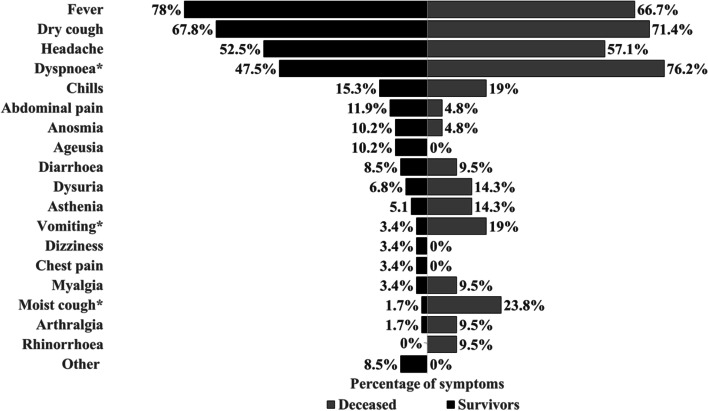
Background: In low- and middle-income countries, pregnant women and newborns are more vulnerable to adverse outcomes from coronavirus disease 2019 (COVID-19). However, in Venezuela, there are no integrated data in a national surveillance system to identify the clinical-epidemiological characteristics and maternal-foetal outcomes of pregnant women hospitalised with COVID-19. Methods: A retrospective study was conducted among Venezuelan pregnant women hospitalised with COVID-19 seen at the “Ruiz y Páez” University Hospital Complex and the San Cristobal Central Hospital between June 2020 and September 2021. Information was obtained from physical and digitised clinical records using a purpose-designed proforma to collect epidemiological, clinical, paraclinical, treatment, obstetric and perinatal complications, and maternal-foetal outcomes data. Results: A total of 80 pregnant women with confirmed severe acute respiratory syndrome coronavirus 2 infection were seen within the study period, 59 (73.8%) survived and 21 (26.2%) died. The median (interquartile range) age was 29 (23–33) years, the majority being in the third trimester of pregnancy (81.2%; n = 65). Interestingly, four (5%) pregnant women were co-infected with malaria by Plasmodium vivax and three (3.8%) with syphilis. The most frequent symptoms were fever (75%; n = 60), dry cough (68.8%; n = 55), dyspnoea (55%; n = 44), and headache (53.8%; n = 43). The most frequent maternal complications were anaemia (51.5%; n = 66) and hypertensive disorders of pregnancy (17.5%; n = 14). The most frequent perinatal complications were preterm delivery (39.2%; n = 20/51) and oligohydramnios (31.3%; n = 25). A total of 29 (36.3%) adverse foetal outcomes were documented, 21 stillbirth and eight abortions. Conclusion: This is the first study to describe the clinical-epidemiological behaviour of COVID-19 in hospitalised Venezuelan pregnant women. Anaemia, hypertensive disorders of pregnancy, oligohydramnios, and low birth weight were the most frequent maternal-foetal complications in this population of pregnant women.
Overview
The claims and statistics of this paper haven’t been checked yet.
Free: it reads the open-access text and checks the first 5 claims that cite a source we can check. Create a free account to check every claim.
Integrity signals
Registry
Cites
Statistics
Figures
Verification
Claims the paper makes
The claims and statistics of this paper haven’t been checked yet.
Free: it reads the open-access text and checks the first 5 claims that cite a source we can check. Create a free account to check every claim.
Claims other papers make about this one
Each is checked against this paper’s own text: does it say what the citing paper says it does?
The source backs part of the claim, not all of it — or backs it for a different population, condition or comparison.
In the citing paper
“Furthermore, co-infection with COVID-19 and malaria can exacerbate the severity of morbidity and mortality [103].”
From Current update on malaria in pregnancy: a systematic review (2025) · cites this paper as [103]
Experimental — accuracy not yet measured
Self-check
Percentages, sums and reported differences re-computed from the paper’s own numbers.
The self-check needs the paper’s full text.
Citations
Cites
Clinical features of patients infected with 2019 novel coronavirus in Wuhan, China
Huang, C., Wang, Y., Li, X., Ren, L., Zhao, J., Hu, Y., Zhang, L., Fan, G., Xu, J., Gu, X., et al. (2020) · The Lancet · doi:10.1016/s0140-6736(20)30183-5 · Cited by 48,884
Zhou, F., Yu, T., Du, R., Fan, G., Liu, Y., Liu, Z., Xiang, J., Wang, Y., Song, B., Gu, X., et al. (2020) · The Lancet · doi:10.1016/s0140-6736(20)30566-3 · Cited by 27,263
Wang, D., Hu, B., Hu, C., Zhu, F., Liu, X., Zhang, J., Wang, B., Xiang, H., Cheng, Z., Xiong, Y., et al. (2020) · JAMA · doi:10.1001/jama.2020.1585 · Cited by 20,148
La certeza de lo impredecible: Cultura Educación y Sociedad en tiempos de COVID19
Martínez González, M. (2020) · DSPACE System - Metalibrary (University of the Coast) · Cited by 18,463
Ruan, Q., Yang, K., Wang, W., Jiang, L., & Song, J. (2020) · Intensive Care Medicine · doi:10.1007/s00134-020-05991-x · Cited by 4,898
Allotey, J., Fernandez, S., Bonet, M., Stallings, E., Yap, M., Kew, T., Zhou, D., Coomar, D., Sheikh, J., Lawson, H., et al. (2020) · BMJ · doi:10.1136/bmj.m3320 · Cited by 2,304 · cited 1×
“Consistent with previous publications [20, 21, 25, 26], our study found that fever, headache, cough, and dyspnoea were the most frequent symptoms reported by pregnant women with COVID-19 at consultation and hospital admission.”
ResultLiu, Y., Yang, Y., Zhang, C., Huang, F., Wang, F., Yuan, J., Wang, Z., Li, J., Li, J., Feng, C., et al. (2020) · Science China Life Sciences · doi:10.1007/s11427-020-1643-8 · Cited by 2,031
Lymphopenia predicts disease severity of COVID-19: a descriptive and predictive study
Tan, L., Wang, Q., Zhang, D., Ding, J., Huang, Q., Tang, Y.-Q., Wang, Q., & Miao, H. (2020) · Signal Transduction and Targeted Therapy · doi:10.1038/s41392-020-0148-4 · Cited by 1,690
Coronavirus disease 2019 (COVID-19) pandemic and pregnancy
Dashraath, P., Wong, J. L. J., Lim, M. X. K., Lim, L. M., Li, S., Biswas, A., Choolani, M., Mattar, C., & Su, L. L. (2020) · American Journal of Obstetrics and Gynecology · doi:10.1016/j.ajog.2020.03.021 · Cited by 1,432
Villar, J., Ariff, S., Gunier, R. B., Thiruvengadam, R., Rauch, S., Kholin, A., Roggero, P., Prefumo, F., do Vale, M. S., Cardona-Perez, J. A., et al. (2021) · JAMA Pediatrics · doi:10.1001/jamapediatrics.2021.1050 · Cited by 1,338
Tomazini, B. M., Maia, I. S., Cavalcanti, A. B., Berwanger, O., Rosa, R. G., Veiga, V. C., Avezum, A., Lopes, R. D., Bueno, F. R., Silva, M. V. A. O., et al. (2020) · JAMA · doi:10.1001/jama.2020.17021 · Cited by 1,241 · cited 1×
“There is evidence that corticosteroids reduce mortality, hospitalisation time, and use of mechanical ventilation in COVID-19 patients with supplemental oxygen requirements [53], so they have been applied as an indispensable tool, even in pregnant women [54].”
MethodKnight, M., Bunch, K., Vousden, N., Morris, E., Simpson, N., Gale, C., O’Brien, P., Quigley, M., Brocklehurst, P., & Kurinczuk, J. J. (2020) · BMJ · doi:10.1136/bmj.m2107 · Cited by 1,170
Chmielewska, B., Barratt, I., Townsend, R., Kalafat, E., van der Meulen, J., Gurol-Urganci, I., O'Brien, P., Morris, E., Draycott, T., Thangaratinam, S., et al. (2021) · The Lancet Global Health · doi:10.1016/s2214-109x(21)00079-6 · Cited by 1,092 · cited 1×
“In low- and middle-income countries (LMICs), pregnant women and newborns are more vulnerable to adverse outcomes from COVID-19 [17, 18].”
BackgroundPregnancy and perinatal outcomes of women with severe acute respiratory syndrome
Wong, S. F., Chow, K. M., Leung, T. N., Ng, W. F., Ng, T. K., Shek, C. C., Ng, P. C., Lam, P. W. Y., Ho, L. C., To, W. W. K., et al. (2004) · American Journal of Obstetrics and Gynecology · doi:10.1016/j.ajog.2003.11.019 · Cited by 1,049
Prevalence and outcomes of infection among patients in intensive care units in 2017.
Vincent, J.-L., Sakr, Y., Singer, M., Martin-Loeches, I., Machado, F. R., Marshall, J. C., Finfer, S., Pelosi, P., Brazzi, L., Aditianingsih, D., et al. (2020) · JAMA · doi:10.1001/jama.2020.2717 · Cited by 1,011
Schwartz, D. A., & Graham, A. L. (2020) · Viruses · doi:10.3390/v12020194 · Cited by 936
The impact of COVID-19 on pregnancy outcomes: a systematic review and meta-analysis
Wei, S. Q., Bilodeau-Bertrand, M., Liu, S., & Auger, N. (2021) · Canadian Medical Association Journal · doi:10.1503/cmaj.202604 · Cited by 911 · cited 1×
“Likewise, studies in Latin America [21] and other regions of the world [14–16, 29] found that preterm delivery and low birth weight were the most frequent perinatal complications in our patient population, which could be associated with excessive host inflammatory response to COVID-19 and poor foetal vascular perfusio…”
BackgroundKarlinsky, A., & Kobak, D. (2021) · eLife · doi:10.7554/elife.69336 · Cited by 772
Clinical Characteristics of Pregnant Women with Covid-19 in Wuhan, China
Chen, L., Li, Q., Zheng, D., Jiang, H., Wei, Y., Zou, L., Feng, L., Xiong, G., Sun, G., Wang, H., et al. (2020) · New England Journal of Medicine · doi:10.1056/nejmc2009226 · Cited by 623 · cited 1×
“At the pandemic’s beginning, scientific reports suggested that pregnant women were not at increased risk of maternal-foetal complications due to COVID-19 [10, 11].”
BackgroundKhalil, A., Kalafat, E., Benlioglu, C., O'Brien, P., Morris, E., Draycott, T., Thangaratinam, S., Le Doare, K., Heath, P., Ladhani, S., et al. (2020) · EClinicalMedicine · doi:10.1016/j.eclinm.2020.100446 · Cited by 362
Huntley, B. J. F., Huntley, E. S., Di Mascio, D., Chen, T., Berghella, V., & Chauhan, S. P. (2020) · Obstetrics & Gynecology · doi:10.1097/aog.0000000000004010 · Cited by 266 · cited 1×
“At the pandemic’s beginning, scientific reports suggested that pregnant women were not at increased risk of maternal-foetal complications due to COVID-19 [10, 11].”
BackgroundLucien, M. A. B., Canarie, M. F., Kilgore, P. E., Jean-Denis, G., Fénélon, N., Pierre, M., Cerpa, M., Joseph, G. A., Maki, G., Zervos, M. J., et al. (2021) · International Journal of Infectious Diseases · doi:10.1016/j.ijid.2020.12.087 · Cited by 256 · cited 1×
“However, indiscriminate antibiotic use during the pandemic has been the common denominator (71–90%) [31], a clinical practice that increases bacterial multidrug resistance [30, 32, 33].”
BackgroundClinical Characteristics and Outcomes of Hospitalized Women Giving Birth With and Without COVID-19
Jering, K. S., Claggett, B. L., Cunningham, J. W., Rosenthal, N., Vardeny, O., Greene, M. F., & Solomon, S. D. (2021) · JAMA Internal Medicine · doi:10.1001/jamainternmed.2020.9241 · Cited by 246
Laboratory findings in COVID-19 diagnosis and prognosis
Pourbagheri-Sigaroodi, A., Bashash, D., Fateh, F., & Abolghasemi, H. (2020) · Clinica Chimica Acta · doi:10.1016/j.cca.2020.08.019 · Cited by 241
Infants Born to Mothers With Severe Acute Respiratory Syndrome
Shek, C. C., Ng, P. C., Fung, G. P. G., Cheng, F. W. T., Chan, P. K. S., Peiris, M. J. S., Lee, K. H., Wong, S. F., Cheung, H. M., Li, A. M., et al. (2003) · Pediatrics · doi:10.1542/peds.112.4.e254 · Cited by 231
Poudel, A., Poudel, Y., Adhikari, A., Aryal, B. B., Dangol, D., Bajracharya, T., Maharjan, A., & Gautam, R. (2021) · PLOS ONE · doi:10.1371/journal.pone.0256744 · Cited by 222
Yuan, J., Zou, R., Zeng, L., Kou, S., Lan, J., Li, X., Liang, Y., Ding, X., Tan, G., Tang, S., et al. (2020) · Inflammation Research · doi:10.1007/s00011-020-01342-0 · Cited by 210
Marcolino, M. S., Ziegelmann, P. K., Souza-Silva, M. V. R., do Nascimento, I. J. B., Oliveira, L. M., Monteiro, L. S., Sales, T. L. S., Ruschel, K. B., Martins, K. P. M. P., Etges, A. P. B. D. S., et al. (2021) · International Journal of Infectious Diseases · doi:10.1016/j.ijid.2021.01.019 · Cited by 186 · cited 3×
“There is substantial evidence to support the use of corticosteroids in pregnant women at risk of preterm delivery [30], one of the complications with the highest incidence in our study.”
BackgroundSelf-citationLatin American healthcare systems in times of pandemic
Litewka, S. G., & Heitman, E. (2020) · Developing World Bioethics · doi:10.1111/dewb.12262 · Cited by 126
COVID-19 pneumonia and the appropriate use of antibiotics
Ginsburg, A. S., & Klugman, K. P. (2020) · The Lancet Global Health · doi:10.1016/s2214-109x(20)30444-7 · Cited by 125 · cited 1×
“However, indiscriminate antibiotic use during the pandemic has been the common denominator (71–90%) [31], a clinical practice that increases bacterial multidrug resistance [30, 32, 33].”
BackgroundHigher severe acute respiratory syndrome coronavirus 2 infection rate in pregnant patients
Lokken, E. M., Taylor, G. G., Huebner, E. M., Vanderhoeven, J., Hendrickson, S., Coler, B. S., Sheng, J. S., Walker, C. L., McCartney, S. A., Kretzer, N. M., et al. (2021) · American Journal of Obstetrics and Gynecology · doi:10.1016/j.ajog.2021.02.011 · Cited by 122 · cited 1×
“An increased risk of abortions and stillbirth in patients with COVID-19 has been described in larger studies [17, 50, 51], a pattern observed in our study with a higher proportion within the dead pregnant women, similar to that described in a Latin-American study [21], with the exception of the proportion of stillbirt…”
ResultSpanish Obstetric Emergency Group, Pérez, Ó. M., Prats, P., Hernandez, M. M., Pardilla, M. B. E., Pérez, N. P., Hernandez, M. R. V., Yarza, A. V., Velasco, O. N., Fernández, P. D. B., et al. (2021) · BMC Pregnancy and Childbirth · doi:10.1186/s12884-021-03742-4 · Cited by 121 · cited 1×
“In addition, several studies have described that exposure to COVID-19 increases the likelihood of developing pre-eclampsia/eclampsia, preterm delivery, premature rupture of membrane, and admission to the neonatal intensive care unit [15, 16].”
BackgroundSevere acute respiratory syndrome (SARS) in neonates and children
Li, A. M., & Ng, P. C. (2005) · Archives of Disease in Childhood Fetal & Neonatal · doi:10.1136/adc.2005.075309 · Cited by 116
Servante, J., Swallow, G., Thornton, J., Myers, B., Munireddy, S., Malinowski, A. K., Othman, M., Li, W., O’Donoghue, K., & Walker, K. F. (2021) · BMC Pregnancy and Childbirth · doi:10.1186/s12884-021-03568-0 · Cited by 111 · cited 1×
“On the other hand, the prothrombotic risk in pregnant women with SARS-CoV-2 infection has been reported previously [34].”
BackgroundCarubbi, F., Salvati, L., Alunno, A., Maggi, F., Borghi, E., Mariani, R., Mai, F., Paoloni, M., Ferri, C., Desideri, G., et al. (2021) · Scientific Reports · doi:10.1038/s41598-021-83831-8 · Cited by 104
Maza-Arnedo, F., Paternina-Caicedo, Á. J., Sosa, C., Mucio, B. D., Rojas-Suárez, J. A., Say, L., Cresswell, J. A., de Francisco, L. A., Serruya, S. J., Lappot, D. A. R., et al. (2022) · The Lancet Regional Health - Americas · doi:10.1016/j.lana.2022.100269 · Cited by 101 · cited 7×
“An increased risk of abortions and stillbirth in patients with COVID-19 has been described in larger studies [17, 50, 51], a pattern observed in our study with a higher proportion within the dead pregnant women, similar to that described in a Latin-American study [21], with the exception of the proportion of stillbirt…”
BackgroundResultInfluentialGajbhiye, R., Sawant, M. S., Kuppusamy, P., Surve, S. V., Pasi, A. R., Prusty, R. K., Mahale, S. D., & Modi, D. N. (2021) · International Journal of Gynecology & Obstetrics · doi:10.1002/ijgo.13793 · Cited by 92 · cited 3×
“An increased risk of abortions and stillbirth in patients with COVID-19 has been described in larger studies [17, 50, 51], a pattern observed in our study with a higher proportion within the dead pregnant women, similar to that described in a Latin-American study [21], with the exception of the proportion of stillbirt…”
BackgroundResultPregnancy, Postpartum Care, and COVID-19 Vaccination in 2021
Rasmussen, S. A., & Jamieson, D. J. (2021) · JAMA · doi:10.1001/jama.2021.1683 · Cited by 84
Gonçalves, B. M. M., Francisco, R. P. V., & Rodrigues, A. S. (2021) · PLoS ONE · doi:10.1371/journal.pone.0261492 · Cited by 78 · cited 1×
“Consistent with previous publications [20, 21, 25, 26], our study found that fever, headache, cough, and dyspnoea were the most frequent symptoms reported by pregnant women with COVID-19 at consultation and hospital admission.”
ResultCOVID-19 in Latin America—emergency and opportunity
Lancet, T. (2021) · The Lancet · doi:10.1016/s0140-6736(21)01551-8 · Cited by 70 · cited 1×
“Only eight newborns survived out of the 21 pregnant women died.”
BackgroundLa Verde, M., Riemma, G., Torella, M., Cianci, S., Savoia, F., Licciardi, F., Scida, S., Morlando, M., Colacurci, N., & De Franciscis, P. (2021) · International Journal of Gynecology & Obstetrics · doi:10.1002/ijgo.13726 · Cited by 69
Ferritin as prognostic marker in COVID-19: the FerVid study
Para, O., Caruso, L., Pestelli, G., Tangianu, F., Carrara, D., Maddaluni, L., Tamburello, A., Castelnovo, L., Fedi, G., Guidi, S., et al. (2021) · Postgraduate Medicine · doi:10.1080/00325481.2021.1990091 · Cited by 69
Tang, P., Wang, J., & Song, Y. (2018) · BMC Pregnancy and Childbirth · doi:10.1186/s12884-018-2070-0 · Cited by 68 · cited 1×
“Anatomical, physiological, and immunological changes accompanying pregnancy may increase the susceptibility of pregnant women to viral pathogens and the risk of developing severe pneumonia [5].”
BackgroundKasehagen, L. J., Byers, P., Taylor, K. E., Kittle, T. S., Roberts, C. L., Collier, C., Rust, B., Ricaldi, J. N., Green, J., Zapata, L. B., et al. (2021) · MMWR Morbidity and Mortality Weekly Report · doi:10.15585/mmwr.mm7047e2 · Cited by 58
Corticosteroid Guidance for Pregnancy during COVID-19 Pandemic
McIntosh, J. J. (2020) · American Journal of Perinatology · doi:10.1055/s-0040-1709684 · Cited by 55 · cited 1×
“There is evidence that corticosteroids reduce mortality, hospitalisation time, and use of mechanical ventilation in COVID-19 patients with supplemental oxygen requirements [53], so they have been applied as an indispensable tool, even in pregnant women [54].”
MethodGajbhiye, R., Mahajan, N. N., Waghmare, R., Zala, S., Chaaithanya, I. K., Kuppusamy, P., Bhurke, A. V., Pious, M., Surve, S. V., Modi, D. N., et al. (2021) · The Indian Journal of Medical Research · doi:10.4103/ijmr.ijmr_1938_21 · Cited by 36 · cited 1×
“2%) compared with similar studies [16, 36], associated with the presence of poor prognosis markers such as elevated lactate dehydrogenase, C-reactive protein, ferritin, and D dimer, as well as thrombocytopenia and lymphopenia [30, 37–49].”
ResultMaternal infection with COVID-19 and increased risk of adverse pregnancy outcomes: a meta-analysis
Wang, X., Chen, X., & Zhang, K. (2022) · The Journal of Maternal-Fetal & Neonatal Medicine · doi:10.1080/14767058.2022.2033722 · Cited by 28
Lampo, M., Hernández-Villena, J. V., Cascante, J., Vincenti-Gonzalez, M. F., Forero-Peña, D. A., Segovia, M., Hampson, K., Castro, J. S., & Grillet, M. E. (2021) · Vaccines · doi:10.3390/vaccines9070719 · Cited by 22 · cited 1×
“However, these data are inconsistent with the real epidemiological behaviour of the pandemic in the country, where underreporting is estimated to be five to seven times higher [4].”
BackgroundSelf-citationMaza-Arnedo, F., Paternina-Caicedo, Á. J., Sosa, C., et al. (2022) · SSRN Electronic Journal · doi:10.2139/ssrn.4035411 · Cited by 22
The impact of COVID‐19 on pregnancy and therapeutic drug development
Abbas‐Hanif, A., Rezai, H., Ahmed, S. F., & Ahmed, A. S. (2021) · British Journal of Pharmacology · doi:10.1111/bph.15582 · Cited by 18 · cited 1×
“Hypertensive disorders of pregnancy and COVID-19 share an exaggerated inflammatory response, guided by cytokines such as IL-6, TNF-α and IFN-γ leading to endothelial damage [28].”
BackgroundHaye, M., Cartes, G., Gutiérrez, J., Ahumada, P., Krause, B. J., Merialdi, M., & González, R. (2021) · The Journal of Maternal-Fetal & Neonatal Medicine · doi:10.1080/14767058.2021.1902498 · Cited by 16 · cited 3×
“Latin America is one of the most affected regions by the coronavirus disease 2019 (COVID-19) pandemic, showing the highest morbidity and mortality rates in countries with weakened healthcare services, economic and political instabilities, humanitarian crises, and deep social inequalities, such as Venezuela [1–3].”
BackgroundForero-Peña, D. A., Carrión‐Nessi, F. S., Mendoza‐Millán, D. L., Omaña‐Ávila, Ó. D., Mejía‐Bernard, M. D., Camejo‐Ávila, N. A., Flora‐Noda, D. M., Velásquez, V. L., Chacón‐Labrador, F. R., Doval, J. M., et al. (2021) · Journal of Medical Virology · doi:10.1002/jmv.27449 · Cited by 16 · cited 1×
“A possible hypothesis that could explain these discrepancies is poor antenatal care due to the collapse of health care centres during the COVID-19 pandemic in Venezuela, as well as quarantine and community containment measures [52].”
BackgroundSelf-citationThe prognostic role of D-dimer in hospitalized COVID-19 patients
Korkusuz, R., Karandere, F., Şenoğlu, S., Koçoğlu, H., & Yasar, K. K. (2021) · Bratislavské lekárske listy/Bratislava medical journal · doi:10.4149/bll_2021_129 · Cited by 10
Forero-Peña, D. A., Carrión‐Nessi, F. S., Omaña‐Ávila, Ó. D., Mendoza-Millán, D. L., Arocha, S. R. R., Escalante-Pérez, I. A., Maricuto, A. L., Camejo‐Ávila, N. A., Chavero, M., Figuera, L., et al. (2022) · Travel Medicine and Infectious Disease · doi:10.1016/j.tmaid.2022.102460 · Cited by 6 · cited 4×
“A group of pregnant women reported co-infection with malaria and syphilis, in accordance with co-infections reported in LMICs [17, 24].”
ResultInfluentialSelf-citation
Research works printed but not linked: 2
- NIH. Coronavirus Disease 2019 (COVID-19) Treatment Guidelines. Bethesda: National Institutes of Health (US); 2021. Available at: https://www.covid19treatmentguidelines.nih.gov/. 34003615
- Del Carpio-Orantes L García-Méndez S Contreras-Sánchez ER González-Segovia O Ahumada-Zamudio A Velasco-Caicero AR Aparicio-Sánchez EE García-Hernández O Munguía-Sereno ÁE Escobar-Huerta A Caracterización clínica y del hemograma de pacientes con neumonía por COVID-19 en Veracruz, México Revista de Hematol 2020 21 4 205 209
Cited by
Current update on malaria in pregnancy: a systematic review
Minwuyelet, A., Yewhalaw, D., Siferih, M., & Atenafu, G. (2025) · Tropical Diseases, Travel Medicine and Vaccines · doi:10.1186/s40794-025-00248-1 · Cited by 49
“Furthermore, co-infection with COVID-19 and malaria can exacerbate the severity of morbidity and mortality [103].”
Mpox infection in animals: A systematic review and meta-analysis
Bonilla‐Aldana, D. K., Bonilla-Aldana, J. L., Ulloque‐Badaracco, J. R., Al‐kassab‐Córdova, A., Hernández-Bustamante, E. A., Alarcón‐Braga, E. A., Benites-Zapata, V. A., Corzo, C. A. C., Silva-Cajaleón, K., & Rodriguez-Morales, A. J. (2024) · Journal of Infection and Public Health · doi:10.1016/j.jiph.2024.04.015 · Cited by 20
Self-citationRodriguez-Morales, A. J., Puerta-Arias, M. C., Husni, R., Montenegro-Idrogo, J. J., Escalera-Antezana, J. P., Alvarado-Arnez, L. E., Bonilla‐Aldana, D. K., Camacho‐Moreno, G., Mendoza, H., Sabogal, I. A. R., et al. (2025) · Travel Medicine and Infectious Disease · doi:10.1016/j.tmaid.2025.102839 · Cited by 18
Self-citationPlasmodium vivax and SARS-CoV-2 co-infection in Venezuelan pregnant women: a case series
Carrión‐Nessi, F. S., Mendoza-Millán, D. L., Omaña‐Ávila, Ó. D., Arocha, S. R. R., Moncada-Ortega, A., Lopez-Perez, M., Torres, J. R., Noya-González, Ó., & Forero-Peña, D. A. (2023) · Malaria Journal · doi:10.1186/s12936-023-04442-4 · Cited by 9
“However, two recent studies reported a high prevalence of maternal–fetal events among Venezuelan pregnant women with COVID-19 [32, 33].”
BackgroundSelf-citationThe covid-19 pandemic and its effect on maternal health indicators in Latin American countries
Pérez, F. C. A., Casanova, A. M. P., Nicho-Conde, G., Robles, K. J. D., & Vela-Ruiz, J. M. (2024) · Obstetrics & Gynecology International Journal · doi:10.15406/ogij.2024.15.00760
Metadata
- Authors
- Carrión-Nessi, F. S., Castro, M. P., Freitas-De Nobrega, D. C., Moncada-Ortega, A., Omaña-Ávila, Ó. D., Mendoza-Millán, D. L., Marcano-Rojas, M. V., Trejo, N. J., Virriel, I. V., Chavero, M., Camejo-Ávila, N. A., Rodriguez-Morales, A. J., & Forero-Peña, D. A.
- Affiliations
- Universidad Central de Venezuela (VE)
- Universidad de Oriente (VE)
- Universidad Científica del Sur (PE)
- Hospital Clínico Universitario de Caracas (VE)
- Corresponding author
- Forero-Peña, David A.
- Venue
- BMC Pregnancy and Childbirth
- Published
- 2022-12-05
- Volume
- 22
- Issue
- 1
- Pages
- 905-905
- ISSN
- 1471-2393 (ISSN-L)
- PMC
- PMC9720989
- OpenAlex
- W4310682276
- Cited by
- 5
- References
- 53
- Citations by year
- 2025: 2 · 2024: 2 · 2023: 1
- FWCI
- 1.25
- Type
- journal article
- Language
- en
- Open access
- gold
- doi.org
- Licence
- cc-by
- creativecommons.org/licenses/by/4.0 (tdm)
- creativecommons.org/licenses/by/4.0 (vor)
- Locations
- BMC Pregnancy and Childbirth (publishedVersion, cc-by)
- PubMed Central (publishedVersion, cc-by)
- PubMed (publishedVersion)
- DOAJ (DOAJ: Directory of Open Access Journals) (submittedVersion, cc-by-sa)
- Topics
- Health Sciences › Medicine › Obstetrics and Gynecology › COVID-19 Impact on Reproduction
- Health Sciences › Medicine › Infectious Diseases › COVID-19 Clinical Research Studies
- Health Sciences › Medicine › Cardiology and Cardiovascular Medicine › Cardiovascular Issues in Pregnancy
- Keywords
- COVID-19 in pregnancy, SARS-CoV-2, maternal outcomes, perinatal outcomes, anemia, hypertensive disorders of pregnancy, oligohydramnios, preterm birth, stillbirth, abortion, low birth weight, malaria co-infection, Plasmodium vivax, clinical-epidemiological characteristics
- MeSH terms
- COVID-19, Adult, Anemia, Female, Humans, Infant, Newborn, Pregnancy, Pregnancy Complications, Infectious, Pregnancy Outcome, Retrospective Studies, Venezuela, Oligohydramnios, Pregnant People, Pregnant Women, Hypertension, Pregnancy-Induced, Premature Birth, Stillbirth
About these checks
Registry, retraction, Cites and statistics results are computed, not judged, with one exception: a printed reference that no index lists is read once by a model before it counts as a citation error. Claims are extracted by a model and kept only when their quote appears verbatim in the text; each cited source is then checked, with a model’s help, for whether it says what the claim relies on. Those verdicts can be wrong — read the claim’s quote and the cited source before relying on one.
Statistics and arithmetic are recomputed, not judged.
Confidence bands are shown only for fields calibrated on our annotated test set. None is calibrated yet, so no band is shown.
What counts as a claim ›How we measure confidence ›How we check this ›
Are you an author, or do you see a problem with this page? Request a review
Data sources
Bibliographic data: Semantic Scholar, OpenAlex, Crossref.
Contains information from the Semantic Scholar Academic Graph Datasets, made available under the ODC Attribution License (ODC-BY 1.0).
Semantic Scholar’s data is described in: Kinney, R., et al. (2023). The Semantic Scholar Open Data Platform. arXiv:2301.10140.
