

Return-to-work intervention for cancer survivors: budget impact and allocation of costs and returns in the Netherlands and six major EU-countries
Open accessThe DOI matches its Crossref record; 19 of the 19 references it cites were found in a registry or an index.
Abstract
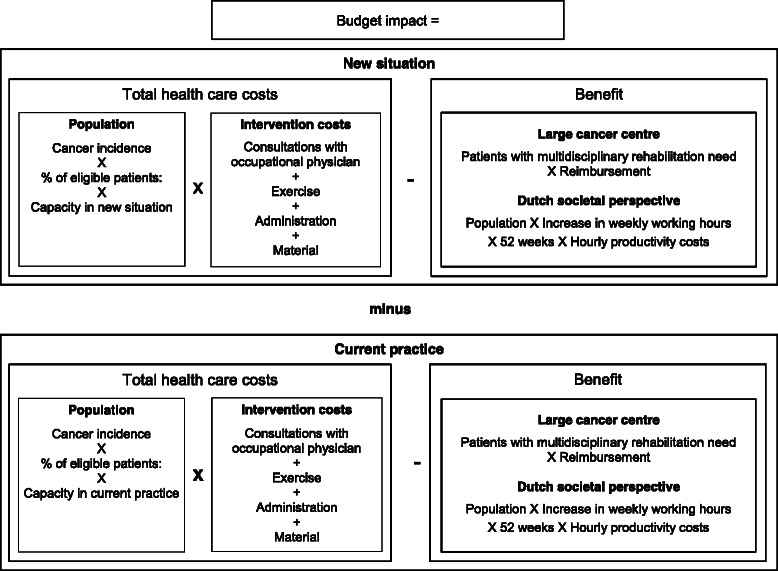
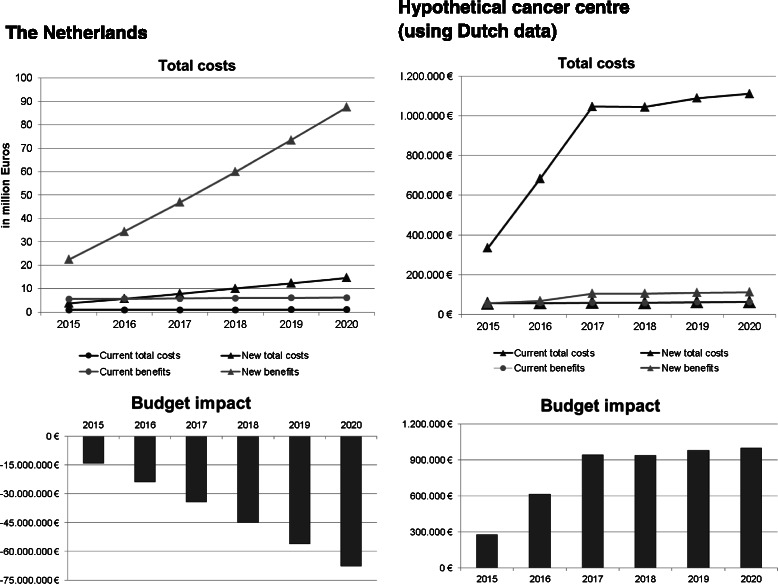
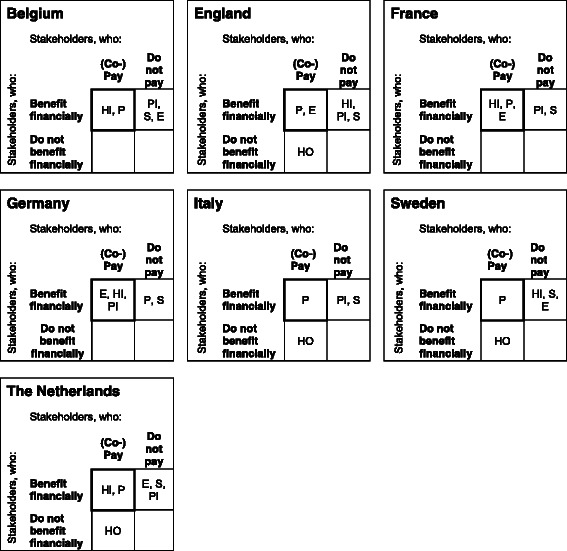
BACKGROUND: Return-to-work (RTW)-interventions support cancer survivors in resuming work, but come at additional healthcare costs. The objective of this study was to assess the budget impact of a RTW-intervention, consisting of counselling sessions with an occupational physician and an exercise-programme. The secondary objective was to explore how the costs of RTW-interventions and its financial revenues are allocated among the involved stakeholders in several EU-countries. METHODS: The budget impact (BI) of a RTW-intervention versus usual care was analysed yearly for 2015-2020 from a Dutch societal- and from the perspective of a large cancer centre. The allocation of the expected costs and financial benefits for each of the stakeholders involved was compared between the Netherlands, Belgium, England, France, Germany, Italy, and Sweden. RESULTS: The average intervention costs in this case were €1,519/patient. The BI for the Netherlands was €-14.7 m in 2015, rising to €-71.1 m in 2020, thus the intervention is cost-saving as the productivity benefits outweigh the intervention costs. For cancer centres the BI amounts to €293 k in 2015, increasing to €1.1 m in 2020. Across European countries, we observed differences regarding the extent to which stakeholders either invest or receive a share of the benefits from offering a RTW-intervention. CONCLUSION: The RTW-intervention is cost-saving from a societal perspective. Yet, the total intervention costs are considerable and, in many European countries, mainly covered by care providers that are not sufficiently reimbursed.
Overview
The claims and statistics of this paper haven’t been checked yet.
Free: it reads the open-access text and checks the first 5 claims that cite a source we can check. Create a free account to check every claim.
Integrity signals
Registry
Cites
Statistics
Figures
Verification
Claims the paper makes
The claims and statistics of this paper haven’t been checked yet.
Free: it reads the open-access text and checks the first 5 claims that cite a source we can check. Create a free account to check every claim.
Claims other papers make about this one
Each is checked against this paper’s own text: does it say what the citing paper says it does?
In the citing paper
“Underfunding, however, is common even in countries with government subsidies.83”
From Exercise is medicine in oncology: Engaging clinicians to help patients move through cancer (2019) · cites this paper as [83]
Self-check
Percentages, sums and reported differences re-computed from the paper’s own numbers.
The self-check needs the paper’s full text.
Citations
Cites
Cochrane Database of Systematic Reviews
(2011) · Progress in Neurology and Psychiatry · doi:10.1002/pnp.208 · Cited by 4,667
American College of Sports Medicine Roundtable on Exercise Guidelines for Cancer Survivors
Schmitz, K. H., Courneya, K. S., Matthews, C., Demark-Wahnefried, W., GALVÃO, D. A., Pinto, B. M., IRWIN, M. L., WOLIN, K. Y., SEGAL, R. J., LUCIA, A., et al. (2010) · Medicine & Science in Sports & Exercise · doi:10.1249/mss.0b013e3181e0c112 · Cited by 2,781 · cited 1×
“guidelines [8–12].”
Sullivan, S. D., Mauskopf, J. A., Augustovski, F., Jaime Caro, J., Lee, K. M., Minchin, M., Orlewska, E., Penna, P., Rodriguez Barrios, J.-M., & Shau, W.-Y. (2014) · Value in Health · doi:10.1016/j.jval.2013.08.2291 · Cited by 1,172
Employment and work-related issues in cancer survivors
Mehnert, A. (2011) · Critical Reviews in Oncology/Hematology · doi:10.1016/j.critrevonc.2010.01.004 · Cited by 827 · cited 1×
“Approximately 40 % have not resumed work 24 months post treatment [1].”
BackgroundCancer Survivors and Unemployment: A Meta-analysis and Meta-regression
de Boer, A. G. E. M., Taskila, T., Ojajärvi, A., van Dijk, F. J. H., & Verbeek, J. H. A. M. (2009) · JAMA · doi:10.1001/jama.2009.187 · Cited by 795
Mauskopf, J. A., Sullivan, S. D., Annemans, L., Caro, J., Mullins, C. D., Nuijten, M., Orlewska, E., Watkins, J., & Trueman, P. (2007) · Value in Health · doi:10.1111/j.1524-4733.2007.00187.x · Cited by 750
Interventions to enhance return-to-work for cancer patients
de Boer, A. G., Taskila, T. K., Tamminga, S. J., Feuerstein, M., Frings-Dresen, M. H., & Verbeek, J. H. (2015) · Cochrane Database of Systematic Reviews · doi:10.1002/14651858.cd007569.pub3 · Cited by 428
Self-citationHealthcare financing systems for increasing the use of tobacco dependence treatment
van den Brand, F. A., Nagelhout, G. E., Reda, A. A., Winkens, B., Evers, S. M. A. A., Kotz, D., & van Schayck, O. C. (2017) · Cochrane Database of Systematic Reviews · doi:10.1002/14651858.cd004305.pub5 · Cited by 215
Exercise-oncology research: Past, present, and future
Jones, L. W., & Alfano, C. M. (2013) · Acta Oncologica · doi:10.3109/0284186x.2012.742564 · Cited by 205 · cited 1×
“This study has some limitations; first, the potential overall health benefits of exercise programs, beyond returning to work, that may lead to lower future health care resource use are not included in the analysis [19].”
BackgroundHarris, S. R., Schmitz, K. H., Campbell, K. L., & McNeely, M. L. (2012) · Cancer · doi:10.1002/cncr.27461 · Cited by 155
Predictors of employment among cancer survivors after medical rehabilitation – a prospective study
Mehnert-Theuerkauf, A., & Koch, U. (2012) · Scandinavian Journal of Work Environment & Health · doi:10.5271/sjweh.3291 · Cited by 141 · cited 1×
“Supporting patients in returning to the workplace may improve health and quality of life, and avoid high societal costs associated with unemployment and long-term inability to work [4–6].”
BackgroundRowland, J. H., Kent, E. E., Forsythe, L. P., Loge, J. H., Hjorth, L., Glaser, A., Mattioli, V., & Fosså, S. D. (2013) · Cancer · doi:10.1002/cncr.28060 · Cited by 129
Interventions to enhance return-to-work for cancer patients
de Boer, A. G., Taskila, T. K., Tamminga, S. J., Frings-Dresen, M. H., Feuerstein, M., & Verbeek, J. H. (2011) · Cochrane Database of Systematic Reviews · doi:10.1002/14651858.cd007569.pub2 · Cited by 114
Self-citationMeaning of work and the returning process after breast cancer: a longitudinal study of 56 women
Lilliehorn, S., Hamberg, K., Kero, A., & Salander, P. (2012) · Scandinavian Journal of Caring Sciences · doi:10.1111/j.1471-6712.2012.01026.x · Cited by 86 · cited 1×
“Supporting patients in returning to the workplace may improve health and quality of life, and avoid high societal costs associated with unemployment and long-term inability to work [4–6].”
BackgroundPhysical exercise and return to work: cancer survivors’ experiences
Groeneveld, I. F., de Boer, A. G. E. M., & Frings‐Dresen, M. H. W. (2013) · Journal of Cancer Survivorship · doi:10.1007/s11764-012-0264-4 · Cited by 81
Self-citationThijs, K. M., de Boer, A. G. E. M., Vreugdenhil, G., van de Wouw, A. J., Houterman, S., & Schep, G. (2011) · Journal of Occupational Rehabilitation · doi:10.1007/s10926-011-9341-1 · Cited by 56
Cancer survivorship and return to work: UK occupational physician experience
Amir, Z., Wynn, P., Whitaker, S., & Luker, K. A. (2008) · Occupational Medicine · doi:10.1093/occmed/kqn150 · Cited by 38 · cited 1×
“Furthermore, cancer survivors have an increased risk for unemployment compared to the general population [2, 3].”
BackgroundGroeneveld, I. F., de Boer, A. G. E. M., & Frings‐Dresen, M. H. W. (2012) · BMJ Open · doi:10.1136/bmjopen-2012-001321 · Cited by 25 · cited 3×
“Volumes of resource use were obtained from the intervention protocol and health professionals participating in a feasibility study of the intervention [12, 14].”
BackgroundMethodSelf-citationGlimelius, B. (2012) · Acta Oncologica · doi:10.3109/0284186x.2012.744876 · Cited by 9
Research works printed but not linked: 1
- van KWF Kankerbestrijding SK Kanker in Nederland tot 2020 - trends en prognoses 2011 Amsterdam Dutch Cancer Society
Cited by
Exercise is medicine in oncology: Engaging clinicians to help patients move through cancer
Schmitz, K. H., Campbell, A. M., Stuiver, M. M., Pinto, B. M., Schwartz, A. L., Morris, G. S., Ligibel, J. A., Cheville, A., Galvão, D. A., Alfano, C. M., et al. (2019) · CA: A Cancer Journal for Clinicians · doi:10.3322/caac.21579 · Cited by 789
Return to work after cancer. A multi-regional population-based study from Germany
Arndt, V., Koch‐Gallenkamp, L., Bertram, H., Eberle, A., Holleczek, B., Pritzkuleit, R., Waldeyer‐Sauerland, M., Waldmann, A., Zeißig, S. R., Doege, D., et al. (2019) · Acta Oncologica · doi:10.1080/0284186x.2018.1557341 · Cited by 107
“As a result, these stakeholders have an intrinsic interest and financial incentive to support quick and successful resumption of work [6].”
BackgroundCarrera, P. M., Curigliano, G., Santini, D., Sharp, L., Chan, R. J., Pisu, M., Perrone, F., Karjalainen, S., Numico, G., Cherny, N. I., et al. (2024) · ESMO Open · doi:10.1016/j.esmoop.2024.102992 · Cited by 85
“122 Additionally, inequities within the fi nancial service landscape for cancer survivors have been high-lighted such as job discrimination or reduced access to travel or life insurance, bank loans and adoption services which can further exacerbate fi nancial toxicity.”
den Bakker, C. M., Anema, J. R., Zaman, A. G. N. M., de Vet, H. C. W., Sharp, L., Angenete, E., Allaix, M. E., Otten, R. H. J., Huirne, J. A. F., Bonjer, H. J., et al. (2018) · PLoS ONE · doi:10.1371/journal.pone.0200720 · Cited by 75
Steel, J. S., Godderis, L., & Luyten, J. (2018) · Scandinavian Journal of Work Environment & Health · doi:10.5271/sjweh.3715 · Cited by 34
Metadata
- Authors
- Mewes, J. C., Steuten, L. M. G., Groeneveld, I. F., de Boer, A. G. E. M., Frings-Dresen, M. H. W., IJzerman, M. J., & van Harten, W. H.
- Affiliations
- University of Twente (NL)
- University of Washington (US)
- Sophia Revalidatie (NL)
- Venue
- BMC Cancer
- Published
- 2015-11-12
- Volume
- 15
- Issue
- 1
- Pages
- 899-899
- ISSN
- 1471-2407 (ISSN-L)
- PMC
- PMC4642612
- OpenAlex
- W2108729418
- Cited by
- 23
- References
- 19
- Citations by year
- 2026: 1 · 2024: 3 · 2023: 2 · 2022: 2 · 2020: 3 · 2019: 3 · 2018: 4 · 2017: 5
- FWCI
- 7.25
- Type
- journal article
- Language
- en
- Open access
- gold
- doi.org
- Licence
- Locations
- BMC Cancer (publishedVersion, cc-by)
- Europe PMC (PubMed Central) (publishedVersion, cc-by)
- PubMed Central (publishedVersion, cc-by)
- PubMed (publishedVersion)
- Pure Amsterdam UMC (publishedVersion, other-oa)
- University of Twente Research Information (acceptedVersion, cc-by)
- Minerva Access (University of Melbourne) (submittedVersion, cc-by)
- Data Archiving and Networked Services (DANS) (submittedVersion)
- Leiden Repository (Leiden University) (submittedVersion)
- University of Twente Research Information (submittedVersion, cc-by)
- Funders
- Deutsches Krebsforschungszentrum
- University of Cambridge
- Cambridge University Hospitals
- KWF Kankerbestrijding
- Institut Gustave-Roussy
- Topics
- Social Sciences › Economics, Econometrics and Finance › Economics and Econometrics › Economic and Financial Impacts of Cancer
- Health Sciences › Medicine › Oncology › Cancer survivorship and care
- Social Sciences › Economics, Econometrics and Finance › Economics and Econometrics › Health Systems, Economic Evaluations, Quality of Life
- Keywords
- return to work interventions, cancer survivors, budget impact, cost allocation, exercise programmes, productivity benefits, health care costs, cancer centers, reimbursement, cross-national comparison, European Union
- MeSH terms
- Adult, Cost-Benefit Analysis, Counseling, Efficiency, Europe, Exercise Therapy, Female, Humans, Male, Middle Aged, Neoplasms, Netherlands, Rehabilitation, Vocational, Health Care Costs, Survivors, Sick Leave, Return to Work
About these checks
Registry, retraction, Cites and statistics results are computed, not judged, with one exception: a printed reference that no index lists is read once by a model before it counts as a citation error. Claims are extracted by a model and kept only when their quote appears verbatim in the text; each cited source is then checked, with a model’s help, for whether it says what the claim relies on. Those verdicts can be wrong — read the claim’s quote and the cited source before relying on one.
Statistics and arithmetic are recomputed, not judged.
Confidence bands are shown only for fields calibrated on our annotated test set. None is calibrated yet, so no band is shown.
What counts as a claim ›How we measure confidence ›How we check this ›
Are you an author, or do you see a problem with this page? Request a review
Data sources
Bibliographic data: Semantic Scholar, OpenAlex, Crossref.
Contains information from the Semantic Scholar Academic Graph Datasets, made available under the ODC Attribution License (ODC-BY 1.0).
Semantic Scholar’s data is described in: Kinney, R., et al. (2023). The Semantic Scholar Open Data Platform. arXiv:2301.10140.
