

Portrait of a cancer: mutational signature analyses for cancer diagnostics
Open accessThe DOI matches its Crossref record; 145 of the 146 references it cites were found in a registry or an index.
Abstract
BACKGROUND: In the past decade, systematic and comprehensive analyses of cancer genomes have identified cancer driver genes and revealed unprecedented insight into the molecular mechanisms underlying the initiation and progression of cancer. These studies illustrate that although every cancer has a unique genetic make-up, there are only a limited number of mechanisms that shape the mutational landscapes of cancer genomes, as reflected by characteristic computationally-derived mutational signatures. Importantly, the molecular mechanisms underlying specific signatures can now be dissected and coupled to treatment strategies. Systematic characterization of mutational signatures in a cancer patient's genome may thus be a promising new tool for molecular tumor diagnosis and classification. RESULTS: In this review, we describe the status of mutational signature analysis in cancer genomes and discuss the opportunities and relevance, as well as future challenges, for further implementation of mutational signatures in clinical tumor diagnostics and therapy guidance. CONCLUSIONS: Scientific studies have illustrated the potential of mutational signature analysis in cancer research. As such, we believe that the implementation of mutational signature analysis within the diagnostic workflow will improve cancer diagnosis in the future.
Overview
The claims and statistics of this paper haven’t been checked yet.
Free: it reads the open-access text and checks the first 5 claims that cite a source we can check. Create a free account to check every claim.
Integrity signals
Registry
Cites
Statistics
Figures
Verification
Claims the paper makes
The claims and statistics of this paper haven’t been checked yet.
Free: it reads the open-access text and checks the first 5 claims that cite a source we can check. Create a free account to check every claim.
Claims other papers make about this one
Each is checked against this paper’s own text: does it say what the citing paper says it does?
The cited source says what the claim attributes to it.
In the citing paper
“It was recently shown that somatic passenger mutations, which are identified efficiently by whole-genome sequencing (WGS), can provide insights into the mutational processes that occurred before and during tumorigenesis, paving the way for novel opportunities for clinical tumor diagnostics6.”
From Pan-cancer landscape of homologous recombination deficiency. (2020) · cites this paper as [6]
Self-check
Percentages, sums and reported differences re-computed from the paper’s own numbers.
The self-check needs the paper’s full text.
Citations
Cites
PD-1 and PD-L1 Immune Checkpoint Blockade to Treat Breast Cancer
Hartkopf, A. D., Taran, F.-A., Wallwiener, M., Walter, C. B., Krämer, B., Grischke, E.-M., & Brucker, S. Y. (2016) · Breast Care · doi:10.1159/000453569 · Cited by 30,845
Signatures of mutational processes in human cancer
Initiative, A. P. C. G., Alexandrov, L. B., ICGC Breast Cancer Consortium, ICGC MMML-Seq Consortium, PedBrain, I., Nik-Zainal, S., Wedge, D. C., Aparicio, S. A. J. R., Behjati, S., Biankin, A. V., et al. (2013) · Nature · doi:10.1038/nature12477 · Cited by 9,660
PD-1 Blockade in Tumors with Mismatch-Repair Deficiency
Le, D. T., Uram, J. N., Wang, H., Bartlett, B. R., Kemberling, H., Eyring, A. D., Skora, A. D., Luber, B. S., Azad, N. S., Laheru, D., et al. (2015) · New England Journal of Medicine · doi:10.1056/nejmoa1500596 · Cited by 9,377
p53 Mutations in Human Cancers
Hollstein, M., Sidransky, D., Vogelstein, B., & Harris, C. C. (1991) · Science · doi:10.1126/science.1905840 · Cited by 8,018
Mutational landscape determines sensitivity to PD-1 blockade in non–small cell lung cancer
Rizvi, N. A., Hellmann, M. D., Snyder, A., Kvistborg, P., Makarov, V., Havel, J. J., Lee, W., Yuan, J., Wong, P., Ho, T. S., et al. (2015) · Science · doi:10.1126/science.aaa1348 · Cited by 7,802
Comprehensive genomic characterization defines human glioblastoma genes and core pathways
The Cancer Genome Atlas Research Network (2008) · Nature · doi:10.1038/nature07385 · Cited by 7,735
Mismatch repair deficiency predicts response of solid tumors to PD-1 blockade
Le, D. T., Durham, J. N., Smith, K. N., Wang, H., Bartlett, B. R., Aulakh, L. K., Lu, S., Kemberling, H., Wilt, C., Luber, B. S., et al. (2017) · Science · doi:10.1126/science.aan6733 · Cited by 6,645
Genetic Basis for Clinical Response to CTLA-4 Blockade in Melanoma
Snyder, A., Makarov, V., Merghoub, T., Yuan, J., Zaretsky, J. M., Desrichard, A., Walsh, L. A., Postow, M. A., Wong, P., Ho, T. S., et al. (2014) · New England Journal of Medicine · doi:10.1056/nejmoa1406498 · Cited by 4,286
Inhibition of Poly(ADP-Ribose) Polymerase in Tumors from BRCA Mutation Carriers
Fong, P. C., Boss, D. S., Yap, T. A., Tutt, A., Wu, P., Mergui-Roelvink, M., Mortimer, P., Swaisland, H., Lau, A., O'Connor, M. J., et al. (2009) · New England Journal of Medicine · doi:10.1056/nejmoa0900212 · Cited by 3,634
Genomic analyses identify molecular subtypes of pancreatic cancer
Bailey, P., Chang, D. K., Nones, K., Johns, A. L., Patch, A.-M., Gingras, M.-C., Miller, D. K., Christ, A. N., Bruxner, T. J. C., Quinn, M. C., et al. (2016) · Nature · doi:10.1038/nature16965 · Cited by 3,621
Research works printed but not linked: 3
- Le DT Durham JN Smith KN Wang H Bartlett BR Aulakh LK Mismatch repair deficiency predicts response of solid tumors to PD-1 blockade Science 2017 357 409 413 10.1126/science.aan6733 28596308 PMC5576142 · DOI · Paper page
- Ferlay J Soerjomataram I Ervik M Dikshit R Eser S Mathers C GLOBOCAN 2012 v1.0, Cancer incidence and mortality worldwide: IARC CancerBase no. 11. International Agency for Research on Cancer 2013
- Li Y, Roberts ND, Weischenfeldt J, Wala JA, Shapira O, Schumacher SE, Khurana E, Korbel J, Imielinski M, Beroukhim R, Campbell PJ, on behalf of the PCAWG-Structural Variation Working Group, and the PCAWG Network. Patterns of structural variation in human cancer. bioRxiv. 181339.
Cited by
Pan-cancer landscape of homologous recombination deficiency.
Nguyen, L., W. M. Martens, J., Van Hoeck, A., & Cuppen, E. (2020) · Nature communications · doi:10.1038/s41467-020-19406-4 · Cited by 532
“Given that CHORD, unlike HRDetect, does not rely on refitting algorithms on SBS signatures[6] and SV signatures[8], the similar performance between the two models suggests that accurate detection of HRD is possible without using mutational signatures.”
BackgroundSelf-citationDegasperi, A., Amarante, T. D., Czarnecki, J., Shooter, S., Zou, X., Glodzik, D., Morganella, S., Nanda, A. S., Badja, C., Koh, G., et al. (2020) · Nature Cancer · doi:10.1038/s43018-020-0027-5 · Cited by 304
Newman, S., Nakitandwe, J., Kesserwan, C. A., Azzato, E. M., Wheeler, D. A., Rusch, M., Shurtleff, S., Hedges, D. J., Hamilton, K. V., Foy, S. G., et al. (2021) · Cancer Discovery · doi:10.1158/2159-8290.cd-20-1631 · Cited by 219
The mutational signatures of formalin fixation on the human genome
Guo, Q., Lakatos, E., Bakir, I. A., Curtius, K., Graham, T. A., & Mustonen, V. (2022) · Nature Communications · doi:10.1038/s41467-022-32041-5 · Cited by 148
Implementation of Whole-Genome and Transcriptome Sequencing Into Clinical Cancer Care
Cuppen, E. P. J. G., Elemento, O., Rosenquist, R., Nikic, S., IJzerman, M. J., Durand‐Zaleski, I., Frederix, G., Levin, L., Mullighan, C. G., Buettner, R., et al. (2022) · JCO Precision Oncology · doi:10.1200/po.22.00245 · Cited by 94
Self-citationTherapeutic and prognostic insights from the analysis of cancer mutational signatures
Brady, S. W., Gout, A. M., & Zhang, J. (2021) · Trends in Genetics · doi:10.1016/j.tig.2021.08.007 · Cited by 93
The DNA damage response pathway as a land of therapeutic opportunities for colorectal cancer
Mauri, G., Arena, S., Siena, S., Bardelli, A., & Sartore-Bianchi, A. (2020) · Annals of Oncology · doi:10.1016/j.annonc.2020.05.027 · Cited by 86
Analysis of mutational signatures with yet another package for signature analysis
Hübschmann, D., Jopp‐Saile, L., Andresen, C., Krämer, S., Gu, Z., Heilig, C. E., Kreutzfeldt, S., Teleanu, V., Fröhling, S., Eils, R., et al. (2020) · Genes Chromosomes and Cancer · doi:10.1002/gcc.22918 · Cited by 75
“…the obtained exposures, that is, the contributions of the signatures to the overall mutational catalog, are compared to the respective signature-specific cutoffs, and only those signatures for which the exposures are higher than the respective optimal signature-specific cutoffs are kept 3.”
InfluentialEvolving Significance of Tumor-Normal Sequencing in Cancer Care
Mandelker, D. L., & Ceyhan‐Birsoy, O. (2019) · Trends in cancer · doi:10.1016/j.trecan.2019.11.006 · Cited by 74
“Filtering out germline variants from tumor sequencing data also yields more reliable information to estimate tumor phenotypic features such as mutation burden, microsatellite instability, and other mutation signatures [31, 32].”
Comprehensive Outline of Whole Exome Sequencing Data Analysis Tools Available in Clinical Oncology
Bartha, Á., & Győrffy, B. (2019) · Cancers · doi:10.3390/cancers11111725 · Cited by 68
Valieris, R., Amaro, L., Osório, C. A. B. D. T., Bueno, A. P., Rosales Mitrowsky, R. A., Carraro, D. M., Nunes, D. N., Dias-Neto, E., & Silva, I. T. D. (2020) · Cancers · doi:10.3390/cancers12123687 · Cited by 64
Kroeze, L. I., de Voer, R. M., Kamping, E. J., von Rhein, D. T., Jansen, E. A. M., Hermsen, M. J. W., Barberis, M. C. P., Botling, J., Garrido-Martin, E. M., Haller, F., et al. (2020) · Journal of Molecular Diagnostics · doi:10.1016/j.jmoldx.2020.02.009 · Cited by 58
“More importantly, these mutational signatures may support the differential diagnosis in cases of metastasis of unknown primary origin, allow the classification of potential pathogenic variants in DNA repair genes, and may determine the presence of mutational processes important for tumorigenesis and therapy choice tha…”
BackgroundFocal Adhesion Kinase Fine Tunes Multifaced Signals toward Breast Cancer Progression
Rigiracciolo, D. C., Cirillo, F., Talia, M., Muglia, L., Gutkind, J. S., Maggiolini, M., & Lappano, R. (2021) · Cancers · doi:10.3390/cancers13040645 · Cited by 57
“Therefore, several efforts have been carried out in order to identify novel oncogenic drivers as molecular biomarkers for the prognosis and prediction of drug responses to conventional chemotherapy, targeted therapy, and immunotherapy approaches in breast tumor patients [8,9].”
BackgroundClinical Utility and Benefits of Comprehensive Genomic Profiling in Cancer
Tjota, M. Y., Segal, J. P., & Wang, P. (2024) · The Journal of Applied Laboratory Medicine · doi:10.1093/jalm/jfad091 · Cited by 53
Hsu, K.-S., Adileh, M., Martin, M. L., Makarov, V., Chen, J., Wu, C., Bodo, S., Klingler, S., Sauvé, C.-E. G., Szeglin, B. C., et al. (2022) · Cancer Research · doi:10.1158/0008-5472.can-21-4128 · Cited by 53
Georgeson, P., Pope, B. J., Rosty, C., Clendenning, M., Mahmood, K., Joo, J. E., Walker, R., Hutchinson, R. A., Preston, S., Como, J., et al. (2021) · Gut · doi:10.1136/gutjnl-2019-320462 · Cited by 50
Reardon, B. M., Moore, N. D., Moore, N., Kofman, E. R., AlDubayan, S. H., Cheung, A. T. M., Conway, J. R., Elmarakeby, H., Imamović, A., Kamran, S. C., et al. (2021) · Nature Cancer · doi:10.1038/s43018-021-00243-3 · Cited by 54
Feasibility of whole‐genome sequencing‐based tumor diagnostics in routine pathology practice
Samsom, K. G., Schipper, L. J., Roepman, P., Bosch, L. J. W., Lalezari, F., Klompenhouwer, E. G., de Langen, A. J., Buffart, T. E., Riethorst, I., Schoenmaker, L., et al. (2022) · The Journal of Pathology · doi:10.1002/path.5988 · Cited by 50
Self-citationMethylthioadenosine Phosphorylase Genomic Loss in Advanced Gastrointestinal Cancers
Ngoi, N. Y. L., Tang, T., Gaspar, C. F., Pavlick, D. C., Buchold, G. M., Scholefield, E. L., Parimi, V., Huang, R. S. P., Janovitz, T., Danziger, N. A., et al. (2024) · The Oncologist · doi:10.1093/oncolo/oyae011 · Cited by 49
“27,46 In the Genomics-only cohort, we found increased APOBEC and UV mutational signatures among MTAP-loss PDAC and CRC, respectively.”
BackgroundKasago, I. S., Chatila, W. K., Lezcano, C. M., Febres‐Aldana, C. A., Schultz, N. D., Vanderbilt, C., Doğan, S., Bartlett, E. K., D’Angelo, S. P., Tap, W. D., et al. (2023) · Modern Pathology · doi:10.1016/j.modpat.2023.100165 · Cited by 45
From APC to the genetics of hereditary and familial colon cancer syndromes
Olkinuora, A. P., Peltomäki, P., Aaltonen, L. A., & Rajamäki, K. (2021) · Human Molecular Genetics · doi:10.1093/hmg/ddab208 · Cited by 44
The Mutagenic Impact of Environmental Exposures in Human Cells and Cancer: Imprints Through Time
Huber, A. R., van Hoeck, A., & van Boxtel, R. (2021) · Frontiers in Genetics · doi:10.3389/fgene.2021.760039 · Cited by 43
“…endogenous signatures, which can provide information on the presence of genetic predisposition (Drost et al., 2017), and acquired targetable vulnerabilities (Davies et al., 2017; Nguyen et al., 2020), environmental signatures are not (yet) used in clinical decisionmaking (Van Hoeck et al., 2019).”
BackgroundDiscovery through clinical sequencing in oncology
Donoghue, M. T. A., Schram, A. M., Hyman, D. M., & Taylor, B. S. (2020) · Nature Cancer · doi:10.1038/s43018-020-0100-0 · Cited by 42
Voutsadakis, I. A., & Stravodimou, A. (2023) · Anticancer Research · doi:10.21873/anticanres.16241 · Cited by 39
Cells with cancer‐associated mutations overtake our tissues as we age
Evans, E. J., & DeGregori, J. V. (2021) · Aging and Cancer · doi:10.1002/aac2.12037 · Cited by 38
Genetics and Genomics of Breast Cancer: update and translational perspectives
Biancolella, M., Testa, B., Salehi, L. B., D’Apice, M. R., & Novelli, G. (2020) · Seminars in Cancer Biology · doi:10.1016/j.semcancer.2020.03.013 · Cited by 36
Helderman, N. C., ten Broeke, S. W., Morreau, H. M., Suerink, M., Terlouw, D., Lam, A.-S. V. D. W.-’. T., van Wezel, T., & Nielsen, M. (2021) · Critical Reviews in Oncology/Hematology · doi:10.1016/j.critrevonc.2021.103338 · Cited by 35
Homologous recombination deficiency: how genomic signatures are generated
Setton, J. S., Reis-Filho, J. S., & Powell, S. N. (2021) · Current Opinion in Genetics & Development · doi:10.1016/j.gde.2021.01.002 · Cited by 34
The genomics of undifferentiated sarcoma of soft tissue: Progress, challenges and opportunities
Steele, C. D., & Pillay, N. (2019) · Seminars in Cancer Biology · doi:10.1016/j.semcancer.2019.11.009 · Cited by 33
“The identification of the mutational processes 9 that generate these mutations (mutational signatures) is beneficial to understanding 10 cancer biology, identification of cancers of unknown primaries and rational 11 therapeutic selection in many other cancer types[83].”
BackgroundClinical interpretation of whole-genome and whole-transcriptome sequencing for precision oncology
Jobanputra, V., Wrzeszczyński, K. O., Büttner, R., Caldas, C., Cuppen, E. P. J. G., Grimmond, S. M., Haferlach, T., Mullighan, C. G., Schuh, A., & Elemento, O. (2021) · Seminars in Cancer Biology · doi:10.1016/j.semcancer.2021.07.003 · Cited by 33
Self-citationAutomated molecular-image cytometry and analysis in modern oncology
Weissleder, R., & Lee, H. (2020) · Nature Reviews Materials · doi:10.1038/s41578-020-0180-6 · Cited by 31
An overview of mutational and copy number signatures in human cancer
Steele, C. D., Pillay, N., & Alexandrov, L. B. (2022) · The Journal of Pathology · doi:10.1002/path.5912 · Cited by 31
“In contrast, the vast majority of SBS mutations seen in a tumour genome are passenger events [77], and possibly have little effect on selection.”
BackgroundMutational signature dynamics shaping the evolution of oesophageal adenocarcinoma
Abbas, S., Pich, O., Devonshire, G., Zamani, S. A., Katz‐Summercorn, A., Killcoyne, S., Cheah, C., Nutzinger, B., Grehan, N., López-Bigas, N., et al. (2023) · Nature Communications · doi:10.1038/s41467-023-39957-6 · Cited by 32
Roberts, H., Lopopolo, M., Pagnamenta, A. T., Sharma, E., Parkes, D., Lonie, L. J., Freeman, C., Knight, S. J. L., Lunter, G. A., Dreau, H. M.-P., et al. (2021) · Scientific Reports · doi:10.1038/s41598-021-85354-8 · Cited by 30
Unraveling the genomic landscape of colorectal cancer through mutational signatures
Díaz‐Gay, M., & Alexandrov, L. B. (2021) · Advances in cancer research · doi:10.1016/bs.acr.2021.03.003 · Cited by 30
Lorkowski, S. W., Dermawan, J. K. T. K., & Rubin, B. P. (2023) · Archiv für Pathologische Anatomie und Physiologie und für Klinische Medicin · doi:10.1007/s00428-023-03708-1 · Cited by 28
“Mutational signatures (MS) are distinct patterns generated from cumulative somatic mutations with both exogenous and endogenous origins [18], and nearly one-third of MS have no clear underlying mechanism [19].”
Nanoparticle-aided glycovariant assays to bridge biomarker performance and ctDNA results
Gidwani, K., Kekki, H., Terävä, J., Soukka, T., Sundfeldt, K., & Pettersson, K. S. I. (2019) · Molecular Aspects of Medicine · doi:10.1016/j.mam.2019.11.001 · Cited by 27
The mutagenic consequences of defective DNA repair
Németh, E., & Szüts, D. (2024) · DNA repair · doi:10.1016/j.dnarep.2024.103694 · Cited by 23
A comprehensive comparison of tools for fitting mutational signatures
Medo, M., Ng, C. K. Y., & Medová, M. (2024) · Nature Communications · doi:10.1038/s41467-024-53711-6 · Cited by 22
UiO-based platforms in biomedicine: Advanced nanovehicles for effective treatment
Zhang, R., Karami, A. M., Huang, Q., Tan, X., Albalwi, A. N., Liu, J., Bhat, I. U. H., & Muddassir, M. (2025) · Materials Today Chemistry · doi:10.1016/j.mtchem.2025.102645 · Cited by 22
Characteristics of mutational signatures of unknown etiology
Hu, X., Xu, Z., & De, S. (2020) · NAR Cancer · doi:10.1093/narcan/zcaa026 · Cited by 21
“APOBEC signature) associated with cancer diagnosis and/or guide suitable treatment, including immunotherapy (7,55,56).”
BackgroundCopy Number Alteration Signatures As Biomarkers in Cancer: A Review
Doran, C. G., & Pennington, S. R. (2022) · Biomarkers in Medicine · doi:10.2217/bmm-2021-0476 · Cited by 20
Overview of Wnt/β-Catenin Pathway and DNA Damage/Repair in Cancer
Nadin, S. B., Cuello-Carrión, F. D., Cayado-Gutiérrez, N., & Fanelli, M. A. (2025) · Biology · doi:10.3390/biology14020185 · Cited by 20
“Beyond repairing gene mutations, the genomic imprint of somatic mutations in cancer can be applied to diagnose deficiencies in DNA repair deficiencies and select specific molecules for therapy [6,7].”
Rebello, R. J., Posner, A., Dong, R., Prall, O. W. J., Sivakumaran, T., Mitchell, C. B., Flynn, A., Caneborg, A., Mitchell, C., Kanwal, S., et al. (2025) · Nature Communications · doi:10.1038/s41467-025-59661-x · Cited by 21
“Somatic single-base substitution (SBS) signatures can be of high diagnostic and therapeutic value 22 .”
Abécassis, J., Reyal, F., & Vert, J. (2021) · Nature Communications · doi:10.1038/s41467-021-24992-y · Cited by 20
Dermawan, J. K. T. K., & Rubin, B. P. (2020) · Seminars in Diagnostic Pathology · doi:10.1053/j.semdp.2020.12.001 · Cited by 17
Nagel, J., Paschoalini, R. B., Barreto, P. S. D., Credidio, C. H., Paulino, E., & Estevez-Diz, M. D. P. (2024) · Surgical and Experimental Pathology · doi:10.1186/s42047-024-00164-2 · Cited by 16
PhySigs: Phylogenetic Inference of Mutational Signature Dynamics
Christensen, S. A., Leiserson, M. D. M., & El-Kebir, M. (2019) · Pacific Symposium on Biocomputing (PSB) · doi:10.1142/9789811215636_0021 · Cited by 17
PARP Inhibitors in Advanced Prostate Cancer in Tumors with DNA Damage Signatures
McNevin, C. S., Cadoo, K. A., Baird, A., Finn, S. P., & McDermott, R. (2022) · Cancers · doi:10.3390/cancers14194751 · Cited by 14
Multiobjective optimization identifies cancer-selective combination therapies
Pulkkinen, O. I., Gautam, P., Mustonen, V., & Aittokallio, T. A. (2020) · PLoS Computational Biology · doi:10.1371/journal.pcbi.1008538 · Cited by 13
“The optimization is based on the sensitivity data of 104 drug compounds and their pairwise combinations in the NCI-60 cell lines available in the NCI ALMANAC resource [24].”
MethodClinical significance of molecular subtypes of gastrointestinal tract adenocarcinoma
Ignatova, E., Kozlov, E. M., Ivanov, M. V., Mileyko, V., Menshikova, S., Sun, H., Fedyanin, M. Y., Tryakin, A. A., & Stilidi, I. S. (2022) · World Journal of Gastrointestinal Oncology · doi:10.4251/wjgo.v14.i3.628 · Cited by 13
A phylogenetic approach to study the evolution of somatic mutational processes in cancer
Miura, S., Vu, T., Choi, J., Townsend, J. P., Karim, S., & Kumar, S. (2022) · Communications Biology · doi:10.1038/s42003-022-03560-0 · Cited by 13
Genetic inhibitors of APOBEC3B-induced mutagenesis
Mertz, T. M., Rice-Reynolds, E., Nguyen, L. T. H., Wood, A. J., Cordero, C., Bray, N., Harcy, V., Vyas, R. K., Mitchell, D., Lobachev, K. S., et al. (2023) · Genome Research · doi:10.1101/gr.277430.122 · Cited by 14
“…prognostic value for patient outcomes and responses to cancer therapeutics (Sieuwerts et al. 2014; Walker et al. 2015; Billingsley et al. 2016; D ’ Antonio et al. 2016; Law et al. 2016; Middlebrooks et al. 2016; Yan et al. 2016; Glaser et al. 2018; Van Hoeck et al. 2019; Alexandrov et al. 2020).”
Karihtala, P., Porvari, K., Roininen, N., Voutilainen, S., Mattson, J., Heikkilä, P., Haapasaari, K., & Selander, K. S. (2022) · Oncogenesis · doi:10.1038/s41389-022-00427-1 · Cited by 12
Bubie, A., Zoulim, F., Testoni, B., Miles, B. A., Posner, M. R., Villanueva, A., & Losic, B. (2021) · iScience · doi:10.1016/j.isci.2021.102368 · Cited by 12
Peng, Q., Zhou, Y., Jin, L., Cao, C., Gao, C., Zhou, J., Yang, D., & Zhu, J. (2020) · Translational Andrology and Urology · doi:10.21037/tau-19-853 · Cited by 11
Buttura, J. R., Santos, M. N. P., Valieris, R., Calsavara, V. F., Drummond, R. D., Defelicibus, A., Lima, J. P., Freitas, H., de Lima, V. C. C., Bartelli, T. F., et al. (2021) · Cancers · doi:10.3390/cancers13030490 · Cited by 10
Mutational signatures for breast cancer diagnosis using artificial intelligence
Odhiambo, P., Okello, H., Wakaanya, A., Wekesa, C., & OKOTH, P. K. (2023) · Journal of the Egyptian National Cancer Institute · doi:10.1186/s43046-023-00173-4 · Cited by 10
“Traditionally, breast cancer diagnosis and treatment have been based on clinical symptoms, tumor shape, and site of origin [3, 4].”
BackgroundInfluentialPatterson, A., Elbasir, A., Tian, B., & Auslander, N. (2023) · Cancers · doi:10.3390/cancers15071958 · Cited by 9
DNA Repair Footprint Uncovers Contribution of DNA Repair Mechanism to Mutational Signatures
Wójtowicz, D., Leiserson, M. D. M., Sharan, R., & Przytycka, T. M. (2019) · Pacific Symposium on Biocomputing (PSB) · doi:10.1142/9789811215636_0024 · Cited by 9
Dionellis, V. S., Norkin, M., Karamichali, A., Rossetti, G. G., Huelsken, J., Ordóñez‐Morán, P., & Halazonetis, T. D. (2021) · Cancers · doi:10.3390/cancers13061267 · Cited by 9
The East Palestine train derailment: A complex environmental disaster
Singer, L. T., Schumacher, F. R., Fabisiak, J. P., Dietz, L. J., & Ciesielski, T. H. (2025) · Neurotoxicology and Teratology · doi:10.1016/j.ntt.2025.107522 · Cited by 7
Somatic mutational landscape across Indian breast cancer cases by whole exome sequencing
Kumar, R., Awasthi, S., Pradhan, D., Kumar, R., Goel, H., Singh, J., Haider, I., Deo, S. V. S., Kumar, C., Srivastava, A., et al. (2024) · Scientific Reports · doi:10.1038/s41598-024-65148-4 · Cited by 7
Luo, L.-Z., Li, S., Chen, W., Ma, J., Qian, L.-M., Chen, Y., Wang, S., & Zhao, Q. (2023) · Frontiers in Immunology · doi:10.3389/fimmu.2023.1186357 · Cited by 7
“The significance of mutational signatures in cancer research extends to both basic and clinical studies, providing important information for developing targeted therapies and improving patient outcomes (7, 8).”
BackgroundGiacoletto, C. J., Valente, L. J., Brown, L., Patterson, S. E., Gokhale, R. H., Mockus, S. M., Grody, W. W., Deng, H., Rotter, J. I., & Schiller, M. R. (2025) · Genomics · doi:10.1016/j.ygeno.2025.111118 · Cited by 6
“Another possibility is that DNA repair is more efficient at these positions, as previously suggested (59).”
Relating mutational signature exposures to clinical data in cancers via signeR 2.0
Drummond, R. D., Defelicibus, A., Meyenberg, M., Valieris, R., Dias‐Neto, E., Rosales, R., & da Silva, I. T. (2023) · BMC Bioinformatics · doi:10.1186/s12859-023-05550-3 · Cited by 6
ScalpelSig Designs Targeted Genomic Panels from Data to Detect Activity of Mutational Signatures
Franzese, N., Fan, J., Sharan, R., & Leiserson, M. D. M. (2022) · Journal of Computational Biology · doi:10.1089/cmb.2021.0453 · Cited by 6
“Recent work has high-lighted mutational signatures as a powerful diagnostic tool for clinical use, with several signatures implicated as potential therapeutic biomarkers (Davies et al., 2017; Van Hoeck et al., 2019).”
Rosa, R. C. A., Yurchenko, A. A., Chahud, F., Ribeiro‐Silva, A., Brunaldi, M. O., Silva, W. A., Kannouche, P. L., Nikolaev, S. I., & Ferraz, V. E. D. F. (2020) · Genetics and Molecular Biology · doi:10.1590/1678-4685-gmb-2020-0100 · Cited by 6
“These findings support that mutational signatures can be extracted from sequencing data derived from a small gene panel in tumors that are highly mutated (Hoeck et al. , 2019).”
BackgroundEmerging Topics in Cancer Evolution
El-Kebir, M., Morris, Q., Oesper, L., & Şahinalp, S. C. (2021) · Pacific Symposium on Biocomputing (PSB) · doi:10.1142/9789811250477_0036 · Cited by 5
Lamb, N. A., Bard, J., Buck, M. J., & Surtees, J. A. (2021) · G3 Genes Genomes Genetics · doi:10.1093/g3journal/jkab099 · Cited by 5
Reconstructing the lifelong history of cells and tissues via somatic mutation analysis
Faienza, S., Margaria, J. P., & Franco, I. (2025) · Cellular and Molecular Life Sciences · doi:10.1007/s00018-025-05946-9 · Cited by 4
“Genetic defects affecting the activity of the homologous recombination and mismatch repair pathways are well-studied examples [82 , 94 ].”
Liu, G., Luo, H., Liang, D., Zhong, L., Dai, N., & Lan, W. (2024) · Recent Patents on Anti-Cancer Drug Discovery · doi:10.2174/0115748928329276241020184935 · Cited by 4
Targeting homologous recombination addicted tumors: challenges and opportunities
Golan, T., & Brody, J. R. (2020) · Annals of Pancreatic Cancer · doi:10.21037/apc.2020.03.02 · Cited by 4
“Furthermore, there may be subtle but clinically meaningful differences of HRD signatures per cancer subtype (19).”
BackgroundMutational pattern of PIK3CA exon 20 in circulating DNA in breast cancer
Ibrahim, I. H., El-Aziz, H. G. A., Amer, N. N., & al-samee, H. A. (2022) · Saudi Journal of Biological Sciences · doi:10.1016/j.sjbs.2022.01.002 · Cited by 3
“It has recently been revealed that mutational signatures could show clinical significance in predicting treatment response in cancer (Van Hoeck et al., 2019).”
BackgroundMutagenic Impact and Evolutionary Influence of Chemoradiotherapy in Hematologic Malignancies
Diamond, B. T., Chahar, D., Jain, M. D., Poos, A. M., Durante, M. A., Ziccheddu, B., Kaddoura, M., Papadimitriou, M., Maclachlan, K. H., Jelínek, T., et al. (2025) · Blood Cancer Discovery · doi:10.1158/2643-3230.bcd-24-0328 · Cited by 3
Recognizing Pattern and Rule of Mutation Signatures Corresponding to Cancer Types
Chen, L., Zhou, X., Zeng, T., Pan, X., Zhang, Y., Huang, T., Fang, Z., & Cai, Y. (2021) · Frontiers in Cell and Developmental Biology · doi:10.3389/fcell.2021.712931 · Cited by 3
Targeting the Transcriptome Through Globally Acting Components
Parrello, D., Vlasenok, M., Kranz, L. A., & Nechaev, S. (2021) · Frontiers in Genetics · doi:10.3389/fgene.2021.749850 · Cited by 3
A real-world pan-cancer catalogue of mutational signatures from 111,711 tumorsPreprint
Lee, D., Hua, M., Wang, D., Song, L., Zhang, T., Hua, X., Yu, K. F., Yang, X. R., Chanock, S. J., Shi, J., et al. (2023) · medRxiv · doi:10.1101/2023.05.18.23290188 · Cited by 3
“To decipher these mutational signatures, multiple algorithms have been proposed 10-14 , and catalogues of reference mutational signatures have been established for tumors analyzed through whole exome or whole genome sequencing (WES/WGS) in research settings 1,2 .”
MethodGenomic Landscape and Clinical Implications of MTAP Loss in Advanced Gastrointestinal Malignancies
Min-Ho, L., & Jin-Woo, C. (2024) · Archive of International Journal of Cancer and Allied Science · doi:10.51847/1wge2vwbfg · Cited by 2
Agha, M., McGregor, S., Braganca, K. C. D., Lengil, T., Alegria, V. R., Wiest, D. D., Perciavalle, M., Potluri, R. C., Ranjan, S., Bannister, C. C., et al. (2026) · Cancer Treatment and Research Communications · doi:10.1016/j.ctarc.2026.101161 · Cited by 2
Taj, J., Ajmal, M. N., Arshad, T., Dawood, A., Abbas, A., Hafeez, M., Rafeeq, H., Malik, A., Nishat, A., & Hussain, M. (2025) · Scholars Academic Journal of Biosciences · doi:10.36347/sajb.2025.v13i06.011 · Cited by 2
Vijayan, P., & Bonilla, L. (2020) · Journal of Pathology of Nepal · doi:10.3126/jpn.v10i2.29862 · Cited by 2
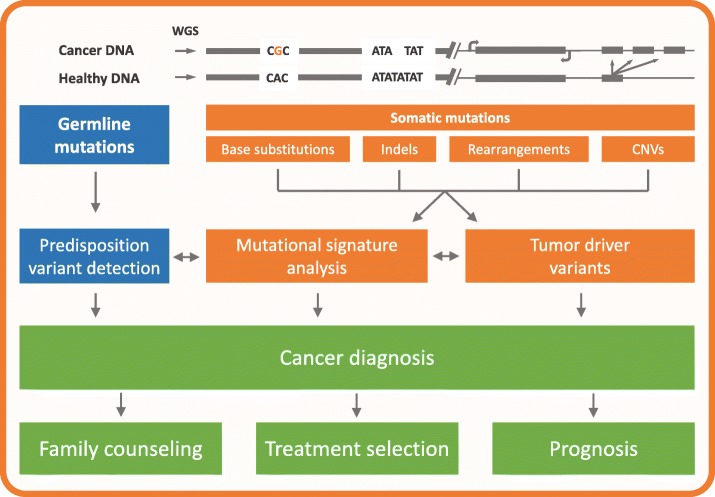
“Figure adapted from Hoeck et al, 2019.19 Patient diagnosed with cancer undergoes biopsy from the tumor as well as from healthy tissue (e.g blood).”
MethodInfluentialGenetic modifiers of APOBEC-induced mutagenesisPreprint
Mertz, T. M., Rice-Reynolds, E., Nguyen, L. T. H., Wood, A. J., Bray, N., Mitchell, D., Lobachev, K. S., & Roberts, S. A. (2023) · bioRxiv (Cold Spring Harbor Laboratory) · doi:10.1101/2023.04.05.535598 · Cited by 2
“In addition, abundance of APOBEC signature mutations and APOBEC expression have prognostic value in respect to patient outcomes and response to cancer therapeutics (Sieuwerts et al. 2014; Walker et al. 2015; Billingsley et al. 2016; D’Antonio et al. 2016; Law et al. 2016; Middlebrooks et al. 2016; Yan et al. 2016; Gla…”
BackgroundWhole Exome Sequencing Data Analysis Algorithms in Cancer Diagnostics
Bartha, Á., & Győrffy, B. (2020) · Vide Leaf, Hyderabad eBooks · doi:10.37247/pacr.1.2020.5 · Cited by 1
“Clinical cancer diagnostics might benefit from the application of mutational signature detection, as aberration patterns can be useful for targeted treatment selection [129].”
BackgroundUsing FFPEsig to Remove Formalin-Induced Artifacts and Characterize Mutational Signatures in Cancer
Guo, Q., Baker, A., Mustonen, V., & Graham, T. A. (2025) · Methods in molecular biology · doi:10.1007/978-1-0716-4566-6_6 · Cited by 1
Chemotherapy at the wheel of ALL relapse
Morscio, J., & Vlierberghe, P. V. (2020) · Blood · doi:10.1182/blood.2019003870 · Cited by 1
Genetic etiology of DNA-mismatch repair deficiency in cancer
Rosa, R. C. A. (2022) · Digital Library of Theses and Dissertations (Universidade de São Paulo) · doi:10.11606/t.17.2022.tde-10042023-085050 · Cited by 1
Bridging the gap: Implementation of whole genome sequencing in routine clinical care
Samsom, K. G. (2023) · Utrecht University Repository (Utrecht University) · doi:10.33540/1708 · Cited by 1
Lang, I., Landy, J. M., & Parmigiani, G. (2025) · arXiv (Cornell University) · doi:10.48550/arxiv.2506.15855 · Cited by 1
“Nonetheless, the applications of mutational signature analysis to cancer diagnosis will have tremendous clinical impact [Van Hoeck et al., 2019].”
Apport du séquençage d'exome pour le diagnostic et le traitement des maladies complexes
Jacob, A. (2020) · theses.fr (ABES) · doi:10.70675/867c4f59zac67z45c8z821ez3513ef63ba7c · Cited by 1
Advances in Hereditary Colorectal Cancer: Opportunities and Challenges for Clinical Translation
DeSouza, B., & Georgiou, D. (2020) · Current Genetic Medicine Reports · doi:10.1007/s40142-020-00183-x
Quantifying the pro- and antimutagenic roles of DNA damage and repair
Volkova, N. V. (2019) · Apollo (University of Cambridge) · doi:10.17863/cam.50845
Molecular diagnostics and targeted treatment approaches in pediatric oncology (literature review)
Rozhkov, A., Nuriev, R. I., & Sekacheva, M. I. (2021) · Medical alphabet · doi:10.33667/2078-5631-2020-38-29-33
Algorithms for phylogenetic tree correction in species and cancer evolution
Christensen, S. A. (2020) · Illinois Digital Environment for Access to Learning and Scholarship (University of Illinois at Urbana-Champaign)
Rhee, J. (2022) · Applied Sciences · doi:10.3390/app12136596
Germline Testing for the Evaluation of Hereditary Cancer Predisposition
Ceyhan‐Birsoy, O. (2022) · Clinics in Laboratory Medicine · doi:10.1016/j.cll.2022.04.007
A Biterm Topic Model for Sparse Mutation Data
Sason, I., Chen, Y., Leiserson, M. D. M., & Sharan, R. (2023) · Cancers · doi:10.3390/cancers15051601
Hsu, K., Adileh, M., Martín, M. L., Makarov, V., Chen, J., Wu, C., Bodo, S., Klingler, S., Sauvé, C.-E. G., Szeglin, B. C., et al. (2023) · doi:10.1158/0008-5472.c.6513871.v1
Mutational Signatures in Solid Tumors
Barrie, E. S., & Wollenzien, H. (2023) · Advances in Molecular Pathology · doi:10.1016/j.yamp.2023.08.005
Metadata
- Authors
- Van Hoeck, A., Tjoonk, N. H., van Boxtel, R., & Cuppen, E.
- Affiliations
- University Medical Center Utrecht (NL)
- Venue
- BMC Cancer
- Published
- 2019-05-15
- Volume
- 19
- Issue
- 1
- Pages
- 457-457
- ISSN
- 1471-2407 (ISSN-L)
- PMC
- PMC6521503
- OpenAlex
- W2946230264
- Cited by
- 107
- References
- 146
- Citations by year
- 2026: 3 · 2025: 9 · 2024: 12 · 2023: 15 · 2022: 17 · 2021: 23 · 2020: 22 · 2019: 6
- FWCI
- 1.63
- Type
- journal article
- Language
- en
- Open access
- gold
- doi.org
- Licence
- cc-by
- creativecommons.org/licenses/by/4.0/ (tdm)
- creativecommons.org/licenses/by/4.0/ (vor)
- Locations
- BMC Cancer (publishedVersion, cc-by)
- PubMed Central (publishedVersion, cc-by)
- PubMed (publishedVersion)
- DOAJ (DOAJ: Directory of Open Access Journals) (submittedVersion, cc-by-sa)
- Utrecht University Repository (Utrecht University) (submittedVersion, other-oa)
- Funders
- NWO zwaartekracht (Zenith project 93512003)
- Topics
- Life Sciences › Biochemistry, Genetics and Molecular Biology › Cancer Research › Cancer Genomics and Diagnostics
- Life Sciences › Biochemistry, Genetics and Molecular Biology › Molecular Biology › Chromatin Remodeling and Cancer
- Health Sciences › Medicine › Oncology › Cancer Immunotherapy and Biomarkers
- Keywords
- mutational signatures, cancer genomics, cancer classification, driver genes, mutational landscape, clinical implementation, precision oncology
- MeSH terms
- Whole Genome Sequencing, DNA Mutational Analysis, Humans, Neoplasms, Molecular Diagnostic Techniques
About these checks
Registry, retraction, Cites and statistics results are computed, not judged, with one exception: a printed reference that no index lists is read once by a model before it counts as a citation error. Claims are extracted by a model and kept only when their quote appears verbatim in the text; each cited source is then checked, with a model’s help, for whether it says what the claim relies on. Those verdicts can be wrong — read the claim’s quote and the cited source before relying on one.
Statistics and arithmetic are recomputed, not judged.
Confidence bands are shown only for fields calibrated on our annotated test set. None is calibrated yet, so no band is shown.
What counts as a claim ›How we measure confidence ›How we check this ›
Are you an author, or do you see a problem with this page? Request a review
Data sources
Bibliographic data: Semantic Scholar, OpenAlex, Crossref.
Contains information from the Semantic Scholar Academic Graph Datasets, made available under the ODC Attribution License (ODC-BY 1.0).
Semantic Scholar’s data is described in: Kinney, R., et al. (2023). The Semantic Scholar Open Data Platform. arXiv:2301.10140.
