

Combined prognostic value of the SUVmax derived from FDG-PET and the lymphocyte-monocyte ratio in patients with stage IIIB-IV non-small cell lung cancer receiving chemotherapy
Open accessThe DOI matches its Crossref record; 39 of the 39 references it cites were found in a registry or an index.
Abstract
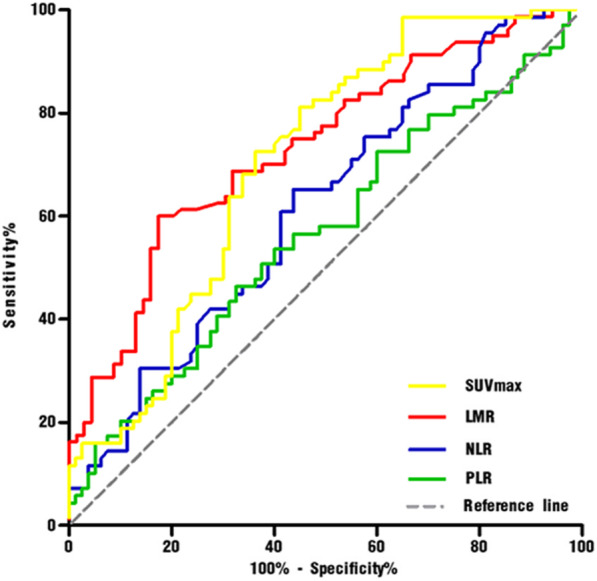
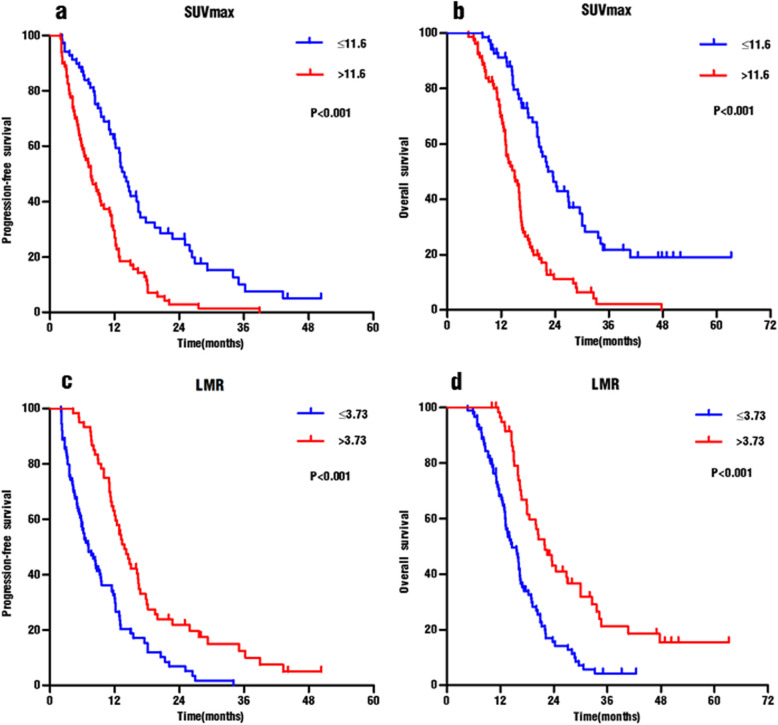
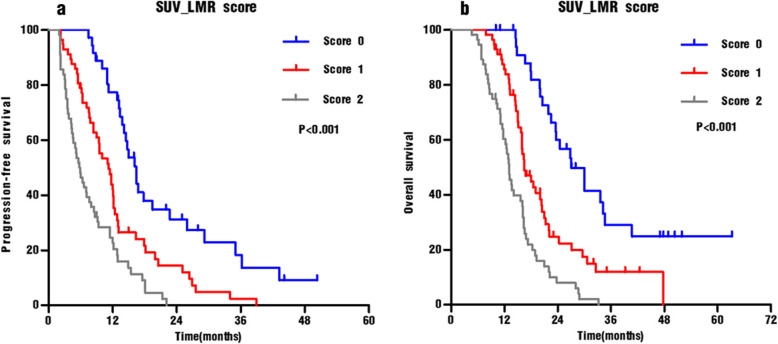
Background: We evaluated the prognostic potential of tumor 18 F-fluorodeoxyglucose (FDG) uptake derived from positron emission tomography (PET) and known inflammatory hematological markers, both individually and in combination, for chemosensitivity and survival in patients with stage IIIB-IV non-small cell lung cancer (NSCLC) receiving first-line chemotherapy. Methods: A total of 149 patients with stage IIIB and IV NSCLC (based on TNM 7th edition) were retrospectively reviewed. Maximum standardized uptake value (SUVmax) were used to quantitatively assess FDG uptake. The lymphocyte-monocyte ratio (LMR), neutrophil-lymphocyte ratio (NLR) and platelet-lymphocyte ratio (PLR) were selected as hematological markers. Receiver operating characteristic (ROC) curves were constructed for the determination of optimal cut-off values to predict chemotherapeutic response. Results: Patients with SUVmax > 11.6 or LMR ≤3.73 exhibited a significantly lower objective response rate (ORR) to chemotherapy ( p < 0.001 and p < 0.001). Through multivariable logistic regression analysis, both the SUVmax and LMR were identified as independent predictive factors for chemotherapeutic response ( p = 0.001 and p < 0.001). Furthermore, a multivariable Cox proportional hazard model identified a high SUVmax (> 11.6) and low LMR (≤3.73) as independent predictors of poor PFS ( p < 0.001 and p = 0.025) and OS ( p < 0.001 and p = 0.032). A novel score system was constructed based on the SUVmax and LMR (SUV_LMR score), and patients were stratified into three subgroups. The patients with a score of 0 had a significantly higher ORR (88.9%) than did those with a score of 1 (59.6%) and score of 2 (25.0%) ( p < 0.001). Moreover, multivariable Cox analysis further identified the SUV_LMR score as an independent prognostic factor for PFS ( p < 0.001) and OS ( p < 0.001). Conclusions: Pre-treatment SUVmax and LMR were not only predictive factors for chemotherapeutic response but also independent prognostic factors of survival in stage IIIB-IV NSCLC. Moreover, the SUV_LMR score, which is based on primary tumor metabolic activity and the systemic inflammatory response, might provide a promising tool to predict chemosensitivity, recurrence and survival of advanced NSCLC.
Overview
The claims and statistics of this paper haven’t been checked yet.
Free: it reads the open-access text and checks the first 5 claims that cite a source we can check. Create a free account to check every claim.
Integrity signals
Registry
Cites
Statistics
Figures
Verification
Claims the paper makes
The claims and statistics of this paper haven’t been checked yet.
Free: it reads the open-access text and checks the first 5 claims that cite a source we can check. Create a free account to check every claim.
Self-check
Percentages, sums and reported differences re-computed from the paper’s own numbers.
The self-check needs the paper’s full text.
Citations
Cites
Hallmarks of Cancer: The Next Generation
Hanahan, D., & Weinberg, R. A. (2011) · Cell · doi:10.1016/j.cell.2011.02.013 · Cited by 66,590 · cited 3×
“Indeed, significantly elevated glucose uptake and utilization have been observed in various types of tumors [7].”
BackgroundInfluentialSiegel, R. L., Miller, K. D., & Jemal, A. (2018) · CA: A Cancer Journal for Clinicians · doi:10.3322/caac.21442 · Cited by 16,579
Immunity, Inflammation, and Cancer
Grivennikov, S. I., Greten, F. R., & Karin, M. (2010) · Cell · doi:10.1016/j.cell.2010.01.025 · Cited by 10,755 · cited 1×
“Accumulating evidence has demonstrated that systemic inflammation plays a key role in tumorigenesis, progression and metastasis [17].”
BackgroundMacrophage Diversity Enhances Tumor Progression and Metastasis
Qian, B.-Z., & Pollard, J. W. (2010) · Cell · doi:10.1016/j.cell.2010.03.014 · Cited by 5,188
Non-Small Cell Lung Cancer: Epidemiology, Risk Factors, Treatment, and Survivorship
Molina, J. R., Yang, P., Cassivi, S. D., Schild, S. E., & Adjei, A. A. (2008) · Mayo Clinic Proceedings · doi:10.1016/s0025-6196(11)60735-0 · Cited by 3,908 · cited 1×
“Owing to lack of early symptoms, close to 70% of patients are already in late stage when they are initially diagnosed with NSCLC, and most of them have lost the opportunity for surgical therapy [2].”
BackgroundThe Central Role of CD4+ T Cells in the Antitumor Immune Response
Hung, K., Hayashi, R., Lafond-Walker, A., Lowenstein, C., Pardoll, D., & Levitsky, H. (1998) · The Journal of Experimental Medicine · doi:10.1084/jem.188.12.2357 · Cited by 1,345 · cited 1×
“On the one hand, it is well known that lymphocytes, especially cytotoxic T lymphocytes, play a critical role in the antitumor immune response by inducing cytotoxic cell death and suppressing tumor cell proliferation and invasion [32].”
Background(1992) · PubMed Central · doi:10.2967/jnumed.120.251744a · Cited by 1,172
Goldstraw, P., Ball, D., Jett, J. R., Le Chevalier, T., Lim, E., Nicholson, A. G., & Shepherd, F. A. (2011) · The Lancet · doi:10.1016/s0140-6736(10)62101-0 · Cited by 711
Shepherd, F. A., Crowley, J., Van Houtte, P., Postmus, P. E., Carney, D., Chansky, K., Shaikh, Z., & Goldstraw, P. (2007) · Journal of Thoracic Oncology · doi:10.1097/jto.0b013e31815bdc0d · Cited by 548 · cited 1×
“The anatomical range of the tumor, which is expressed by the tumor, node, metastasis (TNM) classification, is recognized as the most powerful prognostic factor for lung cancer [5].”
BackgroundBerghmans, T., Dusart, M., Paesmans, M., Hossein-Foucher, C., Buvat, I., Castaigne, C., Scherpereel, A., Mascaux, C., Moreau, M., Roelandts, M., et al. (2008) · Journal of Thoracic Oncology · doi:10.1097/jto.0b013e31815e6d6b · Cited by 524
Interactions between lymphocytes and myeloid cells regulate pro- versus anti-tumor immunity
DeNardo, D. G., Andreu, P., & Coussens, L. M. (2010) · Cancer and Metastasis Reviews · doi:10.1007/s10555-010-9223-6 · Cited by 515
Downey, R. J., Akhurst, T., Gonen, M., Vincent, A., Bains, M. S., Larson, S., & Rusch, V. (2004) · Journal of Clinical Oncology · doi:10.1200/jco.2004.11.109 · Cited by 358
Cerfolio, R. J., Bryant, A. S., Ohja, B., & Bartolucci, A. A. (2005) · The Journal of Thoracic and Cardiovascular Surgery · doi:10.1016/j.jtcvs.2004.11.007 · Cited by 317 · cited 3×
“[10] found that patients with SUVmax ≥10 were more likely to have cancer recurrence and shorter survival compared with those of patients with low SUVmax.”
BackgroundChan, J. C. Y., Chan, D. L., Diakos, C. I., Engel, A., Pavlakis, N., Gill, A., & Clarke, S. J. (2017) · Annals of Surgery · doi:10.1097/sla.0000000000001743 · Cited by 301
Sasaki, R., Komaki, R., Macapinlac, H., Erasmus, J., Allen, P., Forster, K., Putnam, J. B., Herbst, R. S., Moran, C. A., Podoloff, D. A., et al. (2005) · Journal of Clinical Oncology · doi:10.1200/jco.2005.06.129 · Cited by 277
Continuing Rapid Increase in Esophageal Adenocarcinoma in England and Wales
Lepage, C., Rachet, B., Jooste, V., Faivre, J., & Coleman, M. P. (2008) · The American Journal of Gastroenterology · doi:10.1111/j.1572-0241.2008.02191.x · Cited by 263 · cited 2×
“In NSCLC, many studies have demonstrated the prognostic significance of SUVmax [10, 29].”
BackgroundVesselle, H., Salskov, A., Turcotte, E., Wiens, L., Schmidt, R., Jordan, C. D., Vallières, E., & Wood, D. E. (2008) · Journal of Thoracic Oncology · doi:10.1097/jto.0b013e31818307a7 · Cited by 165 · cited 5×
“The results showed that SUVmax was positively correlated with Ki-67 scores in tumor tissue, and it is well known that the overexpression of Ki-67 in tumors indicates active proliferative activity and aggressive biological behaviour.”
BackgroundInfluentialHoang, J. K., Hoagland, L. F., Coleman, R. E., Sykes, A. D., Herndon, J. E., & Patz, E. F. (2008) · Journal of Clinical Oncology · doi:10.1200/jco.2007.14.3628 · Cited by 120 · cited 1×
“However, this conclusion is still controversial since some studies also demonstrated that SUVmax cannot provide reliable prognostic information for NSCLC patients [14, 15].”
ResultSun, Y., & Zhang, L. (2018) · Cancer Management and Research · doi:10.2147/cmar.s171035 · Cited by 112
Hernández, C. M., Piñero, A., Vázquez, P. J. G., Fernández, P. J. G., Merino, G. R., Alonso-Romero, J. L., & Paricio, P. P. (2017) · Clinical & Translational Oncology · doi:10.1007/s12094-017-1732-0 · Cited by 111
Immune Consequences of Tyrosine Kinase Inhibitors that Synergize with Cancer Immunotherapy
(2015) · Cancer Cell & Microenvironment · doi:10.14800/ccm.677 · Cited by 110 · cited 1×
“Inflammation promotes hypoxia in the tumor microenvironment and induces angiogenesis by stimulating VEGF secretion [38].”
BackgroundZhang, J., Huang, S., Li, H., Li, Y., Chen, X.-L., Zhang, W.-Q., Chen, H., & Gu, L. (2012) · Medical Oncology · doi:10.1007/s12032-012-0352-3 · Cited by 98 · cited 1×
“A previous study has demonstrated that a low lymphocyte count was associated with a poor DFS in NSCLC patients [33].”
MethodPET in the management of locally advanced and metastatic NSCLC
Grootjans, W., de Geus-Oei, L.-F., Troost, E. G. C., Visser, E. P., Oyen, W. J. G., & Bussink, J. (2015) · Nature Reviews Clinical Oncology · doi:10.1038/nrclinonc.2015.75 · Cited by 97 · cited 1×
“(18)F-fluorodeoxyglucose positron emission tomography/computed tomography ((18)F-FDG PET/CT), which can noninvasively quantify glucose uptake that precedes anatomic changes, has been widely applied in NSCLC diagnosis, staging, response evaluation and survival prediction [8].”
BackgroundAgarwal, M., Brahmanday, G., Bajaj, S. K., Ravikrishnan, K. P., & Wong, C.-Y. O. (2010) · European Journal of Nuclear Medicine and Molecular Imaging · doi:10.1007/s00259-009-1291-x · Cited by 90 · cited 1×
“However, this conclusion is still controversial since some studies also demonstrated that SUVmax cannot provide reliable prognostic information for NSCLC patients [14, 15].”
ResultLin, G., Peng, J.-W., Xiao, J., Liu, D., & Xia, Z. (2014) · Medical Oncology · doi:10.1007/s12032-014-0070-0 · Cited by 72 · cited 2×
“56) were predictive of a longer PFS and OS in 370 metastatic NSCLC patients receiving chemotherapy [26].”
BackgroundShanafelt, T. D., Loprinzi, C., Marks, R., Novotny, P., & Sloan, J. (2004) · Journal of Clinical Oncology · doi:10.1200/jco.2004.08.176 · Cited by 71 · cited 1×
“However, the response rate to chemotherapy and the survival in advanced NSCLC are not ideal [4].”
BackgroundInvestigation of the role of p53 in chemotherapy resistance of lung cancer cell lines.
Breen, L., Heenan, M., Murphy, V., & CLYNES, M. M. (2007) · PubMed · Cited by 44
Staging of Non-Small Cell Lung Cancer
Tanoue, L. (2008) · Seminars in Respiratory and Critical Care Medicine · doi:10.1055/s-2008-1076745 · Cited by 37
Chen, Y., Wang, W., Zhang, X., Yu, X., Xi, K., Wen, Y., Wang, G., Feng, X., & Zhang, L. (2018) · Cancer Management and Research · doi:10.2147/cmar.s177320 · Cited by 36
Takenaka, T., Yano, T., Ito, K., Morodomi, Y., Miura, N., Kawano, D., Shoji, F., Abe, K., Honda, H., & Maehara, Y. (2009) · Journal of Surgical Oncology · doi:10.1002/jso.21386 · Cited by 29 · cited 8×
“The results showed that SUVmax was positively correlated with Ki-67 scores in tumor tissue, and it is well known that the overexpression of Ki-67 in tumors indicates active proliferative activity and aggressive biological behaviour.”
BackgroundInfluentialWang, Y., Hu, X., Xu, W., Wang, H., Huang, Y., & Che, G. (2019) · Thoracic Cancer · doi:10.1111/1759-7714.13085 · Cited by 27
Self-citationBillè, A., Okiror, L., Skanjeti, A., Errico, L., Arena, V., Penna, D., Ardissone, F., & Pelosi, E. (2012) · Clinical Lung Cancer · doi:10.1016/j.cllc.2012.04.007 · Cited by 25
Guo, M., Li, W., Li, B., Zou, B., Wang, S., Meng, X., Sun, X., Yu, J., & Wang, L. (2019) · International Immunopharmacology · doi:10.1016/j.intimp.2019.04.032 · Cited by 25
Fujii, T., Yanai, K., Tokuda, S., NAKAZAWA, Y., Kurozumi, S., Obayashi, S., Yajima, R., Hirakata, T., & Shirabe, K. (2018) · Anticancer Research · doi:10.21873/anticanres.12809 · Cited by 24 · cited 2×
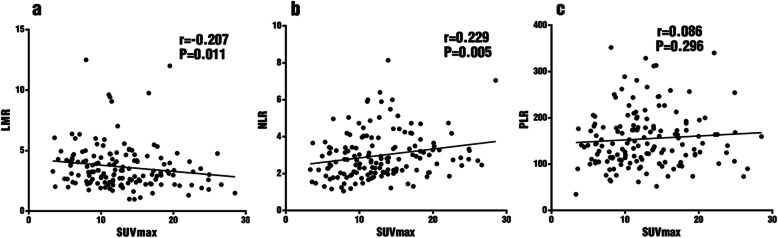
“A similar correlation between SUVmax and hematological parameters was observed in colorectal cancer [34], NSCLC [35] and breast cancer [36].”
BackgroundJeong, E., Hyun, S. H., Moon, S. H., Cho, Y. S., Kim, B., & Lee, K.-H. (2017) · Medicine · doi:10.1097/md.0000000000005935 · Cited by 23 · cited 1×
“A similar correlation between SUVmax and hematological parameters was observed in colorectal cancer [34], NSCLC [35] and breast cancer [36].”
BackgroundXu, J., Li, Y., Hu, S., Lu, L., Gao, Z., & Yuan, H. (2018) · Annals of Nuclear Medicine · doi:10.1007/s12149-018-1299-z · Cited by 22 · cited 2×
“A similar correlation between SUVmax and hematological parameters was observed in colorectal cancer [34], NSCLC [35] and breast cancer [36].”
BackgroundMinami, S., Ihara, S., & Komuta, K. (2018) · Journal of Clinical Medicine Research · doi:10.14740/jocmr3490w · Cited by 18 · cited 2×
“LMR, one of the simple markers of systemic inflammatory response, has been shown to correlate with clinical outcomes of NSCLC [25, 26].”
BackgroundOncologic angiogenesis imaging in the clinic: how and why?
Kurdziel, K., Lindenberg, L., & Choyke, P. L. (2011) · Imaging in Medicine · doi:10.2217/iim.11.31 · Cited by 9
Bai, L., Guo, C., Wang, J., Liu, X., Li, Y., Li, M., Guo, Y., & Duan, X. (2016) · OncoTargets and Therapy · doi:10.2147/ott.s113832 · Cited by 9 · cited 1×
“The mechanism may be related to the overexpression of p53 in tumor cells, as a previous study confirmed the positive correlation between SUVmax and p53 expression [30], and p53 overexpression has been proved to be significantly correlated with chemotherapy resistance in lung cancer [31].”
BackgroundSelf-citation
Cited by
Xie, J., Chen, M., Han, H., Xu, K., Qiu, G., Lin, X., Song, Y., Ye, J., Lv, T., & Zhan, P. (2023) · Thoracic Cancer · doi:10.1111/1759-7714.14874 · Cited by 33
“Zhao et al.(38) recently reported that lower LMR level displayed a significantly poorer response rate to chemotherapy in patients with NSCLC receiving chemotherapy.”
BackgroundSelf-citationRole of tumor‑associated neutrophils in lung cancer (Review)
Zhou, J., Liu, H., Jiang, S., & Wang, W. (2022) · Oncology Letters · doi:10.3892/ol.2022.13588 · Cited by 36
Ly, I., Merker, V. L., Cai, W., Bredella, M. A., Muzikansky, A., Thalheimer, R. D., Da, J., Orr, C., Herr, H. P., Morris, M. E., et al. (2022) · Neurology · doi:10.1212/wnl.0000000000201535 · Cited by 23
Liu, X., Xiang, K., Geng, G.-Y., Wang, S., Ni, M., Zhang, Y., Pan, H., & Lv, W. (2022) · Contrast Media & Molecular Imaging · doi:10.1155/2022/2586245 · Cited by 21
Oldan, J. D., Giglio, B., Smith, E. S., Zhao, W., Bouchard, D. M., Ivanović, M., Lee, Y. Z., Collichio, F. A., Meyers, M. O., Wallack, D. E., et al. (2023) · OncoImmunology · doi:10.1080/2162402x.2023.2204753 · Cited by 20
“Despite the lack of statistical significance, perhaps partly due to the small patient number, this statistical trend is in line with other reports from more extensive prospective studies in oncology, which showed the theragnostic significance of FDG PET imaging across various solid tumors.(21,22) Nevertheless, our stu…”
Result
Metadata
- Authors
- Zhao, K., Wang, C., Shi, F., Huang, Y., Ma, L., Li, M., & Song, Y.
- Affiliations
- Yuhuangding Hospital (CN)
- Shandong University (CN)
- Corresponding author
- Song, Yipeng
- Venue
- BMC Cancer
- Published
- 2021-01-14
- Volume
- 21
- Issue
- 1
- Pages
- 66-66
- ISSN
- 1471-2407 (ISSN-L)
- PMC
- PMC7809816
- OpenAlex
- W3123041309
- Cited by
- 21
- References
- 39
- Citations by year
- 2026: 5 · 2025: 4 · 2024: 3 · 2023: 5 · 2022: 4
- FWCI
- 1.09
- Type
- journal article
- Language
- en
- Open access
- gold
- doi.org
- Licence
- cc-by
- creativecommons.org/licenses/by/4.0/ (tdm)
- creativecommons.org/licenses/by/4.0/ (vor)
- Locations
- BMC Cancer (publishedVersion, cc-by)
- PubMed Central (publishedVersion, cc-by)
- PubMed (publishedVersion)
- DOAJ (DOAJ: Directory of Open Access Journals) (submittedVersion, cc-by-sa)
- Topics
- Health Sciences › Medicine › Oncology › Inflammatory Biomarkers in Disease Prognosis
- Health Sciences › Medicine › Pulmonary and Respiratory Medicine › Lung Cancer Diagnosis and Treatment
- Health Sciences › Medicine › Radiology, Nuclear Medicine and Imaging › Medical Imaging Techniques and Applications
- Keywords
- non-small cell lung cancer, FDG-PET, SUVmax, lymphocyte-to-monocyte ratio, neutrophil-to-lymphocyte ratio, platelet-to-lymphocyte ratio, prognostic factors, chemotherapy response prediction, first-line chemotherapy, objective response rate, progression-free survival, overall survival, inflammatory markers, stage IIIB/IV NSCLC
- MeSH terms
- Adult, Aged, Antineoplastic Combined Chemotherapy Protocols, Carcinoma, Non-Small-Cell Lung, Female, Follow-Up Studies, Humans, Lung Neoplasms, Lymphocytes, Male, Middle Aged, Monocytes, Prognosis, Retrospective Studies, Survival Rate, Radiopharmaceuticals, Fluorodeoxyglucose F18, Positron-Emission Tomography
About these checks
Registry, retraction, Cites and statistics results are computed, not judged, with one exception: a printed reference that no index lists is read once by a model before it counts as a citation error. Claims are extracted by a model and kept only when their quote appears verbatim in the text; each cited source is then checked, with a model’s help, for whether it says what the claim relies on. Those verdicts can be wrong — read the claim’s quote and the cited source before relying on one.
Statistics and arithmetic are recomputed, not judged.
Confidence bands are shown only for fields calibrated on our annotated test set. None is calibrated yet, so no band is shown.
What counts as a claim ›How we measure confidence ›How we check this ›
Are you an author, or do you see a problem with this page? Request a review
Data sources
Bibliographic data: Semantic Scholar, OpenAlex, Crossref.
Contains information from the Semantic Scholar Academic Graph Datasets, made available under the ODC Attribution License (ODC-BY 1.0).
Semantic Scholar’s data is described in: Kinney, R., et al. (2023). The Semantic Scholar Open Data Platform. arXiv:2301.10140.
