

High glucose promotes the progression of colorectal cancer by activating the BMP4 signaling and inhibited by glucagon-like peptide-1 receptor agonist
Open accessThe DOI matches its Crossref record; 62 of the 62 references it cites were found in a registry or an index.
Abstract
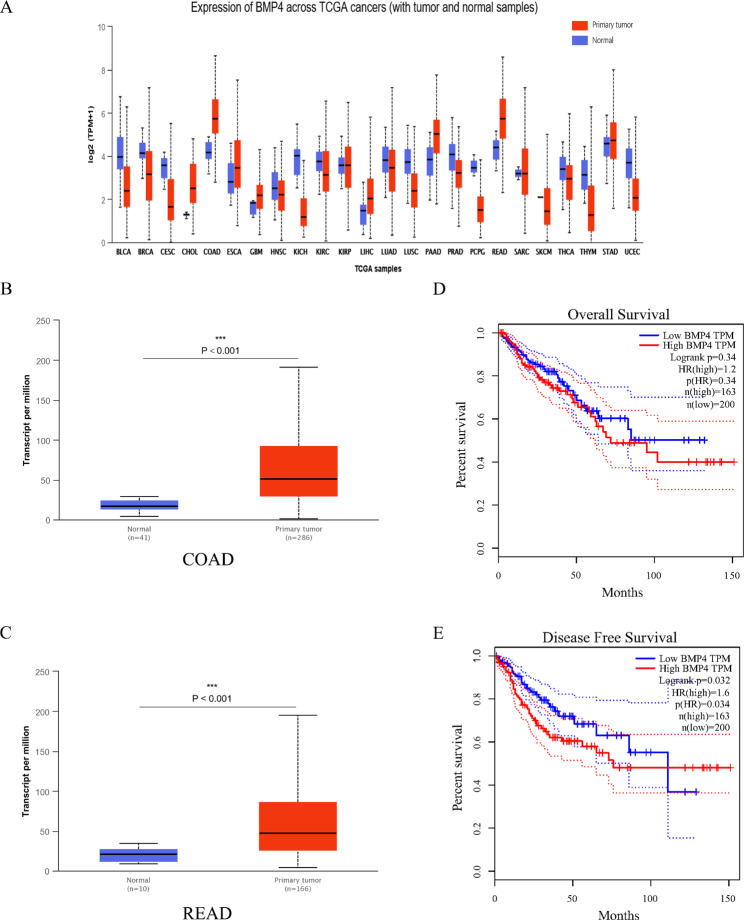
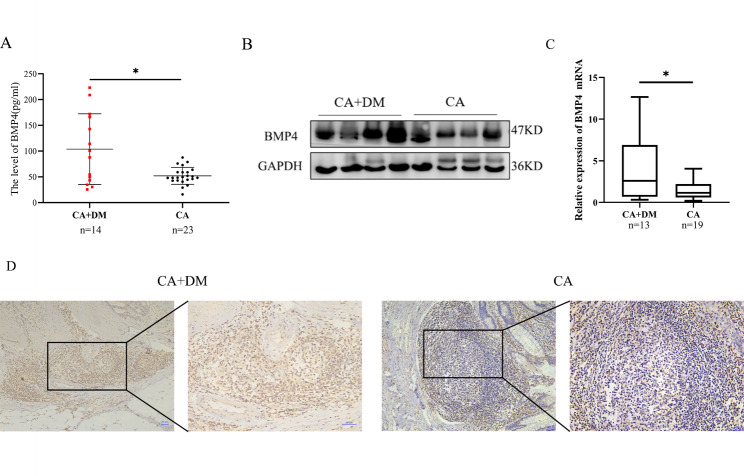
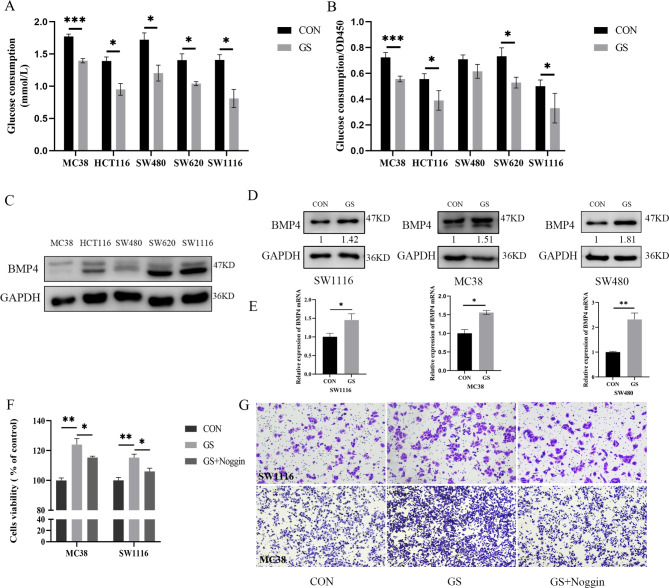
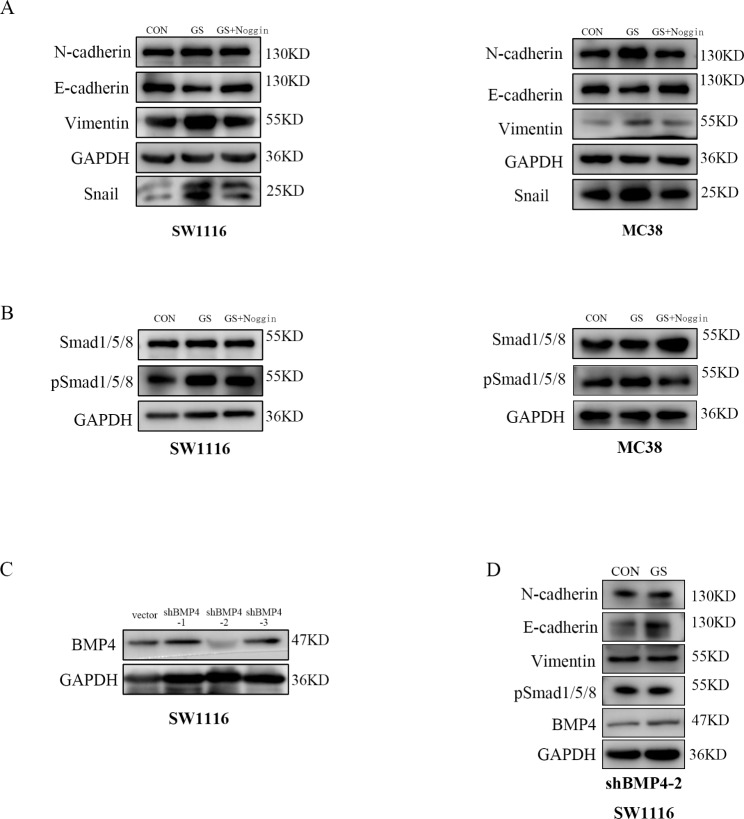
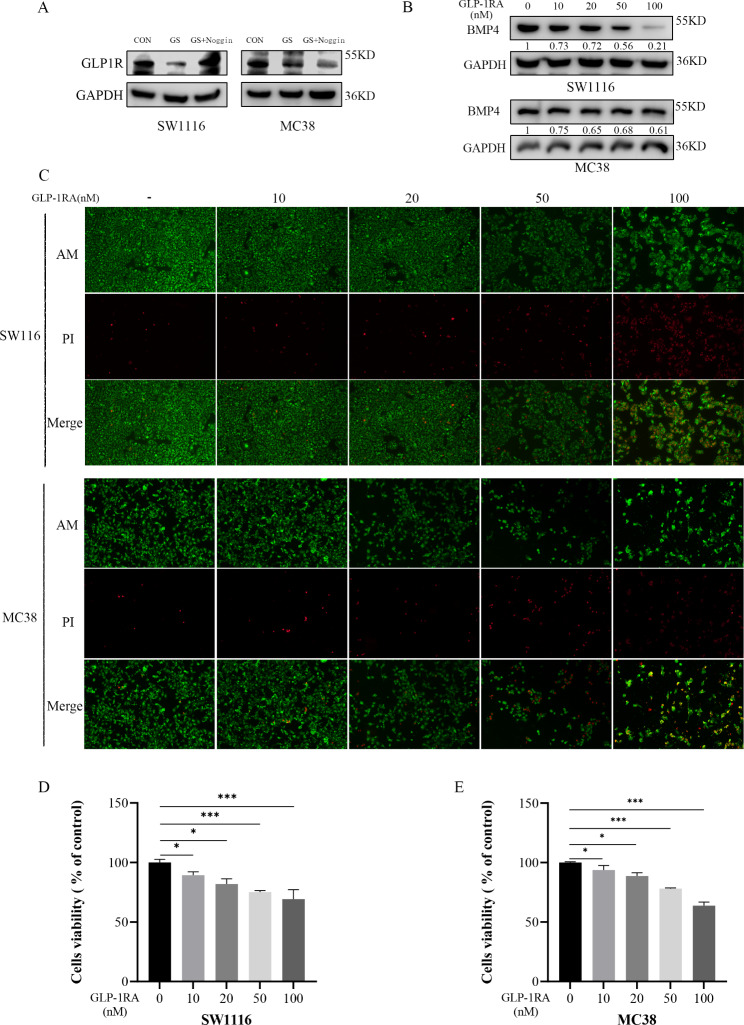
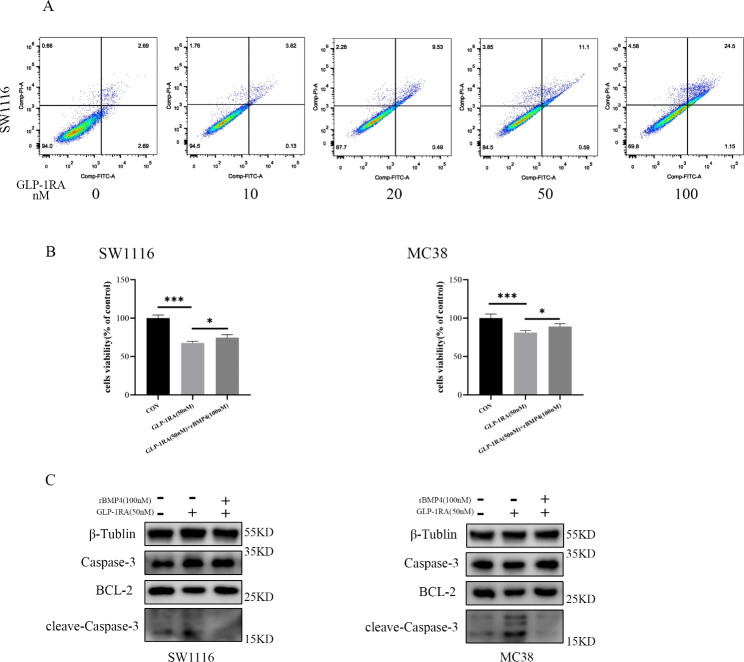
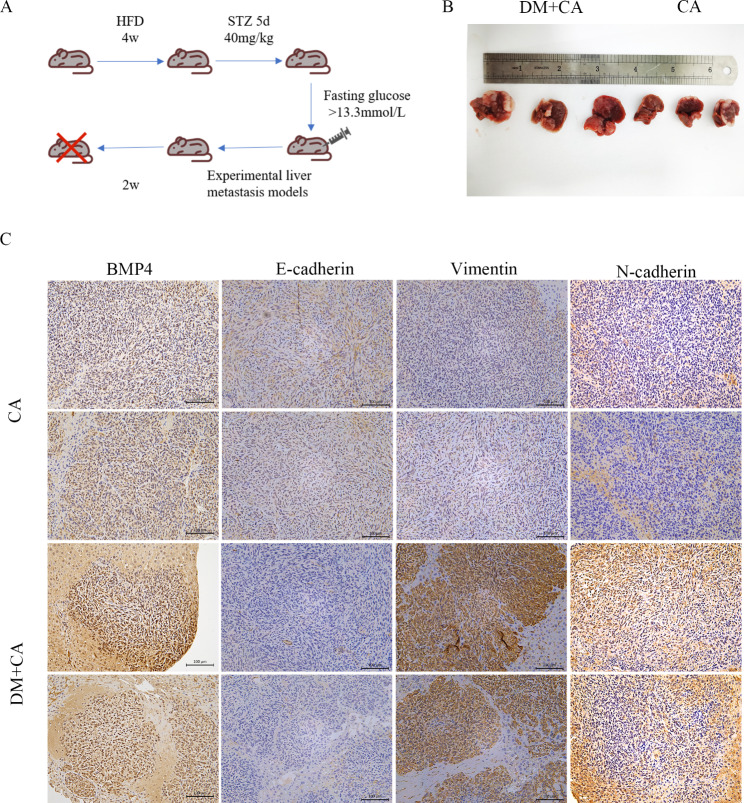
Background: The detailed molecular mechanism between type 2 diabetes mellitus (T2DM) and colorectal cancer (CRC) is still uncertain. Bone morphogenetic protein 4 (BMP4) dysregulation is implicated in T2DM and CRC, respectively. This study aims to investigate whether BMP4 can mediate the interaction of CRC with T2DM. Methods: We firstly explored the expression of BMP4 in The Cancer Genome Altas (TCGA) databases and CRC patients with or without DM from the Shanghai Tenth People’s Hospital. The diabetic model of CRC cell lines in vitro and the mice model in vivo were developed to explore the BMP4 expression during CRC with or without diabetes. Further inhibition of BMP4 to observe its effects on CRC. Also, glucagon-like peptide-1 receptor agonist (GLP-1RA) was used to verify the underlying mechanism of hypoglycemic drugs on CRC via BMP4. Results: BMP4 expression was upregulated in CRC patients, and significantly higher in CRC patients with diabetes (P < 0.05). High glucose-induced insulin resistance (IR)-CRC cells and diabetic mice with metastasis model of CRC had increased BMP4 expression, activated BMP4-Smad1/5/8 pathway, and improved proliferative and metastatic ability mediated by epithelial-mesenchymal transition (EMT). And, treated CRC cells with exogenously BMP inhibitor-Noggin or transfected with lentivirus (sh-BMP4) could block the upregulated metastatic ability of CRC cells induced by IR. Meanwhile, GLP-1R was downregulated by high glucose-induced IR while unregulated by BMP4 inhibitor noggin, and treated GLP-1RA could suppress the proliferation of CRC cells induced by IR through downregulated BMP4. Conclusions: BMP4 increased by high glucose promoted the EMT of CRC. The mechanism of the BMP4/Smad pathway was related to the susceptible metastasis of high glucose-induced IR-CRC. The commonly used hypoglycemic drug, GLP-1RA, inhibited the growth and promoted the apoptosis of CRC through the downregulation of BMP4. The result of our study suggested that BMP4 might serve as a therapeutic target in CRC patients with diabetes.
Overview
The claims and statistics of this paper haven’t been checked yet.
Free: it reads the open-access text and checks the first 5 claims that cite a source we can check. Create a free account to check every claim.
Integrity signals
Registry
Cites
Statistics
Figures
Verification
Claims the paper makes
The claims and statistics of this paper haven’t been checked yet.
Free: it reads the open-access text and checks the first 5 claims that cite a source we can check. Create a free account to check every claim.
Claims other papers make about this one
Each is checked against this paper’s own text: does it say what the citing paper says it does?
The cited source says what the claim attributes to it.
In the citing paper
“Studies have shown that treating CRC cells with GLP-1RA can inhibit cell proliferation induced by insulin resistance by downregulating BMP4.”
From Glucagon-like peptide-1 receptor: mechanisms and advances in therapy (2024) · cites this paper as [519]
The cited source says what the claim attributes to it.
In the citing paper
“However, GLP-1RAs have been shown to reduce BMP4 levels through exogenous administration.”
From Glucagon-like peptide-1 receptor: mechanisms and advances in therapy (2024) · cites this paper as [519]
The cited source says what the claim attributes to it.
In the citing paper
“Specifically, high blood glucose-induced insulin resistance in CRC cells leads to increased BMP4 expression, which activates the BMP4-Smad1/5/8 signaling pathway.519”
From Glucagon-like peptide-1 receptor: mechanisms and advances in therapy (2024) · cites this paper as [519]
The cited source says what the claim attributes to it.
In the citing paper
“The activation of this pathway enhances cell proliferation and metastatic capabilities by promoting epithelial-mesenchymal transition (EMT), thereby increasing the invasiveness and metastatic potential of tumors.”
From Glucagon-like peptide-1 receptor: mechanisms and advances in therapy (2024) · cites this paper as [519]
Self-check
Percentages, sums and reported differences re-computed from the paper’s own numbers.
The self-check needs the paper’s full text.
Citations
Cites
Sung, H., Ferlay, J., Siegel, R. L., Laversanne, M., Soerjomataram, I., Jemal, A., & Bray, F. (2021) · CA: A Cancer Journal for Clinicians · doi:10.3322/caac.21660 · Cited by 108,699 · cited 1×
“Background Colorectal cancer (CRC), one of the most frequent and deadly malignancies, is the third most commonly diagnosed cancer among all types of cancers and the second cause of cancer death [1].”
BackgroundIDF Diabetes Atlas: Global estimates of diabetes prevalence for 2017 and projections for 2045
Cho, N. H., Shaw, J. E., Karuranga, S., Huang, Y., da Rocha Fernandes, J. D., Ohlrogge, A. W., & Malanda, B. (2018) · Diabetes Research and Clinical Practice · doi:10.1016/j.diabres.2018.02.023 · Cited by 7,283 · cited 1×
“Discussion The prevalence of DM has been increasing over the past decades, which diminishes the quality of patients and increases the medical care cost and social burden [36].”
BackgroundUALCAN: A Portal for Facilitating Tumor Subgroup Gene Expression and Survival Analyses
Chandrashekar, D. S., Bashel, B., Balasubramanya, S. A. H., Creighton, C. J., Ponce-Rodriguez, I., Chakravarthi, B. V. S. K., & Varambally, S. (2017) · Neoplasia · doi:10.1016/j.neo.2017.05.002 · Cited by 6,086 · cited 1×
“associated with poor outcome We conducted an intensive analysis of gene alterations in CRC from the TCGA database using an easy-to-use, interactive web portal, ALCAN, and the correlation between BMP4 gene expression and colorectal cancer clinical features [32].”
MethodBone: Formation by Autoinduction
Urist, M. R. (1965) · Science · doi:10.1126/science.150.3698.893 · Cited by 5,546 · cited 1×
“Bone Morphogenetic Proteins (BMPs), one of the largest subgroups of the transforming growth factor-β (TGF-β) superfamily, were initially found can induce mesenchymal stem cells to differentiate into bone and promote the formation of bone and cartilage formation [6].”
BackgroundInzucchi, S. E., Bergenstal, R. M., Buse, J. B., Diamant, M., Ferrannini, E., Nauck, M., Peters, A. L., Tsapas, A., Wender, R., & Matthews, D. R. (2015) · Diabetes Care · doi:10.2337/dc14-2441 · Cited by 3,066 · cited 14×
“CRC patients with diabetes had higher expression of BMP4 Fourteen patients with T2DM were divided into the CA + DM group, and 23 non-diabetic patients with age, height, weight, and sex ratio matched (all P value>0.05) belong to the CA group.”
BackgroundInfluentialDiabetes Mellitus, Fasting Glucose, and Risk of Cause-Specific Death
The Emerging Risk Factors Collaboration (2011) · New England Journal of Medicine · doi:10.1056/nejmoa1008862 · Cited by 2,726
Chen, D., Zhao, M., & Mundy, G. R. (2004) · Growth Factors · doi:10.1080/08977190412331279890 · Cited by 1,915
Epithelial–mesenchymal plasticity in carcinoma metastasis
Tsai, J. H., & Yang, J. (2013) · Genes & Development · doi:10.1101/gad.225334.113 · Cited by 1,136 · cited 2×
“and less differentiated mesenchymal phenotype, has been reckoned as a crucial biological step driving tumor cell invasion and metastatic dissemination from primary tumors [34, 55].”
BackgroundBone Morphogenetic Protein (BMP) signaling in development and human diseases
Wang, R. N., Green, J., Wang, Z., Deng, Y., Qiao, M., Peabody, M., Zhang, Q., Ye, J., Yan, Z., Denduluri, S., et al. (2014) · Genes & Diseases · doi:10.1016/j.gendis.2014.07.005 · Cited by 1,031
Bone morphogenetic protein receptors and signal transduction
Miyazono, K., Kamiya, Y., & Morikawa, M. (2010) · Journal of Biochemistry · doi:10.1093/jb/mvp148 · Cited by 999
Research works printed but not linked: 1
- 2 Classification and diagnosis of diabetes Diabetes Care 2019 42 13 S28
Cited by
Glucagon-like peptide-1 receptor: mechanisms and advances in therapy
Zheng, Z., Zong, Y., Ma, Y., Tian, Y., Pang, Y., Zhang, C., & Gao, J. (2024) · Signal Transduction and Targeted Therapy · doi:10.1038/s41392-024-01931-z · Cited by 1,036
“519 In T2DM and CRC, the regulation of BMP4 is abnormal, which is a key focus of the research.”
BackgroundInfluentialLin, A., Ding, Y., Li, Z., Jiang, A., Liu, Z., Wong, H. Z. H., Cheng, Q., Zhang, J., & Luo, P. (2025) · Biomarker Research · doi:10.1186/s40364-025-00765-3 · Cited by 72
“Furthermore, lira-glutide induces the activation of cleaved caspase-3 and downregulates Bcl-2 expression, implying that GLP-1RAs-mediated downregulation of BMP4 may promote apoptosis in CRC cells [71].”
Gong, B., Li, C., Shi, Z., Wang, F., Dai, R., Chen, G., & Su, H. (2025) · Frontiers in Pharmacology · doi:10.3389/fphar.2025.1675552 · Cited by 36
Mao, X., Zhang, X., Lai, R., Cheung, K. S., Yuen, M., Cheung, R. C., Seto, W., & Nguyen, M. H. (2025) · Clinical and Molecular Hepatology · doi:10.3350/cmh.2024.1096 · Cited by 36
“33, 35, 36 Clinical data on the association between GLP-1RA use and site-specific cancer are limited.”
Approach to the patient with thyroid nodules: considering GLP-1 receptor agonists
Kelly, C. A., & Sipos, J. A. (2025) · The Journal of Clinical Endocrinology & Metabolism · doi:10.1210/clinem/dgae722 · Cited by 30
Metadata
- Authors
- Ma, B., Wang, X., Ren, H., Li, Y., Zhang, H., Yang, M., & Li, J.
- Affiliations
- Tongji University (CN)
- East China University of Science and Technology (CN)
- Fudan University (CN)
- Corresponding author
- Li, Jiyu
- Venue
- BMC Cancer
- Published
- 2023-06-27
- Volume
- 23
- Issue
- 1
- Pages
- 594-594
- ISSN
- 1471-2407 (ISSN-L)
- PMC
- PMC10304216
- OpenAlex
- W4382241625
- Semantic Scholar
- 324bf728aeb024c2b9dd35f56044508b5f11ecb0
- Cited by
- 36
- References
- 62
- Citations by year
- 2026: 12 · 2025: 15 · 2024: 9
- FWCI
- 3.20
- Type
- journal article
- Language
- en
- Open access
- gold
- doi.org
- Licence
- cc-by
- creativecommons.org/licenses/by/4.0 (tdm)
- creativecommons.org/licenses/by/4.0 (vor)
- Locations
- BMC Cancer (publishedVersion, cc-by)
- PubMed Central (publishedVersion, cc-by)
- PubMed (publishedVersion)
- DOAJ (DOAJ: Directory of Open Access Journals) (submittedVersion, cc-by-sa)
- Funders
- National Natural Science Foundation of China (80272647)
- Topics
- Life Sciences › Biochemistry, Genetics and Molecular Biology › Molecular Biology › TGF-β signaling in diseases
- Life Sciences › Biochemistry, Genetics and Molecular Biology › Molecular Biology › Metabolism, Diabetes, and Cancer
- Life Sciences › Biochemistry, Genetics and Molecular Biology › Cancer Research › Cancer, Lipids, and Metabolism
- Keywords
- colorectal cancer, type 2 diabetes, high glucose, BMP4 signaling, insulin resistance, epithelial-mesenchymal transition, metastasis, GLP-1 receptor agonists, noggin, antidiabetic drugs, therapeutic target
- MeSH terms
- Glucagon-Like Peptide-1 Receptor, Animals, Diabetes Mellitus, Experimental, Diabetes Mellitus, Type 2, Glucose, Hypoglycemic Agents, Colorectal Neoplasms, Mice
About these checks
Registry, retraction, Cites and statistics results are computed, not judged, with one exception: a printed reference that no index lists is read once by a model before it counts as a citation error. Claims are extracted by a model and kept only when their quote appears verbatim in the text; each cited source is then checked, with a model’s help, for whether it says what the claim relies on. Those verdicts can be wrong — read the claim’s quote and the cited source before relying on one.
Statistics and arithmetic are recomputed, not judged.
Confidence bands are shown only for fields calibrated on our annotated test set. None is calibrated yet, so no band is shown.
What counts as a claim ›How we measure confidence ›How we check this ›
Are you an author, or do you see a problem with this page? Request a review
Data sources
Bibliographic data: Semantic Scholar, OpenAlex, Crossref.
Contains information from the Semantic Scholar Academic Graph Datasets, made available under the ODC Attribution License (ODC-BY 1.0).
Semantic Scholar’s data is described in: Kinney, R., et al. (2023). The Semantic Scholar Open Data Platform. arXiv:2301.10140.
