

Foot length, chest and head circumference measurements in detection of Low birth weight neonates in Mekelle, Ethiopia: a hospital based cross sectional study
Open accessThe DOI matches its Crossref record; 17 of the 17 references it cites were found in a registry or an index.
Abstract
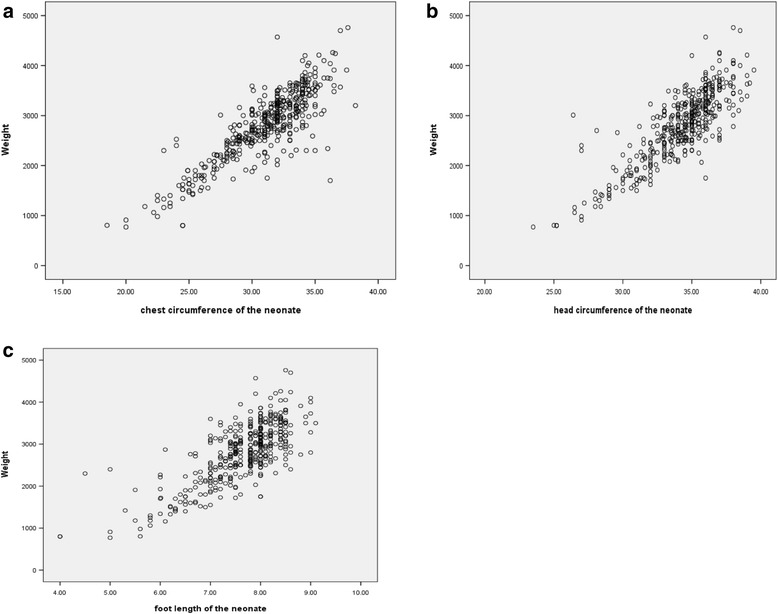
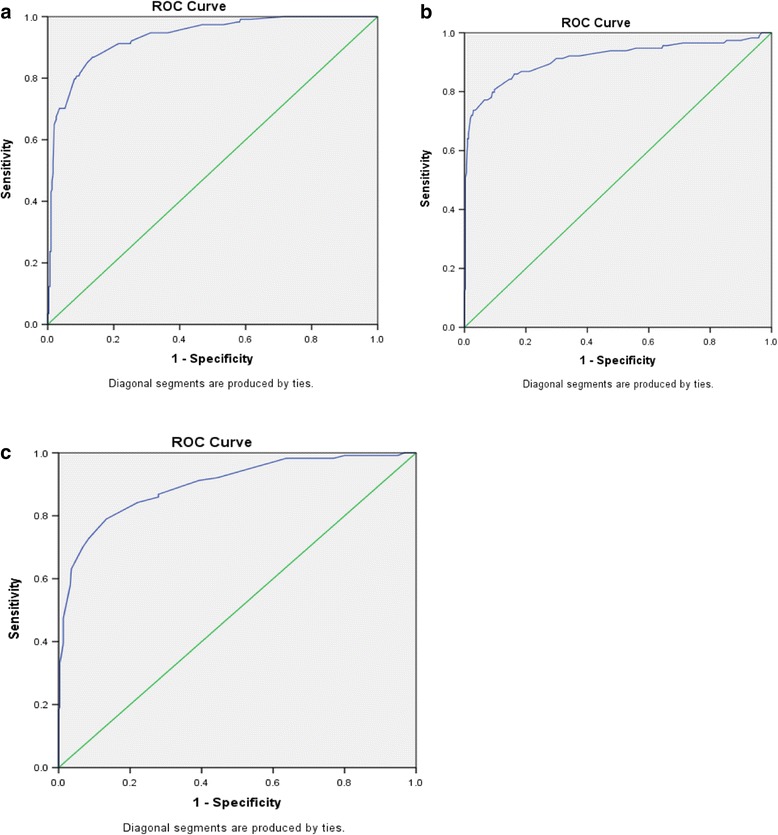
BACKGROUND: Low birth weight (Birth weight < 2500 g) is a leading cause of prenatal and neonatal deaths. The early identification of Low birth weight (LBW) neonates is essential for any comprehensive initiative to improve their chance of survival. However, a large proportion of births in developing countries take place at home and birth weight statistics are not available. Therefore, there is a need to develop simple, inexpensive and practical methods to identify low birth weight (LBW) neonates soon after birth. METHODS: This is a hospital based cross sectional study. Four hundred twenty two (422) live born neonates were included and anthropometric measurements were carried out within 24 h of birth by three trained nurses. Birth weight was measured by digital scale. Head and chest circumference were measured by using non extendable measuring tape and foot length with hard transparent plastic ruler. Data was entered into SPSS version 20 for analysis. Characteristics of study participants were analyzed using descriptive statistics such as frequency and percentage for categorical data and mean and standard deviation for continuous data. Correlation with birth weight using Pearson's correlation coefficient and linear regression were used to identify the association between dependent and independent variables. Receiver operating characteristic (ROC) curve was used to evaluate accuracy of the anthropometric measurements to predict LBW. RESULTS: The prevalence of low birth weight was found to be 27%. All anthropometric measurements had a positive correlation with birth weight, chest circumference attaining the highest correlation with birth weight (r = 0.85) and foot length had the weakest correlation (r = 0.74). Head circumference had the highest predictive value for birth weight (AUC = 0.93) followed by Chest circumference (AUC = 0.91). A cut off point of chest circumference 30.15 cm had 84.2% sensitivity, 85.4% specificity and diagnostic accuracy (P < 0.001). A cut off point of head circumference 33.25 had the highest positive predictive value (77%). CONCLUSION: Chest circumference and head circumference were found to be better surrogate measurements to identify low birth weight neonates.
Overview
The claims and statistics of this paper haven’t been checked yet.
Free: it reads the open-access text and checks the first 5 claims that cite a source we can check. Create a free account to check every claim.
Integrity signals
Registry
Cites
Statistics
Figures
Verification
Claims the paper makes
The claims and statistics of this paper haven’t been checked yet.
Free: it reads the open-access text and checks the first 5 claims that cite a source we can check. Create a free account to check every claim.
Self-check
Percentages, sums and reported differences re-computed from the paper’s own numbers.
The self-check needs the paper’s full text.
Citations
Cites
Levels and trends in child mortality : report 2013
Bastian, P. C., Wardlaw, T., Wu, J., & You, D. (2013) · Cited by 304
Incidence and correlates of low birth weight at a referral hospital in Northwest Ethiopia.
Zeleke, B. M., Zelalem, M., & Mohammed, N. (2012) · PubMed Central · doi:10.11604/pamj.2012.12.4.1284 · Cited by 139
Mullany, L. C., Darmstadt, G. L., Khatry, S. K., LeClerq, S. C., & Tielsch, J. M. (2006) · European Journal of Clinical Nutrition · doi:10.1038/sj.ejcn.1602504 · Cited by 81
Bhargava, S. K., Ramji, S., Kumar, A., Mohan, M., Marwah, J., & Sachdev, H. S. (1985) · BMJ · doi:10.1136/bmj.291.6509.1617 · Cited by 72
Anthropometric surrogates to identify low birth weight Nepalese newborns: a hospital-based study
Sreeramareddy, C. T., Chuni, N., Patil, R., Singh, D., & Shakya, B. (2008) · BMC Pediatrics · doi:10.1186/1471-2431-8-16 · Cited by 70
Factors affecting low birth weight at four central hospitals in vientiane, Lao PDR.
Louangpradith, V., Yoshida, Y., Harun‐Or‐Rashid, M., & Sakamoto, J. (2010) · PubMed Central · doi:10.18999/nagjms.72.1-2.51 · Cited by 60
Nabiwemba, E., Christopher, O. G., & Patrick, K. (2013) · BMC Pediatrics · doi:10.1186/1471-2431-13-54 · Cited by 57
Dhar, B., Mowlah, G., Nahar, S., & Islam, N. (2002) · PubMed · Cited by 53
Teklehaimanot, N. (2014) · International Journal of Nutrition and Food Sciences · doi:10.11648/j.ijnfs.20140306.21 · Cited by 48
Zenebe, K., Awoke, T., & Birhan, N. (2014) · Indo Global Journal of Pharmaceutical Sciences · doi:10.35652/igjps.2014.110 · Cited by 33
Diamond, I. D., McDonald, J. C., & Guidotti, R. J. (1993) · PubMed · Cited by 33
Development of a practical screening tool to identify preterm, low-birthweight neonates in Ethiopia
Raymond, E. G., Tafari, N., Troendle, J. F., Clemens, J. D., & Tafari, N. (1994) · The Lancet · doi:10.1016/s0140-6736(94)91905-4 · Cited by 28
Anthropometric measurements at birth as predictor of low birth weight
Sajjadian, N., Shajari, H., Rahimi, F., Jahadi, R., & Barakat, M. G. (2011) · Health · doi:10.4236/health.2011.312125 · Cited by 25
Ndu, I. K., Ibeziako, N. S., Obidike, E. O., Adimora, G. N., Edelu, B. O., Chinawa, J. M., Asinobi, I. N., & Uleanya, N. D. (2014) · The Italian Journal of Pediatrics/Italian journal of pediatrics · doi:10.1186/s13052-014-0081-7 · Cited by 19
Prediction of low birth weight from other anthropometric parameters in Nnewi, south eastern Nigeria
Achebe, C., Ugochukwu, E., Adogu, P., & Ubajaka, C. F. (2013) · Nigerian Journal of Paediatrics · doi:10.4314/njp.v41i1.11 · Cited by 10
Mohsen, M. A., Youssef, M. M., Zaki, S. T., & El-Shamy, M. M. (2011) · International Journal of Food Nutrition and Public Health · doi:10.47556/j.ijfnph.4.1.2011.3 · Cited by 7
Research works printed but not linked: 1
- Judith P Laura K ACC/SCN Low birth weight: report of a meeting in Dhaka, Bangladesh on 14–17 June 1999 2000
Cited by
Chung, H. U., Rwei, A. Y., Hourlier-Fargette, A., Xu, S., Lee, K., Dunne, E. C., Xie, Z., Liu, C., Carlini, A., Kim, D. H., et al. (2020) · Nature Medicine · doi:10.1038/s41591-020-0792-9 · Cited by 482
Woldeamanuel, G. G., Geta, T. G., Mohammed, T. P., Shuba, M. B., & Bafa, T. A. (2019) · SAGE Open Medicine · doi:10.1177/2050312119827096 · Cited by 105
Kwak, S. S., Yoo, S., Avila, R. O., Chung, H. U., Jeong, H., Liu, C. Y., Vogl, J. L., Kim, J., Yoon, H., Park, Y., et al. (2021) · Advanced Materials · doi:10.1002/adma.202103974 · Cited by 74
Aji, A. S., Lipoeto, N. I., Yusrawati, Y., Malik, S. G., Kusmayanti, N. A., Susanto, I., Majidah, N. M., Nurunniyah, S., Alfiana, R. D., Wahyuningsih, W., et al. (2022) · BMC Pregnancy and Childbirth · doi:10.1186/s12884-022-04815-8 · Cited by 71
Prevalence and Determinants of Low Birth Weight in Ethiopia: A Systematic Review and Meta-Analysis
Katiso, N. A., Kassa, G. M., Fekadu, G. A., Berhe, A. K., & Muche, A. A. (2020) · Advances in Public Health · doi:10.1155/2020/7589483 · Cited by 36
Self-citation
Metadata
- Authors
- Hadush, M. Y., Berhe, A. H., & Medhanyie, A. A.
- Affiliations
- Mekelle University (ET)
- Corresponding author
- Hadush, Marta Yemane
- Venue
- BMC Pediatrics
- Published
- 2017-04-21
- Volume
- 17
- Issue
- 1
- Pages
- 111-111
- ISSN
- 1471-2431 (ISSN-L)
- PMC
- PMC5401464
- OpenAlex
- W2605701926
- Cited by
- 89
- References
- 17
- Citations by year
- 2026: 3 · 2025: 6 · 2024: 6 · 2023: 10 · 2022: 11 · 2021: 7 · 2020: 39 · 2019: 6 · 2017: 1
- FWCI
- 20.39
- Type
- journal article
- Language
- en
- Open access
- gold
- doi.org
- Licence
- cc-by
- Locations
- BMC Pediatrics (publishedVersion, cc-by)
- Europe PMC (PubMed Central) (publishedVersion, cc-by)
- PubMed Central (publishedVersion, cc-by)
- PubMed (publishedVersion)
- DOAJ (DOAJ: Directory of Open Access Journals) (submittedVersion, cc-by-sa)
- Funders
- Mekelle University
- Topics
- Health Sciences › Medicine › Pediatrics, Perinatology and Child Health › Maternal and Neonatal Healthcare
- Health Sciences › Medicine › Pediatrics, Perinatology and Child Health › Global Maternal and Child Health
- Health Sciences › Medicine › Pediatrics, Perinatology and Child Health › Infant Development and Preterm Care
- Keywords
- low birth weight, neonatal anthropometry, chest circumference, head circumference, foot length, birth weight estimation, newborn screening, diagnostic accuracy, Mekelle
- MeSH terms
- Anthropometry, Birth Weight, Cross-Sectional Studies, Developing Countries, Ethiopia, Female, Foot, Head, Hospitals, Humans, Infant, Low Birth Weight, Infant, Newborn, Infant, Premature, Diseases, Male, Thorax, Incidence
About these checks
Registry, retraction, Cites and statistics results are computed, not judged, with one exception: a printed reference that no index lists is read once by a model before it counts as a citation error. Claims are extracted by a model and kept only when their quote appears verbatim in the text; each cited source is then checked, with a model’s help, for whether it says what the claim relies on. Those verdicts can be wrong — read the claim’s quote and the cited source before relying on one.
Statistics and arithmetic are recomputed, not judged.
Confidence bands are shown only for fields calibrated on our annotated test set. None is calibrated yet, so no band is shown.
What counts as a claim ›How we measure confidence ›How we check this ›
Are you an author, or do you see a problem with this page? Request a review
Data sources
Bibliographic data: Semantic Scholar, OpenAlex, Crossref.
Contains information from the Semantic Scholar Academic Graph Datasets, made available under the ODC Attribution License (ODC-BY 1.0).
Semantic Scholar’s data is described in: Kinney, R., et al. (2023). The Semantic Scholar Open Data Platform. arXiv:2301.10140.
