

The DOI matches its Crossref record; 18 of the 18 references it cites were found in a registry or an index.
Seasonal variations in the occurrence of acute appendicitis and their relationship with the presence of fecaliths in children
Open accessPublished version of a preprint
Abstract
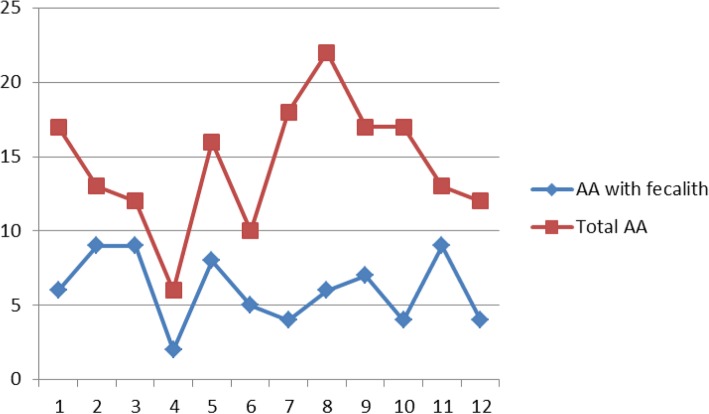
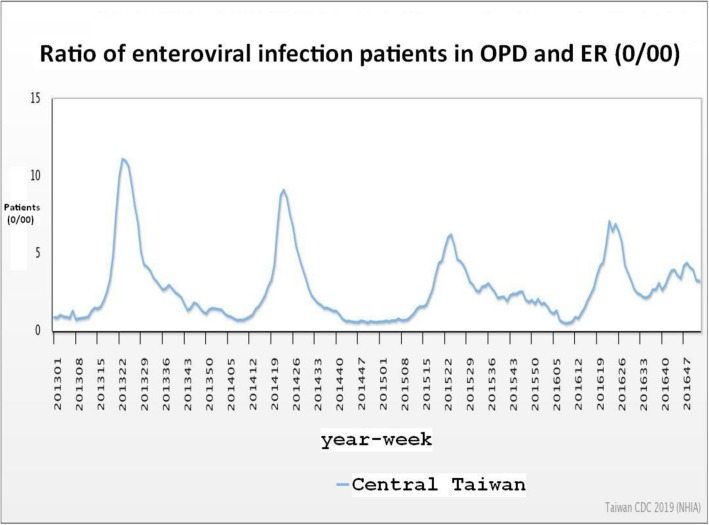
BACKGROUND: Acute appendicitis (AA) is the most common surgical condition in children. Although a higher incidence of AA in summer has been reported, the reason for this observation remains unclear. The purpose of this study was to compare the clinical findings of AA patients who underwent appendectomies during the summer months with those who underwent the procedure during the non-summer months. METHODS: The clinical data of 171 patients who underwent appendectomy from January 2013 to December 2016 were reviewed. The patients were divided into a summer group (from May to October) and a non-summer group (from November to April) based on the month when appendectomy was performed. All patients were under 18 years of age at the time of surgery. The medical records including laboratory data, computed tomography scans, pathology reports and operative notes were reviewed. RESULTS: The number of patients with AA was higher in the summer group than in the non-summer group (101 vs. 70 patients). No significant differences in the laboratory results between the two groups of patients were observed. The percentage of AA patients who presented with a fecalith was significantly lower in the summer group (33.6%) than in the non-summer group (55.7%). No significant differences in the incidence of appendiceal perforations and abscesses, as well as postoperative complications were observed between the two groups. CONCLUSIONS: The percentage of AA patients with fecaliths in summer was lower than that in the non-summer months. The increase in the number of AA patients in summer may be due to the increased occurrence of lymphoid hyperplasia, which may be correlated with the yearly outbreak of enterovirus infection during this period.
Overview
The claims and statistics of this paper haven’t been checked yet.
Run the check — free, no account needed. It reads the open-access text and checks the sources it cites.
Integrity signals
Registry
Cites
Statistics
Figures
Verification
Claims the paper makes
The claims and statistics of this paper haven’t been checked yet.
Run the check — free, no account needed. It reads the open-access text and checks the sources it cites.
Claims other papers make about this one
Each is checked against this paper’s own text: does it say what the citing paper says it does?
The cited source says what the claim attributes to it.
In the citing paper
“the circannual trend of acute appendicitis is well documented indicating a seasonal peak during summer months and lower numbers during colder months. 12,13”
From Increasing incidence of complicated appendicitis during COVID-19 pandemic (2021) · cites this paper as [12]
Self-check
Percentages, sums and reported differences re-computed from the paper’s own numbers.
The self-check needs the paper’s full text.
Citations
Cites
THE EPIDEMIOLOGY OF APPENDICITIS AND APPENDECTOMY IN THE UNITED STATES
Addiss, D. G., Shaffer, N., FOWLER, B. S., & Tauxe, R. V. (1990) · American Journal of Epidemiology · doi:10.1093/oxfordjournals.aje.a115734 · Cited by 2,254
Burkitt, D. P. (1974) · JAMA: The Journal of the American Medical Association · doi:10.1001/jama.1974.03230460018013 · Cited by 487
Effect of ambient air pollution on the incidence of appendicitis
Kaplan, G. G., Dixon, E., Panaccione, R., Fong, A., Chen, L., Szyszkowicz, M., Wheeler, A. J., MacLean, A. R., Buie, W. D., Leung, T., et al. (2009) · Canadian Medical Association Journal · doi:10.1503/cmaj.082068 · Cited by 156
Role of the faecolith in modern-day appendicitis
Singh, J., & Mariadason, J. G. (2012) · Annals of The Royal College of Surgeons of England · doi:10.1308/003588413x13511609954851 · Cited by 124
Appendicitis: Trends in incidence, age, sex, and seasonal variations in South-Western Nigeria
Oguntola, A., Adeoti, M., & Oyemolade, T. (2010) · Annals of African Medicine · doi:10.4103/1596-3519.70956 · Cited by 111
Jones, B. A., Δημητριάδης, Δ., & Segal, I. (1985) · Annals of Surgery · doi:10.1097/00000658-198507000-00013 · Cited by 109
Jahangiri, Y., Sadigh, N., & Ahmadnia, A. Y. (2006) · International Journal of Surgery · doi:10.1016/j.ijsu.2006.03.009 · Cited by 92
Association of Viral Infection and Appendicitis
Alder, A. C. (2010) · Archives of Surgery · doi:10.1001/archsurg.2009.250 · Cited by 89
Appendiceal fecalith is associated with early perforation in pediatric patients
Alaedeen, D. I., Cook, M., & Chwals, W. J. (2008) · Journal of Pediatric Surgery · doi:10.1016/j.jpedsurg.2007.12.034 · Cited by 85
Monthly variation in acute appendicitis incidence: A 10-year nationwide population-based study
Wei, P., Chen, C.-S., Keller, J. J., & Lin, H. (2012) · Journal of Surgical Research · doi:10.1016/j.jss.2012.06.034 · Cited by 79
Cited by
Increasing incidence of complicated appendicitis during COVID-19 pandemic
Orthopoulos, G., Santone, E., Izzo, F., Tirabassi, M., Pérez-Caraballo, A. M., Corriveau, N., & Jabbour, N. (2021) · The American Journal of Surgery · doi:10.1016/j.amjsurg.2020.09.026 · Cited by 171
Guan, L., Liu, Z., Pan, G., Zhang, B., Wu, Y., Gan, T., & Ouyang, G. (2023) · BMC Gastroenterology · doi:10.1186/s12876-023-02678-7 · Cited by 173
Fisher, J. C., Tomita, S. S., Ginsburg, H. B., Gordon, A. J., Walker, D., & Kuenzler, K. A. (2020) · Annals of Surgery · doi:10.1097/sla.0000000000004426 · Cited by 97
Comparison of Open and Laparoscopic Appendectomy in Children: A 5-year Single Center Experience
Pogorelić, Z., Buljubašić, M., Šušnjar, T., Jukić, M., Peričić, T. P., & Jurić, I. (2019) · Indian Pediatrics · doi:10.1007/s13312-019-1518-2 · Cited by 53
Montalva, L., Haffreingue, A., Ali, L., Clariot, S., Julien‐Marsollier, F., El‐Ghoneimi, A., Peycelon, M., & Bonnard, A. (2020) · Pediatric Surgery International · doi:10.1007/s00383-020-04759-0 · Cited by 34
Yu, Y., Li, Y., & Du, X. (2021) · The American Journal of Emergency Medicine · doi:10.1016/j.ajem.2021.03.022 · Cited by 21
Perforated Appendicitis During a Pandemic: The Downstream Effect of COVID-19 in Children
Esparaz, J. R., Chen, M. K., Beierle, E. A., Anderson, S. A., Martin, C. A., Mortellaro, V. E., Rogers, D. A., Mathis, M. S., & Russell, R. T. (2021) · Journal of Surgical Research · doi:10.1016/j.jss.2021.07.008 · Cited by 17
The Gut Microbiota and Inflammatory Factors in Pediatric Appendicitis
Bi, Y.-W., Yang, Q., Li, J., Zhao, X.-F., Yan, B., Li, X., & Cui, H. (2022) · Disease Markers · doi:10.1155/2022/1059445 · Cited by 16
Paediatric appendicitis: international study of management in the COVID-19 pandemic
van Amstel, P., Ghazzaoui, A. E., Hall, N. J., Wester, T., Morini, F., van der Lee, J. H., Singer, G., Pierro, A., Zani, A., & Gorter, R. R. (2022) · British journal of surgery · doi:10.1093/bjs/znac239 · Cited by 12
Seasonal Variation in Cases of Acute Appendicitis
AlHarmi, R. A. R., Almahari, S. A., AlAradi, J., Alqaseer, A., Aljirdabi, N. S., & Ahmed, F. A. (2021) · Surgery Research and Practice · doi:10.1155/2021/8811898 · Cited by 12
Paran, M., Dreznik, Y., Totah, M., Nevo, A., Kravarušić, D., & Samuk, I. (2024) · Journal of Paediatrics and Child Health · doi:10.1111/jpc.16748 · Cited by 6
Incidence of appendicitis during COVID-19 lockdown: A nationwide population-based study
Jantzen, A. T., Bang-Nielsen, A., Bertelsen, C. A., Torp-Pedersen, C. T., & Kleif, J. (2022) · Scandinavian Journal of Surgery · doi:10.1177/14574969221089387 · Cited by 6
Comparison of the prevalence of perforated appendicitis during and before COVID19 pandemic
Azadbakht, M., Azadbakht, S., Daniali, S., & Dehghani, M. (2022) · Annals of Medicine and Surgery · doi:10.1016/j.amsu.2022.104785 · Cited by 6
Hassanieh, J., Zalaquett, N., Khazzeka, A., Ghazal, R. E., Riachi, M. E., Habib, S. G., & Zaghal, A. (2024) · BMC Surgery · doi:10.1186/s12893-023-02273-3 · Cited by 5
Baek, K., Park, S., & Park, C. (2024) · International Journal of Biometeorology · doi:10.1007/s00484-024-02764-9 · Cited by 5
Asano, S. (2022) · Surgery in Practice and Science · doi:10.1016/j.sipas.2022.100128 · Cited by 4
Martín‐Arévalo, J., Valdezate, D. M., García‐Botello, S., Pérez‐Santiago, L., Casado-Rodrigo, D., Hernández, L. P. G., Ibáñez, F. C., Lara, J. S. S., Martínez‐Ciarpaglini, C., & Pla‐Martí, V. (2025) · Scientific Reports · doi:10.1038/s41598-025-88782-y · Cited by 4
Pediatric appendicitis may be co-associated with meteorologic factors: A case-crossover study
Nissen, M., Tröbs, R., & Albeer, A. (2024) · Pediatrics & Neonatology · doi:10.1016/j.pedneo.2024.04.016 · Cited by 3
Appendicitis in infants up to three months of age: A case series
The, S., Thé, A.-F., Visser, D. H., de Meij, T. G. J., Bakx, R., van der Kuip, M., Derikx, J. P. M., & Gorter, R. R. (2023) · Journal of Pediatric Surgery Case Reports · doi:10.1016/j.epsc.2023.102730 · Cited by 1
Al-Bdour, B., Alshoubaki, W. I., Ayyad, R., Hamiedeh, M. M., Alzboon, M. R., Khlifat, M. S., Saádeh, A. J., Alhabashneh, A. T., & Al-lassasmeh, M. M. (2024) · International Journal of Advances in Medicine · doi:10.18203/2349-3933.ijam20241593 · Cited by 1
Kulice, E. C., Bostancı, S. A., Bayram, S., Genişol, İ., Dörterler, M. E., Cesur, E., Tangul, S. U., Çelik, N., Dündar, K., Sağ, S., et al. (2026) · Pediatric Surgery International · doi:10.1007/s00383-026-06473-9 · Cited by 1
The, S., van Amstel, P., Noordzij, S. M., Bakx, R., Bijlsma, T. S., Derikx, J. P. M., van Heurn, E. L. W., van der Kuip, M., & Gorter, R. R. (2023) · Children · doi:10.3390/children10121912 · Cited by 1
Chuluun, E., Ganzorig, G., Ankhbayar, B., Luuzan, G., Dambadarjaa, D., Dungerdorj, Z., & Chimedtseye, P. (2021) · Occupational Diseases and Environmental Medicine · doi:10.4236/odem.2021.91001 · Cited by 1
Martín‐Arévalo, J., Valdezate, D. M., García‐Botello, S., Pérez‐Santiago, L., Casado-Rodrigo, D., Izquierdo-Moreno, A., Hernández, L. P. G., Ibáñez, F. C., Lara, J. S. S., & Pla‐Martí, V. (2024) · Research Square · doi:10.21203/rs.3.rs-4410634/v1
Acute Appendicitis in a Pediatric Minority Population: Uncommon Presentations of a Common Disease
Aeed, F., Jammal, L., Farah, A., Mari, A., & Abboud, W. (2025) · Cureus · doi:10.7759/cureus.79948
Guan, L., Liu, Z., Pan, G., Zhang, B., Wu, Y., Gan, T., & Ouyang, G. (2024) · Figshare · doi:10.6084/m9.figshare.26570551
Guan, L., Liu, Z., Pan, G., Zhang, B., Wu, Y., Gan, T., & Ouyang, G. (2024) · Figshare · doi:10.6084/m9.figshare.26570554
Buzuk, J., Dujić, B., Vuković, S., & Bašković, M. (2026) · Medical Sciences · doi:10.3390/medsci14060673
Metadata
- Authors
- Hsu, Y.-J., Fu, Y.-W., & Chin, T.
- Affiliations
- Changhua Christian Hospital (TW)
- Venue
- BMC Pediatrics
- Published
- 2019-11-16
- Volume
- 19
- Issue
- 1
- Pages
- 443-443
- ISSN
- 1471-2431 (ISSN-L)
- PMC
- PMC6858696
- OpenAlex
- W2986759888
- Cited by
- 29
- References
- 18
- Citations by year
- 2026: 2 · 2025: 2 · 2024: 8 · 2023: 3 · 2022: 5 · 2021: 5 · 2020: 3 · 2019: 1
- FWCI
- 4.06
- Type
- journal article
- Language
- en
- Open access
- gold
- doi.org
- Licence
- cc-by
- creativecommons.org/licenses/by/4.0/ (tdm)
- creativecommons.org/licenses/by/4.0/ (vor)
- Locations
- BMC Pediatrics (publishedVersion, cc-by)
- Research Square (acceptedVersion, cc-by)
- PubMed Central (publishedVersion, cc-by)
- PubMed (publishedVersion)
- DOAJ (DOAJ: Directory of Open Access Journals) (submittedVersion, cc-by-sa)
- Topics
- Health Sciences › Medicine › Emergency Medicine › Appendicitis Diagnosis and Management
- Health Sciences › Medicine › Surgery › Gastrointestinal disorders and treatments
- Health Sciences › Medicine › Surgery › Omental and Epiploic Conditions
- Keywords
- acute appendicitis, seasonal variation, fecalith, children, appendectomy, appendiceal perforation, appendiceal abscess, postoperative complications, lymphoid hyperplasia, enterovirus infection
- MeSH terms
- Adolescent, Appendectomy, Appendicitis, Child, Fecal Impaction, Female, Humans, Male, Retrospective Studies, Seasons
About these checks
Registry, retraction, Cites and statistics results are computed, not judged, with one exception: a printed reference that no index lists is read once by a model before it counts as a citation error. Claims are extracted by a model and kept only when their quote appears verbatim in the text; each cited source is then checked, with a model’s help, for whether it says what the claim relies on. Those verdicts can be wrong — read the claim’s quote and the cited source before relying on one.
Statistics and arithmetic are recomputed, not judged.
Confidence bands are shown only for fields calibrated on our annotated test set. None is calibrated yet, so no band is shown.
What counts as a claim ›How we measure confidence ›How we check this ›
Are you an author, or do you see a problem with this page? Request a review
Data sources
Bibliographic data: Semantic Scholar, OpenAlex, Crossref.
Contains information from the Semantic Scholar Academic Graph Datasets, made available under the ODC Attribution License (ODC-BY 1.0).
Semantic Scholar’s data is described in: Kinney, R., et al. (2023). The Semantic Scholar Open Data Platform. arXiv:2301.10140.
