

Metformin in prevention and treatment of antipsychotic induced weight gain: a systematic review and meta-analysis.
Open accessThe DOI matches its Crossref record; 49 of the 49 references it cites were found in a registry or an index.
Abstract
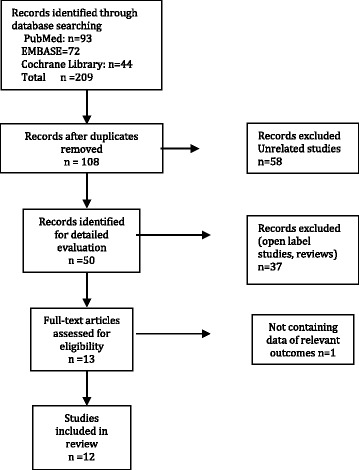
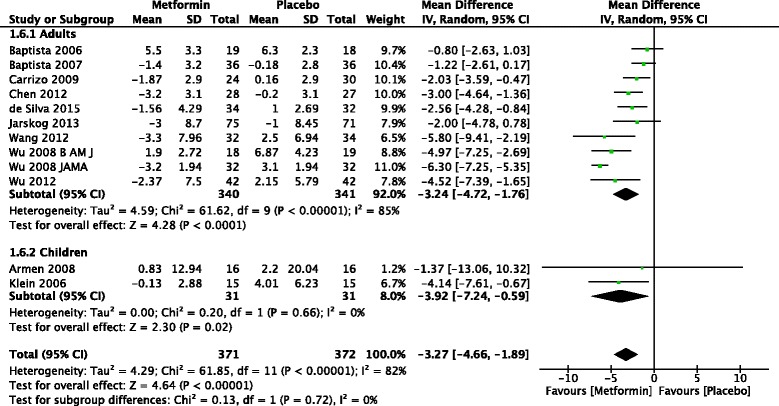
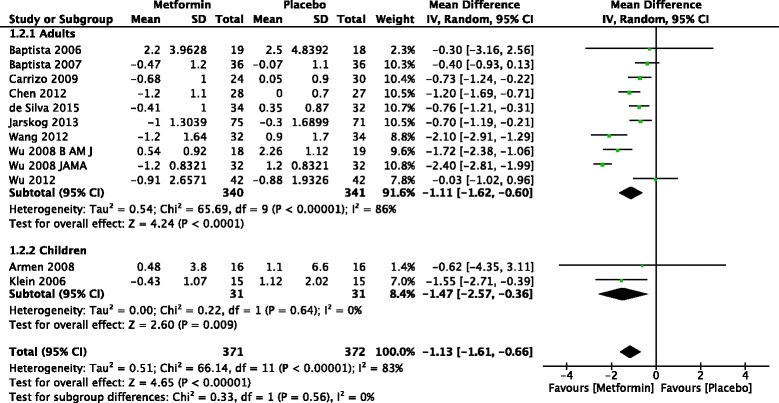
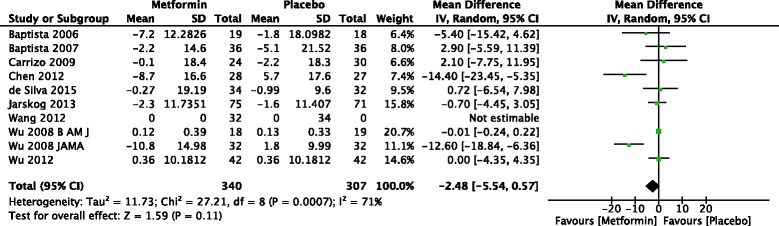
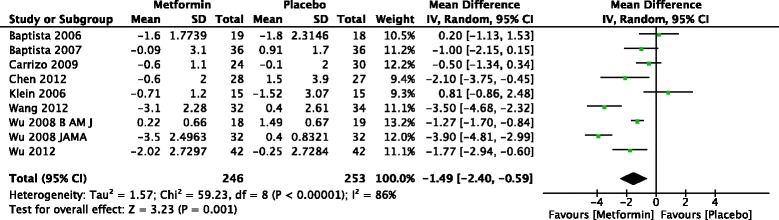
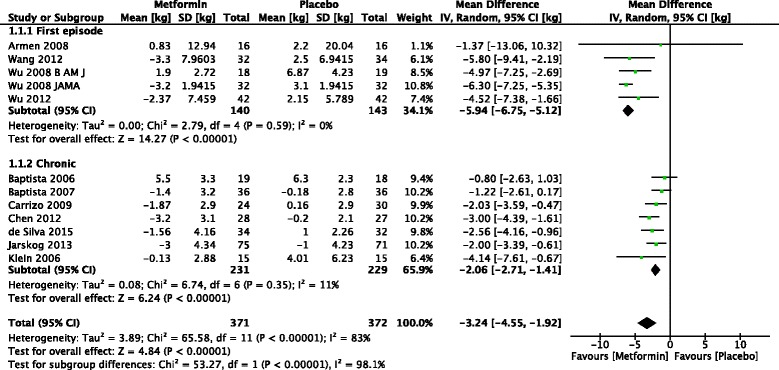
Most antipsychotics are associated with weight gain and other metabolic complications. Several randomized trials have shown metformin to be effective, but this still hasn’t been included in clinical guidelines on managing antipsychotic induced weight gain. All double blind placebo controlled trials assessing the efficacy of metformin in the treatment of antipsychotic induced weight gain were included. Cochrane Central Register of Controlled Trials (CENTRAL) and MEDLINE were searched for the period January 2000-December 2015. Meta-analysis was carried out using the random effects model. Meta analysis of 12 published studies with a total of 743 patients found that in patients treated with antipsychotics, metformin treatment resulted in significantly better anthropometric and metabolic parameters than placebo. The mean change in weight was −3.27 kg (95 % CI −4.66 to −1.89) ( Z = 4.64, p < 0.001). Metformin compared to placebo resulted in significant reduction in BMI [−1.13 kg/m 2 (95 % CI −1.61 to −0.66)] and insulin resistance index [−1.49 (95 % CI −2.40 to −0.59)] but not fasting blood sugar [−2.48 mg/dl (95 % CI −5.54 to 0.57]. This meta-analysis confirms that metformin is effective in treating antipsychotic induced weight gain in patients with schizophrenia or schizoaffective disorder.
Overview
The claims and statistics of this paper haven’t been checked yet.
Free: it reads the open-access text and checks the first 5 claims that cite a source we can check. Create a free account to check every claim.
Integrity signals
Registry
Cites
Statistics
Figures
Verification
Claims the paper makes
The claims and statistics of this paper haven’t been checked yet.
Free: it reads the open-access text and checks the first 5 claims that cite a source we can check. Create a free account to check every claim.
Claims other papers make about this one
Each is checked against this paper’s own text: does it say what the citing paper says it does?
The cited source says what the claim attributes to it.
In the citing paper
“Metformin (1000 mg total daily dose) and topiramate (100 mg/d) counteract the effects of some weight gain-promoting agents, particularly antipsychotics and can be considered as adjunctive therapy (topiramate: mean difference, −3.76 kg; 95% CI, −4.92 kg to −2.69 kg; metformin: mean difference, −3.27 kg; 95% CI, −4.66 kg to −1.89 kg).79,80”
From Obesity Management in Adults: A Review (2023) · cites this paper as [80]
Self-check
Percentages, sums and reported differences re-computed from the paper’s own numbers.
The self-check needs the paper’s full text.
Citations
Cites
Diagnostic and Statistical Manual of Mental Disorders
American Psychiatric Association (2013) · doi:10.1176/appi.books.9780890425596 · Cited by 116,369
Diagnostic and Statistical Manual of Mental Disorders
Williams, J. B. W., & First, M. (2013) · Encyclopedia of Social Work · doi:10.1093/acrefore/9780199975839.013.104 · Cited by 109,519
Preferred Reporting Items for Systematic Reviews and Meta-Analyses: the PRISMA statement
Moher, D., Liberati, A., Tetzlaff, J., Altman, D. G., & for the PRISMA Group (2009) · BMJ · doi:10.1136/bmj.b2535 · Cited by 83,823
Preferred reporting items for systematic reviews and meta-analyses: the PRISMA Statement.
(2009) · PubMed Central · Cited by 44,859
Meta-analysis in clinical trials
DerSimonian, R., & Laird, N. (1986) · Controlled Clinical Trials · doi:10.1016/0197-2456(86)90046-2 · Cited by 39,552 · cited 1×
“Meta-analysis was carried out using the random effects model of DerSimonian and Laird because the subjects and interventions in the studies have differed in ways that would have impacted on the results [24].”
MethodPreferred reporting items for systematic reviews and meta-analyses: The PRISMA statement
Moher, D., Liberati, A., Tetzlaff, J., Altman, D. G., & the PRISMA Group* (2009) · Annals of Internal Medicine · doi:10.7326/0003-4819-151-4-200908180-00135 · Cited by 37,554
Diagnostic and Statistical Manual of Mental Disorders.
Widiger, T. A. (2000) · Encyclopedia of Psychology, Vol. 3. · doi:10.1037/10518-009 · Cited by 19,744
Assessing the quality of reports of randomized clinical trials: Is blinding necessary?
Jadad, A. R., Moore, R. A., Carroll, D., Jenkinson, C., Reynolds, D. J. M., Gavaghan, D. J., & McQuay, H. J. (1996) · Controlled Clinical Trials · doi:10.1016/0197-2456(95)00134-4 · Cited by 17,582 · cited 3×
“The detailed risk of bias table is given as a additional file (Additional file 1: Table S1).”
MethodInfluentialZhang, Q., Wang, C., Zheng, M., Li, Y., Li, J., Zhang, L., Shang, X., & Yan, C. (2015) · Cerebrovascular Diseases · doi:10.1159/000369778 · Cited by 11,533
Dong, Y., Hao, L., Shi, Z., Wang, G., Zhang, Z., & Han, C. (2013) · Urologia Internationalis · doi:10.1159/000351405 · Cited by 4,540
Research works printed but not linked: 1
- The Nordic Cochrane Centre: Review Manager (RevMan) [ComputerProgram] Version 5.0. Copenhagen: The Cochrane Collaboration, Version 5.2.6 2012.
Cited by
Items 101–200 of 249
Roodi, P. B., Jazayeri, S., Hadi, F., Paghaleh, S. J., Khosravi‐Darani, K., & Malakouti, S. K. (2024) · BMC Psychiatry · doi:10.1186/s12888-024-06061-y · Cited by 11
Pharmacogenetics of Metformin for Medication-Induced Weight Gain in Autism Spectrum Disorder
Garfunkel, D., Anagnostou, E. A., Aman, M. G., Handen, B. L., Sanders, K. B., Macklin, E. A., Chan, J. G. M., & Veenstra-VanderWeele, J. M. (2019) · Journal of Child and Adolescent Psychopharmacology · doi:10.1089/cap.2018.0171 · Cited by 11
“Among adults taking mixed DSRAs, metformin leads to significant weight loss and a reduction in body mass index (BMI) (Bjorkhem-Bergman et al. 2011; Wu et al. 2012; de Silva et al. 2016).”
An update on pharmacotherapeutic strategies for obesity
Tchang, B. G., Tarazi, M. S., Aras, M., & Shukla, A. P. (2021) · Expert Opinion on Pharmacotherapy · doi:10.1080/14656566.2021.1888927 · Cited by 12
Pharmacotherapeutic Options for Weight Regain After Bariatric Surgery
Anekwe, C. V., Knight, M. G., Seetharaman, S., Dutton, W. P., Chhabria, S. M., & Stanford, F. C. (2021) · Current Treatment Options in Gastroenterology · doi:10.1007/s11938-021-00358-7 · Cited by 11
30-year cardiovascular disease risk for young adults with serious mental illness
Miley, K. M., Hooker, S. A., Crain, A. L., O’Connor, P. J., Haapala, J. L., Bond, D. J., & Rossom, R. C. (2023) · General Hospital Psychiatry · doi:10.1016/j.genhosppsych.2023.10.015 · Cited by 10
Strube, W., Wagner, E. M., Luykx, J. J., & Hasan, A. (2024) · Expert Opinion on Drug Safety · doi:10.1080/14740338.2024.2348561 · Cited by 10
“In this context and if there is a need to continue SGA medication, current meta-analyses support a treatment trial with metformin to facilitate weight loss [85–87].”
ResultGoltz, J. S., Ivanov, I., & Rice, T. (2019) · International Journal of Developmental Disabilities · doi:10.1080/20473869.2019.1638583 · Cited by 11
“In addition, multiple meta-analyses demonstrate a positive effect of metformin treating SGA-induced weight gain, with a recent meta-analysis demonstrating an average weight gain difference of –3.27 kg between subjects taking metformin versus placebo (de Silva et al. 2016).”
BackgroundInfluentialDo Leptin Play a Role in Metabolism–Related Psychopathological Symptoms?
Zhang, Y., Li, X., Yao, X., Yang, Y., Ning, X., Zhao, T., Xia, L., Zhang, Y., Zhang, K., & Liu, H. (2021) · Frontiers in Psychiatry · doi:10.3389/fpsyt.2021.710498 · Cited by 11
Tang, C. Y. Z., Chua, Y. C., Abdin, E., Subramaniam, M., & Verma, S. K. (2021) · International Journal of Environmental Research and Public Health · doi:10.3390/ijerph19010137 · Cited by 11
“A meta-analysis conducted by de Silva and colleagues [25] concluded that metformin compared to placebo resulted in a significant reduction in weight and BMI, but not in fasting blood sugar.”
MethodPiras, M., Ranjbar, S., Laaboub, N., Grosu, C., Gamma, F., Plessen, K. J., von Gunten, A., Conus, P., & Eap, C. B. (2022) · Schizophrenia Bulletin · doi:10.1093/schbul/sbac133 · Cited by 10
Metabolic complications of glucocorticoids – Prevention by metformin
Sanpawithayakul, K., & Korbonits, M. (2023) · Annales d Endocrinologie · doi:10.1016/j.ando.2023.05.002 · Cited by 10
Fukuyama, K., Motomura, E., & Okada, M. (2023) · Biomolecules · doi:10.3390/biom13050862 · Cited by 9
Fukuyama, K., Motomura, E., & Okada, M. (2023) · Biomolecules · doi:10.3390/biom13091288 · Cited by 9
Should I consider metformin therapy for weight loss in patients with obesity but without diabetes?
Rodriguez, P., Pantalone, K. M., Griebeler, M. L., & Burguera, B. G. (2023) · Cleveland Clinic Journal of Medicine · doi:10.3949/ccjm.90a.22096 · Cited by 9
Miedlich, S. U., & Lamberti, J. S. (2025) · Annals of the New York Academy of Sciences · doi:10.1111/nyas.15301 · Cited by 13
“189,190,192,193,195 It should be noted, however, that follow-up in these studies was limited to 6 months or less.”
Płaczkiewicz‐Jankowska, E., Czupryniak, L., Gajos, G., Lewiñski, A., Ruchała, M. A., Stasiak, M., Strojek, K., Szczepanek‐Parulska, E., Wyleżoł, M., Ostrowska, L., et al. (2022) · Polskie Archiwum Medycyny Wewnętrznej · doi:10.20452/pamw.16216 · Cited by 12
“63 In the case of secondary obesity (eg, hypothyroidism, Cushing’s syndrome, hypogonadism, hypothalamic obesity, rare weakening.”
Seiter, H. T., Fellendorf, F. T., Popkova, D., & Reininghaus, E. Z. (2025) · International Journal of Bipolar Disorders · doi:10.1186/s40345-025-00397-4 · Cited by 8
Gas therapy strategies for depression and schizophrenia: A review
Tao, X., Zhu, X., Liu, Y., Wang, L., Wang, D., Sun, L., Li, C., Lian, B., Wang, Y., & Chen, F. (2023) · Medicine · doi:10.1097/md.0000000000036156 · Cited by 8
“[5,6] Therefore, new treatment strategies are also urgently needed for anti-schizophrenia.”
BackgroundApproach to the Patient: Navigating Body Mass Index Requirements for Gender-Affirming Surgery
Taormina, J. M., Kissee, M. C., Brownstone, L. M., Grimstad, F. W., Morrison, S. D., Hendrixson, A., & Iwamoto, S. J. (2024) · The Journal of Clinical Endocrinology & Metabolism · doi:10.1210/clinem/dgae193 · Cited by 8
Rosenblat, J. D., & McIntyre, R. S. (2017) · Current Treatment Options in Psychiatry · doi:10.1007/s40501-017-0131-z · Cited by 10
Empagliflozin Effectively Attenuates Olanzapine-Induced Body Weight Gain in Female Wistar Rats
Ashraf, G. M., Alghamdi, B. S. A., Alshehri, F. S., Alam, M. Z., Tayeb, H. O., & Tarazi, F. I. (2021) · Frontiers in Pharmacology · doi:10.3389/fphar.2021.578716 · Cited by 8
Iannuzzo, F., Basile, G. A., Campolo, D., Genovese, G., Pandolfo, G., Giunta, L., Ruggeri, D., Benedetto, A. D., & Bruno, A. (2022) · Current Research in Pharmacology and Drug Discovery · doi:10.1016/j.crphar.2022.100116 · Cited by 8
Time course and dose effect of metformin on weight in patients with different disease states
Chen, X., Wang, D., & Li, Z. (2020) · Expert Review of Clinical Pharmacology · doi:10.1080/17512433.2020.1822164 · Cited by 9
Usmani, N., Ghosh, S., Sanghera, K. P., Ong, A. D., Koul, R., Dubey, A., Ahmed, S., Quon, H. C., Yee, D., Parliament, M. B., et al. (2022) · International Journal of Radiation Oncology*Biology*Physics · doi:10.1016/j.ijrobp.2022.07.035 · Cited by 9
Cardiovascular Disease and Bipolar Disorder: A Review of Pathophysiology and Treatment Implications
Chaudhari, M., Mendez, L., Olvera, R. L., Seshadri, S. S., & Teixeira, A. L. (2025) · The International Journal of Psychiatry in Medicine · doi:10.1177/00912174251316947 · Cited by 9
Cannon, A. T., Jacoby, C., & Hughes, A. S. (2024) · Current Diabetes Reports · doi:10.1007/s11892-024-01564-0 · Cited by 7
Antipsychotic-Induced Weight Gain: What Have We Learned?
Silas, A., Musso, M., & Dolber, T. (2025) · Current Cardiovascular Risk Reports · doi:10.1007/s12170-025-00762-z · Cited by 7
Trajano, L. F., Hayes, J., Launders, N., Davies, N. M., Osborn, D., & Richards‐Belle, A. (2025) · BMJ Mental Health · doi:10.1136/bmjment-2024-301505 · Cited by 7
“23 This NICE surveillance review recommended that the NICE guidelines on psychosis and schizophrenia in adults 24 are updated to ‘explore the role of metformin for managing AIWG’, including off-label use.”
InfluentialEder, J., Glocker, C., Barton, B. B., Sarisik, E., Popovic, D., Lämmermann, J., Knaf, A., Beqiri‐Zagler, A., Engl, K., Rihs, L., et al. (2024) · Acta Psychiatrica Scandinavica · doi:10.1111/acps.13684 · Cited by 8
Metformin in the management of antipsychotic-induced weight gain – why the ‘weight’?
Fitzgerald, I., Sahm, L. J., Dhubhlaing, C. N., O’Dwyer, S., O’Connell, J., Torrens, J., & Crowley, E. K. (2024) · Frontiers in Psychiatry · doi:10.3389/fpsyt.2024.1491417 · Cited by 8
Emam, A. A., Habib, N. M., Mahmoud, H. M., Abdelwhab, N. S., & Abdelrahman, M. M. (2020) · Bioanalysis · doi:10.4155/bio-2020-0009 · Cited by 7
Namara, K. M., Alzubaidi, H., Murray, M., Samorinha, C., Dunbar, J., Versace, V. L., & Castle, D. J. (2022) · The Medical Journal of Australia · doi:10.5694/mja2.51701 · Cited by 9
Schizophrenia Outside the Brain
Valença, A. G. F., & Smith, B. J. (2022) · Advances in experimental medicine and biology · doi:10.1007/978-3-030-97182-3_4 · Cited by 7
Metformin: Beyond Diabetes Management to Neuroprotection and Cognitive Enhancement
Gupta, P., Dutta, S., Jash, R., & Dutta, K. (2025) · Current Pharmacology Reports · doi:10.1007/s40495-025-00395-1 · Cited by 6
“Activation of the immune cells disrupts the integrity of the BBB and allows immune cells to enter the CNS and attack myelin [89].”
Butt, A., & Sadiq, S. (2025) · Neuropsychopharmacology Reports · doi:10.1002/npr2.70061 · Cited by 6
Matera, E., Cristofano, G., Furente, F., Marzulli, L., Tarantini, M., Margari, L., Piarulli, F. M., GIACOMO, A. D., & Petruzzelli, M. G. (2022) · Biomedicines · doi:10.3390/biomedicines11010048 · Cited by 6
De, R., Prasad, F., Stogios, N., Burin, L. M., Ebdrup, B. H., Knop, F. K., Hahn, M., & Agarwal, S. M. (2023) · Expert Opinion on Pharmacotherapy · doi:10.1080/14656566.2023.2254698 · Cited by 8
Ward, K. M., & Citrome, L. (2024) · Expert Opinion on Drug Safety · doi:10.1080/14740338.2024.2328812 · Cited by 6
Shukla, A. P., Mandel, L., Tchang, B. G., Litman, E. A., Cadwell, J. B., Kumar, R. B., Waitman, J. A., Igel, L. I., Christos, P. J., & Aronne, L. J. (2020) · Obesity · doi:10.1002/oby.22903 · Cited by 6
Metformin Reduces Potassium Currents and Prolongs Repolarization in Non-Diabetic Heart
Malagueta-Vieira, L. L., Fernandez-Ruocco, J., Hortigon-Vinagre, M. P., Zamora, V., Zayas-Arrabal, J., Echeazarra, L., Smith, G. L., Petroff, M. V., Medei, E. H., Casis, Ó., et al. (2022) · International Journal of Molecular Sciences · doi:10.3390/ijms23116021 · Cited by 7
“Because of the potential efficacy to promote weight loss, metformin is used to reduce obesity in non-diabetic patients [28] and in the treatment of antipsychoticinduced weight gain [29].”
BackgroundBrowne, J., Wu, W., Jiang, L., Bayer, T. A., Kunicki, Z. J., Thompson, M. F., Bozzay, M. L., Vito, A. N. D., Howe, M. D., Singh, M., et al. (2025) · Schizophrenia Bulletin · doi:10.1093/schbul/sbaf143 · Cited by 5
Pharmacotherapy for obesity management
Noeth, M., Zyl, F. H. V., Hellig, J., Conradie-Smit, M., & May, W. (2025) · South African Medical Journal · doi:10.7196/samj.2025.v115i9b.3767 · Cited by 5
“[107] Twelve double-blind, randomised, placebo-controlled trials of 12 weeks’ to 24 weeks’ duration, including a total of 743 participants with schizophrenia or schizoaffective disorder, were included in the study.”
Drawbacks of Olanzapine Therapy: An Emphasis on Its Metabolic Effects and Discontinuation
Oruch, R., Rajab, H. A., Elderbi, M., Pryme, I. F., Fasmer, O. B., & Lund, A. (2025) · Journal of Clinical Medicine · doi:10.3390/jcm14228125 · Cited by 7
“Additionally, metformin, an oral hypoglycemic agent, has been used as an adjunct to OLZ to prevent weight gain associated with this and other second generation APCs that may have metabolic side effects [119].”
Grywińska, W. B., & Głowacka, A. (2023) · Postępy Psychiatrii i Neurologii · doi:10.5114/ppn.2023.132493 · Cited by 6
“However, metformin may be less effective for patients already experiencing weight gain complications due to the metabolic changes caused by long-term antipsychotic drug therapy [26].”
BackgroundAntipsychotic-Induced Weight Gain and Metformin
Walkup, J. T., & Cottingham, E. M. (2017) · Journal of the American Academy of Child & Adolescent Psychiatry · doi:10.1016/j.jaac.2017.08.009 · Cited by 5
Jahn, J., Ehlen, Q. T., Kaplan, L. D., Best, T. M., Meng, Z., & Huang, C.-Y. C. (2024) · Bioengineering · doi:10.3390/bioengineering11100972 · Cited by 4
“The with increased AGEs and oxidative stress, is associated with OA progression and places those with DM at high risk relative to the non-diabetic population [94]. protective e ff ects of metformin on OA have also been replicated in humans with DM [90–92].”
BackgroundLee, K., Twohig, M., Idoko, N. P., & Williams, B. D. (2025) · Journal of Psychopharmacology · doi:10.1177/02698811251337374 · Cited by 4
“Currently, anti-diabetic medications are typically utilized for this purpose (Cooper et al., 2016; De Silva et al., 2016; Lee et al., 2022), though some of these medications (e.g., metformin) remain off-label.”
Yang, J., Zhu, X., Wang, W., Wang, H., Gong, H., Zhang, Y., Correll, C. U., Xiao, L., & Wang, G. (2025) · Schizophrenia Research · doi:10.1016/j.schres.2025.04.011 · Cited by 4
“Studies indicated that 500-2550 mg/ day of metformin can reduce prolactin levels and improve hyperprolactinemia-related symptoms (Silva et al., 2016; Smith, 2012; Wu et al., 2012).”
Atypical Antipsychotic Medications Disrupt the Cardio-Metabolic and Cardio-Immune Axes
Rostama, B., May, M. A., & Houseknecht, K. (2020) · Interventional Cardiology · doi:10.37532/fmic.2020.12(2).648 · Cited by 5
Diagnosis and management of hyperglycaemia in patients treated with antipsychotic drugs
Kosmalski, M., Różycka-Kosmalska, M., Basiak, M., Okopień, B., & Pietras, T. (2022) · Endokrynologia Polska · doi:10.5603/ep.a2022.0071 · Cited by 4
“When liraglutide was used for 16 weeks in overweight and obese patients with schizophrenia, schizotypal disorders, or paranoid psychosis, treated for at least 6 months with clozapine or olanzapine, a significant improvement in anthropometric parameters (body weight, waist circumference, and BMI) and OGTT results was o…”
BackgroundInfluentialPer, B. L., Loeser, S., Edwards, S., Lee, W. S., Wilton, L. R., & Clark, S. R. (2025) · Acta Psychiatrica Scandinavica · doi:10.1111/acps.13796 · Cited by 4
“Antipsychotic treatment commonly causes weight gain, referred to as antipsychotic-induced weight gain (AIWG) [1].”
Carolan, A., Keating, D., Marmion, A., Coady, A., Ryan, I. J., Hynes, C., O'Donoghue, B. N., Strawbridge, J., & Ryan, C. A. (2025) · The British Journal of Psychiatry · doi:10.1192/bjp.2025.10476 · Cited by 6
Mansour, M. E. M., Alsaadany, K. R., Mustafa, M. M. M., Ahmed, M., Beddor, A., Helal, M. M., Elgahamy, A. S., Kassar, O., Abdelsalam, F., Elmetwalli, A. E., et al. (2025) · Journal of Psychopharmacology · doi:10.1177/02698811251399544 · Cited by 3
“Systematic evidence discussed the efficacy of metformin only in the prevention and management of AIWG (de Silva et al., 2016; Fitzgerald et al., 2022).”
Greydanus, D. E., Azeem, M. W., & Nazeer, A. (2025) · Disease-a-Month · doi:10.1016/j.disamonth.2025.101983 · Cited by 3
Current Views on Dopaminergic Drugs Affecting Glucose Homeostasis
Hassanabad, M. F., & Fatehi, M. (2018) · Current Diabetes Reviews · doi:10.2174/1573399814666180424123912 · Cited by 3
Levy‐Shraga, Y., Madi, L. R., Shalev, M., Mazor‐Aronovitch, K., Schwartz-Lifshitz, M., & Gothelf, D. (2021) · Journal of Child and Adolescent Psychopharmacology · doi:10.1089/cap.2021.0006 · Cited by 3
“One option is the addition of a pharmacological therapy for weight reduction, such as metformin (de Silva et al. 2016).”
Use of metformin in the management of colorectal cancer: A survey
Montgomery, T., Hailemeskel, B., & Fullas, F. (2022) · International Journal of Science and Research Archive · doi:10.30574/ijsra.2022.7.2.0259 · Cited by 3
Stogios, N., Prasannakumar, A., Mehra, K., Hahn, M., & Agarwal, S. M. (2025) · FOCUS The Journal of Lifelong Learning in Psychiatry · doi:10.1176/appi.focus.20250020 · Cited by 2
Mukherjee, S., Skrede, S., & Fernø, J. (2025) · Reviews in Endocrine and Metabolic Disorders · doi:10.1007/s11154-025-10009-2 · Cited by 3
“A recent meta-analysis of 12 studies, encompassing 743 patients receiving both metformin and atypical antipsychot - ics, revealed significant improvements in BMI and insulin resistance [ 103 ].”
Marques, M. G., Özerdem, A., Kung, S., Voort, J. L. V., Betcher, H. K., Gentry, M. T., Veldić, M., Moore, K. M., Croarkin, P. E., Penaluna, B. K., et al. (2026) · The Journal of Clinical Psychiatry · doi:10.4088/jcp.25cs16066 · Cited by 2
Metformin for the management and prevention of antipsychotic‑induced weight gain
Shreen, S., Ali, M., Eram, S., Baig, M., Nayeem, M., Omer, W. A. F., Nasirabadi, M., & Hussain, S. (2026) · Medicine International · doi:10.3892/mi.2026.312 · Cited by 2
“Corresponding changes in BMI mirrored these trends. these findings are consistent with previous randomized controlled trials and meta‑analyses demonstrating significant reductions in body weight and BMI with adjunctive metformin in patients receiving antipsychotic therapy (3,21,24,27).”
Pham, H., Warlick, H., Bermudez, R., Nguyen, Q., & Rey, J. A. (2022) · Journal of Pharmacy Technology · doi:10.1177/87551225221114281 · Cited by 2
“The mean age was 41 years (18-67) and 61% were males.”
BackgroundAutism Spectrum Disorder (ASD)
Rutten, M. R., Zhong, J., Rolison, M. J., & Sukhodolsky, D. G. (2024) · Elsevier eBooks · doi:10.1016/b978-0-323-95702-1.00076-2 · Cited by 3
Comorbidity Between Severe Mental Disorders and Metabolic Disease
Starostina, E. G. (2025) · Springer eBooks · doi:10.1007/978-3-031-81802-8_8 · Cited by 2
van der Zalm, Y. C., Termorshuizen, F., Sommer, I. E., & Selten, J. (2019) · International Clinical Psychopharmacology · doi:10.1097/yic.0000000000000292 · Cited by 2
Sivolap, Y. P., Portnova, A. A., Mv, I., Savchenkov, V. A., & Pushin, P. V. (2021) · Neurology Bulletin · doi:10.17816/nb44729 · Cited by 2
Yunilaynen, O. A., Oleichik, I. V., Sizov, S. V., Баранов, П. А., & Starostina, E. G. (2021) · Obesity and metabolism · doi:10.14341/omet12684 · Cited by 2
Taormina, J. M., & Camidge, D. R. (2023) · Journal of Thoracic Oncology · doi:10.1016/j.jtho.2023.05.006 · Cited by 2
Bennett, C. W., Gensler, L., & Goldsmith, D. R. (2022) · Community Mental Health Journal · doi:10.1007/s10597-022-01045-2 · Cited by 1
Esh, N., Michael, S. A., Paetzholdt, J., & Samaras, K. (2023) · Australasian Psychiatry · doi:10.1177/10398562231190781 · Cited by 1
Seo, M., Choi, W.-S., Woo, Y. S., & Bahk, W. (2024) · Mood and Emotion · doi:10.35986/me.2024.22.1.1 · Cited by 1
Approaches to mitigate weight gain associated with antipsychotic use
Tran, F., Barnes, A., Urbonas, R., & Meriden, Z. (2025) · Personalized Medicine in Psychiatry · doi:10.1016/j.pmip.2025.100151 · Cited by 1
Kahwenga, K. D., Mnukwa, L., & Bronkhorst, E. (2025) · Healthcare · doi:10.3390/healthcare13121456 · Cited by 1
“The off-label prescription of metformin, reportedly used for antipsychotic-induced weight management, reflects an area where clinical practice is ahead of, or divergent from, current guidelines [37–39].”
Multimorbidity involving psychiatric disorders and insulin resistance
Fanelli, G. (2025) · Radboud University Press eBooks · doi:10.54195/9789465151236 · Cited by 1
Tan, G. S. Q., Miller, L., Wade, S., Ilomäki, J., Lukose, D., Rong, J., & Webb, G. I. (2025) · Clinical Pharmacology & Therapeutics · doi:10.1002/cpt.70080 · Cited by 1
Atypical Antipsychotics‐Induced Glucose and Lipid Metabolism Disorders and Therapeutic Intervention
Xia, A., Jin, Q., Ke, S., Li, H., & Wang, J. (2025) · Journal of Applied Toxicology · doi:10.1002/jat.70036 · Cited by 1
“Metformin, a first-line therapy for diabetes and obesity, has demonstrated only moderate efficacy in mitigating APPs-induced weight gain (de Silva et al. 2016; Siskind et al. 2016; Zhuo et al. 2018).”
Choi, W.-S., Song, M.-K., Seo, M. W., Woo, Y. S., & Bahk, W. (2026) · Therapeutic Advances in Psychopharmacology · doi:10.1177/20451253261419609 · Cited by 2
“6,17,46,47 Consistent with this pattern, antipsychotics were most frequently used concomitantly in the MET group.”
Dolati, A., Ahmadimoghaddam, D., Zamanirafe, M., Rezaie, S., Khazaie, S., Mehrpooya, M., & Doostizadeh, M. (2026) · Human Psychopharmacology Clinical and Experimental · doi:10.1002/hup.70047 · Cited by 1
“Additionally, pharmacological options like metformin have been explored for their potential to counteract weight gain associated with atypical antipsychotic treatment (de Silva et al. 2016).”
Mlčůchová, N., Lipový, B., Zendulka, O., Janošek, J., & Linhartová, P. B. (2026) · Frontiers in Pharmacology · doi:10.3389/fphar.2026.1794405 · Cited by 1
“It has also been shown to be effective in the treatment of antipsychotic-induced weight gain in patients with schizophrenia and schizoaffective disorder (de Silva et al., 2016).”
Insulin Resistance in Chronic Disease
Hamiel, U., & Pinhas‐Hamiel, O. (2019) · Contemporary Endocrinology · doi:10.1007/978-3-030-25057-7_3 · Cited by 1
Is metformin effective treatment of weight gain associated with antipsychotic medications?
Cohen, D., Affel, M., McCullough, K., & Carrio, K. (2020) · Evidence-Based Practice · doi:10.1097/ebp.0000000000000498 · Cited by 1
Managing glucose-related adverse events of antipsychotics is worth the effort
Fenton, C., & Kang, C. (2021) · Drugs & Therapy Perspectives · doi:10.1007/s40267-021-00856-9 · Cited by 1
Antiretrovirals and Psychotropics: Drug Interactions and Complications
Smith, C. M., Hicks, P. B., Lindefjeld, J. K., Taylor, B. M., Fisher, D. R., Faragon, J. J., Lam, S. T., Pereira, L. F., & Cozza, K. L. (2021) · Springer eBooks · doi:10.1007/978-3-030-80665-1_17 · Cited by 1
Levenson, J. L., Crouse, E. L. B., & Bozymski, K. M. (2019) · American Psychiatric Association Publishing eBooks · doi:10.1176/appi.books.9781615371501.lr29 · Cited by 1
Gannon, J. M., Sanchez, M., Lines, K., Cairns, K., Reardon, C., Chengappa, K. N. R., & Calkin, C. (2024) · Journal of Clinical Psychopharmacology · doi:10.1097/jcp.0000000000001818 · Cited by 2
Ali, S. S., Ghodsimaab, N., Rusling, M., & Rashid, N. (2024) · Psychiatry Research Case Reports · doi:10.1016/j.psycr.2024.100231 · Cited by 1
Yoshida, S., Aizawa, E., Ishihara, N., Hattori, K., Segawa, K., & Kunugi, H. (2025) · Nutrients · doi:10.3390/nu17040613 · Cited by 1
“A meta-analysis of 12 published studies (a total of 743 patients) found that in patients treated with antipsychotics, metformin treat-ment resulted in significantly reduced BMI and metabolic parameters (insulin resistance index) compared to placebo [33].”
Les premiers succès de la piste immuno-métabolique en psychiatrie de précision
Godin, O., Frajerman, A., Lengvenytė, A., Bernard, J., Andreazza, A. C., Étain, B., & Leboyer, M. (2025) · médecine/sciences · doi:10.1051/medsci/2025063 · Cited by 3
Weinstein, L. C., & Turchi, R. (2018) · iDEA - Drexel University Institutional Repository · doi:10.17918/g0hk-y295 · Cited by 1
Antipsychotic drugs-associated weight gain and its further implications on health
Zahid, M. J. (2023) · Journal of Rehman Medical Institute · doi:10.52442/jrmi.v9i3.529 · Cited by 1
Reeves, G. M., & Sikich, L. (2017) · Contemporary Endocrinology · doi:10.1007/978-3-319-68192-4_37
Drs. Walkup and Cottingham Reply
Walkup, J. T., & Cottingham, E. M. (2018) · Journal of the American Academy of Child & Adolescent Psychiatry · doi:10.1016/j.jaac.2018.08.006
A Psychopharmacology Guide by Psychiatrists for Non-psychiatrists
Heinrich, T. W., Owen, J. R., & Pawar, D. S. (2019) · Springer eBooks · doi:10.1007/978-3-030-18218-2_3
Pharmakotherapie und andere somatische Behandlungsverfahren (Modul 4a)
Gäebel, W., Hasan, A., & Falkai, P. (2019) · Springer eBooks · doi:10.1007/978-3-662-59380-6_5
Are Atypical Antipsychotics the Least Detrimental Alternative?
Breton, H. (2019) · McMaster University Medical Journal · doi:10.15173/mumj.v16i1.2019
“For instance, a meta-analysis found that metformin is effective in the reduction of weight gain and insulin resistance.(40) Unfortunately, these positive effects seem to dissipate with cessation of this medication.”
BackgroundWhat is the treatment for adults taking antipsychotics who develop weight gain?
Brandenburg, D. L., & Paulson, D. (2019) · Evidence-Based Practice · doi:10.1097/ebp.0000000000000339
“A2016 meta-analysis of 12 double-blind randomized controlled trials (RCTs) (N5743) assessed the effectiveness of metformin versus placebo in treating antipsychotic-related weight gain in those diagnosed with schizophrenia and schizoaffective disorders.(1) Men and women between 10 and 65 years old were included.”
Ndlangisa, Z. L. (2019) · ResearchSpace (University of KwaZulu-Natal)
First-Episode & Early Psychosis in Transition-Age Youth
Faraji, P., Camp, C., Elberg, Z., & Usher, C. T. (2021) · Springer eBooks · doi:10.1007/978-3-030-62113-1_14
An inquiry into various aspects of clozapine use: prescription, monitoring and mortality
van der Zalm, Y. C. (2021) · Research Publications (Maastricht University) · doi:10.26481/dis.20210618yz
Psychotische Störungen, Antipsychotika und Diabetes
Schullerus, M., Ruetz, A., Reiff, J., & Braus, D. F. (2021) · Der Diabetologe · doi:10.1007/s11428-021-00806-z
Metadata
- Authors
- de Silva, V. A., Suraweera, C., Ratnatunga, S. S., Dayabandara, M., Wanniarachchi, N., & Hanwella, R.
- Affiliations
- National Hospital of Sri Lanka (LK)
- University of Colombo (LK)
- Venue
- BMC Psychiatry
- Published
- 2016-10-03
- Volume
- 16
- Issue
- 1
- Pages
- 341-341
- ISSN
- 1471-244X (ISSN-L)
- PMC
- PMC5048618
- OpenAlex
- W2529188573
- Cited by
- 227
- References
- 49
- Citations by year
- 2026: 15 · 2025: 35 · 2024: 34 · 2023: 29 · 2022: 29 · 2021: 28 · 2020: 15 · 2019: 23 · 2018: 11 · 2017: 8
- FWCI
- 2.01
- Type
- journal article
- Language
- en
- Open access
- gold
- doi.org
- Licence
- Locations
- BMC Psychiatry (publishedVersion, cc-by)
- PubMed Central (publishedVersion, cc-by)
- PubMed (publishedVersion)
- DOAJ (DOAJ: Directory of Open Access Journals) (submittedVersion, cc-by-sa)
- Funders
- This study did not receive any specific funding
- Topics
- Health Sciences › Medicine › Psychiatry and Mental health › Schizophrenia research and treatment
- Health Sciences › Medicine › Pharmacology (medical) › Pharmacology and Obesity Treatment
- Social Sciences › Psychology › Clinical Psychology › Eating Disorders and Behaviors
- Keywords
- metformin, antipsychotic-induced weight gain, antipsychotic drugs, schizophrenia, schizoaffective disorder, insulin resistance, body mass index, fasting blood glucose, metabolic complications, weight loss
- MeSH terms
- Double-Blind Method, Humans, Metformin, Psychotic Disorders, Schizophrenia, Antipsychotic Agents, Weight Gain
About these checks
Registry, retraction, Cites and statistics results are computed, not judged, with one exception: a printed reference that no index lists is read once by a model before it counts as a citation error. Claims are extracted by a model and kept only when their quote appears verbatim in the text; each cited source is then checked, with a model’s help, for whether it says what the claim relies on. Those verdicts can be wrong — read the claim’s quote and the cited source before relying on one.
Statistics and arithmetic are recomputed, not judged.
Confidence bands are shown only for fields calibrated on our annotated test set. None is calibrated yet, so no band is shown.
What counts as a claim ›How we measure confidence ›How we check this ›
Are you an author, or do you see a problem with this page? Request a review
Data sources
Bibliographic data: Semantic Scholar, OpenAlex, Crossref.
Contains information from the Semantic Scholar Academic Graph Datasets, made available under the ODC Attribution License (ODC-BY 1.0).
Semantic Scholar’s data is described in: Kinney, R., et al. (2023). The Semantic Scholar Open Data Platform. arXiv:2301.10140.
