

Metformin in prevention and treatment of antipsychotic induced weight gain: a systematic review and meta-analysis.
Open accessThe DOI matches its Crossref record; 49 of the 49 references it cites were found in a registry or an index.
Abstract
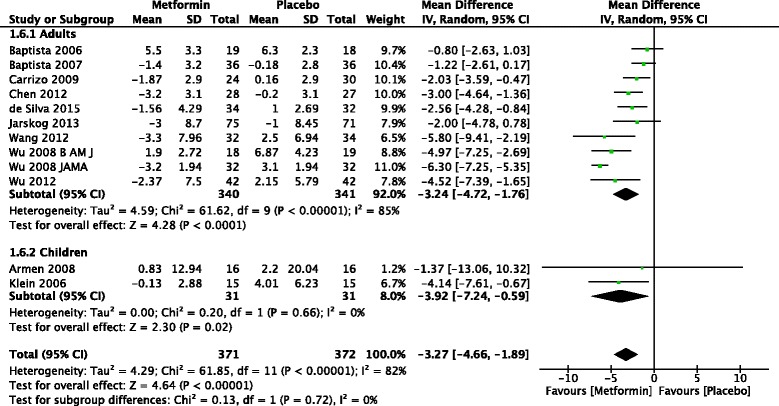
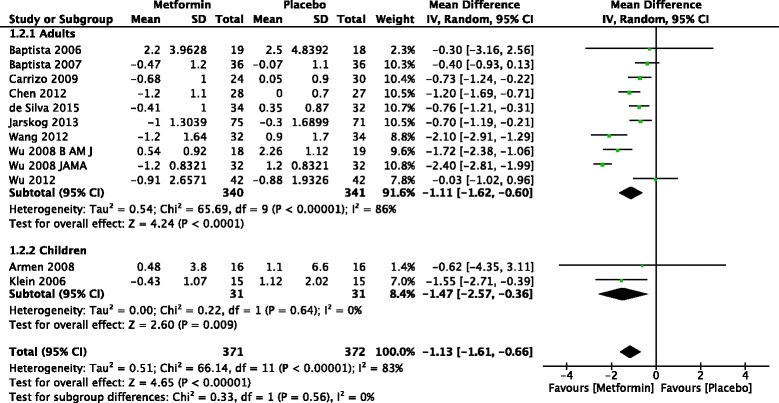
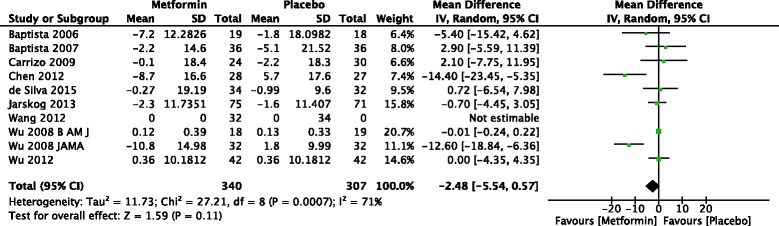
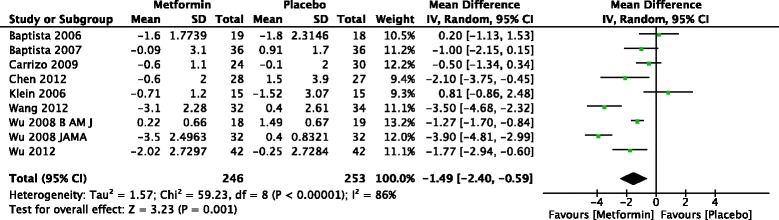
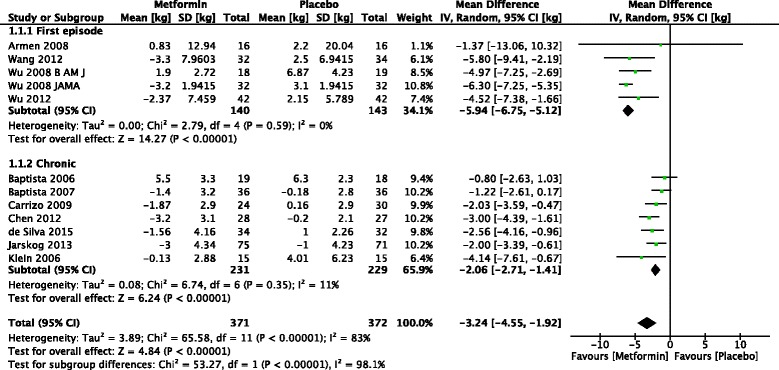
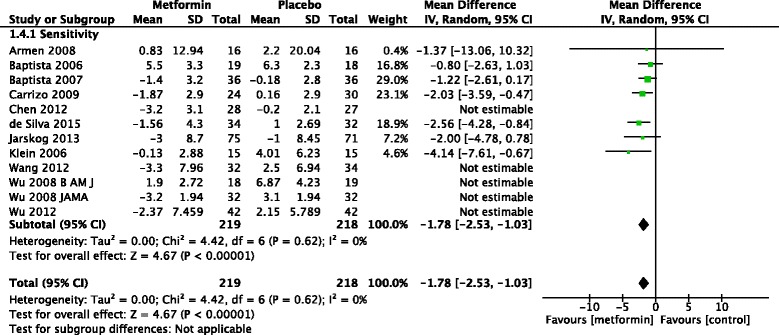
Most antipsychotics are associated with weight gain and other metabolic complications. Several randomized trials have shown metformin to be effective, but this still hasn’t been included in clinical guidelines on managing antipsychotic induced weight gain. All double blind placebo controlled trials assessing the efficacy of metformin in the treatment of antipsychotic induced weight gain were included. Cochrane Central Register of Controlled Trials (CENTRAL) and MEDLINE were searched for the period January 2000-December 2015. Meta-analysis was carried out using the random effects model. Meta analysis of 12 published studies with a total of 743 patients found that in patients treated with antipsychotics, metformin treatment resulted in significantly better anthropometric and metabolic parameters than placebo. The mean change in weight was −3.27 kg (95 % CI −4.66 to −1.89) ( Z = 4.64, p < 0.001). Metformin compared to placebo resulted in significant reduction in BMI [−1.13 kg/m 2 (95 % CI −1.61 to −0.66)] and insulin resistance index [−1.49 (95 % CI −2.40 to −0.59)] but not fasting blood sugar [−2.48 mg/dl (95 % CI −5.54 to 0.57]. This meta-analysis confirms that metformin is effective in treating antipsychotic induced weight gain in patients with schizophrenia or schizoaffective disorder.
Overview
The claims and statistics of this paper haven’t been checked yet.
Free: it reads the open-access text and checks the first 5 claims that cite a source we can check. Create a free account to check every claim.
Integrity signals
Registry
Cites
Statistics
Figures
Verification
Claims the paper makes
The claims and statistics of this paper haven’t been checked yet.
Free: it reads the open-access text and checks the first 5 claims that cite a source we can check. Create a free account to check every claim.
Claims other papers make about this one
Each is checked against this paper’s own text: does it say what the citing paper says it does?
The cited source says what the claim attributes to it.
In the citing paper
“Metformin (1000 mg total daily dose) and topiramate (100 mg/d) counteract the effects of some weight gain-promoting agents, particularly antipsychotics and can be considered as adjunctive therapy (topiramate: mean difference, −3.76 kg; 95% CI, −4.92 kg to −2.69 kg; metformin: mean difference, −3.27 kg; 95% CI, −4.66 kg to −1.89 kg).79,80”
From Obesity Management in Adults: A Review (2023) · cites this paper as [80]
Self-check
Percentages, sums and reported differences re-computed from the paper’s own numbers.
The self-check needs the paper’s full text.
Citations
Cites
Diagnostic and Statistical Manual of Mental Disorders
American Psychiatric Association (2013) · doi:10.1176/appi.books.9780890425596 · Cited by 116,369
Diagnostic and Statistical Manual of Mental Disorders
Williams, J. B. W., & First, M. (2013) · Encyclopedia of Social Work · doi:10.1093/acrefore/9780199975839.013.104 · Cited by 109,519
Preferred Reporting Items for Systematic Reviews and Meta-Analyses: the PRISMA statement
Moher, D., Liberati, A., Tetzlaff, J., Altman, D. G., & for the PRISMA Group (2009) · BMJ · doi:10.1136/bmj.b2535 · Cited by 83,823
Preferred reporting items for systematic reviews and meta-analyses: the PRISMA Statement.
(2009) · PubMed Central · Cited by 44,859
Meta-analysis in clinical trials
DerSimonian, R., & Laird, N. (1986) · Controlled Clinical Trials · doi:10.1016/0197-2456(86)90046-2 · Cited by 39,552 · cited 1×
“Meta-analysis was carried out using the random effects model of DerSimonian and Laird because the subjects and interventions in the studies have differed in ways that would have impacted on the results [24].”
MethodPreferred reporting items for systematic reviews and meta-analyses: The PRISMA statement
Moher, D., Liberati, A., Tetzlaff, J., Altman, D. G., & the PRISMA Group* (2009) · Annals of Internal Medicine · doi:10.7326/0003-4819-151-4-200908180-00135 · Cited by 37,554
Diagnostic and Statistical Manual of Mental Disorders.
Widiger, T. A. (2000) · Encyclopedia of Psychology, Vol. 3. · doi:10.1037/10518-009 · Cited by 19,744
Assessing the quality of reports of randomized clinical trials: Is blinding necessary?
Jadad, A. R., Moore, R. A., Carroll, D., Jenkinson, C., Reynolds, D. J. M., Gavaghan, D. J., & McQuay, H. J. (1996) · Controlled Clinical Trials · doi:10.1016/0197-2456(95)00134-4 · Cited by 17,582 · cited 3×
“The detailed risk of bias table is given as a additional file (Additional file 1: Table S1).”
MethodInfluentialZhang, Q., Wang, C., Zheng, M., Li, Y., Li, J., Zhang, L., Shang, X., & Yan, C. (2015) · Cerebrovascular Diseases · doi:10.1159/000369778 · Cited by 11,533
Dong, Y., Hao, L., Shi, Z., Wang, G., Zhang, Z., & Han, C. (2013) · Urologia Internationalis · doi:10.1159/000351405 · Cited by 4,540
International Statistical Classification of Diseases and Related Health Problems
Eisfeld, J. (2014) · TSQ: Transgender Studies Quarterly · doi:10.1215/23289252-2399740 · Cited by 3,570
Saha, S., Chant, D., & McGrath, J. (2007) · Archives of General Psychiatry · doi:10.1001/archpsyc.64.10.1123 · Cited by 2,065 · cited 1×
“This risk has been increasing over the recent past [8].”
BackgroundSecond-Generation (Atypical) Antipsychotics and Metabolic Effects: A Comprehensive Literature Review
Newcomer, J. W. (2005) · CNS Drugs · doi:10.2165/00023210-200519001-00001 · Cited by 1,340
Schizophrenia and increased risks of cardiovascular disease
Hennekens, C. H., Hennekens, A. R., Hollar, D., & Casey, D. E. (2005) · American Heart Journal · doi:10.1016/j.ahj.2005.02.007 · Cited by 1,070 · cited 1×
“Increased rates of cigarette smoking, obesity and metabolic syndrome caused by life style factors and side effects are major contributors [10].”
BackgroundGlobal guideline for type 2 diabetes
(2014) · Diabetes Research and Clinical Practice · doi:10.1016/j.diabres.2012.10.001 · Cited by 1,064
Excess mortality of schizophrenia: A meta-analysis
Brown, S. (1997) · British Journal of Psychiatry · doi:10.1192/bjp.171.6.502 · Cited by 869 · cited 1×
“5 times that of the general population [7].”
BackgroundAlmost All Antipsychotics Result in Weight Gain: A Meta-Analysis
Bak, M., Fransen, A., Janssen, J., van Os, J., & Drukker, M. (2014) · PLoS ONE · doi:10.1371/journal.pone.0094112 · Cited by 490
Atypical antipsychotics and weightgain — a systematic review
Taylor, D. M., & McAskill, R. (2000) · Acta Psychiatrica Scandinavica · doi:10.1034/j.1600-0447.2000.101006416.x · Cited by 433
Wu, R.-R., Zhao, J.-P., Jin, H., Shao, P., Fang, M.-S., Guo, X.-F., He, Y.-Q., Liu, Y.-J., Chen, J.-D., & Li, L.-H. (2008) · JAMA · doi:10.1001/jama.2007.56-b · Cited by 366 · cited 3×
“Only one RCT included an arm of lifestyle modification [28].”
BackgroundInnes, K., Hooper, J., Bramley, M., & DahDah, P. (1997) · Health Information Management · doi:10.1177/183335839702700110 · Cited by 342
Lee, A., & Morley, J. E. (1998) · Obesity Research · doi:10.1002/j.1550-8528.1998.tb00314.x · Cited by 320 · cited 1×
“Metformin also increases peripheral utilization and suppresses appetite [13].”
BackgroundÁlvarez-Jiménez, M., Hetrick, S. E., González-Blanch, C., Gleeson, J. F., & McGorry, P. D. (2008) · British Journal of Psychiatry · doi:10.1192/bjp.bp.107.042853 · Cited by 317
Weighing the Options: Criteria for Evaluating Weight-Management Programs
Thomas, P. (1995) · Cited by 285
Therapeutic Use of Metformin in Prediabetes and Diabetes Prevention
Hostalek, U., Gwilt, M., & Hildemann, S. (2015) · Drugs · doi:10.1007/s40265-015-0416-8 · Cited by 278
Klein, D. J., Cottingham, E. M., Sorter, M., Barton, B. A., & Morrison, J. A. (2006) · American Journal of Psychiatry · doi:10.1176/ajp.2006.163.12.2072 · Cited by 271 · cited 5×
“Two trials were of 16 weeks duration [17, 36].”
BackgroundInfluentialEffectiveness of Metformin on Weight Loss in Non-Diabetic Individuals with Obesity
Seifarth, C., Schehler, B., & Schneider, H. (2012) · Experimental and Clinical Endocrinology & Diabetes · doi:10.1055/s-0032-1327734 · Cited by 258 · cited 1×
“However its efficacy in treating obesity in non-diabetics has not been established [15].”
BackgroundEstimating the consequences of anti-psychotic induced weight gain on health and mortality rate
Fontaine, K. R., Heo, M., Harrigan, E. P., Shear, C. L., Lakshminarayanan, M., Casey, D. E., & Allison, D. B. (2001) · Psychiatry Research · doi:10.1016/s0165-1781(01)00234-7 · Cited by 230
Wu, R.-R., Zhao, J.-P., Guo, X.-F., He, Y.-Q., Fang, M.-S., Guo, W.-B., Chen, J.-D., & Li, L.-H. (2008) · American Journal of Psychiatry · doi:10.1176/appi.ajp.2007.07010079 · Cited by 230 · cited 1×
“commencing treatment with antipsychotics [16, 27, 28, 34, 36].”
Mizuno, Y., Suzuki, T., Nakagawa, A., Yoshida, K., Mimura, M., Fleischhacker, W. W., & Uchida, H. (2014) · Schizophrenia Bulletin · doi:10.1093/schbul/sbu030 · Cited by 202 · cited 1×
“significantly reduced weight and other anthropometric measures [42].”
BackgroundWeight gain and antipsychotics: a drug safety review
Musil, R., Obermeier, M., Russ, P., & Hamerle, M. (2015) · Expert Opinion on Drug Safety · doi:10.1517/14740338.2015.974549 · Cited by 187
Kahan, B. C., Forbes, G., Ali, Y., Jairath, V., Bremner, S., Harhay, M. O., Hooper, R., Wright, N., Eldridge, S. M., & Leyrat, C. (2016) · Trials · doi:10.1186/s13063-016-1571-2 · Cited by 185
Metformin for Weight Loss in Pediatric Patients Taking Psychotropic Drugs
Morrison, J. A., Cottingham, E. M., & Barton, B. A. (2002) · American Journal of Psychiatry · doi:10.1176/appi.ajp.159.4.655 · Cited by 174 · cited 1×
“There are a few open label studies too which found that metformin was effective in treating weight gain in children on antipsychotics [40, 41].”
BackgroundThe prevalence and mechanisms of metabolic syndrome in schizophrenia: a review
Papanastasiou, E. (2012) · Therapeutic Advances in Psychopharmacology · doi:10.1177/2045125312464385 · Cited by 151 · cited 1×
“Metabolic syndrome is more likely with second generation antipsychotics than first generation antipsychotics [2].”
BackgroundJarskog, L. F., Hamer, R. M., Catellier, D. J., Stewart, D. D., LaVange, L., Ray, N., Golden, L. H., Lieberman, J. A., Stroup, T. S., & for the METS Investigators (2013) · American Journal of Psychiatry · doi:10.1176/appi.ajp.2013.12010127 · Cited by 145
Baptista, T., Rangel, N., Fernández, V., Carrizo, E., Fakih, Y. E., Uzcátegui, E., Galeazzi, T., Gutiérrez, M. A. M., Servigna, M., Dávila, A., et al. (2007) · Schizophrenia Research · doi:10.1016/j.schres.2007.03.029 · Cited by 144
Baptista, T., Martínez, J., Lacruz, A., Rangel, N., Beaulieu, S., Serrano, A., Arapé, Y., Martinez, M., de Mendoza, S., Teneud, L., et al. (2006) · The Canadian Journal of Psychiatry · doi:10.1177/070674370605100310 · Cited by 130
Wu, R.-R., Jin, H., Gao, K., Twamley, E. W., Ou, J.-J., Shao, P., Wang, J., Guo, X.-F., Davis, J. M., Chan, P. K., et al. (2012) · American Journal of Psychiatry · doi:10.1176/appi.ajp.2012.11091432 · Cited by 120 · cited 3×
“One included only female patients who had amenorrhoea [26].”
BackgroundWeight gain in antipsychotic-naive patients: a review and meta-analysis
Tarricone, I., Ferrari Gozzi, B., Serretti, A., Grieco, D., & Berardi, D. (2010) · Psychological Medicine · doi:10.1017/s0033291709990407 · Cited by 112 · cited 12×
“There was significant difference in change in BMI in adults −1.11 (95 % CI −1.62 to −0.60) (Z = 4.24, p 0.001)] and children [−1.47 (95 % CI −2.57 to −0.36) (Z = 2.6, p = 0.009)].”
BackgroundInfluentialCarrizo, E., Fernández, V., Connell, L., Sandia, I., Prieto, D., Mogollón, J., Valbuena, D., Fernández, I., de Baptista, E. A., & Baptista, T. (2009) · Schizophrenia Research · doi:10.1016/j.schres.2009.05.007 · Cited by 103
Metformin for treatment of antipsychotic-induced weight gain: A randomized, placebo-controlled study
Wang, M., Tong, J.-H., Zhu, G., Liang, G.-M., Yan, H., & Wang, X. (2012) · Schizophrenia Research · doi:10.1016/j.schres.2012.02.021 · Cited by 82 · cited 3×
“commencing treatment with antipsychotics [16, 27, 28, 34, 36].”
BackgroundArman, S., Sadramely, M. R., Nadi, M., & Koleini, N. (2008) · Saudi Medical Journal · doi:10.15537/1658-3175.4426 · Cited by 72
Chen, C.-H., Huang, M.-C., Kao, C.-F., Lin, S.-K., Kuo, P.-H., Chiu, C.-C., & Lu, M.-L. (2013) · The Journal of Clinical Psychiatry · doi:10.4088/jcp.12m08186 · Cited by 72
Bushe, C. J., Slooff, C. J., Haddad, P. M., & Karagianis, J. L. (2012) · The Journal of Clinical Psychiatry · doi:10.4088/jcp.11m07246 · Cited by 57 · cited 1×
“Rate of weight gain is highest in the first six months after commencing treatment however patients continue to gain weight during the course of treatment [3].”
BackgroundThe time-dependent change of insulin secretion in schizophrenic patients treated with olanzapine
Chiu, C.-C., Chen, C.-H., Chen, B.-Y., Yu, S.-H., & Lu, M. (2010) · Progress in Neuro-Psychopharmacology and Biological Psychiatry · doi:10.1016/j.pnpbp.2010.04.003 · Cited by 51 · cited 1×
“A study which followed up antipsychotic naïve patients treated with second generation antipsychotics over 8 weeks reported that serum insulin decreased at week 2, returned to baseline at week 4, and increased at week 8 [39].”
BackgroundMetformin for Weight Control in Pediatric Patients on Atypical Antipsychotic Medication
Shin, L., Bregman, H., Breeze, J. L., Noyes, N., & Frazier, J. A. (2009) · Journal of Child and Adolescent Psychopharmacology · doi:10.1089/cap.2008.094 · Cited by 49 · cited 1×
“There are a few open label studies too which found that metformin was effective in treating weight gain in children on antipsychotics [40, 41].”
Background(2004) · National Academies Press eBooks · doi:10.1037/10510-004 · Cited by 43
de Silva, V. A., Dayabandara, M., Wijesundara, H., Henegama, T., Gunewardena, H., Suraweera, C. U., & Hanwella, R. (2015) · Journal of Psychopharmacology · doi:10.1177/0269881115613519 · Cited by 32 · cited 4×
“commencing treatment with antipsychotics [16, 27, 28, 34, 36].”
BackgroundInfluentialSelf-citationMarvast, M. N., Hebrani, P., Manteghi, A. A., Behdani, F., Hessami, E., Rezayat, K. A., & Rezayat, A. (2015) · Journal of Research in Medical Sciences · doi:10.4103/1735-1995.158262 · Cited by 18 · cited 1×
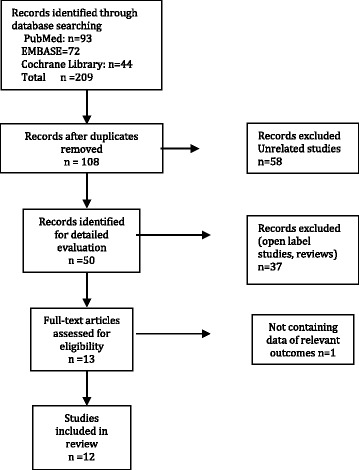
“Thirteen RCTs were identified but one was excluded cause it did not contain adequate data on the primary outcome [20, 30].”
BackgroundCarrizo, E., Fernández, V., Sandia, I., Prieto, D., Mogollón, J., Connel, L., Valbuena, D., Fernández, I., de Baptista, E. A., & Baptista, T. (2009) · Schizophrenia Research · doi:10.1016/j.schres.2009.08.006 · Cited by 13
Research works printed but not linked: 1
- The Nordic Cochrane Centre: Review Manager (RevMan) [ComputerProgram] Version 5.0. Copenhagen: The Cochrane Collaboration, Version 5.2.6 2012.
Cited by
Obesity Management in Adults: A Review
Elmaleh-Sachs, A., Schwartz, J. L., Bramante, C. T., Nicklas, J. M., Gudzune, K. A., & Jay, M. (2023) · JAMA · doi:10.1001/jama.2023.19897 · Cited by 813
Metabolic syndrome in psychiatric patients: overview, mechanisms, and implications
Penninx, B. W. J. H., & Lange, S. M. M. (2018) · Dialogues in Clinical Neuroscience · doi:10.31887/dcns.2018.20.1/bpenninx · Cited by 566
Metformin: Mechanisms in Human Obesity and Weight Loss
Yerevanian, A., & Soukas, A. A. (2019) · Current Obesity Reports · doi:10.1007/s13679-019-00335-3 · Cited by 414
Wei, G., Lu, K., Umar, M., Zhu, Z., Lu, W. W., Speakman, J. R., Chen, Y., Tong, L., & Chen, D. (2023) · Bone Research · doi:10.1038/s41413-023-00301-9 · Cited by 207
“Notably, some studies have reported that metformin, a medication used to treat diabetes, not only reduces body mass index (BMI) in obese individuals but also decreases the rate of joint replacement surgery in patients with OA 46 – 48 .”
BackgroundMazereel, V., Detraux, J., Vancampfort, D., van Winkel, R., & De Hert, M. (2020) · Frontiers in Endocrinology · doi:10.3389/fendo.2020.573479 · Cited by 205
Metadata
- Authors
- de Silva, V. A., Suraweera, C., Ratnatunga, S. S., Dayabandara, M., Wanniarachchi, N., & Hanwella, R.
- Affiliations
- National Hospital of Sri Lanka (LK)
- University of Colombo (LK)
- Venue
- BMC Psychiatry
- Published
- 2016-10-03
- Volume
- 16
- Issue
- 1
- Pages
- 341-341
- ISSN
- 1471-244X (ISSN-L)
- PMC
- PMC5048618
- OpenAlex
- W2529188573
- Cited by
- 227
- References
- 49
- Citations by year
- 2026: 15 · 2025: 35 · 2024: 34 · 2023: 29 · 2022: 29 · 2021: 28 · 2020: 15 · 2019: 23 · 2018: 11 · 2017: 8
- FWCI
- 2.01
- Type
- journal article
- Language
- en
- Open access
- gold
- doi.org
- Licence
- Locations
- BMC Psychiatry (publishedVersion, cc-by)
- PubMed Central (publishedVersion, cc-by)
- PubMed (publishedVersion)
- DOAJ (DOAJ: Directory of Open Access Journals) (submittedVersion, cc-by-sa)
- Funders
- This study did not receive any specific funding
- Topics
- Health Sciences › Medicine › Psychiatry and Mental health › Schizophrenia research and treatment
- Health Sciences › Medicine › Pharmacology (medical) › Pharmacology and Obesity Treatment
- Social Sciences › Psychology › Clinical Psychology › Eating Disorders and Behaviors
- Keywords
- metformin, antipsychotic-induced weight gain, antipsychotic drugs, schizophrenia, schizoaffective disorder, insulin resistance, body mass index, fasting blood glucose, metabolic complications, weight loss
- MeSH terms
- Double-Blind Method, Humans, Metformin, Psychotic Disorders, Schizophrenia, Antipsychotic Agents, Weight Gain
About these checks
Registry, retraction, Cites and statistics results are computed, not judged, with one exception: a printed reference that no index lists is read once by a model before it counts as a citation error. Claims are extracted by a model and kept only when their quote appears verbatim in the text; each cited source is then checked, with a model’s help, for whether it says what the claim relies on. Those verdicts can be wrong — read the claim’s quote and the cited source before relying on one.
Statistics and arithmetic are recomputed, not judged.
Confidence bands are shown only for fields calibrated on our annotated test set. None is calibrated yet, so no band is shown.
What counts as a claim ›How we measure confidence ›How we check this ›
Are you an author, or do you see a problem with this page? Request a review
Data sources
Bibliographic data: Semantic Scholar, OpenAlex, Crossref.
Contains information from the Semantic Scholar Academic Graph Datasets, made available under the ODC Attribution License (ODC-BY 1.0).
Semantic Scholar’s data is described in: Kinney, R., et al. (2023). The Semantic Scholar Open Data Platform. arXiv:2301.10140.
