

The burden of depressive disorders in South Asia, 1990–2016: findings from the global burden of disease study
Open accessThe DOI matches its Crossref record; 64 of the 64 references it cites were found in a registry or an index.
Abstract
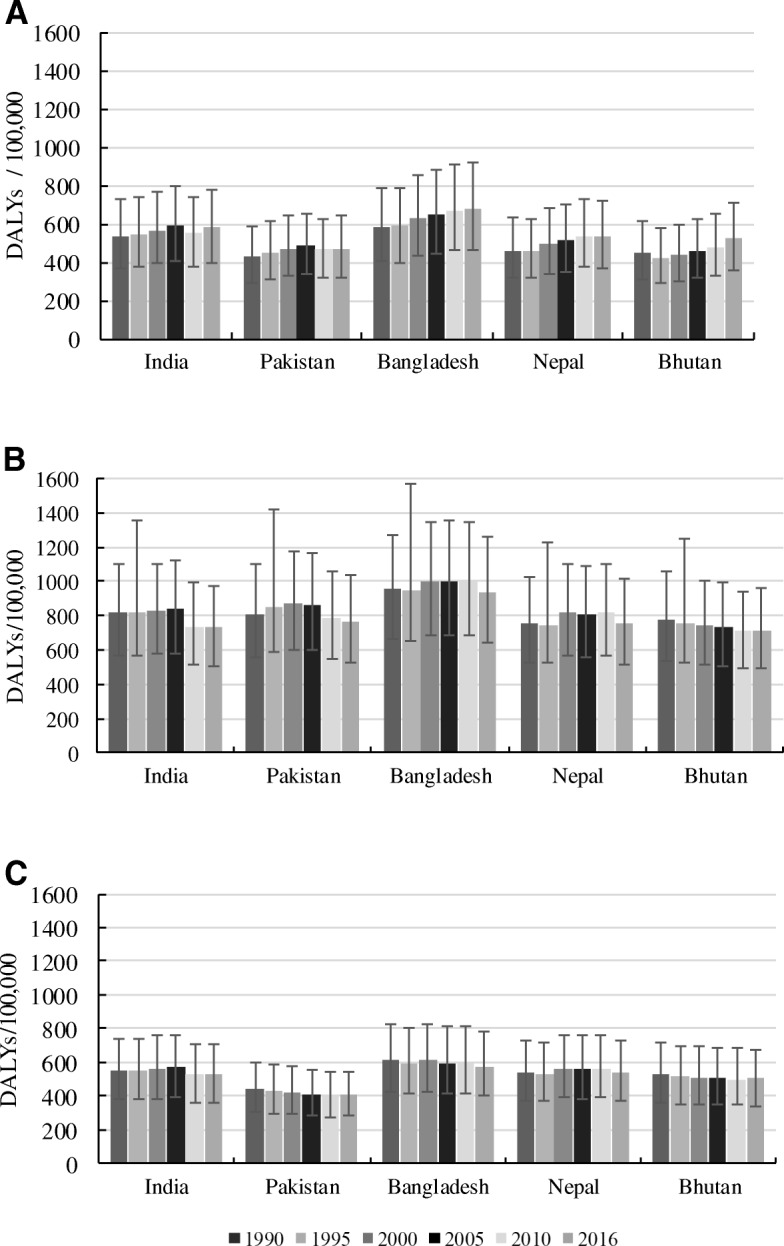
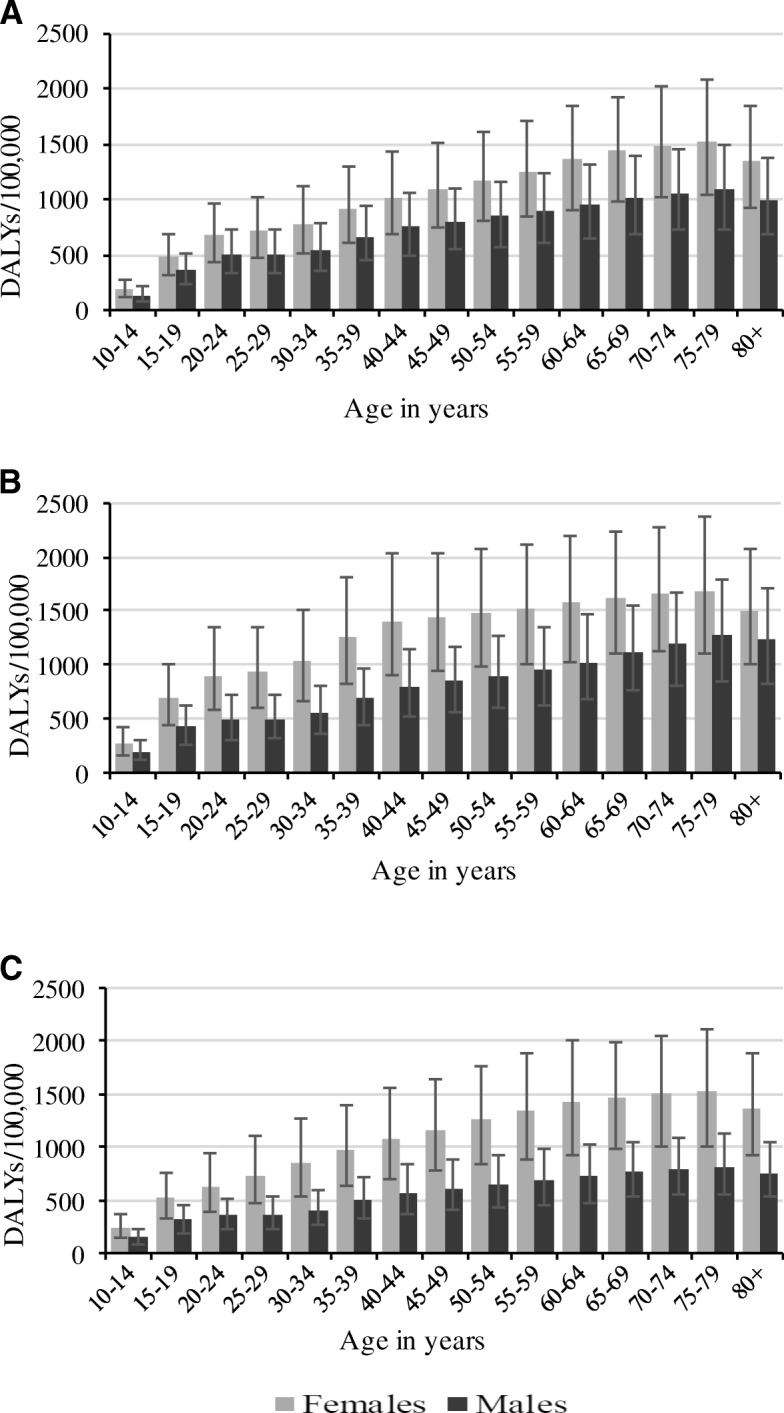
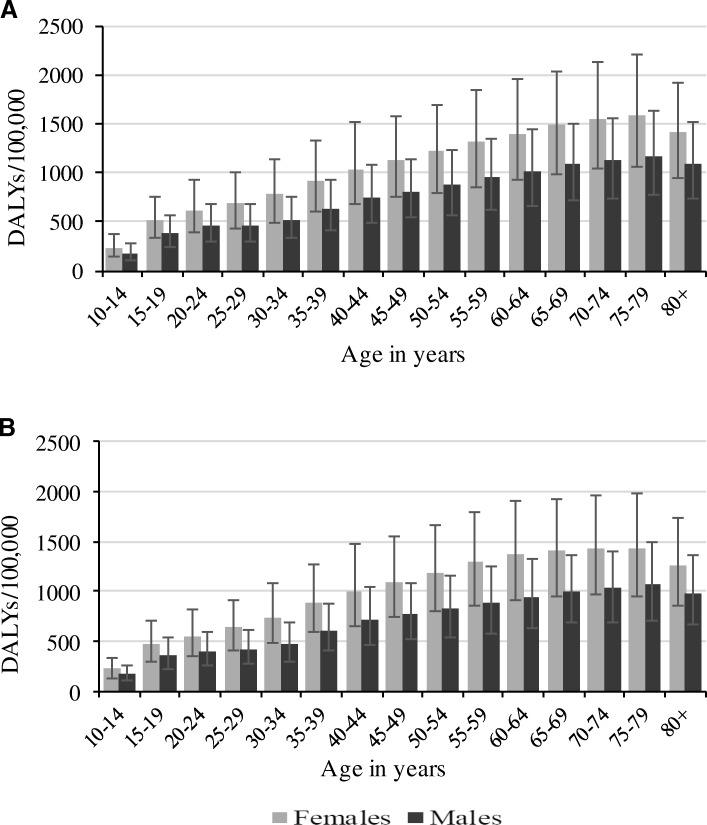
BACKGROUND: Globally, depressive disorders are one of the most common forms of mental illness. Using data from the most recent Global Burden of Disease, Injury, and Risk Factor Study 2016 (GBD 2016), we aimed to describe the burden of disease attributable to depressive disorders in terms of prevalence and disability-adjusted life years (DALYs) in South Asia countries (namely India, Pakistan, Bangladesh, Nepal and Bhutan). METHODS: GBD 2016 used epidemiological data on depressive disorders (major depression and dysthymia) from South Asia and a Bayesian meta-regression tool (DisMod-MR 2.1) to model prevalence and DALYs of depressive disorders by age, sex, country and year. DALYs were calculated from the years lived with disability (YLDs), derived from the prevalence of depressive disorders and disability weights, obtained from a community and internet-based surveys. The analyses adjusted for comorbidity, data sources and multiple modelling, and estimates were presented with 95% uncertainty intervals (UI). RESULTS: In 2016, the age-standardised prevalence of depressive disorders in South Asia was 3.9% (95% UI: 3.6-4.2%), 4.4% (95% UI: 4.4-4.8%) in Bangladesh, 3.9% (95% UI: 3.6-4.2%) in India, 3.0% (95% UI: 2.8-3.3%) in Pakistan, 4.0% (95% UI: 3.7-4.3%) in Nepal and 3.7% (95% UI: 3.4-4.1%) in Bhutan. In South Asia, depressive disorders accounted for 9.8 million DALYs (95% UI: 6.8-13.2 million) or 577.8 (95% UI: 399.9-778.9) per 100,000 population in 2016. Of these, major depressive disorders (MDD) accounted for 7.8 million DALYs (95% UI: 5.3-10.5 million). India generated the largest numbers of DALYs due to depressive disorders and MDD, followed by Bangladesh and Pakistan. DALYs due to depressive disorders were highest in females and older adults (75-79 years) across all countries. CONCLUSION: Our findings show the substantial public health burden of depressive disorders in South Asian populations and healthcare systems. Given the scale of depressive disorders, improvement in overall population health is possible if South Asian countries prioritise the prevention and treatment of depressive disorders.
Overview
The claims and statistics of this paper haven’t been checked yet.
Free: it reads the open-access text and checks the first 5 claims that cite a source we can check. Create a free account to check every claim.
Integrity signals
Registry
Cites
Statistics
Figures
Verification
Claims the paper makes
The claims and statistics of this paper haven’t been checked yet.
Free: it reads the open-access text and checks the first 5 claims that cite a source we can check. Create a free account to check every claim.
Claims other papers make about this one
Each is checked against this paper’s own text: does it say what the citing paper says it does?
In the citing paper
“Depression, as a serious public health problem, is associated with adverse health outcomes and reduced life-expectancy30.”
From Temporal and spatial trend analysis of all-cause depression burden based on Global Burden of Disease (GBD) 2019 study (2024) · cites this paper as [30]
Self-check
Percentages, sums and reported differences re-computed from the paper’s own numbers.
The self-check needs the paper’s full text.
Citations
Cites
Vos, T., Abajobir, A. A., Abate, K. H., Abbafati, C., Abbas, K. M., Abd-Allah, F., Abdulkader, R. S., Abdulle, A. M., Abebo, T. A., Abera, S. F., et al. (2017) · The Lancet · doi:10.1016/s0140-6736(17)32154-2 · Cited by 13,220
Vos, T., Flaxman, A. D., Naghavi, M., Lozano, R., Michaud, C., Ezzati, M., Shibuya, K., Salomon, J. A., Abdalla, S., Aboyans, V., et al. (2012) · The Lancet · doi:10.1016/s0140-6736(12)61729-2 · Cited by 8,291
Vos, T., Allen, C., Arora, M., Barber, R. M., Bhutta, Z. A., Brown, A., Carter, A., Casey, D. C., Charlson, F. J., Chen, A. Z., et al. (2016) · The Lancet · doi:10.1016/s0140-6736(16)31678-6 · Cited by 7,253
(1996) · Cited by 6,884
Vos, T., Barber, R. M., Bell, B., Bertozzi-Villa, A., Biryukov, S., Bolliger, I., Charlson, F., Davis, A., Degenhardt, L., Dicker, D., et al. (2015) · The Lancet · doi:10.1016/s0140-6736(15)60692-4 · Cited by 6,414
Global Burden of Disease Cancer Collaboration, Fitzmaurice, C., Allen, C., Barber, R. M., Barregard, L., Bhutta, Z. A., Brenner, H., Dicker, D. J., Chimed-Orchir, O., Dandona, R., et al. (2017) · JAMA Oncology · doi:10.1001/jamaoncol.2016.5688 · Cited by 6,215
Diagnostic and Statistical Manual of Mental Disorders ( DSM ‐ IV ‐ TR )
Segal, D. L. (2010) · The Corsini Encyclopedia of Psychology · doi:10.1002/9780470479216.corpsy0271 · Cited by 4,666
Kyu, H. H., Abate, D., Abate, K. H., Abay, S. M., Abbafati, C., Abbasi, N., Abbastabar, H., Abd-Allah, F., Abdela, J., Abdelalim, A., et al. (2018) · The Lancet · doi:10.1016/s0140-6736(18)32335-3 · Cited by 4,081
Depression, chronic diseases, and decrements in health: results from the World Health Surveys
Moussavi, S., Chatterji, S., Verdes, E., Tandon, A., Patel, V., & Ustun, B. (2007) · The Lancet · doi:10.1016/s0140-6736(07)61415-9 · Cited by 4,070
Ferrari, A. J., Charlson, F. J., Norman, R. E., Patten, S. B., Freedman, G., Murray, C. J. L., Vos, T., & Whiteford, H. A. (2013) · PLoS Medicine · doi:10.1371/journal.pmed.1001547 · Cited by 3,115
Research works printed but not linked: 7
- World Health Organization The ICD-10 classification of mental and behavioural disorders: clinical descriptions and diagnostic guidelines: World Health Organization 1992
- Chaudhry T. The Stigma of Mental Illness in South Asian Cultures. Online: Wellesley College, 2016 Contract No.: Honors Thesis Collection. 390.
- World Health Organization, Ministry of Health and Population WHO-AIMS Report on Mental Health System in Nepal: A report of the assessment of the mental health system in Nepal using the World Health Organization – Assessment Instrument for Mental Health Systems (WHO-AIMS). Nepal 2006
- World Health Organization & Ministry of Health & Family Welfare WHO-AIMS Report on Mental Health System in Bangladesh: A report of the assessment of the mental health system in Bangladesh using the World Health Organization – Assessment Instrument for Mental Health Systems (WHO-AIMS). Dhaka, Bangladesh 2007
- Government of India India Department of Health and Family welfare National Mental Health policy of India Department of Health and Family welfare 2014
- Pelzang Rinchen Mental health care in Bhutan: policy and issues WHO South-East Asia Journal of Public Health 2012 1 3 339 10.4103/2224-3151.207030 28615560 · DOI
- Hussain S. Mental Health in Pakistan: Myths and Facts Online: Journal of pioneering medical sciences blog; 2014 [updated june 17; cited 2017 September 18]. Available from: http://blogs.jpmsonline.com/2014/06/17/mental-health-in-pakistan-myths-and-facts/.
Cited by
Depression and Its Phytopharmacotherapy—A Narrative Review
Dobrek, Ł., & Głowacka, K. (2023) · International Journal of Molecular Sciences · doi:10.3390/ijms24054772 · Cited by 203
Liu, J., Liu, Y., Ma, W., Tong, Y., & Zheng, J. (2024) · Scientific Reports · doi:10.1038/s41598-024-62381-9 · Cited by 160
“Depression, as a serious public health problem, is associated with adverse health outcomes and reduced life-expectancy 30 .”
BackgroundMental health problems and hypertension in the elderly: Review from the HOPE Asia Network
Turana, Y., Tengkawan, J., Chia, Y. C., Shin, J., Chen, C., Park, S., Tsoi, K. K. F., Buranakitjaroen, P., Soenarta, A. A., Siddique, S., et al. (2020) · Journal of Clinical Hypertension · doi:10.1111/jch.14121 · Cited by 116
Chen, X.-D., Li, F., Zuo, H., & Zhu, F. (2025) · Depression and Anxiety · doi:10.1155/da/5553491 · Cited by 97
“It is linked to negative health consequences and decreased life expectancy [18].”
Shao, X., & Zhu, G. (2020) · Frontiers in Psychiatry · doi:10.3389/fpsyt.2020.00381 · Cited by 102
Zhang, X., Bu, H., Jiang, Y., Sun, G., Jiang, R., Huang, X., Duan, H., Huang, Z., & Wu, Q. (2019) · Molecular Medicine Reports · doi:10.3892/mmr.2019.10491 · Cited by 66
Chan, V. K. Y., Leung, M. Y. M., Chan, S. S. M., Yang, D., Knapp, M. R. J., Luo, H., Craig, D., Chen, Y., Bishai, D. M., Wong, G. H. Y., et al. (2024) · The Lancet Regional Health - Western Pacific · doi:10.1016/j.lanwpc.2024.101026 · Cited by 64
Dutta, G., Rajendran, N., Kumar, T., Varthya, S. B., & Rajendran, V. (2023) · Cureus · doi:10.7759/cureus.33590 · Cited by 59
“Further, it was also stated that it would increase the burden of depression in South Asian populations and healthcare systems [2].”
BackgroundWu, Q., Feng, J., & Pan, C. (2022) · Journal of Affective Disorders · doi:10.1016/j.jad.2022.03.062 · Cited by 55
Martínez-Calderón, J., García‐Muñoz, C., Heredia‐Rizo, A. M., & Cano‐García, F. J. (2024) · Journal of Affective Disorders · doi:10.1016/j.jad.2024.01.259 · Cited by 49
Koly, K. N., Saba, J., Muzaffar, R., Modasser, R. B., Tasdik Hasan, M., Colón-Cabrera, D., & Warren, N. (2022) · Internet Interventions · doi:10.1016/j.invent.2022.100544 · Cited by 50
The Global Burden of Cardiovascular Disease in Adults: A Mapping Review
Victor, G., Shishani, K., Vellone, E., & Froelicher, E. S. (2025) · European Journal of Cardiovascular Nursing · doi:10.1093/eurjcn/zvaf243 · Cited by 53
Explainable deep learning predictions for illness risk of mental disorders in Nanjing, China
Wang, C., Feng, L., & Qi, Y. (2021) · Environmental Research · doi:10.1016/j.envres.2021.111740 · Cited by 45
Islam, S., Islam, T., Nahar, Z., Shahriar, M., Islam, S. M. A., Bhuiyan, M. A., & Islam, M. R. (2022) · PLoS ONE · doi:10.1371/journal.pone.0276619 · Cited by 37
Time Trends and Heterogeneity in the Disease Burden of Glaucoma, 1990-2017: A Global Analysis
Zhang, Y., Jin, G., Fan, M., Lin, Y., Wen, X., Li, Z., Zeng, P. C., Zheng, D., & Lan, Y. (2018) · Journal of Global Health · doi:10.2139/ssrn.3296655 · Cited by 31
Effects of riverbank erosion on mental health of the affected people in Bangladesh
Hossain, A., Alam, M. J., & Haque, M. R. (2021) · PLoS ONE · doi:10.1371/journal.pone.0254782 · Cited by 31
“In Bangladesh, the prevalence of mental health is more serious than in other South Asian countries [11].”
BackgroundHu, Y., Yang, Z., Li, Y., Xu, Y. X., Tian, M., Jiang, N., & Guo, N. (2022) · Frontiers in Psychiatry · doi:10.3389/fpsyt.2021.820782 · Cited by 34
“This result is contrary to studies in some countries in Southeast Asia (29, 30).”
ResultPrevalence and associated factors of depression in Sri Lanka: a systematic review and meta-analysis
Alwis, I., Baminiwatta, A., & Chandradasa, M. (2023) · Social Psychiatry and Psychiatric Epidemiology · doi:10.1007/s00127-023-02495-z · Cited by 35
“The burden of depression was higher among females than males in South Asia [12].”
The Acceptance of Digital Health: What about Telepsychology and Telepsychiatry?
Alhur, A., & Alhur, A. A. (2022) · Jurnal Sistem Informasi · doi:10.21609/jsi.v18i2.1143 · Cited by 41
“South Asia has a substantial burden of depression among the region's populations (Ogbo et al. 2018).”
BackgroundOgbo, F. A., Okoro, A., Olusanya, B. O., Olusanya, J. O., Ifegwu, I. K., Awosemo, A. O., Ogeleka, P., & Page, A. (2019) · International Breastfeeding Journal · doi:10.1186/s13006-019-0198-9 · Cited by 34
“The estimation of UIs not only adjusts for sampling error but also captures uncertainty from several analytical modelling stages and adjusts for the type and quality of data sources [19, 25, 44].”
BackgroundSelf-citationLi, R., Zhou, X., Wang, X., Cheng, P., Xu, J., Cao, J., Gao, Q., & Zhu, H. (2025) · Journal of Affective Disorders · doi:10.1016/j.jad.2025.04.106 · Cited by 27
Axinn, W. G., Zhang, Y., Ghimire, D. J., Chardoul, S., Scott, K. M., & Bruffaerts, R. (2020) · Journal of Affective Disorders · doi:10.1016/j.jad.2020.01.069 · Cited by 24
Fang, H., Duan, Y., Hou, Y., Chang, H., Hu, S., & Huang, R. (2024) · Frontiers in Public Health · doi:10.3389/fpubh.2024.1441006 · Cited by 25
“Research conducted in several nations indicates an increasing frequency of depression among older adults (3, 4).”
BackgroundWillmot, R., Sharp, R. A., Kassim, A. A., & Parkinson, J. A. (2022) · Cambridge Prisms Global Mental Health · doi:10.1017/gmh.2022.49 · Cited by 24
“(Continued) Author(s) Design Population (n = sample size) Setting Treatment focus Intervention Comparator Outcome measures Results and conclusions Palit and Chatterjee (2006) Descriptive Parents of children aged 6–9 months with cerebral palsy and comorbid disabilities n = 50 Outpatient clinic India…”
BackgroundLiu, X.-G., Li, Y., Xiong, F., Li, W.-T., Liu, L., & Sullivan John, S. (2023) · Frontiers in Pediatrics · doi:10.3389/fped.2022.711241 · Cited by 19
Sohan, M., Qusar, M. S., Shahriar, M., Islam, S. M. A., Bhuiyan, M. A., & Islam, M. R. (2023) · PLoS ONE · doi:10.1371/journal.pone.0288159 · Cited by 18
Anant, N., Kaur, D., Nadarajan, R., Phua, D. Y., Chong, Y. S., Gluckman, P. D., Yap, F. K. P., Chen, H., Broekman, B. F. P., Meaney, M. J., et al. (2023) · PLoS ONE · doi:10.1371/journal.pone.0286197 · Cited by 18
“For example, Ogbo and colleagues [2] found that depressive disorders in South Asian adults had a prevalence rate of 3.”
BackgroundKarasz, A., Anne, S., Hamadani, J. D., & Tofail, F. (2021) · International Journal of Environmental Research and Public Health · doi:10.3390/ijerph18010279 · Cited by 20
“However, the excess burden of depression born by women in South Asian societies may exceed that of other parts of the world [14,15].”
BackgroundObeïd, S., Azzi, V., & Hallit, S. R. (2023) · PLoS ONE · doi:10.1371/journal.pone.0285665 · Cited by 17
“Consequently, depression is the foremost source of incapacity globally regarding the number of disoriented years attributable to infirmity [4].”
BackgroundMiao, Y.-F., Dong, X., Li, D., Zhang, T., Wu, Y., & Pan, C. (2023) · Journal of Affective Disorders · doi:10.1016/j.jad.2023.08.045 · Cited by 17
AGE AND GENDER FEATURES OF DEPRESSIVE AND ANXIETY SYMPTOMATICS OF DEPRESSIVE DISORDERS
Belov, O. O., & Пшук, Н. Г. (2020) · Wiadomości Lekarskie · doi:10.36740/wlek202007130 · Cited by 17
Sultana, S., Zaman, S., Chowdhury, A. A., Hasan, I., Haque, M. I., Hossain, M. K., Ahmed, K. R., Chakraborty, P. A., & Hawlader, M. D. H. (2021) · Heliyon · doi:10.1016/j.heliyon.2021.e07493 · Cited by 16
Khan, Z., Cheong, Y. F., Miedema, S. S., Naved, R. T., & Yount, K. M. (2020) · SSM - Population Health · doi:10.1016/j.ssmph.2020.100641 · Cited by 16
“Globally, women are more likely than men to experience adverse life events strongly associated with the onset of depressive episodes, such as prenatal and postnatal stress, physical and sexual abuse, and intimate partner violence (IPV) (Ogbo et al., 2018).”
BackgroundResultWang, Y., Lu, Q., Penpat, I., Wu, J., Abulikemu, D., Zeng, F.-C., Huang, J., & Hu, Z. (2024) · World Journal of Psychiatry · doi:10.5498/wjp.v14.i6.848 · Cited by 11
Khan, R., Akter, F., Rahman, M., Amin, N., Rahman, M., & WINCH, P. J. (2025) · Frontiers in Psychiatry · doi:10.3389/fpsyt.2025.1446473 · Cited by 14
“Mental disorders signi fi cantly contribute to the global burden of non-communicable diseases (NCDs) (1, 2).”
Time trends and heterogeneity in the disease burden of trachoma, 1990–2019: a global analysis
He, J., Chen, A., Zou, M., Young, C. A., Jin, L., Zheng, D., Jin, G., & Congdon, N. G. (2021) · British Journal of Ophthalmology · doi:10.1136/bjophthalmol-2021-319621 · Cited by 11
Detecting Level of Depression from Social Media Posts for the Low-resource Bengali Language
Hoque, M. N., & Salma, U. (2023) · Journal of Engineering Advancements · doi:10.38032/jea.2023.02.003 · Cited by 12
“Due to missed workdays and decreased production, depression has a substantial influence on a country's economy and productivity [3].”
BackgroundPublic Mental Health and Access to Mental Health Services in South Asia
Kabir, R., Isigi, S. S., & Candussi, C. J. (2024) · Springer eBooks · doi:10.1007/978-981-99-9153-2_11 · Cited by 11
Syed, S. E., Khan, N., & Ahmed, H. (2022) · East Asian Archives of Psychiatry · doi:10.12809/eaap2138 · Cited by 9
Idris, A., Akhir, N. M., Mohamad, M. S., & Sarnon, N. (2023) · Behavioral Sciences · doi:10.3390/bs13020151 · Cited by 8
“Other factors that cause high stress and depression among women are stress before and after childbirth (prenatal and postnatal), physical and sexual abuse, and violence committed by the spouse [13].”
BackgroundBhatta, D. K., Budhathoki, K., Paudel, K., Paudel, S., Marahatta, S. B., Banskota, A., & Joshi, Y. P. (2021) · medRxiv · doi:10.1101/2021.06.13.21258841 · Cited by 9
Charles, I., Patrick, M., Mink, T. L., Ahmed, T., Reddy, Y. M., Young, M. R., Waford, R., Caruso, B. A., & Sinharoy, S. S. (2025) · American Journal of Obstetrics and Gynecology · doi:10.1016/j.ajog.2025.06.018 · Cited by 8
Fotheringham, L., Paddick, S., Barron, E., Norman, C., Lukose, A., Walker, R. W., & Varghese, M. (2021) · International Psychogeriatrics · doi:10.1017/s1041610220003804 · Cited by 7
“…Asian countries are often considered together in large meta-analyses, citing challenges common across the region, such as lack of access to resources, stigma, and underde-veloped mental health legislation, policies, and plans (Hossain et al. , 2020; Ogbo et al. , 2018; Ranjan and Asthana, 2017).”
Bose, R., Hamdani, S. U., Minhas, F. A., & Herr, K. J. (2022) · Current Medical Research and Opinion · doi:10.1080/03007995.2022.2031146 · Cited by 7
Living with depression and diabetes: A qualitative study in Bangladesh and Pakistan
Jennings, H. M., Anas, A., Asmat, S., Naz, A., Afaq, S., Ahmed, N., Aslam, F., Zavala, G. A., Siddiqi, N., & Ekers, D. (2024) · PLOS Global Public Health · doi:10.1371/journal.pgph.0002846 · Cited by 7
Data-driven learning to identify biomarkers in bipolar disorder
Li, Z., Li, W., Yan, W., Zhang, R., & Xie, S. (2022) · Computer Methods and Programs in Biomedicine · doi:10.1016/j.cmpb.2022.107112 · Cited by 6
Khan, J. R., Muurlink, O. T., Hu, N., Awan, N., & Lingam, R. (2023) · Archives of Women s Mental Health · doi:10.1007/s00737-023-01302-7 · Cited by 5
Cost analysis of registered brands of oral antidepressant drugs in Pakistan: a descriptive analysis
Kamran, S., Saqlain, M., Khan, Z., Mahmood, S., Ali, H., Ahmad, N., & Shah, K. U. (2019) · Expert Review of Pharmacoeconomics & Outcomes Research · doi:10.1080/14737167.2019.1666001 · Cited by 5
Sheoran, H., & Srivastava, P. (2022) · Frontiers in Psychology · doi:10.3389/fpsyg.2022.814234 · Cited by 9
Neurological and Mental Health Problems Among Refugees from South Asia
Syed, M. J., & Wasay, M. (2021) · Sustainable development goals series · doi:10.1007/978-3-030-81058-0_11 · Cited by 6
Gupta, J. K., Singh, K., Bhatt, A., Porwal, P., Rani, R., Dubey, A., Jain, D., & Nand, S. (2024) · 3 Biotech · doi:10.1007/s13205-024-04104-5 · Cited by 5
“Specifically, the prevalence rates are 3.9% in India, 4.4% in Bangladesh, 4.0% in Nepal, 3.0% in Pakistan, and 3.7% in Bhutan (Ogbo et al. 2018).”
InfluentialHalemani, K., Vitale, E., Thimmappa, L., Dhiraaj, S., & Shetty, A. P. (2026) · Journal of Affective Disorders · doi:10.1016/j.jad.2026.121541 · Cited by 4
Mental Health and Injury Outcomes in Liberia, 1990–2017: An Ecological Systems Analysis
Rastegar, P. J., Dorliae, F. C., & Schwebel, D. C. (2022) · Social and Health Sciences · doi:10.25159/2957-3645/10807 · Cited by 4
Kehyayan, V., Omar, H., Ghuloum, S., Marji, T., Al-Amin, H. A., Alah, M. A., & Mahfoud, Z. R. (2024) · Current Psychology · doi:10.1007/s12144-024-06686-y · Cited by 4
“In South Asian countries, studies have also shown high lev - els of stigma and discrimination associated with mental ill - ness (Ogbo et al., 2018 ).”
Kamran, S., Khan, Z., Saqlain, M., Nazar, Z., Khan, M., Ali, Z., Rashid, H., Shah, K. U., Karataş, Y., & Rahman, N. U. (2021) · Expert Review of Pharmacoeconomics & Outcomes Research · doi:10.1080/14737167.2022.2021073 · Cited by 6
“However, details about drug utilization and cost analysis of ADs for MDD patients are lacking [7,9,13,20].”
BackgroundMenstruation stigma: A qualitative exploratory study of the lived experiences of Nepali women.
Gurung, I. (2023) · ThinkIR: The University of Louisville's Institutional Repository (University of Louisville) · doi:10.18297/etd/4105 · Cited by 8
Comparing Influence of Depression and Negative Affect on Decision Making
Moosath, H., & Rangaswamy, M. (2023) · Psychological Studies · doi:10.1007/s12646-023-00719-5 · Cited by 4
Ardeh, A., Shahverdi, J., Ghiasi, A., Goodarzi, E., & Zamani, F. (2025) · Health Science Reports · doi:10.1002/hsr2.71312 · Cited by 3
Prakash, S., & Bhatia, D. (2026) · Current Neurovascular Research · doi:10.2174/0115672026415993251226184643 · Cited by 4
Research, Innovations, and Ideas to Facilitate Mental Healthcare Delivery in South Asia
Kar, N. (2024) · Springer eBooks · doi:10.1007/978-981-99-9153-2_10 · Cited by 4
Riaz, S., Khuda, F., Malik, N. S., Gohar, N., Rashid, A., Khan, A., Rahman, A., Ali, S., Jan, A., & Nasim, A. (2025) · PLoS ONE · doi:10.1371/journal.pone.0320258 · Cited by 4
“%) between 1990 and 2016 [7].”
Islam, M. S., Patel, J. V., Ahmed, H. U., Naheed, A., & Gill, P. S. (2025) · BMJ Open · doi:10.1136/bmjopen-2025-106812 · Cited by 2
Concepts in Psychodermatology: An Overview for Primary Care Providers
Goldin, D. S. (2020) · The Journal for Nurse Practitioners · doi:10.1016/j.nurpra.2020.04.015 · Cited by 2
"TODAY, I HAVE A REASON TO LIVE": EXPLORING THE LIVED EXPERIENCE OF WOMEN MDD SURVIVORS
Idris, A., Akhir, N. M., Mohamad, M. S., & Sarnon, N. (2023) · ASEAN Journal of Psychiatry · doi:10.54615/2231-7805.47324 · Cited by 2
Vijayakumar, L., & Balaji, M. (2022) · Springer eBooks · doi:10.1007/978-3-030-42003-1_44 · Cited by 3
Russell, P. S. S., Russell, S., Viswanathan, S. A., Shankar, S., & Mammen, P. (2019) · Journal of Family Medicine and Primary Care · doi:10.4103/jfmpc.jfmpc_152_19 · Cited by 1
“Keywords: Adolescent, clinical‑utility, depression, primary‑care, screen Original Article Access this article online Quick Response Code: Website: www.jfmpc.com DOI: 10.4103/jfmpc.jfmpc_152_19 Address for correspondence: Dr. Paul S. S. Russell, Department of Psychiatry, Child and Adolescent Psychiatry Unit, Christian…”
InfluentialVijayakumar, L., & Balaji, M. (2022) · Springer eBooks · doi:10.1007/978-3-030-41319-4_44-1 · Cited by 1
ALCOHOL-DEPENDENT INPATIENTS IN NORTHERN VIETNAM: A PROSPECTIVE STUDY ON FACTORS RELATED TO RELAPSE
Phuong, N. T., Giang, K. B., & Tuan, N. V. (2023) · ASEAN Journal of Psychiatry · doi:10.54615/2231-7805.47335 · Cited by 1
“Relapse of alcohol dependence was defined as the patient met the criteria for the diagnosis of alcohol dependence according to ICD-10 after a period of abstinence [10].”
MethodZareie, M., Habashi, S. B., & Afshar, P. F. (2024) · Clinical Psychology and Special Education · doi:10.17759/cpse.2024130206 · Cited by 1
Social Determinants and Cultural Aspects of Geriatric Mental Health in South Asia
Khurana, H., & Sethi, S. (2025) · Springer eBooks · doi:10.1007/978-981-96-7469-5_9 · Cited by 2
Amiri, S., & Kazemi, S. (2025) · Medicine · doi:10.1097/md.0000000000045745 · Cited by 1
“[37] A finding obtained from this study showed that the burden of depressive disorders increased from 1990 to 2021, but in 2019, at the same time as the COVID-19 pandemic, there was a rapid growth in the prevalence of depressive disorders.”
Role of Visfatin as a Marker for Depression in Elderly Patients
Qazi, S., Emad, S., & Ghani, R. (2020) · Journal of Bahria University Medical and Dental College · doi:10.51985/jbumdc2019109 · Cited by 1
Behl, R. (2021) · Springer eBooks · doi:10.1007/978-3-030-85335-8_10 · Cited by 1
Gautam, L., Shakya, D. R., Poudel, S. K., & Deo, B. K. (2020) · Journal of Anxiety & Depression · doi:10.46527/2582-3264.123
Shahid, B., Dayaram, J., Bijarani, A. N., Muneer, M., Arshad, S., Sameed, Q. U. A., Sadiq, S., Lakhani, M., & Qureshi, M. F. H. (2021) · Journal of Pharmaceutical Research International · doi:10.9734/jpri/2020/v32i4131038
“9% of the population are suffering from depressive symptoms [6].”
BackgroundОСОБЛИВОСТІ ПСИХОПАТОЛОГІЧНОЇ СИМПТОМАТИКИ У ХВОРИХ ІЗ ДЕПРЕСИВНИМИ РОЗЛАДАМИ
Belov, O. (2021) · Bulletin Of Medical And Biological Research · doi:10.11603/bmbr.2706-6290.2020.4.11799
Some features of psychopathological symptoms in patients with depressive disorders
Belov, O. O. (2021) · doi:10.30525/978-9934-26-113-8-1
“patients with depressions and in their microsocial environment [1, 2, 3].”
BackgroundSome characteristics of social support for patients with depressive disorders
Belov, O. O., & Пшук, Н. Г. (2021) · Reports of Vinnytsia National Medical University · doi:10.31393/reports-vnmedical-2021-25(2)-25
Sari, M. A. T. P., Wardani, N. D., & Asikin, H. G. (2024) · Journal of Community Empowerment for Health · doi:10.22146/jcoemph.86230
Role of personalized medicine in silico
Bangash, F. (2024) · Precision Medicine Communications · doi:10.55627/pmc.004.002.0778
MAAMBONG-EVARDONE, M. R., Mordeno, I. G., & Ferolino, M. A. L. (2025) · Minerva Psychiatry · doi:10.23736/s2724-6612.24.02579-x
Hossain, M. A., Arafat, Y., & Rahman, M. A. (2025) · Journal of Affective Disorders · doi:10.1016/j.jad.2025.120884
Advancements in Psychotherapy and Treatment: The Use of AI Interventions for Psychopathologies
Varma, A., Saraiya, A. S., Maheshwari, E., Tuli, K., Srivastava, S., & Suresh, S. (2026) · Advances in computational intelligence and robotics book series · doi:10.4018/979-8-3373-1325-2.ch007 · Cited by 1
Monisha, S. M., Arpitha, N., Shivakumar, H., Kokila, S., Shinde, R., Yadav, V., & Yashwanth, S. (2026) · International Journal of Drug Delivery Technology · doi:10.25258/ijddt.16.14s.72
Begum, M. H. (2026) · University Of Wales Trinity Saint David Research Repository (University of Wales Trinity Saint David) · doi:10.82227/repository.uwtsd.ac.uk.00004207 · Cited by 1
Rahman, M. T., Rohman, M. K., Sarkar, S. S., Fahim, M., Islam, M. M., & Maniruzzaman, M. (2026) · Research Square · doi:10.21203/rs.3.rs-9455372/v1
Alghamdi, R., Ajeel, A. A., Aljahdali, N. B., Aldoweesh, O. H., Almutairi, A. G., Aljabr, S. A., Alsaeedi, F. I., AlMehaimeed, M. A., Alawami, S. A., Alfehaid, O. S., et al. (2026) · Asian Journal of Psychiatry · doi:10.1016/j.ajp.2026.105094
Poudel, L., Acharya, B., Shrestha, B., Shrestha, S., Shrestha, A., Bhandari, B., Kohrt, B. A., Gurung, D., & Rai, S. (2026) · Frontiers in Epidemiology · doi:10.3389/fepid.2026.1769884
Kumari, N., Yadav, A., Garg, N., Sankhla, M., Yadav, K., Gupta, I. D., Jeph, D., & Patel, B. (2022) · International Journal of Health and Clinical Research
Decoding Depression: Advances in Selectively Bred Rodent Models
Iglesias, L. P., Wegener, G., & Godoy, L. D. (2026) · Neuromethods · doi:10.1007/978-1-0716-5599-3_19
Rahman, M. M., Ashik, M. A. U., Arnob, R. H., Akter, S., Tonmoy, M. H., & Mostofa, M. G. (2026) · Depression and Anxiety · doi:10.1155/da/7941286
Metadata
- Authors
- Ogbo, F. A., Mathsyaraja, S., Koti, R. K., Perz, J., & Page, A.
- Affiliations
- Western Sydney University (AU)
- Corresponding author
- Ogbo, Felix Akpojene
- Venue
- BMC Psychiatry
- Published
- 2018-10-16
- Volume
- 18
- Issue
- 1
- Pages
- 333-333
- ISSN
- 1471-244X (ISSN-L)
- PMC
- PMC6192293
- OpenAlex
- W2896129151
- Semantic Scholar
- cb08a52e1cc6d379ca6dd15b58d6262b6ba53731
- Cited by
- 84
- References
- 64
- Citations by year
- 2026: 5 · 2025: 12 · 2024: 12 · 2023: 15 · 2022: 13 · 2021: 14 · 2020: 8 · 2019: 4 · 2018: 1
- FWCI
- 9.14
- Type
- journal article
- Language
- en
- Open access
- gold
- doi.org
- Licence
- cc-by
- creativecommons.org/licenses/by/4.0/ (tdm)
- Locations
- BMC Psychiatry (publishedVersion, cc-by)
- Europe PMC (PubMed Central) (publishedVersion, other-oa)
- PubMed Central (publishedVersion, cc-by)
- PubMed (publishedVersion)
- DOAJ (DOAJ: Directory of Open Access Journals) (submittedVersion)
- Funders
- Bill and Melinda Gates Foundation
- Institute for Health Metrics and Evaluation
- Topics
- Health Sciences › Medicine › Psychiatry and Mental health › Mental Health Treatment and Access
- Health Sciences › Medicine › Pharmacology (medical) › Treatment of Major Depression
- Health Sciences › Medicine › Public Health, Environmental and Occupational Health › Global Health and Epidemiology
- Keywords
- depressive disorders, major depressive disorder, dysthymia, disability-adjusted life years, disease burden, prevalence, South Asia, India, Pakistan, Bangladesh, Nepal, Bhutan, sex differences, age differences, years lived with disability, disability weights, psychiatric epidemiology, comorbidity adjustment, internet-based survey, community survey
- MeSH terms
- Global Burden of Disease, Aged, Bangladesh, Depressive Disorder, Major, Major Depressive Disorder, Female, Disabled Persons, Persons with Disabilities, Humans, India, Male, Middle Aged, Nepal, Pakistan, Risk Factors, Global Health
About these checks
Registry, retraction, Cites and statistics results are computed, not judged, with one exception: a printed reference that no index lists is read once by a model before it counts as a citation error. Claims are extracted by a model and kept only when their quote appears verbatim in the text; each cited source is then checked, with a model’s help, for whether it says what the claim relies on. Those verdicts can be wrong — read the claim’s quote and the cited source before relying on one.
Statistics and arithmetic are recomputed, not judged.
Confidence bands are shown only for fields calibrated on our annotated test set. None is calibrated yet, so no band is shown.
What counts as a claim ›How we measure confidence ›How we check this ›
Are you an author, or do you see a problem with this page? Request a review
Data sources
Bibliographic data: Semantic Scholar, OpenAlex, Crossref.
Contains information from the Semantic Scholar Academic Graph Datasets, made available under the ODC Attribution License (ODC-BY 1.0).
Semantic Scholar’s data is described in: Kinney, R., et al. (2023). The Semantic Scholar Open Data Platform. arXiv:2301.10140.
