

Effects of stigmatizing media coverage on stigma measures, self-esteem, and affectivity in persons with depression—an experimental controlled trial
Open accessThe DOI matches its Crossref record; 47 of the 48 references it cites were found in a registry or an index.
Abstract
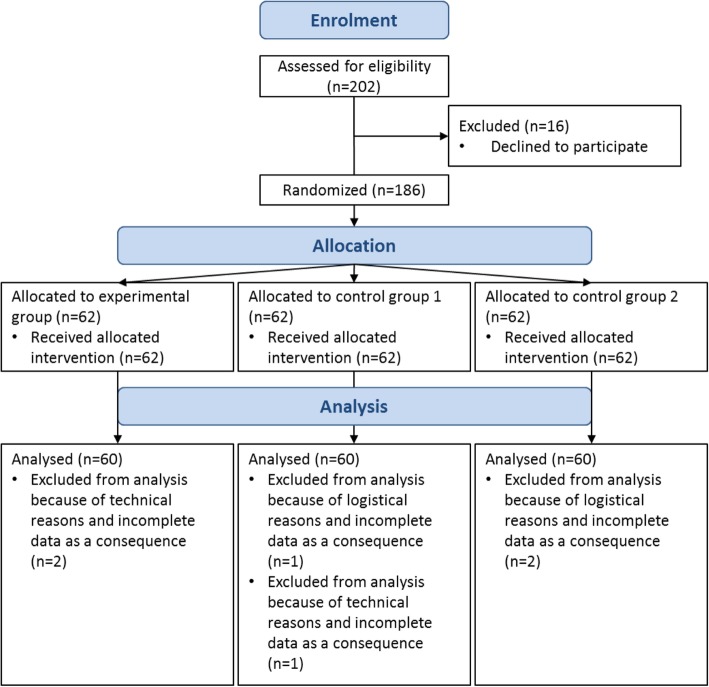
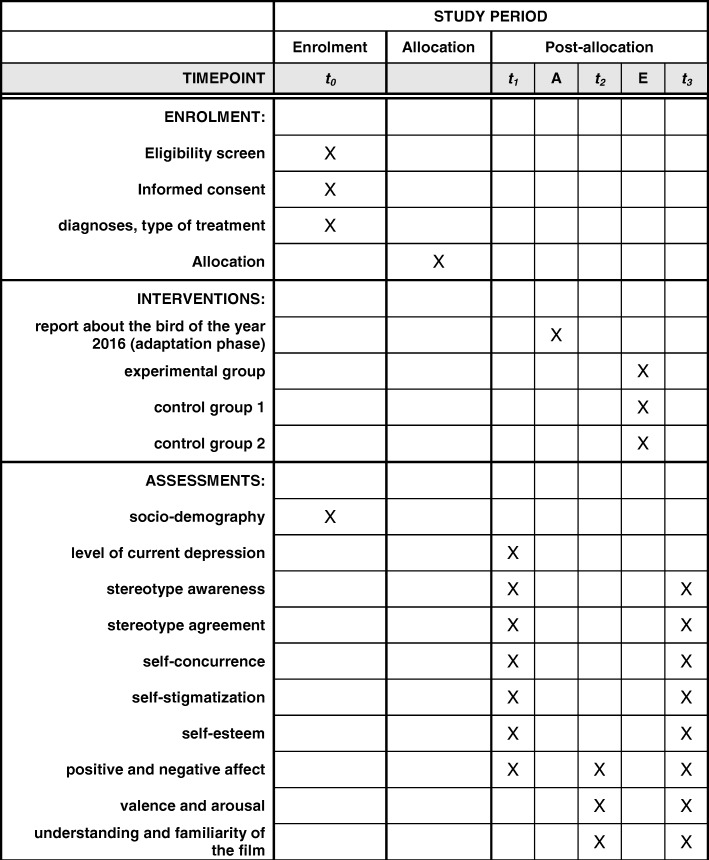
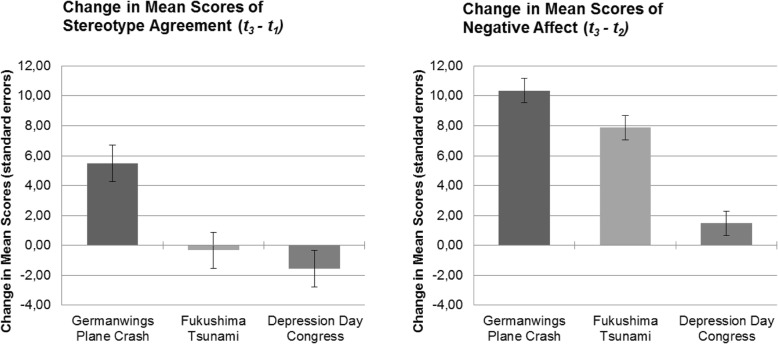
BACKGROUND: Stigmatization of people with mental illness is still a significant problem even in Western society. Media is an important vector for public messaging that may lead to stigma (and potentially counteract it). There is an ongoing debate about the impact of news with potentially stigmatizing content on people with depression. This experimental study aimed at investigating the direct effects media reporting could have on people with depression, namely, higher levels of stigma attitudes and negative affect, as well as lower levels of self-esteem and positive affect. METHODS: Experimental study; target sample size n = 180 patients; eligibility criteria: clinical diagnosis of depressive episode or dysthymia, aged 18-70 years, sufficient cognitive abilities and German language skills; exclusion criteria: acute psychotic, manic or hypomanic episode, addiction symptoms, or suicidal ideation; parallel assignment to one of three arms (each n = 60): watching a short film about a negative event relating to depression (experimental group), about a negative event without relation to depression (control group 1), or about a neutral event relating to depression (control group 2); primary outcomes: degrees of stigma attitudes (stereotype awareness, stereotype agreement, self-concurrence, and self-stigmatization); secondary outcomes: degrees of self-esteem, positive and negative affect; statistical analyses: general linear models with repeated-measures; one-way ANOVAs of the change in scores, followed by Bonferroni-adjusted pairwise comparisons; IBM SPSS Statistics 24.0. RESULTS: Significant group × time interactions in stereotype agreement (medium effect: η = 0.10) and negative affect (large effect: η = 0.26); the level of stereotype agreement increased significantly more in the experimental group than in control groups 1 and 2. The level of negative affect increased significantly more in the experimental group and in control group 1 than in control group 2. All other interaction effects were non-significant. CONCLUSION: The present study allows statements about the direct effects of potentially stigmatizing media reporting on carriers of the stigmatized attribute, i.e., depression: Even single film presentations of familiar events that contain potentially stigmatizing content have an impact on stereotype agreement and negative affect. The impact of long-term exposure and change in other stigma-measures require a deeper understanding of stigma-processes. Potential explanations and implications for practice and future research are discussed. TRIAL REGISTRATION: Deutsche Register Klinischer Studien, Trial registration: DRKS00011855 . Registered 23 June 2017, retrospectively registered; for details see Additional file 1.
Overview
The claims and statistics of this paper haven’t been checked yet.
Free: it reads the open-access text and checks the first 5 claims that cite a source we can check. Create a free account to check every claim.
Integrity signals
Registry
Cites
Statistics
Figures
Verification
Claims the paper makes
The claims and statistics of this paper haven’t been checked yet.
Free: it reads the open-access text and checks the first 5 claims that cite a source we can check. Create a free account to check every claim.
Claims other papers make about this one
Each is checked against this paper’s own text: does it say what the citing paper says it does?
In the citing paper
“Exposure of service users to news about the Germanwings aircraft crash, in which the pilot was reported to have had a mental health condition, significantly increased self-stigma.281”
From The Lancet Commission on ending stigma and discrimination in mental health (2022) · cites this paper as [281]
Self-check
Percentages, sums and reported differences re-computed from the paper’s own numbers.
The self-check needs the paper’s full text.
Citations
Cites
The PHQ-9: Validity of a brief depression severity measure
Kroenke, K., Spitzer, R. L., & Williams, J. B. W. (2001) · Journal of General Internal Medicine · doi:10.1046/j.1525-1497.2001.016009606.x · Cited by 44,910 · cited 2×
“It was measured via the German version of the Patient Health Questionnaire [34, 35].”
MethodSociety and the Adolescent Self-Image
Rosenberg, M. (1965) · doi:10.1515/9781400876136 · Cited by 30,126
Stigma: Notes on the Management of Spoiled Identity
(1969) · Postgraduate Medical Journal · doi:10.1136/pgmj.45.527.642 · Cited by 14,231
Stigma: Notes on the Management of Spoiled Identity.
Seeman, M., & Goffman, E. (1964) · American Sociological Review · doi:10.2307/2091442 · Cited by 10,716
Lippa, N. C., & Sanderson, S. C. (2013) · Human Heredity · doi:10.1159/000353712 · Cited by 6,078
Clement, S., Schauman, O., Graham, T., Maggioni, F., Evans-Lacko, S., Bezborodovs, N., Morgan, C., Rüsch, N., Brown, J. S. L., & Thornicroft, G. (2015) · Psychological Medicine · doi:10.1017/s0033291714000129 · Cited by 3,152 · cited 1×
“This might have led to selection bias regarding the level of self-stigmatization since help seeking is related to low self-stigma [44].”
BackgroundThe paradox of self-stigma and mental illness.
Corrigan, P. W., & Watson, A. C. (2002) · Clinical Psychology: Science and Practice · doi:10.1093/clipsy.9.1.35 · Cited by 1,872 · cited 2×
“According to Corrigan, the application of stereotype agreement to oneself must meet specific prerequisites [18]: identification with the stigmatized attribute and group as well as the perception of legitimacy of the information received.”
BackgroundLivingston, J. D., & Boyd, J. E. (2010) · Social Science & Medicine · doi:10.1016/j.socscimed.2010.09.030 · Cited by 1,677 · cited 1×
“Age in years and gender have been inconsistently correlated with self-stigma in previous research and are therefore also assessed [36].”
ResultThe self–stigma of mental illness: implications for self–esteem and self–efficacy
Corrigan, P. W., Watson, A. C., & Barr, L. (2006) · Journal of Social and Clinical Psychology · doi:10.1521/jscp.2006.25.8.875 · Cited by 1,406 · cited 1×
“[25], German version by Rüsch and Brück, published in [26].”
BackgroundDilling, H., Mombour, W., & Schmidt, M. H. (1991) · Max Planck Institute for Plasma Physics · Cited by 678
Research works printed but not linked: 5
- Gurris S Stigmatisierung nützt niemandem. In: collection title 2015
- Bavendamm U Fatalismus ist nicht angebracht Süddeutsche Zeitung 2015 93 15
- Schiel S Prädiktion des Erfolges der Dialektisch-Behavioralen Therapie bei Frauen mit Borderlinepersönlichkeitsstörung unter besonderer Berücksichtigung von Scham und Selbst-Stigmatisierung 2005
- Löwe B Spitzer R Zipfel S Herzog W PHQ-D Gesundheitsfragebogen für Patienten 2002
- Pendry L Jonas K Stroebe W MRC H Soziale Kognition 2007 Springer-Verlag Sozialpsychologie - Eine Einführunged Berlin Heidelberg 111 145
Cited by
The Lancet Commission on ending stigma and discrimination in mental health
Thornicroft, G., Sunkel, C., Alikhon Aliev, A., Baker, S., Brohan, E., el Chammay, R., Davies, K., Demissie, M., Duncan, J., Fekadu, W., et al. (2022) · The Lancet · doi:10.1016/s0140-6736(22)01470-2 · Cited by 748
Naslund, J. A., & Deng, D. (2021) · Ethics Medicine and Public Health · doi:10.1016/j.jemep.2021.100719 · Cited by 129
Tan, G. T. H., Shahwan, S., Goh, C. M. J., Ong, W. J., Wei, K., Verma, S. K., Chong, S. A., & Subramaniam, M. (2020) · BMC Psychiatry · doi:10.1186/s12888-020-02823-6 · Cited by 100
Emmer, C., Dorn, J., & Mata, J. (2024) · Psychological Bulletin · doi:10.1037/bul0000419 · Cited by 119
Whitley, R., Sitter, K. C., Adamson, G., & Carmichael, V. (2020) · BMC Psychiatry · doi:10.1186/s12888-020-2429-4 · Cited by 58
“It can also lead to damaging self-stigma among people with mental illness [13].”
BackgroundDu, N., Chong, E. S. K., Wei, D., Liu, Z., Mu, Z., Deng, S., & Huang, Y. (2023) · Journal of Affective Disorders · doi:10.1016/j.jad.2023.04.013 · Cited by 57
Media Coverage of Pedophilia: Benefits and Risks from Healthcare Practitioners’ Point of View
Stelzmann, D., Jahnke, S., & Kuhle, L. F. (2020) · International Journal of Environmental Research and Public Health · doi:10.3390/ijerph17165739 · Cited by 44
“, [14,19,21,40], our results suggest that media coverage can both educate society and perpetuate stigmatizing beliefs.”
BackgroundNg, F., Charles, A., Pollock, K., Rennick‐Egglestone, S., Cuijpers, P. J., Gillard, S., van der Krieke, L., Bongaardt, R., Pomberth, S., Repper, J., et al. (2019) · BMC Psychiatry · doi:10.1186/s12888-019-2405-z · Cited by 33
Impact of Mass Media on HIV/AIDS Stigma Reduction: A Systematic Review and Meta-analysis
Aghaei, A., Sakhaei, A., Khalilimeybodi, A., Qiao, S., & Li, X. (2023) · AIDS and Behavior · doi:10.1007/s10461-023-04057-5 · Cited by 39
Applying Corrigan’s progressive model of self-stigma to people with depression
Goepfert, N. C., von Heydendorff, S. C., Dreßing, H. R., & Bailer, J. (2019) · PLoS ONE · doi:10.1371/journal.pone.0224418 · Cited by 33
Self-citationStelzmann, D., Jahnke, S., & Kuhle, L. F. (2022) · International Journal of Environmental Research and Public Health · doi:10.3390/ijerph19159356 · Cited by 25
“Even though participants were able to recognize that they were not ‘monsters’ as detailed in the media, media coverage still contributed to stereotypes about other people with this sexual attraction (also see [92,93]).”
BackgroundPrototypes of People With Depression
Ziano, I., & Koç, Y. (2023) · Psychological Science · doi:10.1177/09567976231204035 · Cited by 15
“On the one hand, negative stereotypes about people with depression are thought to come from the media, where inaccurate and inappropriate views of people with depression are widespread (Goepfert et al., 2019).”
BackgroundGranello, D. H., & Gorby, S. R. (2021) · Journal of Counseling & Development · doi:10.1002/jcad.12397 · Cited by 23
Setia, S., Krägeloh, C., Bandyopadhyay, G., & Subramaniam, K. (2021) · Alternative and Complementary Therapies · doi:10.1089/act.2021.29322.sse · Cited by 15
“80 Even in developed countries, racial and ethnic minorities who should meet criteria for a mental disorder remain undiagnosed or mis-diagnosed.”
Text-Mining Analyses of News Articles on Schizophrenia
Nam, H. J., & Ryu, S. (2020) · Korean Journal of Schizophrenia Research · doi:10.16946/kjsr.2020.23.2.58 · Cited by 9
Haas, C. T., Klein, L., Heckl, M., Kesić, M., Rueß, A.-K., Gensichen, J., Lukaschek, K., Kruse, T., & POKAL-Group (2025) · JMIR Mental Health · doi:10.2196/65920 · Cited by 9
“Research suggests such portrayals may perpetuate stigma, deter help-seeking behaviors, and reinforce harmful stereotypes [50,51].”
Sun, M., & Fang, Y. (2024) · Journal of Health Communication · doi:10.1080/10810730.2024.2411320 · Cited by 5
“Even presenting a single film with potentially stigmatizing content in media reports can evoke stigma attitudes and negative emotions among audiences (Goepfert et al., 2019).”
Media coverage of Canadian Veterans, with a focus on post traumatic stress disorder and suicide
Whitley, R., & Saucier, A.-M. (2022) · BMC Psychiatry · doi:10.1186/s12888-022-03954-8 · Cited by 7
“Indeed, a large corpus of research indicates that media stereotyping of a group, for example people with mental illness or Veterans, can lead to increased levels of internal and external stigma [26, 29, 30].”
BackgroundSelf-Injury in the News: A Content Analysis
Lewis, S. P., Hasking, P. A., Staniland, L., Boyes, M. E., Collaton, J., & Bryce, L. (2023) · Basic and Applied Social Psychology · doi:10.1080/01973533.2023.2179401 · Cited by 6
“Percentage agreement and Gwet’s first-order agreement coefficient (AC1; Gwet, 2008) were calculated in R using the irrCAC package (version 1.0; Gwet, 2019).”
MethodInfluentialTreatment preferences and self-stigma in depression: Development and validation of the brief ATDT-SF
Jensen, K. H. R., Sørensen, M., Spanggård, A., Juvik, A. K., Olsen, S., Dam, V. H., & Jørgensen, M. B. (2025) · Journal of Affective Disorders · doi:10.1016/j.jad.2025.120233 · Cited by 4
Markiewitz, A., & Jungblut, M. (2023) · Annals of the International Communication Association · doi:10.1080/23808985.2023.2231419 · Cited by 7
“While talking about physical health seems normal for many, talking about mental health and respective issues is still not fully normalized by society, but rather stigmatized – which is likely to worsen the problem (cf. Goepfert et al., 2019).”
BackgroundSukalla, F., Krack, I., Seibert, D., Paeth, L., Frank, O., Preißler, R., & Block, P. M. (2022) · Studies in Communication and Media · doi:10.5771/2192-4007-2022-1-169 · Cited by 2
Henderson, M. S. G., Andersen, J. A., Dinh, J. M., Ziegenfuss, J. Y., Canterbury, M., & JaKa, M. M. (2024) · Issues in Mental Health Nursing · doi:10.1080/01612840.2024.2318603 · Cited by 2
Chen, S., Ngai, C. S. B., Cheng, C., & Hu, Y. M. (2025) · Journal of Medical Internet Research · doi:10.2196/66696 · Cited by 5
“Media coverage of depression may encourage positive outcomes such as enhancing social support for individuals with depression or otherwise lead to negative outcomes, such as strengthening the public stigma toward the population with depression and their self-stigma [15,16,22,26].”
InfluentialWang, M., Zhang, Y., Wang, M., & Zhao, X. (2025) · Frontiers in Psychology · doi:10.3389/fpsyg.2025.1476138 · Cited by 3
Walid, A., Winarni, E. W., & Yanti, F. A. (2023) · Jurnal Pendidikan IPA Indonesia · doi:10.15294/jpii.v12i1.40108 · Cited by 8
Muscogliati, R., Hassanieh, A., Ballani, R. E., Najem, Z., Najem, L., Frem, J., Younes, K., Ezzeddine, D., Safi, C., Chedid, A., et al. (2025) · British journal of surgery · doi:10.1007/s43390-025-01156-2 · Cited by 1
“Such representations likely shape patient expectations, influence peer attitudes, and contribute to internalized stigma [16, 17].”
Herold, S., & Woodruff, K. (2026) · Culture Health & Sexuality · doi:10.1080/13691058.2026.2641524 · Cited by 1
Ross, A., Morgan, A. J., McNaught, G., Green, R., & Reavley, N. J. (2026) · Australian & New Zealand Journal of Psychiatry · doi:10.1177/00048674261462377 · Cited by 2
“This finding is supported by some experimental studies, e.g., a randomised controlled trial has shown that exposure to a negative news event relating to depression increased stereotype agreement and negative affect in people with depression (Goepfert et al., 2019).”
Storman, D., Jemioło, P., Sawiec, Z., Świerz, M. J., Antonowicz, E., Bała, M. M., & Prokop‐Dorner, A. (2024) · Journal of Medical Internet Research · doi:10.2196/51506 · Cited by 2
“Users underlined the unique experience of staying at open wards and described them as pretty and a place of fun where one can feel as in a sanatorium or at a summer camp where discos take place (quotations 53 and 54).”
Whitley, R., Sitter, K. C., Adamson, G., & Carmichael, V. (2023) · doi:10.32920/21972038 · Cited by 1
This is your brain on stigma: Stigma attributions resulting from drug-related social marketing
Kerstens, M. (2022) · Open Access Victoria University of Wellington | Te Herenga Waka (Figshare) · doi:10.26686/wgtn.21505338
Whitley, R., Sitter, K. C., Adamson, G., & Carmichael, V. (2023) · doi:10.32920/21972038.v1
Καθυστερημένη αναζήτηση φροντίδας στην κατάθλιψη. Αντιλήψεις ασθενών με καταθλιπτική διαταραχή
Σκούρα, Ε., Κουλιεράκης, Γ., & Φούσκας, Θ. (2023) · Psychology the Journal of the Hellenic Psychological Society · doi:10.12681/psy_hps.30963
Galli, F., New, K. J., & Grech, M. (2023) · Mental Health Global Challenges Journal · doi:10.56508/mhgcj.v6i1.163 · Cited by 1
Representación mediática de la salud mental en Iberoamérica: tendencias y desafíos en la era digital
Romero-Rodríguez, L. M., Tejedor, S., Martínez, J., & Rull-Ribó, D. (2026) · Ciência & Saúde Coletiva · doi:10.1590/1413-81232026313.13322024
Haye-Caty, N. L. (2025) · Sens public · doi:10.7202/1125348ar
Stigma in verschiedenen Gesellschaftsbereichen
Rüsch, N. (2021) · Elsevier eBooks · doi:10.1016/b978-3-437-23520-7.00007-6
(2021) · Elsevier eBooks · doi:10.1016/b978-3-437-23520-7.09981-5
Metadata
- Authors
- Goepfert, N. C., Conrad von Heydendorff, S., Dreßing, H., & Bailer, J.
- Affiliations
- Heidelberg University (DE)
- Corresponding author
- Goepfert, Nele Cornelia
- Venue
- BMC Psychiatry
- Published
- 2019-05-07
- Volume
- 19
- Issue
- 1
- Pages
- 138-138
- ISSN
- 1471-244X (ISSN-L)
- PMC
- PMC6505308
- OpenAlex
- W2947367440
- Cited by
- 39
- References
- 48
- Citations by year
- 2026: 3 · 2025: 6 · 2024: 4 · 2023: 10 · 2022: 5 · 2021: 5 · 2020: 4 · 2019: 2
- FWCI
- 5.03
- Type
- journal article
- Language
- en
- Open access
- gold
- doi.org
- Licence
- cc-by
- creativecommons.org/licenses/by/4.0/ (tdm)
- Locations
- BMC Psychiatry (publishedVersion, cc-by)
- PubMed Central (publishedVersion, cc-by)
- PubMed (publishedVersion)
- heiDOK (Heidelberg University) (acceptedVersion, other-oa)
- DOAJ (DOAJ: Directory of Open Access Journals) (submittedVersion, cc-by-sa)
- Funders
- Deutsche Forschungsgemeinschaft
- Universität Heidelberg
- Topics
- Health Sciences › Medicine › Psychiatry and Mental health › Mental Health Treatment and Access
- Social Sciences › Communication › Media Influence and Health
- Social Sciences › Psychology › Clinical Psychology › Suicide and Self-Harm Studies
- Keywords
- mental health stigma, depression, news media, self-stigma, stereotype awareness, self-esteem, negative affect, positive affect, media exposure
- MeSH terms
- Adult, Attitude to Health, Depressive Disorder, Female, Humans, Male, Mass Media, Retrospective Studies, Self Concept, Stereotyping
About these checks
Registry, retraction, Cites and statistics results are computed, not judged, with one exception: a printed reference that no index lists is read once by a model before it counts as a citation error. Claims are extracted by a model and kept only when their quote appears verbatim in the text; each cited source is then checked, with a model’s help, for whether it says what the claim relies on. Those verdicts can be wrong — read the claim’s quote and the cited source before relying on one.
Statistics and arithmetic are recomputed, not judged.
Confidence bands are shown only for fields calibrated on our annotated test set. None is calibrated yet, so no band is shown.
What counts as a claim ›How we measure confidence ›How we check this ›
Are you an author, or do you see a problem with this page? Request a review
Data sources
Bibliographic data: Semantic Scholar, OpenAlex, Crossref.
Contains information from the Semantic Scholar Academic Graph Datasets, made available under the ODC Attribution License (ODC-BY 1.0).
Semantic Scholar’s data is described in: Kinney, R., et al. (2023). The Semantic Scholar Open Data Platform. arXiv:2301.10140.
