

Effects of stigmatizing media coverage on stigma measures, self-esteem, and affectivity in persons with depression—an experimental controlled trial
Open accessThe DOI matches its Crossref record; 47 of the 48 references it cites were found in a registry or an index.
Abstract
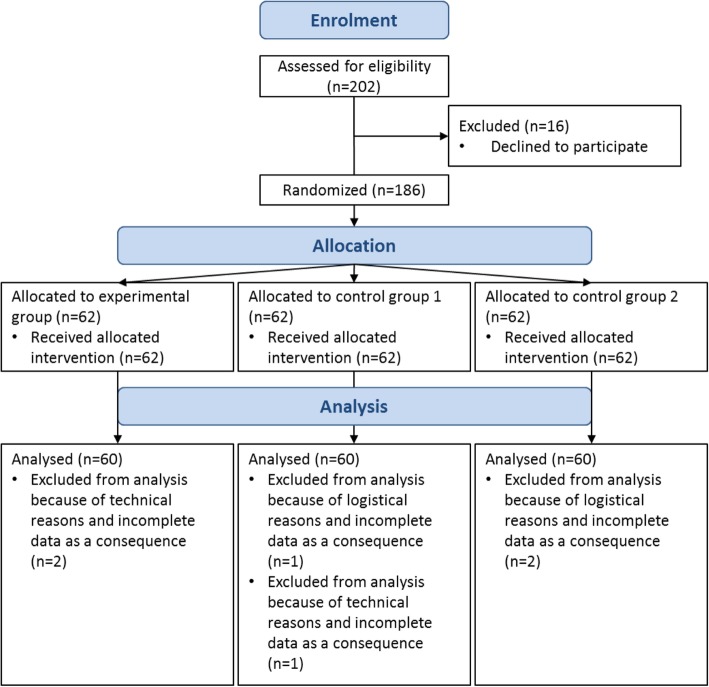
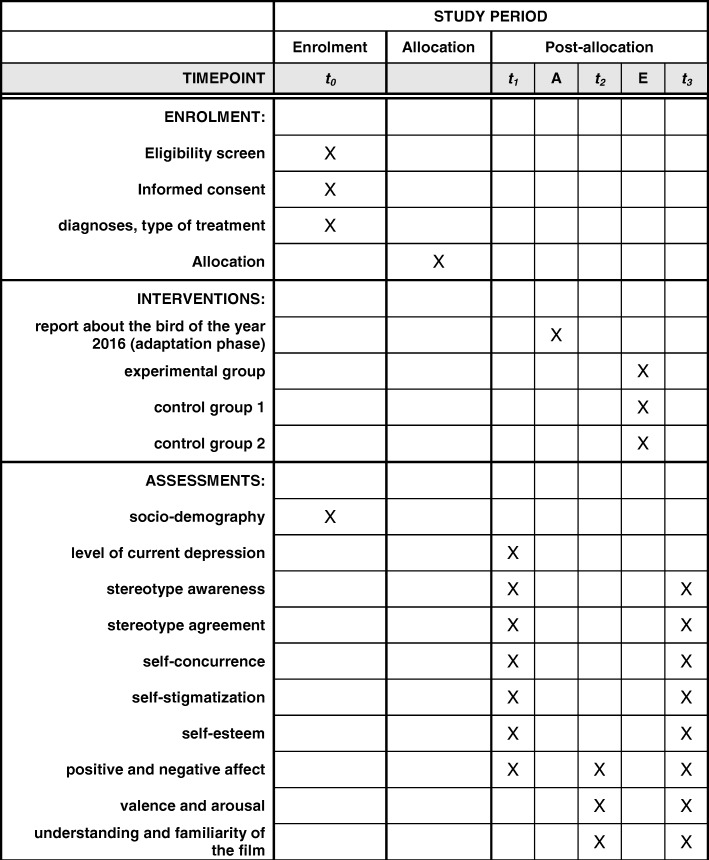
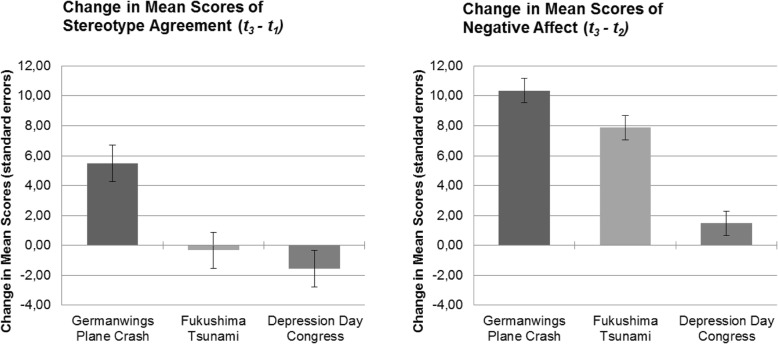
BACKGROUND: Stigmatization of people with mental illness is still a significant problem even in Western society. Media is an important vector for public messaging that may lead to stigma (and potentially counteract it). There is an ongoing debate about the impact of news with potentially stigmatizing content on people with depression. This experimental study aimed at investigating the direct effects media reporting could have on people with depression, namely, higher levels of stigma attitudes and negative affect, as well as lower levels of self-esteem and positive affect. METHODS: Experimental study; target sample size n = 180 patients; eligibility criteria: clinical diagnosis of depressive episode or dysthymia, aged 18-70 years, sufficient cognitive abilities and German language skills; exclusion criteria: acute psychotic, manic or hypomanic episode, addiction symptoms, or suicidal ideation; parallel assignment to one of three arms (each n = 60): watching a short film about a negative event relating to depression (experimental group), about a negative event without relation to depression (control group 1), or about a neutral event relating to depression (control group 2); primary outcomes: degrees of stigma attitudes (stereotype awareness, stereotype agreement, self-concurrence, and self-stigmatization); secondary outcomes: degrees of self-esteem, positive and negative affect; statistical analyses: general linear models with repeated-measures; one-way ANOVAs of the change in scores, followed by Bonferroni-adjusted pairwise comparisons; IBM SPSS Statistics 24.0. RESULTS: Significant group × time interactions in stereotype agreement (medium effect: η = 0.10) and negative affect (large effect: η = 0.26); the level of stereotype agreement increased significantly more in the experimental group than in control groups 1 and 2. The level of negative affect increased significantly more in the experimental group and in control group 1 than in control group 2. All other interaction effects were non-significant. CONCLUSION: The present study allows statements about the direct effects of potentially stigmatizing media reporting on carriers of the stigmatized attribute, i.e., depression: Even single film presentations of familiar events that contain potentially stigmatizing content have an impact on stereotype agreement and negative affect. The impact of long-term exposure and change in other stigma-measures require a deeper understanding of stigma-processes. Potential explanations and implications for practice and future research are discussed. TRIAL REGISTRATION: Deutsche Register Klinischer Studien, Trial registration: DRKS00011855 . Registered 23 June 2017, retrospectively registered; for details see Additional file 1.
Overview
The claims and statistics of this paper haven’t been checked yet.
Free: it reads the open-access text and checks the first 5 claims that cite a source we can check. Create a free account to check every claim.
Integrity signals
Registry
Cites
Statistics
Figures
Verification
Claims the paper makes
The claims and statistics of this paper haven’t been checked yet.
Free: it reads the open-access text and checks the first 5 claims that cite a source we can check. Create a free account to check every claim.
Claims other papers make about this one
Each is checked against this paper’s own text: does it say what the citing paper says it does?
In the citing paper
“Exposure of service users to news about the Germanwings aircraft crash, in which the pilot was reported to have had a mental health condition, significantly increased self-stigma.281”
From The Lancet Commission on ending stigma and discrimination in mental health (2022) · cites this paper as [281]
Self-check
Percentages, sums and reported differences re-computed from the paper’s own numbers.
The self-check needs the paper’s full text.
Citations
Cites
The PHQ-9: Validity of a brief depression severity measure
Kroenke, K., Spitzer, R. L., & Williams, J. B. W. (2001) · Journal of General Internal Medicine · doi:10.1046/j.1525-1497.2001.016009606.x · Cited by 44,910 · cited 2×
“It was measured via the German version of the Patient Health Questionnaire [34, 35].”
MethodSociety and the Adolescent Self-Image
Rosenberg, M. (1965) · doi:10.1515/9781400876136 · Cited by 30,126
Stigma: Notes on the Management of Spoiled Identity
(1969) · Postgraduate Medical Journal · doi:10.1136/pgmj.45.527.642 · Cited by 14,231
Stigma: Notes on the Management of Spoiled Identity.
Seeman, M., & Goffman, E. (1964) · American Sociological Review · doi:10.2307/2091442 · Cited by 10,716
Lippa, N. C., & Sanderson, S. C. (2013) · Human Heredity · doi:10.1159/000353712 · Cited by 6,078
Clement, S., Schauman, O., Graham, T., Maggioni, F., Evans-Lacko, S., Bezborodovs, N., Morgan, C., Rüsch, N., Brown, J. S. L., & Thornicroft, G. (2015) · Psychological Medicine · doi:10.1017/s0033291714000129 · Cited by 3,152 · cited 1×
“This might have led to selection bias regarding the level of self-stigmatization since help seeking is related to low self-stigma [44].”
BackgroundThe paradox of self-stigma and mental illness.
Corrigan, P. W., & Watson, A. C. (2002) · Clinical Psychology: Science and Practice · doi:10.1093/clipsy.9.1.35 · Cited by 1,872 · cited 2×
“According to Corrigan, the application of stereotype agreement to oneself must meet specific prerequisites [18]: identification with the stigmatized attribute and group as well as the perception of legitimacy of the information received.”
BackgroundLivingston, J. D., & Boyd, J. E. (2010) · Social Science & Medicine · doi:10.1016/j.socscimed.2010.09.030 · Cited by 1,677 · cited 1×
“Age in years and gender have been inconsistently correlated with self-stigma in previous research and are therefore also assessed [36].”
ResultThe self–stigma of mental illness: implications for self–esteem and self–efficacy
Corrigan, P. W., Watson, A. C., & Barr, L. (2006) · Journal of Social and Clinical Psychology · doi:10.1521/jscp.2006.25.8.875 · Cited by 1,406 · cited 1×
“[25], German version by Rüsch and Brück, published in [26].”
BackgroundDilling, H., Mombour, W., & Schmidt, M. H. (1991) · Max Planck Institute for Plasma Physics · Cited by 678
Self-Stigma in People With Mental Illness
Watson, A. C., Corrigan, P., Larson, J. E., & Sells, M. (2006) · Schizophrenia Bulletin · doi:10.1093/schbul/sbl076 · Cited by 678 · cited 1×
“’s [27] experience, the fourth SSMIS subscale of self-esteem decrement was not included in this study because of its difficult wording.”
BackgroundUntersuchungen mit einer deutschen Version der "Positive and Negative Affect Schedule" (PANAS).
Krohne, H. W., Egloff, B., Kohlmann, C., & Tausch, A. (1996) · Diagnostica · Cited by 609
Eine revidierte Fassung der deutschsprachigen Skala zum Selbstwertgefühl von Rosenberg
von Collani, G., & Herzberg, P. Y. (2003) · Zeitschrift für Differentielle und Diagnostische Psychologie · doi:10.1024//0170-1789.24.1.3 · Cited by 481
Examining a progressive model of self-stigma and its impact on people with serious mental illness
Corrigan, P. W., Rafacz, J., & Rüsch, N. (2011) · Psychiatry Research · doi:10.1016/j.psychres.2011.05.024 · Cited by 467 · cited 3×
“Stereotype agreement is an important stage in the process of self-stigmatization, according to the stigma-model of Corrigan and colleagues [19].”
BackgroundMethodInfluentialThe Impact of Mental Illness Stigma.
Corrigan, P. W., & Kleinlein, P. (2005) · On the stigma of mental illness: Practical strategies for research and social change. · doi:10.1037/10887-001 · Cited by 322 · cited 1×
“In addition to factual information, mental illness is frequently reported in the context of exciting incidents [9], linking mental illness to “danger”, “crime”, and a “negative burden on society” [10].”
BackgroundAttitudes towards psychiatric treatment and people with mental illness: changes over two decades
Angermeyer, M. C., Matschinger, H., & Schomerus, G. (2013) · British Journal of Psychiatry · doi:10.1192/bjp.bp.112.122978 · Cited by 303 · cited 1×
“Background Despite major efforts by regional and national educational programmes, the stigmatization of people with mental illness is still a significant problem even in Western society [1].”
BackgroundStuart, H. (2006) · CNS Drugs · doi:10.2165/00023210-200620020-00002 · Cited by 300
Positive and Negative Affect Schedule
Watson, D., Clark, L. A., & Tellegen, A. (2011) · PsycTESTS Dataset · doi:10.1037/t03592-000 · Cited by 287
Images of Mental Illness in the Media: Identifying Gaps in the Research
Stout, P. A., Villegas, J., & Jennings, N. A. (2004) · Schizophrenia Bulletin · doi:10.1093/oxfordjournals.schbul.a007099 · Cited by 213
Angermeyer, M. C., & Matschinger, H. (1996) · Social Science & Medicine · doi:10.1016/s0277-9536(96)00065-2 · Cited by 211 · cited 1×
“In the early 1990s, when Oskar Lafontaine and Wolfgang Schäuble, two popular German politicians, were attacked by perpetrators with psychoses, public stigmatization significantly increased in the German population [16].”
BackgroundCoppens, E., Van Audenhove, C., Scheerder, G., Arensman, E., Coffey, C., Costa, S., Koburger, N., Gottlebe, K., Gusmão, R., O’Connor, R., et al. (2013) · Journal of Affective Disorders · doi:10.1016/j.jad.2013.04.013 · Cited by 177 · cited 1×
“A higher level of self-stigmatization in turn is negatively related to well-being [20], quality of life, professional help-seeking when needed [21], general performance, self-esteem [22], self-clarity, hope, recovery, and functioning [23], and positively related to suicidal behaviour [24].”
BackgroundRüsch, N., Corrigan, P. W., Powell, K., Rajah, A., Olschewski, M., Wilkniss, S., & Batia, K. (2009) · Schizophrenia Research · doi:10.1016/j.schres.2009.01.005 · Cited by 170 · cited 1×
“Moreover, protective factors such as emotional clarity [41], cognitive appraisal and a variety of coping responses [42] have been postulated to impact stigmatization effects.”
Background“Depression is who I am”: mental illness identity, stigma and wellbeing
Cruwys, T., & Gunaseelan, S. (2016) · Journal of Affective Disorders · doi:10.1016/j.jad.2015.09.012 · Cited by 162 · cited 1×
“A higher level of self-stigmatization in turn is negatively related to well-being [20], quality of life, professional help-seeking when needed [21], general performance, self-esteem [22], self-clarity, hope, recovery, and functioning [23], and positively related to suicidal behaviour [24].”
BackgroundBartsch, A., Oliver, M. B., Nitsch, C., & Scherr, S. (2016) · Communication Research · doi:10.1177/0093650215626984 · Cited by 145 · cited 1×
“For instance, character empathy was indicated as an important mediator for destigmatizing effects of media regarding Paralympic athletes: While pity decreased destigmatization, positive emotions increased destigmatization [47].”
BackgroundPicco, L., Pang, S., Lau, Y. W., Jeyagurunathan, A., Satghare, P., Abdin, E., Vaingankar, J. A., Lim, S., Poh, C. L., Chong, S. A., et al. (2016) · Psychiatry Research · doi:10.1016/j.psychres.2016.10.041 · Cited by 143 · cited 1×
“A higher level of self-stigmatization in turn is negatively related to well-being [20], quality of life, professional help-seeking when needed [21], general performance, self-esteem [22], self-clarity, hope, recovery, and functioning [23], and positively related to suicidal behaviour [24].”
BackgroundThe effects of news stories on the stigma of mental illness
Corrigan, P. W., Powell, K. J., & Michaels, P. J. (2013) · Journal of Nervous & Mental Disease · doi:10.1097/nmd.0b013e3182848c24 · Cited by 140 · cited 1×
“found both positive and negative effects of news stories regarding mental illness [14].”
BackgroundReinforcing Stigmatization: Coverage of Mental Illness in Spanish Newspapers
Aragonès, E., López-Muntaner, J., Ceruelo, S., & Basora, J. (2014) · Journal of Health Communication · doi:10.1080/10810730.2013.872726 · Cited by 119 · cited 1×
“In addition to factual information, mental illness is frequently reported in the context of exciting incidents [9], linking mental illness to “danger”, “crime”, and a “negative burden on society” [10].”
BackgroundThe measurement of self-esteem, Society and the adolescent self-image
Rosenberg, M. (1965) · Medical Entomology and Zoology · Cited by 108
Barney, L. J., Griffiths, K. M., Christensen, H., & Jorm, A. F. (2010) · International Journal of Methods in Psychiatric Research · doi:10.1002/mpr.325 · Cited by 96 · cited 1×
“, how people would feel or think if they had a depressive disorder [31].”
BackgroundDas Stigma psychischer Erkrankung: Konzepte, Formen und Folgen
Rüsch, N., Angermeyer, M., & Corrigan, P. (2005) · Psychiatrische Praxis · doi:10.1055/s-2004-834566 · Cited by 94 · cited 1×
“The current severity of depression symptoms has been shown to be highly correlated with the current level of self-esteem [33].”
BackgroundKohls, E., Coppens, E., Hug, J., Wittevrongel, E., Audenhove, C. V., Koburger, N., Arensman, E., Székely, A., Gusmão, R., & Hegerl, U. (2017) · Journal of Affective Disorders · doi:10.1016/j.jad.2017.04.006 · Cited by 84 · cited 1×
“Kohls and colleagues found corresponding results [39]: In their research, stereotype agreement seemed Table 3 Results of multivariate tests of general linear models with repeated measures for each outcome variable”
ResultMedia depictions and the priming of mental illness stigma.
Chan, G., & Yanos, P. T. (2018) · Stigma and Health · doi:10.1037/sah0000095 · Cited by 51
El complejo estigma-discriminación asociado a trastorno mental como factor de riesgo de suicidio
Campo-Arias, A., & Herazo, E. (2015) · Revista Colombiana de Psiquiatría · doi:10.1016/j.rcp.2015.04.003 · Cited by 44
Jorm, A. F., & Reavley, N. J. (2013) · Australian & New Zealand Journal of Psychiatry · doi:10.1177/0004867413509697 · Cited by 39
Scherr, S., & Reinemann, C. (2011) · Suicide and Life-Threatening Behavior · doi:10.1111/j.1943-278x.2011.00059.x · Cited by 37 · cited 1×
“Scherr and Reinemann indicated comparable findings, as exposure to suicidal media enhances belief in a change in thoughts, perceptions, and behaviour primed by violent media content in other people rather than in oneself [40].”
ResultChanges in depression stigma after the Germanwings crash – Findings from German population surveys
Knesebeck, O. V. D., Mnich, E. E., Angermeyer, M. C., Kofahl, C., & Makowski, A. C. (2015) · Journal of Affective Disorders · doi:10.1016/j.jad.2015.07.029 · Cited by 37 · cited 4×
“However, research indicated no to very small changes in the community’s attitudes towards persons with mental illness after SMC about the 2015 Germanwings plane crash in France [17].”
BackgroundInfluentialSelf-clarity and different clusters of insight and self-stigma in mental illness
Hasson‐Ohayon, I., Mashiach‐Eizenberg, M., Lysaker, P. H., & Roe, D. (2016) · Psychiatry Research · doi:10.1016/j.psychres.2016.04.060 · Cited by 32 · cited 1×
“A higher level of self-stigmatization in turn is negatively related to well-being [20], quality of life, professional help-seeking when needed [21], general performance, self-esteem [22], self-clarity, hope, recovery, and functioning [23], and positively related to suicidal behaviour [24].”
BackgroundIndividual and neighborhood predictors of mental illness stigma in New York state.
Gonzales, L., Chan, G., & Yanos, P. T. (2016) · Stigma and Health · doi:10.1037/sah0000043 · Cited by 32
Scherr, S. (2015) · Springer eBooks · doi:10.1007/978-3-658-11162-5 · Cited by 30
Wang, K., Weiss, N. H., Pachankis, J. E., & Link, B. G. (2016) · Stigma and Health · doi:10.1037/sah0000032 · Cited by 29
Till, B., Wild, T. A., Arendt, F., Scherr, S., & Niederkrotenthaler, T. (2018) · Crisis · doi:10.1027/0227-5910/a000516 · Cited by 23 · cited 1×
“However, time spent reading tabloids was associated with higher endorsement of suicide myths, a lower level of suicide-related knowledge and a higher level of stigmatizing attitudes in recent studies [45].”
BackgroundScherr, S. (2018) · Current Psychology · doi:10.1007/s12144-018-0020-7 · Cited by 22 · cited 1×
“One of the most relevant motives for use of traditional media in people suffering under depressive symptoms is information seeking, independently of the depression severity; the higher the levels of depressive symptoms are, the stronger the motivation is to use media as a form of coping to forget about everyday concer…”
BackgroundStigmatization of mentally ill patients by media coverage of Germanwings disaster
von Heydendorff, S. C., Meyer‐Lindenberg, A., & Dreßing, H. R. (2016) · International Journal of Social Psychiatry · doi:10.1177/0020764016669174 · Cited by 9 · cited 3×
“Based on Heydendorff ’s and Dressing’s categorical system of risky coverage [11], four separate cases of risky coverage could be identified in the experimental condition, i.”
BackgroundMethodSelf-citationPsychische Krankheiten in der Gesellschaft und in den Medien
Scherr, S. (2019) · Springer eBooks · doi:10.1007/978-3-658-10727-7_46 · Cited by 8
Goepfert, N. C., Lehr, K., Zillich, L., von Heydendorff, S. C., Dreßing, H. R., & Bailer, J. (2019) · PPmP - Psychotherapie · Psychosomatik · Medizinische Psychologie · doi:10.1055/a-0838-4953 · Cited by 3
Self-citationFür die Menschen – gegen Ausgrenzung
Oehmcke, B. (2017) · PPH · doi:10.1055/s-0043-110091 · Cited by 1
Research works printed but not linked: 5
- Gurris S Stigmatisierung nützt niemandem. In: collection title 2015
- Bavendamm U Fatalismus ist nicht angebracht Süddeutsche Zeitung 2015 93 15
- Schiel S Prädiktion des Erfolges der Dialektisch-Behavioralen Therapie bei Frauen mit Borderlinepersönlichkeitsstörung unter besonderer Berücksichtigung von Scham und Selbst-Stigmatisierung 2005
- Löwe B Spitzer R Zipfel S Herzog W PHQ-D Gesundheitsfragebogen für Patienten 2002
- Pendry L Jonas K Stroebe W MRC H Soziale Kognition 2007 Springer-Verlag Sozialpsychologie - Eine Einführunged Berlin Heidelberg 111 145
Cited by
The Lancet Commission on ending stigma and discrimination in mental health
Thornicroft, G., Sunkel, C., Alikhon Aliev, A., Baker, S., Brohan, E., el Chammay, R., Davies, K., Demissie, M., Duncan, J., Fekadu, W., et al. (2022) · The Lancet · doi:10.1016/s0140-6736(22)01470-2 · Cited by 748
Naslund, J. A., & Deng, D. (2021) · Ethics Medicine and Public Health · doi:10.1016/j.jemep.2021.100719 · Cited by 129
Tan, G. T. H., Shahwan, S., Goh, C. M. J., Ong, W. J., Wei, K., Verma, S. K., Chong, S. A., & Subramaniam, M. (2020) · BMC Psychiatry · doi:10.1186/s12888-020-02823-6 · Cited by 100
Emmer, C., Dorn, J., & Mata, J. (2024) · Psychological Bulletin · doi:10.1037/bul0000419 · Cited by 119
Whitley, R., Sitter, K. C., Adamson, G., & Carmichael, V. (2020) · BMC Psychiatry · doi:10.1186/s12888-020-2429-4 · Cited by 58
“It can also lead to damaging self-stigma among people with mental illness [13].”
Background
Metadata
- Authors
- Goepfert, N. C., Conrad von Heydendorff, S., Dreßing, H., & Bailer, J.
- Affiliations
- Heidelberg University (DE)
- Corresponding author
- Goepfert, Nele Cornelia
- Venue
- BMC Psychiatry
- Published
- 2019-05-07
- Volume
- 19
- Issue
- 1
- Pages
- 138-138
- ISSN
- 1471-244X (ISSN-L)
- PMC
- PMC6505308
- OpenAlex
- W2947367440
- Cited by
- 39
- References
- 48
- Citations by year
- 2026: 3 · 2025: 6 · 2024: 4 · 2023: 10 · 2022: 5 · 2021: 5 · 2020: 4 · 2019: 2
- FWCI
- 5.03
- Type
- journal article
- Language
- en
- Open access
- gold
- doi.org
- Licence
- cc-by
- creativecommons.org/licenses/by/4.0/ (tdm)
- Locations
- BMC Psychiatry (publishedVersion, cc-by)
- PubMed Central (publishedVersion, cc-by)
- PubMed (publishedVersion)
- heiDOK (Heidelberg University) (acceptedVersion, other-oa)
- DOAJ (DOAJ: Directory of Open Access Journals) (submittedVersion, cc-by-sa)
- Funders
- Deutsche Forschungsgemeinschaft
- Universität Heidelberg
- Topics
- Health Sciences › Medicine › Psychiatry and Mental health › Mental Health Treatment and Access
- Social Sciences › Communication › Media Influence and Health
- Social Sciences › Psychology › Clinical Psychology › Suicide and Self-Harm Studies
- Keywords
- mental health stigma, depression, news media, self-stigma, stereotype awareness, self-esteem, negative affect, positive affect, media exposure
- MeSH terms
- Adult, Attitude to Health, Depressive Disorder, Female, Humans, Male, Mass Media, Retrospective Studies, Self Concept, Stereotyping
About these checks
Registry, retraction, Cites and statistics results are computed, not judged, with one exception: a printed reference that no index lists is read once by a model before it counts as a citation error. Claims are extracted by a model and kept only when their quote appears verbatim in the text; each cited source is then checked, with a model’s help, for whether it says what the claim relies on. Those verdicts can be wrong — read the claim’s quote and the cited source before relying on one.
Statistics and arithmetic are recomputed, not judged.
Confidence bands are shown only for fields calibrated on our annotated test set. None is calibrated yet, so no band is shown.
What counts as a claim ›How we measure confidence ›How we check this ›
Are you an author, or do you see a problem with this page? Request a review
Data sources
Bibliographic data: Semantic Scholar, OpenAlex, Crossref.
Contains information from the Semantic Scholar Academic Graph Datasets, made available under the ODC Attribution License (ODC-BY 1.0).
Semantic Scholar’s data is described in: Kinney, R., et al. (2023). The Semantic Scholar Open Data Platform. arXiv:2301.10140.
