

Threat appeals in health communication: messages that elicit fear and enhance perceived efficacy positively impact on young male drivers
Open accessThe DOI matches its Crossref record; 100 of the 100 references it cites were found in a registry or an index.
Abstract
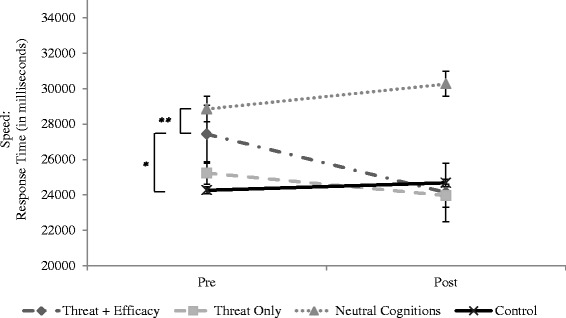
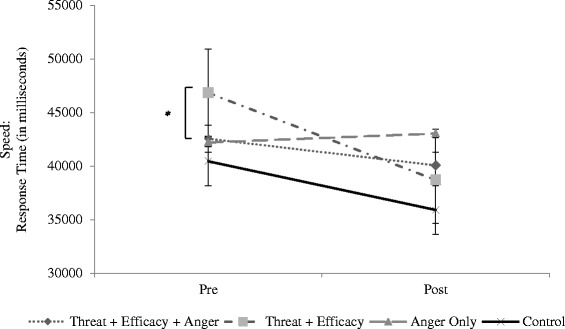
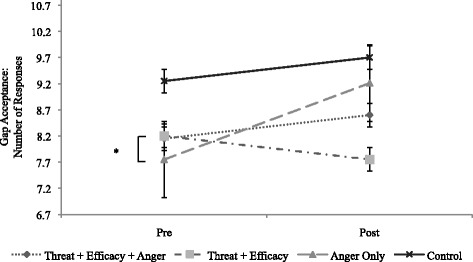
BACKGROUND: Health communications often present graphic, threat-based representations of the potential consequences of health-risk behaviours. These 'threat appeals' feature prominently in public health campaigns, but their use is controversial, with studies investigating their efficacy reporting inconsistent, and often negative, findings. This research examined the impact of a threat-based road safety advertisement on the driving behaviour of young male drivers. METHODS: To address limitations of previous research, we first identified a road safety advertisement that objectively and subjectively elicited fear using physiological and subjective measures. Study 1 (n = 62) examined the effect of this advertisement, combined with a manipulation designed to increase perceived efficacy, on speed choice. Study 2 (n = 81) investigated whether a state emotion, anger, impacts on the effectiveness of the advertisement in changing four distinct driving behaviours. Both studies examined short-term effects only. RESULTS: Study 1 findings indicated that a high threat message, when combined with high perceived efficacy, can lead to a decrease in speed choice. Study 2 results suggested that increased levels of state anger may counteract the potential value of combining fear-arousing threats and efficacy-building messages. CONCLUSIONS: Findings suggest that threat-based road safety communications that target affective (fear) and cognitive (perceived efficacy) mechanisms can positively affect driving behaviours. State emotions, such as anger, may negatively impact on the effectiveness of the message. Taken together, these findings provide additional support for the use of efficacy-building messages in threat-based communications, but highlight the need for further research into the complex array of affective influences on driving.
Overview
The claims and statistics of this paper haven’t been checked yet.
Free: it reads the open-access text and checks the first 5 claims that cite a source we can check. Create a free account to check every claim.
Integrity signals
Registry
Cites
Statistics
Figures
Verification
Claims the paper makes
The claims and statistics of this paper haven’t been checked yet.
Free: it reads the open-access text and checks the first 5 claims that cite a source we can check. Create a free account to check every claim.
Self-check
Percentages, sums and reported differences re-computed from the paper’s own numbers.
The self-check needs the paper’s full text.
Citations
Cites
From Intentions to Actions: A Theory of Planned Behavior
Ajzen, I. (1985) · Action Control · doi:10.1007/978-3-642-69746-3_2 · Cited by 19,057
A Protection Motivation Theory of Fear Appeals and Attitude Change1
Rogers, R. W. (1975) · The Journal of Psychology · doi:10.1080/00223980.1975.9915803 · Cited by 6,805 · cited 1×
“Theoretical models applied to threat appeal research include the fear-as-acquired drive model [15], the Parallel Response Model (PRM; [16]), the Health Belief Model (HBM; [17]), Protection Motivation Theory (PMT; [18]), the Theory of Planned Behaviour (TPB; [19]), Terror Management Theory (TMT; [20]) and the Extended…”
Putting the fear back into fear appeals: the extended parallel process model
Witte, K. (1992) · Communication Monographs · doi:10.1080/03637759209376276 · Cited by 3,880 · cited 4×
“Third, current theoretical perspectives on threat appeals emphasise the roles of perceived threat and perceived efficacy [12] - constructs that are at the core of the EPPM [21].”
BackgroundResultInfluentialLerner, J. S., & Keltner, D. (2001) · Journal of Personality and Social Psychology · doi:10.1037/0022-3514.81.1.146 · Cited by 3,325
A Meta-Analysis of Fear Appeals: Implications for Effective Public Health Campaigns
Witte, K., & Allen, M. (2000) · Health Education & Behavior · doi:10.1177/109019810002700506 · Cited by 3,216 · cited 5×
“Thus, high threat, high efficacy messages have the greatest potential for behaviour change [11, 21, 24].”
BackgroundInfluentialHealth Belief Model and Personal Health Behavior
Becker, M. H. (1976) · Medical Entomology and Zoology · Cited by 3,065
The Causes and Consequences of a Need for Self-Esteem: A Terror Management Theory
Greenberg, J., Pyszczynski, T., & Solomon, S. (1986) · Public Self and Private Self · doi:10.1007/978-1-4613-9564-5_10 · Cited by 3,032 · cited 1×
“Theoretical models applied to threat appeal research include the fear-as-acquired drive model [15], the Parallel Response Model (PRM; [16]), the Health Belief Model (HBM; [17]), Protection Motivation Theory (PMT; [18]), the Theory of Planned Behaviour (TPB; [19]), Terror Management Theory (TMT; [20]) and the Extended…”
Towards a Cognitive Theory of Emotions
Oatley, K., & Johnson-laird, P. N. (1987) · Cognition & Emotion · doi:10.1080/02699938708408362 · Cited by 1,751
Fear control and danger control: A test of the extended parallel process model (EPPM)
Witte, K. (1994) · Communication Monographs · doi:10.1080/03637759409376328 · Cited by 1,464 · cited 1×
“Thus, high threat, high efficacy messages have the greatest potential for behaviour change [11, 21, 24].”
BackgroundFindings and Theory in the Study of Fear Communications
Leventhal, H. (1970) · Advances in Experimental Social Psychology · doi:10.1016/s0065-2601(08)60091-x · Cited by 1,335
Research works printed but not linked: 1
- Hovland CI Janis IL Kelley HH Communication and persuasion: Psychological studies of obvious change 1953 New Haven Yale University Press
Cited by
Chou, W.-Y. S., & Budenz, A. (2020) · Health Communication · doi:10.1080/10410236.2020.1838096 · Cited by 675
(2020) · doi:10.1016/j.paid.2020.110420 · Cited by 225
Cassarino, M., & Murphy, G. (2018) · Transportation Research Part F Traffic Psychology and Behaviour · doi:10.1016/j.trf.2018.04.003 · Cited by 89
Kaye, S.-A., Lewis, I. M., & Freeman, J. (2018) · Journal of Safety Research · doi:10.1016/j.jsr.2018.02.012 · Cited by 82
Walsh, J. C., Comar, M., Folan, J., Williams, S., & Kola, S. (2022) · Acta Psychologica · doi:10.1016/j.actpsy.2022.103550 · Cited by 55
“…why people will take action to prevent, to screen for, or to control illness conditions; these include perceived susceptibility to and perceived severity of disease; perceived benefits and perceived risks of preventative strategies (e.g., vaccinating) against a disease (Champion & Skinner, 2008).”
Public sentiments towards the use of Wolbachia-Aedes technology in Singapore
Liew, C., Soh, L. T., Chen, I., & Ng, L. C. (2021) · BMC Public Health · doi:10.1186/s12889-021-11380-w · Cited by 42
Diwanji, V. S., Geana, M., Pei, J., Nguyen, N. H. T., Izhar, N., & Chaif, R. H. (2025) · International Journal of Human-Computer Interaction · doi:10.1080/10447318.2025.2454954 · Cited by 41
“These findings are consistent with earlier studies that affect elicitation in general (e.g., Schroder & Carey, 2005), and specifically anger (Carey & Sarma, 2016; Foroughi et al., 2016) significantly influences users’ health-related decision-making.”
Hayashi, Y., Foreman, A. M., Friedel, J. E., & Wirth, O. (2019) · PLoS ONE · doi:10.1371/journal.pone.0213453 · Cited by 27
Teal, R., Roberts, M., Harrigan, P., Clarkson, J., & Rosenberg, M. (2019) · Sport Management Review · doi:10.1016/j.smr.2019.05.003 · Cited by 28
Lanning, B. A., Melton, K. K., & Abel, N. (2018) · Transportation Research Part F Traffic Psychology and Behaviour · doi:10.1016/j.trf.2018.06.019 · Cited by 26
Rosa, M. N., Matthews, S. A., Giuliano, T. A., Thomas, K. H., Swift, B. A., & Mills, M. M. (2019) · Personality and Individual Differences · doi:10.1016/j.paid.2019.04.009 · Cited by 24
Xia, Z., Chen, Q., Zhang, Y., & Evans, R. D. (2023) · BMC Public Health · doi:10.1186/s12889-023-15169-x · Cited by 28
“For example, negative affect helps to improve individuals’ intentions to quit smoking [83], and fear has been found to help people drive safely [84], while the relationship between negative affect and COVID-19 vaccination intentions is complicated.”
BackgroundAdolescents' perspectives on distracted driving legislation
Pope, C. N., Mirman, J. H., & Stavrinos, D. (2018) · Journal of Safety Research · doi:10.1016/j.jsr.2018.12.013 · Cited by 18
Health and Environmental Protective Behavioral Intentions for Reducing Harm from Water Pollutants
Little, G. M., Kohl, P. A., & Wardropper, C. B. (2023) · Environmental Management · doi:10.1007/s00267-023-01805-0 · Cited by 18
“Fear appeal research suggests that a greater sense of threat could increase persuasiveness to engage in risk-reducing behaviors, but only if the recipient feels capable of avoiding the threat by executing the recommended behavior (Ruiter et al. 2001; Carey and Sarma 2016).”
BackgroundBord, S., Schor, A., Satran, C., Saleh, O. A., Inchi, L., & Halperin, D. (2021) · International Journal of Environmental Research and Public Health · doi:10.3390/ijerph18168770 · Cited by 17
Fleury‐Bahi, G., Sapin, A., Navarro, Ó., Boudoukha, A. H., Galharret, J., Bret, A., & Congard, A. (2023) · Frontiers in Psychology · doi:10.3389/fpsyg.2023.1182114 · Cited by 15
“The literature also suggests that negative affects like anger or fear could promote behavioral change and positively influence health behaviors (Tannenbaum et al., 2015; Carey and Sarma, 2016; MacFarlane et al., 2020).”
Fagbemi, B., Olarewaju, O. K., Laleye, O., Abodunrin, O., Akintola, O. A., Oluwagbemisola, F., Stephanie, O., Disu, Y., Anueyiagu, C., & Aisiri, A. (2022) · Scientific African · doi:10.1016/j.sciaf.2022.e01259 · Cited by 13
“According to Carey & Sarma [6] , the EPPM was developed as a framework to understand complex psychological processes triggered in response to threat messages.”
An Integrative Review on Teen Distracted Driving for Model Program Development
Classen, S., Winter, S. M., Brown, C., Morgan-Daniel, J., Medhizadah, S., & Agarwal, N. (2019) · Frontiers in Public Health · doi:10.3389/fpubh.2019.00111 · Cited by 11
Mazengia, E. M., Kassie, A., Zewdie, A., Tesfa, H., Aschale, A., & Demissie, G. D. (2022) · Transportation Research Interdisciplinary Perspectives · doi:10.1016/j.trip.2023.101011 · Cited by 15
Zhang, D., Su, F., Meng, X., & Zhang, Z. (2023) · Frontiers in Public Health · doi:10.3389/fpubh.2023.1137692 · Cited by 12
Hussain, B., Miwa, T., Sato, H., & Morikawa, T. (2022) · Journal of Safety Research · doi:10.1016/j.jsr.2022.11.007 · Cited by 9
Raymaekers, P., Fobé, E., Lerusse, A., Dhondt, S., & Brans, M. (2022) · Transportation Research Interdisciplinary Perspectives · doi:10.1016/j.trip.2022.100726 · Cited by 8
Psychological impact of fear-based messages in context of COVID 19
Swami, M. K., & Gupta, T. (2020) · International Journal of Social Psychiatry · doi:10.1177/0020764020980773 · Cited by 7
“High perception of threat and low perceived self-efficacy can initiate maladaptive behaviours (Carey & Sarma, 2016).”
BackgroundRace, ethnicity, psychological factors, and COVID-19 vaccine hesitancy during the COVID-19 pandemic
Yuan, Y., Melde, C., Zhang, N., & Pagidipati, P. (2022) · Psychology Health & Medicine · doi:10.1080/13548506.2022.2084123 · Cited by 7
“Based on the Extended Parallel Process Model (Carey & Sarma, 2016; Witte, 1998), effective fear/threat appeals are usually composed of two components: communicating the threat and providing solutions that are both easy to perform and effective.”
Method"I can feel the risks by looking at the robot face": Communicating Risk through a Physical Agent
Schömbs, S., Gonçalves, J., & Johal, W. (2025) · Designing Interactive Systems Conference · doi:10.1145/3715336.3735759 · Cited by 8
“Some participants derived their motivation from the fact that their personal action has a direct outcome, a determinant of risk perception that is termed perceived efficacy [8].”
Köpetz, C., & Woerner, J. I. (2021) · Policy Insights from the Behavioral and Brain Sciences · doi:10.1177/2372732220980093 · Cited by 8
“Despite their prevalence, threat appeals against risk taking are not only ineffective, they may even provoke an increase in the risky behavior (Carey & Sarma, 2016; Jessop et al., 2008).”
BackgroundTargeting Smartphone Use While Driving: Drivers’ Reactions to Different Types of Safety Messages
Šeibokaitė, L., Markšaitytė, R., Endriulaitienė, A., Slavinskienė, J., Šakinytė, D., & Tamajevaitė, G. (2021) · Sustainability · doi:10.3390/su132313241 · Cited by 6
Blondé, J., & Girandola, F. (2018) · Social Cognition · doi:10.1521/soco.2018.36.4.411 · Cited by 6
Strategic Communication Campaigns in Health
Kaur‐Gill, S., & Dutta, M. J. (2021) · doi:10.1002/9781118857205.ch20 · Cited by 5
Vo, N. D. Q., Nguyen-Phuoc, D. Q., Pervez, A., & Lee, J. (2026) · Accident Analysis & Prevention · doi:10.1016/j.aap.2026.108421 · Cited by 6
A Goal Systems Approach to Risk Behavior
Köpetz, C., & Starnes, W. (2023) · Oxford University Press eBooks · doi:10.1093/oso/9780197687468.003.0003 · Cited by 7
Social and Strategic Partnership in Marketing Contexts: The Case Study of Help2kids
Sousa, B. B., & Magalhães, F. S. (2020) · Advances in educational marketing, administration, and leadership book series · doi:10.4018/978-1-7998-3285-0.ch008 · Cited by 6
Kuipers, M. F., Konuş, U., Brundel, B. J. J. M., & Birbil, Ş. İ. (2025) · npj Digital Medicine · doi:10.1038/s41746-025-01854-1 · Cited by 4
The Impact of Fear and Rational Appeal Scam Techniques on Individual Susceptibility
Bakar, S. N. A., & Zakaria, N. H. (2021) · Baghdad Science Journal · doi:10.21123/bsj.2021.18.2(suppl.).0871 · Cited by 7
“For example, a range of work has been carried out on the use of fear appeal in health campaigns (9-13).”
BackgroundTyagi, S., Wragg, N., & Suhendra, F. (2025) · Transportation Research Interdisciplinary Perspectives · doi:10.1016/j.trip.2025.101430 · Cited by 2
Zhou, X., & Xu, K. (2025) · Health Communication · doi:10.1080/10410236.2025.2591266 · Cited by 2
“For example, Carey and Sarma (2016) noted that threat appeals were largely based on the belief that the more fear the campaign evoked, the greater the chance the recommended behaviors would be carried out.”
Understanding electric scooter safety through driver's lens using protection motivation theory
Sodha, K. S., Hall, O., Ali, Y., & Ali, N. (2026) · Cities · doi:10.1016/j.cities.2026.107017 · Cited by 2
Faus, M., Alonso, F., Estéban, C., & Velarte, J. L. (2025) · Sustainability · doi:10.3390/su17052002 · Cited by 2
Kawano, D. R. (2019) · Digital Library of Theses and Dissertations (Universidade de São Paulo) · doi:10.11606/t.27.2019.tde-14082019-113333 · Cited by 3
Mohammed, A., Desu, A. P., Acheampong, P. R., Mensah, K. A., Osei, F., Yeboah, E. O., Amanor, E., & Owusu‐Dabo, E. (2022) · Health Promotion International · doi:10.1093/heapro/daac098 · Cited by 2
Youth Engagement with Social Media Skits for Health Awareness in Nigeria
Olumuji, E. O., & Akerele, I. (2025) · De-centre Journal of Interdisciplinary Studies · doi:10.36615/chctt594 · Cited by 1
“In a similar study of appeals in health communication messages, Carey and Sarma (2016) reveal that threat-based road safety communications that target affective (fear) and cognitive (perceived efficacy) mechanisms can positively affect driving behaviours on the road.”
Linguistic agency in disaster messaging: differing strategies for threat and efficacy perceptions
Bagley, B. H., Anthony, K. E., & Venette, S. J. (2024) · Atlantic Journal of Communication · doi:10.1080/15456870.2024.2345232 · Cited by 1
“The Extended Parallel Process Model (EPPM) provides insight on how individuals manage risk when considering the severity of the disaster event, their own personal susceptibility, and their personal efficacy to manage the risk (Carey & Sarma, 2016).”
White, M. L., Zinkan, J. L., Smith, G. F., Peterson, D. T., Youngblood, A. Q., Dodd, A. C., Parker, W., Strachan, S., Sloane, P. A., & Tofil, N. M. (2017) · Traffic Injury Prevention · doi:10.1080/15389588.2017.1407925 · Cited by 1
“Threat appeals can be described as the use of threat-based demonstration to present the possible consequences associated with risky behaviors (Carey and Sarma 2016).”
BackgroundSchoenmaker, I. (2020) · Utrecht University Repository (Utrecht University) · Cited by 1
THE EFFECTIVENESS OF SOCIAL ADS TARGETING DRUNK DRIVING
Šakinytė, D., Markšaitytė, R., Šeibokaitė, L., Endriulaitienė, A., & Slavinskienė, J. (2021) · Psychological applications and trends · doi:10.36315/2021inpact069
Effectiveness of the use of threats in communication with children (aged from 8 to 12)
Methlouthi, K., & Nefzi, A. (2021) · Young Consumers Insight and Ideas for Responsible Marketers · doi:10.1108/yc-12-2020-1270
Global Pandemics: The Manifestation of Societal and Economic Havoc
O'Keefe, T. (2022) · Undergraduate Journal of Public Health · doi:10.3998/ujph.2318
Milenia, A. P., Rostiana, R., & Marella, B. (2022) · Advances in Social Science, Education and Humanities Research/Advances in social science, education and humanities research · doi:10.2991/assehr.k.220404.242
Social and Strategic Partnership in Marketing Contexts: The Case Study of Help2kids
Sousa, B. B., & Magalhães, F. S. (2022) · IGI Global eBooks · doi:10.4018/978-1-6684-7593-5.ch018
The Influence of Prevention Message Form on Post Covid-19 Self-Protection Motivation
Kamal, K., & Afdaliza, A. (2023) · Communicare Journal of Communication Studies · doi:10.37535/101010120234
ANALISIS OPINI PUBLIK TERHADAP PROGRAM VAKSINASI COVID-19 DI MEDIA SOSIAL TWITTER
Yusyah, N. H., & Suranto, S. (2022) · Lektur Jurnal Ilmu Komunikasi · doi:10.21831/lektur.v4i2.18522
A goal systemic approach to risk taking
Köpetz, C., Starnes, W., Woerner, J. I., Leander, N. P., & Johnson, M. B. (2024) · Advances in experimental social psychology · doi:10.1016/bs.aesp.2024.04.001
EXPLORING THE LINKS BETWEEN AFFECT AND DRIVER BEHAVIOR: A SYSTEMATIC REVIEW
Azık, D. (2024) · Uludağ Üniversitesi Fen Edebiyat Fakültesi Sosyal Bilimler Dergisi · doi:10.21550/sosbilder.1428539
Sekoni, A. O., Yesufu, V. O., Odufuwa, K., Brainard, J. S., Taiwo, O., Molobe, I. D., Hornsey, E., Hunter, P. R., & Ogunsola, F. T. (2024) · Research Square · doi:10.21203/rs.3.rs-5290286/v1
Chen, H., Shi, H.-X., Liu, C., & Chiou, W. (2025) · Lecture notes in computer science · doi:10.1007/978-3-031-92710-2_14
Money, efficacy, or empathy? A comparative study on strategies to motivate people to get vaccinated
Lo, L., Tam, Y.-Y., Sin, C.-Y., & Li, W. O. (2025) · Journal of Communications In Healthcare · doi:10.1080/17538068.2025.2526220
“An awareness of the threats is important for people to understand the specific problems and corresponding consequences that they need to deal with [8].”
Initial validation of a United States video speed test to measure speed propensity
Nees, M. A., & Geiss, H. (2025) · Transportation Research Part F Traffic Psychology and Behaviour · doi:10.1016/j.trf.2025.103365
Sivakumar, M., Coundouris, S. P., Grainger, S. A., & Henry, J. D. (2025) · Educational Gerontology · doi:10.1080/03601277.2025.2573396
“As noted earlier, both positively and negatively valanced content have been shown to be effective in eliciting behavioral change in other groups (Carey & Sarma, 2016; Yousef et al., 2021), but the current findings suggest that, at least when older people are the targets, positive health-based…”
Aliyah, S., Dida, S., & Lusiana, E. (2025) · Jurnal Keluarga Berencana · doi:10.37306/4pp3qs85
Education and Behavioral Changes for Safe Water Usage
Jacob, D. E. (2026) · Springer water · doi:10.1007/978-3-032-10602-5_8 · Cited by 1
Ma, L., Fang, G., & Liu, Z. (2026) · Frontiers in Public Health · doi:10.3389/fpubh.2026.1790676
Tam, L., Mehta, A. M., Tyquin, E., & Li, Q. (2026) · Health Communication · doi:10.1080/10410236.2026.2659825
Admin, A., Sabri, B. A. M., Rahman, R. N. A. R. A., Rosdy, N. M. M. N. M., & Rosli, N. H. (2026) · Malaysian Journal of Medicine and Health Sciences · doi:10.47836/mjmhs.v22i1.1489
García-Ramírez, Y., Díaz, F., & Merino-Vivanco, X. (2026) · Future Transportation · doi:10.3390/futuretransp6040144
Metadata
- Authors
- Carey, R. N., & Sarma, K. M.
- Affiliations
- University College London (GB)
- Ollscoil na Gaillimhe – University of Galway (IE)
- Corresponding author
- Carey, Rachel N.
- Venue
- BMC Public Health
- Published
- 2016-07-27
- Volume
- 16
- Issue
- 1
- Pages
- 645-645
- ISSN
- 1471-2458 (ISSN-L)
- PMC
- PMC4962518
- OpenAlex
- W2493442460
- Semantic Scholar
- dcbf7213e5d4c9065d8c390661bb2d78a75b1228
- Cited by
- 65
- References
- 100
- Citations by year
- 2026: 7 · 2025: 12 · 2024: 4 · 2023: 7 · 2022: 10 · 2021: 9 · 2020: 5 · 2019: 5 · 2018: 5 · 2017: 1
- FWCI
- 5.63
- Type
- journal article
- Language
- en
- Open access
- gold
- doi.org
- Licence
- Locations
- BMC Public Health (publishedVersion, cc-by)
- Europe PMC (PubMed Central) (publishedVersion, cc-by)
- PubMed Central (publishedVersion, cc-by)
- PubMed (publishedVersion)
- Arrow@dit (Dublin Institute of Technology) (submittedVersion)
- ARAN (University of Galway Research Repository) (Ollscoil na Gaillimhe – University of Galway) (submittedVersion, cc-by-nc-nd)
- DOAJ (DOAJ: Directory of Open Access Journals) (submittedVersion, cc-by-sa)
- UCL Discovery (University College London) (submittedVersion)
- Funders
- Irish Road Safety Authority
- Topics
- Social Sciences › Psychology › Applied Psychology › Behavioral Health and Interventions
- Social Sciences › Communication › Media Influence and Health
- Physical Sciences › Engineering › Safety, Risk, Reliability and Quality › Traffic and Road Safety
- Keywords
- fear appeals, perceived efficacy, road safety communication, young male drivers, driver behavior, speed choice, state anger, health risk communication
- MeSH terms
- Adolescent, Anger, Automobile Driving, Emotions, Fear, Health Promotion, Humans, Male, Perception, Persuasive Communication, Safety, Program Evaluation, Young Adult, Health Communication
About these checks
Registry, retraction, Cites and statistics results are computed, not judged, with one exception: a printed reference that no index lists is read once by a model before it counts as a citation error. Claims are extracted by a model and kept only when their quote appears verbatim in the text; each cited source is then checked, with a model’s help, for whether it says what the claim relies on. Those verdicts can be wrong — read the claim’s quote and the cited source before relying on one.
Statistics and arithmetic are recomputed, not judged.
Confidence bands are shown only for fields calibrated on our annotated test set. None is calibrated yet, so no band is shown.
What counts as a claim ›How we measure confidence ›How we check this ›
Are you an author, or do you see a problem with this page? Request a review
Data sources
Bibliographic data: Semantic Scholar, OpenAlex, Crossref.
Contains information from the Semantic Scholar Academic Graph Datasets, made available under the ODC Attribution License (ODC-BY 1.0).
Semantic Scholar’s data is described in: Kinney, R., et al. (2023). The Semantic Scholar Open Data Platform. arXiv:2301.10140.
