

Waist-to-height ratio index for predicting incidences of hypertension: the ARIRANG study
Open accessThe DOI matches its Crossref record; 36 of the 36 references it cites were found in a registry or an index.
Abstract
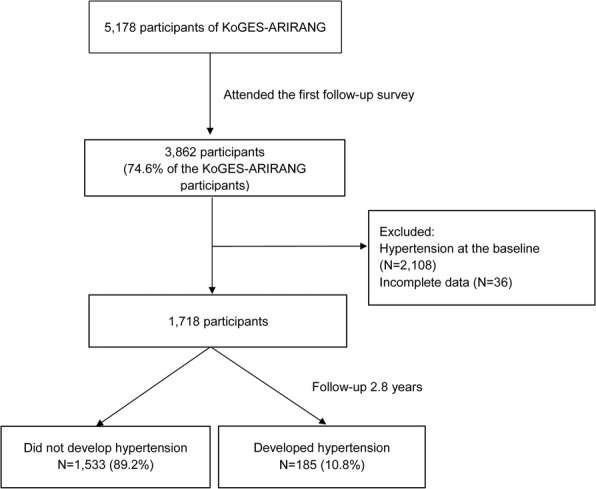
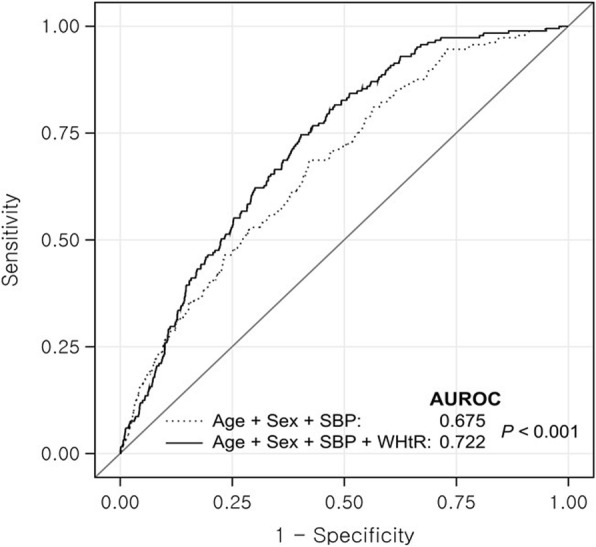
BACKGROUND: Several anthropometric indices such as body mass index (BMI) and waist circumference (WC) have been examined as indicators of cardiovascular diseases, in both adults and children. However, the waist-to-height ratio (WHtR) is considered a better predictor for the detection of cardiovascular risk factors, than BMI. We investigated the association between the WHtR and incident hypertension. METHODS: A total of 1718 participants, aged 39-72 years, were recruited in this longitudinal study. Participants were divided into 2 groups according to the development of hypertension during 2005-2008 (baseline) and 2008-2011 (follow-up). Logistic regression models were used to evaluate the WHtR as a significant predictor of hypertension. RESULTS: During the 2.8 years of follow-up, 185 new cases of hypertension (10.8%) were diagnosed, with an incidence rate of approximately 4% per year. The WHtR was significantly higher in the participants who had developed hypertension than in those who had not (0.54 ± 0.05 vs. 0.51 ± 0.05, p < 0.001). After adjusting for age, sex, smoking status, alcohol intake, regular exercise status, total cholesterol, and systolic blood pressure, at the baseline, the logistic regression analysis indicated that the participants with the highest quartile of the WHtR (WHtR≥0.54) were 4.51 times more likely to have hypertension than those with the lowest quartile (odds ratio 4.51; 95% confidence interval 2.41-8.43; p < .0001). The area under the curve for the WHtR, in identifying hypertension risk, was significantly greater than that for the BMI (p = 0.0233). CONCLUSION: A positive association between WHtR and the incidence of hypertension was observed in Korean adults. The findings of the present community-based prospective study suggest that the WHtR may be a better predictor of incident hypertension.
Overview
The claims and statistics of this paper haven’t been checked yet.
Free: it reads the open-access text and checks the first 5 claims that cite a source we can check. Create a free account to check every claim.
Integrity signals
Registry
Cites
Statistics
Figures
Verification
Claims the paper makes
The claims and statistics of this paper haven’t been checked yet.
Free: it reads the open-access text and checks the first 5 claims that cite a source we can check. Create a free account to check every claim.
Claims other papers make about this one
Each is checked against this paper’s own text: does it say what the citing paper says it does?
The source backs part of the claim, not all of it — or backs it for a different population, condition or comparison.
In the citing paper
“It has been identified as a cardiovascular disease predictor (17, 18).”
From The waist-to-height ratio is a good predictor for insulin resistance in women with polycystic ovary syndrome (2024) · cites this paper as [17]
Experimental — accuracy not yet measured
Self-check
Percentages, sums and reported differences re-computed from the paper’s own numbers.
The self-check needs the paper’s full text.
Citations
Cites
Ashwell, M., Gunn, P., & Gibson, S. (2012) · Obesity Reviews · doi:10.1111/j.1467-789x.2011.00952.x · Cited by 2,130 · cited 2×
“In contrast, WHtR values have been demonstrated to be steady, across age groups, gender, and ethnicities, and are even easier to measure than BMI [12, 27].”
BackgroundPouliot, M.-C., Després, J.-P., Lemieux, S., Moorjani, S., Bouchard, C., Tremblay, A., Nadeau, A., & Lupien, P. J. (1994) · The American Journal of Cardiology · doi:10.1016/0002-9149(94)90676-9 · Cited by 2,085 · cited 1×
“WC is strongly associated with visceral fat depots [24] and is now widely used in the measurement of abdominal obesity [21].”
BackgroundBrowning, L. M., Hsieh, S. D., & Ashwell, M. (2010) · Nutrition Research Reviews · doi:10.1017/s0954422410000144 · Cited by 1,400 · cited 4×
“of the age-, gender-, and ethnicity-specific values [12].”
BackgroundInfluentialAshwell, M., & Hsieh, S. D. (2005) · International Journal of Food Sciences and Nutrition · doi:10.1080/09637480500195066 · Cited by 1,065
The Canadian Heart Health Surveys Research Group, Dobbelsteyn, C., Joffres, M., MacLean, D., & Flowerdew, G. (2001) · International Journal of Obesity · doi:10.1038/sj.ijo.0801582 · Cited by 464
Waist-to-Height Ratio, a Useful Index to Identify High Metabolic Risk in Overweight Children
Maffeis, C., Banzato, C., & Talamini, G. (2008) · The Journal of Pediatrics · doi:10.1016/j.jpeds.2007.09.021 · Cited by 419 · cited 1×
“in children as well as in adults, without age-related distinctions [1, 13, 14].”
BackgroundPrevalence of Overweight and Obesity among Chinese Adults: Role of Adiposity Indicators and Age
Xu, W., Zhang, H., Paillard-Borg, S., Zhu, H., Qi, X., & Rizzuto, D. (2016) · Obesity Facts · doi:10.1159/000443003 · Cited by 417
Jousilahti, P., Tuomilehto, J., Vartiainen, E., Pekkanen, J., & Puska, P. (1996) · Circulation · doi:10.1161/01.cir.93.7.1372 · Cited by 401 · cited 1×
“Various prospective studies revealed the association of BMI, a measure of overall obesity, and hypertension [31, 32], while other follow-up studies investigated the WC, WHtR, and WHR, measurements in the case of abdominal adiposity, and found them to be significantly associated with the risk of hypertension [3].”
BackgroundHsieh, S. D., Yoshinaga, H., & Muto, T. (2003) · International Journal of Obesity · doi:10.1038/sj.ijo.0802259 · Cited by 400 · cited 1×
“In Japan, various cross-sectional studies have demonstrated a stronger association of WHtR with cardiovascular risk factors, compared to BMI and WC [2, 6, 9].”
BackgroundDoll, S., Paccaud, F., Bovet, P., Burnier, M., & Wietlisbach, V (2002) · International Journal of Obesity · doi:10.1038/sj.ijo.0801854 · Cited by 311
Cited by
Waist-to-height ratio and non-alcoholic fatty liver disease in adults
Sheng, G., Xie, Q., Wang, R., Hu, C., Zhong, M., & Zou, Y. (2021) · BMC Gastroenterology · doi:10.1186/s12876-021-01824-3 · Cited by 70
Zhang, Y., Gu, Y., Wang, N., Zhao, Q., Ng, N., Wang, R., Zhou, X., Jiang, Y., Wang, W., & Zhao, G. (2019) · BMC Public Health · doi:10.1186/s12889-019-7366-0 · Cited by 55
Li, Y., Gui, J., Zhang, X., Wang, Y., Mei, Y., Yang, X., Liu, H., Guo, L., Li, J., Lei, Y., et al. (2023) · BMC Cardiovascular Disorders · doi:10.1186/s12872-023-03232-9 · Cited by 44
“not applicable due to the differences of race and human body composition [63].”
BackgroundResultAlshamiri, M. Q., Habbab, F. M. A., AL-Qahtani, S. S., Alghalayini, K., Al-Qattan, O. M., & Elshaer, F. (2020) · Cardiology Research and Practice · doi:10.1155/2020/4250793 · Cited by 44
Zhang, X., Ye, R., Sun, L., Liu, X., Wang, S., Meng, Q., & Chen, X. (2023) · BMC Public Health · doi:10.1186/s12889-023-15208-7 · Cited by 32
“Lee et al. suggested that WHR was correlated with the incidence of hypertension in both sexes of middle-aged Korean people [7].”
BackgroundInfluentialThe magnitude of hypertension and its risk factors in southern Ethiopia: A community based study
Zekewos, A., Egeno, T., & Loha, E. (2019) · PLoS ONE · doi:10.1371/journal.pone.0221726 · Cited by 29
“Previous studies reported that increased WHtR strongly predicted the probability of developing hypertension in both children and adults [33,34].”
BackgroundGolabi, S., Ajloo, S., Maghsoudi, F., Adelipour, M., & Naghashpour, M. (2021) · Journal of International Medical Research · doi:10.1177/03000605211049960 · Cited by 26
“Previous epidemiological studies have shown that central obesity indicators, such as WHtR, are more closely associated with CVD risk factors than BMI, which is consistent with our results.(41,44) This may be because ectopic fat deposition triggers pathological metabolic reactions, which increases the risk of metabolic…”
ResultLee, W.-C., Wu, P.-Y., Huang, J., Tsai, Y., Chiu, Y., Chen, S., Chang, J., & Chen, H. (2022) · Journal of Personalized Medicine · doi:10.3390/jpm12060972 · Cited by 25
Evolving perspectives on evaluating obesity: from traditional methods to cutting-edge techniques
Wang, H., Qin, Y., Niu, J., Chen, H., Lu, X., Wang, R., & Han, J. (2025) · Annals of Medicine · doi:10.1080/07853890.2025.2472856 · Cited by 31
“WHtR also outperformed BMI in identifying hypertension risk [95].”
Sgambat, K., Clauss, S. B., & Moudgil, A. (2018) · Pediatric Transplantation · doi:10.1111/petr.13300 · Cited by 18
Chen, N., Hu, L., Sun, Y., Dong, J., Chu, X., Lu, Y., Liu, Y., Ma, L.-L., & Yan, Y. (2022) · Obesity Research & Clinical Practice · doi:10.1016/j.orcp.2022.12.005 · Cited by 19
Zhu, M., Wang, K., Feng, J., Liu, Y., Guan, M., Wang, Y., & Wu, X. (2024) · Frontiers in Endocrinology · doi:10.3389/fendo.2024.1502321 · Cited by 14
Rezaianzadeh, A., Johari, M. G., Baeradeh, N., Seif, M., & Hosseini, S. V. (2024) · BMC Public Health · doi:10.1186/s12889-024-21082-8 · Cited by 28
Choi, J. R., Jeon, M., & Koh, S. B. (2020) · BMC Medical Genetics · doi:10.1186/s12881-019-0927-3 · Cited by 15
Self-citationThe Effect of Nutritional Mobile Apps on Populations With Cancer: Systematic Review
Ng, K. L. S., Munisamy, M., Lim, J. B. Y., & Alshagga, M. A. (2024) · JMIR Cancer · doi:10.2196/50662 · Cited by 13
Çoner, A., Gençtoy, G., Akıncı, S., Altın, C., & Müderrisoğlu, H. (2019) · Blood Pressure Monitoring · doi:10.1097/mbp.0000000000000378 · Cited by 12
Kawamoto, R., Kikuchi, A., Akase, T., Ninomiya, D., & Kumagi, T. (2020) · Clinical Hypertension · doi:10.1186/s40885-020-00142-2 · Cited by 14
Hu, H., Han, Y. Y., Liu, Y., Guan, M., & Wan, Q. (2022) · Frontiers in Endocrinology · doi:10.3389/fendo.2022.973823 · Cited by 9
Modjadji, P., Salane, M. C., Mokwena, K. E., Mudau, T. S., & Mphekgwana, P. M. (2022) · Applied Sciences · doi:10.3390/app12094697 · Cited by 11
Minh, Q. N., & Vo, M. H. N. (2020) · Integrated Blood Pressure Control · doi:10.2147/ibpc.s281996 · Cited by 11
Association of waist-to-height ratio with hypertension and its subtypes in southern China
Lu, P., Zhu, L., Hu, L., Bao, H., Huang, X., Zhou, W., Wang, T., Liu, X., Li, J., Li, P., et al. (2022) · Journal of Human Hypertension · doi:10.1038/s41371-021-00566-9 · Cited by 7
Lu, Y., Dong, J., Sun, Y., Hu, L., Liu, Y., Chu, X., & Yan, Y. (2022) · International Journal of Obesity · doi:10.1038/s41366-022-01081-8 · Cited by 7
“With the prevalence of overweight, obesity, and abnormal obesity sharply increasing in current China [35, 36], it is urgent that accurate prevention strategies for CVD should be advanced.”
BackgroundInfluentialHwang, S., Cho, Y., & Kang, N. L. (2019) · Medical Hypotheses · doi:10.1016/j.mehy.2019.109471 · Cited by 7
Wang, K., Pan, L., Wang, D., Dong, F., Yu, Y., Wang, L., Li, L., Liu, T., Sun, L., Zhu, G., et al. (2020) · Medicine · doi:10.1097/md.0000000000020176 · Cited by 7
Andishgar, A., Bazmi, S., Tabrizi, R., Rismani, M., Keshavarzian, O., Pezeshki, B., & Ahmadizar, F. (2024) · PLoS ONE · doi:10.1371/journal.pone.0300201 · Cited by 11
“Choi et al. in a large longitudinal study with a good sample size concluded that WHR has a significant and strong relationship with the occurrence of hypertension over time [39].”
BackgroundBody adiposity measures and risk of adolescent hypertension among the postpubescents Northeast India
Meitei, S. Y., Pao, P. S. V., Devi, T. C., Sharma, B. S., & Konjengbam, H. (2021) · American Journal of Human Biology · doi:10.1002/ajhb.23675 · Cited by 7
“Simultaneously, few suggest WHtR could be a better assessment (Caminha et al., 2017; Choi et al., 2018; Rodea-Montero et al., 2014).”
BackgroundSegheto, W., Marins, J. C. B., Amorim, P. R. D. S., Franco, A. B., Almeida, M. A., Alvarenga, N. V. A., & Lima, L. M. (2021) · Nutrición Hospitalaria · doi:10.20960/nh.03496 · Cited by 6
Wu, Y., Tong, Y., Wang, H., Zhang, X., Long, Y., Li, Q., Ren, J., & Liu, C. (2023) · Frontiers in Public Health · doi:10.3389/fpubh.2023.1122995 · Cited by 9
Ali, M. W., Corsi, D. R., & Agbaje, A. O. (2026) · Journal of Nutrition · doi:10.1016/j.tjnut.2026.101426 · Cited by 5
“The studies reported that the most significant association with high BP was found with WHtR values > 0.53, whereas categorisation of WHtR into quartiles in a Korean cohort (participants aged 40 – 70) reported an equivalent strength of association at a WHtR cut point of 0.51 [22,23,27].”
InfluentialKong, J., Lee, H., Kim, H., Yim, Y., Lee, S., Hong, S., Smith, L., Pizzol, D., Kim, J., Woo, H. G., et al. (2025) · Medicine · doi:10.1097/md.0000000000043773 · Cited by 4
“[6,22] In addition, most previous studies have not sufficiently addressed sex differences in these trends and associations.”
Prevalence and knowledge of cardiovascular disease risk factors among young adults in Saudi Arabia
Alloubani, A., Nimer, R. M., Ayaad, O. A., Farhan, F., Samara, R., Abdulhafiz, I., Saleh, A., Qashou, H., & Akhu‐Zaheya, L. (2022) · Obesity Medicine · doi:10.1016/j.obmed.2022.100457 · Cited by 5
Nagayama, D., Watanabe, Y., Shirai, K., Ohira, M., & Saiki, A. (2025) · Reviews in Cardiovascular Medicine · doi:10.31083/rcm26583 · Cited by 4
“Besides, a prospective study of 1718 Korean general residents found that WHtR, unlike BMI and waist-to-hip ratio, was independently associated with new-onset hypertension [50].”
Central obesity and hypertension among rural adults of Paschim Medinipur, West Bengal, India
Chanak, M., & Bose, K. (2019) · Anthropological Review · doi:10.2478/anre-2019-0017 · Cited by 7
“Associations between HT and WHtR have been documented in some studies wherein WHtR has been considered as the best indicator of HT and estimation of body fat (Nagai et al. 2008; Zhou et al. 2008; Choi et al. 2018).”
BackgroundAlqahtani, S. A., Al-Raddadi, R. M., Ajabnoor, G., AlRaddadi, Z., Al-Ahmadi, J., Alhabash, A., Hakim, R., Alseraihi, L. I., & Bahijri, S. (2024) · Nutrition and Metabolic Insights · doi:10.1177/11786388241259942 · Cited by 3
Yang, Y., Xie, M., Zeng, Y., Yuan, S., Tang, H., Dong, Y., Zou, Z., Dong, B., Wang, Z., Ye, X., et al. (2021) · PLoS ONE · doi:10.1371/journal.pone.0257144 · Cited by 4
Hirigo, A. T., Yilma, D., Astatkie, A., & Debebe, Z. Y. (2024) · Therapeutic Advances in Infectious Disease · doi:10.1177/20499361241306942 · Cited by 7
“The findings are consistent with previous studies highlighting the association between elevated blood pressure and inadequate vegetable intake, 57 lipid profiles, 44 and high WHtR. 58 This study has several limitations.”
Zhang, Y.-X., & Wang, S. (2019) · Annals of Human Biology · doi:10.1080/03014460.2019.1640792 · Cited by 3
“A positive association between WHtR and the incidence of hypertension was observed in Korean adults, where the participants with the highest quartile of the WHtR (WHtR 0.54) were 4.51- times more likely to have hypertension than those with the lowest quartile (WHtR < 0.47) (Choi et al. 2018).”
BackgroundInfluentialKumar, S., Kant, R., Yadav, P., Natarajan, K., Bahurupi, Y. A., & Mishra, A. (2021) · Cureus · doi:10.7759/cureus.16014 · Cited by 3
“514, which concluded that WHtR could be a better indicator for diagnosing hypertension than BMI among the study population in the present study, which could be substantiated with results of previous studies [28-30].”
ResultPrediction of high visceral adipose tissue for sex‐specific community residents in Taiwan
Chang, Y., Chang, C., Liu, C., Chang, Y., & Shun, S. (2024) · Nursing and Health Sciences · doi:10.1111/nhs.13104 · Cited by 2
Sartika, R. A. D., Sigit, F. S., Shukri, N. H. M., Purwanto, E., Yunita, J., & Lubis, P. N. (2025) · Journal of Nutrition and Metabolism · doi:10.1155/jnme/5815261 · Cited by 5
“Other studies identifed WHR as the anthropometric index that was most strongly associated with the risk of DM, while WHtR was used for HTN [11, 12].”
Obesity in Older Adults Indonesia: The Role of Healthy Behaviour Factors and Metabolic Syndrome
Sudikno, S., Sulistyowati, N., Nainggolan, O., & Tjandrarini, D. H. (2021) · Global Journal of Health Science · doi:10.5539/gjhs.v13n6p124 · Cited by 4
“Other epidemiological studies showed that central obesity indicators such as abdominal circumference and waist-to-hip ratio are more closely related to metabolic disease risk factors than BMI (Tran et al., 2018; Choi et al., 2018).”
BackgroundGumilang, R. A., Fan, Y., Wu, S.-H., & Bai, C. (2024) · BMC Cardiovascular Disorders · doi:10.1186/s12872-024-03817-y · Cited by 2
“BMI, body mass index; WHR, waist‑to‑hip ratio; WC, waist circumference; WHtR, waist‑to‑height ratio 0.722, p = 0.001) [34].”
ResultInfluentialMiri, N., Noroozi, M., Zavoshy, R., & Ezzeddin, N. (2019) · International journal of epidemiologic research · doi:10.15171/ijer.2019.21 · Cited by 4
New Obesity Index Associated with Fitness Among Korean Adults
Kang, N. L. (2021) · International Journal of Clinical and Experimental Medical Sciences · doi:10.11648/j.ijcems.20210701.12 · Cited by 2
“Therefore, many studies have considered the waist-to-height ratio (WHtR), which is defined as the waist circumference (WC) divided by the height, as an indicator of abdominal obesity or a parameter to predict the risk of cardiovascular diseases [15-18].”
BackgroundBora, K., Natarajaseenivasan, K., Gogoi, A. J., Garh, N., Rabidas, M., Chanda, G., Das, R., & Borah, P. K. (2025) · The Indian Journal of Medical Research · doi:10.25259/ijmr_881_2024 · Cited by 1
“According to a Korean study 24 , BMI is still a substantial and useful indicator for hypertension even though other anthropometric measurements, such as the waist-to-height ratio (WHtR), could be more predictive in some situations.”
Asociación de sobrepeso y obesidad con cifras de presión elevada en niños de edad escolar
Pérez, A. J. S., Carrillo-Flores, G., & Morales, A. L. G. (2020) · Atención Familiar · doi:10.22201/facmed.14058871p.2020.3.75896 · Cited by 3
Tanglai, W., Jeamjitvibool, T., Chen, P., Lockwood, M. B., & Cajita, M. (2024) · The Journal of Cardiovascular Nursing · doi:10.1097/jcn.0000000000001147 · Cited by 2
Sgambat, K., Amatya, K., Vogel, S., Clauss, S. B., & Moudgil, A. (2025) · Pediatric Nephrology · doi:10.1007/s00467-024-06635-8 · Cited by 1
“This theory is further supported by evidence that WHR is a better indicator of CV risk in geographic regions where central adiposity and short stature are endemic [31, 32].”
Estimation of optimal obesity cut-offs among Tripuri and Halam women of Tripura, Northeast India
Chaudhuri, R., Das, P., Sarkar, P., Chatterjee, D., & Bandyopadhyay, A. R. (2020) · Papers on Anthropology · doi:10.12697/poa.2020.29.2.07 · Cited by 2
“109) × √{WT(kg)/HT (m)}] were calculated using the standard formulae [15, 16, 17, 18].”
MethodAsiri, F., Dixit, S., Alsubaie, S. F., Gular, K., Alshahrani, A., Reddy, R. S., Gautam, A. P., & Tedla, J. S. (2022) · International Journal of Environmental Research and Public Health · doi:10.3390/ijerph192114283 · Cited by 1
“Another anthropometric measure, WHtR, has been associated with the risk of hypertension among the Korean population [26].”
BackgroundObesity and Cardiovascular Outcomes in Children With CKD: Does Sex Matter?
Sgambat, K., & Moudgil, A. (2020) · American Journal of Kidney Diseases · doi:10.1053/j.ajkd.2020.02.440 · Cited by 1
New method for evaluating fitness using the waist-to-height ratio among Korean adultsPreprint
Kang, N. L. (2020) · arXiv (Cornell University) · doi:10.48550/arxiv.2002.05114
“…considered the waist-to-height ratio (WHtR), which is defined as the waist circumference (WC) divided by the height, as an indicator of abdominal obesity or a parameter to predict the risk of cardiovascular diseases (Choi et al., 2018; Hsieh et al., 2003; Shen et al., 2017; Vasquez et al., 2019).”
BackgroundAnalysis of fitness among Korean adults by the cause–effect relation in lump mean scheme
Kang, N. L. (2021) · BMC Sports Science Medicine and Rehabilitation · doi:10.1186/s13102-021-00338-5
Lu, Y., Dong, J., Yue, S. U. N., Hu, L., Liu, Y., Chu, X., & Yan, Y.-X. (2020) · Research Square · doi:10.21203/rs.3.rs-127503/v1
Measurement of Waist to Height Ratio as a Screening Tool for Obesity among Students
Jayabharathi, B. (2020) · Indian Journal of Public Health Research & Development · doi:10.37506/ijphrd.v11i8.10891
Ajetunmobi, O. A., Olayiwola, I. O., & John, E. P. (2022) · Acta Scientifci Nutritional Health · doi:10.31080/asnh.2022.06.1150
Paese, M. C. D. S. (2022) · Digital Library of Theses and Dissertations (Universidade de São Paulo) · doi:10.11606/t.22.2022.tde-08032023-163557
An investigation of body mass distributional changes in Australia, 1995–2017/18
Vijayasivajie, A., Mukhopadhaya, P., & Heaton, C. (2023) · Economics & Human Biology · doi:10.1016/j.ehb.2023.101270
“Our results align with studies (Choi et al., 2018; Lee et al., 2008; Schneider et al., 2010) that document distinct health risk profiles for general and central body mass.”
ResultNiba, L. L., Njiawah, A. C., & Navti, L. K. (2023) · Journal of Public Health and Epidemiology · doi:10.5897/jphe2023.1477
Vengidasamy, P., Tamrin, S. B. M., Hj, M. A. B., Rahman, A., & Singh, G. S. A. H. (2024) · International Journal of Management and Human Sciences · doi:10.31674/mjmr.2024.v08i01.002 · Cited by 1
Breaking the Cycle: Enhancing Cardiovascular Health in the Elderly Through Group Exercise
Bilajac, L., Glavić, M. M., Zulle, K., Bilobrk, M., Juraga, D., Jelaković, A., Rukavina, T., Vasiljev, V., & Jelaković, B. (2025) · Life · doi:10.3390/life15020206
“Waist-to-hip ratio (WHR) and waist-to-height ratio (WHtR) provide complementary insights by indicating central adiposity, which is more strongly associated with cardiometabolic risks [21,22].”
Health Risk Associated with Obesity in North Indian Rural Population: Population Based Survey
Kant, R., Karna, G., Singh, M., Kishor, S., & Barnwal, S. (2025) · Indian Journal of Community Medicine · doi:10.4103/ijcm.ijcm_817_24
“[4,5] This study aims at understanding the patterns of obesity with respect to various demographic profiles.”
Inequality of Opportunity in Body Mass: Evidence From Australia
Vijayasivajie, A., Mukhopadhaya, P., & Heaton, C. (2025) · Health Economics · doi:10.1002/hec.4966
“This is warranted because WHtR and BMI are distinct measures of body mass with different health risk profiles (Choi et al. 2018; Lee et al. 2008; Schneider et al. 2010).”
Pérez-Luque, E. L., Alvarado, M. I. C., & Figueroa‐Vega, N. (2025) · International Journal of Medical Science and Health Research · doi:10.51505/ijmshr.2025.9212
Butt, S. A. (2025) · Journal of General and Family Medicine · doi:10.1002/jgf2.70057
“3 By leaving out these variables in the multivariate analysis, this study might have overestimated the apparent independent role of the thigh circumference to hypertension risk; some of the relationship may in fact be because of central fat deposits.”
Additional file 1 of Waist-to-height ratio and non-alcoholic fatty liver disease in adults
盛国太, Xie, Q., Wang, R., Hu, C., Zhong, M., & Zou, Y. (2021) · Figshare · doi:10.6084/m9.figshare.14676698
Gumilang, R. A., Fan, Y.-C., Wu, S.-H., & Bai, C.-H. (2024) · Figshare · doi:10.6084/m9.figshare.25397482
Xing, K., Ge, C., Xu, L., & Liu, L. (2026) · Medicine · doi:10.1097/md.0000000000046675 · Cited by 1
Determining Factors of Stroke Preventive Behaviors among Risk Persons in Community, Thailand
Sangsaikaew, A., Junsevg, K., Utaisang, A., Thanyawarathorn, T., & Thongsaman, R. (2025) · Malaysian Journal of Medicine and Health Sciences · doi:10.47836/mjmhs.21.5.8
Wijewickrama, E., Dj, F., Wickramarachchi, A. W., Katulanda, G. W., Wickramasinghe, P., & Katulanda, P. (2026) · BMC Cardiovascular Disorders · doi:10.1186/s12872-026-05560-y
“In contrast, males exhibited higher prevalence of hypertension in the 30–39 and 60–69 age groups, consistent with increased exposure to lifestyle-related risks such as alcohol consumption [23], smoking [24], and higher waist-to-height ratios [25].”
Feng, Y., Sun, P., Zhang, X., Zhao, D., 褚云起, Liu, Z., Ferrari, G., Rezende, L. F. M., Ge, Y., Zhang, H., et al. (2026) · BMC Public Health · doi:10.1186/s12889-026-27691-9
“Although both BMI and WHtR have been associated with elevated blood pressure in adolescents, findings from cross-sectional studies remain inconsistent [10–12], and existing longitudinal research has mainly focused on adults [13, 14].”
Ahmad, S., Ansari, M. A., Abedi, A. J., & Khalil, S. (2026) · Journal of the Epidemiology Foundation of India · doi:10.56450/jefi.2026.v4i01.005
“Current research has highlighted the superiority of central adiposity assessments to conventional BMI in the prediction of cardiovascular events(7,11).”
InfluentialOksidriyani, S., Huriyati, E., Purba, M. B., Nareswara, A. R., Habibi, N. A., & Salsabilla, J. (2026) · BIO Web of Conferences · doi:10.1051/bioconf/202624705009
Udroiu, I.-V., Albai, A., Lazăr, S., Braha, A., Gaiţă, L., Timar, B., & Sima, A. C. (2026) · Diagnostics · doi:10.3390/diagnostics16172837 · Cited by 1
“Higher values of WHtR significantly increased the risk of developing hypertension over time [83].”
Adiposity and Blood Pressure in Children and Adolescents: A National Cross-Sectional Study in China
Wang, L., Yang, S., Li, Y., Zhang, L., Chen, W., Yan, J., Zhu, W., Zhai, L., & Sun, Y. L. (2026) · Healthcare · doi:10.3390/healthcare14183059
“Among various anthropometric measures, body mass index (BMI) and waist-to-height ratio (WHtR) have emerged as simple and widely used indicators for assessing obesity-related cardiometabolic risk in children and adolescents [18–20].”
Uzomba, G. C., Nwafor, C., Ugah, C., Ogbodo, H., Amaku, C., Onwe, K., Cookey-Gam, T.-I., Obaje, S. G., & Mbajiorgu, E. F. (2026) · International Journal of Hypertension · doi:10.1155/ijhy/5085833
Association between waist-height ratio and hypertension: results from the lookup 8+ study
D’Ignazio, F., Giordano, G., Risoli, A., Mastrantoni, L., Calvani, R., Salini, S., Russo, A., Galluzzo, V., Ciciarello, F., & Landi, F. (2026) · Frontiers in Medicine · doi:10.3389/fmed.2026.1975590
Metadata
- Authors
- Choi, J. R., Koh, S. B., & Choi, E.
- Affiliations
- Yonsei University (KR)
- Corresponding author
- Koh, Sang Baek
- Venue
- BMC Public Health
- Published
- 2018-06-19
- Volume
- 18
- Issue
- 1
- Pages
- 767-767
- ISSN
- 1471-2458 (ISSN-L)
- PMC
- PMC6008942
- OpenAlex
- W2808813716
- Cited by
- 77
- References
- 36
- Citations by year
- 2026: 10 · 2025: 12 · 2024: 11 · 2023: 5 · 2022: 9 · 2021: 11 · 2020: 11 · 2019: 7 · 2018: 1
- FWCI
- 5.67
- Type
- journal article
- Language
- en
- Open access
- gold
- doi.org
- Licence
- cc-by
- creativecommons.org/licenses/by/4.0/ (tdm)
- Locations
- BMC Public Health (publishedVersion, cc-by)
- Europe PMC (PubMed Central) (publishedVersion, other-oa)
- PubMed Central (publishedVersion, cc-by)
- PubMed (publishedVersion)
- DOAJ (DOAJ: Directory of Open Access Journals) (submittedVersion)
- Funders
- the Basic Science Research Program through the National Research Foundation of Korea (Ministry of Education (2017R1D1A3B03034119).)
- the Korea Centers for Disease Control and Prevention (2005-E71013-00, 2006-E71002-00, 2007-E71013-00, 2008-E71004-00, 2009-E71006-00, and 2010-E71003-00)
- Medical Research Center Program (2017R1A5A2015369)
- Topics
- Health Sciences › Medicine › Cardiology and Cardiovascular Medicine › Blood Pressure and Hypertension Studies
- Health Sciences › Medicine › Endocrinology, Diabetes and Metabolism › Diabetes, Cardiovascular Risks, and Lipoproteins
- Health Sciences › Medicine › Cardiology and Cardiovascular Medicine › Cardiovascular Function and Risk Factors
- Keywords
- waist-to-height ratio, hypertension incidence, anthropometric indices, body mass index, cardiovascular risk factors, hypertension risk prediction, Korean adults
- MeSH terms
- Adult, Aged, Female, Humans, Hypertension, Longitudinal Studies, Male, Middle Aged, Predictive Value of Tests, Prospective Studies, Risk Factors, Incidence, Republic of Korea, Waist-Height Ratio
About these checks
Registry, retraction, Cites and statistics results are computed, not judged, with one exception: a printed reference that no index lists is read once by a model before it counts as a citation error. Claims are extracted by a model and kept only when their quote appears verbatim in the text; each cited source is then checked, with a model’s help, for whether it says what the claim relies on. Those verdicts can be wrong — read the claim’s quote and the cited source before relying on one.
Statistics and arithmetic are recomputed, not judged.
Confidence bands are shown only for fields calibrated on our annotated test set. None is calibrated yet, so no band is shown.
What counts as a claim ›How we measure confidence ›How we check this ›
Are you an author, or do you see a problem with this page? Request a review
Data sources
Bibliographic data: Semantic Scholar, OpenAlex, Crossref.
Contains information from the Semantic Scholar Academic Graph Datasets, made available under the ODC Attribution License (ODC-BY 1.0).
Semantic Scholar’s data is described in: Kinney, R., et al. (2023). The Semantic Scholar Open Data Platform. arXiv:2301.10140.
