

Connection to the land as a youth-identified social determinant of Indigenous Peoples’ health
Open accessThe DOI matches its Crossref record; 43 of the 46 references it cites were found in a registry or an index.
Abstract
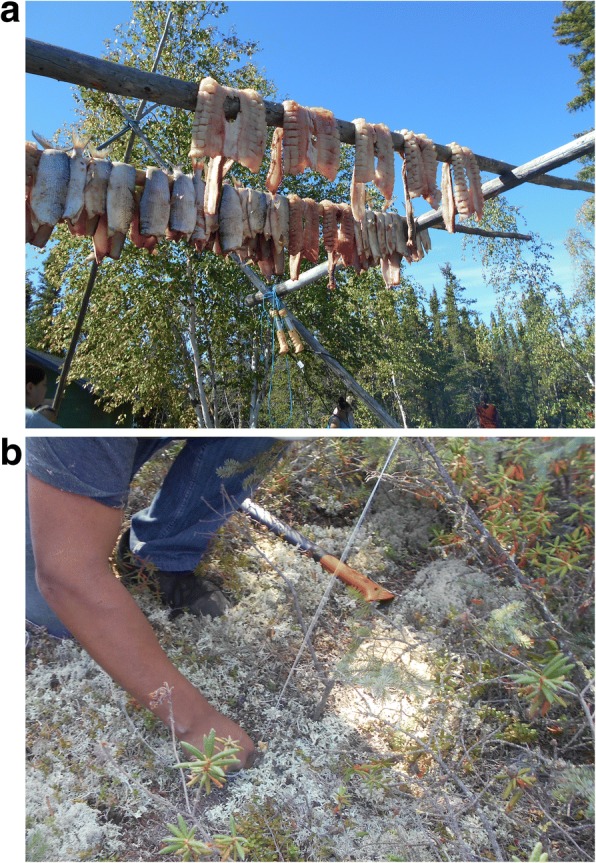
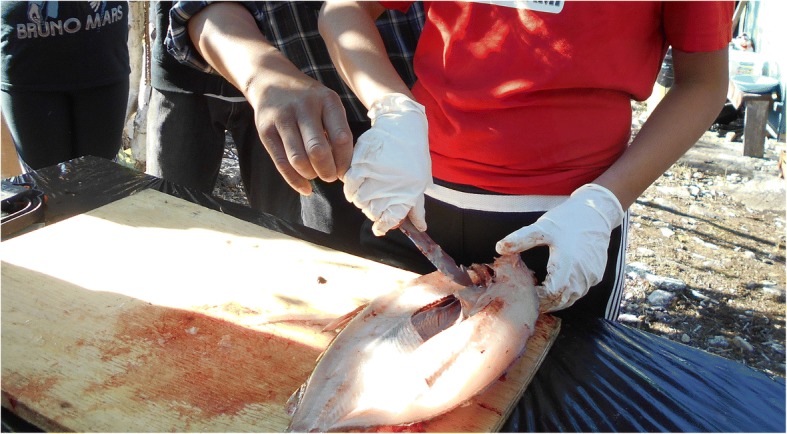
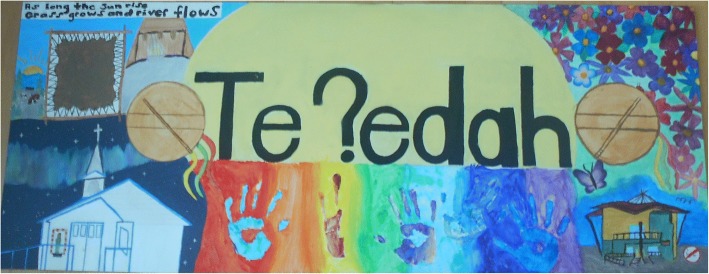
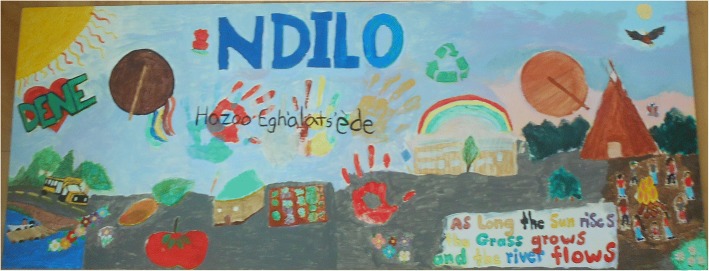
BACKGROUND: Social determinants of Indigenous health are known to include structural determinants such as history, political climate, and social contexts. Relationships, interconnectivity, and community are fundamental to these determinants. Understanding these determinants from the perspective of Indigenous youth is vital to identifying means of alleviating future inequities. METHODS: In 2016, fifteen Yellowknives Dene First Nation (YKDFN) youth in the Canadian Northwest Territories participated in the 'On-the-Land Health Leadership Camp'. Using a strength- and community-based participatory approach through an Indigenous research lens, the YKDFN Wellness Division and university researchers crafted the workshop to provide opportunities for youth to practice cultural skills, and to capture the youth's perspectives of health and health agency. Perspectives of a healthy community, health issues, and health priorities were collected from youth through sharing circles, PhotoVoice, mural art, and surveys. RESULTS: The overall emerging theme was that a connection to the land is an imperative determinant of YKDFN health. Youth identified the importance of a relationship to land including practicing cultural skills, Elders passing on traditional knowledge, and surviving off the land. The youth framed future health research to include roles for youth and an on-the-land component that builds YKDFN culture, community relations, and traditional knowledge transfer. Youth felt that a symbiotic relationship between land, environment, and people is fundamental to building a healthy community. CONCLUSION: Our research confirmed there is a direct and critical relationship between structural context and determinants of Indigenous Peoples' health, and that this should be incorporated into health research and interventions.
Overview
The claims and statistics of this paper haven’t been checked yet.
Free: it reads the open-access text and checks the first 5 claims that cite a source we can check. Create a free account to check every claim.
Integrity signals
Registry
Cites
Statistics
Figures
Verification
Claims the paper makes
The claims and statistics of this paper haven’t been checked yet.
Free: it reads the open-access text and checks the first 5 claims that cite a source we can check. Create a free account to check every claim.
Claims other papers make about this one
Each is checked against this paper’s own text: does it say what the citing paper says it does?
The cited source says what the claim attributes to it.
In the citing paper
“Reconnection to lands has been identified as a determinant of health [80], with capacity to heal the effects of dispossession [81,82].”
From Canada First Nations Strengths in Community-Based Primary Healthcare (2022) · cites this paper as [80]
Self-check
Percentages, sums and reported differences re-computed from the paper’s own numbers.
The self-check needs the paper’s full text.
Citations
Cites
Photovoice: Concept, Methodology, and Use for Participatory Needs Assessment
Wang, C., & Burris, M. A. (1997) · Health Education & Behavior · doi:10.1177/109019819702400309 · Cited by 5,551 · cited 4×
“The PhotoVoice method developed by Wang and Burris [42] presents a foundation for group participatory analysis in three stages: 1) selecting photographs that are most representative, 2) providing background for the photographs through stories, and 3) recognizing issues or themes.”
MethodInfluentialClosing the gap in a generation: health equity through action on the social determinants of health
Marmot, M., Friel, S., Bell, R., Houweling, T. A., & Taylor, S. (2008) · The Lancet · doi:10.1016/s0140-6736(08)61690-6 · Cited by 3,247
Social determinants of health: the solid facts
Wilkinson, R. G., & Marmot, M. G. (2003) · University Libraries (University of Maryland) · doi:10.13016/yroj-yfcz · Cited by 2,709
The salutogenic model as a theory to guide health promotion
ANTONOVSKY, A. (1996) · Health Promotion International · doi:10.1093/heapro/11.1.11 · Cited by 2,647 · cited 1×
“Using a health promotion lens shifts the focus from a pathogenic approach that emphasizes factors related to disease and illness to a salutogenic model that stresses positive, salutary factors that support people’s health and well-being [20, 21].”
Background(2009) · Cited by 2,537
Closing the gap in a generation: health equity through action on the social determinants of health
Reading, R. (2009) · Child: Care, Health and Development · doi:10.1111/j.1365-2214.2008.00935_10.x · Cited by 2,387
Indigenous Research Methodologies
Hanson, C. (2012) · International Journal of Critical Indigenous Studies · doi:10.5204/ijcis.v5i1.97 · Cited by 1,700
Indigenous health part 2: the underlying causes of the health gap
King, M., Smith, A., & Gracey, M. (2009) · The Lancet · doi:10.1016/s0140-6736(09)60827-8 · Cited by 1,469 · cited 1×
“The social determinants of health related to these historical contexts have largely been accepted as one of the key etiologic factors underlying high rates of illness, disease, and mortality in Indigenous populations [16].”
BackgroundIndigenous health part 1: Determinants and disease patterns
Gracey, M., & King, M. (2009) · The Lancet · doi:10.1016/s0140-6736(09)60914-4 · Cited by 1,303 · cited 1×
“These deficits are reflected in multiple adverse health outcomes, including, but not limited to, elevated rates of: infant and young child mortality, infectious diseases, malnutrition, tobacco use, accidents, interpersonal violence, homicide, suicide, obesity, cardiovascular disease, diabetes, and diseases caused by e…”
BackgroundIndigenous Research Methodologies
Chilisa, B. (2011) · Cited by 1,158
Research works printed but not linked: 10
- Reading C de Leeuw S Greenwood M Lindsay NM Reading C Chapter 1: structural determinants of aboriginal People’s health Determinants of indigenous Peoples’ health in Canada: beyond the social 2015 Toronto Canadian Scholars’ Press Inc. 3 15
- Mikkonen J Raphael D Social determinants of health: the Canadian facts 2010 Toronto York University School of Health Policy and Management
- Aboriginal Healing Foundation The healing has begun: an operational update from the Aboriginal Healing Foundation 2002 Ottawa Aboriginal Healing Foundation
- Chandler MJ Dunlop WL de Leeuw S Greenwood M Lindsay NM Reading C Cultural wounds demand cultural medicines Determinants of indigenous Peoples’ health in Canada: beyond the social 2015 Toronto Canadian Scholars’ Press Inc. 78 90
- World Health Organization World conference on social determinants of health Rio political declaration on social determinants of health 2011 Geneva World Health Organization
- Greenwood M Jones E de Leeuw S Greenwood M Lindsay NM Reading C Being at the interface: early childhood as a determinant of health Determinants of indigenous Peoples’ health in Canada: beyond the social 2015 Toronto Canadian Scholars’ Press Inc. 64 77
- Blanchet-Cohen N McMillan Z Greenwood M Indigenous youth engagement in Canada’s health care Pimatisiwin 2011 9 87 111
- Richmond C de Leeuw S Greenwood M Lindsay NM Reading C The relatedness of people, land, and health: stories from Anishinabe elders Determinants of indigenous Peoples’ health in Canada: beyond the social 2015 Toronto Canadian Scholars’ Press Inc. 47 63
- Marshall M Marshall A Bartlett C de Leeuw S Greenwood M Lindsay NM Reading C Two-eyed seeing in medicine Determinants of indigenous Peoples’ health in Canada: beyond the social 2015 Toronto Canadian Scholars’ Press Inc. 16 24
- Jardine C, Genuis S, Lukasewich M, Tang K. Participatory health risk communication: using visual messages generated by Aboriginal youth to effect change. Int J Qual Meth. 2014. 10.18357/ijih11120161602. · doi:10.18357/ijih11120161602
Cited by
Hatala, A. R., Njeze, C., Morton, D., Pearl, T., & Bird‐Naytowhow, K. (2020) · BMC Public Health · doi:10.1186/s12889-020-08647-z · Cited by 192
“To mobilize these approaches within Indigenous health contexts in Canada particularly, and global health more generally, offers limited conceptual and epistemological frameworks to understand the broader spiritual and cultural meanings attached to land and nature, and can obscure the historical processes of settler co…”
BackgroundSpiegel, S. J., Thomas, S. E., O’Neill, K., Brondgeest, C., Thomas, J., Beltran, J., Hunt, T., & Yassi, A. (2020) · International Journal of Environmental Research and Public Health · doi:10.3390/ijerph17072362 · Cited by 83
“The words of this TWN youth leader reflected the resurgence of indigenous youth across many indigenous communities in repatriating severed relationships to nature and traditional practices linked to holistic concepts of health [67], and in which stewardship is central to resilience and health [19].”
BackgroundA Scoping Review of Nature, Land, and Environmental Connectedness and Relatedness
Keaulana, S., Kahili-Heede, M. K., Riley, L., Park, M. L. N., Makua, K. L., Vegas, J. K., & Antonio, M. C. K. (2021) · International Journal of Environmental Research and Public Health · doi:10.3390/ijerph18115897 · Cited by 78
“Health equity for Indigenous people requires the understanding of land as a social determinant of health, where the wellness of land is the wellness of people [97,100].”
BackgroundReclaiming Indigenous Health in the US: Moving beyond the Social Determinants of Health
Carroll, S. R., Suina, M., Jäger, M. B., Black, J. L., Cornell, S., Gonzales, A. A., Jorgensen, M., Palmanteer-Holder, N. L., Rosa, J. S. D. L., & Teufel‐Shone, N. I. (2022) · International Journal of Environmental Research and Public Health · doi:10.3390/ijerph19127495 · Cited by 75
Ahmed, F., Zuk, A. M., & Tsuji, L. J. S. (2021) · International Journal of Environmental Research and Public Health · doi:10.3390/ijerph18137099 · Cited by 88
“To promote and maintain these changes, establishing community support networks for individuals has also been shown to be a beneficial factor for these health interventions [39,50].”
BackgroundInfluentialNinomiya, M. E. M., Burns, N., Pollock, N. J., Green, N., Martin, J., Linton, J., Rand, J., Brubacher, L. J., Keeling, A., & Latta, A. (2023) · The Lancet Planetary Health · doi:10.1016/s2542-5196(23)00079-7 · Cited by 94
A Systematic Methods Review of Photovoice Research with Indigenous Young People
Anderson, K. M., Elder‐Robinson, E., Howard, K., & Garvey, G. (2023) · International Journal of Qualitative Methods · doi:10.1177/16094069231172076 · Cited by 78
Galway, L. P., Esquega, E., & Jones-Casey, K. (2022) · Social Science & Medicine · doi:10.1016/j.socscimed.2022.114700 · Cited by 60
Josewski, V., de Leeuw, S., & Greenwood, M. (2023) · International Journal of Environmental Research and Public Health · doi:10.3390/ijerph20054319 · Cited by 57
Enhancing health and wellness by, for and with Indigenous youth in Canada: a scoping review
Okpalauwaekwe, U., Ballantyne, C., Tunison, S., & Ramsden, V. R. (2022) · BMC Public Health · doi:10.1186/s12889-022-14047-2 · Cited by 55
“Other facilitators included: reliance on the wisdom, skills, and teachings of community Elders, Traditional Knowledge Keepers and community leaders in the pursuit of health and wellness promotion with Indigenous youth [5, 16, 44, 72, 77, 79–81, 83, 84]; taking responsibility for one’s journey to wellness [44, 57, 72,…”
BackgroundResultInfluentialLeyton-Flor, S. A., & Sangha, K. K. (2024) · The Extractive Industries and Society · doi:10.1016/j.exis.2024.101429 · Cited by 73
American Indian/Alaska Native Child Health and Poverty
Empey, A., Garcia, A., & Bell, S. (2021) · Academic Pediatrics · doi:10.1016/j.acap.2021.07.026 · Cited by 42
Morton, D., Bird‐Naytowhow, K., Pearl, T., & Hatala, A. R. (2020) · Health & Place · doi:10.1016/j.healthplace.2019.102268 · Cited by 41
What Is Wellbeing, and What Is Important for Wellbeing? Indigenous Voices from across Canada
Tsuji, S. R. J., Zuk, A. M., Solomon, A., Edwards-Wheesk, R., Ahmed, F., & Tsuji, L. J. S. (2023) · International Journal of Environmental Research and Public Health · doi:10.3390/ijerph20176656 · Cited by 60
Stelkia, K., Beck, L., Manshadi, A., Fisk, A. J., Adams, E., Browne, A. J., Dixon, C., McEachern, D., Ritchie, W., McDonald, S., et al. (2020) · International Journal of Indigenous Health · doi:10.32799/ijih.v16i2.33206 · Cited by 46
“RCMP invasion of Wet’suwet’en Nation territory breaches Canada’s “rule of law.””
BackgroundResultInfluential“The Land Nurtures Our Spirit”: Understanding the Role of the Land in Labrador Innu Wellbeing
Ward, L. M., Hill, M. J., Antane, N., Chreim, S., Harper, A. O., & Wells, S. L. (2021) · International Journal of Environmental Research and Public Health · doi:10.3390/ijerph18105102 · Cited by 36
An Approach to Providing Timely Mental Health Services to Diverse Youth Populations
Iyer, S. N., Boksa, P., Joober, R., Shah, J. L., Fuhrer, R., Andersson, N., Lal, S., D’Andrea, G., Morrison, N., Noel, V. A., et al. (2025) · JAMA Psychiatry · doi:10.1001/jamapsychiatry.2024.4880 · Cited by 39
Ljubicic, G. J., Mearns, R., Okpakok, S., & Robertson, S. (2021) · Arctic Science · doi:10.1139/as-2020-0059 · Cited by 36
Indigenous perspectives on wellness and health in Canada: study protocol for a scoping review
Thiessen, K. R., Haworth-Brockman, M. J., Stout, R. L., Moffitt, P. M., Gelowitz, J., Schneider, J. C., & Demczuk, L. (2020) · Systematic Reviews · doi:10.1186/s13643-020-01428-0 · Cited by 34
Restoring Our Roots: Land-Based Community by and for Indigenous Youth
Fast, E., Lefebvre, M., Reid, C., Deer, W. B., Swiftwolfe, D., Clark, M., Boldo, V., Mackie, J., & Mackie, R. (2021) · International Journal of Indigenous Health · doi:10.32799/ijih.v16i2.33932 · Cited by 30
“Examples of effective research processes and programming have been shown by Indigenous-led projects such as Vancouver’s Urban Aboriginal Community Kitchen Garden Project (Mundel & Chapman, 2010), the On-the-Land Health Leadership Program of Yellowknife’s Dene First Nation (Lines et al., 2019), and the Promoting Commun…”
BackgroundInfluentialMyette, E., & Riva, M. (2021) · The Extractive Industries and Society · doi:10.1016/j.exis.2021.100901 · Cited by 31
Reclaiming Land, Identity and Mental Wellness in Biigtigong Nishnaabeg Territory
Nightingale, E., & Richmond, C. A. M. (2022) · International Journal of Environmental Research and Public Health · doi:10.3390/ijerph19127285 · Cited by 32
“Drawing on Indigenous pedagogies, this teaching often takes place through sharing personal experiences, revitalizing language, and learning by doing to build individual self-esteem and independence [34,47].”
BackgroundAspects of Wellbeing for Indigenous Youth in CANZUS Countries: A Systematic Review
Anderson, K. M., Elder‐Robinson, E., Gall, A., Ngampromwongse, K., Connolly, M., Letendre, A., Willing, E. J., Akuhata-Huntington, Z., Howard, K., Dickson, M., et al. (2022) · International Journal of Environmental Research and Public Health · doi:10.3390/ijerph192013688 · Cited by 29
“Abel et al. (2001) [109] Auckland Community health service Māori 150 participants (26 Māori; others Tongan, Samoan, Cook islands, Niuean, Pakeha) Māori: 17F 9M Mid-teens to early 40s Parents or grandparents Focus groups BROAD Abel et al. (2015) [110] Hawkes Bay andTairawhiti Community Māori 22 Māori participants…”
BackgroundInfluentialNasir, B., Brennan-Olsen, S. L., Gill, N. S., Beccaria, G., Kisely, S. R., Hides, L. M., Kondalsamy‐Chennakesavan, S., Nicholson, G. C., & Toombs, M. R. (2021) · Australian and New Zealand Journal of Public Health · doi:10.1111/1753-6405.13115 · Cited by 19
Nightingale, E., & Richmond, C. A. M. (2021) · Health & Place · doi:10.1016/j.healthplace.2021.102725 · Cited by 27
Ahmed, F., Liberda, E. N., Solomon, A., Davey, R., Sutherland, B., & Tsuji, L. J. S. (2022) · International Journal of Environmental Research and Public Health · doi:10.3390/ijerph19127335 · Cited by 26
“There is an increasing awareness that health and well-being are more than just biomedical constructs, and must also be viewed through social and social–cultural lenses [32].”
BackgroundInfluentialImproving Indigenous Food Sovereignty through sustainable food production: a narrative review
Rowe, S., Brady, C., Sarang, R., Wiipongwii, T., Leu, M., Jennings, L. L., Peterson, T., Boston, J., Roach, B., Phillips, J., et al. (2024) · Frontiers in Sustainable Food Systems · doi:10.3389/fsufs.2024.1341146 · Cited by 24
Ahmed, F., Liberda, E. N., Solomon, A., Davey, R., Sutherland, B., & Tsuji, L. J. S. (2023) · International Journal of Environmental Research and Public Health · doi:10.3390/ijerph20043686 · Cited by 19
“Notably, this index does not include culturally relevant variables, such as the relation to the land, which has been cited as an important indicator of well-being for Indigenous peoples [13,33,46,47].”
BackgroundLin, Y. H., Lee, T. H., & Wang, C.-K. (2021) · International Journal of Environmental Research and Public Health · doi:10.3390/ijerph182212223 · Cited by 15
Creation of an instrument for pediatric mental health in indigenous people: A participatory design
Agudelo‐Hernández, F., & Giraldo-Álvarez, A. B. (2024) · Children and Youth Services Review · doi:10.1016/j.childyouth.2024.107447 · Cited by 16
Identifying and Applying a Strength-Based Research Approach in Indigenous Health
Lines, L.-A., & Jardine, C. G. (2025) · International Journal of Qualitative Methods · doi:10.1177/16094069241310273 · Cited by 12
Self-citationKoia, J. H., & Shepherd, P. R. (2020) · Frontiers in Pharmacology · doi:10.3389/fphar.2020.00935 · Cited by 19
“Relationships, interconnectivity, and community are fundamental to these dynamics (Lines et al., 2019).”
BackgroundCanada First Nations Strengths in Community-Based Primary Healthcare
Kyoon Achan, G., Eni, R., Phillips-Beck, W., Lavoie, J. G., Kinew, K. A., & Katz, A. (2022) · International Journal of Environmental Research and Public Health · doi:10.3390/ijerph192013532 · Cited by 13
“Reconnection to lands has been identified as a determinant of health [80], with capacity to heal the effects of dispossession [81,82].”
BackgroundLawal, M. O., Ajayi, O. O., & Akinyemi, A. E. (2022) · Sustainable development goals series · doi:10.1007/978-3-030-99411-2_4 · Cited by 24
Moriarity, R. J., Zuk, A. M., Liberda, E. N., & Tsuji, L. J. S. (2021) · Environmental Research · doi:10.1016/j.envres.2021.110788 · Cited by 10
Vining, R., & Finn, M. (2023) · Nursing Inquiry · doi:10.1111/nin.12605 · Cited by 10
Nightingale, E., & Richmond, C. A. M. (2021) · Social Science & Medicine · doi:10.1016/j.socscimed.2021.113706 · Cited by 14
Park, J., Wilcox, K., & Ineese-Nash, N. (2023) · Canadian Journal of Children s Rights / Revue canadienne des droits des enfants · doi:10.22215/cjcr.v10i2.4483 · Cited by 13
Agudelo‐Hernández, F., Vélez-Botero, H., & Andrade, R. M. R. (2024) · International Journal of Mental Health · doi:10.1080/00207411.2024.2334479 · Cited by 8
“The risk of suicide may be higher in indigenous communities due to unique cultural, social, and economic factors that not only limit access to basic services but also significantly impact the overall development of indigenous communities and their members (Lines & Jardine, 2019).”
McVittie, J., & Ansloos, J. P. (2022) · Canadian Journal of School Psychology · doi:10.1177/08295735221136185 · Cited by 12
“Finally, connecting with the land has been described by Indigenous youth as being a social determinant of health (Lines & Jardine, 2019) and was described by educators as contributing to students’ sense of purpose and identity in protecting against suicide.”
BackgroundMoriarity, R. J., Zuk, A. M., Liberda, E. N., & Tsuji, L. J. S. (2021) · BMC Public Health · doi:10.1186/s12889-021-10654-7 · Cited by 11
Hatala, A. R., & Roger, K. S. (2021) · Routledge eBooks · doi:10.4324/9781003043508 · Cited by 19
Sâkipakâwin: Assessing Indigenous Cancer Supports in Saskatchewan Using a Strength-Based Approach
Witham, S., Carr, T., Badea, A., Ryan, M., Stringer, L., Barreno, L., & Groot, G. (2021) · Current Oncology · doi:10.3390/curroncol29010012 · Cited by 11
Garvey, G., Howard, K., Garvey, D. C., Dickson, M., Howell, M., Butler, T., Cadet‐James, Y., Cunningham, J., Bainbridge, R. G., McGorry, P. D., et al. (2024) · BMJ Open · doi:10.1136/bmjopen-2023-076119 · Cited by 9
Black, G. F., Jamrozik, E., Khan, W., Peralta, S. R., Havenga, B., Merritt, M. W., & Kelley, M. C. (2024) · Frontiers in Climate · doi:10.3389/fclim.2024.1456417 · Cited by 11
Eberly, L. A., Tennison, A., Morgan, L., Smith, M., Gray, L., Kearney, M., Feliciano, B., Lindsey, E., Manche, J., Detsoi-Smiley, P., et al. (2025) · Circulation · doi:10.1161/circulationaha.124.073166 · Cited by 8
Indigenous-led conservation improves outcomes in protected areas
Wall, J. R., Moola, F. M., Lukawiecki, J., & Roth, R. J. (2025) · Nature Reviews Biodiversity · doi:10.1038/s44358-025-00054-9 · Cited by 7
“Access to healthy land is associated with improved mental health outcomes, including depression reduction in youth 8 and suicide reduction among Inuit communities 9 .”
Lin, J. C., Toombs, E., Sanders, C., Sinoway, C., Amirault, M., Mushquash, C. J., Barkman, L., Deschamps, M., Young, M., Gauvin, H., et al. (2023) · PLoS ONE · doi:10.1371/journal.pone.0282484 · Cited by 12
Ball, J., & Benoit-Jansson, A. (2024) · First Peoples Child & Family Review An Interdisciplinary Journal Honouring the Voices Perspectives and Knowledges of First Peoples · doi:10.7202/1109654ar · Cited by 9
Youth perspectives on community health in Nunavik: a community-engaged photovoice project
Pawlowski, M., Riva, M., Fletcher, C., Lyonnais, M.-C., & Arsenault-Hudon, D. (2022) · Canadian Journal of Public Health · doi:10.17269/s41997-022-00687-9 · Cited by 7
Caron, N. R., Adam, W., Anderson, K. M., Boswell, B. T., Chongo, M., Deineko, V., Dick, A., Hall, S. E., Hatcher, J. T., Howard, P., et al. (2023) · International Journal of Environmental Research and Public Health · doi:10.3390/ijerph20105783 · Cited by 13
“This belief is based on the existence of a close symbiotic relationship between Indigenous culture and the land [62].”
BackgroundStelkia, K., Manshadi, A., Adams, E., Wieman, C., & Reading, J. (2023) · International Journal of Indigenous Health · doi:10.32799/ijih.v18i1.39520 · Cited by 10
Black, G. F., Petersen, L. M., Mpofu-Mketwa, T., Dick, L., Wilson, A. N., Ncube, S., Abrams, A. L., Carden, K., Dickie, J., Hamilton‐Smith, N., et al. (2025) · Journal of Participatory Research Methods · doi:10.35844/001c.129834 · Cited by 12
“Community-academic partnerships that take a community-based participatory research (CBPR) approach can facilitate the contribution of local knowledge to disaster risk management strategies (Lines et al., 2019; Peace & Myers, 2012).”
Jamieson, S. K., Spencer, W., Robinson, V., McCausland, R., Andersen, M. J., Macniven, R., Hickey, V., & MacGillivray, P. (2025) · Journal of Gerontological Social Work · doi:10.1080/01634372.2025.2451730 · Cited by 6
“International research shows that connection to land and water is intrinsic to Indigenous peoples’ health and wellbeing (Dudgeon et al., 2014; Lines & Jardine, 2019; Richmond, 2015).”
Théberge, D., Flamand-Hubert, M., Nadeau, S., Girard, J., Bradette, I., & Asselin, H. (2024) · Forests · doi:10.3390/f15111886 · Cited by 6
Socio‐demographic correlates of nature connection: An Australia‐wide study
Sollis, K., van Eeden, L. M., Rajeevan, U., Lin, B. B., Lee, K., Marsh, P., & Flies, E. J. (2025) · People and Nature · doi:10.1002/pan3.70181 · Cited by 9
“This is also true of Indigenous communities around the world (Gall et al., 2021 ; Lines et al., 2019 ; Reed, 2020 ).”
The COVID-19 Pandemic: Challenges and Needs Experienced by Indigenous People of Urban Areas
Poitras, M.-È., Canapé, A., Bacon, K., Vaillancourt, V. T., Hatcher, S., & Boudreault, A. (2022) · International Journal of Indigenous Health · doi:10.32799/ijih.v17i1.36676 · Cited by 5
The health of indigenous peoples
Chirgwin, S., & Walker, D. (2022) · Cambridge University Press eBooks · doi:10.1017/9781009047784.024 · Cited by 5
Learning Together: Sharing Circles in Rural Alaska on Cancer Education Priorities for Youth
Cueva, K., Schmidt, J. I., & Cueva, M. (2021) · Journal of Cancer Education · doi:10.1007/s13187-021-02074-3 · Cited by 5
Gittings, L., Malama, K., Logie, C. H., Lys, C. L., Taylor, S. B., McNamee, C., Mackay, K. I., & Admassu, Z. (2024) · PLoS ONE · doi:10.1371/journal.pone.0298166 · Cited by 6
Fauk, N. K., Dent, E., Aylward, P., Ward, P., Tyndall, J., Kirwan, L., & Mwanri, L. (2024) · Journal of Child and Adolescent Mental Health · doi:10.2989/17280583.2024.2385307 · Cited by 4
Quinlan-Davidson, M., Cleverley, K., Barbic, S. P., Courtney, D., Dimitropoulos, G., Hawke, L. D., Nandlall, N., Ma, C., Prebeg, M., & Henderson, J. L. (2025) · Canadian Journal of Public Health · doi:10.17269/s41997-025-01109-2 · Cited by 3
Accessing Indigenous Long-Term Care
Gionnas, D., Bianchi, A., Benoit, L., & Rodrigues, K. (2021) · Canadian Journal of Bioethics · doi:10.7202/1077634ar · Cited by 5
“The traumas that Indigenous peoples endured are directly linked to current health statuses and outcomes, resulting in an increased burden of illness and related inequities (26).”
BackgroundInfluentialPruksa, S., Sripoona, S., Lowirakorn, S., Chaitokkia, S., & Hutchinson, C. (2022) · Sustainability · doi:10.3390/su14126978 · Cited by 11
Toombs, E., Lund, J. I., Mushquash, A. R., & Mushquash, C. J. (2022) · International Journal of Environmental Research and Public Health · doi:10.3390/ijerph19138029 · Cited by 5
Archibald, M. M., Makinde, S., Tongol, N., Levasseur-Puhach, S., & Roos, L. E. (2023) · JMIR Research Protocols · doi:10.2196/50208 · Cited by 4
Onyeneke, C., Harper, B., & Thompson, S. (2024) · Land · doi:10.3390/land13060830 · Cited by 6
Indigenous approaches to health assessment: a scoping review protocol
Sharma, N., Walker, J. D., Wenghofer, E. F., Moeke-Pickering, T., & Lindenbach, J. M. (2024) · Systematic Reviews · doi:10.1186/s13643-024-02496-2 · Cited by 5
Sinclaire, M., Allen, L. P., & Hatala, A. R. (2024) · AlterNative An International Journal of Indigenous Peoples · doi:10.1177/11771801241251411 · Cited by 8
“…imposed economic and policy conditions that produce inequitable and impoverished education, employment security, housing, childhood development, and health care, as well as exclusion from land-based resources (Johnson & Ali, 2020; Landry et al., 2019; Lines & Jardine, 2019; Stelkia et al., 2020).”
InfluentialEspinoza‐Kulick, M. A. V. (2024) · New Directions for Evaluation · doi:10.1002/ev.20592 · Cited by 4
Daly, A. (2022) · SSRN Electronic Journal · doi:10.2139/ssrn.4141475 · Cited by 4
The Use of Photovoice in Youth Health Education Programs: A Systematic Review
Burke, L., Gavigan, N., Smith, C. W., Belton, S., & Goss, H. R. (2024) · Journal of Teaching in Physical Education · doi:10.1123/jtpe.2023-0324 · Cited by 5
Unsilencing the Echoes of Historical Trauma: A Comparative Analysis
Riley, L., Su'esu'e, A., & Ravida, M. (2023) · Trauma Care · doi:10.3390/traumacare3020008 · Cited by 6
Thorburn, R., Ansloos, J. P., McCormick, S., & Zantingh, D. (2023) · International Journal of Indigenous Health · doi:10.32799/ijih.v18i2.39519 · Cited by 7
Zuk, A. M., Liberda, E. N., & Tsuji, L. J. S. (2021) · Environmental Advances · doi:10.1016/j.envadv.2021.100048 · Cited by 4
Pedersen, M., Harris, K. J., Lewis, J., Grant, M., Kleinmeyer, C., Glass, A., Graham, N., Brown, B. D., & King, D. K. (2021) · Translational Behavioral Medicine · doi:10.1093/tbm/ibab107 · Cited by 6
Hatala, A. R., Morton, D., Deschenes, C., & Bird‐Naytowhow, K. (2024) · BMC Public Health · doi:10.1186/s12889-024-20007-9 · Cited by 5
“Indeed, due to long histories of settler colonial-ism, dispossession, oppression, and contemporary forms of racism, certain aspects of urban environments, like city parks or walking trails, are not always safe spaces for Indigenous Peoples [9, 38, 48].”
BackgroundInfluentialFostering fisheries futures: the promise of localized stewardship education in Nunatsiavut
Laver, Q., Andersen, O., Moore, S., Pottle, C., & Snook, J. (2024) · Frontiers in Environmental Science · doi:10.3389/fenvs.2024.1409358 · Cited by 6
Armstrong, C. M., Unger, L. D., Pomani, S., Cole, R. E., Morin, E., Cheney, M. K., Anderson, R. E., & Cole, A. B. (2023) · Adversity and Resilience Science · doi:10.1007/s42844-023-00117-w · Cited by 3
“In qualitative interviews, participants identified community support and cultural connectedness as protective factors that can foster resilience, which is consistent with prior studies (Fish et al., 2017; Lines & Jardine, 2019; Wexler, 2014).”
ResultIndigenous youth involvement in land-based food systems in Fort Providence, Northwest Territories
Vandermale, E. A., Ross, P., & Mason, C. W. (2025) · Food and Foodways · doi:10.1080/07409710.2025.2440972 · Cited by 2
“…systems and the roles youth play in them demonstrate the interconnected nature of food, land, culture, identity, and well-being for youth and their broader communities (Chandler and Lalonde 2019; Gaudet 2017; Kuhnlein 2015; Lines, Jardine and Yellowknives Dene First Nation Wellness Division 2019).”
Price, F. M., Crane, T. D. W.-R., & Weybright, E. H. (2025) · International Journal of Environmental Research and Public Health · doi:10.3390/ijerph22020183 · Cited by 8
“Connection to the land has been articulated as a social determinant of health by Indigenous youth [100], and many of the qualitative studies in this review likewise described the necessity of connecting to the environment for wellbeing.”
Thorburn, R., & Ansloos, J. P. (2025) · Journal of Prevention and Health Promotion · doi:10.1177/26320770251359603 · Cited by 5
“…have values and practices that reflect a view of wellness more holistic and relational than those typically espoused by traditional systems of mental health care (Clark et al., 2013; Hatala et al., 2020; Isaak et al., 2020; Kooiman et al., 2012; Lines et al., 2019; Petrasek MacDonald, 2015).”
Eco-emotions in children and adolescents: A rapid review of the qualitative literature
Wu, J., Gina, M., Gislason, M., Julia, K., & Samji, H. (2025) · Journal of Environmental Psychology · doi:10.1016/j.jenvp.2025.102894 · Cited by 4
Prieto, M. R., Ostertag, S., Donnelly, T., Wolki, C., Arey, S., Memogana, S., Slack, C., & Skinner, K. A. (2026) · Frontiers in Climate · doi:10.3389/fclim.2025.1694926 · Cited by 6
Kuo, C. C.-L., Jasczyński, M., Yoo, J. H., Robinson, J. L., Reynolds, K. D., Anoruo, L., Bae, K., Ka’opua, L. S., Chavez, R., Tellei, J., et al. (2023) · Prevention Science · doi:10.1007/s11121-023-01573-7 · Cited by 2
“Specifically, Yellowknives Dene First Nation youth have identified connection to the land as their most important social determinant of health (Lines et al., 2019).”
BackgroundExpanding enabling places theory through land-based cultural learning with indigenous men
Waddell-Henowitch, C. M., Herron, R., Gobeil, J., Tacan, F., Ford, M., & Allan, J. A. (2025) · Wellbeing Space and Society · doi:10.1016/j.wss.2025.100306 · Cited by 4
An Exploration of Connections with the Land in an Urban Sport Context among Indigenous Youth
Davie, J. (2019) · ERA: Education and Research Archive (University of Alberta) · doi:10.7939/r3-1y64-5j64 · Cited by 2
Ahmed, F., Liberda, E. N., Solomon, A., Davey, R., Sutherland, B., & Tsuji, L. J. S. (2023) · doi:10.32920/22782707 · Cited by 2
Well-Being of Recent Migrants: The Role of Place-Based and Social Connections
Asokumar, A. (2024) · Carleton University's Institutional Repository (MacOdrum Library, Carleton University) · doi:10.22215/etd/2024-15920 · Cited by 2
Fligg, R. A., & Robinson, D. T. (2025) · Land Use Policy · doi:10.1016/j.landusepol.2024.107463 · Cited by 2
Indigenous Māori perspectives of smokefree parks
Quigg, R., Marsh, L., & Clark-Heu, B.-J. W. T. (2022) · Australian and New Zealand Journal of Public Health · doi:10.1111/1753-6405.13228 · Cited by 2
Malama, K., Admassu, Z., Logie, C. H., Lys, C. L., Kanbari, A., Taylor, S. B., Mackay, K. I., McNamee, C., & Gittings, L. (2024) · Journal of Global Health Reports · doi:10.29392/001c.91888 · Cited by 2
Stanley, R. M., McKnight, A., Probst, Y., O’Flynn, G., & Tillott, S. (2024) · Pilot and Feasibility Studies · doi:10.1186/s40814-023-01422-y · Cited by 2
Ahmed, F., Liberda, E. N., Solomon, A., Davey, R., Sutherland, B., & Tsuji, L. J. S. (2023) · doi:10.32920/22782707.v1 · Cited by 1
Morton, D., Bird‐Naytowhow, K., & Hatala, A. R. (2021) · Routledge eBooks · doi:10.4324/9781003043508-7 · Cited by 1
EFFECT OF THERMAL AND GRAVITATIONAL GRADIENTS ON THE MOVEMENT OF LIQUIDS AND GASES IN BEDDED SALT.
Anthony, T. R., & Cline, H. E. (1972) · Transactions of the American Nuclear Society
Public health issues and special populations
(2022) · Cambridge University Press eBooks · doi:10.1017/9781009047784.019
Moriarty, R. J., Zuk, A. M., Liberda, E. N., & Tsuji, L. J. S. (2023) · doi:10.32920/22782719
Moriarty, R. J., Zuk, A. M., Liberda, E. N., & Tsuji, L. J. S. (2023) · doi:10.32920/22782719.v1
Environmental Justice and Health
Stephens, C., & Chang, G. (2023) · Elsevier eBooks · doi:10.1016/b978-0-323-99967-0.00017-x
Metadata
- Authors
- Division, Y. D. F. N. W., Lines, L.-A., & Jardine, C. G.
- Affiliations
- University of Alberta (CA)
- University of the Fraser Valley (CA)
- Corresponding author
- Jardine, Cynthia G.
- Venue
- BMC Public Health
- Published
- 2019-02-11
- Volume
- 19
- Issue
- 1
- Pages
- 176-176
- ISSN
- 1471-2458 (ISSN-L)
- PMC
- PMC6371607
- OpenAlex
- W2922103409
- Semantic Scholar
- 33a5aa94955fcc8a2b3ab1748cafab4d83c2d142
- Cited by
- 126
- References
- 46
- Citations by year
- 2026: 11 · 2025: 16 · 2024: 28 · 2023: 22 · 2022: 20 · 2021: 21 · 2020: 6 · 2019: 1
- FWCI
- 11.66
- Type
- journal article
- Language
- en
- Open access
- gold
- doi.org
- Licence
- cc-by
- creativecommons.org/licenses/by/4.0/ (tdm)
- Locations
- BMC Public Health (publishedVersion, cc-by)
- Europe PMC (PubMed Central) (publishedVersion, other-oa)
- PubMed Central (publishedVersion, cc-by)
- PubMed (publishedVersion)
- DOAJ (DOAJ: Directory of Open Access Journals) (submittedVersion)
- Funders
- Canadian Institutes of Health Research (IPH 143070)
- Topics
- Social Sciences › Health › Indigenous Health, Education, and Rights
- Social Sciences › Education › Indigenous and Place-Based Education
- Social Sciences › Anthropology › Indigenous Cultures and History
- Keywords
- Indigenous youth, social determinants of health, health agencies, traditional knowledge, cultural skills, older adults, community wellness, health disparities, Indigenous research, Northwest Territories
- MeSH terms
- Adolescent, Child, Humans, Indians, North American, Northwest Territories, Social Determinants of Health
About these checks
Registry, retraction, Cites and statistics results are computed, not judged, with one exception: a printed reference that no index lists is read once by a model before it counts as a citation error. Claims are extracted by a model and kept only when their quote appears verbatim in the text; each cited source is then checked, with a model’s help, for whether it says what the claim relies on. Those verdicts can be wrong — read the claim’s quote and the cited source before relying on one.
Statistics and arithmetic are recomputed, not judged.
Confidence bands are shown only for fields calibrated on our annotated test set. None is calibrated yet, so no band is shown.
What counts as a claim ›How we measure confidence ›How we check this ›
Are you an author, or do you see a problem with this page? Request a review
Data sources
Bibliographic data: Semantic Scholar, OpenAlex, Crossref.
Contains information from the Semantic Scholar Academic Graph Datasets, made available under the ODC Attribution License (ODC-BY 1.0).
Semantic Scholar’s data is described in: Kinney, R., et al. (2023). The Semantic Scholar Open Data Platform. arXiv:2301.10140.
