

Connection to the land as a youth-identified social determinant of Indigenous Peoples’ health
Open accessThe DOI matches its Crossref record; 43 of the 46 references it cites were found in a registry or an index.
Abstract
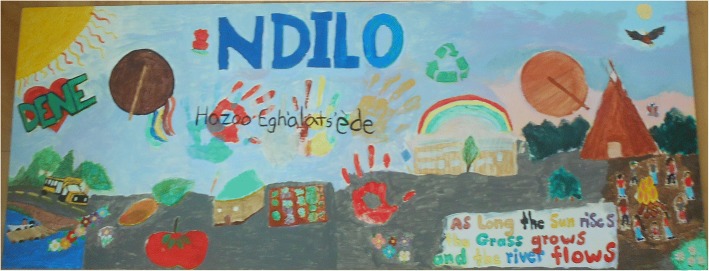
BACKGROUND: Social determinants of Indigenous health are known to include structural determinants such as history, political climate, and social contexts. Relationships, interconnectivity, and community are fundamental to these determinants. Understanding these determinants from the perspective of Indigenous youth is vital to identifying means of alleviating future inequities. METHODS: In 2016, fifteen Yellowknives Dene First Nation (YKDFN) youth in the Canadian Northwest Territories participated in the 'On-the-Land Health Leadership Camp'. Using a strength- and community-based participatory approach through an Indigenous research lens, the YKDFN Wellness Division and university researchers crafted the workshop to provide opportunities for youth to practice cultural skills, and to capture the youth's perspectives of health and health agency. Perspectives of a healthy community, health issues, and health priorities were collected from youth through sharing circles, PhotoVoice, mural art, and surveys. RESULTS: The overall emerging theme was that a connection to the land is an imperative determinant of YKDFN health. Youth identified the importance of a relationship to land including practicing cultural skills, Elders passing on traditional knowledge, and surviving off the land. The youth framed future health research to include roles for youth and an on-the-land component that builds YKDFN culture, community relations, and traditional knowledge transfer. Youth felt that a symbiotic relationship between land, environment, and people is fundamental to building a healthy community. CONCLUSION: Our research confirmed there is a direct and critical relationship between structural context and determinants of Indigenous Peoples' health, and that this should be incorporated into health research and interventions.
Overview
The claims and statistics of this paper haven’t been checked yet.
Free: it reads the open-access text and checks the first 5 claims that cite a source we can check. Create a free account to check every claim.
Integrity signals
Registry
Cites
Statistics
Figures
Verification
Claims the paper makes
The claims and statistics of this paper haven’t been checked yet.
Free: it reads the open-access text and checks the first 5 claims that cite a source we can check. Create a free account to check every claim.
Claims other papers make about this one
Each is checked against this paper’s own text: does it say what the citing paper says it does?
The cited source says what the claim attributes to it.
In the citing paper
“Reconnection to lands has been identified as a determinant of health [80], with capacity to heal the effects of dispossession [81,82].”
From Canada First Nations Strengths in Community-Based Primary Healthcare (2022) · cites this paper as [80]
Self-check
Percentages, sums and reported differences re-computed from the paper’s own numbers.
The self-check needs the paper’s full text.
Citations
Cites
Photovoice: Concept, Methodology, and Use for Participatory Needs Assessment
Wang, C., & Burris, M. A. (1997) · Health Education & Behavior · doi:10.1177/109019819702400309 · Cited by 5,551 · cited 4×
“The PhotoVoice method developed by Wang and Burris [42] presents a foundation for group participatory analysis in three stages: 1) selecting photographs that are most representative, 2) providing background for the photographs through stories, and 3) recognizing issues or themes.”
MethodInfluentialClosing the gap in a generation: health equity through action on the social determinants of health
Marmot, M., Friel, S., Bell, R., Houweling, T. A., & Taylor, S. (2008) · The Lancet · doi:10.1016/s0140-6736(08)61690-6 · Cited by 3,247
Social determinants of health: the solid facts
Wilkinson, R. G., & Marmot, M. G. (2003) · University Libraries (University of Maryland) · doi:10.13016/yroj-yfcz · Cited by 2,709
The salutogenic model as a theory to guide health promotion
ANTONOVSKY, A. (1996) · Health Promotion International · doi:10.1093/heapro/11.1.11 · Cited by 2,647 · cited 1×
“Using a health promotion lens shifts the focus from a pathogenic approach that emphasizes factors related to disease and illness to a salutogenic model that stresses positive, salutary factors that support people’s health and well-being [20, 21].”
Background(2009) · Cited by 2,537
Closing the gap in a generation: health equity through action on the social determinants of health
Reading, R. (2009) · Child: Care, Health and Development · doi:10.1111/j.1365-2214.2008.00935_10.x · Cited by 2,387
Indigenous Research Methodologies
Hanson, C. (2012) · International Journal of Critical Indigenous Studies · doi:10.5204/ijcis.v5i1.97 · Cited by 1,700
Indigenous health part 2: the underlying causes of the health gap
King, M., Smith, A., & Gracey, M. (2009) · The Lancet · doi:10.1016/s0140-6736(09)60827-8 · Cited by 1,469 · cited 1×
“The social determinants of health related to these historical contexts have largely been accepted as one of the key etiologic factors underlying high rates of illness, disease, and mortality in Indigenous populations [16].”
BackgroundIndigenous health part 1: Determinants and disease patterns
Gracey, M., & King, M. (2009) · The Lancet · doi:10.1016/s0140-6736(09)60914-4 · Cited by 1,303 · cited 1×
“These deficits are reflected in multiple adverse health outcomes, including, but not limited to, elevated rates of: infant and young child mortality, infectious diseases, malnutrition, tobacco use, accidents, interpersonal violence, homicide, suicide, obesity, cardiovascular disease, diabetes, and diseases caused by e…”
BackgroundIndigenous Research Methodologies
Chilisa, B. (2011) · Cited by 1,158
Community-based participatory research: assessing the evidence.
Viswanathan, M., Ammerman, A., Eng, E. M., Garlehner, G., Lohr, K. N., Griffith, D. M., Rhodes, S. D., Samuel‐Hodge, C. D., Maty, S. C., Lux, L. J., et al. (2004) · PubMed Central · Cited by 1,062
Beyond the standard interview: the use of graphic elicitation and arts-based methods
Bagnoli, A. (2009) · Qualitative Research · doi:10.1177/1468794109343625 · Cited by 910 · cited 2×
“Art methods have previously been used to direct the analysis process by presenting participants’ perspectives in a metaphoric format [39].”
BackgroundMethodEcosystem services in New Zealand : conditions and trends
Dymond, J. R. (2013) · doi:10.7931/dl1ms3 · Cited by 794
Healing Traditions: Culture, Community and Mental Health Promotion with Canadian Aboriginal Peoples
Kirmayer, L., Simpson, C., & Cargo, M. (2003) · Australasian Psychiatry · doi:10.1046/j.1038-5282.2003.02010.x · Cited by 580 · cited 1×
“recognized the central role of youth in the health and vitality of the community” [25] (p.”
BackgroundWang, C. C., Cash, J. L., & Powers, L. S. (2000) · Health Promotion Practice · doi:10.1177/152483990000100113 · Cited by 455 · cited 1×
“What do you See here? How does this relate to Our lives? Why does this concern or priority exist? What can we Do about it?) [43].”
BackgroundFrom margins to center? The development and purpose of participatory research
Hall, B. L. (1992) · The American Sociologist · doi:10.1007/bf02691928 · Cited by 453 · cited 1×
“CBPR is a collaboration between researchers and community participants through sharing knowledge and relevant lived experiences to promote social change [33, 34].”
BackgroundThe determinants of First Nation and Inuit health: A critical population health approach
Richmond, C. A. M., & Ross, N. A. (2009) · Health & Place · doi:10.1016/j.healthplace.2008.07.004 · Cited by 425 · cited 4×
“In line with other research on Indigenous Peoples’ connection with the land [11, 54], we recommend projects with Indigenous communities incorporate land components and the localized strengths of the Indigenous group.”
BackgroundInfluentialIndigenous Māori knowledge and perspectives of ecosystems
Harmsworth, G., & Awatere, S. (2013) · doi:10.7931/dl16c7 · Cited by 406
Peace, power, righteousness : an indigenous manifesto
Alfred, G. R. (2009) · Cited by 325
Report summary – Diabetes in Canada: facts and figures from a public health perspective
Pelletier, C., Dai, S., Roberts, K., Bienek, A., Onysko, J., & Pelletier, L. (2012) · Chronic Diseases and Injuries in Canada · doi:10.24095/hpcdp.33.1.07 · Cited by 242
Life Stages and Native Women: Memory, Teachings, and Story Medicine
Anderson, K. (2011) · University of Manitoba Press eBooks · doi:10.1515/9780887554056 · Cited by 219
Salutogenesis 30 Years Later: Where Do We Go from here?.
Becker, C. M., Glascoff, M. A., & Felts, W. M. (2010) · The international electronic journal of health education · Cited by 209
Determinants of Indigenous Peoples’ Health in Canada: Beyond the Social
Tait Neufeld, H. (2017) · Canadian Studies in Population · doi:10.25336/p6mc71 · Cited by 182
Social determinants of health and the future well-being of Aboriginal children in Canada
(2012) · Paediatrics and Child Health · doi:10.1093/pch/17.7.381 · Cited by 178 · cited 1×
“Exploring determinants of health from the perspective of Indigenous youth is critical to identifying and changing the conditions underlying inequities that impact individuals, communities and nations in the next generation [22].”
BackgroundCrossing Methodological Borders: Decolonizing Community-Based Participatory Research
Stanton, C. R. (2014) · Qualitative Inquiry · doi:10.1177/1077800413505541 · Cited by 150
Group interview methods in community health research
Coreil, J. (1994) · Medical Anthropology · doi:10.1080/01459740.1994.9966115 · Cited by 133 · cited 1×
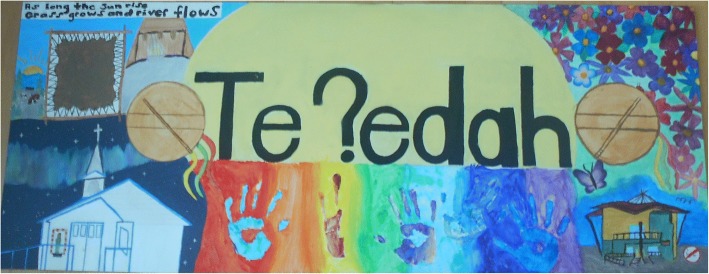
“The images in the mural project were jointly analyzed by youth using a consensus group format called the ‘nominal group’ technique, where participants form an idea, discuss in a group, then come to a consensus [44].”
MethodKa‘akālai Kū Kanaka: A Call for Strengths-Based Approaches from a Native Hawaiian Perspective
Kanaiaupuni, S. M. (2005) · Educational Researcher · doi:10.3102/0013189x034005032 · Cited by 111
Ka‘akālai Kū Kanaka: A Call for Strengths-based Approaches from a Native Hawaiian Perspective
Kanaiaupuni, S. M. (2004) · Educational Researcher · doi:10.3102/0013189x033009026 · Cited by 82
Withrow, D. R., Pole, J. D., Nishri, E. D., Tjepkema, M., & Marrett, L. D. (2016) · Cancer Epidemiology Biomarkers & Prevention · doi:10.1158/1055-9965.epi-16-0706 · Cited by 80
Brazg, T., Bekemeier, B., Spigner, C., & Huebner, C. E. (2011) · Health Promotion Practice · doi:10.1177/1524839909358659 · Cited by 77 · cited 1×
“PhotoVoice projects have been appreciated by youth as a means of sharing their voice and opinions through photos they have taken, edited, and narrated [40, 41].”
BackgroundRice, K., Te Hiwi, B., Zwarenstein, M., Lavallee, B., Barre, D. E., & Harris, S. B. (2016) · Canadian Journal of Diabetes · doi:10.1016/j.jcjd.2015.10.007 · Cited by 66
Markus, M. L. (2012) · American Indian and Alaska Native Mental Health Research · doi:10.5820/aian.1901.2012.102 · Cited by 60
An exploration of the meanings of sport to urban Aboriginal youth: a photovoice approach
McHugh, T.-L. F., Coppola, A. M., & Sinclair, S. (2013) · Qualitative Research in Sport, Exercise and Health · doi:10.1080/2159676x.2013.819375 · Cited by 55 · cited 1×
“PhotoVoice projects have been appreciated by youth as a means of sharing their voice and opinions through photos they have taken, edited, and narrated [40, 41].”
BackgroundSharing Our Wisdom: A Holistic Aboriginal Health Initiative
Howell, T., Auger, M., Gomes, T., Brown, F. L., & Young Leon, A. (2016) · International Journal of Indigenous Health · doi:10.18357/ijih111201616015 · Cited by 51
“The Dene Way of Life”: Perspectives on Health From Canada’s North
Parlee, B., & O’Neil, J. (2007) · Journal of Canadian Studies · doi:10.3138/jcs.41.3.112 · Cited by 48 · cited 1×
“In line with other research on Indigenous Peoples’ connection with the land [11, 54], we recommend projects with Indigenous communities incorporate land components and the localized strengths of the Indigenous group.”
BackgroundConferência Mundial sobre Determinantes Sociais da Saúde
Filho, A. P. (2011) · Cadernos de Saúde Pública · doi:10.1590/s0102-311x2011001100001 · Cited by 38
Insist or Enlist?: Adultism versus Climates of Excellence.
Tate, T. F., & Copas, R. L. (2003) · Reclaiming Children and Youth · Cited by 33
Monchalin, R., Flicker, S., Wilson, C., Prentice, T., Oliver, V., Jackson, R., Larkin, J., Mitchell, C. M., Restoule, J., & Native Youth Sexual Health Network (2016) · International Journal of Indigenous Health · doi:10.18357/ijih111201616012 · Cited by 26 · cited 2×
“This colonial view denies youth’s agency to create change [30], such as influence and effect health services, and opposes an Indigenous perspective.”
BackgroundAboriginal Self-Government in Canada
Henderson, A. (2008) · Cited by 22
Knowledge translation with northern Aboriginal communities: a case study.
Jardine, C., & Furgal, C. M. (2010) · PubMed · Cited by 19
Self-citationStrengthening Aboriginal Health through a Place-Based Learning Community
Anderson, J. F., Pakula, B., Smye, V. L., Peters, V. L., & Schroeder, L. (2013) · International Journal of Indigenous Health · doi:10.18357/ijih71201112352 · Cited by 17 · cited 1×
“A research approach that has gained support is changing the focus to community strengths (“what has worked in the past and what is the most appropriate community vision for future success”) as opposed to the more traditional focus on problems (“why and where the community has failed”) [17] (p.”
Background(2007) · University of British Columbia Press eBooks · doi:10.59962/9780774851794 · Cited by 9
"Bringing what's on the inside out": arts-based cancer education with Alaska Native peoples.
Cueva, M. C. P. (2011) · Cited by 3
Research works printed but not linked: 10
- Reading C de Leeuw S Greenwood M Lindsay NM Reading C Chapter 1: structural determinants of aboriginal People’s health Determinants of indigenous Peoples’ health in Canada: beyond the social 2015 Toronto Canadian Scholars’ Press Inc. 3 15
- Mikkonen J Raphael D Social determinants of health: the Canadian facts 2010 Toronto York University School of Health Policy and Management
- Aboriginal Healing Foundation The healing has begun: an operational update from the Aboriginal Healing Foundation 2002 Ottawa Aboriginal Healing Foundation
- Chandler MJ Dunlop WL de Leeuw S Greenwood M Lindsay NM Reading C Cultural wounds demand cultural medicines Determinants of indigenous Peoples’ health in Canada: beyond the social 2015 Toronto Canadian Scholars’ Press Inc. 78 90
- World Health Organization World conference on social determinants of health Rio political declaration on social determinants of health 2011 Geneva World Health Organization
- Greenwood M Jones E de Leeuw S Greenwood M Lindsay NM Reading C Being at the interface: early childhood as a determinant of health Determinants of indigenous Peoples’ health in Canada: beyond the social 2015 Toronto Canadian Scholars’ Press Inc. 64 77
- Blanchet-Cohen N McMillan Z Greenwood M Indigenous youth engagement in Canada’s health care Pimatisiwin 2011 9 87 111
- Richmond C de Leeuw S Greenwood M Lindsay NM Reading C The relatedness of people, land, and health: stories from Anishinabe elders Determinants of indigenous Peoples’ health in Canada: beyond the social 2015 Toronto Canadian Scholars’ Press Inc. 47 63
- Marshall M Marshall A Bartlett C de Leeuw S Greenwood M Lindsay NM Reading C Two-eyed seeing in medicine Determinants of indigenous Peoples’ health in Canada: beyond the social 2015 Toronto Canadian Scholars’ Press Inc. 16 24
- Jardine C, Genuis S, Lukasewich M, Tang K. Participatory health risk communication: using visual messages generated by Aboriginal youth to effect change. Int J Qual Meth. 2014. 10.18357/ijih11120161602. · doi:10.18357/ijih11120161602
Cited by
Hatala, A. R., Njeze, C., Morton, D., Pearl, T., & Bird‐Naytowhow, K. (2020) · BMC Public Health · doi:10.1186/s12889-020-08647-z · Cited by 192
“To mobilize these approaches within Indigenous health contexts in Canada particularly, and global health more generally, offers limited conceptual and epistemological frameworks to understand the broader spiritual and cultural meanings attached to land and nature, and can obscure the historical processes of settler co…”
BackgroundSpiegel, S. J., Thomas, S. E., O’Neill, K., Brondgeest, C., Thomas, J., Beltran, J., Hunt, T., & Yassi, A. (2020) · International Journal of Environmental Research and Public Health · doi:10.3390/ijerph17072362 · Cited by 81
“The words of this TWN youth leader reflected the resurgence of indigenous youth across many indigenous communities in repatriating severed relationships to nature and traditional practices linked to holistic concepts of health [67], and in which stewardship is central to resilience and health [19].”
BackgroundA Scoping Review of Nature, Land, and Environmental Connectedness and Relatedness
Keaulana, S., Kahili-Heede, M. K., Riley, L., Park, M. L. N., Makua, K. L., Vegas, J. K., & Antonio, M. C. K. (2021) · International Journal of Environmental Research and Public Health · doi:10.3390/ijerph18115897 · Cited by 77
“Health equity for Indigenous people requires the understanding of land as a social determinant of health, where the wellness of land is the wellness of people [97,100].”
BackgroundReclaiming Indigenous Health in the US: Moving beyond the Social Determinants of Health
Carroll, S. R., Suina, M., Jäger, M. B., Black, J. L., Cornell, S., Gonzales, A. A., Jorgensen, M., Palmanteer-Holder, N. L., Rosa, J. S. D. L., & Teufel‐Shone, N. I. (2022) · International Journal of Environmental Research and Public Health · doi:10.3390/ijerph19127495 · Cited by 75
Ahmed, F., Zuk, A. M., & Tsuji, L. J. S. (2021) · International Journal of Environmental Research and Public Health · doi:10.3390/ijerph18137099 · Cited by 88
“To promote and maintain these changes, establishing community support networks for individuals has also been shown to be a beneficial factor for these health interventions [39,50].”
BackgroundInfluential
Metadata
- Authors
- Division, Y. D. F. N. W., Lines, L.-A., & Jardine, C. G.
- Affiliations
- University of Alberta (CA)
- University of the Fraser Valley (CA)
- Corresponding author
- Jardine, Cynthia G.
- Venue
- BMC Public Health
- Published
- 2019-02-11
- Volume
- 19
- Issue
- 1
- Pages
- 176-176
- ISSN
- 1471-2458 (ISSN-L)
- PMC
- PMC6371607
- OpenAlex
- W2922103409
- Cited by
- 126
- References
- 46
- Citations by year
- 2026: 11 · 2025: 16 · 2024: 28 · 2023: 22 · 2022: 20 · 2021: 21 · 2020: 6 · 2019: 1
- FWCI
- 11.66
- Type
- journal article
- Language
- en
- Open access
- gold
- doi.org
- Licence
- cc-by
- creativecommons.org/licenses/by/4.0/ (tdm)
- Locations
- BMC Public Health (publishedVersion, cc-by)
- Europe PMC (PubMed Central) (publishedVersion, other-oa)
- PubMed Central (publishedVersion, cc-by)
- PubMed (publishedVersion)
- DOAJ (DOAJ: Directory of Open Access Journals) (submittedVersion)
- Funders
- Canadian Institutes of Health Research (IPH 143070)
- Topics
- Social Sciences › Health › Indigenous Health, Education, and Rights
- Social Sciences › Education › Indigenous and Place-Based Education
- Social Sciences › Anthropology › Indigenous Cultures and History
- Keywords
- Indigenous youth, social determinants of health, health agencies, traditional knowledge, cultural skills, older adults, community wellness, health disparities, Indigenous research, Northwest Territories
- MeSH terms
- Adolescent, Child, Humans, Indians, North American, Northwest Territories, Social Determinants of Health
About these checks
Registry, retraction, Cites and statistics results are computed, not judged, with one exception: a printed reference that no index lists is read once by a model before it counts as a citation error. Claims are extracted by a model and kept only when their quote appears verbatim in the text; each cited source is then checked, with a model’s help, for whether it says what the claim relies on. Those verdicts can be wrong — read the claim’s quote and the cited source before relying on one.
Statistics and arithmetic are recomputed, not judged.
Confidence bands are shown only for fields calibrated on our annotated test set. None is calibrated yet, so no band is shown.
What counts as a claim ›How we measure confidence ›How we check this ›
Are you an author, or do you see a problem with this page? Request a review
Data sources
Bibliographic data: Semantic Scholar, OpenAlex, Crossref.
Contains information from the Semantic Scholar Academic Graph Datasets, made available under the ODC Attribution License (ODC-BY 1.0).
Semantic Scholar’s data is described in: Kinney, R., et al. (2023). The Semantic Scholar Open Data Platform. arXiv:2301.10140.
