

Development and validation of five behavioral indices of flood adaptation
Open accessThe DOI matches its Crossref record; 38 of the 39 references it cites were found in a registry or an index.
Abstract
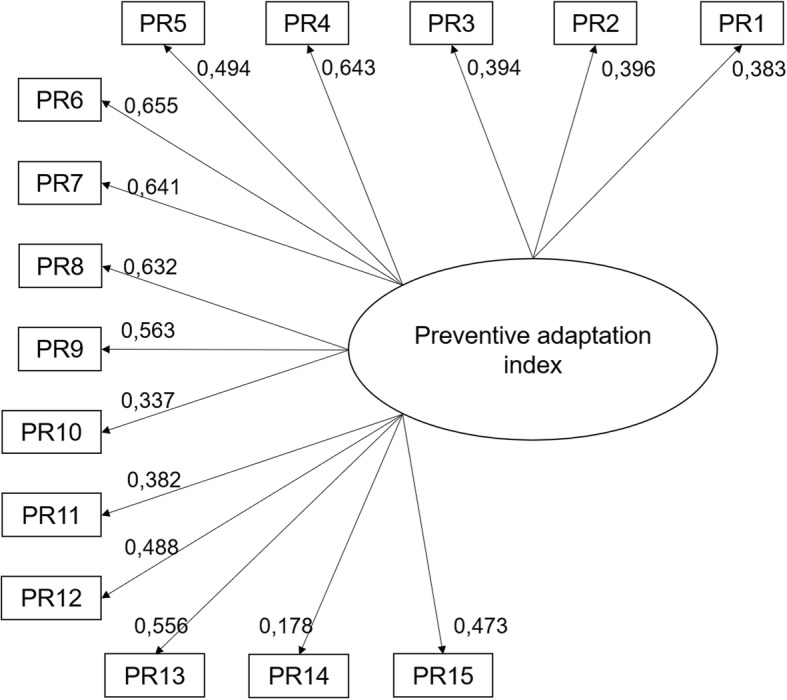
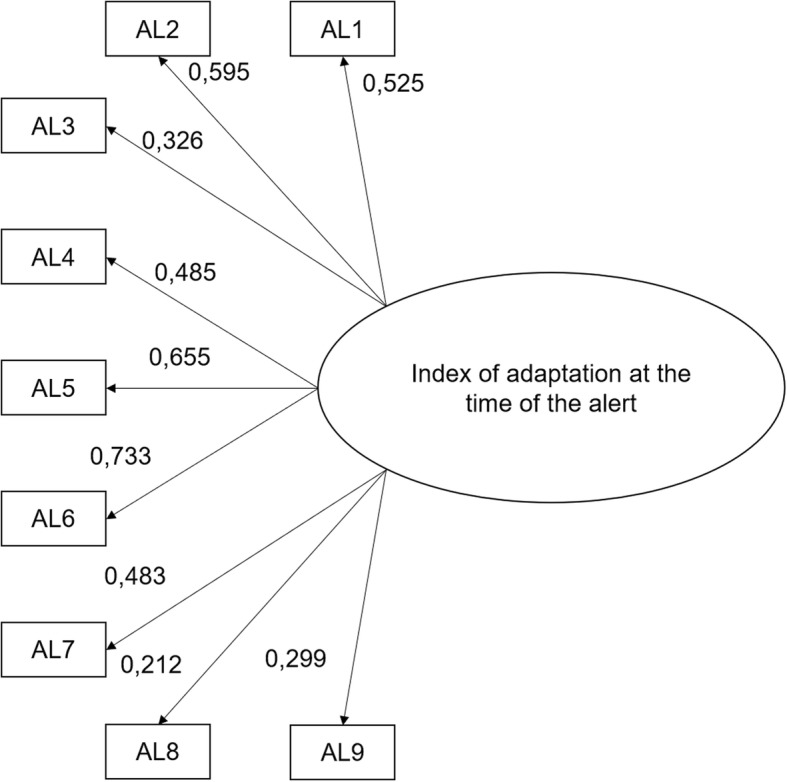
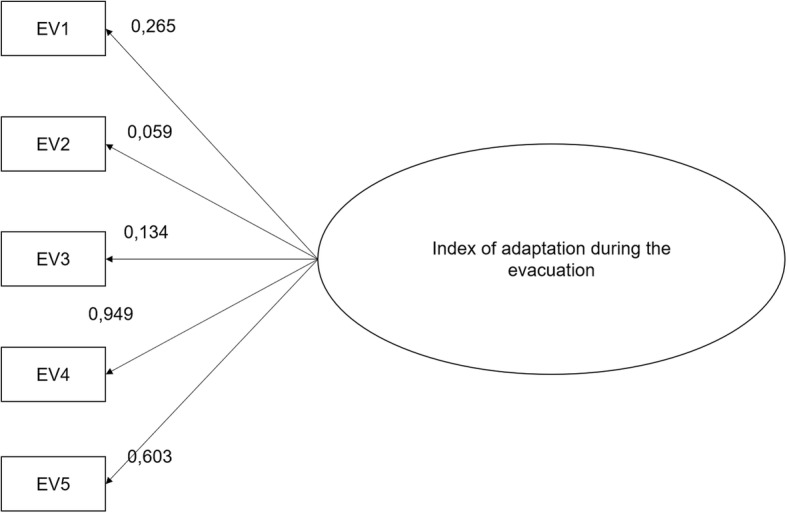
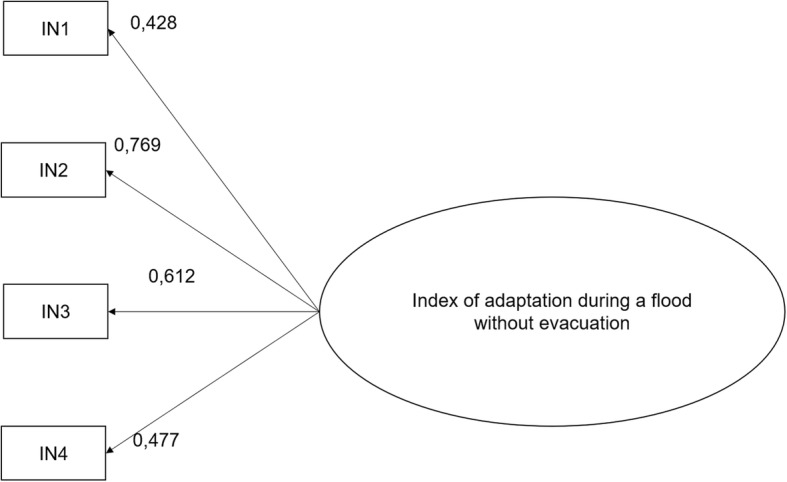
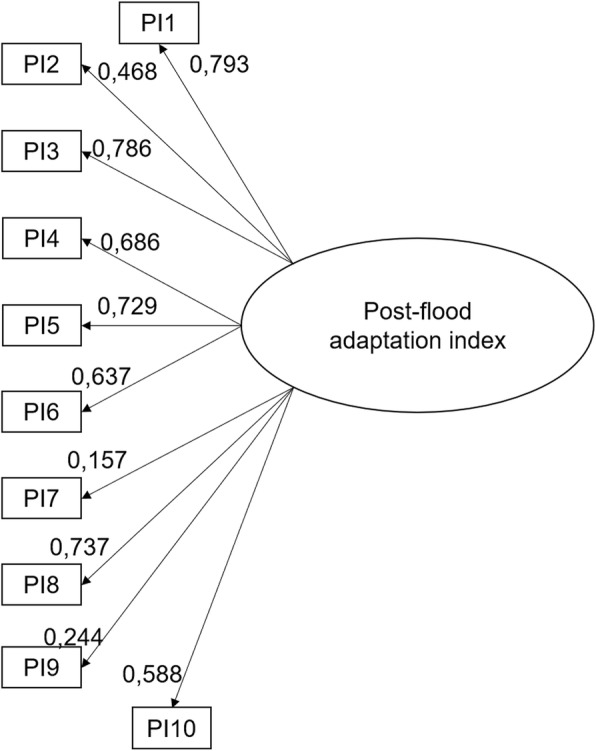
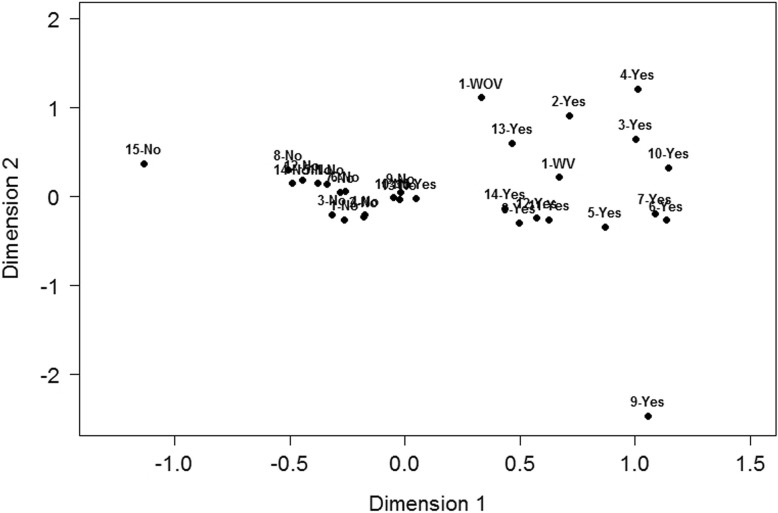
BACKGROUND: In the current context of climate change, climate forecasts for the province of Quebec (Canada) are a lengthening of the thunderstorm season and an increase in episodes of intense precipitations. These changes in the distribution of precipitations could heighten the intensity or frequency of floods, a natural hazard that concerns 80% of Quebec's riverside municipalities. For the health and safety of the at-risk population, it is very important to make sure they have acquired necessary adaptive behaviors against flooding hazard. However, there has been no assessment of these flood adaptation behaviors to date. Thus, the aim of this study was to develop and validate five indices of adaptation to flooding. METHODS: A sample of 1951 adults completed a questionnaire by phone. The questionnaire, specifically developed for this study, measured whether they did or did not adopt the behaviors that are proposed by public health officials to protect themselves against flooding. RESULTS: The results of the item, confirmatory factor, and multiple correspondence analyses contributed to the development of five indices corresponding to the adaptation behaviors to adopt according to the chronology of events: (a) pre-alert preventive behaviors, (b) behaviors to carry out after the alert is issued, (c) behaviors to adopt during a flood not requiring evacuation, (d) behaviors to adopt during a flood requiring evacuation, and (e) post-flood behaviors. The results of this study also showed that people who perceive a risk of flooding in their home in the next 5 years tend to adopt more preventive behaviors and adaptation behaviors than those who perceive little or no risk at all. They also reveal that people who feel more adverse effects on their physical or mental health tend to adopt more adaptive behaviors than those who feel little or no adverse effects on their health. CONCLUSION: Across a series of psychometric analyses, the results showed that these flood adaptation indices could properly measure a vast range of adaptive behaviors according to the chronology of events. Therefore, researchers, public health agencies, and professionals can use them to monitor the evolution of individuals' adaptive behaviors during floods.
Overview
The claims and statistics of this paper haven’t been checked yet.
Free: it reads the open-access text and checks the first 5 claims that cite a source we can check. Create a free account to check every claim.
Integrity signals
Registry
Cites
Statistics
Figures
Verification
Claims the paper makes
The claims and statistics of this paper haven’t been checked yet.
Free: it reads the open-access text and checks the first 5 claims that cite a source we can check. Create a free account to check every claim.
Claims other papers make about this one
Each is checked against this paper’s own text: does it say what the citing paper says it does?
The source backs part of the claim, not all of it — or backs it for a different population, condition or comparison.
In the citing paper
“Mental adaptation and certain behavioral patterns will develop following the chronology of events: in the pre-alert phase, during the disaster and after the event (163).”
From The Impact of Climate Change on Mental Health: A Systematic Descriptive Review (2020) · cites this paper as [163]
Experimental — accuracy not yet measuredThe source backs part of the claim, not all of it — or backs it for a different population, condition or comparison.
In the citing paper
“Additionally, people who felt more adverse effects of flooding on their physical or mental health tended to adopt more adaptive behaviours than those who felt little or no adverse effects on their health [101].”
From Climate Change and Mental Health: A Scoping Review (2021) · cites this paper as [101]
Experimental — accuracy not yet measuredThe cited source says what the claim attributes to it.
In the citing paper
“A study designed to develop and validate indices of adaptation to flooding found that people who perceived a risk of flooding in their home in the next five years adopted more preventative behaviours and adaptation behaviours than those who perceived little or no risk at all.”
From Climate Change and Mental Health: A Scoping Review (2021) · cites this paper as [101]
Self-check
Percentages, sums and reported differences re-computed from the paper’s own numbers.
The self-check needs the paper’s full text.
Citations
Cites
Hu, L., & Bentler, P. M. (1999) · Structural Equation Modeling A Multidisciplinary Journal · doi:10.1080/10705519909540118 · Cited by 108,788
Principles and Practice of Structural Equation Modeling
Tabri, N., & Elliott, C. M. (2012) · Canadian Graduate Journal of Sociology and Criminology · doi:10.15353/cgjsc-rcessc.v1i1.25 · Cited by 38,891
(1998) · Cited by 36,049
(1990) · Choice Reviews Online · doi:10.5860/choice.27-3338 · Cited by 35,305
Multiple imputation using chained equations: Issues and guidance for practice
White, I. R., Royston, P., & Wood, A. M. (2011) · Statistics in Medicine · doi:10.1002/sim.4067 · Cited by 9,792 · cited 1×
“Because there were some missing values for age and education level, we imputed the missing data for these variables employing predictive mean matching [31].”
MethodKupper, L. L., Hosmer, D. W., & Lemeshow, S. (1990) · Journal of the American Statistical Association · doi:10.2307/2290035 · Cited by 7,599
Social Vulnerability to Environmental Hazards*
Cutter, S. L., Boruff, B. J., & Shirley, W. L. (2003) · Social Science Quarterly · doi:10.1111/1540-6237.8402002 · Cited by 5,702
(2011) · Cited by 5,290
Theory and Applications of Correspondence Analysis.
Jolliffe, I. T., & Greenacre, M. J. (1986) · Biometrics · doi:10.2307/2531266 · Cited by 3,004
Correspondence Analysis in Practice
Greenacre, M. (2007) · Chapman & Hall/CRC eBooks · doi:10.1201/9781420011234 · Cited by 2,040
Calibration Estimators in Survey Sampling
Deville, J.-C., & Särndal, C.-E. (1992) · Journal of the American Statistical Association · doi:10.1080/01621459.1992.10475217 · Cited by 1,735 · cited 1×
“Before performing statistical analyses, we reweighted the data to compensate for imbalances between the proportions of respondents in each administrative region in the sample and those of the target population [30].”
MethodSocial vulnerability to floods: Review of case studies and implications for measurement
Rufat, S., Tate, E., Burton, C. G., & Maroof, A. S. (2015) · International Journal of Disaster Risk Reduction · doi:10.1016/j.ijdrr.2015.09.013 · Cited by 839
Floods and human health: A systematic review
Alderman, K., Turner, L. R., & Tong, S. (2012) · Environment International · doi:10.1016/j.envint.2012.06.003 · Cited by 766
Wolf, J., Adger, W. N., Lorenzoni, I., Abrahamson, V., & Raine, R. (2010) · Global Environmental Change · doi:10.1016/j.gloenvcha.2009.09.004 · Cited by 489
Flooding and Mental Health: A Systematic Mapping Review
Fernandez, A., Black, J., Jones, M., Wilson, L., Salvador-Carulla, L., Astell-Burt, T., & Black, D. (2015) · PLOS ONE · doi:10.1371/journal.pone.0119929 · Cited by 382
Du, W., FitzGerald, G. J., Clark, M., & Hou, X.-Y. (2010) · Prehospital and Disaster Medicine · doi:10.1017/s1049023x00008141 · Cited by 340
Coupling groundwater modeling and biological indicators for identifying river/aquifer exchanges
Graillot, D., Paran, F., Bornette, G., Marmonier, P., Piscart, C., & Cadilhac, L. (2014) · SpringerPlus · doi:10.1186/2193-1801-3-68 · Cited by 231
Analyzing Psychopathology Items: A Case for Nonparametric Item Response Theory Modeling.
Meijer, R. R., & Baneke, J. J. (2004) · Psychological Methods · doi:10.1037/1082-989x.9.3.354 · Cited by 220
Lawrence, J., Quade, D., & Becker, J. (2014) · Natural Hazards · doi:10.1007/s11069-014-1288-z · Cited by 205
Recent changes in flood preparedness of private households and businesses in Germany
Kreibich, H., Seifert, I., Thieken, A. H., Lindquist, E., Wagner, K., & Merz, B. (2011) · Regional Environmental Change · doi:10.1007/s10113-010-0119-3 · Cited by 184
Testing the Unidimensionality of Items: Pitfalls and Loopholes
Ziegler, M. D., & Hagemann, D. (2015) · European Journal of Psychological Assessment · doi:10.1027/1015-5759/a000309 · Cited by 172
Climate change and climate variability: personal motivation for adaptation and mitigation
Semenza, J. C., Ploubidis, G. B., & George, L. A. (2011) · Environmental Health · doi:10.1186/1476-069x-10-46 · Cited by 169
Ejeta, L. T., Ardalan, A., & Paton, D. (2015) · PLoS Currents · doi:10.1371/currents.dis.31a8995ced321301466db400f1357829 · Cited by 163
Lamond, J. E., Joseph, R. D., & Proverbs, D. G. (2015) · Environmental Research · doi:10.1016/j.envres.2015.04.008 · Cited by 159
Extreme weather events and infectious disease outbreaks
McMichael, A. J. (2015) · Virulence · doi:10.4161/21505594.2014.975022 · Cited by 122
Climate change adaptation in developed nations : from theory to practice
Ford, J. D., & Berrang‐Ford, L. (2011) · Advances in global change research · doi:10.1007/978-94-007-0567-8 · Cited by 113
When It Rains, It Pours: Future Climate Extremes and Health
Patz, J. A., Grabow, M. L., & Limaye, V. S. (2014) · Annals of Global Health · doi:10.1016/j.aogh.2014.09.007 · Cited by 110
Assessment of the Health Impacts of the 2011 Summer Floods in Brisbane
Alderman, K., Turner, L. R., & Tong, S. (2013) · Disaster Medicine and Public Health Preparedness · doi:10.1017/dmp.2013.42 · Cited by 83 · cited 1×
“For example, in 2011, in Brisbane, Australia, flood victims reported, among other things, respiratory problems, poor quality of sleep, psychological distress, and PTSD symptoms [13].”
BackgroundThe Incidence of Posttraumatic Stress Disorder After Floods: A Meta-Analysis
Chen, L., & Liu, A. (2015) · Disaster Medicine and Public Health Preparedness · doi:10.1017/dmp.2015.17 · Cited by 71
Climate change and adaptation of the health sector: The case of infectious diseases
Confalonieri, U., Menezes, J. A., & Margonari, C. (2015) · Virulence · doi:10.1080/21505594.2015.1023985 · Cited by 54
Health effects of flooding in Canada: A 2015 review and description of gaps in research
Burton, H., Rabito, F., Danielson, L., & Takaro, T. K. (2016) · Canadian Water Resources Journal / Revue canadienne des ressources hydriques · doi:10.1080/07011784.2015.1128854 · Cited by 39
New York City Panel on Climate Change 2015 ReportChapter 5: Public Health Impacts and Resiliency
Kinney, P. L., Matte, T., Knowlton, K., Madrigano, J., Petkova, E., Weinberger, K., Quinn, A., Arend, M., & Pullen, J. (2015) · Annals of the New York Academy of Sciences · doi:10.1111/nyas.12588 · Cited by 36
Flooding and Clostridium difficile Infection: A Case-Crossover Analysis
Lin, C. J., Wade, T. J., & Hilborn, E. D. (2015) · International Journal of Environmental Research and Public Health · doi:10.3390/ijerph120606948 · Cited by 33
A typology of household-level adaptation to coastal flooding and its spatio-temporal patterns
Koerth, J., Vafeidis, A. T., Carretero, S., Sterr, H., & Hinkel, J. (2014) · SpringerPlus · doi:10.1186/2193-1801-3-466 · Cited by 29
Bélanger, D., Abdous, B., Gosselin, P., & Valois, P. (2015) · Climatic Change · doi:10.1007/s10584-015-1420-4 · Cited by 28
Self-citationWaite, T. D., Murray, V. S. G., & Baker, D. (2014) · PLoS Currents · doi:10.1371/currents.dis.2b2eb9e15f9b982784938803584487f1 · Cited by 23
An open source tool to verify the psychometric properties of an evaluation instrument
Valois, P., Houssemand, C., Germain, S., & Abdous, B. (2011) · Procedia - Social and Behavioral Sciences · doi:10.1016/j.sbspro.2011.03.140 · Cited by 17
Self-citationCanuel, M., Abdous, B., Bélanger, D., & Gosselin, P. (2014) · PLoS ONE · doi:10.1371/journal.pone.0101569 · Cited by 11
Research works printed but not linked: 3
- du Québec G Rapport d’évènement: inondations printanières - Montérégie 2011 [Internet] 2013
- Cochran WG Sampling Technique 1963 2 New York John Wiley & Sons
- Samejima F Estimation of latent ability using a response pattern of graded scores (Psychometrika monograph no. 17) 1969 Psychometric Society Richmond, VA
Cited by
The Impact of Climate Change on Mental Health: A Systematic Descriptive Review
Cianconi, P., Betrò, S., & Janiri, L. (2020) · Frontiers in Psychiatry · doi:10.3389/fpsyt.2020.00074 · Cited by 1,320
“Mental adaptation and certain behavioral patterns will develop following the chronology of events: in the pre-alert phase, during the disaster and after the event (163).”
BackgroundA systematic global stocktake of evidence on human adaptation to climate change
Berrang-Ford, L., Siders, A. R., Lesnikowski, A., Fischer, A. P., Callaghan, M. W., Haddaway, N. R., Mach, K. J., Araos, M., Shah, M. A. R., Wannewitz, M., et al. (2021) · Nature Climate Change · doi:10.1038/s41558-021-01170-y · Cited by 655
Climate Change and Mental Health: A Scoping Review
Charlson, F., Ali, S., Benmarhnia, T., Pearl, M., Massazza, A., Augustinavicius, J., & Scott, J. G. (2021) · International Journal of Environmental Research and Public Health · doi:10.3390/ijerph18094486 · Cited by 507
Kurata, Y. B., Ong, A. K. S., Ang, R. Y. B., Angeles, J. K. F., Bornilla, B. D. C., & Fabia, J. L. P. (2023) · Sustainability · doi:10.3390/su15086657 · Cited by 95
(IPCC), I. P. O. C. C. (2023) · Cambridge University Press eBooks · doi:10.1017/9781009325844.016 · Cited by 76
Metadata
- Authors
- Valois, P., Caron, M., Gousse-Lessard, A.-S., Talbot, D., & Renaud, J.-S.
- Affiliations
- Université Laval (CA)
- Corresponding author
- Valois, Pierre
- Venue
- BMC Public Health
- Published
- 2019-02-28
- Volume
- 19
- Issue
- 1
- Pages
- 245-245
- ISSN
- 1471-2458 (ISSN-L)
- PMC
- PMC6394037
- OpenAlex
- W2923869234
- Cited by
- 25
- References
- 39
- Citations by year
- 2026: 2 · 2025: 5 · 2024: 3 · 2023: 5 · 2021: 4 · 2020: 5 · 2019: 1
- FWCI
- 1.29
- Type
- journal article
- Language
- en
- Open access
- gold
- doi.org
- Licence
- cc-by
- creativecommons.org/licenses/by/4.0/ (tdm)
- Locations
- BMC Public Health (publishedVersion, cc-by)
- Europe PMC (PubMed Central) (publishedVersion, cc-by)
- PubMed Central (publishedVersion, cc-by)
- PubMed (publishedVersion)
- DOAJ (DOAJ: Directory of Open Access Journals) (submittedVersion, cc-by-sa)
- Funders
- Green Fund of the Québec government (N/A)
- Topics
- Physical Sciences › Environmental Science › Global and Planetary Change › Flood Risk Assessment and Management
- Social Sciences › Sociology and Political Science › Disaster Management and Resilience
- Social Sciences › Sociology and Political Science › Risk Perception and Management
- Keywords
- flood adaptation, flood risk perception, adaptive behavior, behavioral indices, flood preparedness, evacuation, flood recovery, climate change, heavy rainfall, Quebec
- MeSH terms
- Acclimatization, Adaptation, Psychological, Adult, Aged, Aged, 80 and over, Cities, Female, Humans, Male, Middle Aged, Psychometrics, Quebec, Surveys and Questionnaires, Reproducibility of Results, Floods
About these checks
Registry, retraction, Cites and statistics results are computed, not judged, with one exception: a printed reference that no index lists is read once by a model before it counts as a citation error. Claims are extracted by a model and kept only when their quote appears verbatim in the text; each cited source is then checked, with a model’s help, for whether it says what the claim relies on. Those verdicts can be wrong — read the claim’s quote and the cited source before relying on one.
Statistics and arithmetic are recomputed, not judged.
Confidence bands are shown only for fields calibrated on our annotated test set. None is calibrated yet, so no band is shown.
What counts as a claim ›How we measure confidence ›How we check this ›
Are you an author, or do you see a problem with this page? Request a review
Data sources
Bibliographic data: Semantic Scholar, OpenAlex, Crossref.
Contains information from the Semantic Scholar Academic Graph Datasets, made available under the ODC Attribution License (ODC-BY 1.0).
Semantic Scholar’s data is described in: Kinney, R., et al. (2023). The Semantic Scholar Open Data Platform. arXiv:2301.10140.
