

Unveiling the unseen toll: exploring the impact of the Lebanese economic crisis on the health-seeking behaviors in a sample of patients with diabetes and hypertension
Open accessThe DOI matches its Crossref record; 39 of the 41 references it cites were found in a registry or an index.
Abstract
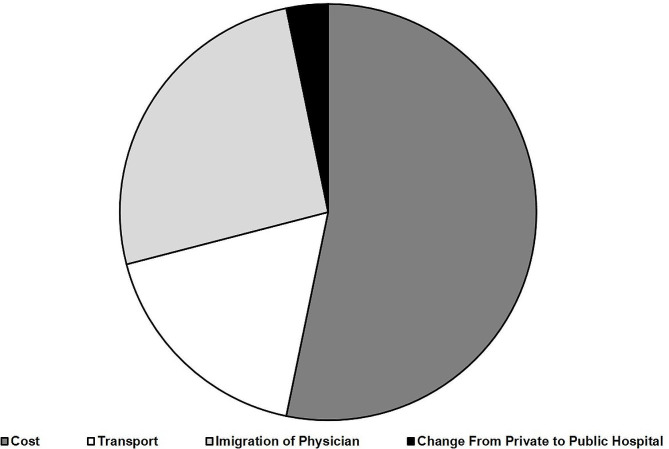
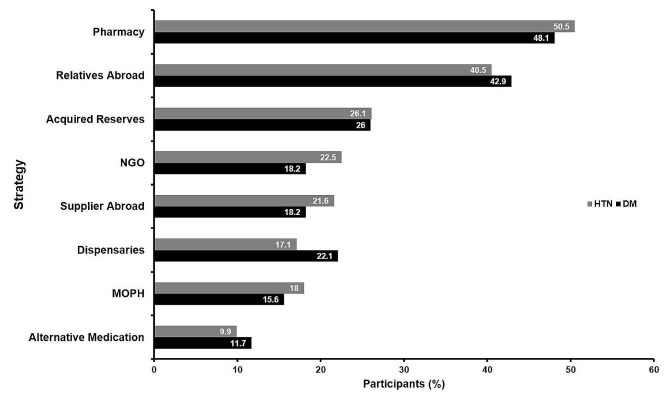
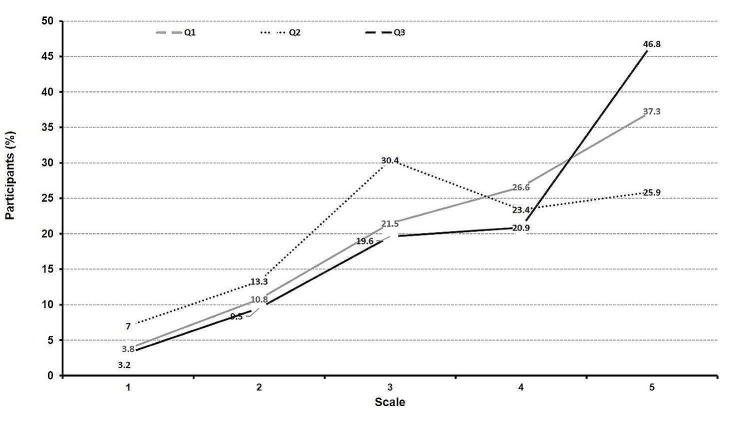
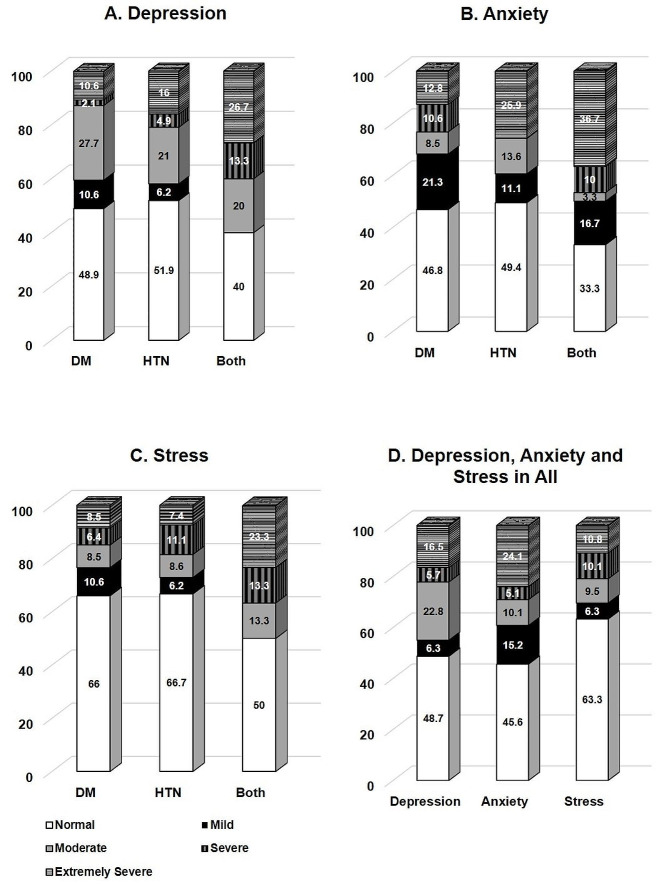
Background: Against the backdrop of Lebanon’s escalating multifaceted crisis which resulted in medication shortages for chronic diseases and unaffordable healthcare services, the current study endeavors to shed light on a critical yet overlooked facet of the Lebanese economic crisis– its profound impact on the health-seeking behaviors of patients with hypertension and diabetes mellitus. Methods: An exploratory cross-sectional study based on an online questionnaire was conducted on 156 adult Lebanese citizens diagnosed medically with either hypertension or diabetes. We gathered sociodemographic characteristics and healthcare-related challenges faced during the economic crisis. We also assessed stress levels using the Depression Anxiety Stress Scale (DASS-21). Descriptive and bivariate analyses were done using SPSS version 26. Results: The mean age of the population was 49.8 ± 17.7 years old, 51.6% were females and 48.4% were males, 29.7% had diabetes, 51.3% had hypertension and 19.0% had both diseases. Among all, 84.2% reported dissatisfaction with the current healthcare system, 31.6% reported changing their physician mainly because of unaffordable consultation fees (66%) or immigration of the physician (32%). Of those with hypertension and/or diabetes, less than 20% reported finding all their prescribed medications and 47% either modified or discontinued their treatment without seeking medical advice. In case of drug shortage, patients relied on stocked reserves (26%), alternative/generic medications (10%) and external sources for medication procurement such as relatives living abroad (41.7%), outsourcing suppliers (19.9%), dispensaries (19.6%) and NGOs (20.3%). All participants reported a high stress level (5.03/7) with a mean total DASS-21 score of 38.7 ± 35.8 that were attributed to August 4 th Beirut port explosion (81.0%), global pandemic (81%), unstable political conditions (90.5%), economic crisis (96.8%), medication shortage (91.8%) and inability to access healthcare (74.1%). Higher sub-scores for anxiety, depression and total stress were insignificantly noted in participants with both hypertension and diabetes (p > 0.05). Conclusion: Our findings explore how the economic crisis has taken its toll on almost all aspects of healthcare in a sample of patients with diabetes and hypertension in Lebanon. The drug shortage as well as disruptions in affordable healthcare access imposed several barriers to adequate adherence to treatment regimens and acted as important mental health stressors.
Overview
The claims and statistics of this paper haven’t been checked yet.
Free: it reads the open-access text and checks the first 5 claims that cite a source we can check. Create a free account to check every claim.
Integrity signals
Registry
Cites
Statistics
Figures
Verification
Claims the paper makes
The claims and statistics of this paper haven’t been checked yet.
Free: it reads the open-access text and checks the first 5 claims that cite a source we can check. Create a free account to check every claim.
Self-check
Percentages, sums and reported differences re-computed from the paper’s own numbers.
The self-check needs the paper’s full text.
Citations
Cites
International Diabetes Federation 2017
Carracher, A. M., Marathe, P. H., & Close, K. L. (2018) · Journal of Diabetes · doi:10.1111/1753-0407.12644 · Cited by 13,418
(1995) · Cited by 6,909
Henry, J. D., & Crawford, J. R. (2005) · British Journal of Clinical Psychology · doi:10.1348/014466505x29657 · Cited by 5,801 · cited 1×
“…to stress and assessed stress in its different dimensions using the validated 21-item Depression, Anxiety and Stress Scale (DASS-21) questionnaire which serves as a quantitative assessment tool for measuring distress across the three dimensions of depression, anxiety, and stress [20, 21].”
MethodStringhini, S., Carmeli, C., Jokela, M., Avendaño, M., Muennig, P., Guida, F., Ricceri, F., d'Errico, A., Barros, H., Bochud, M., et al. (2017) · The Lancet · doi:10.1016/s0140-6736(16)32380-7 · Cited by 1,319 · cited 1×
“This association has been cited by different studies [29, 30] where lower income levels and unemployment were associated with poorer health status and less access to healthcare services.”
Functional Health Literacy and the Risk of Hospital Admission Among Medicare Managed Care Enrollees
Baker, D. W., Gazmararian, J. A., Williams, M. V., Scott, T., Parker, R. M., Green, D., Ren, J., & Peel, J. (2002) · American Journal of Public Health · doi:10.2105/ajph.92.8.1278 · Cited by 1,008 · cited 1×
“Education level may have an impact on health literacy, health-seeking behavior, and knowledge of health [28].”
BackgroundCameron, A., Ewen, M., Ross-Degnan, D., Ball, D., & Laing, R. (2009) · The Lancet · doi:10.1016/s0140-6736(08)61762-6 · Cited by 928 · cited 1×
“Taken together the above-mentioned results are in accordance with earlier research done in settings with limited resources, emphasizing the necessity for a variety of strategies to guarantee drug accessibility and affordability under trying conditions [42].”
ResultHealth disparities across the lifespan: Meaning, methods, and mechanisms
Adler, N. E., & Stewart, J. (2010) · Annals of the New York Academy of Sciences · doi:10.1111/j.1749-6632.2009.05337.x · Cited by 729
Marital status, health and mortality
Robards, J., Evandrou, M., Falkingham, J., & Vlachantoni, A. (2012) · Maturitas · doi:10.1016/j.maturitas.2012.08.007 · Cited by 371 · cited 1×
“Married people were reported to have access to resources and social support that have a positive impact on their health [27].”
BackgroundSimou, E., & Koutsogeorgou, E. (2014) · Health Policy · doi:10.1016/j.healthpol.2014.02.002 · Cited by 338 · cited 1×
“In Greece, pharmaceutical expenditure has long been high mainly due to low use of generics and usage of new expensive medications [17].”
BackgroundEconomou, M., Madianos, M., Peppou, L. E., Patelakis, A., & Stefanis, C. N. (2013) · Journal of Affective Disorders · doi:10.1016/j.jad.2012.08.008 · Cited by 315
The impacts of medication shortages on patient outcomes: A scoping review
Phuong, J. M., Penm, J., Chaar, B., Oldfield, L. D., & Moles, R. (2019) · PLOS ONE · doi:10.1371/journal.pone.0215837 · Cited by 251 · cited 2×
“Notably, Phuong et al., conducted a comprehensive analysis highlighting how drug shortages can affect patients purchasing capacity (economic outcome), mortality, drug errors, adverse drug reactions, and hospitalization changes, all known by clinical outcomes [11].”
BackgroundVenezuela's public health crisis: a regional emergency
Page, K. R., Doocy, S., Reyna Ganteaume, F., Castro, J. S., Spiegel, P., & Beyrer, C. (2019) · The Lancet · doi:10.1016/s0140-6736(19)30344-7 · Cited by 178 · cited 2×
“…need for targeted investigations into the specific challenges faced by individuals managing chronic conditions in the wake of economic turmoil, especially that most of the data on medication shortage comes from industrialized countries [14–19], which may not be applied to non-industrialized ones.”
BackgroundThe welfare state and the crisis: the case of Greece
Matsaganis, M. (2011) · Journal of European Social Policy · doi:10.1177/0958928711418858 · Cited by 166
The impact of the 1997-98 East Asian economic crisis on health and health care in Indonesia
Waters, H. (2003) · Health Policy and Planning · doi:10.1093/heapol/czg022 · Cited by 113 · cited 1×
“Our data are in agreement with results from Greece where the concomitant rise in unemployment and decreases in the purchasing power of the public led to a decrease in utilization of private care as opposed to public care, thus increasing the burden on an already strained public sector [32].”
ResultAllen, J., Hutchinson, A. M., Brown, R., & Livingston, P. M. (2018) · Health Expectations · doi:10.1111/hex.12646 · Cited by 97 · cited 1×
“These challenges led a high proportion of the Lebanese respondents suffering from DM and HTN to change their primary care physician or to switch from private to public institutions, which may lead to fragmented care and jeopardize treatment continuity [31].”
BackgroundBarriers to preventive health services for minority households in the rural south.
Strickland, J., & Strickland, D. L. (1996) · Journal of Rural Health · doi:10.1111/j.1748-0361.1996.tb00795.x · Cited by 93 · cited 1×
“Indeed, the impacts of the economic crisis were shown to be more pronounced in rural areas where people have lower incomes and decreased access to healthcare services [24, 25].”
BackgroundReforms in the Greek pharmaceutical market during the financial crisis
Vandoros, S., & Stargardt, T. (2012) · Health Policy · doi:10.1016/j.healthpol.2012.08.016 · Cited by 84 · cited 1×
“…reduction in pharmaceutical prices was imposed by the government as a corrective measure; however, this created a huge shortage in drugs in the country [35] which led several diabetic patients to refuse the usage of expensive medications and to decrease the frequency of taking their drugs [26, 36].”
BackgroundTohme, R. A., Jurjus, A. R., & Estephan, A. (2005) · Journal of Human Hypertension · doi:10.1038/sj.jhh.1001909 · Cited by 77 · cited 2×
“Indeed, the prevalence of HTN in Lebanon increased from 23.1% as reported in 2005 to 31.2% in 2018 with 47% of hypertensive patients on two or more antihypertensive drugs [7, 9].”
BackgroundInfluentialMedication Adherence Affects Risk of New Diabetes Complications: A Cohort Study
Simpson, S. H., Mu, L., & Eurich, D. T. (2016) · Annals of Pharmacotherapy · doi:10.1177/1060028016653609 · Cited by 68
Economic crisis hits Lebanese health care
Devi, S. (2020) · The Lancet · doi:10.1016/s0140-6736(20)30407-4 · Cited by 66 · cited 2×
“In addition, many healthcare services have been rendered unaffordable [5, 6].”
BackgroundShin, H., & Kim, J. (2010) · International Journal for Equity in Health · doi:10.1186/1475-9276-9-17 · Cited by 43
Piette, J., Rosland, Silveira, Hayward, & McHorney, C. (2011) · Patient Preference and Adherence · doi:10.2147/ppa.s17363 · Cited by 36 · cited 1×
“Continuing along with this trend, in the United States, chronically ill patients felt the financial upheaval as they were unable to purchase their prescription medications [18].”
BackgroundCardiovascular drug shortages in Lebanon: a broken heart
Khattar, G., Hallit, J., Chamieh, C. E., & Sanayeh, E. B. (2022) · Health Economics Review · doi:10.1186/s13561-022-00369-9 · Cited by 30
Kim, H., Yoon, S., Oh, I., Lim, J. H., & Kim, Y. A. (2016) · Korean Circulation Journal · doi:10.4070/kcj.2016.46.3.384 · Cited by 25
Impact of the financial crisis on adherence to treatment of a rural population in Crete, Greece.
Tsiligianni, I., Papadokostakis, P., Prokopiadou, D., Stefanaki, I., Tsakountakis, N., & Lionis, C. D. (2014) · PubMed · Cited by 24
Prevalence and clinical characteristics of diabetes mellitus in Lebanon: a national survey
Bou-Orm, I. R., & Adib, S. M. (2020) · Eastern Mediterranean Health Journal · doi:10.26719/2020.26.2.182 · Cited by 23 · cited 1×
“The overall national prevalence of DM is around 11% [10] as reported by the International Diabetes Federation (IDF) [8].”
BackgroundEl‐Harakeh, A., & Haley, S. J. (2022) · Health Research Policy and Systems · doi:10.1186/s12961-022-00921-3 · Cited by 21 · cited 1×
“More than 85% of the medications in Lebanon are imported [33].”
BackgroundGrappasonni, I., Scuri, S., Tanzi, E., Kračmarová, L., & Petrelli, F. (2018) · Acta bio-medica dell'Ateneo parmense/Acta biomedica · doi:10.23750/abm.v89i1.7068 · Cited by 20 · cited 2×
“In Italy, patients reported that they choose pharmaceutical items based on the recommendation of a family member or friend, rather than a medical expert [39].”
BackgroundHome monitoring of glucose and blood pressure.
Taylor, J. R., & Campbell, K. M. (2007) · PubMed · Cited by 19
Health seeking behaviour among Lebanese population: A highlight on seeking care from pharmacists
Soubra, R., Hlais, S., Houmani, N., Ghandour, L., Hassan, R., Joujou, M., & Shaarani, I. (2021) · European Journal of General Practice · doi:10.1080/13814788.2021.1917541 · Cited by 17
Eating habits and lifestyle behaviors during COVID-19 lockdown: The Lebanese experience
Haidar, S. A., Cherfane, M., Hallit, S. R., Rahal, M. K., & Safwan, J. (2023) · PLoS ONE · doi:10.1371/journal.pone.0284526 · Cited by 17 · cited 1×
“Poor lifestyle factors have been discussed in the literature particularly during the pandemic [45].”
BackgroundSelf-citationBouclaous, C. H., Fadlallah, N., Helou, M. O. E., & Dadaczynski, K. (2022) · Journal of Mental Health · doi:10.1080/09638237.2022.2140785 · Cited by 15 · cited 1×
“The political instability along with economic and financial depression accompanied by the COVID-19 pandemic and Beirut Explosion (August 4, 2020) [1, 2] have been the major contributing factors to the crisis, with inflation rates exceeding 131.9% during the first 6 months of 2021 [3] and subsequent…”
BackgroundInfluentialWillis, R., Akik, C., Dirani, Z. E., Truppa, C. T., Zmeter, C., Fleri, F., Perone, S. A., Paci, R., Frederiksen, S., Haidar, C. A., et al. (2023) · PLOS Global Public Health · doi:10.1371/journal.pgph.0001383 · Cited by 15 · cited 2×
“This has contributed to the scarcity of DM and HTN medications, thereby affecting patient’s treat-ment continuity [34].”
BackgroundA Qualitative Investigation of University Students’ Experience of the Beirut Port Explosion
Issa, E., Choueiry, F. E., Alhajj, M., Shbaklo, K., & Bouclaous, C. H. (2023) · Journal of Loss and Trauma · doi:10.1080/15325024.2023.2264785 · Cited by 14
Self-citationGreek financial crisis: consequences in the healthcare of diabetes and its complications.
Aloumanis, K., & Παπάνας, Ν. (2014) · Europe PMC (PubMed Central) · Cited by 12
Awad, N., Saade, R., Bassil, M. S., SUKKARIEH-HARATY, O. A., & Egede, L. E. (2022) · Journal of the National Medical Association · doi:10.1016/j.jnma.2022.03.002 · Cited by 11 · cited 1×
“In our study sample, there is a greater representation of Mount Lebanon and the capital, Beirut, compared to other remote regions, which may point to regional differences in socioeconomic conditions, infrastructure, and access to healthcare that may have an impact on health outcomes [23].”
BackgroundCorreia, T., Carapinheiro, G., Carvalho, H., Silva, J. M., & Vieira, J. (2016) · Journal of Public Health · doi:10.1093/pubmed/fdw071 · Cited by 6 · cited 2×
“Also, the decrease in the usage of all types of drugs was prominent in low socioeconomic areas where the unemployment rate was high [38].”
BackgroundKnowledge about and attitudes toward medical informed consent: a Lebanese population survey
Deeb, M. E., Alameddine, D., Jaoudeh, R. A. R. A., Laoun, W., Maamari, J., Honeini, R., Khouri, A., Abou-Mrad, F., Elia, N., & Abi‐Gerges, A. (2022) · Ethics & Behavior · doi:10.1080/10508422.2022.2153681 · Cited by 5 · cited 2×
“As an inherent limitation, the surveyed population was recruited through a convenient sample using a snowball method [22], which again may not reflect the general Lebanese population with DM and HTN.”
MethodSelf-citationMay Measurement Month 2019: an analysis of blood pressure screening results from Lebanon
Najem, R. N., Halawi, A., Tanios, B. Y., Ambriss, R., Bikai, R. E., Partington, G., Beaney, T. E., Poulter, N. R., & Abu‐Alfa, A. K. (2021) · European Heart Journal Supplements · doi:10.1093/eurheartj/suab037 · Cited by 4 · cited 1×
“Indeed, the prevalence of HTN in Lebanon increased from 23.1% as reported in 2005 to 31.2% in 2018 with 47% of hypertensive patients on two or more antihypertensive drugs [7, 9].”
BackgroundInfluential
Research works printed but not linked: 1
- Economou C, Kaitelidou D, Kentikelenis A, Maresso A, Sissouras A. The impact of the crisis on the health system and health in Greece. Economic crisis, health systems and health in Europe: country experience [Internet]. European Observatory on Health Systems and Policies; 2015. 28837306
Cited by
Health in Crisis: A Paradox of Access for Syrian Refugees and Lebanese Hosts
Fakhry, Y., Hassan, H. F., & Diab, J. L. (2024) · Health Services Insights · doi:10.1177/11786329241263697 · Cited by 11
Maximizing older people’s access to primary health care centers in Lebanon: a co-design approach
Dableh, S., Frazer, K., Azar, M., Hamadeh, R., & Kroll, T. (2025) · Health Promotion International · doi:10.1093/heapro/daaf077 · Cited by 4
“…down the co-design challenge, older people chose to high-light ‘the lack of preventive strategies that promote mental health and cognitive abilities among older people,’ viewed as pressing needs for Lebanese older people according to the available literature (HelpAge 2022, Cherfane et al. 2024).”
Exploring gender disparity in medicine: perceptions of female physicians in Lebanon
Kassouf, S., Nassar, E., Cherri, H., Mortada, S., Eid, K., Khalife, L., Daccache, A., & Abi‐Gerges, A. (2024) · BMC Medical Education · doi:10.1186/s12909-024-06131-5 · Cited by 5
“The English questionnaire was translated to Arabic and back-translated to English for consistency and validity by a certified translator, as previously reported [43, 44].”
BackgroundMethodSelf-citationDableh, S., Frazer, K., Azar, M., Hamadeh, R. S., & Kroll, T. (2025) · PLoS ONE · doi:10.1371/journal.pone.0335073 · Cited by 6
“They reported that the discontinuation of medications resulted in non-adherence to treatment regimens, dissatisfaction with the health system, and adverse mental outcomes [49].”
Wong, B., Wight, L., Gauvreau, C. L., Nguyen, G. T., Mansuri, N., Petricca, K., Neposlan, J., & Denburg, A. (2026) · BMJ Public Health · doi:10.1136/bmjph-2024-002497 · Cited by 4
Metadata
- Authors
- Cherfane, M., Boueri, M., Issa, E., Abdallah, R., Hamam, A., Sbeity, K., Saad, A., & Abi-Gerges, A.
- Affiliations
- Institut National de Santé Publique, d'Épidémiologie Clinique et de Toxicologie-Liban (LB)
- Lebanese American University (LB)
- Venue
- BMC Public Health
- Published
- 2024-02-27
- Volume
- 24
- Issue
- 1
- Pages
- 628-628
- ISSN
- 1471-2458 (ISSN-L)
- PMC
- PMC10900622
- OpenAlex
- W4392185858
- Cited by
- 19
- References
- 41
- Citations by year
- 2026: 6 · 2025: 8 · 2024: 5
- FWCI
- 11.16
- Type
- journal article
- Language
- en
- Open access
- gold
- doi.org
- Licence
- cc-by
- creativecommons.org/licenses/by/4.0 (tdm)
- creativecommons.org/licenses/by/4.0 (vor)
- Locations
- BMC Public Health (publishedVersion, cc-by)
- PubMed Central (publishedVersion, cc-by)
- PubMed (publishedVersion)
- DOAJ (DOAJ: Directory of Open Access Journals) (submittedVersion, cc-by-sa)
- Topics
- Health Sciences › Health Professions › General Health Professions › Health and Conflict Studies
- Health Sciences › Medicine › Public Health, Environmental and Occupational Health › Employment and Welfare Studies
- Health Sciences › Medicine › Public Health, Environmental and Occupational Health › Healthcare Systems and Reforms
- Keywords
- Lebanese economic crisis, health-seeking behavior, diabetes mellitus, hypertension, drug shortages, chronic disease management, stress, anxiety, depression, health care access, consultation fees, physician migration, Beirut port explosion, COVID-19 pandemic, Lebanon, drug procurement, DASS-21
- MeSH terms
- Adult, Aged, Cross-Sectional Studies, Diabetes Mellitus, Female, Humans, Hypertension, Male, Middle Aged, Patient Acceptance of Health Care, Economic Recession
About these checks
Registry, retraction, Cites and statistics results are computed, not judged, with one exception: a printed reference that no index lists is read once by a model before it counts as a citation error. Claims are extracted by a model and kept only when their quote appears verbatim in the text; each cited source is then checked, with a model’s help, for whether it says what the claim relies on. Those verdicts can be wrong — read the claim’s quote and the cited source before relying on one.
Statistics and arithmetic are recomputed, not judged.
Confidence bands are shown only for fields calibrated on our annotated test set. None is calibrated yet, so no band is shown.
What counts as a claim ›How we measure confidence ›How we check this ›
Are you an author, or do you see a problem with this page? Request a review
Data sources
Bibliographic data: Semantic Scholar, OpenAlex, Crossref.
Contains information from the Semantic Scholar Academic Graph Datasets, made available under the ODC Attribution License (ODC-BY 1.0).
Semantic Scholar’s data is described in: Kinney, R., et al. (2023). The Semantic Scholar Open Data Platform. arXiv:2301.10140.
