

Validation of overnight oximetry to diagnose patients with moderate to severe obstructive sleep apnea
Open accessThe DOI matches its Crossref record; 52 of the 53 references it cites were found in a registry or an index.
Abstract
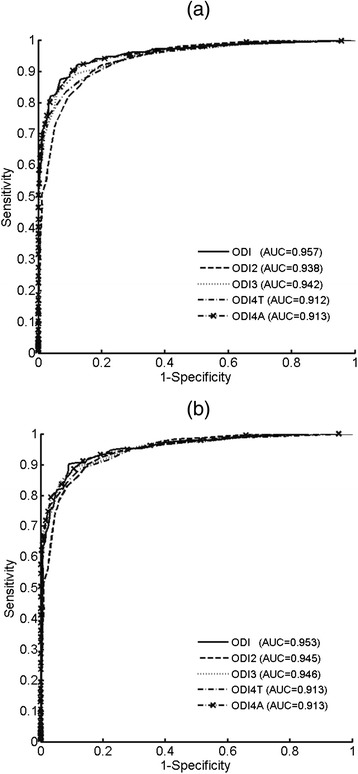
BACKGROUND: Polysomnography (PSG) is treated as the gold standard for diagnosing obstructive sleep apnea (OSA). However, it is labor-intensive, time-consuming, and expensive. This study evaluates validity of overnight pulse oximetry as a diagnostic tool for moderate to severe OSA patients. METHODS: A total of 699 patients with possible OSA were recruited for overnight oximetry and PSG examination at the Sleep Center of a University Hospital from Jan. 2004 to Dec. 2005. By excluding 23 patients with poor oximetry recording, poor EEG signals, or respiratory artifacts resulting in a total recording time less than 3 hours; 12 patients with total sleeping time (TST) less than 1 hour, possibly because of insomnia; and 48 patients whose ages less than 20 or more than 85 years old, data of 616 patients were used for further study. By further considering 76 patients with TST < 4 h, a group of 540 patients with TST ≥ 4 h was used to study the effect of insufficient sleeping time. Alice 4 PSG recorder (Respironics Inc., USA) was used to monitor patients with suspected OSA and to record their PSG data. After statistical analysis and feature selection, models built based on support vector machine (SVM) were then used to diagnose moderate and moderate to severe OSA patients with a threshold of AHI = 30 and AHI = 15, respectively. RESULTS: The SVM models designed based on the oxyhemoglobin desaturation index (ODI) derived from oximetry measurements provided an accuracy of 90.42-90.55%, a sensitivity of 89.36-89.87%, a specificity of 91.08-93.05%, and an area under ROC curve (AUC) of 0.953-0.957 for the diagnosis of severe OSA patients; as well as achieved an accuracy of 87.33-87.77%, a sensitivity of 87.71-88.53%, a specificity of 86.38-86.56%, and an AUC of 0.921-0.924 for the diagnosis of moderate to severe OSA patients. The predictive outcome of ODI to diagnose severe OSA patients is better than to diagnose moderate to severe OSA patients. CONCLUSIONS: Overnight pulse oximetry provides satisfactory diagnostic performance in detecting severe OSA patients. Home-styled oximetry may be a tool for severe OSA diagnosis.
Overview
The claims and statistics of this paper haven’t been checked yet.
Free: it reads the open-access text and checks the first 5 claims that cite a source we can check. Create a free account to check every claim.
Integrity signals
Registry
Cites
Statistics
Figures
Verification
Claims the paper makes
The claims and statistics of this paper haven’t been checked yet.
Free: it reads the open-access text and checks the first 5 claims that cite a source we can check. Create a free account to check every claim.
Claims other papers make about this one
Each is checked against this paper’s own text: does it say what the citing paper says it does?
The source backs part of the claim, not all of it — or backs it for a different population, condition or comparison.
In the citing paper
“In the general population, two Level 1b studies,499,616 three Level 2b studies,617–619 and one Level 3b620 found reasonably good correlations between oximetry ODI and PSG AHIs, though primarily when the 4% desaturation criteria was used to score respiratory events.”
From International Consensus Statement on Obstructive Sleep Apnea (2023) · cites this paper as [618]
Experimental — accuracy not yet measuredThe cited source says what the claim attributes to it.
In the citing paper
“However, a number of these studies were downgraded for using the oximetry off the PSG as the comparison to the PSG derived AHI,617,618 or for using highly selective populations.619”
From International Consensus Statement on Obstructive Sleep Apnea (2023) · cites this paper as [618]
Self-check
Percentages, sums and reported differences re-computed from the paper’s own numbers.
The self-check needs the paper’s full text.
Citations
Cites
The Occurrence of Sleep-Disordered Breathing among Middle-Aged Adults
Young, T., Palta, M., Dempsey, J., Skatrud, J., Weber, S., & Badr, S. (1993) · New England Journal of Medicine · doi:10.1056/nejm199304293281704 · Cited by 10,183 · cited 1×
“Obstructive sleep apnea (OSA) is prevalent in 4% of men and 2% of women [4]; among them, up to 93% of women and 82% of men have not been diagnosed [5], resulting in an increased risk of 2–7 folds in causing motor vehicle crashes [6] and causing several chronic diseases, such as metabolic syndrome [7]; neurocognitive d…”
Background(2007) · Cited by 6,530
Berry, R. B., Budhiraja, R., Gottlieb, D. J., Gozal, D., Iber, C., Kapur, V. K., Marcus, C. L., Mehra, R., Parthasarathy, S., Quan, S. F., et al. (2012) · Journal of Clinical Sleep Medicine · doi:10.5664/jcsm.2172 · Cited by 5,302
The Triad of Sleep Apnea, Hypertension, and Chronic Kidney Disease: A Spectrum of Common Pathology
Aziz, F., & Chaudhary, K. (2017) · Cardiorenal Medicine · doi:10.1159/000450796 · Cited by 3,267
Knowledge-based analysis of microarray gene expression data by using support vector machines
Brown, M. P. S., Grundy, W. N., Lin, D., Cristianini, N., Sugnet, C. W., Furey, T. S., Ares, M., & Haussler, D. (2000) · Proceedings of the National Academy of Sciences · doi:10.1073/pnas.97.1.262 · Cited by 2,308
Young, T., Evans, L., Finn, L., & Palta, M. (1997) · Sleep · doi:10.1093/sleep/20.9.705 · Cited by 1,765 · cited 1×
“Obstructive sleep apnea (OSA) is prevalent in 4% of men and 2% of women [4]; among them, up to 93% of women and 82% of men have not been diagnosed [5], resulting in an increased risk of 2–7 folds in causing motor vehicle crashes [6] and causing several chronic diseases, such as metabolic syndrome [7]; neurocognitive d…”
BackgroundSleep Apnea and Cardiovascular Disease
Somers, V. K., White, D. P., Amin, R., Abraham, W. T., Costa, F., Culebras, A., Daniels, S., Floras, J. S., Hunt, C. E., Olson, L. J., et al. (2008) · Journal of the American College of Cardiology · doi:10.1016/j.jacc.2008.05.002 · Cited by 1,487
Goldberger, J. J., Cain, M. E., Hohnloser, S. H., Kadish, A. H., Knight, B. P., Lauer, M. S., Maron, B. J., Page, R. L., Passman, R. S., Siscovick, D., et al. (2008) · Circulation · doi:10.1161/circulationaha.107.189375 · Cited by 1,450
Somers, V. K., White, D. P., Amin, R., Abraham, W. T., Costa, F., Culebras, A., Daniels, S., Floras, J. S., Hunt, C. E., Olson, L. J., et al. (2008) · Circulation · doi:10.1161/circulationaha.107.189420 · Cited by 1,297
Comparison of learning algorithms for handwritten digit recognition
LeCun, Y., Jackel, L. D., Bottou, L., Brunot, A., Cortes, C., Denker, J. S., Drucker, H., Guyon, I., Müller, U., Säckinger, E., et al. (1995) · Cited by 776
Cited by
International Consensus Statement on Obstructive Sleep Apnea
Chang, J. L., Goldberg, A. N., Alt, J. A., Mohammed, A., Ashbrook, L., Auckley, D., Ayappa, I., Bakhtiar, H., Barrera, J. E., Bartley, B. L., et al. (2023) · International Forum of Allergy & Rhinology · doi:10.1002/alr.23079 · Cited by 350
Self-citationThe Value of Oxygen Desaturation Index for Diagnosing Obstructive Sleep Apnea: A Systematic Review
Rashid, N. H., Zaghi, S., Scapuccin, M., Camacho, M., Certal, V., & Capasso, R. (2021) · The Laryngoscope · doi:10.1002/lary.28663 · Cited by 115
“Hang et al., 201532 Cessation of airflow for ≥ 10 secs (i) Fall in SaO2 ≥ 4% from baseline (ii) Fall in SaO2 ≥ 3% from baseline Preceding period of normal breathing (i) mean of all-night saturation (ii) mean of the top 20% of oxyhemoglobin saturation values over the 1 min preceding the scanned oxyhemoglobin value AHI…”
MethodInfluentialDeep learning for obstructive sleep apnea diagnosis based on single channel oximetry
Levy, J., Álvarez, D., Campo, F. D., & Behar, J. A. (2023) · Nature Communications · doi:10.1038/s41467-023-40604-3 · Cited by 129
“However, most previous studies 4,5 focused on developing OSA screening tests with a binary classi fi cation task (OSA, non-OSA).”
Application of artificial intelligence in the diagnosis of sleep apnea
Bazoukis, G., Bollepalli, S. C., Chung, C. T., Li, X., Tse, G., Bartley, B. L., Batool‐Anwar, S., Quan, S. F., & Armoundas, A. A. (2023) · Journal of Clinical Sleep Medicine · doi:10.5664/jcsm.10532 · Cited by 116
Linz, D., Baumert, M., Catcheside, P., Floras, J., Sanders, P., Lévy, P., Cowie, M. R., & Doug McEvoy, R. (2018) · International Journal of Cardiology · doi:10.1016/j.ijcard.2018.04.076 · Cited by 77
Terrill, P. I. (2020) · Respirology · doi:10.1111/resp.13635 · Cited by 75
Enabling Early Obstructive Sleep Apnea Diagnosis With Machine Learning: Systematic Review
Ferreira‐Santos, D., Amorim, P., Martins, T. S., Monteiro‐Soares, M., & Rodrigues, P. P. (2022) · Journal of Medical Internet Research · doi:10.2196/39452 · Cited by 86
Varghese, L., Rebekah, G. J., Priya Priya, N., Oliver, A., & Kurien, R. (2022) · Sleep Science · doi:10.5935/1984-0063.20200119 · Cited by 78
“Similarly, Hang et al. (2015) 7 concluded that overnight pulse oximetry is diagnostic in detecting severe OSA.”
BackgroundSharma, S., & Culebras, A. (2016) · Stroke and Vascular Neurology · doi:10.1136/svn-2016-000038 · Cited by 62
“Validation parameters were slightly less impressive in the moderate-to-severe sleep apnoea category.(77) Studies comparing overnight oximetry to ambulatory PSG in patients with acute stroke are needed.”
BackgroundKirszenblat, R., & Edouard, P. (2021) · Journal of Medical Internet Research · doi:10.2196/27503 · Cited by 54
Oximetry use in obstructive sleep apnea
del Campo, F., Crespo, A., Cerezo-Hernández, A., Gutiérrez-Tobal, G. C., Hornero, R., & Álvarez, D. (2018) · Expert Review of Respiratory Medicine · doi:10.1080/17476348.2018.1495563 · Cited by 49
Zhao, R. Z., Xue, J., Zhang, X., Peng, M., Li, J., Zhou, B. R., Zhao, L., Penzel, T., Kryger, M. H., Dong, X. S., et al. (2022) · Nature and Science of Sleep · doi:10.2147/nss.s367400 · Cited by 49
Linz, D., Kadhim, K., Brooks, A. G., Elliott, A. D., Hendriks, J. M. L., Lau, D. H., Mahajan, R., Gupta, A. K., Middeldorp, M. E., Hohl, M., et al. (2018) · International Journal of Cardiology · doi:10.1016/j.ijcard.2018.07.124 · Cited by 37
Canellas, J. V. D. S., Barros, H. L. M., Medeiros, P. J., & Ritto, F. (2016) · International Journal of Oral and Maxillofacial Surgery · doi:10.1016/j.ijom.2016.09.002 · Cited by 42
“Please cite this article in press as: Canellas JV and its influence on sleep apnoea, Int J Ora technical monitoring and the patient being required to stay overnight away from home.(20) Thus, the cost of this examination is high and its use cannot be justified for patients without previous symptoms or without strong cl…”
MethodObstructive Sleep Apnea Awareness among Primary Care Physicians in Africa
Chang, J.-W., Akemokwe, F. M., Marangu, D., Chisunkha, B., Irekpita, E., Obasikene, G., Kagima, J. W., & Obonyo, C. (2020) · Annals of the American Thoracic Society · doi:10.1513/annalsats.201903-218oc · Cited by 38
A Hybrid Feature Selection and Extraction Methods for Sleep Apnea Detection Using Bio-Signals
Li, X., Ling, S. H., & Su, S. W. (2020) · Sensors · doi:10.3390/s20154323 · Cited by 33
“Then the next feature was taken by ANOVA and the rank-sum test.”
MethodInfluentialClassifying sleep–wake stages through recurrent neural networks using pulse oximetry signals
Casal, R., Persia, L. E. D., & Schlotthauer, G. (2020) · Biomedical Signal Processing and Control · doi:10.1016/j.bspc.2020.102195 · Cited by 39
Dominguez, J. E., Cantrell, S. E., Habib, A. S., Izci‐Balserak, B., Lockhart, E., Louis, J. M., Miskovic, A., Nadler, J. W., Nagappa, M., O'Brien, L. M., et al. (2023) · Obstetrics and Gynecology · doi:10.1097/aog.0000000000005261 · Cited by 40
Validation of the oxygen desaturation index in the diagnostic workup of obstructive sleep apnea
Fabius, T. M., Benistant, J. R., Bekkedam, L., van der Palen, J. A. M., de Jongh, F. H., & Eijsvogel, M. (2018) · Sleep And Breathing · doi:10.1007/s11325-018-1654-2 · Cited by 36
Mashaqi, S., Staebler, D., & Mehra, R. (2020) · Sleep Medicine · doi:10.1016/j.sleep.2020.03.027 · Cited by 35
Performance evaluation of a wrist-worn reflectance pulse oximeter during sleep
Jung, H., Kim, D., Lee, W. Y., Seo, H., Seo, J.-W., Choi, J., & Joo, E. Y. (2022) · Sleep Health · doi:10.1016/j.sleh.2022.04.003 · Cited by 35
“30,37,38 The relatively low speci fi city of the GW4-ODI could be attributed to the vulnerability to artifacts compared to the ODI derived from a fi rmly attached transmittance pulse oximeter.”
Pediatric Tracheostomy Decannulation: 11‐Year Experience
Seligman, K. L., Liming, B. J., & Smith, R. J. (2019) · Otolaryngology · doi:10.1177/0194599819842164 · Cited by 28
“Since continuous pulse oximetry also detects both desaturation events and, by extension, apneic/hypopneic episodes, we consider it a more cost-effective method of detecting crucial desaturation and apneic events, in agreement with multiple studies showing that nocturnal oximetry is a cost-effective alternative to poly…”
Machine learning approach for obstructive sleep apnea screening using brain diffusion tensor imaging
Pang, B., Doshi, S., Roy, B., Lai, M., Ehlert, L., Aysola, R., Kang, D. W., Anderson, A., Joshi, S. H., Tward, D. J., et al. (2022) · Journal of Sleep Research · doi:10.1111/jsr.13729 · Cited by 29
Oxygen Desaturation Index Differs Significantly Between Types of Sleep Software
Ng, Y., Joosten, S. A., Edwards, B. A., Turton, A., Romios, H., Samarasinghe, T. D., Landry, S. A., Mansfield, D. R., & Hamilton, G. S. (2017) · Journal of Clinical Sleep Medicine · doi:10.5664/jcsm.6552 · Cited by 36
“14 However, a “negative” result does not exclude OSA in those at high risk and still requires further evaluation.”
Chen, Y.-F., Lin, C.-S., Hong, C.-F., Lee, D.-J., Sun, C., & Lin, H. (2018) · IEEE Journal of Biomedical and Health Informatics · doi:10.1109/jbhi.2018.2877595 · Cited by 30
“Fourth, it was argued that clinical information and laboratory test data are useful for increasing predictive performance of CDSSs [36], [43], [77].”
BackgroundSelf-citationThe uses of overnight pulse oximetry
Talwar, A., Singh, S., Khan, S., Singh, D., & Verma, S. (2020) · Lung India · doi:10.4103/lungindia.lungindia_302_19 · Cited by 33
“[9,10,22-24] Romem et al. evaluated the accuracy of photoplethysmography (PPG)-based finger pulse oximeter in the diagnosis of OSA.”
BackgroundMethodInfluentialMohamed, B. A., Yarlagadda, K., Self, Z., Simon, A., Rigueiro, F., Sohooli, M., Eisenschenk, S. J., & Doré, S. (2023) · Translational Stroke Research · doi:10.1007/s12975-023-01123-x · Cited by 34
Tsai, C.-Y., Liu, W., Lin, Y.-T., Lin, S., Houghton, R., Hsu, W.-H., Wu, D., Lee, H., Wu, C.-J., Li, L.-Y. J., et al. (2021) · Informatics for Health and Social Care · doi:10.1080/17538157.2021.2007930 · Cited by 27
“Next, to establish the model for screening the risk of severe OSAS, patients were divided into severe and non-severe OSAS (AHI ≥ 30 and AHI < 30, respectively) groups.(26) INFORMATICS FOR HEALTH AND SOCIAL CARE 375”
MethodSelf-citationRahman, M. J., Mahajan, R., & Morshed, B. I. (2018) · IEEE-EMBS International Conference on Biomedical and Health Informatics (BHI ...) · doi:10.1109/bhi.2018.8333363 · Cited by 29
“42% accuracy with the oxyhemoglobin desaturation index (ODI) derived from oximetry measurements [16].”
MethodLiu, M.-H., Chien, S.-Y., Wu, Y.-L., Sun, T.-H., Huang, C.-S., Hsu, K.-C., & Hang, L. (2024) · BioMedical Engineering OnLine · doi:10.1186/s12938-024-01252-w · Cited by 27
Self-citationSalari, N., Manoochehri, Z., Rezaei, M., Khazaie, H., Manoochehri, S., & Pavah, B. (2018) · Journal of Research in Medical Sciences · doi:10.4103/jrms.jrms_357_17 · Cited by 22
“Several studies have used parameters and signals obtained from electrocardiogram (ECG) or overnight oximetry and other signals.[13,14] Other studies have applied tools such as Berlin Questionnaire and Epworth sleepiness scale (ESS) as screening tools to diagnose OSA syndrome and (SDB).”
MethodRolón, R. E., Larrateguy, L. D., Persia, L. E. D., Spies, R. D., & Rufiner, H. L. (2017) · Biomedical Signal Processing and Control · doi:10.1016/j.bspc.2016.12.013 · Cited by 30
Sleep Disordered Breathing During Live High-Train Low in Normobaric Versus Hypobaric Hypoxia
SAUGY, J. J., Schmitt, L., Fallet, S., Faiss, R., Vésin, J.-M., Bertschi, M., Heinzer, R. C., & Millet, G. P. (2016) · High Altitude Medicine & Biology · doi:10.1089/ham.2016.0049 · Cited by 19
“1) denoting a more disturbed sleep breathing than in NH. ODI 3% is considered as a reliable indicator of sleep apnea (Hang et al., 2015).”
Objective sleep assessments for healthy people in environmental research: A literature review
Xu, X., & Lian, Z. (2022) · Indoor Air · doi:10.1111/ina.13034 · Cited by 22
Giorgi, L., Nardelli, D., Moffa, A., Iafrati, F., Giovanni, S. D., Olszewska, E., Baptista, P., Sabatino, L., & Casale, M. (2025) · Healthcare · doi:10.3390/healthcare13020181 · Cited by 24
Development of a pediatric obstructive sleep apnea triage algorithm
Heath, D. S., El-Hakim, H., Al-Rahji, Y., Eksteen, E., Uwiera, T. C., Isaac, A., Castro‐Codesal, M. L., Gerdung, C. A., MacLean, J. E., & Mandhane, P. J. (2021) · Journal of Otolaryngology - Head and Neck Surgery · doi:10.1186/s40463-021-00528-8 · Cited by 21
He, S., Cistulli, P. A., & de Chazal, P. (2023) · Diagnostics · doi:10.3390/diagnostics13213323 · Cited by 21
Hoshide, S., Kubota, K., & Kario, K. (2022) · Hypertension Research · doi:10.1038/s41440-022-01054-4 · Cited by 18
“This methodology has been validated [13].”
Wang, H., Gao, X., Wei, W., Miao, H., Meng, H., & Tian, M. (2017) · BMC Anesthesiology · doi:10.1186/s12871-017-0449-5 · Cited by 20
“Patients were not recruited if they were associated with asthma, symptoms of upper respiratory infection, neck radiation change, neck mass, unstable cervical spine, limited or severely limited jaw protrusion, interincisor distance less than 3 cm, severe obstructive sleep apnea syndrome (with an apnea-hypopnea index gr…”
BackgroundSelf-citationChyad, M. H., Gharghan, S. K., Hamood, H. Q., Altayyar, A. S. H., Zubaidi, S. L., & Ridha, H. M. (2022) · Neural Computing and Applications · doi:10.1007/s00521-022-06919-w · Cited by 17
Sleep-wake stages classification using heart rate signals from pulse oximetry
Casal, R., Persia, L. E. D., & Schlotthauer, G. (2019) · Heliyon · doi:10.1016/j.heliyon.2019.e02529 · Cited by 25
“Several works have been carried out with the aim of detecting these events using pulse oximeter signals [15, 16].”
BackgroundObstructive sleep apnoea–hypopnoea syndrome
Read, N., Jennings, C., & Hare, A. (2023) · Emerging Topics in Life Sciences · doi:10.1042/etls20180939 · Cited by 17
Álvarez, D., Gutiérrez‐Tobal, G. C., Vaquerizo-Villar, F., Barroso-García, V., Crespo, A., Domingo, C. A. A., del Campo, F., & Hornero, R. (2016) · Global Medical Engineering Physics Exchanges/Pan American Health Care Exchanges (GMEPE/PAHCE) · doi:10.1109/gmepe-pahce.2016.7504628 · Cited by 18
Sleep Disturbances in COPD are Associated with Heterogeneity of Airway Obstruction
Basile, M., Baiamonte, P., Mazzuca, E., Principe, S., Pennavaria, F., Benfante, A., & Scichilone, N. (2018) · COPD Journal of Chronic Obstructive Pulmonary Disease · doi:10.1080/15412555.2018.1504015 · Cited by 14
“a fall in oxygen saturation of 4% for at least 8 seconds) (15).”
BackgroundLevendowski, D. J., Hamilton, G. S., Louis, E. K. S., Penzel, T., Dawson, D., & Westbrook, P. R. (2019) · Nature and Science of Sleep · doi:10.2147/nss.s204830 · Cited by 19
Risk factors of sleep-disordered breathing in haemodialysis patients
Chu, G., Suthers, B., Moore, L., Paech, G. M., Hensley, M., McDonald, V. M., & Choi, P. (2019) · PLoS ONE · doi:10.1371/journal.pone.0220932 · Cited by 16
Filho, J. C. R., Neves, D. D., Moreira, G. A., Viana, A., & de Araújo-Melo, M. H. (2021) · Sleep Medicine · doi:10.1016/j.sleep.2021.05.009 · Cited by 56
Jacobowitz, O., Afifi, L., Penzel, T., Poyares, D. R., Marklund, M., & Kushida, C. A. (2021) · Sleep Medicine · doi:10.1016/j.sleep.2021.10.007 · Cited by 16
Pulse Oximetry Monitor Feasible for Early Screening of Obstructive Sleep Apnea (OSA)
Lin, H.-C., Su, C.-L., Ong, J.-H., Tsai, K., Chen, Y., Lin, C.-Y., Chiang, L.-L., & Hung, C. (2019) · Journal of Medical and Biological Engineering · doi:10.1007/s40846-019-00479-6 · Cited by 13
“Finally, one study [25] suggested that TST data recorded for at least 4 h might be reliable for analysis and claimed that older patients and those with more severe OSA and a higher ODI and AHI tend to sleep less, have less sleep latency, and have more frequent apnea and hypopnea events.”
BackgroundSelf-citationChen, L., Tang, W., Wang, C., Chen, D., Gao, Y., Ma, W., Zha, P., Lei, F., Tang, X., & Ran, X. (2021) · Frontiers in Endocrinology · doi:10.3389/fendo.2021.598470 · Cited by 14
Integrated Sensing Devices for Disease Prevention and Health Alerts in Smart Homes
Haghi, M., Spicher, N., Wang, J., & Deserno, T. M. (2022) · Studies in health technology and informatics · doi:10.3233/shti220007 · Cited by 19
Jay, S. M., Smith, B. P., Windler, S., Dorrian, J., & Ferguson, S. A. (2016) · International Journal of Environmental Research and Public Health · doi:10.3390/ijerph13020173 · Cited by 15
“Research has shown that in the absence of nasal pressure and respiratory effort, overnight oximetry is a valid diagnostic tool for OSA, especially when used in conjunction with PSG [14–18] and that an ODI of 10 would be a reasonable cut-off in the detection of at least moderate OSA [15,18].”
BackgroundMethodInfluentialXu, Z., Luo, X., Shi, J., & Lai, Y. (2019) · BMC Medical Informatics and Decision Making · doi:10.1186/s12911-019-0916-7 · Cited by 13
Comparison of two home sleep testing devices with different strategies for diagnosis of OSA
Gumb, T., Twumasi, A., Alimokhtari, S., Perez, A., Black, K., Rapoport, D. M., Sunderram, J., & Ayappa, I. A. (2017) · Sleep And Breathing · doi:10.1007/s11325-017-1547-9 · Cited by 13
“%) for diagnosis of OSA compared to full laboratory PSG [1, 2, 20–23].”
Brupbacher, G., Straus, D., Porschke, H., Zander-Schellenberg, T., Gerber, M., von Känel, R., & Schmidt‐Trucksäss, A. (2019) · Trials · doi:10.1186/s13063-019-3415-3 · Cited by 13
Talukder, A., Li, Y., Yeung, D., Shi, M., Umbach, D. M., Fan, Z., & Li, L. (2024) · Computers in Biology and Medicine · doi:10.1016/j.compbiomed.2024.108777 · Cited by 11
Dantas, E. L. D. S., Stelzer, F. G., Bernardo, W. M., & Éckeli, Á. L. (2025) · InterAmerican Journal of Medicine and Health · doi:10.1016/j.smrv.2025.102139 · Cited by 12
Usefulness of Home Overnight Pulse Oximetry in Patients with Suspected Sleep-Disordered Breathing
Esteban-Amarilla, C., Bote, S. M., Jurado-García, A., Palomares-Muriana, A., Collado, N. F., & Gámez, B. J. (2020) · Canadian Respiratory Journal · doi:10.1155/2020/1891285 · Cited by 10
Waseem, R., Chan, M. T. V., Wang, C. Y., Seet, E. C. P., & Chung, F. F. (2021) · PLoS ONE · doi:10.1371/journal.pone.0250777 · Cited by 8
“Although there has been a number of studies to predict OSA using oximetry [10, 11, 16, 17], this is the first study to show that overnight pulse oximetry is a valid screening tool in predicting OSA in surgical patients with cardiovascular risk factors.”
BackgroundHoang, N. H., & Liang, Z. (2025) · Frontiers in Digital Health · doi:10.3389/fdgth.2025.1510166 · Cited by 10
Oshita, H., Fuchita, H., Ito, N., Senoo, M., Isoyama, S., Yamamoto, Y. L., Yoshida, A., Osaki, K., Kawasaki, K., & Okusaki, K. (2019) · An Official Journal of the Japan Primary Care Association · doi:10.14442/generalist.42.26 · Cited by 7
Watanabe, M., Shinohara, H., & Kodama, H. (2020) · Journal of obstetrics and gynaecology research · doi:10.1111/jog.14362 · Cited by 8
Wu, C.-H., Lee, J.-H., Kuo, T. B. J., Lai, C., Li, L. P. H., & Yang, C. C. H. (2020) · Journal of Medical and Biological Engineering · doi:10.1007/s40846-020-00566-z · Cited by 7
Validation of Oximetry for Diagnosing Obstructive Sleep Apnea in a Clinical Setting
Ito, K., Uetsu, M., & Kadotani, H. (2020) · Clocks & Sleep · doi:10.3390/clockssleep2030027 · Cited by 7
“Previous studies have suggested that patients with OSA detected by oximetry have more severe disease than those missed by it [14,23,27].”
BackgroundResultA novel, simple, and accurate pulse oximetry indicator for screening adult obstructive sleep apnea
Nigro, C. A., Castaño, G., Bledel, I., Colombi, A., & Zicari, M. C. (2021) · Sleep And Breathing · doi:10.1007/s11325-021-02439-4 · Cited by 8
Kuo, N.-Y., Tsai, H.-J., Tsai, S., & Yang, A. C. (2024) · Journal of Medical Internet Research · doi:10.2196/51615 · Cited by 9
“Hang et al [26] used a support vector machine algorithm with ODI to predict moderate to severe sleep apnea and achieved an accuracy rate of 87.3%-87.8%.”
InfluentialNocturnal hypoxia and age‐related macular degeneration
Chaudhary, A., Abbott, C. J., Wu, Z., Fang, W., Raj, P. R., Naughton, M. T., Heriot, W. J., & Guymer, R. H. (2024) · Clinical and Experimental Ophthalmology · doi:10.1111/ceo.14428 · Cited by 7
Liu, Y., Huang, W., Zou, J., Xu, H., Qian, Y., Zhu, H., Meng, L., Guan, J., Yi, H., & Yin, S. (2020) · Sleep And Breathing · doi:10.1007/s11325-020-02014-3 · Cited by 8
A Survey on Detection and Prediction Methods for Sleep Apnea
Chyad, M. H., Gharghan, S. K., & Hamood, H. Q. (2020) · IOP Conference Series Materials Science and Engineering · doi:10.1088/1757-899x/745/1/012102 · Cited by 6
Perioperative Complications in Obstructive Sleep Apnea Patients
Auckley, D. H. (2016) · Current Sleep Medicine Reports · doi:10.1007/s40675-016-0040-5 · Cited by 7
Proposal of a diagnostic algorithm based on the use of pulse oximetry in obstructive sleep apnea
Borsini, E. E., & Nigro, C. A. (2022) · Sleep And Breathing · doi:10.1007/s11325-022-02757-1 · Cited by 7
Overnight oximetry in children undergoing adenotonsillectomy: A single center experience
Liu, C. C., Chaput, K. H., Kirk, V. G., & Yunker, W. K. (2019) · Journal of Otolaryngology - Head and Neck Surgery · doi:10.1186/s40463-019-0391-2 · Cited by 5
Gong, L., Chang, S.-C., Wu, Q., Liu, Z., Wu, X., & Li, S. (2020) · Sleep And Breathing · doi:10.1007/s11325-020-02198-8 · Cited by 6
Predictive Performance of Oximetry to Detect Sleep Apnea in Patients Taking Opioids
Waseem, R., Wong, J., Ryan, C. M., & Chung, F. F. (2021) · Anesthesia & Analgesia · doi:10.1213/ane.0000000000005545 · Cited by 6
Deep learning enhanced transmembranous electromyography in the diagnosis of sleep apnea
Mandeville, R. M., Sedghamiz, H., Mansfield, P. T., Sheean, G. L., Studer, C., Cordice, D., Ghanbari, G., Malhotra, A., Nemati, S., & Koola, J. (2024) · BMC Neuroscience · doi:10.1186/s12868-024-00913-9 · Cited by 5
Ersu, R. H., Shamsi, R., Bjelić, V., Barrowman, N. J., Blinder, H., Dussah, N., Cox, G., Leitman, A. R., & Katz, S. L. (2025) · Sleep Medicine · doi:10.1016/j.sleep.2025.106559 · Cited by 4
Séguro, F., Bard, V., Sedkaoui, K., Riche, M., Didier, A. P., & Bouhanick, B. (2018) · BMC Pulmonary Medicine · doi:10.1186/s12890-018-0737-y · Cited by 4
Lachenmeier, W., & Lachenmeier, D. W. (2022) · Geriatrics · doi:10.3390/geriatrics7020043 · Cited by 4
“to provide a satisfactory diagnostic performance in detecting severe obstructive sleep apnea [5].”
BackgroundUnchiti, K., Samerchua, A., Pipanmekaporn, T., Leurcharusmee, P., Sonsuwan, N., Phinyo, P., & Patumanond, J. (2024) · Sleep And Breathing · doi:10.1007/s11325-024-03226-7 · Cited by 3
“Children under 20 kg or those with poor cooperation underwent nocturnal pulse oximetry, enabling the recording of maximum, average, and minimum SpO 2 levels [19].”
The impact of study type and sleep measurement on oxygen desaturation index calculation
Whenn, C., Wilson, D. L., Ruehland, W. R., Churchward, T. J., Worsnop, C., & Tolson, J. (2024) · Journal of Clinical Sleep Medicine · doi:10.5664/jcsm.10982 · Cited by 5
“17,18 When there is a high clinical probability of OSA, ODI 4% is valid to “ rule in ” moderate to severe OSA (AHI ≥ 15 events/h), 19 – 22 and ODI is used in some countries as a metric to diagnose OSA.”
Næss‐Schmidt, E. T., Christensen, A., Vibjerg, J., Hasselager, V. L., Lindenmayer, L., Laursen, H. S., Nielsen, J. F., & Kirov, F. (2024) · Sleep And Breathing · doi:10.1007/s11325-024-03062-9 · Cited by 5
“It is well known that sleep apnoea are highly prevalent in the able-bodied population [21], but the results in the current study and previous studies [3, 4] point toward that the population of both para-and tetraplegics are in higher risk.”
ResultReal-world utility of overnight oximetry for the screening of obstructive sleep apnea in children
Wilson, A., Hartnett, C., Kilner, D., Davies, K., Slee, N., Chawla, J., Iyer, K. K., & Kevat, A. (2024) · International Journal of Pediatric Otorhinolaryngology · doi:10.1016/j.ijporl.2024.111892 · Cited by 3
Sleep detection in heart rate signals from photoplethysmography
Casal, R., & Schlotthauer, G. (2017) · Workshop on Information Processing and Control · doi:10.23919/rpic.2017.8211644 · Cited by 4
“objetivo de detectar esta morfología en la señal de oximetría [10], [11].”
BackgroundGonzález, M., Ravelo-García, A. G., Navarro-Mesa, J. L., & Hernández-Pérez, E. (2023) · Sensors · doi:10.3390/s23094267 · Cited by 3
“There are approaches that search for temporal OSA patterns [34,43,52,54], while others introduce spectral analysis to detect the peak commonly present in the 0.”
BackgroundDecannulation protocol in pediatric patients: case series study
de Miranda, L. D. G., Borges, L. A. A., Zavaglia, L. C., Mesquita, T. C. L., Leite, L. R., Aguiar, L. T., & Picinin, I. F. D. M. (2024) · Revista Paulista de Pediatria · doi:10.1590/1984-0462/2025/43/2023187 · Cited by 2
“Seligman et al., 23 Hang et al., 27 and Tsai et al. 28 consider that nocturnal oximetry is a viable alternative to polysomnography, as it also detects obstructive events during the sleep of a child in the process of decannulation, which is in line with what we use in our protocol.”
ResultIdentification of arterial oxygen intermittency in oximetry data
Galuzio, P. P., Cherif, A., Tao, X., Thwin, O., Zhang, H., Thijssen, S., & Kotanko, P. (2022) · Scientific Reports · doi:10.1038/s41598-022-20493-0 · Cited by 2
Chaudhary, A., Abbott, C. J., Wu, Z., Fang, W., Raj, P. R., Naughton, M. T., & Guymer, R. H. (2024) · Sleep And Breathing · doi:10.1007/s11325-024-03016-1 · Cited by 2
“OPO has previously been validated as an objective, simple, and cheap method to measure the oxygen saturation level at night when used as a diagnostic tool in patients with moderate to severe OSA [14].”
MethodWaghchaure, S. S., Bhad, W. A., Chavan, S. J., Mehta, N., & Baheti, N. (2022) · The Journal of Indian Orthodontic Society · doi:10.1177/03015742221076914 · Cited by 2
“apnea-hypopnea index (AHI), an index that grades the severity of OSA into mild (5-15), moderate (15-30), and severe (>30).”
BackgroundNovković, D., Popovic, N., Novkovic, N., Lukić, J., Begović-Kuprešanin, V., & Popević, M. B. (2025) · Vojnosanitetski pregled · doi:10.2298/vsp240323024n · Cited by 1
Predi̇cti̇ng the severi̇ty of obstructi̇ve sleep apnea usi̇ng arti̇fi̇ci̇al intelli̇gence tools
Çil, B., Irmak, H., & Kabak, M. (2025) · Annals of Thoracic Medicine · doi:10.4103/atm.atm_250_24 · Cited by 1
Detection and Prediction for Obstructive Sleep Apnea Recognition
Reddy, T. S., Kumar, A. P., Mahesh, M., & Prabhakar, J. (2022) · Advances in intelligent systems and computing · doi:10.1007/978-981-16-9573-5_29 · Cited by 1
Galtieri, R., Salles, C., Kushida, C. A., Cruz, M. G. M. E., & Souza‐Machado, A. (2024) · Sleep Medicine · doi:10.1016/j.sleep.2024.08.010 · Cited by 2
Neagoş, A., Costache, A., Gheorghe, D. C., Georgescu, M. G., Necula, V., Martu, C. M., Păduraru, L., Budacu, C. C., Olariu, R., Vrînceanu, D., et al. (2021) · Revista de Cercetare si Interventie Sociala · doi:10.33788/rcis.72.21 · Cited by 1
Sivathamboo, S., O'Brien, T. J., Goldin, J., Perucca, P., Kwan, P., & Velakoulis, D. (2019) · Neurology · doi:10.1212/wnl.0000000000008454 · Cited by 1
Ferreira‐Santos, D., Amorim, P., Martins, T. S., Monteiro‐Soares, M., & Rodrigues, P. P. (2022) · doi:10.2196/preprints.39452 · Cited by 1
Effects of unilateral sinonasal surgery on sleep-disordered breathing
Ishioka, K., Okumura, H., Sasaki, T., Ikeda, M., Takahashi, N., Baba, H., Aizawa, N., & Horii, A. (2019) · Acta Oto-Laryngologica · doi:10.1080/00016489.2019.1632481
“Regarding the effects of sinonasal surgery on AHI, it is reported that bilateral nasal surgery decreased the AHI as well as nasal resistance in patients with mild to moderate OSA [8] and that nasal resistance level of 0.35 or 0.38 Pa/ cm3/s (D100 Pa) was suggested to be a threshold to perform surgeries [9,10].”
BackgroundInfluentialSethi, N. K. (2019) · Neurology · doi:10.1212/wnl.0000000000008452
Innovations in Surgical Treatment of OSA
Capasso, R., & Zaghi, S. (2020) · Elsevier eBooks · doi:10.1016/b978-0-323-44339-5.00075-4
Senado, A. C. (2019) · UVaDOC UVaDOC University of Valladolid Documentary Repository (University of Valladolid) · doi:10.35376/10324/43206
Metadata
- Authors
- Hang, L.-W., Wang, H.-L., Chen, J.-H., Hsu, J.-C., Lin, H.-H., Chung, W.-S., & Chen, Y.-F.
- Affiliations
- China Medical University (TW)
- National Taichung University of Science and Technology (TW)
- Ministry of Health and Welfare (TW)
- Central Taiwan University of Science and Technology (TW)
- Corresponding author
- Chung, Wei-Sheng
- Chen, Yung-Fu
- Venue
- BMC Pulmonary Medicine
- Published
- 2015-03-20
- Volume
- 15
- Issue
- 1
- Pages
- 24-24
- ISSN
- 1471-2466 (ISSN-L)
- PMC
- PMC4407425
- OpenAlex
- W2103735154
- Semantic Scholar
- 39bc7c46e7e03aa852d85fa0c9d800a32d5b599b
- Cited by
- 115
- References
- 53
- Citations by year
- 2026: 7 · 2025: 6 · 2024: 14 · 2023: 9 · 2022: 17 · 2021: 13 · 2020: 13 · 2019: 16 · 2018: 9 · 2017: 5 · 2016: 6
- FWCI
- 4.91
- Type
- journal article
- Language
- en
- Open access
- gold
- doi.org
- Locations
- BMC Pulmonary Medicine (publishedVersion, cc-by)
- Europe PMC (PubMed Central) (publishedVersion, cc-by)
- PubMed Central (publishedVersion, cc-by)
- PubMed (publishedVersion)
- Funders
- National Science Council
- Ministry of Science and Technology, Taiwan
- Topics
- Health Sciences › Medicine › Physiology (medical) › Obstructive Sleep Apnea Research
- Social Sciences › Psychology › Experimental and Cognitive Psychology › Sleep and related disorders
- Physical Sciences › Engineering › Biomedical Engineering › Non-Invasive Vital Sign Monitoring
- Keywords
- obstructive sleep apnea, overnight pulse oximetry, polysomnography, OSA diagnosis, support vector machine, apnea-hypopnea index, diagnostic accuracy, total sleep time, feature selection, sleep monitoring devices, cost-effective diagnosis, sleep apnea severity classification
- MeSH terms
- Adult, Female, Humans, Male, Middle Aged, Oximetry, Oxyhemoglobins, Sensitivity and Specificity, Severity of Illness Index, Reproducibility of Results, Polysomnography, Sleep Apnea, Obstructive, Support Vector Machine
About these checks
Registry, retraction, Cites and statistics results are computed, not judged, with one exception: a printed reference that no index lists is read once by a model before it counts as a citation error. Claims are extracted by a model and kept only when their quote appears verbatim in the text; each cited source is then checked, with a model’s help, for whether it says what the claim relies on. Those verdicts can be wrong — read the claim’s quote and the cited source before relying on one.
Statistics and arithmetic are recomputed, not judged.
Confidence bands are shown only for fields calibrated on our annotated test set. None is calibrated yet, so no band is shown.
What counts as a claim ›How we measure confidence ›How we check this ›
Are you an author, or do you see a problem with this page? Request a review
Data sources
Bibliographic data: Semantic Scholar, OpenAlex, Crossref.
Contains information from the Semantic Scholar Academic Graph Datasets, made available under the ODC Attribution License (ODC-BY 1.0).
Semantic Scholar’s data is described in: Kinney, R., et al. (2023). The Semantic Scholar Open Data Platform. arXiv:2301.10140.
