

Validation of overnight oximetry to diagnose patients with moderate to severe obstructive sleep apnea
Open accessThe DOI matches its Crossref record; 52 of the 53 references it cites were found in a registry or an index.
Abstract
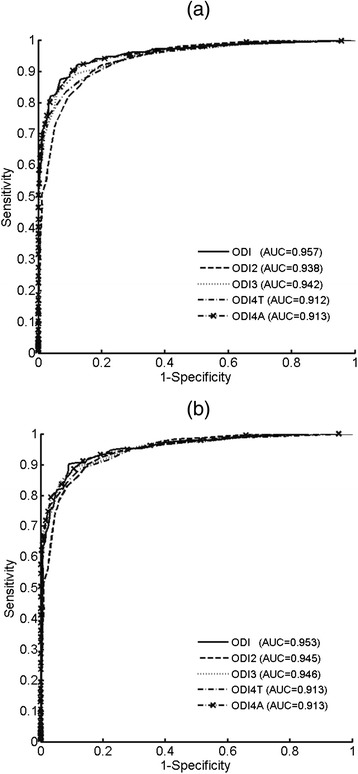
BACKGROUND: Polysomnography (PSG) is treated as the gold standard for diagnosing obstructive sleep apnea (OSA). However, it is labor-intensive, time-consuming, and expensive. This study evaluates validity of overnight pulse oximetry as a diagnostic tool for moderate to severe OSA patients. METHODS: A total of 699 patients with possible OSA were recruited for overnight oximetry and PSG examination at the Sleep Center of a University Hospital from Jan. 2004 to Dec. 2005. By excluding 23 patients with poor oximetry recording, poor EEG signals, or respiratory artifacts resulting in a total recording time less than 3 hours; 12 patients with total sleeping time (TST) less than 1 hour, possibly because of insomnia; and 48 patients whose ages less than 20 or more than 85 years old, data of 616 patients were used for further study. By further considering 76 patients with TST < 4 h, a group of 540 patients with TST ≥ 4 h was used to study the effect of insufficient sleeping time. Alice 4 PSG recorder (Respironics Inc., USA) was used to monitor patients with suspected OSA and to record their PSG data. After statistical analysis and feature selection, models built based on support vector machine (SVM) were then used to diagnose moderate and moderate to severe OSA patients with a threshold of AHI = 30 and AHI = 15, respectively. RESULTS: The SVM models designed based on the oxyhemoglobin desaturation index (ODI) derived from oximetry measurements provided an accuracy of 90.42-90.55%, a sensitivity of 89.36-89.87%, a specificity of 91.08-93.05%, and an area under ROC curve (AUC) of 0.953-0.957 for the diagnosis of severe OSA patients; as well as achieved an accuracy of 87.33-87.77%, a sensitivity of 87.71-88.53%, a specificity of 86.38-86.56%, and an AUC of 0.921-0.924 for the diagnosis of moderate to severe OSA patients. The predictive outcome of ODI to diagnose severe OSA patients is better than to diagnose moderate to severe OSA patients. CONCLUSIONS: Overnight pulse oximetry provides satisfactory diagnostic performance in detecting severe OSA patients. Home-styled oximetry may be a tool for severe OSA diagnosis.
Overview
The claims and statistics of this paper haven’t been checked yet.
Free: it reads the open-access text and checks the first 5 claims that cite a source we can check. Create a free account to check every claim.
Integrity signals
Registry
Cites
Statistics
Figures
Verification
Claims the paper makes
The claims and statistics of this paper haven’t been checked yet.
Free: it reads the open-access text and checks the first 5 claims that cite a source we can check. Create a free account to check every claim.
Claims other papers make about this one
Each is checked against this paper’s own text: does it say what the citing paper says it does?
The source backs part of the claim, not all of it — or backs it for a different population, condition or comparison.
In the citing paper
“In the general population, two Level 1b studies,499,616 three Level 2b studies,617–619 and one Level 3b620 found reasonably good correlations between oximetry ODI and PSG AHIs, though primarily when the 4% desaturation criteria was used to score respiratory events.”
From International Consensus Statement on Obstructive Sleep Apnea (2023) · cites this paper as [618]
Experimental — accuracy not yet measuredThe cited source says what the claim attributes to it.
In the citing paper
“However, a number of these studies were downgraded for using the oximetry off the PSG as the comparison to the PSG derived AHI,617,618 or for using highly selective populations.619”
From International Consensus Statement on Obstructive Sleep Apnea (2023) · cites this paper as [618]
Self-check
Percentages, sums and reported differences re-computed from the paper’s own numbers.
The self-check needs the paper’s full text.
Citations
Cites
The Occurrence of Sleep-Disordered Breathing among Middle-Aged Adults
Young, T., Palta, M., Dempsey, J., Skatrud, J., Weber, S., & Badr, S. (1993) · New England Journal of Medicine · doi:10.1056/nejm199304293281704 · Cited by 10,183 · cited 1×
“Obstructive sleep apnea (OSA) is prevalent in 4% of men and 2% of women [4]; among them, up to 93% of women and 82% of men have not been diagnosed [5], resulting in an increased risk of 2–7 folds in causing motor vehicle crashes [6] and causing several chronic diseases, such as metabolic syndrome [7]; neurocognitive d…”
Background(2007) · Cited by 6,530
Berry, R. B., Budhiraja, R., Gottlieb, D. J., Gozal, D., Iber, C., Kapur, V. K., Marcus, C. L., Mehra, R., Parthasarathy, S., Quan, S. F., et al. (2012) · Journal of Clinical Sleep Medicine · doi:10.5664/jcsm.2172 · Cited by 5,302
The Triad of Sleep Apnea, Hypertension, and Chronic Kidney Disease: A Spectrum of Common Pathology
Aziz, F., & Chaudhary, K. (2017) · Cardiorenal Medicine · doi:10.1159/000450796 · Cited by 3,267
Knowledge-based analysis of microarray gene expression data by using support vector machines
Brown, M. P. S., Grundy, W. N., Lin, D., Cristianini, N., Sugnet, C. W., Furey, T. S., Ares, M., & Haussler, D. (2000) · Proceedings of the National Academy of Sciences · doi:10.1073/pnas.97.1.262 · Cited by 2,308
Young, T., Evans, L., Finn, L., & Palta, M. (1997) · Sleep · doi:10.1093/sleep/20.9.705 · Cited by 1,765 · cited 1×
“Obstructive sleep apnea (OSA) is prevalent in 4% of men and 2% of women [4]; among them, up to 93% of women and 82% of men have not been diagnosed [5], resulting in an increased risk of 2–7 folds in causing motor vehicle crashes [6] and causing several chronic diseases, such as metabolic syndrome [7]; neurocognitive d…”
BackgroundSleep Apnea and Cardiovascular Disease
Somers, V. K., White, D. P., Amin, R., Abraham, W. T., Costa, F., Culebras, A., Daniels, S., Floras, J. S., Hunt, C. E., Olson, L. J., et al. (2008) · Journal of the American College of Cardiology · doi:10.1016/j.jacc.2008.05.002 · Cited by 1,487
Goldberger, J. J., Cain, M. E., Hohnloser, S. H., Kadish, A. H., Knight, B. P., Lauer, M. S., Maron, B. J., Page, R. L., Passman, R. S., Siscovick, D., et al. (2008) · Circulation · doi:10.1161/circulationaha.107.189375 · Cited by 1,450
Somers, V. K., White, D. P., Amin, R., Abraham, W. T., Costa, F., Culebras, A., Daniels, S., Floras, J. S., Hunt, C. E., Olson, L. J., et al. (2008) · Circulation · doi:10.1161/circulationaha.107.189420 · Cited by 1,297
Comparison of learning algorithms for handwritten digit recognition
LeCun, Y., Jackel, L. D., Bottou, L., Brunot, A., Cortes, C., Denker, J. S., Drucker, H., Guyon, I., Müller, U., Säckinger, E., et al. (1995) · Cited by 776
Evidence of bias and variation in diagnostic accuracy studies
Rutjes, A. W. S., Reitsma, J. B., Di Nisio, M., Smidt, N., van Rijn, J. C., & Bossuyt, P. M. M. (2006) · Canadian Medical Association Journal · doi:10.1503/cmaj.050090 · Cited by 611 · cited 2×
“Moreover, the study subjects selected based on the referred PSG examinations instead of clinical symptoms tended to underestimate the diagnostic accuracy [46].”
BackgroundTraining Invariant Support Vector Machines
Decoste, D., & Schölkopf, B. (2002) · Machine Learning · doi:10.1023/a:1012454411458 · Cited by 588
Nocturnal Pulse Oximetry as an Abbreviated Testing Modality for Pediatric Obstructive Sleep Apnea
Brouillette, R. T., Morielli, A., Leimanis, A., Waters, K. A., Luciano, R., & Ducharme, F. M. (2000) · Pediatrics · doi:10.1542/peds.105.2.405 · Cited by 576 · cited 1×
“However, Brouillette and colleagues reported that oximetry could be used to diagnose OSA for children with a positive predictive value of 97% [19].”
BackgroundHome Diagnosis of Sleep Apnea: A Systematic Review of the Literature
Flemons, W. W., Littner, M. R., Rowley, J. A., Gay, P., Anderson, W. M., Hudgel, D. W., McEvoy, R. D., & Loube, D. I. (2003) · Chest · doi:10.1378/chest.124.4.1543 · Cited by 571 · cited 2×
“According to a recent report, waiting time for accessing to diagnose and treat patients with suspected OSA is lengthy even in the developed counties around Europe, Australia, the United States, and Canada [12]; for example, it was estimated that the waiting time for non-urgent referrals for a sleep study ranges from 0…”
BackgroundNeurocognitive Impairment in Obstructive Sleep Apnea
Lal, C., Strange, C., & Bachman, D. (2012) · Chest · doi:10.1378/chest.11-2214 · Cited by 406 · cited 1×
“Obstructive sleep apnea (OSA) is prevalent in 4% of men and 2% of women [4]; among them, up to 93% of women and 82% of men have not been diagnosed [5], resulting in an increased risk of 2–7 folds in causing motor vehicle crashes [6] and causing several chronic diseases, such as metabolic syndrome [7]; neurocognitive d…”
BackgroundBreast cancer diagnosis using least square support vector machine
Polat, K., & Güneş, S. (2007) · Digital Signal Processing · doi:10.1016/j.dsp.2006.10.008 · Cited by 386 · cited 1×
“For examples, it has been applied in prediction of disulfide bonding patterns in proteins [32], discrimination of malignant and benign cervical lymph nodes [33], disease diagnosis using tongue images [34], diagnoses of cardiovascular disease [35] and breast cancer [36], and predictions of successful ventilation weanin…”
MethodSleep Apnea and Cardiovascular Disease: A Bidirectional Relationship
Kasai, T., Floras, J. S., & Bradley, T. D. (2012) · Circulation · doi:10.1161/circulationaha.111.070813 · Cited by 383 · cited 1×
“Several studies have explored that sleep apnea is associated with obesity, daytime fatigue, high blood pressure, and increased risk of cardiovascular morbidity [2,3].”
BackgroundAn Electrocardiogram-Based Technique to Assess Cardiopulmonary Coupling During Sleep
Thomas, R. J., Mietus, J. E., Peng, C.-K., & Goldberger, A. L. (2005) · Sleep · doi:10.1093/sleep/28.9.1151 · Cited by 335 · cited 2×
“Study limitations Unlike PSG and single-lead ECG, the limitation of oximetry measurement is that it is unable to score sleep quality [45].”
BackgroundOvernight Pulse Oximetry for Sleep-Disordered Breathing in Adults
Netzer, N., Eliasson, A. H., Netzer, C., & Kristo, D. A. (2001) · Chest · doi:10.1378/chest.120.2.625 · Cited by 311 · cited 1×
“Thus, home pulse oximetry has been proposed as a valuable screening tool, although its effectiveness in screening patients with OSA has been debated for several years [13].”
BackgroundAutomated analysis of digital oximetry in the diagnosis of obstructive sleep apnoea
Vazquez, J.-C. (2000) · Thorax · doi:10.1136/thorax.55.4.302 · Cited by 254 · cited 2×
“A number of studies have assessed its usefulness, but sometimes with conflicting results [14-16].”
MethodResultNewell, J., Mairesse, O., Verbanck, P., & Neu, D. (2012) · Psychiatry Research · doi:10.1016/j.psychres.2012.07.045 · Cited by 235 · cited 2×
“Furthermore, Newell et al [22] showed that TST, sleep efficiency, and AHI were significantly different between 2 consecutive nights of PSG recording for 4 individual groups of subjects, including sleep-related breathing disorders, insomnia, movement and behavioral disorders, and healthy control, indicating that AHI mi…”
BackgroundPredicting Sleep Apnea and Excessive Day Sleepiness in the Severely Obese
Dixon, J. B., Schachter, L. M., & O'Brien, P. E. (2003) · Chest · doi:10.1378/chest.123.4.1134 · Cited by 212 · cited 2×
“Among them, ESS was found to be correlated to arousal index and apnea-hyponea index (AHI) [38], while contradicted by other investigators [11,39].”
BackgroundResultA Comparison of Clinical Assessment and Home Oximetry in the Diagnosis of Obstructive Sleep Apnea
Gyulay, S., Olson, L. G., Hensley, M. J., King, M. T., Allen, K. M., & Saunders, N. A. (1993) · American Review of Respiratory Disease · doi:10.1164/ajrccm/147.1.50 · Cited by 209 · cited 1×
“In this study, two different baselines, including the mean of all-night oxygen (A) [28] and the mean of the top 20% of oxyhemoglobin saturation values over the 1 min preceding the scanned oxyhemoglobin value (T) [16] were adopted.”
MethodPrediction of the Apnea-Hypopnea Index From Overnight Pulse Oximetry *
Magalang, U. J., Dmochowski, J., Veeramachaneni, S., Draw, A., Mador, M. J., El-Solh, A., & Grant, B. J. B. (2003) · Chest · doi:10.1378/chest.124.5.1694 · Cited by 189 · cited 1×
“Artifacts with changes of oxygen saturation between consecutive sampling intervals greater than 4%/s, and any oxygen saturation less than 50% were detected and eliminated by an automated algorithm [25].”
MethodImpact and Correlates of Poor Sleep Quality in Japanese White-Collar Employees
Doi, Y., Minowa, M., & Tango, T. (2003) · Sleep · doi:10.1093/sleep/26.4.467 · Cited by 188 · cited 1×
“The environmental change might also be the reason for causing insomnia [44].”
BackgroundObstructive Sleep Apnea Syndrome, Sleepiness, and Quality of Life
Gonsalves, M. A., Paiva, T., Ramos, E., & Guilleminault, C. (2004) · Chest · doi:10.1378/chest.125.6.2091 · Cited by 174 · cited 2×
“Among them, ESS was found to be correlated to arousal index and apnea-hyponea index (AHI) [38], while contradicted by other investigators [11,39].”
BackgroundResultObstructive sleep apnea and the metabolic syndrome in community-based Chinese adults in Hong Kong
Lam, J. C. M., Lam, B., Lam, C.-L., Fong, D., Wang, J. K. L., Tse, H.-F., Lam, K. S. L., & Ip, M. S. M. (2006) · Respiratory Medicine · doi:10.1016/j.rmed.2005.10.003 · Cited by 166
Synaptic Rewiring for Topographic Map Formation
Bamford, S. A., Murray, A. F., & Willshaw, D. J. (2008) · Lecture notes in computer science · doi:10.1007/978-3-540-87559-8_23 · Cited by 145
Automated Recognition of Obstructive Sleep Apnea Syndrome Using Support Vector Machine Classifier
Al-Angari, H. M., & Sahakian, A. V. (2012) · IEEE Transactions on Information Technology in Biomedicine · doi:10.1109/titb.2012.2185809 · Cited by 142 · cited 3×
“[23] adopted linear kernel and secondorder polynomial kernel to design the SVM classifiers for discriminating 1-mimute epochs of OSA segments from the normal segments, and to discriminate patients from the normal subjects.”
MethodComparison of Home Oximetry Monitoring With Laboratory Polysomnography in Children *
Kirk, V. G., Bohn, S. G., Flemons, W. W., & Remmers, J. E. (2003) · CHEST Journal · doi:10.1378/chest.124.5.1702 · Cited by 139 · cited 1×
“For example, home overnight oximetry was found to be not very correlated with PSG for testing children [17] and to be considerable night-to-night variability for aged patients with chronic obstructive pulmonary disease (COPD) [18].”
BackgroundAhmadi, N., Shapiro, G. K., Chung, S. A., & Shapiro, C. M. (2009) · Sleep and Breathing · doi:10.1007/s11325-008-0234-2 · Cited by 134 · cited 1×
“Night-to-night variability of AHI greater than 5 among 21% of the study patients had also been observed [21].”
BackgroundEom, J.-H., Kim, S., & ZHANG, B. (2007) · Expert Systems with Applications · doi:10.1016/j.eswa.2007.04.015 · Cited by 132 · cited 1×
“For examples, it has been applied in prediction of disulfide bonding patterns in proteins [32], discrimination of malignant and benign cervical lymph nodes [33], disease diagnosis using tongue images [34], diagnoses of cardiovascular disease [35] and breast cancer [36], and predictions of successful ventilation weanin…”
MethodClassification of hyperspectral medical tongue images for tongue diagnosis
Zhi, L., Zhang, D. D., Yan, J., Li, Q., & Tang, Q. (2007) · Computerized Medical Imaging and Graphics · doi:10.1016/j.compmedimag.2007.07.008 · Cited by 128 · cited 1×
“For examples, it has been applied in prediction of disulfide bonding patterns in proteins [32], discrimination of malignant and benign cervical lymph nodes [33], disease diagnosis using tongue images [34], diagnoses of cardiovascular disease [35] and breast cancer [36], and predictions of successful ventilation weanin…”
MethodScreening for obstructive sleep apnea: an evidence-based analysis
Pang, K. P., & Terris, D. J. (2006) · American Journal of Otolaryngology · doi:10.1016/j.amjoto.2005.09.002 · Cited by 122 · cited 5×
“Although polysomnography (PSG) is regarded as the gold standard, it is time-consuming, labor-intensive, and expensive [11].”
BackgroundResultInfluentialHartenbaum, N., Collop, N., Rosen, I. M., Phillips, B., George, C. F. P., Rowley, J. A., Freedman, N., Weaver, T. E., Gurubhagavatula, I., Strohl, K., et al. (2006) · Journal of Occupational and Environmental Medicine · doi:10.1097/01.jom.0000236404.96857.a2 · Cited by 99 · cited 1×
“Obstructive sleep apnea (OSA) is prevalent in 4% of men and 2% of women [4]; among them, up to 93% of women and 82% of men have not been diagnosed [5], resulting in an increased risk of 2–7 folds in causing motor vehicle crashes [6] and causing several chronic diseases, such as metabolic syndrome [7]; neurocognitive d…”
BackgroundMarcos, J. V., Hornero, R., Álvarez, D., del Campo, F., & Zamarrón, C. (2009) · Medical Engineering & Physics · doi:10.1016/j.medengphy.2009.05.010 · Cited by 81 · cited 3×
“designed an SVM classifier using Gaussian kernel to classify spectral features of SaO2 signals [24].”
MethodKhoo, S. M., Tan, W. C., Ng, T. P., & Ho, C. H. (2004) · Respiratory Medicine · doi:10.1016/j.rmed.2003.11.017 · Cited by 74 · cited 2×
“Khoo et al [40] used questionnaires, containing questions regarding snoring, choking, suffocating, and abrupt awaking during sleep, to study Asian populations, including Chinese, Malaysian, and Indian.”
BackgroundDefining association between sleep apnea syndrome and erectile dysfunction
Telöken, P., Smith, E. B., Lodowsky, C., Freedom, T., & Mulhall, J. P. (2006) · Urology · doi:10.1016/j.urology.2005.11.040 · Cited by 72 · cited 1×
“Obstructive sleep apnea (OSA) is prevalent in 4% of men and 2% of women [4]; among them, up to 93% of women and 82% of men have not been diagnosed [5], resulting in an increased risk of 2–7 folds in causing motor vehicle crashes [6] and causing several chronic diseases, such as metabolic syndrome [7]; neurocognitive d…”
BackgroundBMC Pulmonary Medicine reviewer acknowledgement 2015
Krüger, D. (2016) · BMC Pulmonary Medicine · doi:10.1186/s12890-016-0196-2 · Cited by 64
Gosselin, N., Mathieu, A., Mazza, S., Petit, D., Malo, J., & Montplaisir, J. Y. (2006) · Clinical Neurophysiology · doi:10.1016/j.clinph.2006.07.130 · Cited by 60 · cited 1×
“Obstructive sleep apnea (OSA) is prevalent in 4% of men and 2% of women [4]; among them, up to 93% of women and 82% of men have not been diagnosed [5], resulting in an increased risk of 2–7 folds in causing motor vehicle crashes [6] and causing several chronic diseases, such as metabolic syndrome [7]; neurocognitive d…”
BackgroundZheng, H. T., Sowers, M. R., Buysse, D. J., Consens, F. B., Kravitz, H. M., Matthews, K. A., Owens, J. F., Gold, E. B., & Hall, M. H. (2012) · Journal of Clinical Sleep Medicine · doi:10.5664/jcsm.1670 · Cited by 53 · cited 1×
“It was reported that total sleeping time (TST) and sleep efficiency were significantly smaller for the first night in-home PSG compared to the 2nd and 3rd nights [20].”
ResultScreening of obstructive sleep apnea with empirical mode decomposition of pulse oximetry
Schlotthauer, G., Persia, L. E. D., Larrateguy, L. D., & Milone, D. H. (2014) · Medical Engineering & Physics · doi:10.1016/j.medengphy.2014.05.008 · Cited by 50 · cited 1×
“[43] adopted a novel method based on the empirical mode decomposition to detect oxyhemoglobin desaturation events from the recorded pulse oximetry signals.”
MethodLin, C.-L., Yeh, C., Yen, C., Hsu, W., & Hang, L. (2008) · CHEST Journal · doi:10.1378/chest.08-0057 · Cited by 48 · cited 1×
“predictors in the diagnosis of OSA, while demographic and questionnaire variables are not very helpful to elevate the prediction rate [41].”
BackgroundSelf-citationSeverity of Obstructive Sleep Apnea: Correlation with Clinical Examination and Patient Perception
Pang, K. P., Terris, D. J., & Podolsky, R. (2006) · Otolaryngology–Head and Neck Surgery · doi:10.1016/j.otohns.2006.03.044 · Cited by 45 · cited 1×
“Background Breathing-related sleep disorder is a spectrum of diseases including snoring, upper airway resistance syndrome and sleep apnea [1].”
BackgroundHome Overnight Pulse Oximetry in Patients With COPD
Lewis, C. A., Eaton, T. E., Fergusson, W., Whyte, K. F., Garrett, J., & Kolbe, J. (2003) · CHEST Journal · doi:10.1378/chest.123.4.1127 · Cited by 41
Clinical Verification of A Clinical Decision Support System for Ventilator Weaning
Hsu, J.-C., Chen, Y.-F., Chung, W.-S., Tan, T.-H., Chen, T., & Chiang, J. Y. (2013) · BioMedical Engineering OnLine · doi:10.1186/1475-925x-12-s1-s4 · Cited by 34 · cited 1×
“For examples, it has been applied in prediction of disulfide bonding patterns in proteins [32], discrimination of malignant and benign cervical lymph nodes [33], disease diagnosis using tongue images [34], diagnoses of cardiovascular disease [35] and breast cancer [36], and predictions of successful ventilation weanin…”
MethodSelf-citationChoi, S. J., BENNETT, L. S., Mullins, R., Davies, R. J. O., & Stradling, J. R. (2000) · Respiratory Medicine · doi:10.1053/rmed.2000.0860 · Cited by 26 · cited 1×
“A number of studies have assessed its usefulness, but sometimes with conflicting results [14-16].”
ResultChen, Y., Hang, L., Huang, C.-S., Liang, S., & Chung, W. (2014) · The Kaohsiung Journal of Medical Sciences · doi:10.1016/j.kjms.2014.11.004 · Cited by 24 · cited 1×
“It is acceptable for this misclassification (false-positive) since it was suggested that mild and moderate patients also need treatments using continuous positive airway pressure (CPAP) [42].”
BackgroundSelf-citationTeramoto, S., Matsuse, T., & Fukuchi, Y. (2002) · Sleep Medicine · doi:10.1016/s1389-9457(01)00129-0 · Cited by 20 · cited 1×
“A number of studies have assessed its usefulness, but sometimes with conflicting results [14-16].”
ResultSukor, J. A., Mohktar, M. S., Redmond, S. J., & Lovell, N. H. (2014) · IEEE Journal of Biomedical and Health Informatics · doi:10.1109/jbhi.2014.2361654 · Cited by 20 · cited 1×
“Third, the oximetry is part of the gold standard PSG examination, which reduces the quality of the study and can artificially increase the diagnostic accuracy using the parameters derived from the measurement of homestyle oximetry for its liability to induce errors and to couple noise artifacts [47].”
MethodComputer-aided diagnosis of cervical lymph nodes on ultrasonography
Zhang, J., Wang, Y., Dong, Y., & Wang, Y. (2007) · Computers in Biology and Medicine · doi:10.1016/j.compbiomed.2007.10.005 · Cited by 15 · cited 1×
“For examples, it has been applied in prediction of disulfide bonding patterns in proteins [32], discrimination of malignant and benign cervical lymph nodes [33], disease diagnosis using tongue images [34], diagnoses of cardiovascular disease [35] and breast cancer [36], and predictions of successful ventilation weanin…”
MethodLin, H., Hsu, J.-C., Hsu, Y.-N., Pan, R.-H., Chen, Y.-F., & Tseng, L. (2013) · Computers in Biology and Medicine · doi:10.1016/j.compbiomed.2013.09.008 · Cited by 7 · cited 1×
“For examples, it has been applied in prediction of disulfide bonding patterns in proteins [32], discrimination of malignant and benign cervical lymph nodes [33], disease diagnosis using tongue images [34], diagnoses of cardiovascular disease [35] and breast cancer [36], and predictions of successful ventilation weanin…”
MethodSelf-citation
Cited by
International Consensus Statement on Obstructive Sleep Apnea
Chang, J. L., Goldberg, A. N., Alt, J. A., Mohammed, A., Ashbrook, L., Auckley, D., Ayappa, I., Bakhtiar, H., Barrera, J. E., Bartley, B. L., et al. (2023) · International Forum of Allergy & Rhinology · doi:10.1002/alr.23079 · Cited by 350
Self-citationThe Value of Oxygen Desaturation Index for Diagnosing Obstructive Sleep Apnea: A Systematic Review
Rashid, N. H., Zaghi, S., Scapuccin, M., Camacho, M., Certal, V., & Capasso, R. (2021) · The Laryngoscope · doi:10.1002/lary.28663 · Cited by 115
“Hang et al., 201532 Cessation of airflow for ≥ 10 secs (i) Fall in SaO2 ≥ 4% from baseline (ii) Fall in SaO2 ≥ 3% from baseline Preceding period of normal breathing (i) mean of all-night saturation (ii) mean of the top 20% of oxyhemoglobin saturation values over the 1 min preceding the scanned oxyhemoglobin value AHI…”
MethodInfluentialDeep learning for obstructive sleep apnea diagnosis based on single channel oximetry
Levy, J., Álvarez, D., Campo, F. D., & Behar, J. A. (2023) · Nature Communications · doi:10.1038/s41467-023-40604-3 · Cited by 129
“However, most previous studies 4,5 focused on developing OSA screening tests with a binary classi fi cation task (OSA, non-OSA).”
Application of artificial intelligence in the diagnosis of sleep apnea
Bazoukis, G., Bollepalli, S. C., Chung, C. T., Li, X., Tse, G., Bartley, B. L., Batool‐Anwar, S., Quan, S. F., & Armoundas, A. A. (2023) · Journal of Clinical Sleep Medicine · doi:10.5664/jcsm.10532 · Cited by 116
Linz, D., Baumert, M., Catcheside, P., Floras, J., Sanders, P., Lévy, P., Cowie, M. R., & Doug McEvoy, R. (2018) · International Journal of Cardiology · doi:10.1016/j.ijcard.2018.04.076 · Cited by 77
Metadata
- Authors
- Hang, L.-W., Wang, H.-L., Chen, J.-H., Hsu, J.-C., Lin, H.-H., Chung, W.-S., & Chen, Y.-F.
- Affiliations
- China Medical University (TW)
- National Taichung University of Science and Technology (TW)
- Ministry of Health and Welfare (TW)
- Central Taiwan University of Science and Technology (TW)
- Corresponding author
- Chung, Wei-Sheng
- Chen, Yung-Fu
- Venue
- BMC Pulmonary Medicine
- Published
- 2015-03-20
- Volume
- 15
- Issue
- 1
- Pages
- 24-24
- ISSN
- 1471-2466 (ISSN-L)
- PMC
- PMC4407425
- OpenAlex
- W2103735154
- Semantic Scholar
- 39bc7c46e7e03aa852d85fa0c9d800a32d5b599b
- Cited by
- 115
- References
- 53
- Citations by year
- 2026: 7 · 2025: 6 · 2024: 14 · 2023: 9 · 2022: 17 · 2021: 13 · 2020: 13 · 2019: 16 · 2018: 9 · 2017: 5 · 2016: 6
- FWCI
- 4.91
- Type
- journal article
- Language
- en
- Open access
- gold
- doi.org
- Locations
- BMC Pulmonary Medicine (publishedVersion, cc-by)
- Europe PMC (PubMed Central) (publishedVersion, cc-by)
- PubMed Central (publishedVersion, cc-by)
- PubMed (publishedVersion)
- Funders
- National Science Council
- Ministry of Science and Technology, Taiwan
- Topics
- Health Sciences › Medicine › Physiology (medical) › Obstructive Sleep Apnea Research
- Social Sciences › Psychology › Experimental and Cognitive Psychology › Sleep and related disorders
- Physical Sciences › Engineering › Biomedical Engineering › Non-Invasive Vital Sign Monitoring
- Keywords
- obstructive sleep apnea, overnight pulse oximetry, polysomnography, OSA diagnosis, support vector machine, apnea-hypopnea index, diagnostic accuracy, total sleep time, feature selection, sleep monitoring devices, cost-effective diagnosis, sleep apnea severity classification
- MeSH terms
- Adult, Female, Humans, Male, Middle Aged, Oximetry, Oxyhemoglobins, Sensitivity and Specificity, Severity of Illness Index, Reproducibility of Results, Polysomnography, Sleep Apnea, Obstructive, Support Vector Machine
About these checks
Registry, retraction, Cites and statistics results are computed, not judged, with one exception: a printed reference that no index lists is read once by a model before it counts as a citation error. Claims are extracted by a model and kept only when their quote appears verbatim in the text; each cited source is then checked, with a model’s help, for whether it says what the claim relies on. Those verdicts can be wrong — read the claim’s quote and the cited source before relying on one.
Statistics and arithmetic are recomputed, not judged.
Confidence bands are shown only for fields calibrated on our annotated test set. None is calibrated yet, so no band is shown.
What counts as a claim ›How we measure confidence ›How we check this ›
Are you an author, or do you see a problem with this page? Request a review
Data sources
Bibliographic data: Semantic Scholar, OpenAlex, Crossref.
Contains information from the Semantic Scholar Academic Graph Datasets, made available under the ODC Attribution License (ODC-BY 1.0).
Semantic Scholar’s data is described in: Kinney, R., et al. (2023). The Semantic Scholar Open Data Platform. arXiv:2301.10140.
