

How people with chronic obstructive pulmonary disease perceive their illness: a qualitative study between mind and body
Open accessThe DOI matches its Crossref record; 38 of the 38 references it cites were found in a registry or an index.
Abstract
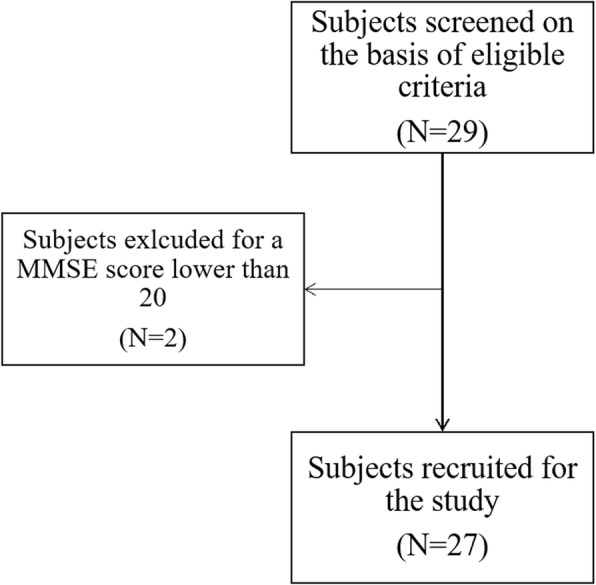
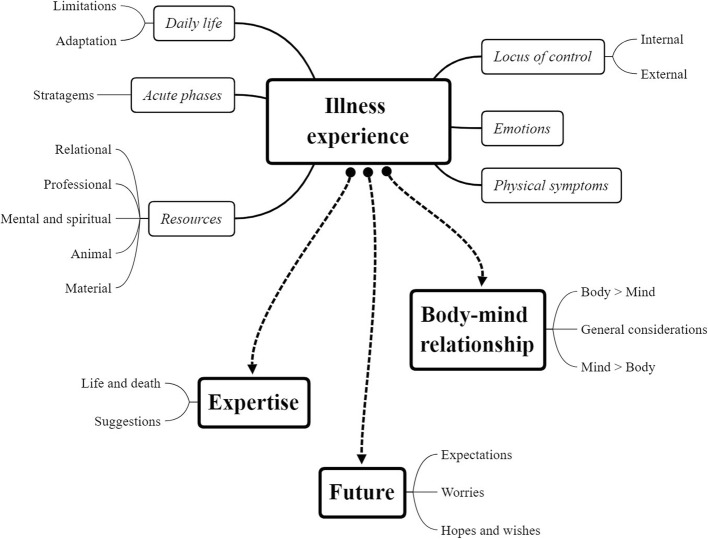
Background: Although many studies on people with Chronic Obstructive Pulmonary Disease (COPD) have examined the mutual impact of physical status and emotional experience, there is limited knowledge about the way COPD people first-hand perceive their condition. This study was designed to investigate the illness perceptions of the patients and, secondarily, to explore their beliefs about the mind-body relationship. Methods: This qualitative study has exploited an ad-hoc semi-structured interview to collect personal perspectives of participants on their illness. Twenty-seven patients (15 males and 12 females), with a mild to severe COPD, were recruited within the Respiratory Rehabilitation Unit of Don Carlo Gnocchi Foundation, in Milan. The thematic analysis of the interviews’ content was facilitated by NVivo (12th version, QSR International®). Results: The thematic analysis of the corpus resulted in four master themes.Illness experience has been considered the primary one. Indeed, dealing with COPD every day allows these people to portray a specific representation of the mind-body relationship,to gain a certain degree of expertise and to develop a perspective on the future. Conclusions: Individual perceptions of the illness vary among people with COPD, but some common experiences characterize them. Many patients share a profound belief that their mental state and their physical symptoms are highly interrelated.
Overview
The claims and statistics of this paper haven’t been checked yet.
Free: it reads the open-access text and checks the first 5 claims that cite a source we can check. Create a free account to check every claim.
Integrity signals
Registry
Cites
Statistics
Figures
Verification
Claims the paper makes
The claims and statistics of this paper haven’t been checked yet.
Free: it reads the open-access text and checks the first 5 claims that cite a source we can check. Create a free account to check every claim.
Self-check
Percentages, sums and reported differences re-computed from the paper’s own numbers.
The self-check needs the paper’s full text.
Citations
Cites
Using thematic analysis in psychology
Braun, V., & Clarke, V. (2006) · Qualitative Research in Psychology · doi:10.1191/1478088706qp063oa · Cited by 194,414 · cited 4×
“The analysis followed the six stages described by Braun and Clarke [27]: familiarization with data, generating initial codes, searching for themes, reviewing themes, defining and naming themes, and producing the report.”
BackgroundMethodInfluential(1998) · Cited by 13,501
Saturation in qualitative research: exploring its conceptualization and operationalization
Saunders, B., Sim, J., Kingstone, T., Baker, S., Waterfield, J., Bartlam, B., Burroughs, H., & Jinks, C. (2018) · Quality & Quantity · doi:10.1007/s11135-017-0574-8 · Cited by 12,033 · cited 1×
“We opted for a theoretical sampling, interrupting the recruitment when the theoretical saturation was reached [29].”
BackgroundAre We There Yet? Data Saturation in Qualitative Research
Fusch, P., & Ness, L. (2015) · The Qualitative Report · doi:10.46743/2160-3715/2015.2281 · Cited by 4,460
Global Initiative for Chronic Obstructive Lung Disease (GOLD)
Rahman, M. M., & Siddiqui, M. M. R. (2017) · Anwer Khan Modern Medical College Journal · doi:10.3329/akmmcj.v7i1.31596 · Cited by 3,106
Perera, G., Broadbent, M., Callard, F., Chang, C.-K., Downs, J., Dutta, R., Fernandes, A., Hayes, R. D., Henderson, M., Jackson, R., et al. (2016) · BMJ Open · doi:10.1136/bmjopen-2015-008721 · Cited by 492
Pinnock, H., Kendall, M., Murray, S. A., Worth, A., Levack, P., Porter, M., MacNee, W., & Sheikh, A. (2011) · BMJ · doi:10.1136/bmj.d142 · Cited by 343
Seamark, D. A., Blake, S. D., Seamark, C. J., & Halpin, D. M. (2004) · Palliative Medicine · doi:10.1191/0269216304pm928oa · Cited by 243 · cited 1×
“This negative expectation is consistent with what Seamark and colleagues (2004) support with their study: looking forward means dealing with feelings of loss and progressive isolation [33].”
ResultAnxiety Disorders in Patients With COPD: A Systematic Review
Willgoss, T. G., & Yohannes, A. M. (2013) · Respiratory Care · doi:10.4187/respcare.01862 · Cited by 240
Zhang, M. W. B., Ho, R. C. M., Cheung, M. W. L., Fu, E., & Mak, A. (2011) · General Hospital Psychiatry · doi:10.1016/j.genhosppsych.2011.03.009 · Cited by 229 · cited 1×
“Anxiety and depression are common in this population, with a prevalence of 10–55% [2] and 25% [3] respectively.”
BackgroundDefinition of a COPD self-management intervention: International Expert Group consensus
Effing, T. W., Vercoulen, J. H., Bourbeau, J., Trappenburg, J., Lenferink, A., Cafarella, P., Coultas, D., Meek, P., van der Valk, P., Bischoff, E. W. M. A., et al. (2016) · European Respiratory Journal · doi:10.1183/13993003.00025-2016 · Cited by 229 · cited 1×
“In this regard, the last international consensus on COPD stresses the role of selfmanagement interventions to increase the patient’s responsibility for healthcare decisions, considering him/ her as the main expert of his/her disease [32].”
BackgroundPooler, A., & Beech, R. (2014) · International Journal of Chronic Obstructive Pulmonary Disease · doi:10.2147/copd.s53255 · Cited by 191 · cited 1×
“While physical symptoms influence the psychological domains, the reverse is also true: for example, depression and anxiety seem to increase the risk of mortality [8], to raise the number of hospitalizations due to exacerbations [9], to increment dyspnoea episodes [10], and to worsen patients’ health-related quality of…”
BackgroundExperience of Advanced Chronic Obstructive Pulmonary Disease: Metasynthesis of Qualitative Research
Disler, R. T., Green, A., Luckett, T., Newton, P. J., Inglis, S., Currow, D. C., & Davidson, P. M. (2014) · Journal of Pain and Symptom Management · doi:10.1016/j.jpainsymman.2014.03.009 · Cited by 177 · cited 3×
“These aspects will be fundamental to make up for limits and losses, as supported by a meta-synthesis realized by Disler and colleagues [16].”
BackgroundInfluentialBlakemore, A., Dickens, C., Guthrie, E., Bower, P., Kontopantelis, E., Afzal, C., & Coventry, P. (2014) · International Journal of Chronic Obstructive Pulmonary Disease · doi:10.2147/copd.s58136 · Cited by 169 · cited 1×
“While physical symptoms influence the psychological domains, the reverse is also true: for example, depression and anxiety seem to increase the risk of mortality [8], to raise the number of hospitalizations due to exacerbations [9], to increment dyspnoea episodes [10], and to worsen patients’ health-related quality of…”
BackgroundGraffigna, G., Barello, S., & Bonanomi, A. (2017) · PLOS ONE · doi:10.1371/journal.pone.0179865 · Cited by 155 · cited 1×
“The patient’s perspective influences their engagement [34], and therefore their adherence and compliance.”
BackgroundIllness perceptions and coping determine quality of life in COPD patients
Tiemensma, J., Gaab, E., Voorhaar, M., Asijee, G. M., & Kaptein, A. A. (2016) · International Journal of COPD · doi:10.2147/copd.s109227 · Cited by 109 · cited 1×
“Moreover, these findings reflect the connection between illness perceptions, coping, and QoL(3) that are all associated with each other [31].”
BackgroundImpact of anxiety and depression on respiratory symptoms
Leander, M., Lampa, E., Rask-Andersen, A., Franklin, K., Gislason, T., Oudin, A., Svanes, C., Torén, K., & Janson, C. (2014) · Respiratory Medicine · doi:10.1016/j.rmed.2014.09.007 · Cited by 103 · cited 1×
“While physical symptoms influence the psychological domains, the reverse is also true: for example, depression and anxiety seem to increase the risk of mortality [8], to raise the number of hospitalizations due to exacerbations [9], to increment dyspnoea episodes [10], and to worsen patients’ health-related quality of…”
BackgroundZöckler, N., Kenn, K., Kühl, K., Stenzel, N., & Rief, W. (2013) · Journal of Psychosomatic Research · doi:10.1016/j.jpsychores.2013.11.021 · Cited by 84 · cited 1×
“Anxiety and depression are not the only psychological aspects that could impact the physical well-being: emotional and cognitive components of the illness perception can influence behavioural patterns, such as treatment adherence and exercise [12], and expectations have been found to be very important in the progressi…”
BackgroundManagement of Dyspnea and Anxiety in Chronic Obstructive Pulmonary Disease: A Critical Review
Yohannes, A. M., Junkes-Cunha, M., Smith, J. A., & Vestbo, J. (2017) · Journal of the American Medical Directors Association · doi:10.1016/j.jamda.2017.09.007 · Cited by 81 · cited 1×
“, the inability to breathe properly) may trigger anxious reactions [6, 7].”
BackgroundExperience of anxiety among patients with severe COPD: A qualitative, in-depth interview study
Strang, S., Ekberg‐Jansson, A., & Henoch, I. (2013) · Palliative & Supportive Care · doi:10.1017/s1478951513000369 · Cited by 77
Meaning of living with severe chronic obstructive lung disease: a qualitative study
Marx, G., Nasse, M., Stanze, H., Owusu-Boakye, S., Nauck, F., & Schneider, N. (2016) · BMJ Open · doi:10.1136/bmjopen-2016-011555 · Cited by 77 · cited 1×
“It is possible to find some recurring focuses adopted by researchers: some of them investigated the emotional burden associated with the illness [19–21], especially in acute circumstances like exacerbations [22]; other works explored the process of adaptation following the diagnosis [23, 24] and the daily struggle det…”
BackgroundSchüler, M., Wittmann, M., Faller, H., & Schultz, K. (2018) · Journal of Affective Disorders · doi:10.1016/j.jad.2018.07.021 · Cited by 69 · cited 1×
“, loss of autonomy, uncertainties about the future) may stimulate or extend depressive symptoms [4, 5].”
BackgroundClari, M., Ivziku, D., Casciaro, R., & Matarese, M. (2018) · COPD Journal of Chronic Obstructive Pulmonary Disease · doi:10.1080/15412555.2017.1417373 · Cited by 64 · cited 2×
“, physical, psychosocial, informational and professional care needs) [15], or taking into account the impact of the disease on patients’ lives (i.”
BackgroundResultThe meaning of living with chronic obstructive pulmonary disease
Clancy, K., Hallet, C., & Caress, A. (2009) · Journal of Nursing and Healthcare of Chronic Illness · doi:10.1111/j.1365-2702.2008.01005.x · Cited by 46 · cited 1×
“It is possible to find some recurring focuses adopted by researchers: some of them investigated the emotional burden associated with the illness [19–21], especially in acute circumstances like exacerbations [22]; other works explored the process of adaptation following the diagnosis [23, 24] and the daily struggle det…”
Backgroundde Voogd, J. N., Sanderman, R., Postema, K., van Sonderen, E., & Wempe, J. B. (2011) · Anxiety, Stress & Coping · doi:10.1080/10615806.2010.520081 · Cited by 45
‘Consumed by breathing’ – a critical interpretive meta-synthesis of the qualitative literature
Harrison, S. L., Apps, L., Singh, S. J., Steiner, M. C., Morgan, M. D., & Robertson, N. (2014) · Chronic Illness · doi:10.1177/1742395313493122 · Cited by 42 · cited 1×
“It is possible to find some recurring focuses adopted by researchers: some of them investigated the emotional burden associated with the illness [19–21], especially in acute circumstances like exacerbations [22]; other works explored the process of adaptation following the diagnosis [23, 24] and the daily struggle det…”
BackgroundHarrison, S. L., Robertson, N., Goldstein, R. S., & Brooks, D. (2016) · Chronic Respiratory Disease · doi:10.1177/1479972316654284 · Cited by 35
Pedrollo, E. F., Nicoletto, B. B., Carpes, L. S., de Freitas, J. D. M. C., Buboltz, J. R., Forte, C. C., Bauer, A. C., Manfro, R. C., Souza, G. C., & Leitão, C. B. (2017) · Trials · doi:10.1186/s13063-017-2158-2 · Cited by 30
The potential role of illness expectations in the progression of medical diseases
Pagnini, F. (2019) · BMC Psychology · doi:10.1186/s40359-019-0346-4 · Cited by 30 · cited 1×
“Anxiety and depression are not the only psychological aspects that could impact the physical well-being: emotional and cognitive components of the illness perception can influence behavioural patterns, such as treatment adherence and exercise [12], and expectations have been found to be very important in the progressi…”
BackgroundSelf-citationStrang, S., Farrell, M., Larsson, L.-O., Sjöstrand, C., Gunnarsson, A., Ekberg‐Jansson, A., & Strang, P. M. (2014) · Journal of Palliative Care · doi:10.1177/082585971403000206 · Cited by 29
Lou, P., Zhu, Y., Chen, P., Zhang, P., Yu, J., Wang, Y., Chen, N., Zhang, L., Wu, H., & Zhao, J. (2014) · COPD: Journal of Chronic Obstructive Pulmonary Disease · doi:10.3109/15412555.2013.822856 · Cited by 28 · cited 1×
“While physical symptoms influence the psychological domains, the reverse is also true: for example, depression and anxiety seem to increase the risk of mortality [8], to raise the number of hospitalizations due to exacerbations [9], to increment dyspnoea episodes [10], and to worsen patients’ health-related quality of…”
BackgroundSalte, K., Titlestad, I. L., & Halling, A. (2015) · PubMed · Cited by 24
A qualitative study of women's experiences of living with COPD
Steindal, S. A., Österlind, J., Halvorsen, K., Schjelderup, T., Kive, E. H., Sørbye, L. W., & Dihle, A. (2017) · Nursing Open · doi:10.1002/nop2.86 · Cited by 23 · cited 1×
“It is possible to find some recurring focuses adopted by researchers: some of them investigated the emotional burden associated with the illness [19–21], especially in acute circumstances like exacerbations [22]; other works explored the process of adaptation following the diagnosis [23, 24] and the daily struggle det…”
BackgroundVolpato, E., Banfi, P. I., Nicolini, A., & Pagnini, F. (2018) · Multidisciplinary Respiratory Medicine · doi:10.1186/s40248-018-0124-9 · Cited by 20 · cited 1×
“These are patterns that have been explored by several studies [14] and are therefore well known by many researchers.”
BackgroundSelf-citationVolpato, E., Banfi, P., & Pagnini, F. (2017) · Trials · doi:10.1186/s13063-017-1802-1 · Cited by 18
Self-citationImplementation of a multidisciplinary robotic centre in a high-volume university hospital.
Watt, S. K., Jakobsen, H. L., Vogelsang, R. P., Kromann‐Andersen, B., Palle, C., Frøding, L. P., Dreijer, B., & Gögenür, I. (2015) · PubMed · Cited by 7
Harrison, S. L. (2019) · Chronic Respiratory Disease · doi:10.1177/1479973119872506 · Cited by 7
Prieto-Centurion, V., Artis, K., & Coultas, D. (2019) · American Journal of Respiratory and Critical Care Medicine · doi:10.1164/rccm.201906-1263le · Cited by 1 · cited 1×
“However, it could hide a concrete potential, since patients’ perspectives may suggest improved interventions and help to understand the patients’ needs [18].”
Background
Cited by
NEŞE, A., & Bağlama, S. S. (2022) · Holistic Nursing Practice · doi:10.1097/hnp.0000000000000531 · Cited by 42
Ekdahl, A., Söderberg, S., & Holmström, M. R. (2021) · Scandinavian Journal of Caring Sciences · doi:10.1111/scs.12998 · Cited by 33
“This aligns with earlier research showing that a lot of time was consumed by waiting for their body to be able to function [40, 41].”
BackgroundVolpato, E., Banfi, P., & Pagnini, F. (2022) · Psychosomatic Medicine · doi:10.1097/psy.0000000000001053 · Cited by 24
“These results stress the relevance of paying attention to the patients’ needs during the adaptation to a new device process that is suddenly perceived as another sign of limitation (67).”
BackgroundSelf-citationAnnunziata, A., Calabrese, C., Simioli, F., Coppola, A., Pierucci, P., Mariniello, D. F., & Fiorentino, G. (2023) · Journal of Clinical Medicine · doi:10.3390/jcm12185866 · Cited by 20
“In contrast, non-acceptance or incorrect use of NIV often results in worse clinical outcomes and greater healthcare costs [3,4].”
BackgroundWeiss, J. R., Serdenes, R., Madtha, U., Zhao, H., Kim, V., Lopez‐Pastrana, J., Eakin, M. N., O’Toole, J., Cooper, C. B., Woodruff, P. G., et al. (2022) · Journal of the Academy of Consultation-Liaison Psychiatry · doi:10.1016/j.jaclp.2022.07.008 · Cited by 16
Metadata
- Authors
- Pozzar, M., Volpato, E., Valota, C., Pagnini, F., & Banfi, P. I.
- Affiliations
- Università Cattolica del Sacro Cuore (IT)
- Don Carlo Gnocchi Foundation (IT)
- Corresponding author
- Pozzar, Marta
- Venue
- BMC Pulmonary Medicine
- Published
- 2020-05-04
- Volume
- 20
- Issue
- 1
- Pages
- 120-120
- ISSN
- 1471-2466 (ISSN-L)
- PMC
- PMC7199319
- OpenAlex
- W3023968587
- Cited by
- 17
- References
- 38
- Citations by year
- 2026: 2 · 2025: 1 · 2024: 2 · 2023: 4 · 2022: 4 · 2021: 3 · 2020: 1
- FWCI
- 1.69
- Type
- journal article
- Language
- en
- Open access
- gold
- doi.org
- Licence
- cc-by
- creativecommons.org/licenses/by/4.0/ (tdm)
- creativecommons.org/licenses/by/4.0/ (vor)
- Locations
- BMC Pulmonary Medicine (publishedVersion, cc-by)
- PubMed Central (publishedVersion, cc-by)
- PubMed (publishedVersion)
- Lirias (submittedVersion, cc-by)
- Archivio Istituzionale della Ricerca (Universita Degli Studi Di Milano) (submittedVersion, other-oa)
- DOAJ (DOAJ: Directory of Open Access Journals) (submittedVersion, cc-by-sa)
- PubliCatt (Università Cattolica del Sacro Cuore) (submittedVersion, cc-by)
- Topics
- Health Sciences › Medicine › Pulmonary and Respiratory Medicine › Chronic Obstructive Pulmonary Disease (COPD) Research
- Social Sciences › Arts and Humanities › History and Philosophy of Science › Medicine, History, and Philosophy
- Health Sciences › Health Professions › General Health Professions › Health, psychology, and well-being
- Keywords
- chronic obstructive pulmonary disease, illness perception, mind-body problem, patient experience, pulmonary rehabilitation, illness experience
- MeSH terms
- Adaptation, Psychological, Aged, Aged, 80 and over, Female, Humans, Internal-External Control, Interviews as Topic, Health Knowledge, Attitudes, Practice, Male, Middle Aged, Severity of Illness Index, Pulmonary Disease, Chronic Obstructive, Qualitative Research
About these checks
Registry, retraction, Cites and statistics results are computed, not judged, with one exception: a printed reference that no index lists is read once by a model before it counts as a citation error. Claims are extracted by a model and kept only when their quote appears verbatim in the text; each cited source is then checked, with a model’s help, for whether it says what the claim relies on. Those verdicts can be wrong — read the claim’s quote and the cited source before relying on one.
Statistics and arithmetic are recomputed, not judged.
Confidence bands are shown only for fields calibrated on our annotated test set. None is calibrated yet, so no band is shown.
What counts as a claim ›How we measure confidence ›How we check this ›
Are you an author, or do you see a problem with this page? Request a review
Data sources
Bibliographic data: Semantic Scholar, OpenAlex, Crossref.
Contains information from the Semantic Scholar Academic Graph Datasets, made available under the ODC Attribution License (ODC-BY 1.0).
Semantic Scholar’s data is described in: Kinney, R., et al. (2023). The Semantic Scholar Open Data Platform. arXiv:2301.10140.
