

Ureteral endometriosis post-hysterectomy for adenomyosis: a case report and literature review
Open accessThe DOI matches its Crossref record; 29 of the 29 references it cites were found in a registry or an index; 7 of the 29 sources its claims cite were checked for support.
Abstract
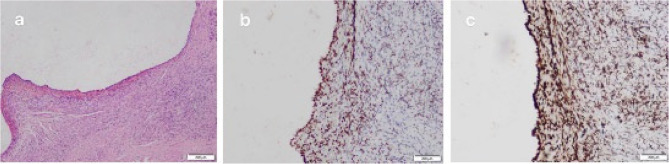
OBJECTIVE: To explore the necessity of long-term pharmacological management following total hysterectomy for adenomyosis. METHODS: A case of ureteral endometriosis identified over one year after laparoscopic total hysterectomy and bilateral salpingectomy for adenomyosis was retrospectively analyzed. Clinical data were reviewed, and related literature was summarized for discussion. RESULTS: The patient underwent laparoscopic total hysterectomy and bilateral salpingectomy at our hospital more than one year prior because of adenomyosis. No pharmacological treatment was provided postsurgery. One year later, the patient presented with right lumbar discomfort. Imaging revealed hydronephrosis of the right kidney and dilation of the right ureter, leading to a diagnosis of right ureteral endometriosis. Laparoscopic excision of the ureteral endometriotic lesion was performed. Pathology confirmed right ureteral endometriosis with glandular cystic expansion. Postsurgery, the patient was treated with gonadotropin-releasing hormone agonist (GnRH-a) therapy (3.6 mg of goserelin via subcutaneous injection every 28 days for a total of six cycles). Treatment is ongoing. Follow-up ultrasound revealed no abnormalities in the kidneys or ureters, and no recurrence was observed during the five months of follow-up. CONCLUSION: Adenomyosis is often associated with deep endometriosis. Even if no evident deep pelvic endometriosis is identified during total hysterectomy, long-term pharmacological management postsurgery may still be necessary. This approach can reduce the incidence of deep endometriosis in organs such as the bladder, ureters, and intestines.
Overview
CoChat Summary
TL;DR
This case report describes a 48-year-old woman who developed right ureteral endometriosis more than one year after laparoscopic total hysterectomy and bilateral salpingectomy for adenomyosis, having received no postoperative hormonal therapy. She was treated with laparoscopic excision and six cycles of GnRH-a, with no recurrence at five months, and the authors argue for risk-stratified long-term pharmacological management after hysterectomy for adenomyosis.
Key findings
- A 48-year-old woman with adenomyosis underwent laparoscopic total hysterectomy and bilateral salpingectomy in March 2023; no endometriotic lesions were seen intraoperatively and no postoperative pharmacological treatment was given.
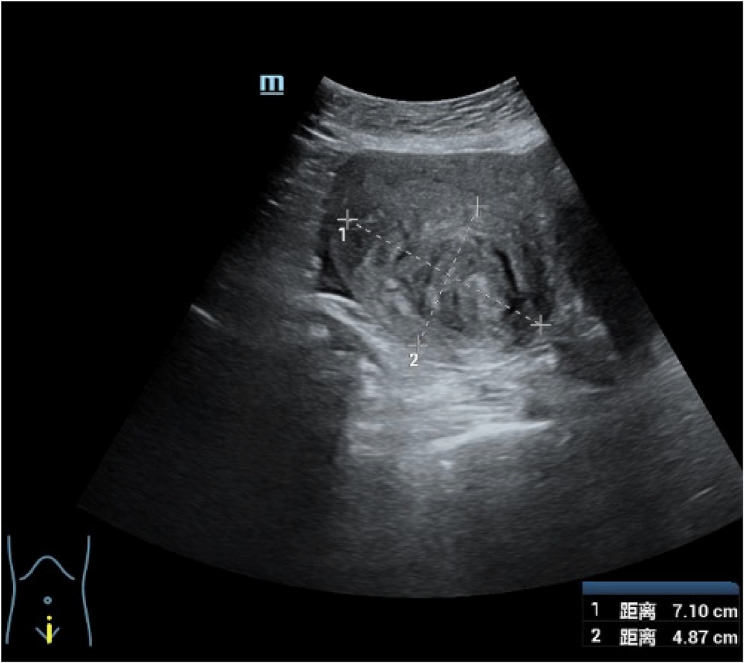
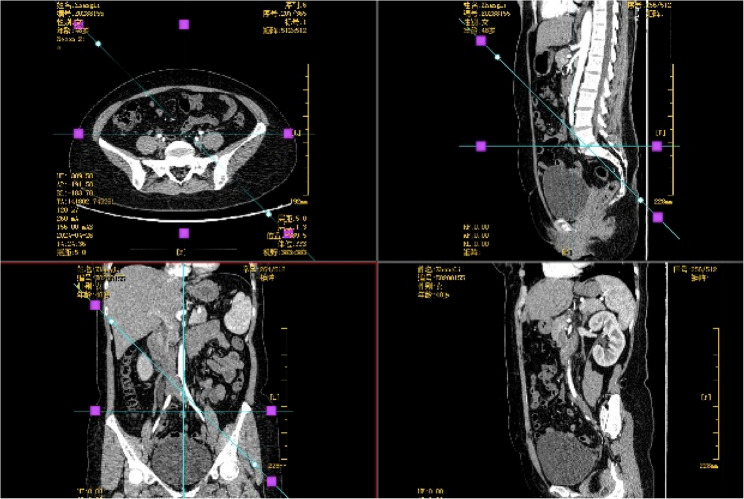
- In April 2024, she presented with right lumbar discomfort; CT showed a distal right ureteral soft tissue nodule measuring approximately 24.5 × 16.5 × 18 mm with hydronephrosis and proximal ureteral dilation, and pathology after laparoscopic excision confirmed ureteral endometriosis with glandular cystic expansion.
- She received postoperative GnRH-a therapy with goserelin 3.6 mg subcutaneously every 28 days for six cycles; follow-up ultrasound five months later showed no kidney, ureter, or bladder abnormalities, and no recurrence was observed.
- The literature review reports recurrence rates of 28.6% in a conservative surgery group without postoperative hormonal therapy (Di Maida et al., 2022) and 1.2% in 160 patients treated with laparoscopic ureteroneocystostomy plus postoperative hormone therapy (Ceccaroni et al., 2019), supporting postoperative hormonal therapy and complete excision to reduce recurrence.
Methods
- Retrospective analysis of a single case of ureteral endometriosis identified more than one year after laparoscopic total hysterectomy and bilateral salpingectomy for adenomyosis.
- Clinical data were reviewed, including laboratory results, pelvic ultrasound, CT, MRI, surgical findings, pathology, treatment, and follow-up.
- Related literature was summarized in a comparative table of reported ureteral endometriosis case series, including sample size, surgical approach, postoperative hormonal therapy, recurrence rate, and follow-up duration.
Limitations
- The paper states that causality cannot be established from a single case and that additional clinical studies are warranted to clarify which patient subgroups may benefit from continued pharmacological therapy after definitive surgery.
- The paper reports follow-up of only five months, so longer-term recurrence risk is not established.
- Evident from the text: this is a single case report with no control group, and the literature review is a narrative comparative summary rather than a systematic review with defined search or quality-assessment methods.
Model-written summary. Check it against the paper before relying on it.
Integrity signals
Registry
Cites
Statistics
Figures
Verification
Claims the paper makes
7 Valid · 0 Not valid · 14 Not checked · 23 Own results and interpretations
The cited sources support only part of this claim — read each source’s verdict below.
In the paper
“Recent studies suggest that nerve-sparing surgical approaches can significantly improve postoperative pelvic organ function, particularly urinary and bowel function [32].”
§ Ureteral endometriosis post-hysterectomy for adenomyosis: a case report and literature review > Discussion
What the sources say
- Partly supportedcites [32] Manuel MI, Diego R, Andrea R, et al. Impact of nerve-sparing posterolateral parametrial excision for deep infiltrating endometriosis on postoperative bowel, urinary, and sexual function. Int J Gynecol Obstet. 2022;159:152–159. PMC9542420 34995374 sourceExperimental — accuracy not yet measured
The Discussion (page unavailable) reports significant improvements in urinary and bowel function three months after surgery for deep infiltrating endometriosis. But it does not establish that nerve-sparing caused those improvements; the Discussion explicitly says the technique does not seem to improve gastrointestinal function. The claim overstates what this study supports about the nerve-sparing approach itself. (LLM, conf=0.86)
hedgedstates a cause- Asserted: passes — The authors put it forward as true.
- Checkable: passes — It can be checked against evidence.
- Load-bearing: unclear — It is unclear whether the paper’s conclusions depend on it.
- Based: passes — The paper gives a reason why it holds.
- Partly supported
The cited sources support only part of this claim — read each source’s verdict below.
In the paper
“Several studies have shown that combining postoperative hormonal therapy (e.g., GnRH agonists) with surgical treatment significantly reduces the recurrence rate of UE compared to surgery alone [16–18].”
§ Ureteral endometriosis post-hysterectomy for adenomyosis: a case report and literature review > Discussion
What the sources say
- Not matchedcites [16] Jia Z, Yan-Ni. "Diagnosis and treatment of ureteral endometriosis: an analysis of 28 cases." Master,s thesis, Shanxi Medical University; 2022. CNKI. https://www.cnki.net.
We searched by its title and found no matching paper.
- Not matchedcites [17] Liu Q, Sun YX, Liu KJ, et al. Analysis of the diagnosis and treatment of ureteral endometriosis by laparoscopic surgery in 16 patients. Chin J Pract Gynecol Obstet. 2019;35(8):934–937.
Its entry has no title and year that we can search by.
- Partly supportedcites [18] Hung ZC, Hsu TH, Jiang LY, et al. Robot-assisted laparoscopic ureteral reconstruction for ureter endometriosis: case series and literature review. J Chin Med Assoc. 2020;83(3):288–294. PMC13048165 32080024 sourceExperimental — accuracy not yet measured
The Results report that all five patients received postoperative GnRH agonists after ureteral surgery and that none had recurrence at their last follow-up (mean 17 months). The paper does not compare them with a surgery-only group or establish a statistically significant reduction in recurrence from adding hormonal therapy. (LLM, conf=0.86)
boostedstates a cause- Asserted: passes — The authors put it forward as true.
- Checkable: passes — It can be checked against evidence.
- Load-bearing: passes — The paper’s conclusions depend on it.
- Based: passes — The paper gives a reason why it holds.
- Not matched
The cited sources support only part of this claim — read each source’s verdict below.
In the paper
“A high American Society for Reproductive Medicine (ASRM) score, particularly ≥ 40, is also considered a significant risk factor [29, 30].”
§ Ureteral endometriosis post-hysterectomy for adenomyosis: a case report and literature review > Discussion
What the sources say
- Partly supportedcites [29] Coccia ME, Rizzello F, Palagiano A, et al. Long-term follow-up after laparoscopic treatment for endometriosis: multivariate analysis of predictive factors for recurrence of endometriotic lesions and pain. Eur J Obstet Gynecol Reprod Biol. 2011;157:78–83. 21481523 sourceExperimental — accuracy not yet measured
The Results (section 3.2, p. 5) identify more severe disease stage as a statistically significant independent predictor of endometriosis recurrence, and the Comments (p. 6) say ASRM staging has prognostic value. The paper’s passages compare stages III–IV with I–II; they do not establish the claimed ASRM score threshold of ≥40. (LLM, conf=0.88)
- Not checked — no full text of the sourcecites [30] Kikuchi I, Takeuchi H, Kitade M, et al. Recurrence rate of endometriomas following a laparoscopic cystectomy. Acta Obstet Gynecol Scand. 2006;85(9):1120–1124. 16929419 source
plainstates an association- Asserted: passes — The authors put it forward as true.
- Checkable: passes — It can be checked against evidence.
- Load-bearing: unclear — It is unclear whether the paper’s conclusions depend on it.
- Based: passes — The paper gives a reason why it holds.
- Partly supported
The cited sources support only part of this claim — read each source’s verdict below.
In the paper
“Seo et al. found that patients aged 40–45 years had significantly lower recurrence rates compared to those under 40”
§ Ureteral endometriosis post-hysterectomy for adenomyosis: a case report and literature review > Discussion
What the sources say
- Not checked — no full text of the sourcecites [25] Seo JW, Lee DY, Yoon BK, et al. The age-related recurrence of endometrioma after conservative surgery. Eur J Obstet Gynecol Reprod Biol. 2017;208:81–5. 27894033 source
- Partly supportedcites [26] Yang F, Liu B, Xu L, et al. Age at surgery and recurrence of ovarian endometrioma after conservative surgery: a meta-analysis including 3125 patients. Arch Gynecol Obstet. 2020;302:23–30. 32430756 PMC7266855 sourceExperimental — accuracy not yet measured
The Discussion (page not provided) reports Seo et al.’s recurrence rates as 10.2% for ages 40–45, versus 22.5% for ages 30–39 and 43.3% for ages 20–29. It does not report whether those specific differences were statistically significant. The meta-analysis’s own Discussion says its age association was not significant in the ≥35 subgroup. (LLM, conf=0.86)
plainstates an association- Asserted: passes — The authors put it forward as true.
- Checkable: passes — It can be checked against evidence.
- Load-bearing: unclear — It is unclear whether the paper’s conclusions depend on it.
- Based: passes — The paper gives a reason why it holds.
Every source the paper cites for this claim was checked and supports it.
In the paper
“Surgery is currently considered the gold standard for treating UE.”
§ Ureteral endometriosis post-hysterectomy for adenomyosis: a case report and literature review > Discussion
What the sources say
- Supportedcites [14] Kızılay F, Şimşir A, Nazlı O. Management of ureteral endometriosis and review of the literature. 2018. pp. 166–169. PMC7595017 33120006 source
The Introduction states that surgery is the primary treatment for ureteral endometriosis and explains why medical treatment may be insufficient. That supports the citing sentence’s characterization of surgery as the treatment standard, although the paper reserves the exact phrase “gold standard” for histopathological diagnosis. (LLM, conf=0.88)
plain- Asserted: passes — The authors put it forward as true.
- Checkable: passes — It can be checked against evidence.
- Load-bearing: unclear — It is unclear whether the paper’s conclusions depend on it.
- Based: passes — The paper gives a reason why it holds.
- Supported
17 more claims
Create a free account to see all 44 claims and every source verdict.
- It may state two separate claims as one. 12
- Probably not a substantial claim. 17
Citations
Cites
Guerriero, S., Condous, G., van den Bosch, T., Valentin, L., Leone, F. P. G., Van Schoubroeck, D., Exacoustos, C., Installé, A. J. F., Martins, W. P., Abrao, M. S., et al. (2016) · Ultrasound in Obstetrics & Gynecology · doi:10.1002/uog.15955 · Cited by 900 · cited 1×
“Currently, transvaginal ultrasonography (TVS) combined with urinary system ultrasound is considered a first-line imaging modality for diagnosing DIE because of its noninvasive nature, afford-ability, and reproducibility [11, 12].”
Clinical Management of Endometriosis
Falcone, T., & Flyckt, R. (2018) · Obstetrics & Gynecology · doi:10.1097/aog.0000000000002469 · Cited by 569
Adenomyosis, epidemiological factors
Vercellini, P., Viganò, P., Somigliana, E., Daguati, R., Abbiati, A., & Fedele, L. (2006) · Best Practice & Research Clinical Obstetrics & Gynaecology · doi:10.1016/j.bpobgyn.2006.01.017 · Cited by 319
Clinical Management of Endometriosis
Falcone, T., & Lebovic, D. I. (2011) · Obstetrics & Gynecology · doi:10.1097/aog.0b013e31822adfd1 · Cited by 263
Adenomyosis: An update regarding its diagnosis and clinical features
Bourdon, M., Santulli, P., Marcellin, L., Maignien, C., Maitrot‐Mantelet, L., Bordonné, C., Plu‐Bureau, G., & Chapron, C. (2021) · Journal of Gynecology Obstetrics and Human Reproduction · doi:10.1016/j.jogoh.2021.102228 · Cited by 139
Barra, F., Scala, C., Biscaldi, E., Vellone, V. G., Ceccaroni, M., Terrone, C., & Ferrero, S. (2018) · Human Reproduction Update · doi:10.1093/humupd/dmy027 · Cited by 138 · cited 1×
“Ureteral endometriosis (UE), a rare manifestation, occurs in only 0.1–1.7% of EM cases [7].”
InfluentialBedaiwy, M. A., Allaire, C., & Alfaraj, S. (2017) · Fertility and Sterility · doi:10.1016/j.fertnstert.2016.12.024 · Cited by 126 · cited 1×
“For patients undergoing uterus-sparing surgery for AM, postoperative management of endometriosis, or excision of deep infiltrating lesions (DIE), long-term hormonal therapy is commonly recommended to reduce recurrence rates and delay disease progression [21, 22].”
Ureteral and Vesical Endometriosis: Two Different Clinical Entities Sharing the Same Pathogenesis
Berlanda, N., Vercellini, P., Carmignani, L., Aimi, G., Amicarelli, F., & Fedele, L. (2009) · Obstetrical & Gynecological Survey · doi:10.1097/ogx.0b013e3181c4bc3a · Cited by 119 · cited 2×
“These characteristics often lead to diagnostic challenges and delays, potentially causing silent kidney damage [6].”
Recurrence rate of endometriomas following a laparoscopic cystectomy
Kikuchi, I., Takeuchi, H., Kitade, M., Shimanuki, H., Kumakiri, J., & Kinoshita, K. (2006) · Acta Obstetricia et Gynecologica Scandinavica · doi:10.1080/00016340600627154 · Cited by 116
Prevalence and Risk Factors of Central Sensitization in Women with Endometriosis
Raimondo, D., Raffone, A., Renzulli, F., Sanna, G., Raspollini, A., Bertoldo, L., Maletta, M., Lenzi, J., Rovero, G., Travaglino, A., et al. (2022) · Journal of Minimally Invasive Gynecology · doi:10.1016/j.jmig.2022.10.007 · Cited by 94 · cited 1×
“Studies have reported that up to 30–50% of women with EM may experience infertility, and many suffer from years of delayed diagnosis due to overlapping symptoms with other gynecologic or gastrointestinal disorders [5].”
Ianieri, M. M., Raimondo, D., Rosati, A., Cocchi, L., Trozzi, R., Maletta, M., Raffone, A., Campolo, F., Beneduce, G., Mollo, A., et al. (2022) · International Journal of Gynecology & Obstetrics · doi:10.1002/ijgo.14089 · Cited by 86
Recurrent endometriosis: a battle against an unknown enemy
Ceccaroni, M., Bounous, V. E., Clarizia, R., Mautone, D., & Mabrouk, M. (2019) · The European Journal of Contraception & Reproductive Health Care · doi:10.1080/13625187.2019.1662391 · Cited by 67 · cited 1×
“Endometriosis is associated with a relatively high post-operative recurrence rate, with an average 5-year recurrence of up to 50% [24].”
Carfagna, P., De Cicco Nardone, C., De Cicco Nardone, A., Testa, A. C., Scambia, G., Marana, R., & De Cicco Nardone, F. (2018) · Ultrasound in Obstetrics & Gynecology · doi:10.1002/uog.17524 · Cited by 66 · cited 1×
“Currently, transvaginal ultrasonography (TVS) combined with urinary system ultrasound is considered a first-line imaging modality for diagnosing DIE because of its noninvasive nature, afford-ability, and reproducibility [11, 12].”
Ceccaroni, M., Ceccarello, M., Caleffi, G., Clarizia, R., Scarperi, S., Pastorello, M., Molinari, A., Ruffo, G., & Cavalleri, S. (2019) · Journal of Minimally Invasive Gynecology · doi:10.1016/j.jmig.2018.03.031 · Cited by 60
Seracchioli, R., Raimondo, D., Di Donato, N., Leonardi, D., Spagnolo, E., Paradisi, R., Montanari, G., Caprara, G., & Zannoni, L. (2015) · Human Reproduction · doi:10.1093/humrep/deu360 · Cited by 55 · cited 1×
“Isolated or solitary UE is rare [8].”
Coccia, M. E., Rizzello, F., Palagiano, A., & Scarselli, G. (2011) · European Journal of Obstetrics & Gynecology and Reproductive Biology · doi:10.1016/j.ejogrb.2011.02.008 · Cited by 52 · cited 1×
“A high American Society for Reproductive Medicine (ASRM) score, particularly ≥ 40, is also considered a significant risk factor [29, 30].”
Wahl, K., Orr, N. L., Lisonek, M., Noga, H. L., Bedaiwy, M. A., Williams, C., Allaire, C., Albert, A., Smith, K. B., Cox, S., et al. (2020) · Sexual Medicine · doi:10.1016/j.esxm.2020.01.002 · Cited by 49 · cited 1×
“In contrast, EM involves the ectopic growth of endometrial tissue outside the uterus— such as in the ovaries, peritoneum, or deep pelvic struc-tures—and commonly presents with chronic pelvic pain and infertility [4].”
Tobiume, T., Kotani, Y., Takaya, H., Nakai, H., Tsuji, I., Suzuki, A., & Mandai, M. (2016) · European Journal of Obstetrics & Gynecology and Reproductive Biology · doi:10.1016/j.ejogrb.2016.07.516 · Cited by 44 · cited 1×
“In addition, the severity of dysmenorrhea prior to surgery is positively associated with recurrence risk, with more severe pain indicating a higher likelihood of recurrence [27, 28].”
The age-related recurrence of endometrioma after conservative surgery
Seo, J.-W., Lee, D.-Y., Yoon, B.-K., & Choi, D. (2017) · European Journal of Obstetrics & Gynecology and Reproductive Biology · doi:10.1016/j.ejogrb.2016.11.015 · Cited by 32 · cited 1×
“For example, Seo et al. found that patients aged 40–45 years had significantly lower recurrence rates compared to those under 40, potentially due to lower ovarian activity and estrogen levels, which reduce the stimulation of residual endometriotic lesions [25, 26].”
Philip, C., Froc, E., Chapron, C., Hébert, T., Douvier, S., Filipuzzi, L., Descamps, P., Agostini, A., Collinet, P., von Théobald, P., et al. (2021) · Journal of Minimally Invasive Gynecology · doi:10.1016/j.jmig.2021.04.020 · Cited by 25
Risk factors for recurrence of deep infiltrating endometriosis after surgical treatment
Yela, D. A., Vitale, S. G., Vizotto, M. P., & Benetti‐Pinto, C. L. (2021) · Journal of Obstetrics and Gynaecology Research · doi:10.1111/jog.14837 · Cited by 23 · cited 1×
“Incomplete excision of deep infiltrating endometriosis (DIE) lesions is another key contributor to recurrence [31].”
Management of ureteral endometriosis with hydronephrosis: Experience from a tertiary medical center
Huang, J., Guo, H., Li, J., & Chen, S. (2017) · Journal of Obstetrics and Gynaecology Research · doi:10.1111/jog.13422 · Cited by 19
Seo, J.-W., Lee, D.-Y., Kim, S. E., Yoon, B.-K., & Choi, D. (2019) · European Journal of Obstetrics & Gynecology and Reproductive Biology · doi:10.1016/j.ejogrb.2019.02.032 · Cited by 18 · cited 1×
“In premenopausal women, such therapy may also induce menopausal side effects, including hot flashes and decreased bone density [23].”
Yang, F., Liu, B., Xu, L., & Liu, H. (2020) · Archives of Gynecology and Obstetrics · doi:10.1007/s00404-020-05586-3 · Cited by 14
Spagnolo, E., Hernández, A., Pascual, I., Cabanes, M., López, A., & Zapardiel, I. (2020) · Colorectal Disease · doi:10.1111/codi.15093 · Cited by 12 · cited 1×
“As the disease progresses, approximately 25% of patients develop lumbar pain, and 15% experience gross hematuria [10].”
Hung, Z.-C., Hsu, T.-H., Jiang, L.-Y., Chao, W.-T., Wang, P.-H., Chen, W.-J., Huang, E. Y.-H., Chen, Y.-J., & Lin, A. T. L. (2020) · Journal of the Chinese Medical Association · doi:10.1097/jcma.0000000000000249 · Cited by 11 · cited 1×
“Several studies have shown that combining postoperative hormonal therapy (e.g., GnRH agonists) with surgical treatment significantly reduces the recurrence rate of UE compared to surgery alone [16–18].”
Management of ureteral endometriosis and review of the literature
Kızılay, F., Şimşir, A., & Nazlı, O. (2019) · Urology Research and Practice · doi:10.5152/tud.2018.21605 · Cited by 10
Urinary Tract Endometriosis: How to Predict and Prevent Recurrence after Primary Surgical Excision
Di Maida, F., Lambertini, L., Grosso, A. A., Mari, A., Vannuccini, S., Capezzuoli, T., Fambrini, M., Petraglia, F., & Minervini, A. (2022) · Journal of Minimally Invasive Gynecology · doi:10.1016/j.jmig.2022.07.004 · Cited by 5
Diagnosis and Treatment of Ureteral Endometriosis: Analysis of 3 Cases
Chen, B. (2002) · Reproduction and contraception · Cited by 1
Research works printed but not linked: 4
- Jia Z, Yan-Ni. "Diagnosis and treatment of ureteral endometriosis: an analysis of 28 cases." Master,s thesis, Shanxi Medical University; 2022. CNKI. https://www.cnki.net.
- Liu Q, Sun YX, Liu KJ, et al. Analysis of the diagnosis and treatment of ureteral endometriosis by laparoscopic surgery in 16 patients. Chin J Pract Gynecol Obstet. 2019;35(8):934–937.
- Zheng H, Qi XR. Interpretation of the ESHRE endometriosis management guidelines. Chin J Fam Plann Gynecol. 2023;15(8):3–7.
- Hu LH, Chen Y, Zhou Y, et al. Risk factors for recurrence after laparoscopic conservative surgery in patients with stage III-IV endometriosis. J Int Obstet Gynecol. 2021;48(3):314–317.
Cited by
Asmara, E. C., Rachmawati, A., Nisa, A. S., & Syam, H. H. (2026) · International Journal of Women s Health · doi:10.2147/ijwh.s605680
“7,17 During follow-up, periodic imaging evaluation and renal function assessment remain essential to detect disease progression at an early stage and to reassess the indication for definitive surgical management if conservative therapy fails.”
Metadata
- Authors
- Lu, Y., & Wang, Y.
- Affiliations
- Chengdu University (CN)
- Corresponding author
- Lu, Yujuan
- ORCID
- Venue
- BMC Urology
- Published
- 2025-07-09
- Volume
- 25
- Issue
- 1
- Pages
- 164-164
- ISSN
- 1471-2490 (ISSN-L)
- PMC
- PMC12239412
- OpenAlex
- W4412150527
- Cited by
- 0
- References
- 28
- FWCI
- 0.00
- Type
- journal article
- Language
- en
- Open access
- gold
- doi.org
- Licence
- cc-by-nc-nd
- creativecommons.org/licenses/by-nc-nd/4.0 (tdm)
- creativecommons.org/licenses/by-nc-nd/4.0 (vor)
- Locations
- BMC Urology (publishedVersion, cc-by-nc-nd)
- PubMed Central (publishedVersion, cc-by-nc-nd)
- PubMed (publishedVersion)
- DOAJ (DOAJ: Directory of Open Access Journals) (submittedVersion, cc-by-sa)
- Topics
- Health Sciences › Medicine › Reproductive Medicine › Endometriosis Research and Treatment
- Health Sciences › Medicine › Obstetrics and Gynecology › Gynecological conditions and treatments
- Health Sciences › Medicine › Obstetrics and Gynecology › Uterine Myomas and Treatments
- Keywords
- ureteral endometriosis, adenomyosis, total hysterectomy, bilateral salpingectomy, deep infiltrating endometriosis, GnRH agonist, goserelin, hydronephrosis, laparoscopic resection, long-term follow-up
- MeSH terms
- Adult, Endometriosis, Female, Humans, Hysterectomy, Middle Aged, Postoperative Complications, Ureteral Diseases, Adenomyosis
About these checks
Registry, retraction, Cites and statistics results are computed, not judged, with one exception: a printed reference that no index lists is read once by a model before it counts as a citation error. Claims are extracted by a model and kept only when their quote appears verbatim in the text; each cited source is then checked, with a model’s help, for whether it says what the claim relies on. Those verdicts can be wrong — read the claim’s quote and the cited source before relying on one.
The claim verdicts this report counts are experimental: their accuracy is not yet measured.
A language model drew the claims from the paper on 2026-10-10, under version 3 of the claim definition (model deepseek-v4.1-flash, prompt extract-v3).
A second model labelled each claim on 2026-10-10 (model jev-1.13-20260917, definition revision gold-guideline-v0.2).
Cited sources are checked with a language model’s help (gpt-6-sol).
Statistics and arithmetic are recomputed, not judged.
Confidence bands are shown only for fields calibrated on our annotated test set. None is calibrated yet, so no band is shown.
What counts as a claim ›How we measure confidence ›How we check this ›
Are you an author, or do you see a problem with this page? Request a review
Data sources
Bibliographic data: Semantic Scholar, OpenAlex, Crossref.
Contains information from the Semantic Scholar Academic Graph Datasets, made available under the ODC Attribution License (ODC-BY 1.0).
Semantic Scholar’s data is described in: Kinney, R., et al. (2023). The Semantic Scholar Open Data Platform. arXiv:2301.10140.
