

The dual amylin and calcitonin receptor agonist KBP-089 and the GLP-1 receptor agonist liraglutide act complimentarily on body weight reduction and metabolic profile
Open accessPublished version of a preprint
The DOI matches its Crossref record; 45 of the 45 references it cites were found in a registry or an index.
Abstract
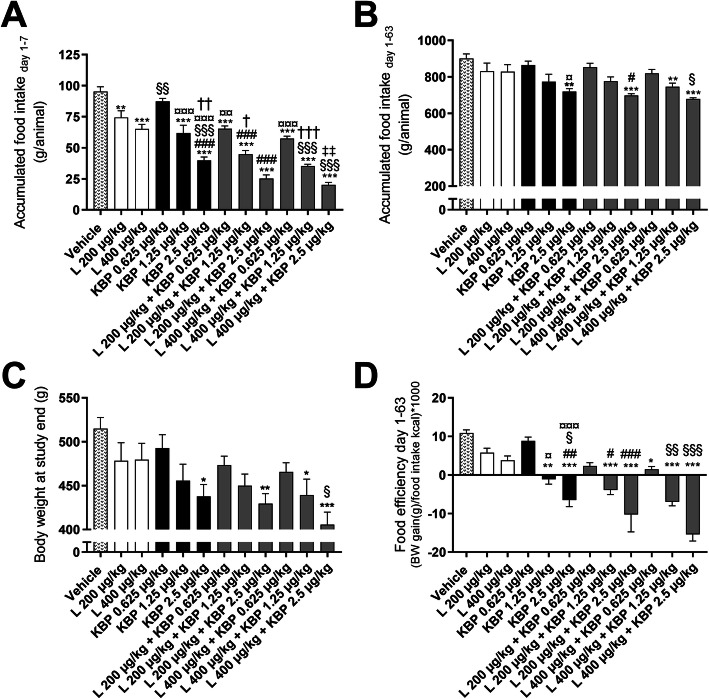
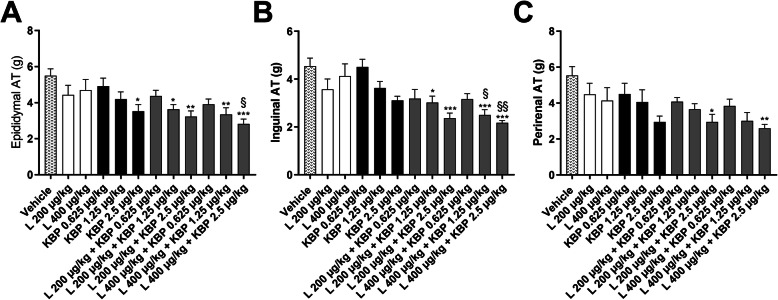
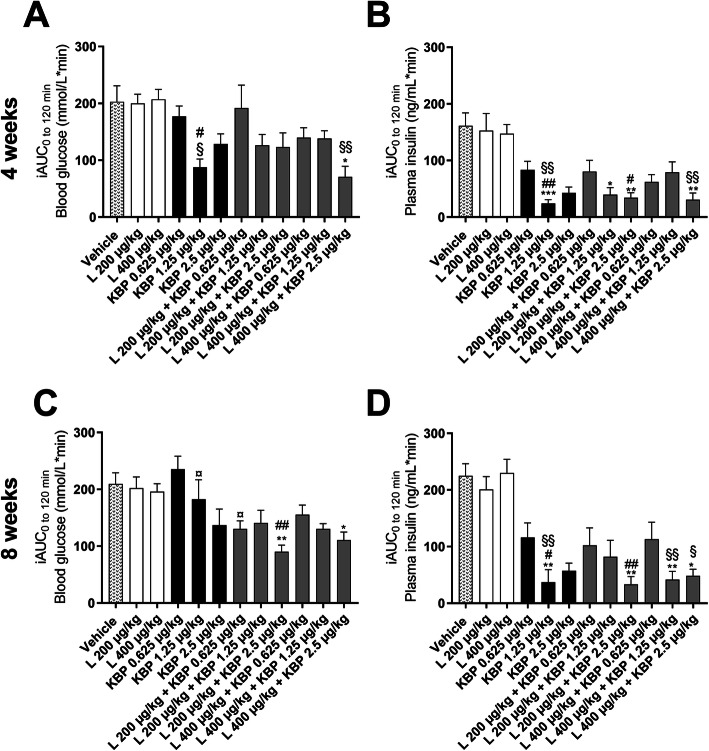
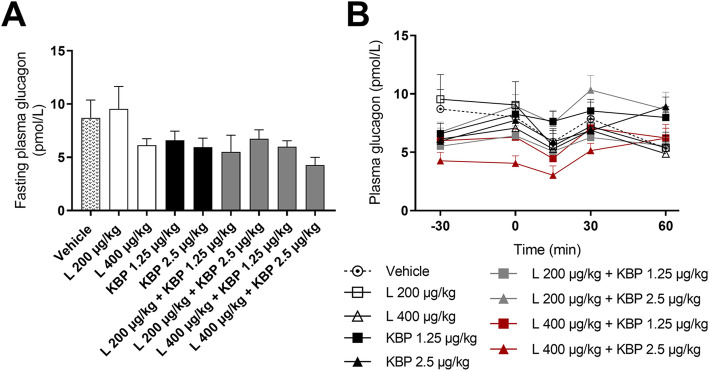
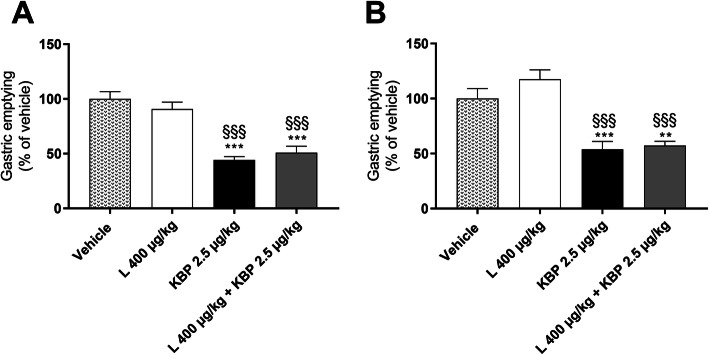
Background: Weight loss therapy is becoming more and more important, and two classes of molecules, namely amylin receptor and GLP-1 receptor agonists, have shown promise in this regard. Interestingly, these molecules have several overlapping pharmacological effects, such as suppression of gastric emptying, reduction of glucagon secretion and weight loss in common; however, they also have distinct effects on prandial insulin secretion. Hence, a combination of these two mechanisms is of significant interest. Methods: In this study, we investigated the add-on potential of the dual amylin and calcitonin receptor agonist (DACRA) KBP-089 in combination with the GLP-1 receptor agonist liraglutide as obesity treatment in high-fat diet (HFD) fed rats. Results: Increasing doses of KBP-089 and liraglutide alone and in combination were studied with respect to their effects on body weight, food intake and glucose metabolism during a 9-week intervention study conducted in HFD rats. Further, the gastric emptying rate during an oral glucose tolerance was assessed. Treatment with KBP-089 and liraglutide dose-dependently lowered body weight 15% (at 2.5 μg/kg/day) and 7% (at 400 μg/kg/day) in HFD rats, respectively, while the combination resulted in a 21% body weight reduction, which was mirrored by reduction in fat depot sizes. Gastric emptying and glucose metabolism were improved, primarily by KBP-089, although liraglutide led to a reduction in fasting plasma glucagon. Conclusion: DACRAs complement GLP-1 on food intake, body weight, and glucose tolerance indicating the potential for an add-on therapy.
Overview
The claims and statistics of this paper haven’t been checked yet.
Free: it reads the open-access text and checks the first 5 claims that cite a source we can check. Create a free account to check every claim.
Integrity signals
Registry
Cites
Statistics
Figures
Verification
Claims the paper makes
The claims and statistics of this paper haven’t been checked yet.
Free: it reads the open-access text and checks the first 5 claims that cite a source we can check. Create a free account to check every claim.
Claims other papers make about this one
Each is checked against this paper’s own text: does it say what the citing paper says it does?
The cited source says what the claim attributes to it.
In the citing paper
“Moreover, studies in high fat diet fed rats have shown that the combination of the GLP-1 RA liraglutide with a dual amylin and calcitonin receptor agonist (DACRA) results not only in more WL, but also in improvement in glycemia compared to liraglutide monotherapy and DACRA monotherapy, demonstrating the potential for combining GLP-1 RA with amylin RA in T2D management [66].”
Self-check
Percentages, sums and reported differences re-computed from the paper’s own numbers.
The self-check needs the paper’s full text.
Citations
Cites
Mechanisms linking obesity to insulin resistance and type 2 diabetes
Kahn, S. E., Hull, R. L., & Utzschneider, K. M. (2006) · Nature · doi:10.1038/nature05482 · Cited by 5,448
Guh, D. P., Zhang, W., Bansback, N., Amarsi, Z., Birmingham, C. L., & Anis, A. H. (2009) · BMC Public Health · doi:10.1186/1471-2458-9-88 · Cited by 3,855
Haslam, D. W., & James, W. P. T. (2005) · The Lancet · doi:10.1016/s0140-6736(05)67483-1 · Cited by 3,757
Davies, M. J., Bergenstal, R., Bode, B., Kushner, R. F., Lewin, A., Skjøth, T. V., Andreasen, A. H., Jensen, C. B., DeFronzo, R. A., & for the NN8022-1922 Study Group (2015) · JAMA · doi:10.1001/jama.2015.9676 · Cited by 1,198
on behalf of the NN8022-1807 Investigators, Astrup, A., Carraro, R., Finer, N., Harper, A., Kunesova, M., Lean, M. E. J., Niskanen, L., Rasmussen, M. F., Rissanen, A., et al. (2012) · International Journal of Obesity · doi:10.1038/ijo.2011.158 · Cited by 757
Non-alcoholic fatty liver disease and obesity: Biochemical, metabolic and clinical presentations
Milić, S. (2014) · World Journal of Gastroenterology · doi:10.3748/wjg.v20.i28.9330 · Cited by 583 · cited 1×
“(NAFLD), non-alcoholic steatohepatitis (NASH), and other obesity related morbidities [7, 32].”
Backgroundvan Can, J., Sloth, B., Jensen, C. B., Flint, A., Blaak, E. E., & Saris, W. H. M. (2014) · International Journal of Obesity · doi:10.1038/ijo.2013.162 · Cited by 537
Vilsbøll, T., Zdravkovic, M., Le-Thi, T., Krarup, T., Schmitz, O., Courrèges, J.-P., Verhoeven, R., Bugánová, I., & Madsbad, S. (2007) · Diabetes Care · doi:10.2337/dc06-2593 · Cited by 468
Bariatric Surgery: Risks and Rewards
Pories, W. J. (2008) · The Journal of Clinical Endocrinology & Metabolism · doi:10.1210/jc.2008-1641 · Cited by 405
Ratner, R. E., Dickey, R., Fineman, M., Maggs, D. G., Shen, L., Strobel, S. A., Weyer, C., & Kolterman, O. G. (2004) · Diabetic Medicine · doi:10.1111/j.1464-5491.2004.01319.x · Cited by 307
Cited by
A survey of the mouse hindbrain in the fed and fasted states using single-nucleus RNA sequencing
Dowsett, G. K. C., Lam, B. Y. H., Tadross, J. A., Cimino, I., Rimmington, D., Coll, A. P., Polex-Wolf, J., Knudsen, L. B., Pyke, C., & Yeo, G. S. H. (2021) · Molecular Metabolism · doi:10.1016/j.molmet.2021.101240 · Cited by 98
Mediators of Amylin Action in Metabolic Control
Boyle, C. N., Zheng, Y., & Lutz, T. A. (2022) · Journal of Clinical Medicine · doi:10.3390/jcm11082207 · Cited by 67
Peptides in the regulation of glucagon secretion
Andersen, D. B., & Holst, J. J. (2022) · Peptides · doi:10.1016/j.peptides.2021.170683 · Cited by 43
Gasbjerg, L. S., Rosenkilde, M. M., Meier, J. J., Holst, J. J., & Knop, F. K. (2023) · Diabetes, Obesity and Metabolism · doi:10.1111/dom.15216 · Cited by 41
“…should be challenged by comparison with other combination approaches (e.g. combinations of GLP-1 and GIP analogues, or GLP-1 and amylin analogues, 132 or GLP-1 analogues and GIP receptor antagonists 58,121,122 ), where the dose ratios could be easily adjusted according to personalized needs,…”
BackgroundLarsen, A. T., Mohamed, K. E., Sonne, N., BREDTOFT, E.-M., Andersen, F., Karsdal, M. A., & Henriksen, K. (2022) · Biomedicine & Pharmacotherapy · doi:10.1016/j.biopha.2022.113842 · Cited by 43
Self-citationCurrent Therapeutical Approaches Targeting Lipid Metabolism in NAFLD
Vitulo, M., Gnodi, E., Rosini, G., Meneveri, R., Giovannoni, R., & Barisani, D. (2023) · International Journal of Molecular Sciences · doi:10.3390/ijms241612748 · Cited by 37
“Other molecules activating THRβ signalling have been tested with discrete results in animal models, such as TG68, which ameliorates hepatic steatosis and lipid metabolism, mainly improving mitochondrial fatty acid oxidation downstream the activation of THRβ [171], or KBP-089, a double-receptor agonist for amylin and c…”
Amylin: From Mode of Action to Future Clinical Potential in Diabetes and Obesity
Volčanšek, Š., Koceva, A., Jensterle, M., Janež, A., & Muzurović, E. M. (2025) · Diabetes Therapy · doi:10.1007/s13300-025-01733-8 · Cited by 35
“In the case of KBP-089, a dual amylin and CTR agonist, the additivity of DACRAs and GLP-1 RA in improved insulin sensitivity and body weight reduction was demonstrated in the rat–animal model [119, 120].”
Gogineni, P., Melson, E., Papamargaritis, D., & Davies, M. (2024) · Expert Opinion on Pharmacotherapy · doi:10.1080/14656566.2024.2356254 · Cited by 32
“…the GLP-1 RA liraglutide with a dual amylin and calcitonin receptor agonist (DACRA) results not only in more WL, but also in improvement in glycemia compared to liraglutide monotherapy and DACRA monotherapy, demonstrating the potential for combining GLP-1 RA with amylin RA in T2D management [66].”
Muzurović, E. M., Katsiki, N., Volčanšek, Š., Plescia, F., Rizzo, M., & Mantzoros, C. S. (2026) · Metabolism · doi:10.1016/j.metabol.2026.156494 · Cited by 25
The role of incretin receptor agonists in the treatment of obesity
Forst, T. M., Block, C. E. M. D., Prato, S. D., Armani, S., Frías, J. P., Lautenbach, A., Ludvik, B. H., Marinez, M., Mathieu, C., Müller, T. D., et al. (2024) · Diabetes Obesity and Metabolism · doi:10.1111/dom.15796 · Cited by 22
The roles of hepatokine and osteokine in liver-bone crosstalk: Advance in basic and clinical aspects
Li, Z., Wen, X., Li, N., Zhong, C., Chen, L., Zhang, F., Zhang, G., Lü, A., & Liu, J. (2023) · Frontiers in Endocrinology · doi:10.3389/fendo.2023.1149233 · Cited by 22
“The administration of DACRA combined with liraglutide for obese rats generated a significant effect on appetite suppression and body weight loss (112).”
BackgroundLarsen, A. T., Melander, S. A., Sonne, N., BREDTOFT, E.-M., Al-Rubai, M., Karsdal, M. A., & Henriksen, K. (2023) · Biomedicine & Pharmacotherapy · doi:10.1016/j.biopha.2023.114969 · Cited by 17
Self-citationThe story of amylin: from physiology to therapy
Secher, A., Lutz, T. A., & Raun, K. (2026) · Nature Metabolism · doi:10.1038/s42255-026-01465-4 · Cited by 16
“In preclinical studies, several AMYR agonists have been demonstrated to reduce body weight—especially fat mass—and energy intake 60,132,201,217 .”
Melander, S. A., Katri, A., Karsdal, M. A., & Henriksen, K. (2022) · European Journal of Pharmacology · doi:10.1016/j.ejphar.2022.175397 · Cited by 16
Self-citationLarsen, A. T., Karsdal, M. A., & Henriksen, K. (2023) · European Journal of Pharmacology · doi:10.1016/j.ejphar.2023.175837 · Cited by 16
Self-citationThe role of amylin, a gut–brain axis hormone, in metabolic and neurological disorders
Muhammad, T., Pastore, S. F., Good, K., Yu, W. H., & Vincent, J. B. (2025) · FASEB BioAdvances · doi:10.1096/fba.2024-00151 · Cited by 14
Maharjan, R., Lim, D. S., Baik, H. J., Park, H. E., Kim, M., Kim, K. H., & Jeong, S. H. (2024) · Journal of Pharmaceutical Investigation · doi:10.1007/s40005-024-00681-y · Cited by 14
“Conceivably, the mechanism of action can be either a dual or multi - incretin agonist effect (Gilroy et al. 2020; Larsen et al. 2021).”
Larsen, A. T., Mohamed, K. E., Melander, S. A., Karsdal, M. A., & Henriksen, K. (2024) · American Journal of Physiology-Endocrinology and Metabolism · doi:10.1152/ajpendo.00092.2024 · Cited by 12
Self-citationLee, S. M. (2021) · Biomolecules · doi:10.3390/biom11091364 · Cited by 12
RISING STARS: Targeting G protein-coupled receptors to regulate energy homeostasis
Jamaluddin, A., & Gorvin, C. M. (2023) · Journal of Molecular Endocrinology · doi:10.1530/jme-23-0014 · Cited by 12
Hénin, G., Loumaye, A., Deldicque, L., Leclercq, I. A., & Lanthier, N. (2024) · Liver International · doi:10.1111/liv.15938 · Cited by 12
Aranäs, C., Caffrey, A., Edvardsson, C. E., Vestlund, J., Schmidt, H. D., & Jerlhag, E. (2024) · British Journal of Pharmacology · doi:10.1111/bph.17406 · Cited by 8
Long-acting amylin-related peptides as therapies for obesity and type 2 diabetes
Bailey, C. J., Flatt, P. R., & Conlon, J. M. (2026) · Peptides · doi:10.1016/j.peptides.2026.171480 · Cited by 7
Melander, S. A., Larsen, A. T., Karsdal, M. A., & Henriksen, K. (2024) · British Journal of Pharmacology · doi:10.1111/bph.16329 · Cited by 6
“Likewise, DACRAs are known to reduce beta-cell loss and attenuate hyperglucagonemia in obese and diabetic rats (Andreassen, Feigh, et al., 2014; Feigh et al., 2012; Hjuler et al., 2015, 2017; Larsen et al., 2021).”
BackgroundSelf-citationAranäs, C., Edvardsson, C. E., Zentveld, L., Vallöf, D., Witley, S., Tufvesson‐Alm, M., Shevchouk, O. T., Vestlund, J., & Jerlhag, E. (2024) · Acta Neuropsychiatrica · doi:10.1017/neu.2024.58 · Cited by 5
“The combination treatment successfully reduced the body weight in rats, a finding supported by previous studies with liraglutide/exendin-4 and sCT (Bello et al ., 2010, Trevaskis et al ., 2013, Liberini et al ., 2019, Larsen et al ., 2021).”
Larsen, A. T., Melander, S. A., Mohamed, K. E., Petersen, E. A., Benmarce, M., Karsdal, M. A., & Henriksen, K. (2025) · Biomedicine & Pharmacotherapy · doi:10.1016/j.biopha.2025.118388 · Cited by 3
Self-citationDecrease in the efficacy of glucagon-like peptide-1 receptor agonists: what is the reason?
Кушнарьова, Н. М., Zinych, О. В., Korpachev, V. V., Ковальчук, А., Prybyla, О. В., & Shyshkan-Shyshova, К. О. (2021) · INTERNATIONAL JOURNAL OF ENDOCRINOLOGY (Ukraine) · doi:10.22141/2224-0721.17.8.2021.246799 · Cited by 3
Intranasal pramlintide matches intraperitoneal effects on food intake and gastric emptying in mice
Almeida, M. S., Sanches, M. P., Tonet, N. S., Zuglianello, C., Morari, J., Velloso, L. A., Lemos‐Senna, E., & Rafacho, A. (2025) · Endocrine · doi:10.1007/s12020-025-04220-z · Cited by 1
“…better mimic human treatment protocols, this single daily dose was initially chosen based on previous subchronic/chronic preclinical studies with amylin and pramlintide [9, 11, 13], aiming to establish a baseline for assessing the viability of intranasal pramlintide delivery for brain-targeting.”
For Weight Loss: Why Do GLP-1 Agonists Work, and How Can We Make Them Work Better?
Giang, C., Meng, J., Mohammad, M. A., Liu, Z., Wu, X., & Zhu, Y. (2026) · Biology · doi:10.3390/biology15161395 · Cited by 1
“…Standalone: ~1.9 pM [269] ↑ with fasting (post-meal) [269] ↓ Blood calcium levels ↓ Bone resorption [270] Standalone: N/A With GLP-1: Experimental [271] Apelin Endothelial cells, adipose tissue, GI tract, CNS [272] ~45–85 pM (fasted) [273] ↑ with fasting (post-meal) [274] ↑ Glucose uptake,…”
InfluentialWoźniak, K., Stasiak, M., Woźniak, A., Glapiński, F., Żyro, W., & Żyro, K. (2025) · Medical Science · doi:10.54905/disssi.v29i158.e62ms3558
Anti‐Obesity Pharmacotherapy and Emerging Multimodal Interventions for Obstructive Sleep Apnea
Preshy, A., Fernandez, C. J., Nedai, M. H., & Pappachan, J. M. (2026) · Chronic Diseases and Translational Medicine · doi:10.1002/cdt3.70040
“Other new drugs in development are the dual amylin and calcitonin receptor agonists (DACRAs), which have shown metabolic benefits, appetite suppression, and anti‐obesity effects in early human trials [75].”
Rombach, J., Hannani, M. T., Henriksen, K., Bihlet, A. R., Bajaj, M., He, Y., Bay-Jensen, A.-C., Thudium, C. S., & Karsdal, M. (2026) · Osteoarthritis and Cartilage · doi:10.1016/j.joca.2026.09.007
Self-citationArgano, C., Maggio, D., Pollicino, C., Cangialosi, V., Manno, S. B., Orlando, V., Monti, M. L., Grutta, A., Torres, A., & Corrao, S. (2026) · Frontiers in Pharmacology · doi:10.3389/fphar.2026.1784959
“Preclinical investigations have shown that DACRAs produce greater and more sustained reductions in food intake and body weight than selective amylin receptor agonists, together with improvements in insulin sensitivity and lipid metabolism (Larsen et al., 2021).”
Metadata
- Authors
- Larsen, A. T., Gydesen, S., Sonne, N., Karsdal, M. A., & Henriksen, K.
- Affiliations
- Nordic Bioscience (Denmark) (DK)
- Corresponding author
- Henriksen, Kim
- Venue
- BMC Endocrine Disorders
- Published
- 2021-01-07
- Volume
- 21
- Issue
- 1
- Pages
- 10-10
- ISSN
- 1472-6823 (ISSN-L)
- PMC
- PMC7791885
- OpenAlex
- W3119986206
- Cited by
- 33
- References
- 45
- Citations by year
- 2026: 7 · 2025: 5 · 2024: 8 · 2023: 6 · 2022: 3 · 2021: 4
- FWCI
- 2.76
- Type
- journal article
- Language
- en
- Open access
- gold
- doi.org
- Licence
- cc-by
- creativecommons.org/licenses/by/4.0/ (tdm)
- creativecommons.org/licenses/by/4.0/ (vor)
- Locations
- BMC Endocrine Disorders (publishedVersion, cc-by)
- Research Square (acceptedVersion, cc-by)
- Europe PMC (PubMed Central) (publishedVersion, other-oa)
- PubMed Central (publishedVersion, cc-by)
- PubMed (publishedVersion)
- DOAJ (DOAJ: Directory of Open Access Journals) (submittedVersion, cc-by-sa)
- Funders
- Den Danske Forskningsfond (N/A)
- Topics
- Life Sciences › Neuroscience › Endocrine and Autonomic Systems › Regulation of Appetite and Obesity
- Health Sciences › Medicine › Pharmacology (medical) › Pharmacology and Obesity Treatment
- Health Sciences › Medicine › Endocrinology, Diabetes and Metabolism › Diabetes Treatment and Management
- Keywords
- liraglutide, amylin receptor agonist, GLP-1 receptor agonists, obesity treatment, weight loss, high-fat diet, gastric emptying, glucose tolerance, dietary intake, glucagon, insulin secretion, combination therapy
- MeSH terms
- Liraglutide, Glucagon-Like Peptide-1 Receptor Agonists, Animals, Blood Glucose, Drug Therapy, Combination, Glucagon-Like Peptides, Glucose Tolerance Test, Hypoglycemic Agents, Male, Obesity, Weight Loss, Rats, Sprague-Dawley, Receptors, Calcitonin, Rats, Metabolome, Receptors, Islet Amyloid Polypeptide, Diet, High-Fat, Amylin Receptor Agonists
About these checks
Registry, retraction, Cites and statistics results are computed, not judged, with one exception: a printed reference that no index lists is read once by a model before it counts as a citation error. Claims are extracted by a model and kept only when their quote appears verbatim in the text; each cited source is then checked, with a model’s help, for whether it says what the claim relies on. Those verdicts can be wrong — read the claim’s quote and the cited source before relying on one.
Statistics and arithmetic are recomputed, not judged.
Confidence bands are shown only for fields calibrated on our annotated test set. None is calibrated yet, so no band is shown.
What counts as a claim ›How we measure confidence ›How we check this ›
Are you an author, or do you see a problem with this page? Request a review
Data sources
Bibliographic data: Semantic Scholar, OpenAlex, Crossref.
Contains information from the Semantic Scholar Academic Graph Datasets, made available under the ODC Attribution License (ODC-BY 1.0).
Semantic Scholar’s data is described in: Kinney, R., et al. (2023). The Semantic Scholar Open Data Platform. arXiv:2301.10140.
