

Paediatric palliative care improves patient outcomes and reduces healthcare costs: evaluation of a home-based program
Open accessThe DOI matches its Crossref record; 39 of the 42 references it cites were found in a registry or an index.
Abstract
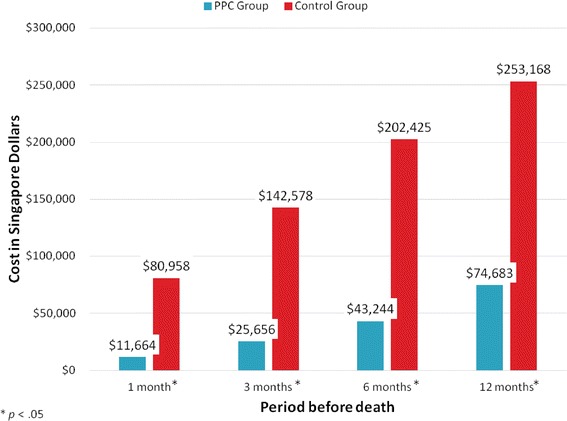
BACKGROUND: Around the world, different models of paediatric palliative care have responded to the unique needs of children with life shortening conditions. However, research confirming their utility and impact is still lacking. This study compared patient-related outcomes and healthcare expenditures between those who received home-based paediatric palliative care and standard care. The quality of life and caregiver burden for patients receiving home-based paediatric palliative care were also tracked over the first year of enrolment to evaluate the service's longitudinal impact. METHOD: A structured impact and cost evaluation of Singapore-based HCA Hospice Care's Star PALS (Paediatric Advance Life Support) programme was conducted over a three-year period, employing both retrospective and prospective designs with two patient groups. RESULTS: Compared to the control group (n = 67), patients receiving home-based paediatric palliative care (n = 71) spent more time at home than in hospital in the last year of life by 52 days (OR = 52.30, 95% CI: 25.44-79.17) with at least two fewer hospital admissions (OR = 2.46, 95% CI: 0.43-4.48); and were five times more likely to have an advance care plan formulated (OR = 5.51, 95% CI: 1.55-19.67). Medical costs incurred by this group were also considerably lower (by up to 87%). Moreover, both patients' quality of life (in terms of pain and emotion), and caregiver burden showed improvement within the first year of enrolment into the programme. DISCUSSION: Our findings suggest that home-based paediatric palliative care brings improved resource utilization and cost-savings for both patients and healthcare providers. More importantly, the lives of patients and their caregivers have improved, with terminally ill children and their caregivers being able to spend more quality time at home at the final stretch of the disease. CONCLUSIONS: The benefits of a community paediatric palliative care programme have been validated. Study findings can become key drivers when engaging service commissioners or even policy makers in appropriate settings.
Overview
The claims and statistics of this paper haven’t been checked yet.
Free: it reads the open-access text and checks the first 5 claims that cite a source we can check. Create a free account to check every claim.
Integrity signals
Registry
Cites
Statistics
Figures
Verification
Claims the paper makes
The claims and statistics of this paper haven’t been checked yet.
Free: it reads the open-access text and checks the first 5 claims that cite a source we can check. Create a free account to check every claim.
Claims other papers make about this one
Each is checked against this paper’s own text: does it say what the citing paper says it does?
The cited source doesn’t support the claim as written.
In the citing paper
“However, some recent studies found that family support interventions did not reduce psychological symptoms in family members. 66,67,75,79”
From European Resuscitation Council Guidelines 2021: Ethics of resuscitation and end of life decisions (2021) · cites this paper as [66]
Checked by a reasoning model — may be wrong.
Experimental — accuracy not yet measured
Self-check
Percentages, sums and reported differences re-computed from the paper’s own numbers.
The self-check needs the paper’s full text.
Citations
Cites
The Health Utilities Index (HUI): concepts, measurement properties and applications.
Horsman, J., Furlong, W. J., Feeny, D. F., & Torrance, G. W. (2003) · Health and Quality of Life Outcomes · doi:10.1186/1477-7525-1-54 · Cited by 1,598
Economic Evaluation in Clinical Trials
Glick, H. A., Doshi, J. A., Sonnad, S. S., & Polsky, D. (2014) · Oxford University Press eBooks · doi:10.1093/med/9780199685028.001.0001 · Cited by 910
Dying in America: improving quality and honoring individual preferences near the end of life
(2015) · Choice Reviews Online · doi:10.5860/choice.191895 · Cited by 881
Himelstein, B. P., Hilden, J. M., Boldt, A. M., & Weissman, D. (2004) · New England Journal of Medicine · doi:10.1056/nejmra030334 · Cited by 571
Pediatric Palliative Care and Hospice Care Commitments, Guidelines, and Recommendations
SECTION ON HOSPICE AND PALLIATIVE MEDICINE AND COMMITTEE ON HOSPITAL CARE, Feudtner, C., Friebert, S., Jewell, J., Friebert, S., Carter, B., Feudtner, C., Hood, M., Imaizumi, S., & Komatz, K. (2013) · Pediatrics · doi:10.1542/peds.2013-2731 · Cited by 472 · cited 1×
“Background Palliative care in children pursues similar goals as in the adult setting; to minimize suffering and to improve quality of life in the face of terminal illness [1, 2].”
BackgroundPediatric Palliative Care Patients: A Prospective Multicenter Cohort Study
Feudtner, C., Kang, T. I., Hexem, K. R., Friedrichsdorf, S. J., Osenga, K., Siden, H., Friebert, S. E., Hays, R. M., Dussel, V., & Wolfe, J. (2011) · Pediatrics · doi:10.1542/peds.2010-3225 · Cited by 427
Economic Evaluation in Clinical Trials
Glick, H. A., Doshi, J. A., Sonnad, S. S., & Polsky, D. E. (2007) · OUP Catalogue · Cited by 366
Pediatric Palliative Care Patients: A Prospective Multicenter Cohort Study
(2011) · PEDIATRICS · doi:10.1542/peds.2010-3225d · Cited by 261
Mack, J. W., & Wolfe, J. (2006) · Current Opinion in Pediatrics · doi:10.1097/01.mop.0000193266.86129.47 · Cited by 226
Pediatric palliative care provision around the world: A systematic review
Knapp, C., Woodworth, L., Wright, M., Downing, J., Drake, R., Fowler‐Kerry, S., Hain, R., & Marston, J. (2011) · Pediatric Blood & Cancer · doi:10.1002/pbc.23100 · Cited by 188 · cited 1×
“[15], two thirds of countries around * Correspondence: pohhengC@hcahospicecare.”
Background
Cited by
Pediatric Palliative Care and Hospice Care Commitments, Guidelines, and Recommendations
SECTION ON HOSPICE AND PALLIATIVE MEDICINE AND COMMITTEE ON HOSPITAL CARE, Feudtner, C., Friebert, S., Jewell, J., Friebert, S., Carter, B., Feudtner, C., Hood, M., Imaizumi, S., & Komatz, K. (2013) · Pediatrics · doi:10.1542/peds.2013-2731 · Cited by 472
European Resuscitation Council Guidelines 2021: Ethics of resuscitation and end of life decisions
Mentzelopoulos, S. D., Couper, K., Voorde, P. V. D., Druwé, P., Blom, M., Perkins, G. D., Lulic, I., Djakow, J., Raffay, V., Lilja, G., et al. (2021) · Resuscitation · doi:10.1016/j.resuscitation.2021.02.017 · Cited by 246
Impact of Specialized Pediatric Palliative Care: A Systematic Review
Marcus, K. L., Santos, G., Ciapponi, A., Comandé, D., Bilodeau, M., Wolfe, J., & Dussel, V. (2019) · Journal of Pain and Symptom Management · doi:10.1016/j.jpainsymman.2019.08.005 · Cited by 123
“(25– 28,33,38,42,43) One study used two designs: a retrospective cohort and an uncontrolled before/after.(38) Half of the studies were survey-based,(24,25,27–29,32,34,38,39,42,43,45) and only one of these used a patient-reported outcome; the other survey studies used outcomes reported by parents or primary caregivers.”
BackgroundResultInstruments to Measure Outcomes in Pediatric Palliative Care: A Systematic Review
Friedel, M., Aujoulat, I., Dubois, A.-C., & Degryse, J. (2019) · PEDIATRICS · doi:10.1542/peds.2018-2379 · Cited by 79
“A study was included if all of the following criteria were fulfilled: (1) the full text was written in English, French, German, Italian, or Dutch; (2) the study sample included a clear description of infants, children, and/or adolescents ranging in age from 0 to 18 years; (3) children’s diseases were included in the d…”
BackgroundResultPalliative Care in Paediatric Oncology: an Update
Salins, N. S., Hughes, S., & Preston, N. J. (2022) · Current Oncology Reports · doi:10.1007/s11912-021-01170-3 · Cited by 62
Barriers to the early integration of palliative care in pediatric oncology in 11 Eurasian countries
Ehrlich, B. S., Movsisyan, N., Batmunkh, T., Кумирова, Э. В., Borisevich, M. V., Киргизов, К. И., Graetz, D. E., McNeil, M. J., Yakimkova, T., Vinitsky, A., et al. (2020) · Cancer · doi:10.1002/cncr.33151 · Cited by 57
Mitchell, S., Bennett, K., Morris, A., Slowther, A., Coad, J. E., & Dale, J. R. (2019) · Palliative Medicine · doi:10.1177/0269216319870647 · Cited by 52
Home-Based Specialized Pediatric Palliative Care: A Systematic Review and Meta-Analysis
Hammer, N. M., Bidstrup, P. E., Brok, J. S., Devantier, M., Sjøgren, P., Schmiegelow, K., Larsen, A. T. S., Kurita, G. P., Olsen, M., & Larsen, H. B. (2023) · Journal of Pain and Symptom Management · doi:10.1016/j.jpainsymman.2022.12.139 · Cited by 50
The adult and pediatric palliative care: differences and shared issues
Chelazzi, C., Villa, G., Lanini, I., Romagnoli, S., & Latronico, N. (2023) · Journal of Anesthesia Analgesia and Critical Care · doi:10.1186/s44158-023-00085-8 · Cited by 50
“Allowing dying children to be cared at home, respite care can contribute to increase the quality of life of children with terminal illnesses and their families [31].”
BackgroundMamom, J., & Daovisan, H. (2022) · International Journal of Environmental Research and Public Health · doi:10.3390/ijerph19010567 · Cited by 48
“Caregivers live with poor physical health, psychological stress and economic problems, which increase their burden [13,14].”
BackgroundHolder, P., Coombes, L., Chudleigh, J. H., Harding, R., & Fraser, L. (2024) · Palliative Medicine · doi:10.1177/02692163241271010 · Cited by 43
Pediatric Palliative Care in Oncology: Basic Principles
Benini, F., Avagnina, I., Giacomelli, L., Papa, S., Mercante, A., & Perilongo, G. (2022) · Cancers · doi:10.3390/cancers14081972 · Cited by 39
“Moreover, home care allows for social inclusion in the family’s and friends’ network, counteracting the loneliness that often affects families of seriously ill children [35,37].”
BackgroundNamisango, E., Bristowe, K., Murtagh, F. E., Downing, J. D., Powell, R. A., Abas, M., Lohfeld, L. H., Ali, Z. V., Atieno, M., Haufiku, D., et al. (2020) · Palliative Medicine · doi:10.1177/0269216319900137 · Cited by 39
Impact of educational programs on nurses’ knowledge and attitude toward pediatric palliative care
Abuhammad, S., & Almasri, R. (2021) · Palliative & Supportive Care · doi:10.1017/s1478951521001139 · Cited by 39
“The benefits of PPC not just improve the quality of life for the patients and their families but also benefit the health system in decreasing health care cost by reducing unnecessary hospital admission (Gans et al., 2012; Chong et al., 2018; Abuhammad et al., 2021a).”
BackgroundIndicators Used to Assess the Impact of Specialized Pediatric Palliative Care: A Scoping Review
Widger, K. A., Medeiros, C., Trenholm, M., Zúñiga-Villanueva, G., & Streuli, J. C. (2018) · Journal of Palliative Medicine · doi:10.1089/jpm.2018.0420 · Cited by 38
“…following: location of death 10,13,19,24,28,29,32,33,40,43,44,46,54 ; length of stay in hospital 9,10,15,16,24,25,27,34,39,42,53 ; number of hospital admissions 9,10,15,25,27,34,39,48,53 ; medication use 22,24,26,28,37,45 ; use of life support 22,24,28,29,32,43 ; child’s QOL 13,18,35,51–53 ; and”
InfluentialMentzelopoulos, S. D., Couper, K., de Voorde, P. V., Druwé, P., Blom, M. T., Perkins, G. D., Lulić, I., Djakow, J., Raffay, V. I., Lilja, G., et al. (2021) · Notfall + Rettungsmedizin · doi:10.1007/s10049-021-00888-8 · Cited by 36
Chong, P. H., Soo, J. E. J., Yeo, Z. Z., Ang, R. Q., & Ting, C. (2020) · BMC Palliative Care · doi:10.1186/s12904-020-0524-4 · Cited by 36
Self-citationOfosu-Poku, R., Owusu-Ansah, M., & Antwi, J. (2020) · International Journal of Chronic Diseases · doi:10.1155/2020/8432956 · Cited by 34
Dowling, M., Fahy, P., Houghton, C., & Smalle, M. (2020) · European Journal of Cancer Care · doi:10.1111/ecc.13316 · Cited by 32
Lin, S., Huang, M., Yasmara, D., & Wuu, H.-L. (2021) · Palliative & Supportive Care · doi:10.1017/s1478951520001455 · Cited by 31
“…of the two groups under consideration (Chang et al., 2013; Keele et al., 2013; Friedrichsdorf et al., 2015; Smith et al., 2015; Vern-Gross et al., 2015; Osenga et al., 2016; Snaman et al., 2017; Chong et al., 2018; Widger et al., 2018; Revon-Rivière et al., 2019; Zernikow et al., 2019).”
InfluentialPediatric palliative care and end-of-life: a systematic review of economic health analyses
Lo, D. S., Hein, N., & Bulgareli, J. V. (2022) · Revista Paulista de Pediatria · doi:10.1590/1984-0462/2022/40/2021002 · Cited by 28
Saad, R., Abu‐Saad, H. H., Noureddine, S., & Sailian, S. D. (2022) · Annals of Palliative Medicine · doi:10.21037/apm-22-525 · Cited by 28
“Timely integration of specialized PPC services in the treatment of pediatric patients yielded better symptom management, quality of life, communication with the children and their families, and reduced care cost (5-9).”
Cantero, M. J. P., Morales‐Asencio, J. M., Mingorance, Á. N., Madrid-Rodriguez, A., Tolmo, Á. T., Escobosa-Sánchez, O., & Alba, R. M. (2023) · European Journal of Pediatrics · doi:10.1007/s00431-023-04870-z · Cited by 28
Lin, C., & Chu, W. (2025) · The Journal of Hospice and Palliative Care · doi:10.14475/jhpc.2025.28.3.81 · Cited by 26
“In both adult and pediatric populations, home-based palliative care has been linked to improved symptom control, enhanced emotional well-being, and reduced care-giver burden [18].”
Lacerda, A., Oliveira, G., Cancelinha, C., & Lopes, S. (2019) · Acta Médica Portuguesa · doi:10.20344/amp.10437 · Cited by 26
O’Keefe, S., Maddux, A. B., Bennett, K. S., Youngwerth, J. M., & Czaja, A. S. (2020) · Pediatric Critical Care Medicine · doi:10.1097/pcc.0000000000002603 · Cited by 26
Piette, V. E., Beernaert, K., Cohen, J., Pauwels, N., Scherrens, A., ten Bosch, J. V. D. W., & Deliëns, L. (2020) · Pediatric Research · doi:10.1038/s41390-020-1036-x · Cited by 23
Impact of Pediatric Primary Palliative Care Education and Mentoring in Practice
Lafond, D. A., Perko, K., Fisher, D., Mahmood, L. A., & Hinds, P. S. (2021) · Journal of Hospice and Palliative Nursing · doi:10.1097/njh.0000000000000802 · Cited by 22
“Strong evidence exists regarding the benefits of PPC services for patients and families, including improved satisfaction, symptom control, increased quality of life for patients and families, reduced burden of care felt by parents, decreased health care utilization, and lengthened survival.(18,19) Importantly, however…”
BackgroundAndriastuti, M., Halim, P. G., Tunjungsari, E., & Widodo, D. P. (2022) · Asian Pacific Journal of Cancer Prevention · doi:10.31557/apjcp.2022.23.9.3029 · Cited by 23
“As the results showed, HBPC was a better option to provide early palliative intervention in children with malignancy.”
BackgroundInfluentialNamisango, E., Bhakta, N. H., Wolfe, J., McNeil, M. J., Powell, R. A., Kibudde, S., Luyirika, E. B. K., Mulema, V., Feudtner, C., & Baker, J. N. (2021) · JCO Global Oncology · doi:10.1200/go.21.00102 · Cited by 22
“There is also emerging evidence for the cost-effectiveness of specialist PPC providers and their ability to improve symptom management, mitigate health-related suffering, and improve the QoL of affected children and their families’ care in resource-limited settings.(12) Despite the enormous need for palliative cancer…”
BackgroundResultInfluentialImplications of Pediatric Palliative Consultation for Intensive Care Unit Stay
Rossfeld, Z. M., Miller, R., Tumin, D., Tobias, J. D., & Humphrey, L. M. (2019) · Journal of Palliative Medicine · doi:10.1089/jpm.2018.0292 · Cited by 21
Salins, N. S., Hughes, S., & Preston, N. J. (2022) · BMC Palliative Care · doi:10.1186/s12904-022-01105-0 · Cited by 18
Weaver, M. S., Jenkins, R., Wichman, C., Robinson, J. E., Potthoff, M., Menicucci, T., & Vail, C. (2019) · Journal of Palliative Care · doi:10.1177/0825859719889700 · Cited by 17
Lysecki, D. L., Gupta, S., Rapoport, A., Rhodes, E., Spruin, S., Vadeboncoeur, C., Widger, K. A., & Tanuseputro, P. (2022) · Journal of Palliative Medicine · doi:10.1089/jpm.2021.0175 · Cited by 16
Dehghannezhad, J., Hassankhani, H., Taleghani, F., Rahmani, A., Sattarpour, S., & Sanaat, Z. (2021) · Iranian Journal of Nursing and Midwifery Research · doi:10.4103/ijnmr.ijnmr_249_19 · Cited by 15
Namisango, E., Bristowe, K., Murtagh, F. E., Downing, J. D., Powell, R. A., Atieno, M., Abas, M., Ali, Z. V., Luyirika, E. B. K., Meiring, M., et al. (2022) · Palliative Medicine · doi:10.1177/02692163221099583 · Cited by 15
Gwyther, L., Bates, J., Tran, B., Grant, L., Harding, R., Krakauer, E. L., May, P., Namisango, E., Rajagopal, M. R., Reid, E. A., et al. (2025) · Journal of Pain and Symptom Management · doi:10.1016/j.jpainsymman.2025.09.020 · Cited by 12
Guía de Práctica Clínica sobre Cuidados Paliativos en Pediatría
Armero, P., Arroyo, M. J., Estebánez, B., Gállego, A., & Gamboa, F. (2022) · GuíaSalud eBooks · doi:10.46995/gpc_618 · Cited by 12
Zimmermann, K., Simon, M., Scheinemann, K., Tinner, E. M., Widler, M., Keller, S., Fink, G., Mitterer, S., Gerber, A.-K., von Felten, S., et al. (2022) · BMC Palliative Care · doi:10.1186/s12904-022-01089-x · Cited by 11
“The question, of how SPPC is beneficial for whom and under what circumstances, remains largely unanswered as validation of innovative care programmes in controlled studies is lacking [18].”
BackgroundResultKnighting, K., Pilkington, G., Noyes, J., Roe, B. H., Maden, M., Bray, L., Jack, B., O'Brien, M. R., Downing, J. D., Mateus, C., et al. (2021) · Health Services and Delivery Research · doi:10.3310/hsdr09060 · Cited by 11
Nurses’ experiences of providing palliative care for children with life-limiting conditions
Reid, B. B., & Brogan, P. (2024) · International Journal of Palliative Nursing · doi:10.12968/ijpn.2024.30.5.212 · Cited by 10
Empowering Pediatric Palliative Homecare Patients and Caregivers with Symptom Management Plans
Larrow, A., Doshi, A., Fisher, E. S., Patel, A., Marc-Aurele, K., Rhee, K. E., & Beauchamp‐Walters, J. (2022) · Journal of Pain and Symptom Management · doi:10.1016/j.jpainsymman.2022.06.015 · Cited by 9
Funcionalidade de Crianças com Leucemia em Tratamento Quimioterápico
Silva, B. N., Cruz, M. S. S., Lima, T. L. B. K., de Oliveira, A. P. S., Diniz, K. T., & Miranda, R. M. (2022) · Revista Brasileira de Cancerologia · doi:10.32635/2176-9745.rbc.2022v68n3.2249 · Cited by 9
Challenges in Pediatric Home-Based Hospice and Palliative Care: A Case Series
Jarrell, J. A., Grossoehme, D. H., Friebert, S. E., Ajayi, T. A., Thienprayoon, R., & Humphrey, L. H. (2024) · Journal of Pain and Symptom Management · doi:10.1016/j.jpainsymman.2024.06.027 · Cited by 8
Root, M. C., Koo, J., Collins, G. S., Penumarthy, N. L., Hermiston, M. L., & Bogetz, J. F. (2023) · Journal of Pediatric Hematology/Oncology Nursing · doi:10.1177/27527530221140069 · Cited by 8
“Furthermore, some families receiving care from PPC teams report improved communication and family relationships (Hancock et al., 2018; Kassam et al., 2015) and decreased caregiver burden (Chong et al., 2018; Groh et al., 2013).”
BackgroundHome-Based Pediatric Hospice and Palliative Care Provider Visits: Effects on Healthcare Utilization
Smith, S. M., Grossoehme, D. H., Cicozi, K., Hiltunen, A., Roth, C., Richner, G. J., Kim, S. S., Tram, N. K., & Friebert, S. E. (2024) · The Journal of Pediatrics · doi:10.1016/j.jpeds.2024.113929 · Cited by 8
Shamah, R., George, E., DeGroote, N. P., Wasilewski, K., & Brock, K. E. (2024) · Pediatric Blood & Cancer · doi:10.1002/pbc.31387 · Cited by 8
“10,12,30,33,39 42 Additionally, it is not clear whether PPC receipt alone affects EOL care and healthcare utilizationorwhetherthelocationofPPCcareisimportant.”
Menon, A. P., Mok, Y. H., Loh, L. E., & Lee, J. H. (2019) · Journal of Pediatric Intensive Care · doi:10.1055/s-0039-3401009 · Cited by 8
Notejane, M., & Bernadá, M. (2021) · Archivos de Pediatría del Uruguay · doi:10.31134/ap.92.1.2 · Cited by 8
Ray, S., McLorie, E. V., & Downie, J. (2023) · Healthcare · doi:10.3390/healthcare11172438 · Cited by 8
“However, there is still not enough evidence to determine an agreed worldwide model [16], as disparities in service provision and resources are evident.”
BackgroundLima, P. M. V. D. M., Fernandes, L. T. B., Santos, M. M., Collet, N., Toso, B. R. G. D. O., & Vaz, E. M. C. (2022) · Aquichan · doi:10.5294/aqui.2022.22.1.5 · Cited by 8
“physical and emotional support to its patients and caregivers (27).”
BackgroundInfluentialBower, K. A., Lau, M., Short, R., Lawrence, S. L., Beauchamp‐Walters, J., & Marc-Aurele, K. (2022) · Journal of Palliative Medicine · doi:10.1089/jpm.2021.0307 · Cited by 8
Grossoehme, D. H., Sellers, J., Accordino, S., Smith, S. M., Jenkins, R., Richner, G. J., Moore-Forbes, Y., & Friebert, S. E. (2023) · Pediatric Quality and Safety · doi:10.1097/pq9.0000000000000663 · Cited by 7
Andriastuti, M., Halim, P. G., Mulyati, T., Bangun, M., & Widodo, D. P. (2022) · Current Pediatric Reviews · doi:10.2174/1573396318666220928112910 · Cited by 6
Walters, C., Cope, V. C., & Hopkins, M. (2023) · International Emergency Nursing · doi:10.1016/j.ienj.2023.101298 · Cited by 6
Assessment of a new home-based care pathway for children newly diagnosed with type 1 diabetes
Gauche, L., Laporte, R., Bernoux, D., Marquant, E., Vergier, J., Bonnet, L., Aouchiche, K., Bresson, V., Zanini, D., Fabre-Brue, C., et al. (2023) · Primary care diabetes · doi:10.1016/j.pcd.2023.06.007 · Cited by 6
Mortality of patients with chronic disease: an increasing problem
González, R., & López‐Herce, J. (2018) · Jornal de Pediatria · doi:10.1016/j.jped.2018.12.002 · Cited by 6
Helyar, M., Eamens, M., Coombs, S., Smeal, T., Mherekumombe, M. F., & Jaaniste, T. (2024) · Journal of Palliative Care · doi:10.1177/08258597241284286 · Cited by 5
“Effective EOL care for children differs from that of adults, requiring knowledge about pediatric medications and dosages, 29,30 knowledge of life-limiting conditions seen in childhood, 22,29,30 and ability to provide psychosocial support to pediatric patients, caregivers, and siblings.”
Vasli, P., Karami, M., & Asadiparvar-Masouleh, H. (2022) · World Journal of Pediatrics · doi:10.1007/s12519-022-00600-x · Cited by 5
“PPC also pursues similar goals for life-threatening conditions as those practiced for adults [15]; however, there are multiple differences between PPC and PC for adults, viz.”
Kim, C. H., Lee, J., Lee, J. W., & Kim, M. S. (2024) · BMC Palliative Care · doi:10.1186/s12904-024-01448-w · Cited by 4
“Regarding impact on ACP, patients with SPC showed a higher percentage of ACP discussion [8], and they initiated ACP earlier [9, 10].”
ResultPaediatric palliative care in Aotearoa New Zealand—current state and future direction
Aburn, G. E., Gott, M., Moeke‐Maxwell, T., & Drake, R. (2024) · New Zealand Medical Journal · doi:10.26635/6965.6693 · Cited by 4
Prendergast, L. M., Crane, E., Bray, N., & Noyes, J. (2025) · BMJ Paediatrics Open · doi:10.1136/bmjpo-2025-003526 · Cited by 4
“Their findings indicated that the cost of palliative care for children with malignancies was significantly higher at $21 401 PPPM compared with $13 699 PPPM for all other conditions.”
Timing of Palliative Consultation for Children During a Fatal Illness
Rossfeld, Z. M., Miller, R., Fosselman, D. D., Ketner, A. R., Tumin, D., Tobias, J. D., & Humphrey, L. H. (2019) · Hospital Pediatrics · doi:10.1542/hpeds.2018-0169 · Cited by 4
Parental Attitudes Towards Palliative Care in Pediatric Oncology: Insights From Bereaved Families
Martinez, I., Davis, E., Wimberly, C. E., Towry, L., Johnston, E. E., & Walsh, K. M. (2024) · Journal of Pain and Symptom Management · doi:10.1016/j.jpainsymman.2024.09.001 · Cited by 3
Li, Z., Li, Y., Ding, Z., Tao, Y., Zhang, L., & He, R. (2022) · BMC Family Practice · doi:10.1186/s12875-022-01914-5 · Cited by 3
“Moreover, a broader service scope of PCFs, combined with homebased health care services, could generate cost savings for both patients and health care providers [42].”
BackgroundAkard, T. F., Davis, K. A., Hills, T., Lense, M., Kim, D., Webber, R., Dietrich, M. S., & Gilmer, M. J. (2021) · Contemporary Clinical Trials Communications · doi:10.1016/j.conctc.2021.100765 · Cited by 3
“Although previous research has utilized face-to-face music-based intervention delivery methods [56–64], few studies have used remotely-delivered methods which are critical for home-based interventions needed for pediatric palliative care [18,65].”
MethodEliciting and honouring end-of-life care preferences : a multiple methods study on place of death
Tan, W. S. (2018) · doi:10.32657/10220/46920 · Cited by 3
Self-citationPediatric Home-Based Hospice and Palliative Medicine Provider Home Visits: A Multisite Study
Cicozi, K., Smith, S. M., Grossoehme, D. H., Hiltunen, A., Roth, C., Richner, G. J., Kim, S. S., & Friebert, S. E. (2023) · Journal of Palliative Medicine · doi:10.1089/jpm.2022.0480 · Cited by 2
Bahtiar, B., Widiastuti, I. A. K. S., Nopriyanto, D., Fitriani, N., Khumaidi, K., Andriyanto, A., & Muda, I. (2023) · Working with Older People · doi:10.1108/wwop-09-2022-0044 · Cited by 3
Chénard, J., Friedel, M., Olivier-d’Avignon, M., & Dubois, A.-C. (2023) · Enfances Familles Générations · doi:10.7202/1108401ar · Cited by 2
Jaaniste, T., Helyar, M., Eamens, M., Smeal, T., Coombs, S., & Mherekumombe, M. F. (2025) · Journal of Palliative Care · doi:10.1177/08258597251341039 · Cited by 2
Yasser Khalaf Khunaifis Al-Dhibyani, M. A. A. A., & Sultan Abdullah Salim Alotaibi, F. M. O. A. (2024) · The Review of Diabetic Studies · doi:10.70082/8nezcr98 · Cited by 2
Piette, V. E., Cohen, J., Deliëns, L., Pauwels, N., ten Bosch, J. V. D. W., & Beernaert, K. (2019) · Systematic Reviews · doi:10.1186/s13643-019-1059-8 · Cited by 2
Manejo de los pacientes pediátricos en fin de vida: una revisión narrativa de la literatura
Cristancho, C. D. P., Rivera, I. L., Cano, D. C. E., & Díaz, M. M. (2023) · Universitas Médica · doi:10.11144/javeriana.umed64-2.finv · Cited by 1
Uso de la vía subcutánea en cuidados paliativos pediátricos domiciliarios
Romero, I. M., González, L. C., Vázquez-Sánchez, J. M., & Martínez, M. A. (2023) · Conocimiento Enfermero · doi:10.60108/ce.249 · Cited by 1
Pediatric Palliative Care: Implications for Families and Caregivers
Chénard, J., Friedel, M., Olivier-d’Avignon, M., & Dubois, A.-C. (2023) · Enfances Familles Générations · doi:10.7202/1108402ar · Cited by 1
Pratomo, S. W., Artiko, B., & Hidayah, D. (2024) · Sari Pediatri · doi:10.14238/sp26.1.2024.23-9 · Cited by 1
Acuña-Caicedo, S. A., González-Brossard, A. G., Pérez-González, L. E., Arcia-Gálvez, M. E., & Sánchez-Cárdenas, M. A. (2026) · Jornal de Pediatria · doi:10.1016/j.jped.2026.101510 · Cited by 1
“Home-basedcare for children with palliative care needs should also address psychological, social, and spiritual aspects of patient care, with particular emphasis on providing psychological and psychiatric support for the patient and family [17,38,39].”
InfluentialAkard, T. F., Dietrich, M. S., Gilmer, M. J., Lense, M., Hills, T., & Hendricks‐Ferguson, V. L. (2026) · Journal of Palliative Medicine · doi:10.1177/10966218261441211 · Cited by 1
Hunt, K., Wright, D., Almahadeen, R., Dijkstra, J., Wagland, R., Randall, D. C., Uhm, S., Richardson, A. M., & Darlington, A. (2026) · Journal of Palliative Care · doi:10.1177/08258597261449531 · Cited by 2
Ee, J. P., Chong, P. H., Poh, Y. N., Ang, R. Q., & Yeo, Z. Z. (2023) · Disability and health journal · doi:10.1016/j.dhjo.2023.101578 · Cited by 1
Self-citationSaéz, M. F., & Llanta, M. D. C. (2024) · IntechOpen eBooks · doi:10.5772/intechopen.1003878 · Cited by 1
Palliative Care for Children and Adolescents with Non-curative Brain Tumors: A Scoping Review
Bakhtary, M., Sharma, P., Raspin, S., Vemuri, S., & McCarthy, M. (2025) · Journal of Palliative Medicine · doi:10.1089/jpm.2024.0203 · Cited by 1
“15,77,83 For children with non-curative brain tumors, successful care at home often Home-based palliative care/home visits 41,51,64,65 16 Multidisciplinary care 46,51,66 12 Allied health (psychology/social work/occupational therapy/music therapy/ expressive arts therapy/speech pathology) 21,61,66…”
Friedel, M. (2020) · Open Repository and Bibliography (University of Luxembourg) · doi:10.13140/rg.2.2.13926.34882 · Cited by 1
La qualité de vie des enfants en contexte palliatif, comment la documenter ? Peut-on la mesurer ?
Friedel, M., Degryse, J., & Aujoulat, I. (2019) · Médecine Palliative · doi:10.1016/j.medpal.2019.03.004
Kubai, P. K., Mutema, A., & Kei, M. R. (2021) · Asian Journal of Advanced Research and Reports · doi:10.9734/ajarr/2021/v15i330379
Mortality of patients with chronic disease: an increasing problem
González, R., & López‐Herce, J. (2019) · Jornal de Pediatria (Versão em Português) · doi:10.1016/j.jpedp.2019.04.011
Avaliação do conhecimento de pediatras sobre cuidados paliativos
Neto, O. P. D. A., Toledo, M. C. A., de Sousa, M. N. A., Bezerra, A. L. D., Dias, T. R., da Nobriga, E. R., Mazzaro, V. D. D. M., Filho, R. N. D. P., Medeiros, N. M. H. D., & do Egypto, I. A. S. (2023) · OBSERVATÓRIO DE LA ECONOMÍA LATINOAMERICANA · doi:10.55905/oelv21n10-180
Integrating Step-down Care in Community-based Paediatric Palliative Services: A Realist EvaluationPreprint
Yeo, Z. Z., & Chong, P. H. (2024) · medRxiv · doi:10.1101/2024.03.08.24303949
Self-citationPediatric Palliative Care at End of Life
Delgado‐Corcoran, C., Bierer, R., Finnerty, L. C., Gradick, K., Harman, B., Harousseau, M. E., Johnston, B., Kronaizl, S., Moore, D., Moresco, B. L., et al. (2024) · SpringerBriefs in public health · doi:10.1007/978-3-031-65452-7_3
Sotoudeh, R., Namnabati, M., Heidarzadeh, M., Toghyani, R., & Bahrami, N. (2024) · Journal of Education and Health Promotion · doi:10.4103/jehp.jehp_776_23
“[13,14] Remote care for infants and children at home can thus be raised as an effective measure in the wake of crises.”
BackgroundNagoya, Y., Yotani, N., Cho, Y., Yokosuka, T., Shimizu, M., Suzuki, A., Ikeda, Y., & Osumi, T. (2025) · Palliative Care Research · doi:10.2512/jspm.20.29
Palliative Care in Pediatric Oncology
Dracham, C. B., Khosla, D., & Kapoor, R. (2025) · Springer eBooks · doi:10.1007/978-981-96-4872-6_32
Developing the role of the volunteer to support caregivers of children with medical complexity
Thomas, R. L. (2022) · cIRcle (University of British Columbia) · doi:10.14288/1.0413529
A Good Death in the Child with Life Shortening Illness
Chong, P. H. (2021) · Lancaster EPrints (Lancaster University) · doi:10.17635/lancaster/thesis/1293
Self-citationTinoco, A. L. D. (2020) · Portuguese National Funding Agency for Science, Research and Technology (RCAAP Project by FCT) · doi:10.34626/tk53-bg47
Kim, C. H., Lee, J., Lee, J. W., & Kim, M. S. (2024) · Figshare · doi:10.6084/m9.figshare.25885053
Li, Z., Li, Y., Ding, Z., Tao, Y., Zhang, L., & He, R. (2022) · Figshare · doi:10.6084/m9.figshare.21628618
Freixo, A. B. D. S. (2020) · Portuguese National Funding Agency for Science, Research and Technology (RCAAP Project by FCT)
Metadata
- Authors
- Chong, P. H., De Castro Molina, J. A., Teo, K., & Tan, W. S.
- Affiliations
- National Healthcare Group (SG)
- Corresponding author
- Chong, P. H.
- ORCID
- Chong, P. H.
- Venue
- BMC Palliative Care
- Published
- 2018-01-03
- Volume
- 17
- Issue
- 1
- Pages
- 11-11
- ISSN
- 1472-684X (ISSN-L)
- PMC
- PMC5751774
- OpenAlex
- W2781701630
- Semantic Scholar
- 016159cb18db5dacaf913384b6596baef6b8ec56
- Cited by
- 95
- References
- 42
- Citations by year
- 2026: 9 · 2025: 7 · 2024: 14 · 2023: 15 · 2022: 19 · 2021: 9 · 2020: 7 · 2019: 10 · 2018: 4
- FWCI
- 7.15
- Type
- journal article
- Language
- en
- Open access
- gold
- doi.org
- Licence
- cc-by
- Locations
- BMC Palliative Care (publishedVersion, cc-by)
- Europe PMC (PubMed Central) (publishedVersion, cc-by)
- PubMed Central (publishedVersion, cc-by)
- PubMed (publishedVersion)
- National University of Singapore (submittedVersion, cc-by)
- DOAJ (DOAJ: Directory of Open Access Journals) (submittedVersion, cc-by-sa)
- Funders
- Tote board - Singapore (TB048)
- Ministry of Health -Singapore
- Topics
- Health Sciences › Medicine › Public Health, Environmental and Occupational Health › Palliative Care and End-of-Life Issues
- Health Sciences › Medicine › Public Health, Environmental and Occupational Health › Palliative and Oncologic Care
- Health Sciences › Medicine › Pediatrics, Perinatology and Child Health › Ethics and Legal Issues in Pediatric Healthcare
- Keywords
- pediatric palliative care, home-based palliative care, advance care planning, health care costs, quality of life, caregiver burden, terminally ill children, hospitalization, community-based palliative care
- MeSH terms
- Adolescent, Child, Child, Preschool, Female, Home Care Services, Humans, Infant, Male, Palliative Care, Pediatrics, Prospective Studies, Quality of Life, Retrospective Studies, Singapore, Cohort Studies, Health Care Costs, Patient Outcome Assessment
About these checks
Registry, retraction, Cites and statistics results are computed, not judged, with one exception: a printed reference that no index lists is read once by a model before it counts as a citation error. Claims are extracted by a model and kept only when their quote appears verbatim in the text; each cited source is then checked, with a model’s help, for whether it says what the claim relies on. Those verdicts can be wrong — read the claim’s quote and the cited source before relying on one.
Statistics and arithmetic are recomputed, not judged.
Confidence bands are shown only for fields calibrated on our annotated test set. None is calibrated yet, so no band is shown.
What counts as a claim ›How we measure confidence ›How we check this ›
Are you an author, or do you see a problem with this page? Request a review
Data sources
Bibliographic data: Semantic Scholar, OpenAlex, Crossref.
Contains information from the Semantic Scholar Academic Graph Datasets, made available under the ODC Attribution License (ODC-BY 1.0).
Semantic Scholar’s data is described in: Kinney, R., et al. (2023). The Semantic Scholar Open Data Platform. arXiv:2301.10140.
