

Subjective burdens among informal caregivers of critically ill patients: a cross-sectional study in rural Shandong, China
Open accessThe DOI matches its Crossref record; 75 of the 75 references it cites were found in a registry or an index.
Abstract
Background: Informal caregivers are the main source of care for the critically ill, especially after discharge or during the terminal stages at home. However, the concern for informal caregivers is often overshadowed by critically ill patients. The purpose of this study is to determine the influencing factors of the subjective burden of informal caregivers and to seek solutions accordingly. Methods: Between July and August 2019, a cross-sectional study was conducted in Shandong, China, focusing on family caregivers and critically ill patients. Subjective caregiver burden was measured by the Chinese version of Zarit Burden Interview (ZBI). The stress process model was used to identify conditions relevant to the caregiving burden and to assess their impact on family caregivers. Results: 554 samples were selected for analysis. The average scores of Zarit Caregiver Burden Interview (ZBI) scores in this study was 30.37±19.04 (n=554). ZBI scores of older, less educated, and spouse caregivers were significantly lower (4.12; 95%CI, 0.42 to 7.81; P =0.029). Objective and subjective burdens increased proportionally. Secondary role stress factors included the higher out-of-pocket (OOP) costs of critical diseases and lower household income, both of which increased caregivers’ subjective burdens (1.28; 95%CI, -0.06 to 2.63; p=0.062). Formal medical aid systems played a positive role in reducing subjective caregiving burdens (-7.31; 95%CI, -13.23 to -1.40; p=0.016). Conclusions: Health policies should address both the direct medical burdens and the intangible psychological burdens of critical diseases.
Overview
The claims and statistics of this paper haven’t been checked yet.
Free: it reads the open-access text and checks the first 5 claims that cite a source we can check. Create a free account to check every claim.
Integrity signals
Registry
Cites
Statistics
Figures
Verification
Claims the paper makes
The claims and statistics of this paper haven’t been checked yet.
Free: it reads the open-access text and checks the first 5 claims that cite a source we can check. Create a free account to check every claim.
Claims other papers make about this one
Each is checked against this paper’s own text: does it say what the citing paper says it does?
The cited source says what the claim attributes to it.
In the citing paper
“The covariates were selected based on previous studies [7, 12, 23, 24] where socio demographic, socio economic and caregiving setting variables can be potential confounders whereas gender will be considered as an effect modifier [9, 10].”
From Caregiver burden and mental health among informal caregivers of older adults in Lebanon (2026) · cites this paper as [23]
Self-check
Percentages, sums and reported differences re-computed from the paper’s own numbers.
The self-check needs the paper’s full text.
Citations
Cites
Relatives of the Impaired Elderly: Correlates of Feelings of Burden
Zarit, S. H., Reever, K. E., & Bach-Peterson, J. (1980) · The Gerontologist · doi:10.1093/geront/20.6.649 · Cited by 5,810 · cited 6×
“We employed the Chinese version of Zarit Burden Interview (ZBI), a widely used scale with proven statistical power [45–47], to measure the subjective burden of caregivers.”
BackgroundMethodInfluentialCaregiving and the stress process: an overview of concepts and their measures
Pearlin, L. I., Mullan, J. T., Semple, S. J., & Skaff, M. M. (1990) · The Gerontologist · doi:10.1093/geront/30.5.583 · Cited by 4,810 · cited 2×
“Such stress is known as “secondary role strains” in Pearlin’s stress process model [9].”
BackgroundCaregiver Burden: A Clinical Review
Adelman, R. D., Tmanova, L. L., Delgado, D., Dion, S., & Lachs, M. S. (2014) · JAMA · doi:10.1001/jama.2014.304 · Cited by 2,002 · cited 1×
“Caregiver burden has been an issue of concern, with female gender, lower educational attainment, depression symptoms, social isolation, financial stress, and poor health status being risk factors for caregiver burden [30].”
BackgroundSubjective Burden of Husbands and Wives as Caregivers: A Longitudinal Study
Zarit, S. H., Todd, P. A., & Zarit, J. M. (1986) · The Gerontologist · doi:10.1093/geront/26.3.260 · Cited by 1,838 · cited 1×
“The subjective burden arising from caring for a frail or disabled relative can lead to emotional, mental, and physical health problems for caregivers [26, 27], however, may be overlooked by researchers because they are not directly visible [24].”
BackgroundPinquart, M., & Sörensen, S. (2003) · The Journals of Gerontology: Series B · doi:10.1093/geronb/58.2.p112 · Cited by 1,108
Protocol for Prevention and Control of COVID-19 (Edition 6)
Weekly, C. C., & National Health Commission of the People’s Republic of China (2020) · China CDC Weekly · doi:10.46234/ccdcw2020.082 · Cited by 551
Hidden morbidity in cancer: spouse caregivers
Braun, M., Mikulincer, M., Rydall, A., Walsh, A., & Rodin, G. (2007) · Journal of Clinical Oncology · doi:10.1200/jco.2006.10.0909 · Cited by 526 · cited 1×
“Moreover, low incomes and poverty may generate pessimism, frustration, and interpersonal anxiety and rejection, attitudes which may prevent effective engagement with potential social support mechanisms [26, 74].”
BackgroundCancer as a "we-disease": Examining the process of coping from a relational perspective.
Kayser, K., Watson, L. E., & Andrade, J. T. (2007) · Families, Systems, & Health · doi:10.1037/1091-7527.25.4.404 · Cited by 477 · cited 1×
“This suffering is particularly acute among caregivers for patients suffering from critical illnesses, which has been described as ‘we-disease’ [13].”
BackgroundThe Schizophrenic Patient in the Community and His Effect On the Household
Hoenig, J., & Hamilton, M. W. (1966) · International Journal of Social Psychiatry · doi:10.1177/002076406601200301 · Cited by 466 · cited 3×
“In 1966, Hoenig and Hamilton extended this concept into subjective burden and objective burden [24].”
BackgroundReform of how health care is paid for in China: challenges and opportunities
Hu, S., Tang, S., Liu, Y., Zhao, Y., Escobar, M.-L., & de Ferranti, D. (2008) · The Lancet · doi:10.1016/s0140-6736(08)61368-9 · Cited by 441
Dunbar, S. B., Khavjou, O. A., Bakas, T., Hunt, G., Kirch, R. A., Leib, A. R., Morrison, R. S., Poehler, D. C., Roger, V. L., & Whitsel, L. P. (2018) · Circulation · doi:10.1161/cir.0000000000000570 · Cited by 319
The informal caregiver's burden of dependent people: Theory and empirical review
Carretero, S., Garcés, J., Ródenas, F., & Sanjosé, V. (2009) · Archives of Gerontology and Geriatrics · doi:10.1016/j.archger.2008.05.004 · Cited by 315 · cited 1×
“In light of these findings, we recommend exploring more caregiving channels, expanding the types of services and the duration of care provided by health care systems, and increasing the psychological care and skill training available to caregivers [11, 69, 70].”
BackgroundRha, S. Y., Park, Y., Song, S. K., Lee, C. E., & Lee, J. (2015) · European Journal of Oncology Nursing · doi:10.1016/j.ejon.2015.01.004 · Cited by 246 · cited 1×
“The situation is even worse for caregivers who are themselves sick [67].”
BackgroundSherwood, P. R., Given, C. W., Given, B. A., & von Eye, A. (2005) · Journal of Aging and Health · doi:10.1177/0898264304274179 · Cited by 241
(2017) · Journals of Gerontology Series B: Psychological Sciences and Social Sciences · doi:10.1093/geronb/gbx036 · Cited by 206
Souza, A. L. R., Guimarães, R. A., de Araújo Vilela, D., de Assis, R. M., de Almeida Cavalcante Oliveira, L. M., Souza, M. R., Nogueira, D. J., & Barbosa, M. A. (2017) · BMC Psychiatry · doi:10.1186/s12888-017-1501-1 · Cited by 172 · cited 2×
“This substantial time investment limits self-directed activities such as socialization, entertainment, and other activities, let alone normal work [20, 64].”
BackgroundMethodZarit Caregiver Burden Interview: Development, reliability and validity of the Chinese version.
Lu, L., Wang, L., Yang, X., & Feng, Q. (2009) · Psychiatry and Clinical Neurosciences · doi:10.1111/j.1440-1819.2009.02019.x · Cited by 169 · cited 2×
“The scale includes 22 questions rated on a 5-point scale [42, 48].”
BackgroundMiyamoto, Y., Tachimori, H., & Ito, H. (2010) · Geriatric Nursing · doi:10.1016/j.gerinurse.2010.01.002 · Cited by 165
Psychosocial Outcomes in Informal Caregivers of the Critically Ill: A Systematic Review*
Haines, K. J., Denehy, L., Skinner, E. H., Warrillow, S., & Berney, S. (2015) · Critical Care Medicine · doi:10.1097/ccm.0000000000000865 · Cited by 148 · cited 1×
“burdens due to their variable family roles [46, 61].”
BackgroundGe, L., & Mordiffi, S. Z. (2017) · Cancer Nursing · doi:10.1097/ncc.0000000000000445 · Cited by 147 · cited 1×
“For caregivers of cancer patients, caregiver burden was heavier for those who were younger, male, single, and with primary school education or below [32].”
BackgroundZhong, Y., Wang, J., & Nicholas, S. (2020) · BMC Geriatrics · doi:10.1186/s12877-019-1403-9 · Cited by 145 · cited 1×
“Support from relatives, friends, communities, and village doctors may mitigate these negative attitudes [75].”
BackgroundBorges, E. L., Franceschini, J., Costa, L. H. D., Fernandes, A. L. G., Jamnik, S., & Santoro, I. L. (2017) · Jornal Brasileiro de Pneumologia · doi:10.1590/s1806-37562016000000177 · Cited by 138
Seidel, D., & Thyrian, J. R. (2019) · Journal of Multidisciplinary Healthcare · doi:10.2147/jmdh.s209106 · Cited by 127
Suri, R. S., Larive, B., Garg, A. X., Hall, Y. N., Pierratos, A., Chertow, G. M., Gorodetskeya, I., Kliger, A. S., & for the FHN Study Group (2011) · Nephrology Dialysis Transplantation · doi:10.1093/ndt/gfr007 · Cited by 125 · cited 1×
“This substantial time investment limits self-directed activities such as socialization, entertainment, and other activities, let alone normal work [20, 64].”
BackgroundAhmad Zubaidi, Z. S., Ariffin, F., Oun, C. T. C., & Katiman, D. (2020) · BMC Palliative Care · doi:10.1186/s12904-020-00691-1 · Cited by 121 · cited 1×
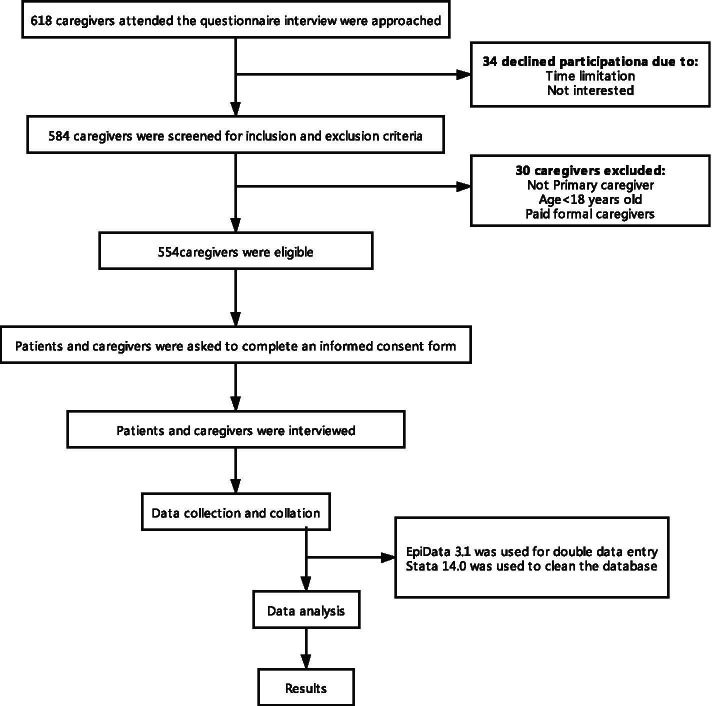
“Considering 20% non-responders [51], we found a minimum sample size of 462.”
BackgroundStress Process Model for Individuals With Dementia
Judge, K. S., Menne, H. L., & Whitlatch, C. J. (2010) · The Gerontologist · doi:10.1093/geront/gnp162 · Cited by 109 · cited 3×
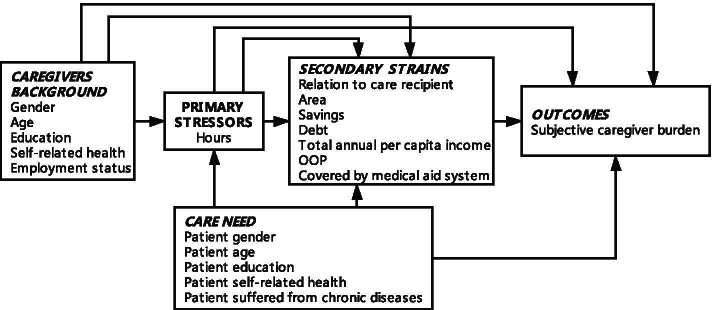
“According to Pearlin’s and Judge’s study family caregiver burdens derive from the primary stressor of providing sustainable care for patients, often involving patients’ socioeconomic characteristics, resources, and self-rated health [26].”
BackgroundMethodOldenkamp, M., Hagedoorn, M., Slaets, J., Stolk, R., Wittek, R., & Smidt, N. (2016) · BMC Geriatrics · doi:10.1186/s12877-016-0387-y · Cited by 109 · cited 3×
“Such an approach could mitigate stress and perceived burdens for caregivers and improve patient and family outcomes [43, 71].”
BackgroundMethodResultPredictors of Caregiver Burden in Caregivers of Bedridden Patients
BEKDEMİR, A., & İLHAN, N. (2019) · Journal of Nursing Research · doi:10.1097/jnr.0000000000000297 · Cited by 102 · cited 1×
“From the perspective of patient characteristics, existing studies found that their education level, functional status were not significantly associated with caregiver burden [12, 34, 35].”
BackgroundThe association between objective and subjective caregiver burden
Jones, S. L. (1996) · Archives of Psychiatric Nursing · doi:10.1016/s0883-9417(96)80070-7 · Cited by 96 · cited 1×
“The objective burden refers to the observable, tangible cost caused by the care- recipients’ illness to the caregiver [25], while the subjective burden refers to the personal perception and personal evaluation of the extent of caregiving burden [24, 25].”
BackgroundLoughnan, M., Nicholls, N., & TAPPER, N. J. (2008) · International Journal of Health Geographics · doi:10.1186/1476-072x-7-42 · Cited by 93
Verbakel, E. (2014) · Journal of European Social Policy · doi:10.1177/0958928714543902 · Cited by 90 · cited 1×
“Additionally, a study of 18 European countries found that availability of formal long-term care resources mitigated the negative externalities of informal care [68].”
BackgroundDependência funcional de idosos e a sobrecarga do cuidador
Gratão, A. C. M., Talmelli, L. F. D. S., Figueiredo, L. C., Rosset, I., Freitas, C. P., & Rodrigues, R. A. P. (2013) · Revista da Escola de Enfermagem da USP · doi:10.1590/s0080-62342013000100017 · Cited by 87 · cited 1×
“Our results displayed the same codirectional relationships between objective and subjective burdens associated with background factors found in previous studies [33, 62, 63].”
ResultTAKAHASHI, M., TANAKA, K., & MIYAOKA, H. (2005) · Psychiatry and Clinical Neurosciences · doi:10.1111/j.1440-1819.2005.01401.x · Cited by 86
Grant, M. J., Cavanagh, A., & Yorke, J. (2012) · International Journal of Nursing Studies · doi:10.1016/j.ijnurstu.2012.02.010 · Cited by 85 · cited 1×
“Our results showed that younger informal caregivers (65 and below years) had significantly higher ZBI scores than their older counterparts, which is in line with Cain and Wicks’s study [59, 60].”
ResultCaregiver burden in Danish family members of patients with severe brain injury: The chronic phase
Doser, K., & Norup, A. (2016) · Brain Injury · doi:10.3109/02699052.2015.1114143 · Cited by 84
Han, Y., Liu, Y., Zhang, X., Tam, W., Mao, J., & López, V. (2017) · Journal of Clinical Nursing · doi:10.1111/jocn.13793 · Cited by 80 · cited 2×
“’s study on the care burden of family caregivers of stroke survivors found that caregiver age and depressed mood, as well as care duration, were determinants of caregiver burden [33].”
BackgroundResultfor the SwiSCI Study Group, Tough, H., Brinkhof, M. W. G., Siegrist, J., & Fekete, C. (2019) · International Journal for Equity in Health · doi:10.1186/s12939-019-1112-1 · Cited by 78 · cited 6×
“Additionally, the caregivers’ demographics (such as age, gender, and education) and their self-assessed health and employment statuses were incorporated into the model according to Tough’s [26], Zarit [42], Oldenkamp [43] and Judge [38].”
BackgroundMethodInfluentialJadalla, A., Ginex, P., Coleman, M., Vrabel, M., & Bevans, M. (2020) · Clinical Journal of Oncology Nursing · doi:10.1188/20.cjon.31-50 · Cited by 77
Honoring the voices of bereaved caregivers: a Metasummary of qualitative research
Holtslander, L. F., Baxter, S., Mills, K. J., Bocking, S. M., Dadgostari, T., Duggleby, W., Duncan, V., Hudson, P., Ogunkorode, A. O., & Peacock, S. (2017) · BMC Palliative Care · doi:10.1186/s12904-017-0231-y · Cited by 71
Durante, Á., Greco, A., Annoni, A. M., Steca, P., Alvaro, R., & Vellone, E. (2019) · European Journal of Cardiovascular Nursing · doi:10.1177/1474515119863173 · Cited by 71 · cited 1×
“From the perspective of patient characteristics, existing studies found that their education level, functional status were not significantly associated with caregiver burden [12, 34, 35].”
BackgroundChang, S. S. H., Zhang, Y., Jeyagurunathan, A., Lau, Y. W., Sagayadevan, V., Chong, S. A., & Subramaniam, M. (2016) · BMC Psychiatry · doi:10.1186/s12888-016-0786-9 · Cited by 68 · cited 1×
“Prolonged periods of mental stress, physical exhaustion, and lack of social support can impose a financial and psychological burden on caregivers, often lasting months or years [65].”
BackgroundSun, X., Ge, J., Meng, H., Chen, Z., & Liu, D. (2019) · International Journal of Environmental Research and Public Health · doi:10.3390/ijerph16111961 · Cited by 68
Cain, C. J., & Wicks, M. N. (2000) · Journal of Family Nursing · doi:10.1177/107484070000600104 · Cited by 66
Ice, G. H., Sadruddin, A. F. A., Vagedes, A., Yogo, J., & Juma, E. A. (2012) · Social Science & Medicine · doi:10.1016/j.socscimed.2012.02.018 · Cited by 65 · cited 1×
“associated with caring for older adults, were served as a precise theoretical framework for understanding caregiver burden [9, 37, 38].”
BackgroundTough, H., Brinkhof, M. W. G., Siegrist, J., & Fekete, C. (2017) · Archives of Physical Medicine and Rehabilitation · doi:10.1016/j.apmr.2017.02.009 · Cited by 65 · cited 3×
“886), which proved the good reliability and validity of the Scale [44].”
BackgroundInfluentialChou, Y., Fu, L., Lin, L., & Lee, Y.-C. (2010) · International Psychogeriatrics · doi:10.1017/s1041610210001225 · Cited by 64 · cited 1×
“With reference to the study by Souza [20], Groenou [39] and Chou [40], Caregiving hours (objective burden) and patient care need (patient gender, patient age, patient education, patient self-related health, patient suffered from chronic diseases) were used as metrics for the primary stressor.”
MethodGroenou, M. I. B. V., Jacobs, M. T., Zwart‐Olde, I., & Deeg, D. J. H. (2015) · Health & Social Care in the Community · doi:10.1111/hsc.12199 · Cited by 63 · cited 1×
“With reference to the study by Souza [20], Groenou [39] and Chou [40], Caregiving hours (objective burden) and patient care need (patient gender, patient age, patient education, patient self-related health, patient suffered from chronic diseases) were used as metrics for the primary stressor.”
MethodFormal Caregiver Burden in Nursing Homes: An Integrative Review
Kunkle, R., Chaperon, C., & Berger, A. M. (2020) · Western Journal of Nursing Research · doi:10.1177/0193945920979691 · Cited by 61
The dyadic interaction of relationships and disability type on informal carer subjective well-being
Hammond, T., Weinberg, M. K., & Cummins, R. A. (2013) · Quality of Life Research · doi:10.1007/s11136-013-0577-4 · Cited by 60 · cited 1×
“An informal caregiver provides unpaid support to a family member or friend [1, 2].”
BackgroundYu, Y., Liu, Z.-W., Zhou, W., Chen, X.-C., Zhang, X.-Y., Hu, M., & Xiao, S.-Y. (2018) · Frontiers in Psychology · doi:10.3389/fpsyg.2018.02539 · Cited by 58
“It Has Changed My Life”: An Exploration of Caregiver Experiences in Serious Illness
Anderson, E. W., & White, K. M. (2018) · American Journal of Hospice and Palliative Medicine® · doi:10.1177/1049909117701895 · Cited by 56 · cited 1×
“Even in countries like the United States, caregivers often lack direct support either as caregivers or as individuals [29].”
BackgroundYu, Y., Li, T., Li, Y., Qiu, D., Xi, S., Xiao, S.-Y., & Tebes, J. K. (2020) · BMC Psychiatry · doi:10.1186/s12888-020-02633-w · Cited by 50
Predictors of caregiver burden in Iranian family caregivers of cancer patients
Mirsoleymani, S. R., Rohani, C., Matbouei, M., Nasiri, M., & Vasli, P. (2017) · Journal of Education and Health Promotion · doi:10.4103/jehp.jehp_137_16 · Cited by 45 · cited 1×
“Such an approach could mitigate stress and perceived burdens for caregivers and improve patient and family outcomes [43, 71].”
BackgroundLee, K., Yiin, J., & Chao, Y.-F. (2016) · International Journal of Nursing Studies · doi:10.1016/j.ijnurstu.2016.01.002 · Cited by 45 · cited 1×
“Caregivers of critically ill patients shoulder multidimensional challenges, including monitoring diseases, providing emotional support, and sharing financial burdens [19].”
BackgroundCost and economic burden of illness over 15 years in Nepal: A comparative analysis
Swe, K. T., Rahman, M. M., Rahman, M. S., Saito, E., Abe, S. K., Gilmour, S., & Shibuya, K. (2018) · PLoS ONE · doi:10.1371/journal.pone.0194564 · Cited by 43 · cited 2×
“Thirdparty liability insurance may reduce the economic burden of critical illnesses [79].”
BackgroundSwartz, K., & Collins, L. G. (2019) · PubMed · Cited by 42
Roopchand-Martin, S., & Creary-Yan, S. (2014) · West Indian Medical Journal · doi:10.7727/wimj.2013.060 · Cited by 40 · cited 2×
“We also found that spouse caregivers experience a significantly higher subjective burden than other relatives who provide care, which is consistent with studies of India and rural China though contrary to a Dutch study [34, 43, 46].”
BackgroundResultChua, C., Wu, J., Wong, Y., Qu, L., Tan, Y., Neo, P., & Pang, G. (2016) · Cancers · doi:10.3390/cancers8110105 · Cited by 40
Care Burden and Self-Efficacy Levels of Family Caregivers of Elderly People in Turkey
Ünver, V., Başak, T., Tosun, N., Aslan, Ö., & Akbayrak, N. (2016) · Holistic Nursing Practice · doi:10.1097/hnp.0000000000000148 · Cited by 39 · cited 1×
“In light of these findings, we recommend exploring more caregiving channels, expanding the types of services and the duration of care provided by health care systems, and increasing the psychological care and skill training available to caregivers [11, 69, 70].”
BackgroundSchmidt, A. E., Ilinca, S., Schulmann, K., Rodrigues, R., Principi, A., Barbabella, F., Sowa, A., Golinowska, S., Deeg, D. J. H., & Galenkamp, H. (2016) · European Journal of Ageing · doi:10.1007/s10433-016-0373-4 · Cited by 36
Gotsadze, G., Murphy, A., Shengelia, N., & Zoidze, A. (2015) · BMC Health Services Research · doi:10.1186/s12913-015-0755-x · Cited by 33
Dementia: psychosocial interventions for family caregivers
Logsdon, R. G. (2008) · The Lancet · doi:10.1016/s0140-6736(08)61048-x · Cited by 29
Wang, M., He, B., Wang, Y., Wu, F., Chen, X., Wang, W., & Yang, X. (2016) · PLoS ONE · doi:10.1371/journal.pone.0156382 · Cited by 29
The Hidden Morbidity of Cancer
Saria, M. G., Nyamathi, A., Phillips, L. R., Stanton, A. L., Evangelista, L., Kesari, S., & Maliski, S. (2017) · Nursing Clinics of North America · doi:10.1016/j.cnur.2016.10.002 · Cited by 29 · cited 1×
“Additionally, the health status of cancer patients may change suddenly and unpredictably, and this uncertainty increases subjective care burden for family caregivers [55].”
BackgroundThe effect of critical illness insurance in China
Fang, P., Pan, Z., Zhang, X., Bai, X., Gong, Y., & Yin, X. (2018) · Medicine · doi:10.1097/md.0000000000011362 · Cited by 29
Burden and depression in caregivers of patients with rheumatoid arthritis in China
Ru, J., Ma, J., Niu, H.-Q., Chen, Y., Li, L., Liu, Y., Li, X., Lian, F., & Wang, X. (2018) · International Journal of Rheumatic Diseases · doi:10.1111/1756-185x.13397 · Cited by 27
Towards a mission‐oriented approach to cancer in Europe: an unmet need in cancer research policy
Celis, J. E., & Heitor, M. V. (2019) · Molecular Oncology · doi:10.1002/1878-0261.12452 · Cited by 24 · cited 1×
“In addition to causing physical injury and psychological stress to patients themselves, critical illnesses are also one of the main causes of patients’ families falling into poverty [14, 18].”
BackgroundLuo, J., Zhou, Y., Liu, H., & Hu, J. R. (2020) · BMC Neurology · doi:10.1186/s12883-020-01652-0 · Cited by 24
Hui, S. A., Elliott, T. R., Martin, R. C., & Uswatte, G. (2010) · British Journal of Health Psychology · doi:10.1348/2044-8287.002003 · Cited by 23 · cited 1×
“Caregivers receive minimal support of any kind, either in their capacity as caregiver or as an individual [66].”
BackgroundDifferential temporal salience of earning and saving
Hu, K., Rosa, E. D., & Anderson, A. K. (2018) · Nature Communications · doi:10.1038/s41467-018-05201-9 · Cited by 20 · cited 1×
“This may be explained by the fact that families with debt have better social relationships relative to other families, possibly enjoying financial support from relatives and friends [73].”
BackgroundLi, C., Miao, J., Gao, X., Zheng, L., Su, X., Hui, H., & Hu, J. R. (2018) · Medical Science Monitor · doi:10.12659/msm.909599 · Cited by 19
Su, D., Chen, Y., Gao, H., Li, H., Chang, J., Lei, S., Jiang, D., Hu, X., Tan, M., & Chen, Z. (2019) · International Journal of Environmental Research and Public Health · doi:10.3390/ijerph16081410 · Cited by 9 · cited 1×
“Medical aid systems can also reduce caregiving burdens [77, 78].”
BackgroundMultidrug-resistant tuberculosis and quality-assured medicines
Barber, S. L., Smid, M., Hennig, C., Huang, B., & Arifaj, D. (2009) · The Lancet · doi:10.1016/s0140-6736(09)61366-0 · Cited by 8
Sisto, A., Vicinanza, F., Tartaglini, D., Giuseppe, T., & Santini, D. (2017) · ESMO Open · doi:10.1136/esmoopen-2017-000256 · Cited by 8 · cited 2×
“Additionally, a study of 18 European countries found that availability of formal long-term care resources mitigated the negative externalities of informal care [68].”
BackgroundSupport for caregivers in the USA
Lancet, T. (2020) · The Lancet · doi:10.1016/s0140-6736(20)30456-6 · Cited by 2
Research works printed but not linked: 1
- Sun ZQ XY, editors.: Medical Statistics (Four Edition). China: Beijing: People'sMedical Publishing House(PMPH); 2002.
Cited by
Putowski, Z., Rachfalska, N., Majewska, K., Megger, K., & Krzych, Ł. J. (2023) · Anaesthesiology Intensive Therapy · doi:10.5114/ait.2023.130831 · Cited by 99
“A number of studies included only relatives of survivors [25, 33, 41, 43–46, 50, 59, 63, 67–70] or only relatives of deceased patients [23, 37, 42, 48, 55, 62, 65], which limited the representativeness of the exposed cohorts.”
BackgroundInfluentialNeuropsychiatric Symptoms of Alzheimer's Disease and Caregiver Burden
Iravani, B., Abdollahi, E., Eslamdoust-Siahestalkhi, F., & Soleimani, R. (2022) · Frontiers in Neurology · doi:10.3389/fneur.2022.877143 · Cited by 45
“Some studies reported that younger caregivers had greater burden (44, 45).”
BackgroundPeres, B. J., & Campos, P. (2023) · Disability and Rehabilitation Assistive Technology · doi:10.1080/17483107.2023.2277821 · Cited by 19
“Even though caregiving takes its toll in both formal and informal caregivers, informal ones typically experience higher levels of burden due to much longer care hours, and a shared financial burden with the family member or members they are looking after [17].”
Family burden after critical illness: the forgotten caregivers
Tejero-Aranguren, J., del Moral, R. G., Poyatos-Aguilera, M. E., & Colmenero, M. (2024) · Medicina Intensiva · doi:10.1016/j.medin.2023.08.011 · Cited by 13
Dong, X., He, D., Zhang, Y., Zhao, Q., Zhang, X., & Fan, X. (2023) · The Journal of Cardiovascular Nursing · doi:10.1097/jcn.0000000000000974 · Cited by 10
Metadata
- Authors
- Fu, W., Li, J., Fang, F., Zhao, D., Hao, W., & Li, S.
- Affiliations
- Shandong University (CN)
- Corresponding author
- Li, Jiajia
- Li, Shixue
- Venue
- BMC Palliative Care
- Published
- 2021-10-22
- Volume
- 20
- Issue
- 1
- Pages
- 167-167
- ISSN
- 1472-684X (ISSN-L)
- PMC
- PMC8532289
- OpenAlex
- W3206844611
- Cited by
- 16
- References
- 75
- Citations by year
- 2026: 2 · 2025: 3 · 2024: 3 · 2023: 7 · 2022: 1
- FWCI
- 4.29
- Type
- journal article
- Language
- en
- Open access
- gold
- doi.org
- Licence
- cc-by
- creativecommons.org/licenses/by/4.0 (tdm)
- creativecommons.org/licenses/by/4.0 (vor)
- Locations
- BMC Palliative Care (publishedVersion, cc-by)
- Europe PMC (PubMed Central) (publishedVersion, other-oa)
- PubMed Central (publishedVersion, cc-by)
- PubMed (publishedVersion)
- DOAJ (DOAJ: Directory of Open Access Journals) (submittedVersion, cc-by-sa)
- Funders
- Shandong University (IFYT1810)
- National Natural Science Foundation of China (IFYT1810, 71303137, 71673170)
- Topics
- Health Sciences › Nursing › Research and Theory › Nursing care and research
- Health Sciences › Medicine › Critical Care and Intensive Care Medicine › Family and Patient Care in Intensive Care Units
- Social Sciences › Psychology › Clinical Psychology › Family Caregiving in Mental Illness
- Keywords
- caregiver burden, informal caregivers, family caregivers, critically ill patients, Zarit Burden Interview, stress process model, out-of-pocket medical costs, household income, rural China, Shandong Province, spousal caregivers, health policy
- MeSH terms
- China, Cross-Sectional Studies, Humans, Critical Illness, Caregivers, Cost of Illness
About these checks
Registry, retraction, Cites and statistics results are computed, not judged, with one exception: a printed reference that no index lists is read once by a model before it counts as a citation error. Claims are extracted by a model and kept only when their quote appears verbatim in the text; each cited source is then checked, with a model’s help, for whether it says what the claim relies on. Those verdicts can be wrong — read the claim’s quote and the cited source before relying on one.
Statistics and arithmetic are recomputed, not judged.
Confidence bands are shown only for fields calibrated on our annotated test set. None is calibrated yet, so no band is shown.
What counts as a claim ›How we measure confidence ›How we check this ›
Are you an author, or do you see a problem with this page? Request a review
Data sources
Bibliographic data: Semantic Scholar, OpenAlex, Crossref.
Contains information from the Semantic Scholar Academic Graph Datasets, made available under the ODC Attribution License (ODC-BY 1.0).
Semantic Scholar’s data is described in: Kinney, R., et al. (2023). The Semantic Scholar Open Data Platform. arXiv:2301.10140.
