

The DOI matches its Crossref record.
Chitosan nanoparticles containing limonene and limonene-rich essential oils: potential phytotherapy agents for the treatment of melanoma and breast cancers
Abstract
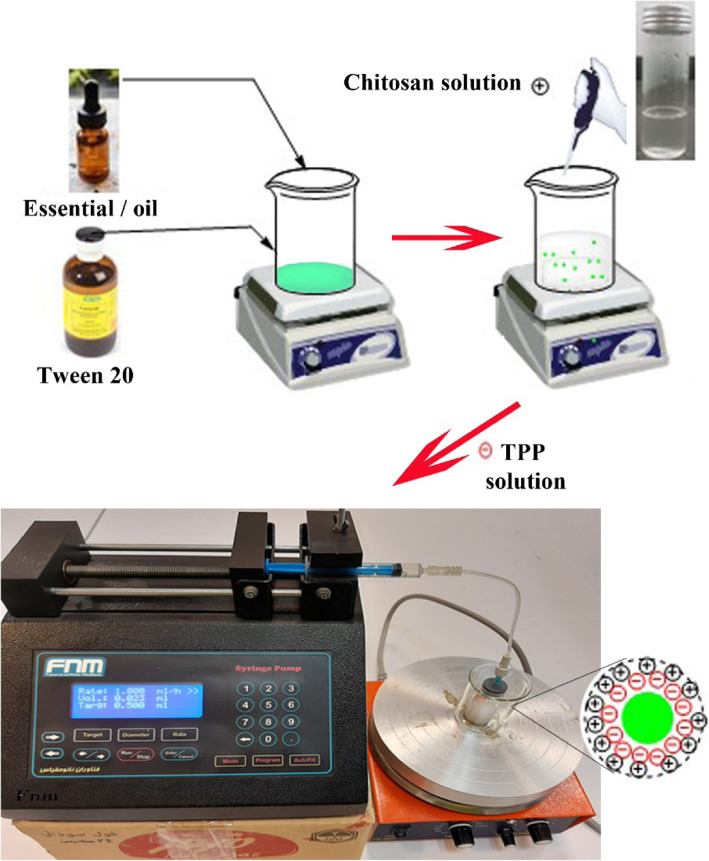
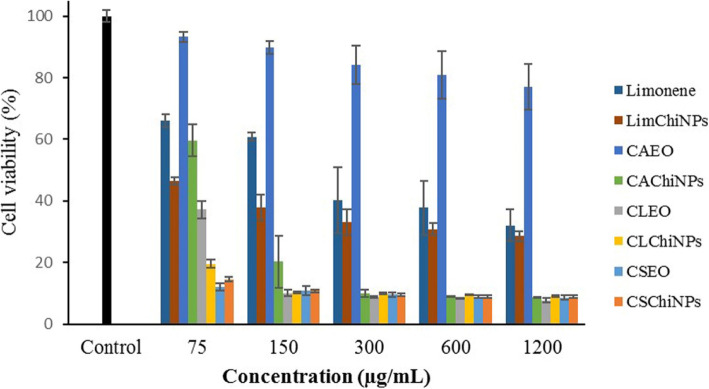
Background: Melanoma and breast cancers are two common cancers worldwide. Due to the side effects of chemotherapy drugs and the occurring resistance against them, the development of green drugs has been received more attention. Methods: The anticancer effects of three essential oils from the Citrus family and their identified major constituents (limonene) were first investigated against melanoma and breast cancer cell lines (A-375 and MDA-MB-468). By preparing chitosan nanoparticles containing them, an attempt was then made to improve their effectiveness. Results: Chitosan nanoparticles containing Citrus sinensis and Citrus limon essential oils with IC 50 s of 0.03 and 0.124 μg/mL on A-375 cells, and 23.65 and 40.32 μg/mL on MDA-MB-468 showed distinct anticancer efficacies. Conclusion: The prepared formulations could thus be considered as green anticancer agents in complementary medicine and therapies.
Overview
The claims and statistics of this paper haven’t been checked yet.
Run the check — free, no account needed. It reads the open-access text and checks the sources it cites.
Integrity signals
Registry
Cites
Statistics
Figures
Verification
Claims the paper makes
The claims and statistics of this paper haven’t been checked yet.
Run the check — free, no account needed. It reads the open-access text and checks the sources it cites.
Claims other papers make about this one
Each is checked against this paper’s own text: does it say what the citing paper says it does?
In the citing paper
“For example, limonene, one of the major constituents of AGEO, has the ability to reduce the viability of A375 cells in a dose-dependent manner [44].”
From Maceration, Soxhlet Extraction, and Steam Hydrodistillation of Anethum graveolens Seeds: Phytochemical Profiles and Cytotoxic Effects (2026) · cites this paper as [44]
Self-check
Percentages, sums and reported differences re-computed from the paper’s own numbers.
The self-check needs the paper’s full text.
Citations
Cites
No references could be resolved yet.
Research works printed but not linked: 44
- Sharma GN, Dave R, Sanadya J, Sharma P, Sharma K. Various types and management of breast cancer: an overview. J Adv Pharm Technol Res. 2010;1(2):109–26. · DOI
- McGuire A, Brown JA, Kerin MJ. Metastatic breast cancer: the potential of miRNA for diagnosis and treatment monitoring. Cancer Metastasis Rev. 2015;34(1):145–55. https://doi.org/10.1007/s10555-015-9551-7. · DOI
- Gordon R: Skin cancer: an overview of epidemiology and risk factors. In: Semin Oncol Nurs: 2013: Elsevier; 2013: 160–169. · DOI
- Uong A, Zon LI. Melanocytes in development and cancer. J Cell Physiol. 2010;222(1):38–41. https://doi.org/10.1002/jcp.21935. · DOI
- Haider T, Pandey V, Banjare N, Gupta PN, Soni V. Drug resistance in cancer: mechanisms and tackling strategies. Pharmacol Rep. 2020;72(5):1125–51. https://doi.org/10.1007/s43440-020-00138-7. · DOI · Paper page
- Blowman K, Magalhães M, Lemos M, Cabral C, Pires I. Anticancer properties of essential oils and other natural products. Evid Based Complement Alternat Med. 2018;2018:1–12. https://doi.org/10.1155/2018/3149362. · DOI
- Pavithra PS, Mehta A, Verma RS. Essential oils: from prevention to treatment of skin cancer. Drug Discov Today. 2019;24(2):644–55. https://doi.org/10.1016/j.drudis.2018.11.020. · DOI
- Russo R, Corasaniti MT, Bagetta G, Morrone LA. Exploitation of cytotoxicity of some essential oils for translation in cancer therapy. Evid Based Complement Alternat Med. 2015;2015:397821. · DOI
- Dobetsberger C, Buchbauer G. Actions of essential oils on the central nervous system: an updated review. Flavour Fragr J. 2011;26(5):300–16. https://doi.org/10.1002/ffj.2045. · DOI
- Shen C-Y, Jiang J-G, Zhu W, Ou-Yang Q. Anti-inflammatory effect of essential oil from Citrus aurantium L. var. Amara Engl. J Agric Food Chem. 2017;65(39):8586–94. https://doi.org/10.1021/acs.jafc.7b02586. · DOI
- Suryawanshi JAS. An overview of Citrus aurantium used in treatment of various diseases. African J Plant Sci. 2011;5(7):390–5.
- Choi H-S, Song HS, Ukeda H, Sawamura M. Radical-scavenging activities of citrus essential oils and their components: detection using 1, 1-diphenyl-2-picrylhydrazyl. J Agric Food Chem. 2000;48(9):4156–61. https://doi.org/10.1021/jf000227d. · DOI
- González-Molina E, Domínguez-Perles R, Moreno D, García-Viguera C. Natural bioactive compounds of Citrus Limon for food and health. J Pharm Biomed Anal. 2010;51(2):327–45. https://doi.org/10.1016/j.jpba.2009.07.027. · DOI
- Ling APK, Chia JY, Hussein S, Harun AR. Physiological responses of Citrus sinensis to gamma irradiation. World Appl Sci J. 2008;5(1):12–9.
- Kammoun AK, Altyar AE, Gad HA. Comparative metabolic study of Citrus Sinensis leaves cultivars based on GC-MS and their cytotoxic activity. J Pharm Biomed Anal. 2021;198:113991. · DOI
- Najar B, Shortrede JE, Pistelli L, Buhagiar J. Chemical composition and in vitro cytotoxic screening of sixteen commercial essential oils on five Cancer cell lines. Chem Biodivers. 2020;17(1):e1900478. https://doi.org/10.1002/cbdv.201900478. · DOI · Paper page
- Sun J. D-limonene: safety and clinical applications. Altern Med Rev. 2007;12(3):259–64.
- Jia S-S, Xi G-P, Zhang M, Chen Y-B, Lei B, Dong X-S, et al. Induction of apoptosis by D-limonene is mediated by inactivation of Akt in LS174T human colon cancer cells. Oncol Rep. 2013;29(1):349–54. https://doi.org/10.3892/or.2012.2093. · DOI · Paper page
- Ciriminna R, Lomeli-Rodriguez M, Cara PD, Lopez-Sanchez JA, Pagliaro M. Limonene: a versatile chemical of the bioeconomy. Chem Commun. 2014;50(97):15288–96. https://doi.org/10.1039/C4CC06147K. · DOI
- Araújo-Filho HGd, Dos Santos JF, Carvalho MT, Picot L, Fruitier-Arnaudin I, Groult H, Quintans-Júnior LJ, Quintans JS. Anticancer activity of limonene: A systematic review of target signaling pathways. Phytother Res. 2021:1–14. https://doi.org/10.1002/ptr.7125. · DOI · Paper page
- de Vasconcelos Cerqueira Braz J, de Carvalho FO, de Vasconcelos Cerqueira Meneses D, Calixto FAF, Santana HSR, Almeida IB, de Aquino LAG, de Souza Araújo AA, Serafini MR. Mechanism of Action of Limonene in Tumor Cells: A Systematic Review and Metanalysis. Curr Pharm Des. 2020. https://doi.org/10.2174/1381612826666201026152902. · DOI
- Manuele MG, Barreiro Arcos ML, Davicino R, Ferraro G, Cremaschi G, Anesini C. Limonene exerts antiproliferative effects and increases nitric oxide levels on a lymphoma cell line by dual mechanism of the ERK pathway: relationship with oxidative stress. Cancer Investig. 2010;28(2):135–45. https://doi.org/10.3109/07357900903179583. · DOI
- Mukhtar YM, Adu-Frimpong M, Xu X, Yu J. Biochemical significance of limonene and its metabolites: future prospects for designing and developing highly potent anticancer drugs. Biosci Rep. 2018;38(6):BSR20181253. · DOI
- Abedinpour N, Ghanbariasad A, Taghinezhad A, Osanloo M. Preparation of Nanoemulsions of Mentha piperita Essential Oil and Investigation of Their Cytotoxic Effect on Human Breast Cancer Lines. BioNanoScience. 2021;11:428–36. · DOI
- Osanloo M, Sedaghat M, Sereshti H, Rahmanian M, Saeedi Landi F, Amani A. Chitosan nanocapsules of tarragon essential oil with low cytotoxicity and long-lasting activity as a green nano-larvicide. J Nanostruct. 2019;9(4):723–35.
- Abdollahi A, Mirzaei E, Amoozegar F, Moemenbellah-Fard MD, Zarenezhad E, Osanloo M. High Antibacterial Effect of Impregnated Nanofiber Mats with a Green Nanogel Against Major Human Pathogens. BioNanoScience. 2021;11:549–58. · DOI
- Venditti A, Frezza C, Maggi F, Lupidi G, Bramucci M, Quassinti L, et al. Phytochemistry, micromorphology and bioactivities of Ajuga chamaepitys (L.) Schreb. (Lamiaceae, Ajugoideae): two new harpagide derivatives and an unusual iridoid glycosides pattern. Fitoterapia. 2016;113:35–43. https://doi.org/10.1016/j.fitote.2016.06.016. · DOI
- Venditti A, Bianco A, Frezza C, Serafini M, Giacomello G, Giuliani C, et al. Secondary metabolites, glandular Trichomes and biological activity of Sideritis montana L. subsp. Montana from Central Italy. Chem Biodivers. 2016;13(10):1380–90. https://doi.org/10.1002/cbdv.201600082. · DOI
- Cianfaglione K, Blomme EE, Quassinti L, Bramucci M, Lupidi G, Dall'Acqua S, Maggi F. Cytotoxic Essential Oils from Eryngium campestre and Eryngium amethystinum (Apiaceae) Growing in Central Italy. Chem Biodivers. 2017;14:e1700096. · DOI
- Momtazi AA, Askari-Khorasgani O, Abdollahi E, Sadeghi-Aliabadi H, Mortazaeinezhad F, Sahebkar A. Phytochemical analysis and cytotoxicity evaluation of Kelussia odoratissima Mozaff. J Acupunct Meridian Stud. 2017;10(3):180–6. https://doi.org/10.1016/j.jams.2017.02.002. · DOI
- Ghanbariasad A, Osanloo M. Development of two stable green nanoformulations with potent anticancer properties. Nanomed Res J. 2020;5(3):234–44.
- Souza JM, Caldas AL, Tohidi SD, Molina J, Souto AP, Fangueiro R, et al. Properties and controlled release of chitosan microencapsulated limonene oil. Rev Bras Farmacogn. 2014;24(6):691–8. https://doi.org/10.1016/j.bjp.2014.11.007. · DOI
- Khoshakhlagh K, Koocheki A, Mohebbi M, Allafchian A. Development and characterization of electrosprayed Alyssum homolocarpum seed gum nanoparticles for encapsulation of d-limonene. J Colloid Interface Sci. 2017;490:562–75. https://doi.org/10.1016/j.jcis.2016.11.067. · DOI
- Karimirad R, Behnamian M, Dezhsetan S, Sonnenberg A. Chitosan nanoparticles-loaded Citrus aurantium essential oil: a novel delivery system for preserving the postharvest quality of Agaricus bisporus. J Sci Food Agric. 2018;98(13):5112–9. https://doi.org/10.1002/jsfa.9050. · DOI
- Karimirad R, Behnamian M, Dezhsetan S. Bitter orange oil incorporated into chitosan nanoparticles: preparation, characterization and their potential application on antioxidant and antimicrobial characteristics of white button mushroom. Food Hydrocoll. 2020;100:105387. https://doi.org/10.1016/j.foodhyd.2019.105387. · DOI
- Bento R, Pagán E, Berdejo D, de Carvalho RJ, García-Embid S, Maggi F, et al. Chitosan nanoemulsions of cold-pressed orange essential oil to preserve fruit juices. Int J Food Microbiol. 2020;331:108786. https://doi.org/10.1016/j.ijfoodmicro.2020.108786. · DOI
- Hasani S, Ojagh SM, Ghorbani M. Nanoencapsulation of lemon essential oil in chitosan-Hicap system. Part 1: study on its physical and structural characteristics. Int J Biol Macromol. 2018;115:143–51. https://doi.org/10.1016/j.ijbiomac.2018.04.038. · DOI
- Hajizadeh MR, Maleki H, Barani M, Fahmidehkar MA, Mahmoodi M, Torkzadeh-Mahani M. In vitro cytotoxicity assay of D-limonene niosomes: an efficient nano-carrier for enhancing solubility of plant-extracted agents. Res Pharm Sci. 2019;14(5):448–58. https://doi.org/10.4103/1735-5362.268206. · DOI
- Li P-H, Lu W-C. Effects of storage conditions on the physical stability of d-limonene nanoemulsion. Food Hydrocoll. 2016;53:218–24. https://doi.org/10.1016/j.foodhyd.2015.01.031. · DOI
- Navaei Shoorvarzi S, Shahraki F, Shafaei N, Karimi E, Oskoueian E. Citrus aurantium L. bloom essential oil nanoemulsion: Synthesis, characterization, cytotoxicity, and its potential health impacts on mice. J Food Biochem. 2020;44(5):e13181. · DOI
- Raimondo S, Naselli F, Fontana S, Monteleone F, Dico AL, Saieva L, et al. Citrus Limon-derived nanovesicles inhibit cancer cell proliferation and suppress CML xenograft growth by inducing TRAIL-mediated cell death. Oncotarget. 2015;6(23):19514–27. https://doi.org/10.18632/oncotarget.4004. · DOI
- Souto EB, Zielinska A, Souto SB, Durazzo A, Lucarini M, Santini A, et al. (+)-Limonene 1, 2-epoxide-loaded slns: Evaluation of drug release, antioxidant activity, and cytotoxicity in an HaCaT cell line. Int J Mol Sci. 2020;21(4):1449. · DOI
- Venditti A, Bianco A, Muscolo C, Zorzetto C, Sanchez-Mateo CC, Rabanal RM, et al. Bioactive secondary metabolites from Schizogyne sericea (Asteraceae) endemic to Canary Islands. Chem Biodivers. 2016;13(7):826–36. https://doi.org/10.1002/cbdv.201500222. · DOI
- Gambini V, Tilio M, Maina EW, Andreani C, Bartolacci C, Wang J, et al. In vitro and in vivo studies of gold(I) azolate/phosphane complexes for the treatment of basal like breast cancer. Eur J Med Chem. 2018;155:418–27. https://doi.org/10.1016/j.ejmech.2018.06.002. · DOI
Cited by
Goldiș, C., Racoviceanu, R., Negrea-Ghiulai, R., Mioc, A., Prodea, A., Atyim, E., Maksimovic, T., Lukinich-Gruia, A. T., Pricop, M.-A., & Șoica, C. (2026) · Molecules · doi:10.3390/molecules31183337
Metadata
- Authors
- Alipanah, H., Farjam, M., Zarenezhad, E., Roozitalab, G., & Osanloo, M.
- Venue
- BMC Complementary Medicine and Therapies
- Published
- 2021-07-02
- Volume
- 21
- Issue
- 1
- ISSN
- 2662-7671
- PMC
- PMC8254332
- Cited by
- 77
- References
- 0
- Language
- en
About these checks
Registry, retraction, Cites and statistics results are computed, not judged, with one exception: a printed reference that no index lists is read once by a model before it counts as a citation error. Claims are extracted by a model and kept only when their quote appears verbatim in the text; each cited source is then checked, with a model’s help, for whether it says what the claim relies on. Those verdicts can be wrong — read the claim’s quote and the cited source before relying on one.
Statistics and arithmetic are recomputed, not judged.
Confidence bands are shown only for fields calibrated on our annotated test set. None is calibrated yet, so no band is shown.
What counts as a claim ›How we measure confidence ›How we check this ›
Are you an author, or do you see a problem with this page? Request a review
Data sources
Bibliographic data: Semantic Scholar, OpenAlex, Crossref.
Contains information from the Semantic Scholar Academic Graph Datasets, made available under the ODC Attribution License (ODC-BY 1.0).
Semantic Scholar’s data is described in: Kinney, R., et al. (2023). The Semantic Scholar Open Data Platform. arXiv:2301.10140.
