

Exploring the antibacterial and anti-biofilm activity of two Iranian medical-grade kinds of honey on multidrug-resistant Pseudomonas aeruginosa
Open accessThe DOI matches its Crossref record; 65 of the 65 references it cites were found in a registry or an index; 1 of the 58 sources its claims cite were checked for support.
Abstract
INTRODUCTION: Pseudomonas aeruginosa is a prominent multidrug-resistant and biofilm-forming bacteria. Mono-floral honey, enriched with a variety of biological compounds, can be categorized as medical-grade honey due to its notable pharmacological benefits. In this study, two types of Iranian honey were thoroughly characterized, and the antimicrobial and anti-biofilm properties were examined against three clinical strains of multidrug-resistant P. aeruginosa. METHODS: Citrus and Thyme honey from Alborz were selected based on physicochemical, phytochemical, and melissopalynological tests conducted from a medical perspective. The antibacterial activity of the honey samples against three clinical strains of multidrug-resistant P. aeruginosa isolated from wound infections was evaluated using both the well-diffusion and broth microdilution methods. Additionally, an antibiofilm assay was performed using the crystal violet method in microplates. RESULTS: Both medical grade honey samples exhibited considerable antibacterial activity against the three P. aeruginosa isolates at 75-100% v/v concentrations with inhibition zones measuring between 15 and 30 mm. The minimum inhibitory concentration (MIC) and the minimum bactericidal concentration (MBC) values for both types of honey were 6.25% v/v (final concentration). The antibiofilm assay indicated that both types of honey demonstrated varying levels of antibiofilm activity. Citrus honey at 9% concentration was the most effective, showing an average inhibition rate of 59%, while Citrus honey at 2.3% final concentration exhibited the least effectiveness with an average inhibition rate of 23%. DISCUSSION: A thorough analysis of the honeys studied confirmed their authenticity and the presence of medicinal compounds. The results of honey tests correspond to the normal range (natural Honey) in the Council of the European Union. Based on the evaluation and compliance with the medical grade criteria including authenticity, health, qualities well botanical origin mentioned honey is classified in medical grade. The antibacterial results indicated that both Thyme and Citrus honeys effectively inhibit the growth and biofilm formation of P. aeruginosa. Therefore, these honeys may serve as natural and safe alternatives or adjuncts to conventional antibiotic therapy for wound healing and infection management.
Overview
CoChat Summary
TL;DR
Two Iranian medical-grade honeys (Citrus and Thyme from Alborz) inhibited three clinical multidrug-resistant *Pseudomonas aeruginosa* isolates in vitro, with MIC/MBC at 6.25% v/v final concentration and concentration-dependent antibiofilm activity. Citrus honey at 9% final concentration gave the highest average biofilm inhibition (59%), supporting further study as a possible adjunct or alternative for wound infection management.
Key findings
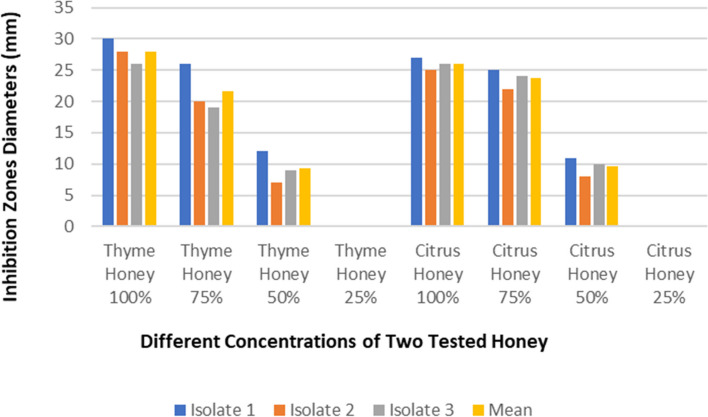
- Both honeys inhibited all three MDR *P. aeruginosa* isolates at 75–100% v/v, with inhibition zones of 15–30 mm; Thyme honey produced 22 ± 4 mm at 75% and 28 ± 2 mm at 100%, while Citrus honey produced 24 ± 2 mm and 26 ± 1 mm at the same concentrations. At 50% v/v, zones were 9 ± 3 mm (Thyme) and 10 ± 2 mm (Citrus), and at 25% v/v no inhibition zones were detected.
- MIC was 12.5% v/v (final concentration 6.25% v/v) for both honeys against all three isolates; MBC matched MIC, indicating MIC = MBC.
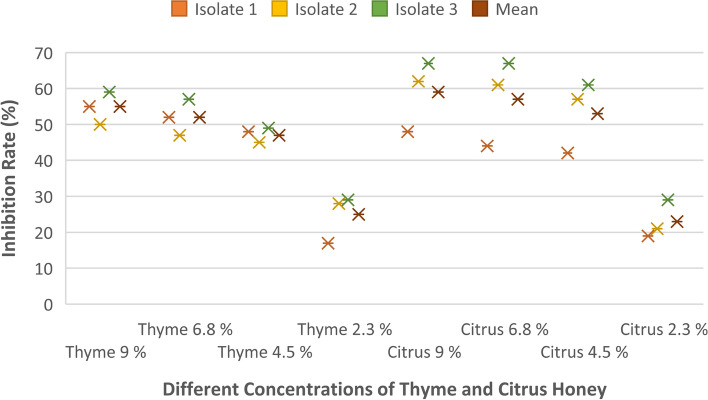
- Antibiofilm activity was concentration-dependent and significantly different across concentrations (p = 0.001). Citrus honey at 9% final concentration was most effective, with an average inhibition rate of 59%; Citrus honey at 2.3% final concentration was least effective, with an average inhibition rate of 23%. Thyme honey averaged 55% inhibition at 9% and 25% at 2.3%.
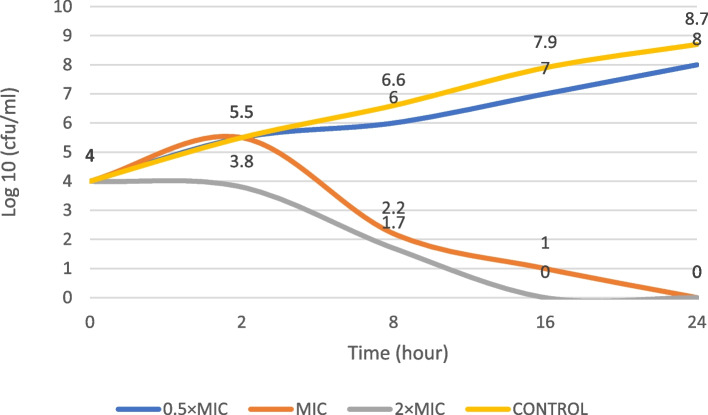
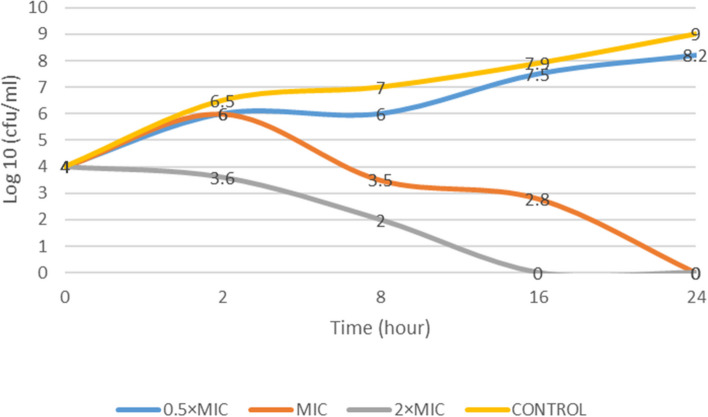
- Time-kill assays showed concentration-dependent killing; at 2 × MIC, a marked reduction in viable bacteria occurred within 2 h for both honeys, and at MIC the 24 h bacterial count was consistent with the MBC.
Methods
- Honey samples were collected from beekeepers in Iran in 2023–2024; Citrus honey from the southern slope of the Alborz mountains and Thyme honey from the same region were selected after physicochemical, phytochemical, and melissopalynological authentication against European Union honey standards.
- Three clinical MDR *P. aeruginosa* strains were isolated from wounds of burnt patients at Imam Reza Hospital, Tehran, Iran; isolates were resistant to ceftazidime, ciprofloxacin, cefepime, aztreonam, piperacillin, and gentamicin.
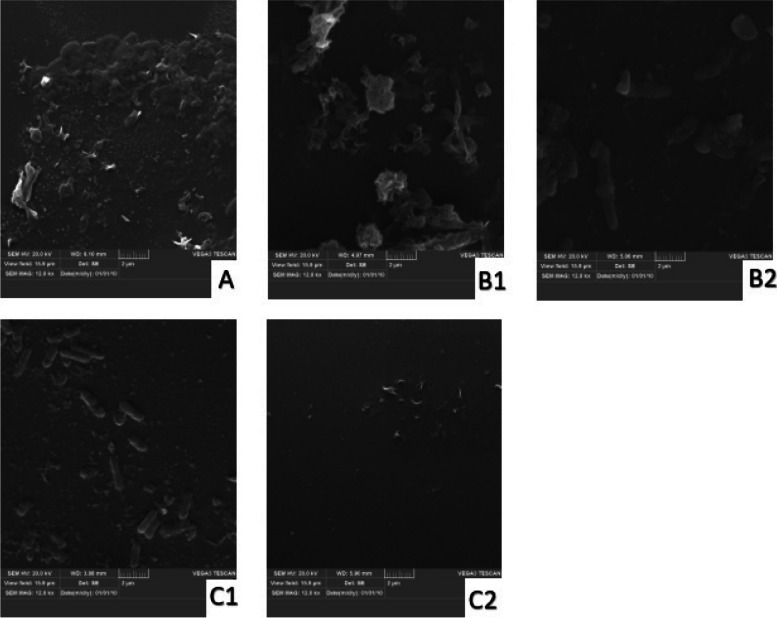
- Antibacterial activity was tested by well-diffusion and broth microdilution MIC/MBC; time-kill assays used 0.5 × MIC, MIC, and 2 × MIC; antibiofilm activity used the crystal violet microplate method, with SEM imaging. Data were analyzed by one-way ANOVA with p < 0.05 using IBM SPSS Statistics Version 22.
Limitations
- The paper does not explicitly state limitations.
- Evident from the text: the study is in vitro and uses only three clinical MDR *P. aeruginosa* wound isolates from a single hospital, so clinical wound-healing, safety, and toxicity outcomes are not assessed.
- Evident from the text: only two Iranian monofloral honeys from the Alborz region were tested, and antibiotic synergy or adjunctive use was discussed but not experimentally evaluated.
Model-written summary. Check it against the paper before relying on it.
Integrity signals
Registry
Cites
Statistics
Figures
Verification
Claims the paper makes
1 Valid · 0 Not valid · 40 Not checked · 49 Own results and interpretations
The cited sources support only part of this claim — read each source’s verdict below.
In the paper
“while the acidic pH (3.2 to 4.5) inhibits bacterial growth [36].”
§ Exploring the antibacterial and anti-biofilm activity of two Iranian medical-grade kinds of honey on multidrug-resistant Pseudomonas aeruginosa > Discussion
What the sources say
- Partly supportedcites [36] Almasaudi S. The antibacterial activities of honey. Saudi J Biol Sci. 2021;28(4):2188–96. 33911935 PMC8071826 sourceExperimental — accuracy not yet measured
The Acidity section (p. n/a) states that 'The acidity of honey, between pH 3.2 and pH 4.5, is a very marked characteristic of its antibacterial efficacy', and the Nonperoxide antibacterial compounds section repeats 'The acidity of honey (pH 3.2–4.5) inhibits the growth of many pathogenic organisms' — so the pH range and the growth-inhibition point are in our copy, but for honey in general, not for 'MGHs' as a category: no passage of our copy defines or addresses MGHs (searched: monofloral/multifloral/geographical honey, MGH). Our copy also qualifies the point — 'pH alone is not sufficient to inhibit the growth of many types of bacteria when diluted in food or in other bodily liquids (Molan 1992)' — whereas the citing sentence states inhibition unconditionally, so the restriction to MGHs and the unqualified mechanism are the parts not supported by this source. (LLM, conf=0.72)
plainstates a cause- Asserted: passes — The authors put it forward as true.
- Checkable: passes — It can be checked against evidence.
- Load-bearing: unclear — It is unclear whether the paper’s conclusions depend on it.
- Based: passes — The paper gives a reason why it holds.
- Partly supported
A result the paper reports from its own data — it cites no other source for it, so there is none to check. The quote shows it is in the paper.
In the paper
“However, the inhibition rate was notably lower 2.3% v/v for both types of honey.”
§ Exploring the antibacterial and anti-biofilm activity of two Iranian medical-grade kinds of honey on multidrug-resistant Pseudomonas aeruginosa > Results > Antibiofilm assay
plain- Asserted: passes — The authors put it forward as true.
- Checkable: passes — It can be checked against evidence.
- Load-bearing: unclear — It is unclear whether the paper’s conclusions depend on it.
- Based: passes — The paper gives a reason why it holds.
- Rests on an assumption not shown here.
A result the paper reports from its own data — it cites no other source for it, so there is none to check. The quote shows it is in the paper.
In the paper
“while at a concentration of 25% (v/v), no inhibition zones were detected for either type of honey.”
§ Exploring the antibacterial and anti-biofilm activity of two Iranian medical-grade kinds of honey on multidrug-resistant Pseudomonas aeruginosa > Results > Susceptibility assay by well-diffusion
plain- Asserted: passes — The authors put it forward as true.
- Checkable: passes — It can be checked against evidence.
- Load-bearing: unclear — It is unclear whether the paper’s conclusions depend on it.
- Based: passes — The paper gives a reason why it holds.
- Rests on an assumption not shown here.
A result the paper reports from its own data — it cites no other source for it, so there is none to check. The quote shows it is in the paper.
In the paper
“while Citrus honey at 2.3% final concentration exhibited the least effectiveness with an average inhibition rate of 23%”
- Also stated in: § Antibiofilm assay · plain
“while the least effective was 2.3% v/v Citrus honey, showing an average inhibition rate of 23%”
§ Exploring the antibacterial and anti-biofilm activity of two Iranian medical-grade kinds of honey on multidrug-resistant Pseudomonas aeruginosa > Abstract > Results
plain- Asserted: passes — The authors put it forward as true.
- Checkable: passes — It can be checked against evidence.
- Load-bearing: unclear — It is unclear whether the paper’s conclusions depend on it.
- Based: passes — The paper gives a reason why it holds.
- Rests on an assumption not shown here.
- Also stated in: § Antibiofilm assay · plain
A result the paper reports from its own data — it cites no other source for it, so there is none to check. The quote shows it is in the paper.
In the paper
“At the MIC concentration, the bacterial count after 24 h was consistent with the MBC”
§ Exploring the antibacterial and anti-biofilm activity of two Iranian medical-grade kinds of honey on multidrug-resistant Pseudomonas aeruginosa > Results > Antimicrobial time-kill assays
plainstates an association- Asserted: passes — The authors put it forward as true.
- Checkable: passes — It can be checked against evidence.
- Load-bearing: unclear — It is unclear whether the paper’s conclusions depend on it.
- Based: passes — The paper gives a reason why it holds.
- Rests on an assumption not shown here.
28 more claims
Create a free account to see all 90 claims and to verify the 52 references still open.
- It may state two separate claims as one. 25
- Probably not a substantial claim. 42
- The quote only partly states this claim. 1
Claims other papers make about this one
Each is checked against this paper’s own text: does it say what the citing paper says it does?
The source backs part of the claim, not all of it — or backs it for a different population, condition or comparison.
In the citing paper
“These properties can inhibit a broad range of wound-associated microorganisms, including Staphylococcus aureus, methicillin-resistant S. aureus (MRSA), and Pseudomonas aeruginosa [11].”
From Honey in wound healing: molecular and cellular mechanisms of inflammation control, immune modulation, and antimicrobial defense (2026) · cites this paper as [11]
Experimental — accuracy not yet measured
Self-check
Percentages, sums and reported differences re-computed from the paper’s own numbers.
Each contradiction between two passages listed here was confirmed by an independent check.
Rated major: it would touch a result — a value a result rests on, reported and recomputed p-values on opposite sides of the significance level, two passages that conflict with no sign which is right, or a cited work retracted before this paper was published.
In the paper
§ Exploring the antibacterial and anti-biofilm activity of two Iranian medical-grade kinds of honey on multidrug-resistant Pseudomonas aeruginosa > Results > Honey and authentication analysis
“| 3 | Frequency classes(percent) | Secondary Pollen | 16–45% | 10 mg | Citrus |”
§ Exploring the antibacterial and anti-biofilm activity of two Iranian medical-grade kinds of honey on multidrug-resistant Pseudomonas aeruginosa > Results > Honey and authentication analysis
“| | Uni-floral Honey (Relative level of abundance of citrus) | Uni-floral Honey (Relative level of abundance of citrus) | > 45% | 10 mg | Citrus |”
Rated major: it would touch a result — a value a result rests on, reported and recomputed p-values on opposite sides of the significance level, two passages that conflict with no sign which is right, or a cited work retracted before this paper was published.
In the paper
§ Exploring the antibacterial and anti-biofilm activity of two Iranian medical-grade kinds of honey on multidrug-resistant Pseudomonas aeruginosa > Results > Honey and authentication analysis
“| Sucrose | 1.86 | 26.5 | 26 | gram% | INSO 92 Clause 2–3-4–7 | 0.82% | - | 5 | major | 51% | ≤ PC | 100.0% | Conforms |”
§ Exploring the antibacterial and anti-biofilm activity of two Iranian medical-grade kinds of honey on multidrug-resistant Pseudomonas aeruginosa > Results > Honey and authentication analysis
“| Sucrose (1%) | 4.68 | 4.88 |”
Rated minor: it would not touch a result — a value no result rests on, a p-value that stays on the same side of the significance level, or a conflict that is clerical, resolved elsewhere in the paper, or outside its own findings.
In the paper
§ Exploring the antibacterial and anti-biofilm activity of two Iranian medical-grade kinds of honey on multidrug-resistant Pseudomonas aeruginosa > Discussion
“The studied honey contains key flavonoids such as Naringenin, Kaempferol, Catechin, Rutin, Hesperetin, Chrysin, Quercetin, and Myricetin”
§ Exploring the antibacterial and anti-biofilm activity of two Iranian medical-grade kinds of honey on multidrug-resistant Pseudomonas aeruginosa > Results > Honey and authentication analysis
“| Myricetin (μg/g) | 0.00 | 0.00 |”
Rated minor: it would not touch a result — a value no result rests on, a p-value that stays on the same side of the significance level, or a conflict that is clerical, resolved elsewhere in the paper, or outside its own findings.
In the paper
§ Exploring the antibacterial and anti-biofilm activity of two Iranian medical-grade kinds of honey on multidrug-resistant Pseudomonas aeruginosa > Results > Honey and authentication analysis
“All authentication criteria adhered to the standards set by the European Union.”
§ Exploring the antibacterial and anti-biofilm activity of two Iranian medical-grade kinds of honey on multidrug-resistant Pseudomonas aeruginosa > Results > Honey and authentication analysis
“| Diastasis Activity (Quantitative) | 7.7 | 26.5 | 26 | Diastasis unit DN | INSO 92 Clause 8–7 | 6% | 8 | - | major | 51% | ≤ PC | - | does not conform |”
Rated minor: it would not touch a result — a value no result rests on, a p-value that stays on the same side of the significance level, or a conflict that is clerical, resolved elsewhere in the paper, or outside its own findings.
In the paper
§ Exploring the antibacterial and anti-biofilm activity of two Iranian medical-grade kinds of honey on multidrug-resistant Pseudomonas aeruginosa > Results > Honey and authentication analysis
“| 4 | FrequencyClasses(percent) | Important Minor Pollen | 3–15% | 10 mg | Astragalus Type, Asteraceae Type |”
§ Exploring the antibacterial and anti-biofilm activity of two Iranian medical-grade kinds of honey on multidrug-resistant Pseudomonas aeruginosa > Results > Honey and authentication analysis
“| 7 | Pollen Frequency | Frequent | 16–45% | 10 mg | Astragalus Type, Asteraceae Type |”
1 more finding
Create a free account to see every finding of this check.
Citations
Cites
Mechanisms of biofilm resistance to antimicrobial agents
Mah, T.-F. C., & O'Toole, G. A. (2001) · Trends in Microbiology · doi:10.1016/s0966-842x(00)01913-2 · Cited by 3,921
Glossary of pollen and spore terminology
Punt, W., Hoen, P. P., Blackmore, S., Nilsson†, S., & Le Thomas, A. (2007) · Review of Palaeobotany and Palynology · doi:10.1016/j.revpalbo.2006.06.008 · Cited by 2,558
Louveaux, J., Maurizio, A., & Vorwohl, G. (1978) · Bee World · doi:10.1080/0005772x.1978.11097714 · Cited by 1,759
Quorum-sensing signals indicate that cystic fibrosis lungs are infected with bacterial biofilms
Singh, P. K., Schaefer, A. L., Parsek, M. R., Moninger, T. O., Welsh, M. J., & Greenberg, E. P. (2000) · Nature · doi:10.1038/35037627 · Cited by 1,519
Illustrated Pollen Terminology
Halbritter, H., Ulrich, S., Grímsson, F., Weber, M., Zetter, R., Hesse, M., Buchner, R., Svojtka, M., & Frosch-Radivo, A. (2018) · Springer eBooks · doi:10.1007/978-3-319-71365-6 · Cited by 652
Pseudomonas aeruginosa adaptation and evolution in patients with cystic fibrosis
Rossi, E., La Rosa, R., Bartell, J. A., Marvig, R. L., Haagensen, J. A. J., Sommer, L. M., Molin, S., & Johansen, H. K. (2021) · Nature Reviews Microbiology · doi:10.1038/s41579-020-00477-5 · Cited by 525
Therapeutic Properties of Bioactive Compounds from Different Honeybee Products
Cornara, L., Biagi, M., Xiao, J., & Burlando, B. (2017) · Frontiers in Pharmacology · doi:10.3389/fphar.2017.00412 · Cited by 460
The antibacterial activities of honey
Almasaudi, S. (2021) · Saudi Journal of Biological Sciences · doi:10.1016/j.sjbs.2020.10.017 · Cited by 425
Antioxidant Activity of Phenolic Compounds: From In Vitro Results to In Vivo Evidence
Fernandez-Panchon, M. S., Villano, D., Troncoso, A. M., & Garcia-Parrilla, M. C. (2008) · Critical Reviews in Food Science and Nutrition · doi:10.1080/10408390701761845 · Cited by 365
Floral Markers in Honey of Various Botanical and Geographic Origins: A Review
Kaškonienė, V., & Venskutonis, P. R. (2010) · Comprehensive Reviews in Food Science and Food Safety · doi:10.1111/j.1541-4337.2010.00130.x · Cited by 330
Multidrug resistant commensal Escherichia coli in animals and its impact for public health
Szmolka, A., & Nagy, B. (2013) · Frontiers in Microbiology · doi:10.3389/fmicb.2013.00258 · Cited by 314
Legislation of honey criteria and standards
Thrasyvoulou, A. T., Tananaki, C., Goras, G., Karazafiris, E., Dimou, M. V., Liolios, V., Kanelis, D., & Gounari, S. (2018) · Journal of Apicultural Research · doi:10.1080/00218839.2017.1411181 · Cited by 247
Dissecting the Antimicrobial Composition of Honey
Nolan, V. C., Harrison, J., & Cox, J. A. G. (2019) · Antibiotics · doi:10.3390/antibiotics8040251 · Cited by 230
Biofilm-Associated Multi-Drug Resistance in Hospital-Acquired Infections: A Review
Assefa, M., & Amare, A. (2022) · Infection and Drug Resistance · doi:10.2147/idr.s379502 · Cited by 215
Honey: An immunomodulator in wound healing
Majtan, J. (2014) · Wound Repair and Regeneration · doi:10.1111/wrr.12117 · Cited by 214
Hayes, A. J., & Markovic, B. (2002) · Food and Chemical Toxicology · doi:10.1016/s0278-6915(01)00103-x · Cited by 202
Plant phenolics and terpenoids as adjuvants of antibacterial and antifungal drugs
Zacchino, S. A., Butassi, E., Liberto, M. D., Raimondi, M., Postigo, A., & Sortino, M. (2017) · Phytomedicine · doi:10.1016/j.phymed.2017.10.018 · Cited by 175
Effect of hydrogen peroxide on antibacterial activities of Canadian honeys
Brudzynski, K. (2006) · Canadian Journal of Microbiology · doi:10.1139/w06-086 · Cited by 144
Hossain, M. L., Lim, L. Y., Hammer, K., Hettiarachchi, D., & Locher, C. (2022) · Antibiotics · doi:10.3390/antibiotics11070975 · Cited by 140
Aliferis, K. A., Tarantilis, P. A., Harizanis, P. C., & Alissandrakis, E. (2010) · Food Chemistry · doi:10.1016/j.foodchem.2009.12.098 · Cited by 137
The citrus flavonoid naringenin stimulates DNA repair in prostate cancer cells
Gao, K., Henning, S. M., Niu, Y., Youssefian, A. A., Seeram, N. P., Xu, A., & Heber, D. (2006) · The Journal of Nutritional Biochemistry · doi:10.1016/j.jnutbio.2005.05.009 · Cited by 128
Honey can inhibit and eliminate biofilms produced by Pseudomonas aeruginosa
Lu, J., Cokcetin, N. N., Burke, C. M., Turnbull, L., Liu, M., Carter, D. A., Whitchurch, C. B., & Harry, E. J. (2019) · Scientific Reports · doi:10.1038/s41598-019-54576-2 · Cited by 119
Honey authentication based on physicochemical parameters and phenolic compounds
Oroian, M., & Ropciuc, S. (2017) · Computers and Electronics in Agriculture · doi:10.1016/j.compag.2017.04.020 · Cited by 112
Antimicrobial effect of different types of honey on Staphylococcus aureus
Almasaudi, S. B., Al-Nahari, A. A. M., Abd El-Ghany, E. S. M., Barbour, E., Al Muhayawi, S. M., Al-Jaouni, S., Azhar, E., Qari, M., Qari, Y. A., & Harakeh, S. (2017) · Saudi Journal of Biological Sciences · doi:10.1016/j.sjbs.2016.08.007 · Cited by 110
Ferreres, F., Giner, J. M., & Tomás-Barberán, F. A. (1994) · Journal of the Science of Food and Agriculture · doi:10.1002/jsfa.2740650316 · Cited by 107
Nayik, G. A., & Nanda, V. (2016) · LWT · doi:10.1016/j.lwt.2016.08.016 · Cited by 98
Honey as medicine: historical perspectives
Kuropatnicki, A. K., Kłósek, M., & Kucharzewski, M. (2018) · Journal of Apicultural Research · doi:10.1080/00218839.2017.1411182 · Cited by 92
Honey antibacterial activity: A neglected aspect of honey quality assurance as functional food
Majtan, J., Bucekova, M., Kafantaris, I., Szweda, P., Hammer, K., & Mossialos, D. (2021) · Trends in Food Science & Technology · doi:10.1016/j.tifs.2021.11.012 · Cited by 90
Mărghitaș, L. A., Dezmirean, D. S., Pocol, C. B., Ilea, M., Bobiş, O., & Gergen, I. (2010) · Notulae Botanicae Horti Agrobotanici Cluj-Napoca · doi:10.15835/nbha3824780 · Cited by 85
Defining the standards for medical grade honey
Hermanns, R., Mateescu, C., Thrasyvoulou, A., Tananaki, C., Wagener, F. A. D. T. G., & Cremers, N. A. J. (2020) · Journal of Apicultural Research · doi:10.1080/00218839.2019.1693713 · Cited by 85
Quality, composition and health-protective properties of citrus honey: A review
Seraglio, S. K. T., Schulz, M., Brugnerotto, P., Silva, B., Gonzaga, L. V., Fett, R., & Costa, A. C. O. (2021) · Food Research International · doi:10.1016/j.foodres.2021.110268 · Cited by 75
Shariati, A., Azimi, T., Ardebili, A., Chirani, A. S., Bahramian, A., Pormohammad, A., Sadredinamin, M., Erfanimanesh, S., Bostanghadiri, N., Shams, S., et al. (2018) · New Microbes and New Infections · doi:10.1016/j.nmni.2017.10.013 · Cited by 73
Devi, A., Jangir, J., & Anu‐Appaiah, K. A. (2018) · Food Research International · doi:10.1016/j.foodres.2018.02.017 · Cited by 71
Antibacterial activity of different honeys against pathogenic bacteria
Voidarou, C., Alexopoulos, A., Plessas, S., Karapanou, A., Mantzourani, I., Stavropoulou, E., Fotou, K., Tzora, A., Skoufos, I., & Bezirtzoglou, E. (2011) · Anaerobe · doi:10.1016/j.anaerobe.2011.03.012 · Cited by 69
Alissandrakis, E. K., Tarantilis, P. Α., Pappas, C., Harizanis, P. C., & Polissiou, M. G. (2009) · European Food Research and Technology · doi:10.1007/s00217-009-1046-8 · Cited by 60
Dai, Y., Jin, R., Verpoorte, R., Lam, W., Cheng, Y.-C., Xiao, Y., Xu, J., Zhang, L., Qin, X.-M., & Chen, S. (2020) · Journal of Ethnopharmacology · doi:10.1016/j.jep.2019.112460 · Cited by 59
Osmotic Effect of Honey on Growth and Viability of Helicobacterpylori
Osato, M. S., Reddy, S. G., & Graham, D. Y. (1999) · Digestive Diseases and Sciences · doi:10.1023/a:1026676517213 · Cited by 51
Antimicrobial Treatment of Pseudomonas aeruginosa Severe Sepsis
Zakhour, J., Sharara, S. L., Hindy, J.-R., Haddad, S. F., & Kanj, S. S. (2022) · Antibiotics · doi:10.3390/antibiotics11101432 · Cited by 48
Inhibition of biofilms of Pseudomonas aeruginosa by Medihoney in vitro
Cooper, R., Jenkins, L., & Hooper, S. (2014) · Journal of Wound Care · doi:10.12968/jowc.2014.23.3.93 · Cited by 44
An overview of the challenges when analysing pollen for monofloral honey classification
Escriche, I., Juan‐Borrás, M., Visquert, M., & Valiente, J. M. (2022) · Food Control · doi:10.1016/j.foodcont.2022.109305 · Cited by 44
Treating severe wounds in pediatrics with medical grade honey: A case series
Smaropoulos, E., & Cremers, N. A. J. (2020) · Clinical Case Reports · doi:10.1002/ccr3.2691 · Cited by 43
Amor, S. B., Mekious, S., Benfekih, L. A., Abdellattif, M. H., Boussebaa, W., Almalki, F. A., Hadda, T. B., & Kawsar, S. M. A. (2022) · Life · doi:10.3390/life12070927 · Cited by 40
Treatment of severe multi-drug resistant Pseudomonas aeruginosa infections
Díaz, E., Jiménez, C. M., del Río-Carbajo, L., & Vidal, P. (2022) · Medicina Intensiva (English Edition) · doi:10.1016/j.medine.2022.06.014 · Cited by 38
Balázs, V. L., Nagy-Radványi, L., Kerekes, E. B., Koloh, R., Szabó, D., Kocsis, B., Kocsis, M., & Farkas, Á. (2023) · Microorganisms · doi:10.3390/microorganisms11020509 · Cited by 38
Nair, H. K. R., Tatavilis, N., Pospíšilová, I., Kučerová, J., & Cremers, N. A. J. (2020) · Antibiotics · doi:10.3390/antibiotics9090529 · Cited by 37
Pavel, M., Ristic, M., & Stevic, T. (2010) · Journal of the Serbian Chemical Society · doi:10.2298/jsc1001027p · Cited by 36
Cremers, N., Belas, A., Santos Costa, S., Couto, I., de Rooster, H., & Pomba, C. (2020) · Veterinary Dermatology · doi:10.1111/vde.12811 · Cited by 34
Pseudomonas Aeruginosa Theft Biofilm Require Host Lipids of Cutaneous Wound
Sinha, M., Ghosh, N., Wijesinghe, D. S., Mathew-Steiner, S. S., Das, A., Singh, K., El Masry, M., Khanna, S., Inoue, H., Yamazaki, K., et al. (2023) · Annals of Surgery · doi:10.1097/sla.0000000000005252 · Cited by 34
Chemical constituents of selected unifloral Greek bee-honeys with antimicrobial activity
Melliou, E., & Chinou, I. (2011) · Food Chemistry · doi:10.1016/j.foodchem.2011.04.047 · Cited by 33
Evaluation of the Antibacterial Activity of Citrus Juices: An In Vitro Study
Tawfik, N. O. M., Al‐haliem, S. M., & Al–Âni, W. (2010) · Al-Rafidain dental journal/Maǧallaẗ al-rāfidayn li-ṭibb al-asnān · doi:10.33899/rden.2010.9030 · Cited by 33
Biomedical Activity and Related Volatile Compounds of Thai Honeys from 3 Different Honeybee Species
Pattamayutanon, P., Angeli, S., Thakeow, P., Abraham, J., Disayathanoowat, T., & Chantawannakul, P. (2015) · Journal of Food Science · doi:10.1111/1750-3841.12993 · Cited by 31
Tsavea, E., & Mossialos, D. (2019) · Journal of Apicultural Research · doi:10.1080/00218839.2019.1649570 · Cited by 30
Antioxidant Effects of Thyme (Thymus vulgaris) Extract on Ram Sperm Quality during Cryopreservation
Vahedi, V., Evrigh, N. H., Behroozlak, M., & Dirandeh, E. (2018) · Iranian journal of applied animal science · Cited by 24
Medical grade honey for the treatment of paediatric abdominal wounds: a case series
Smaropoulos, E., & Cremers, N. A. (2020) · Journal of Wound Care · doi:10.12968/jowc.2020.29.2.94 · Cited by 24
Characterisation of Sierra Morena citrus blossom honey (Citrus sp)
Rodriguez, I., Salud, S., Hortensia, G., Luis, U. J., & Jodral, M. (2010) · International Journal of Food Science & Technology · doi:10.1111/j.1365-2621.2010.02359.x · Cited by 22
Holubová, A., Chlupáčová, L., Krocová, J., Cetlová, L., Peters, L. J. F., Cremers, N. A. J., & Pokorná, A. (2023) · Antibiotics · doi:10.3390/antibiotics12091364 · Cited by 19
Bouhlali, E. D. T., Bammou, M., Sellam, K., Ramchoun, M., Benlyas, M., Alem, C., & Filali-Zegzouti, Y. (2016) · Journal of chemical and pharmaceutical research · Cited by 14
Microbiological Analysis and Antibacterial Effects of Turkish Thyme Honey
Özkök, A., Koru, Ö., & Sorkun, K. (2016) · Bee World · doi:10.1080/0005772x.2016.1275489 · Cited by 10
Masoura, M., & Gkatzionis, K. (2022) · International Journal of Food Science & Technology · doi:10.1111/ijfs.16045 · Cited by 10
Aburayyan, W. S., Seder, N., Al-fawares, O., Fararjeh, A., Majali, I. S., & Al-Hajaya, Y. (2024) · Journal of Evidence-Based Integrative Medicine · doi:10.1177/2515690x241271978 · Cited by 9
Tratamiento de las infecciones graves por Pseudomonas aeruginosa multirresistente
Díaz Santos, E., Mora Jiménez, C., del Río-Carbajo, L., & Vidal-Cortés, P. (2022) · Medicina Intensiva · doi:10.1016/j.medin.2022.03.015 · Cited by 8
Saied M Abdelhady, A., Department of Medical Microbiology and Immunology, F. O. M., Medhat Darwish, N., M. Abdel-Rahman, S., & M Abo El Magd, N. (2020) · AIMS Microbiology · doi:10.3934/microbiol.2020011 · Cited by 5
Safarian, N., Shakib, P., Rajabzadeh, A., & Zarei, L. (2023) · Andrologia · doi:10.1155/2023/9913454 · Cited by 5
Mehrabian, A. (2022) · JOJ Wildlife & Biodiversity · doi:10.19080/jojwb.2022.04.555639
Self-citation(1998) · PubMed
Research works printed but not linked: 3
- Boukraâ L. Honey in traditional and modern medicine. USA: CRC Press, Taylor & Francis Group; 2023.
- Decision G. Identification of Greek monofloral pine, fir, chestnut, erica, thyme, citrus, cotton and helianthus honeys. Greece: Greek Ministry of Agricultural and Food Development Athens; 2005.
- Benli M, Yiğit N. Antimicrobial activity of thyme (Thymus vulgaris) plant with common usage in our country. Orlab On-Line Mikrobiyoloji Dergisi. 2005;3:1–8.
Cited by
Biodegradable natural hydrogels: Design, crosslinking, and medical applications
Liu, L., Zhong, X., Wang, A., Gu, Q., Sun, C., Wang, F., Lei, L., & Zhang, W. (2025) · Materials Today Communications · doi:10.1016/j.mtcomm.2025.112929 · Cited by 20
Siad, N., Hamia, C., Djeridane, A., Benalia, M., Mahfoudi, R., Yousfi, M., Atoki, A. V., Yilmaz, M. A., Cakir, O., Tarha, A., et al. (2026) · Scientific Reports · doi:10.1038/s41598-026-57418-0 · Cited by 1
BORUM, A. E., Keles, M., Güreşmen, A., Alagöz, F. F., & Vicdan, M. (2026) · Uludağ Arıcılık Dergisi · doi:10.31467/uluaricilik.1931153 · Cited by 1
Al-janabi, D. R. A. (2026) · Research Square · doi:10.21203/rs.3.rs-8660214/v1
Metadata
- Authors
- Alshaybawee, M. R., Asgari, S., Ghadersoltani, P., Mehrabian, A., & Saniee, P.
- Affiliations
- Shahid Beheshti University (IR)
- Corresponding author
- Saniee, Parastoo
- Venue
- BMC Complementary Medicine and Therapies
- Published
- 2025-02-04
- Volume
- 25
- Issue
- 1
- Pages
- 39-39
- ISSN
- 2662-7671 (ISSN-L)
- PMC
- PMC11792292
- OpenAlex
- W4407139288
- Semantic Scholar
- af6ccd213552844241cd20b4ab1b8e99c2f355d1
- Cited by
- 8
- References
- 65
- Citations by year
- 2026: 6 · 2025: 2
- FWCI
- 4.37
- Type
- journal article
- Language
- en
- Open access
- gold
- doi.org
- Licence
- cc-by-nc-nd
- creativecommons.org/licenses/by-nc-nd/4.0 (tdm)
- creativecommons.org/licenses/by-nc-nd/4.0 (vor)
- Locations
- BMC Complementary Medicine and Therapies (publishedVersion, cc-by-nc-nd)
- PubMed Central (publishedVersion, cc-by-nc-nd)
- PubMed (publishedVersion)
- DOAJ (DOAJ: Directory of Open Access Journals) (submittedVersion, cc-by-sa)
- Topics
- Life Sciences › Agricultural and Biological Sciences › Insect Science › Bee Products Chemical Analysis
- Life Sciences › Agricultural and Biological Sciences › Food Science › Essential Oils and Antimicrobial Activity
- Life Sciences › Biochemistry, Genetics and Molecular Biology › Molecular Biology › Bacterial biofilms and quorum sensing
- Keywords
- medical-grade honey, Pseudomonas aeruginosa, multidrug resistance, antibacterial activity, antibiofilm activity, citrus honey, thyme honey, honey authentication, wound infection, minimum inhibitory concentration, minimum bactericidal concentration, natural antibiotic alternatives
- MeSH terms
- Anti-Bacterial Agents, Citrus, Honey, Humans, Iran, Microbial Sensitivity Tests, Pseudomonas aeruginosa, Biofilms, Drug Resistance, Multiple, Bacterial, Thymus Plant
About these checks
Registry, retraction, Cites and statistics results are computed, not judged, with one exception: a printed reference that no index lists is read once by a model before it counts as a citation error. Claims are extracted by a model and kept only when their quote appears verbatim in the text; each cited source is then checked, with a model’s help, for whether it says what the claim relies on. Those verdicts can be wrong — read the claim’s quote and the cited source before relying on one.
The claim verdicts this report counts are experimental: their accuracy is not yet measured.
A language model drew the claims from the paper on 2026-11-18, under version 3 of the claim definition (model deepseek-v4.1-flash, prompt extract-v3).
A second model labelled each claim on 2026-11-18 (model jev-1.13-20260917, definition revision gold-guideline-v0.2).
Cited sources are checked with a language model’s help (qwen3.8-omni-flash).
Statistics and arithmetic are recomputed, not judged.
Confidence bands are shown only for fields calibrated on our annotated test set. None is calibrated yet, so no band is shown.
What counts as a claim ›How we measure confidence ›How we check this ›
Are you an author, or do you see a problem with this page? Request a review
Data sources
Bibliographic data: Semantic Scholar, OpenAlex, Crossref.
Contains information from the Semantic Scholar Academic Graph Datasets, made available under the ODC Attribution License (ODC-BY 1.0).
Semantic Scholar’s data is described in: Kinney, R., et al. (2023). The Semantic Scholar Open Data Platform. arXiv:2301.10140.
