

The DOI matches its Crossref record; 2 of the 2 references it cites were found in a registry or an index.
Investigating the existence of social networks in cheating behaviors in medical students
Open accessAbstract
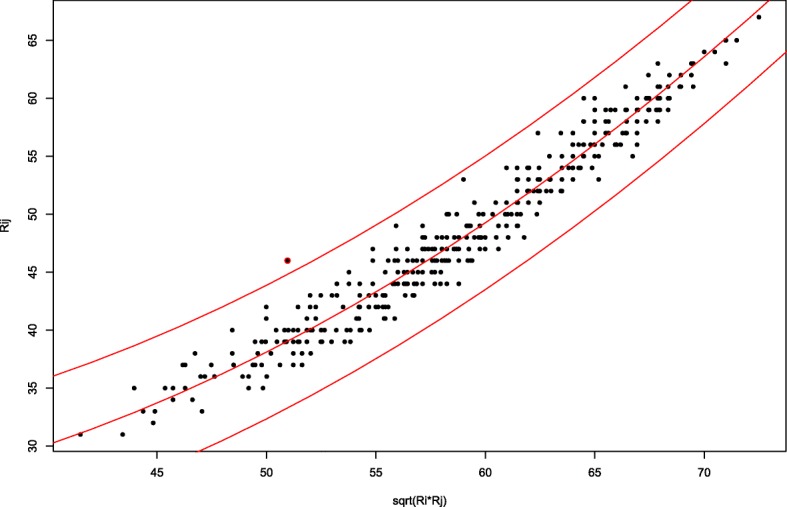
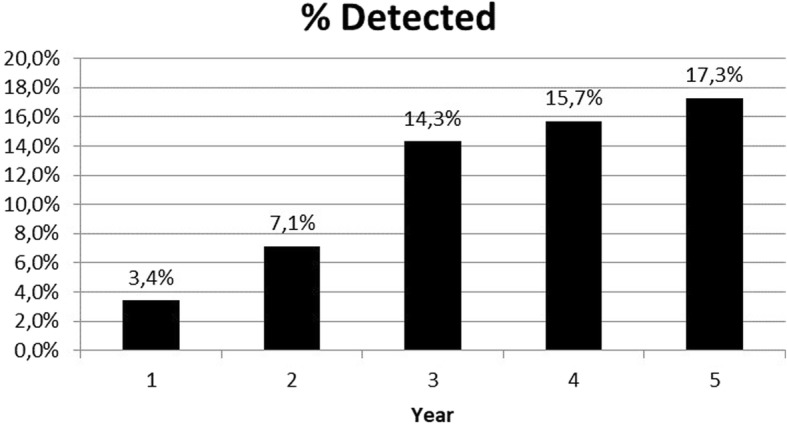
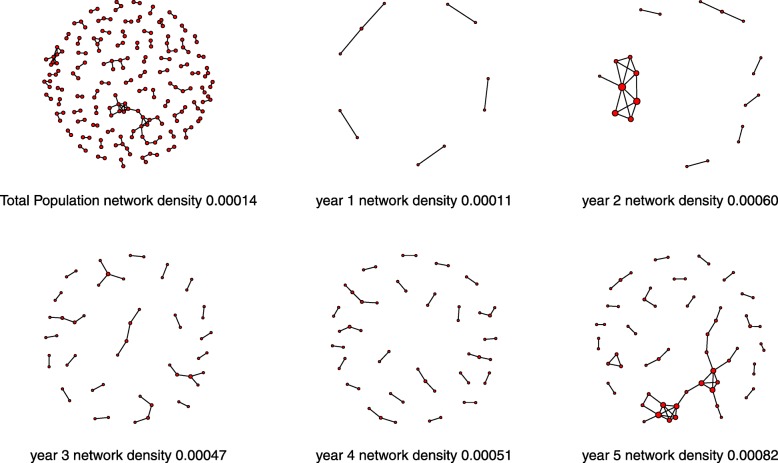
BACKGROUND: Most studies on academic cheating rely on self-reported questionnaires and focus on the individual, overlooking cheating as a group activity. The aim of this study is to estimate the true prevalence of cheating/anomalies among medical students using a statistical index developed for this purpose, and to explore the existence of social networks between anomalies in students' results. METHODS: Angoff's A index was applied to a sample of 30 written examinations, with a total of 1487 students and 7403 examinations taken, from the 2014/2015 academic year of the Faculty of Medicine of the University of Porto to detect anomaly pairs. All analyses are within the same academic year and not across years. Through simulations, the sensitivity and specificity of the statistical method was determined, and the true prevalence of anomalies/cheating was estimated. Networks of anomaly pairs were created to search for patterns and to calculate their density. RESULTS: The percentage of students who cheated at least once increased with the year of medical school, being lowest in the first year (3.4%) and highest in the fifth (17.3%). The year of medical school was associated with anomalies (p < 0.05). The network's density was also lowest in the first year (1.12E-04) and highest in the fifth (8.20E-04). The true prevalence of anomalies was estimated to be 1.85% (95%CI: 1.07-3.20%). CONCLUSIONS: These findings suggest that some students are involved in social networks of cheating, which grow over time, resulting in an increase of anomalies/cheating in later academic years.
Overview
The claims and statistics of this paper haven’t been checked yet.
Run the check — free, no account needed. It reads the open-access text and checks the sources it cites.
Integrity signals
Registry
Cites
Statistics
Figures
Verification
Claims the paper makes
The claims and statistics of this paper haven’t been checked yet.
Run the check — free, no account needed. It reads the open-access text and checks the sources it cites.
Claims other papers make about this one
Each is checked against this paper’s own text: does it say what the citing paper says it does?
The source backs part of the claim, not all of it — or backs it for a different population, condition or comparison.
In the citing paper
“In the context of academic integrity, the existence of online networks dedicated to facilitating academic malpractice is well documented (Monteiro et al., 2018; Parks et al., 2018), so a vulnerability could be shared and widely exploited in a matter of days.”
From Generative AI detection in higher education assessments (2025) · cites this paper as Monteiro et al., 2018
Experimental — accuracy not yet measured
Self-check
Percentages, sums and reported differences re-computed from the paper’s own numbers.
The self-check needs the paper’s full text.
Citations
Cites
ESTIMATING PREVALENCE FROM THE RESULTS OF A SCREENING TEST
ROGAN, W. J., & GLADEN, B. (1978) · American Journal of Epidemiology · doi:10.1093/oxfordjournals.aje.a112510 · Cited by 1,001
Relationship Between Burnout and Professional Conduct and Attitudes Among US Medical Students
Dyrbye, L. N., Massie, F. S., Eacker, A., Harper, W., Power, D., Durning, S. J., Thomas, M. R., Moutier, C., Satele, D., Sloan, J., et al. (2010) · JAMA · doi:10.1001/jama.2010.1318 · Cited by 896
Research works printed but not linked: 29
- McPherson M, Smith-Lovin L, Cook JM. Birds of a feather: Homophily in social networks. Annu Rev Sociol. 2001;27(1):415–44. · DOI · Paper page
- Isba R, Woolf K, Hanneman R. Social network analysis in medical education. Med Educ. 2017;51(1):81–8. · DOI
- Prideaux D. Social network analysis in medical education: a methodology in search of a theory. Med Educ. 2017;51(1):9–10. · DOI
- Woolf K, et al. The hidden medical school: a longitudinal study of how social networks form, and how they relate to academic performance. Medical teacher. 2012;34(7):577–86. · DOI
- Đogaš V, et al. Who would students ask for help in academic cheating? Cross-sectional study of medical students in Croatia. BMC medical education. 2014;14(1):1048. · DOI
- Đogaš V, et al. No difference in the intention to engage others in academic transgression among medical students from neighboring countries: a cross-national study on medical students from Bosnia and Herzegovina, Croatia, and Macedonia. Croatian Medical Journal. 2016;57(4):381–91. · DOI
- Sierles F, Hendrickx I. Cheating in medical school. Acad Med. 1980;55(2):124–5. · DOI
- Dans PE. Self-reported cheating by students at one medical school. Acad Med. 1996;71(1):S70–2. · DOI
- Baldwin D Jr, et al. Cheating in medical school: a survey of second-year students at 31 schools. Acad Med. 1996;71(3):267–73. · DOI
- Kusnoor AV, Falik R. Cheating in medical school: the unacknowledged ailment. South Med J. 2013;106(8):479–83. · DOI
- Rennie SC, Crosby JR. Are “tomorrow's doctors” honest? Questionnaire study exploring medical students' attitudes and reported behaviour on academic misconduct. BMJ. 2001;322(7281):274–5. · DOI
- Genereux RL, McLeod BA. Circumstances surrounding cheating: a questionnaire study of college students. Res High Educ. 1995;36(6):687–704. · DOI
- Hrabak M, et al. Academic misconduct among medical students in a post-communist country. Med Educ. 2004;38(3):276–85. · DOI
- Hafeez K, et al. Academic misconduct among students in medical colleges of Karachi, Pakistan. Pakistan journal of medical sciences. 2013;29(3):699. · DOI
- Sivagnanam G, et al. Medical students and misconduct-a gender-wise comparison. The Meducator. 2002;2:18–22.
- Franco RS, et al. To participate or not participate in unprofessional behavior–Is that the question? Medical Teacher; 2016. p. 1–8.
- Ryan G, et al. Undergraduate and postgraduate pharmacy students' perceptions of plagiarism and academic honesty. Am J Pharm Educ. 2009;73(6):105. · DOI
- Rabi SM, et al. Characteristics, prevalence, attitudes, and perceptions of academic dishonesty among pharmacy students. Am J Pharm Educ. 2006;70(4):A1. · DOI
- Harding TS. On the Frequency and Causes of Academic Dishonesty Among Engineering Students. In: In Proceedings of the 2001 ASEE Annual Conference & Exposition. New Mexico: Albuquerque; 2001.
- Austin Z, et al. Influence of attitudes toward curriculum on dishonest academic behavior. Am J Pharm Educ. 2006;70(3):C1. · DOI
- Angoff WH. The development of statistical indices for detecting cheaters. J Am Stat Assoc. 1974;69(345):44–9. · DOI
- McManus I, Lissauer T, Williams S. Detecting cheating in written medical examinations by statistical analysis of similarity of answers: pilot study. BMJ. 2005;330(7499):1064–6. · DOI
- Wollack JA. Comparison of answer copying indices with real data. J Educ Meas. 2003;40(3):189–205. · DOI
- Zopluoglu C, Davenport EC. The empirical power and type I error rates of the GBT and ω indices in detecting answer copying on multiple-choice tests. Educ Psychol Meas. 2012;72(6):975–1000. · DOI
- Šidák Z. Rectangular confidence regions for the means of multivariate normal distributions. J Am Stat Assoc. 1967;62(318):626–33.
- Speybroeck N, et al. Misclassification errors in prevalence estimation: Bayesian handling with care. International journal of public health. 2013;58(5):791. · DOI
- Butts CT. Network: a package for managing relational data in R. J Stat Softw. 2008;24(2):1–36. · DOI
- Teixeira, A., Integridade Académica Em Portugal, Relatório síntese global do estudo, 22 de maio de 2015, in OBEGEF & Universidade do Porto. 2015.
- Wesolowsky GO. Detecting excessive similarity in answers on multiple choice exams. J Appl Stat. 2000;27(7):909–21. · DOI
Cited by
Sorted by citations
Generative AI detection in higher education assessments
Ardito, C. G. (2025) · New Directions for Teaching and Learning · doi:10.1002/tl.20624 · Cited by 86
Metadata
- Authors
- Monteiro, J., Silva-Pereira, F., & Severo, M.
- Affiliations
- Universidade do Porto (PT)
- Venue
- BMC Medical Education
- Published
- 2018-08-09
- Volume
- 18
- Issue
- 1
- Pages
- 193-193
- ISSN
- 1472-6920 (ISSN-L)
- PMC
- PMC6085665
- OpenAlex
- W2887554296
- Cited by
- 20
- References
- 2
- Citations by year
- 2026: 1 · 2025: 6 · 2024: 1 · 2023: 5 · 2022: 3 · 2021: 2 · 2020: 2
- FWCI
- 1.99
- Type
- journal article
- Language
- en
- Open access
- gold
- doi.org
- Licence
- Locations
- BMC Medical Education (publishedVersion, cc-by)
- Europe PMC (PubMed Central) (publishedVersion, cc-by)
- PubMed Central (publishedVersion, cc-by)
- PubMed (publishedVersion)
- DOAJ (DOAJ: Directory of Open Access Journals) (submittedVersion, cc-by-sa)
- Portuguese National Funding Agency for Science, Research and Technology (RCAAP Project by FCT) (submittedVersion, cc-by)
- Topics
- Social Sciences › Education › Academic integrity and plagiarism
- Physical Sciences › Mathematics › Statistics and Probability › Benford’s Law and Fraud Detection
- Social Sciences › Education › Innovations in Medical Education
- Keywords
- academic dishonesty, medical students, social networks, anomaly detection, written examinations, prevalence estimation, network density, year of medical school, academic integrity
- MeSH terms
- Educational Measurement, Humans, Deception, Surveys and Questionnaires, Schools, Medical, Social Support, Students, Medical, Time Factors, Self Report
About these checks
Registry, retraction, Cites and statistics results are computed, not judged, with one exception: a printed reference that no index lists is read once by a model before it counts as a citation error. Claims are extracted by a model and kept only when their quote appears verbatim in the text; each cited source is then checked, with a model’s help, for whether it says what the claim relies on. Those verdicts can be wrong — read the claim’s quote and the cited source before relying on one.
Statistics and arithmetic are recomputed, not judged.
Confidence bands are shown only for fields calibrated on our annotated test set. None is calibrated yet, so no band is shown.
What counts as a claim ›How we measure confidence ›How we check this ›
Are you an author, or do you see a problem with this page? Request a review
How to cite
Cite CoChat for the checks on this page, and the paper for its own findings.
- This page
- CoChat. (2026). Citation check: Investigating the existence of social networks in cheating behaviors in medical students. https://app.cochat.ai/papers/10.1186/s12909-018-1299-7
- The paper
- Monteiro, J., Silva-Pereira, F., & Severo, M. (2018). Investigating the existence of social networks in cheating behaviors in medical students. BMC Medical Education. https://doi.org/10.1186/s12909-018-1299-7
