

Determining the feasibility and effectiveness of brief online mindfulness training for rural medical students: a pilot study
Open accessPublished version of a preprint
The DOI matches its Crossref record; 50 of the 50 references it cites were found in a registry or an index.
Abstract
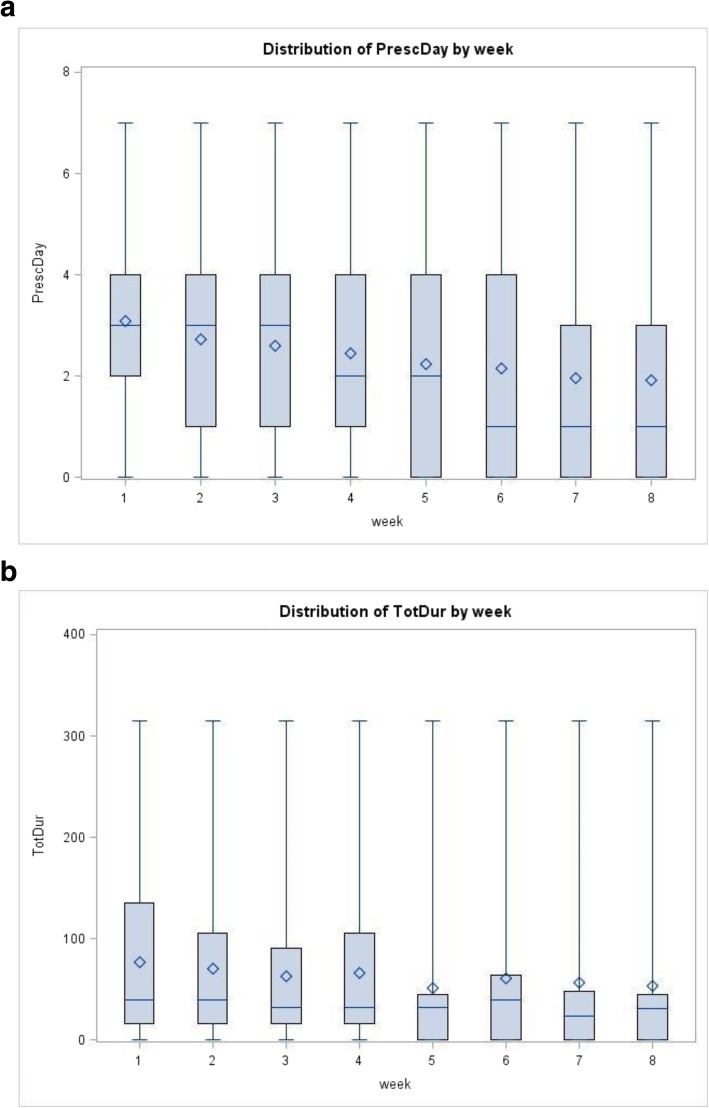
Background: We sought to determine the feasibility and effectiveness of a mindfulness training program, delivered online to medical students at a Rural Clinical School. Methods: An 8-week online training program was delivered to penultimate-year medical students at an Australian Rural Clinical School during 2016. Using a mixed methods approach, we measured the frequency and duration of participants’ mindfulness meditation practice, and assessed changes in their perceived stress, self-compassion and compassion levels, as well as personal and professional attitudes and behaviours. Results: Forty-seven participants were recruited to the study. 50% of participants were practising mindfulness meditation at least weekly by the end of the 8-week program, and 32% reported practising at least weekly 4 months following completion of the intervention. There was a statistically significant reduction in participants’ perceived stress levels and a significant increase in self-compassion at 4-month follow-up. Participants reported insights about the personal and professional impact of mindfulness meditation training as well as barriers to practice. Conclusions: The results provide preliminary evidence that online training in mindfulness meditation can be associated with reduced stress and increased self-compassion in rural medical students. More rigorous research is required to establish concrete measures of feasibility of a mindfulness meditation program.
Overview
The claims and statistics of this paper haven’t been checked yet.
Free: it reads the open-access text and checks the first 5 claims that cite a source we can check. Create a free account to check every claim.
Integrity signals
Registry
Cites
Statistics
Figures
Verification
Claims the paper makes
The claims and statistics of this paper haven’t been checked yet.
Free: it reads the open-access text and checks the first 5 claims that cite a source we can check. Create a free account to check every claim.
Claims other papers make about this one
Each is checked against this paper’s own text: does it say what the citing paper says it does?
The cited source doesn’t support the claim as written.
In the citing paper
“Program use was not reported in Moore et al. [1].”
From Effectiveness of online mindfulness interventions on medical students’ mental health: a systematic review (2021) · cites this paper as [1]
Checked by a reasoning model — may be wrong.
Experimental — accuracy not yet measuredThe source backs part of the claim, not all of it — or backs it for a different population, condition or comparison.
In the citing paper
“Participants who experienced more stress at baseline had a more substantial decrease in stress at the four-month follow-up (p=0.0005).”
From Effectiveness of online mindfulness interventions on medical students’ mental health: a systematic review (2021) · cites this paper as [1]
Experimental — accuracy not yet measuredThe source backs part of the claim, not all of it — or backs it for a different population, condition or comparison.
In the citing paper
“Additionally, participants’ SCS scores had significantly increased at the eight-week mark as well as at the four-month follow-up (p=0.05).”
From Effectiveness of online mindfulness interventions on medical students’ mental health: a systematic review (2021) · cites this paper as [1]
Experimental — accuracy not yet measuredThe source backs part of the claim, not all of it — or backs it for a different population, condition or comparison.
In the citing paper
“Those who reported lower self-compassion at baseline experienced an increase in self-compassion after four months (0.0062) [1].”
From Effectiveness of online mindfulness interventions on medical students’ mental health: a systematic review (2021) · cites this paper as [1]
Experimental — accuracy not yet measuredThe source backs part of the claim, not all of it — or backs it for a different population, condition or comparison.
In the citing paper
“The inclusion of face-to-face time with session facilitators and the longer program time were driving factors in increasing participant engagement [1].”
From Effectiveness of online mindfulness interventions on medical students’ mental health: a systematic review (2021) · cites this paper as [1]
Experimental — accuracy not yet measured
15 more claims about this paper
Create a free account to see every claim other papers make about this one.
Self-check
Percentages, sums and reported differences re-computed from the paper’s own numbers.
The self-check needs the paper’s full text.
Citations
Cites
A Global Measure of Perceived Stress
Cohen, S., Kamarck, T., & Mermelstein, R. (1983) · Journal of Health and Social Behavior · doi:10.2307/2136404 · Cited by 32,807
Convergent and discriminant validation by the multitrait-multimethod matrix.
Campbell, D. T., & Fiske, D. W. (1959) · Psychological Bulletin · doi:10.1037/h0046016 · Cited by 17,116
Mindfulness-based interventions in context: Past, present, and future
Kabat-Zinn, J. (2003) · Clinical Psychology: Science and Practice · doi:10.1093/clipsy.bpg016 · Cited by 8,615
Mindfulness-based interventions in context: Past, present, and future.
Kabat-Zinn, J. (2003) · Clinical Psychology: Science and Practice · doi:10.1093/clipsy/bpg016 · Cited by 8,612
Self-Compassion: An Alternative Conceptualization of a Healthy Attitude Toward Oneself
NEFF, K. (2003) · Self and Identity · doi:10.1080/15298860309032 · Cited by 5,440
Dyrbye, L. N., Thomas, M. R., & Shanafelt, T. D. (2006) · Academic Medicine · doi:10.1097/00001888-200604000-00009 · Cited by 2,909
A pilot study and randomized controlled trial of the mindful self-compassion program
Neff, K. D., & Germer, C. K. (2013) · Journal of Clinical Psychology · doi:10.1002/jclp.21923 · Cited by 2,253
Carmody, J., & Baer, R. A. (2008) · Journal of Behavioral Medicine · doi:10.1007/s10865-007-9130-7 · Cited by 1,823
Effects of mindfulness-based stress reduction on medical and premedical students
Shapiro, S. L., Schwartz, G. E., & Bonner, G. (1998) · Journal of Behavioral Medicine · doi:10.1023/a:1018700829825 · Cited by 1,493
Clinical psychology: Science and practice.
Kazdin, A. E. (1994) · Clinical Psychology: Science and Practice · doi:10.1111/j.1468-2850.1994.tb00001.x · Cited by 1,357
Singer, T., & Klimecki, O. M. (2014) · Current Biology · doi:10.1016/j.cub.2014.06.054 · Cited by 1,254
Rates of medication errors among depressed and burnt out residents: prospective cohort study
Fahrenkopf, A. M., Sectish, T. C., Barger, L. K., Sharek, P. J., Lewin, D., Chiang, V. W., Edwards, S., Wiedermann, B. L., & Landrigan, C. P. (2008) · BMJ · doi:10.1136/bmj.39469.763218.be · Cited by 1,175
Medical Student Distress: Causes, Consequences, and Proposed Solutions
Dyrbye, L. N., Thomas, M. R., & Shanafelt, T. D. (2005) · Mayo Clinic Proceedings · doi:10.4065/80.12.1613 · Cited by 1,137
Shapiro, S. L., Brown, K. W., & Biegel, G. M. (2007) · Training and Education in Professional Psychology · doi:10.1037/1931-3918.1.2.105 · Cited by 1,134
Generating best evidence from qualitative research: the role of data analysis
Green, J., Willis, K., Hughes, E., Small, R., Welch, N., Gibbs, L., & Daly, J. (2007) · Australian and New Zealand Journal of Public Health · doi:10.1111/j.1753-6405.2007.00141.x · Cited by 859
Experiential avoidance as a functional dimensional approach to psychopathology: An empirical review
Chawla, N., & Ostafin, B. (2007) · Journal of Clinical Psychology · doi:10.1002/jclp.20400 · Cited by 805
Self‐Compassion, Stress, and Coping
Allen, A. B., & Leary, M. R. (2010) · Social and Personality Psychology Compass · doi:10.1111/j.1751-9004.2009.00246.x · Cited by 757
Burnout in medical students: A systematic review
IsHak, W., Nikravesh, R., Lederer, S., Perry, R., Ogunyemi, D., & Bernstein, C. (2013) · The Clinical Teacher · doi:10.1111/tct.12014 · Cited by 715
Carmody, J., & Baer, R. A. (2009) · Journal of Clinical Psychology · doi:10.1002/jclp.20555 · Cited by 568
Mindfulness-Based Stress Reduction Lowers Psychological Distress In Medical Students
Rosenzweig, S., Reibel, D. K., Greeson, J. M., Brainard, G. C., & Hojat, M. (2003) · Teaching and Learning in Medicine · doi:10.1207/s15328015tlm1502_03 · Cited by 507
Medical student depression, anxiety and distress outside North America: a systematic review
Hope, V., & Henderson, M. (2014) · Medical Education · doi:10.1111/medu.12512 · Cited by 477
Stress Management in Medical Education: A Review of the Literature
Shapiro, S. L., Shapiro, D. E., & Schwartz, G. E. R. (2000) · Academic Medicine · doi:10.1097/00001888-200007000-00023 · Cited by 412
de Vibe, M., Solhaug, I., Tyssen, R., Friborg, O., Rosenvinge, J. H., Sørlie, T., & Bjørndal, A. (2013) · BMC Medical Education · doi:10.1186/1472-6920-13-107 · Cited by 398
Burnout and Alcohol Abuse/Dependence Among U.S. Medical Students
Jackson, E. R., Shanafelt, T. D., Hasan, O., Satele, D. V., & Dyrbye, L. N. (2016) · Academic Medicine · doi:10.1097/acm.0000000000001138 · Cited by 341
Warnecke, E., Quinn, S., Ogden, K., Towle, N., & Nelson, M. R. (2011) · Medical Education · doi:10.1111/j.1365-2923.2010.03877.x · Cited by 307
Hassed, C., de Lisle, S., Sullivan, G., & Pier, C. (2009) · Advances in Health Sciences Education · doi:10.1007/s10459-008-9125-3 · Cited by 296
Self-citationBoellinghaus, I., Jones, F. W., & Hutton, J. (2014) · Mindfulness · doi:10.1007/s12671-012-0158-6 · Cited by 250
Depression and stress amongst undergraduate medical students
Ludwig, A. B., Burton, W., Weingarten, J., Milan, F., Myers, D. C., & Kligler, B. (2015) · BMC Medical Education · doi:10.1186/s12909-015-0425-z · Cited by 243
Medical Students’ Experience of and Reaction to Stress: The Role of Depression and Anxiety
Saravanan, C., & Wilks, R. (2014) · The Scientific World Journal · doi:10.1155/2014/737382 · Cited by 237
A Systematic Review of Stress-Management Programs for Medical Students
Shiralkar, M. T., Harris, T. B., Eddins-Folensbee, F. F., & Coverdale, J. H. (2013) · Academic Psychiatry · doi:10.1176/appi.ap.12010003 · Cited by 223
Chronic Stress and Suicidal Thinking Among Medical Students
Rosiek, A., Rosiek-Kryszewska, A., Leksowski, Ł., & Leksowski, K. (2016) · International Journal of Environmental Research and Public Health · doi:10.3390/ijerph13020212 · Cited by 186
Journal of Clinical Psychology in Medical Settings
(2013) · Journal of Clinical Psychology in Medical Settings · doi:10.1007/10880.1573-3572 · Cited by 171
Phang, C. K., Mukhtar, F., Ibrahim, N., Keng, S., & Sidik, S. M. (2015) · Advances in Health Sciences Education · doi:10.1007/s10459-015-9591-3 · Cited by 168
Embodied health: the effects of a mind–body course for medical students
Bond, A. R., Mason, H. F., Lemaster, C. M., Shaw, S. E., Mullin, C. S., Holick, E. A., & Saper, R. B. (2013) · Medical Education Online · doi:10.3402/meo.v18i0.20699 · Cited by 152
Greeson, J. M., Toohey, M. J., & Pearce, M. (2015) · EXPLORE · doi:10.1016/j.explore.2015.02.003 · Cited by 133
Moore, P. (2008) · Journal of Clinical Psychology in Medical Settings · doi:10.1007/s10880-008-9134-7 · Cited by 119
Cognitive biases and time stress in team decision making
Lehner, P., Seyed-Solorforough, M.-M., O'Connor, M. F., Sak, S., & Mullin, T. (1997) · IEEE Transactions on Systems, Man, and Cybernetics - Part A: Systems and Humans · doi:10.1109/3468.618269 · Cited by 96 · cited 1×
“3 (11), increased errors (12, 13), reduced attention and concentration (13), cynicism and loss of compassion (14) and impaired interpersonal skills (15).”
BackgroundGockel, A., Burton, D., James, S., & Bryer, E. (2013) · Mindfulness · doi:10.1007/s12671-012-0134-1 · Cited by 89
Mind–Body Skills Training to Improve Distress Tolerance in Medical Students: A Pilot Study
Kraemer, K. M., Luberto, C. M., O'Bryan, E. M., Mysinger, E., & Cotton, S. (2016) · Teaching and Learning in Medicine · doi:10.1080/10401334.2016.1146605 · Cited by 83
Phang, C. K., Chiang, K. C., Ng, A. L. O., Keng, S., & Oei, T. P. S. (2015) · Mindfulness · doi:10.1007/s12671-015-0399-2 · Cited by 61
Brief Online Mindfulness Training: Immediate Impact
Kemper, K. J. (2017) · Journal of Evidence-Based Complementary & Alternative Medicine · doi:10.1177/2156587216639199 · Cited by 60
Impaired Student Counselors: Ethical and Legal Considerations for the Family
Enochs, W. K., & Etzbach, C. A. (2004) · The Family Journal · doi:10.1177/1066480704267240 · Cited by 58
Solhaug, I., Eriksen, T. E., de Vibe, M., Haavind, H., Friborg, O., Sørlie, T., & Rosenvinge, J. H. (2016) · Mindfulness · doi:10.1007/s12671-016-0521-0 · Cited by 54
Soares, D. S., & Chan, L. W. (2016) · BMC Medical Education · doi:10.1186/s12909-016-0693-2 · Cited by 51
Malpass, A., Binnie, K., & Robson, L. (2019) · Education Research International · doi:10.1155/2019/4021729 · Cited by 43 · cited 1×
“However, confirming previous qualitative evaluations of mindfulness training programs, participants were able to write about valuable positive impacts including increased awareness and presence [18, 20, 45], more compassion to self and others [18, 45, 46], and improved emotional regulation and stress management [16–18…”
BackgroundWalter, G., Soh, N. L.-W., Norgren Jaconelli, S., Lampe, L., Malhi, G. S., & Hunt, G. (2013) · Postgraduate Medical Journal · doi:10.1136/postgradmedj-2012-131343 · Cited by 40
COMPASSION AND SELF-COMPASSION IN MEDICINE
Mills, J., & Chapman, M. (2016) · Australasian Medical Journal · doi:10.21767/amj.2016.2583 · Cited by 39
The significance of Good medical practice: a code of conduct for doctors in Australia
Gough, I. R. (2014) · The Medical Journal of Australia · doi:10.5694/mja13.11334 · Cited by 30
The Health-Related Quality of Life of Junior Doctors
Tong, S. C., Tin, A. S., Tan, D. M., & Lim, J. F. Y. (2012) · Annals of the Academy of Medicine Singapore · doi:10.47102/annals-acadmedsg.v41n10p444 · Cited by 23 · cited 1×
“Medical students experience high levels of stress during their training [1–4] and this continues in their junior doctor years [5, 6], potentially resulting in depression, anxiety [7], burnout [8], alcohol abuse [9], and suicidal thinking [10].”
BackgroundEmotional Distress Affects Attention and Concentration: The Difference Between Mountains and Valleys
Meyers, J. E., Grills, C. E., Zellinger, M. M., & Miller, R. M. (2013) · Applied Neuropsychology Adult · doi:10.1080/09084282.2012.721148 · Cited by 16
Cited by
Perceived stress and anxiety among medical students at Helwan University: A cross-sectional study
Ebrahim, O. S., Sayed, H. A. E., Rabei, S., & Hegazy, N. (2024) · Journal of Public Health Research · doi:10.1177/22799036241227891 · Cited by 84
Yogeswaran, V., & El Morr, C. (2021) · BMC Public Health · doi:10.1186/s12889-021-12341-z · Cited by 62
Sperling, E. L., Hulett, J. M., Sherwin, L. B., Thompson, S., & Bettencourt, B. A. (2023) · PLoS ONE · doi:10.1371/journal.pone.0286387 · Cited by 79
“Several interventions were delivered by distance learning, including through DVD [44, 70], CD [45], mobile app [46] and online content [71].”
BackgroundMethodThe effects of mindfulness-based interventions in medical students: a systematic review
Kaisti, I., Kulmala, P., Hintsanen, M., Hurtig, T. M., Repo, S., Paunio, T., Miettunen, J., Halt, A., & Jääskeläinen, E. (2023) · Advances in Health Sciences Education · doi:10.1007/s10459-023-10231-0 · Cited by 73
“Some students found it difficult to sit still (Aherne et al., 2016), and it may be difficult to relax and sit still especially when stressed (Moore et al., 2020).”
BackgroundMethodInfluentialMehta, K. K., Salam, S., Hake, A., Jennings, R. B., Rahman, A. P., & Post, S. G. (2024) · BMC Medical Education · doi:10.1186/s12909-024-05270-z · Cited by 55
Metadata
- Authors
- Moore, S., Barbour, R., Ngo, H., Sinclair, C., Chambers, R., Auret, K., Hassed, C., & Playford, D.
- Affiliations
- The University of Western Australia (AU)
- UNSW Sydney (AU)
- Monash University (AU)
- Corresponding author
- Moore, Sarah
- ORCID
- Venue
- BMC Medical Education
- Published
- 2020-04-06
- Volume
- 20
- Issue
- 1
- Pages
- 104-104
- ISSN
- 1472-6920 (ISSN-L)
- PMC
- PMC7137339
- OpenAlex
- W3014507484
- Cited by
- 65
- References
- 49
- Citations by year
- 2026: 5 · 2025: 10 · 2024: 11 · 2023: 12 · 2022: 12 · 2021: 13 · 2020: 2
- FWCI
- 3.90
- Type
- journal article
- Language
- en
- Open access
- gold
- doi.org
- Licence
- cc-by
- creativecommons.org/licenses/by/4.0/ (tdm)
- creativecommons.org/licenses/by/4.0/ (vor)
- Locations
- BMC Medical Education (publishedVersion, cc-by)
- Research Square (acceptedVersion, cc-by)
- PubMed Central (publishedVersion, cc-by)
- PubMed (publishedVersion)
- UNSWorks (UNSW Sydney) (submittedVersion, cc-by-nc-nd)
- DOAJ (DOAJ: Directory of Open Access Journals) (submittedVersion, cc-by-sa)
- UWA Profiles and Research Repository (UWA) (submittedVersion, cc-by)
- Funders
- Val Lishman Health Research Foundation (NA)
- Topics
- Social Sciences › Psychology › Clinical Psychology › Mindfulness and Compassion Interventions
- Health Sciences › Health Professions › General Health Professions › Healthcare professionals’ stress and burnout
- Social Sciences › Education › Innovations in Medical Education
- Keywords
- mindfulness meditation, medical students, rural medical education, perceived stress, self-compassion, compassion, feasibility, barriers to practice
- MeSH terms
- Occupational Stress, Adult, Australia, Curriculum, Feasibility Studies, Female, Humans, Male, Pilot Projects, Rural Population, Stress, Psychological, Students, Medical, Rural Health Services, Mindfulness
About these checks
Registry, retraction, Cites and statistics results are computed, not judged, with one exception: a printed reference that no index lists is read once by a model before it counts as a citation error. Claims are extracted by a model and kept only when their quote appears verbatim in the text; each cited source is then checked, with a model’s help, for whether it says what the claim relies on. Those verdicts can be wrong — read the claim’s quote and the cited source before relying on one.
Statistics and arithmetic are recomputed, not judged.
Confidence bands are shown only for fields calibrated on our annotated test set. None is calibrated yet, so no band is shown.
What counts as a claim ›How we measure confidence ›How we check this ›
Are you an author, or do you see a problem with this page? Request a review
Data sources
Bibliographic data: Semantic Scholar, OpenAlex, Crossref.
Contains information from the Semantic Scholar Academic Graph Datasets, made available under the ODC Attribution License (ODC-BY 1.0).
Semantic Scholar’s data is described in: Kinney, R., et al. (2023). The Semantic Scholar Open Data Platform. arXiv:2301.10140.
