

Effects of the COVID-19 pandemic on medical students: a multicenter quantitative study
Open accessPublished version of a preprint
The DOI matches its Crossref record; 14 of the 14 references it cites were found in a registry or an index.
Abstract
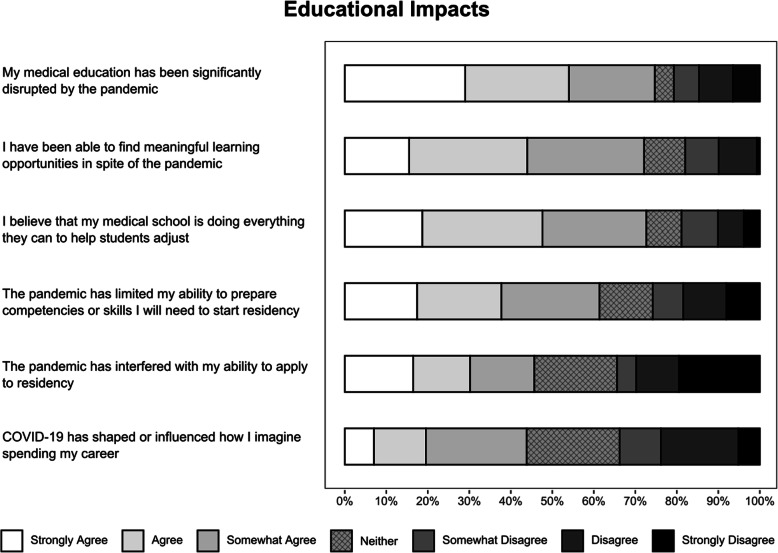
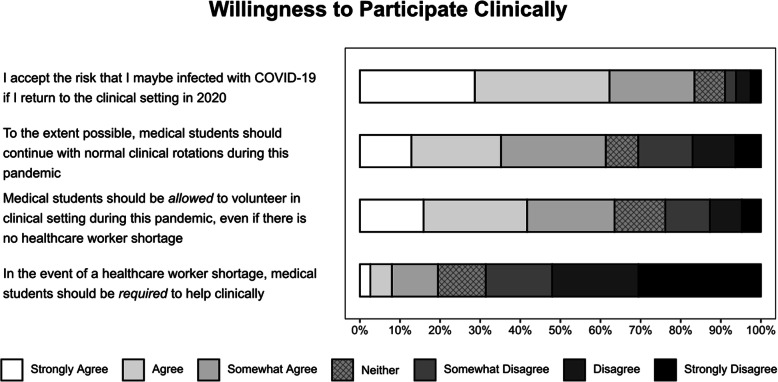
Background: The COVID-19 pandemic disrupted the United States (US) medical education system with the necessary, yet unprecedented Association of American Medical Colleges (AAMC) national recommendation to pause all student clinical rotations with in-person patient care. This study is a quantitative analysis investigating the educational and psychological effects of the pandemic on US medical students and their reactions to the AAMC recommendation in order to inform medical education policy. Methods: The authors sent a cross-sectional survey via email to medical students in their clinical training years at six medical schools during the initial peak phase of the COVID-19 pandemic. Survey questions aimed to evaluate students’ perceptions of COVID-19’s impact on medical education; ethical obligations during a pandemic; infection risk; anxiety and burnout; willingness and needed preparations to return to clinical rotations. Results: Seven hundred forty-one (29.5%) students responded. Nearly all students (93.7%) were not involved in clinical rotations with in-person patient contact at the time the study was conducted. Reactions to being removed were mixed, with 75.8% feeling this was appropriate, 34.7% guilty, 33.5% disappointed, and 27.0% relieved. Most students (74.7%) agreed the pandemic had significantly disrupted their medical education, and believed they should continue with normal clinical rotations during this pandemic (61.3%). When asked if they would accept the risk of infection with COVID-19 if they returned to the clinical setting, 83.4% agreed. Students reported the pandemic had moderate effects on their stress and anxiety levels with 84.1% of respondents feeling at least somewhat anxious. Adequate personal protective equipment (PPE) (53.5%) was the most important factor to feel safe returning to clinical rotations, followed by adequate testing for infection (19.3%) and antibody testing (16.2%). Conclusions: The COVID-19 pandemic disrupted the education of US medical students in their clinical training years. The majority of students wanted to return to clinical rotations and were willing to accept the risk of COVID-19 infection. Students were most concerned with having enough PPE if allowed to return to clinical activities.
Overview
The claims and statistics of this paper haven’t been checked yet.
Free: it reads the open-access text and checks the first 5 claims that cite a source we can check. Create a free account to check every claim.
Integrity signals
Registry
Cites
Statistics
Figures
Verification
Claims the paper makes
The claims and statistics of this paper haven’t been checked yet.
Free: it reads the open-access text and checks the first 5 claims that cite a source we can check. Create a free account to check every claim.
Self-check
Percentages, sums and reported differences re-computed from the paper’s own numbers.
The self-check needs the paper’s full text.
Citations
Cites
The Association of American Medical Colleges
Zapffe, F. C. (1938) · Academic Medicine · doi:10.1097/00001888-193801000-00007 · Cited by 5,533
Dyrbye, L. N., Thomas, M. R., & Shanafelt, T. D. (2006) · Academic Medicine · doi:10.1097/00001888-200604000-00009 · Cited by 2,909
Sahu, P. (2020) · Cureus · doi:10.7759/cureus.7541 · Cited by 2,353
Al-Rabiaah, A., Temsah, M.-H., Al-Eyadhy, A. A., Hasan, G. M., Al-Zamil, F., Al-Subaie, S., Alsohime, F., Jamal, A., Alhaboob, A., Al-Saadi, B., et al. (2020) · Journal of Infection and Public Health · doi:10.1016/j.jiph.2020.01.005 · Cited by 531
Choi, B., Jegatheeswaran, L., Minocha, A., Alhilani, M., Nakhoul, M., & Mutengesa, E. (2020) · BMC Medical Education · doi:10.1186/s12909-020-02117-1 · Cited by 458
Rodriguez, R. M., Medak, A. J., Baumann, B. M., Lim, S., Chinnock, B., Frazier, R., & Cooper, R. J. (2020) · Academic Emergency Medicine · doi:10.1111/acem.14065 · Cited by 169
Self-citationPsychological responses to the SARS outbreak in healthcare students in Hong Kong
Wong, J. G. W. S., Cheung, E. P. T., Cheung, V., Cheung, C., Chan, M. T. Y., Chua, S. E., McAlonan, G. M., Tsang, K. W. T., & Ip, M. S. M. (2004) · Medical Teacher · doi:10.1080/01421590400006572 · Cited by 132
Fear of SARS thwarts medical education in Toronto
Clark, J. (2003) · BMJ · doi:10.1136/bmj.326.7393.784/c · Cited by 90
Senior Medical Students in the COVID‐19 Response: An Opportunity to Be Proactive
Stokes, D. C. (2020) · Academic Emergency Medicine · doi:10.1111/acem.13972 · Cited by 85
Impact of a spreading epidemic on medical students.
Loh, L., ALI, A. M., Ang, T.-H., & Chelliah, A. (2005) · Europe PMC (PubMed Central) · Cited by 56
Cited by
Items 101–200 of 283
Lees, J., Bearman, M., Risør, T., & Sweet, L. P. (2023) · Perspectives on Medical Education · doi:10.5334/pme.903 · Cited by 5
Halfmann, M., Wetzel, L., Castioni, N., Kiefer, F., Koenig, S., Schmieder, A., & Koopmann, A. (2023) · GMS journal for medical education · doi:10.3205/zma001603 · Cited by 13
Jayas, A., Shaull, L., Grbic, D., Andriole, D. A., & McOwen, K. S. (2023) · Academic Medicine · doi:10.1097/acm.0000000000005611 · Cited by 7
Mayers, T., Okamura, Y., Kanaji, M., Shimoda, T. M., Maki, N., & Maeno, T. (2024) · COVID · doi:10.3390/covid4090105 · Cited by 7
Esquivel, E. L., Angelis, P. D., Chae, J. K., Safdieh, J. E., Abramson, E. L., & Kang, Y. H. (2021) · Medical Education Online · doi:10.1080/10872981.2021.1996216 · Cited by 5
“, most institutions pulled students out of the clinical environment to ensure student and patient safety and safeguard scarce resources [14,20].”
BackgroundAchmad, B. F., Sutono, S., Setiyarini, S., Kusumawati, H. I., & Alim, S. (2021) · Open Access Macedonian Journal of Medical Sciences · doi:10.3889/oamjms.2021.7295 · Cited by 6
“This pandemic situation is seen as a valuable opportunity for improving clinical rotation program quality in the future, facilitating the competencies which have been determined essential, and providing valuable clinical experiences for the nursing and medical students [4].”
BackgroundOnline teaching, learning, and health outcomes: Impact on medical undergraduate students
Sawant, N., Vinchurkar, P., Kolwankar, S., Patil, T., Rathi, K., & Urkude, J. (2022) · Industrial Psychiatry Journal · doi:10.4103/ipj.ipj_52_22 · Cited by 6
“[15] Students perceived that some teachers still had difficulty in planning videoconferences, or using interactive methods through web services.”
InfluentialJin, J. W., Smith, K., Helminiak, A., John, V. P., & Wu, H. E. (2023) · The International Journal of Psychiatry in Medicine · doi:10.1177/00912174231152575 · Cited by 4
“Based on the current available data, the literature shows dramatic interruptions in clinical medical student education in various countries including the United States.22,23 These students expressed disruptions due to cancelled in-person clinical instruction, willingness to accept the risks of COVID-19 infection to re…”
BackgroundMethodInfluentialAltıntaş, L., & Şahiner, M. (2024) · Postgraduate Medicine · doi:10.1080/00325481.2024.2379235 · Cited by 4
“The impact of COVID-19 on medical education has been profound, affecting not only the delivery of education but also the mental health and well-being of medical students and postgraduates [3].”
Aljuaid, S. M., Alqahtani, R. A., Alqasem, S., Alsulaimani, Y. T., Alqahtani, S. A., & Alsalmi, S. K. (2021) · World Family Medicine Journal/Middle East Journal of Family Medicine · doi:10.5742/mewfm.2021.94096 · Cited by 7
Fadel, O. E., Goldberg, Z. N., Jain, A., Venkat, N., Upadhyaya, A., Mack, S. J., Kaminski, M. A., Papanagnou, D., Ziring, D. J., & Hayden, G. E. (2024) · Cureus · doi:10.7759/cureus.56912 · Cited by 6
“This may be attributed to an extension of the negative effects of the COVID-19 pandemic on medical student education, which is significant [14,15].”
BackgroundBlalock, A. E., & Balmer, D. F. (2024) · Advances in Health Sciences Education · doi:10.1007/s10459-024-10397-1 · Cited by 6
“While literature about the impact of the pandemic on medical students has been growing (Blalock et al., 2021; Ferrel & Ryan, 2020; Harries et al., 2021; Kim et al., 2020), what is missing are stories about the ebbs and flows of forming personal and professional ties, which are critical components…”
Post-COVID-19 manifestations among college students: shedding the light on young adults’ health
Alkhormani, A. A., Alghamdi, R. A., Damdam, Y. A., Almaghrabi, M. E., Alamri, F. F., Khan, M. A., & Hakami, A. Y. (2024) · BMC Public Health · doi:10.1186/s12889-024-20925-8 · Cited by 5
Anxiety, Uncertainty, and Resilience of Medical Students Worldwide during the COVID-19 Pandemic
Sarkar, M. A., & Ozair, A. (2021) · IntechOpen eBooks · doi:10.5772/intechopen.99226 · Cited by 5
“Lessons from the pandemic: How can we enhance surgical training in undergraduate education?"
Honey, J. R., & Mudge, H. R. (2022) · Annals of Medicine and Surgery · doi:10.1016/j.amsu.2022.103900 · Cited by 4
Guralwar, C., Kundawar, A., & Sharma, S. K. (2022) · International Journal of Community Medicine and Public Health · doi:10.18203/2394-6040.ijcmph20222213 · Cited by 2
The Effect of COVID-19 on United States Pediatric Emergency Departments and Its Impact on Trainees
Bailey, J. A., Nadeau, N. L., Jordan, K., Yerxa, H., & Lam, S. H. F. (2022) · Western Journal of Emergency Medicine · doi:10.5811/westjem.2022.7.57340 · Cited by 4
Straub, J., Franz, A., Holzhausen, Y., Schumann, M., & Peters, H. (2023) · BMC Medical Education · doi:10.1186/s12909-023-04784-2 · Cited by 6
Karami, F., Nasrabadi, A. N., Torabizadeh, C., Mazaheri, M., & Sayadi, L. (2024) · Health Expectations · doi:10.1111/hex.13998 · Cited by 6
“22,23 Quantitative designs do not provide a deep understanding of volunteers' experiences.”
BackgroundBanerjee, I., Robinson, J., Mohabeer, P., Kashyap, A., Shukla, A., & Sathian, B. (2021) · Nepal Journal of Epidemiology · doi:10.3126/nje.v11i2.36951 · Cited by 5
COVID-19 Awareness among Undergraduate Medical Students in Trinidad: A Cross-Sectional Study
Umakanthan, S., Ramlagan, A., Ramlal, C., Ramlal, P., Ramlochan, D., Ramlogan, A.-D., Ramnarace, P., Ramnarine, T., & Ramnath, A. (2022) · International Medical Education · doi:10.3390/ime1020006 · Cited by 4
“Hence, medical students form a vital link between the public and the medical sector in providing valuable and practical resources on COVID-19 [29].”
BackgroundDisease burden and vaccination priorities in Colombia
Quitián, L. M., Rodríguez‐Martínez, C. E., Sossa‐Briceño, M. P., & Cortés, J. A. (2022) · Vaccine · doi:10.1016/j.vaccine.2022.01.014 · Cited by 4
“Prolonging this unprecedented situation could lead to significant gaps in training at different levels in future professionals [26,27] and compromise the quality of health service provision in the future, generating a major public health problem.”
BackgroundEthical Considerations in Using Technology for Medical Education
Adamopoulos, I., Thapa, P. P., & Syrou, N. F. (2025) · IGI Global eBooks · doi:10.4018/979-8-3373-1519-5.ch009 · Cited by 5
Hong, W., Pallath, V., Adams, D., Lee, Y. K., Tan, K. M., & Foong, C. C. (2022) · Education in Medicine Journal · doi:10.21315/eimj2022.14.3.8 · Cited by 4
Alhatmi, S. M., Aldabali, S., & Alzubaidi, Z. A. (2022) · Medical Science · doi:10.54905/disssi/v26i130/ms574e2674 · Cited by 3
Analysis of Pre-clerkship Medical Students’ Perceptions and Performance During the COVID-19 Pandemic
Ayoubieh, H., Alkhalili, E., Niño, D. F., Coué, M., Herber-Valdez, C. R., & Pfarr, C. M. (2023) · Medical Science Educator · doi:10.1007/s40670-022-01723-6 · Cited by 3
“Other studies have examined students’ perceptions of the effects of the pandemic on the pre-clerkship curriculum, and similarly demonstrated satisfaction with the increased flexibility afforded by virtual instruction, along with dissatisfaction due to reduced opportunities to practice medical skills and participate in…”
BackgroundOnline Teaching Skills During the COVID-19 Pandemic and Beyond: One Curve We Do Not Want to Flatten.
Bailey, L., & Hillman, E. (2023) · PubMed Central · Cited by 7
A Framework to Support Medical Students’ Professional Development During Large-Scale Societal Events
Sullivan, C., Quaintance, J., Myers, T., Rogers, B. J., Gaddis, M. L., & Pirani, N. (2023) · Academic Psychiatry · doi:10.1007/s40596-023-01795-5 · Cited by 3
Simulación clínica online para estudiantes de ciencias de la salud durante la pandemia de COVID-19
Guínez-Molinos, S., Castillo, B., & Carrasco, P. E. (2023) · Educación Médica · doi:10.1016/j.edumed.2023.100843 · Cited by 6
Kartoğlu, Ü., Turan, S., Ergör, A., Aslan, D., Erişgen, G., Fındık, D., Yıldız, Ö. K., & Reeves, T. C. (2023) · Teaching and Learning in Medicine · doi:10.1080/10401334.2023.2226659 · Cited by 4
Lange, S., Soták, M., Hagberg, C. E., Bagunu, G., Vigmo, S., & Börgeson, E. (2023) · Biochemistry and Molecular Biology Education · doi:10.1002/bmb.21761 · Cited by 4
“34 We and others 27,35 speculate that limitations to the curriculum, academic delays and reduced scientific output will have a significant impact, with U.S. students likely feeling more “ left behind ” .”
BackgroundYesuf, K. A. (2023) · Health Technology · doi:10.21037/ht-22-14 · Cited by 3
A pilot clinical skills coaching program to reimagine remediation: a cohort study
Klig, J. E., Kettyle, W. M., Kosowsky, J. M., Phillips, W. R., Farrell, S., Hundert, E. M., Dalrymple, J. L., & Goldhamer, M. E. J. (2023) · MedEdPublish · doi:10.12688/mep.19621.1 · Cited by 3
Butaney, B., Hoover, E. B., Coplan, B. H., & Bernard, K. S. (2023) · Journal of American College Health · doi:10.1080/07448481.2023.2258411 · Cited by 3
Singla, R., Chatterjee, P., & Mithra, P. (2023) · Cureus · doi:10.7759/cureus.48259 · Cited by 3
Impact of COVID-19 Pandemic on the Occupation and Mental Health of Students: A Scoping Review
Talastas, C. R., & Ghanouni, P. (2023) · Occupational Therapy in Mental Health · doi:10.1080/0164212x.2023.2285319 · Cited by 5
Factors affecting the specialty choice among medical students of Saudi Arabia; an exploratory study
Nisar, S., Rehman, A., AbouTouk, M., Alsanosi, S., Ikram, N. M., & Rehman, A. (2024) · BMC Medical Education · doi:10.1186/s12909-024-06408-9 · Cited by 3
Anxiety Levels of Undergraduate and Clerkship Medical Students during the COVID-19 Pandemic
Nabila, A. A., Mahmuda, I. N. N., Sulistyani, & Herdaetha, A. (2021) · Ulum Islamiyyah · doi:10.33102/uij.vol33no3.364 · Cited by 4
“Student concerns related to the pandemic, paired with their desire to return to rotations despite the risks, suggest that medical students may take on emotional burdens as members of the patient care team even when not present in the clinical environment (Harries et al., 2020).”
BackgroundBusiness as (un)usual: A qualitative study of clerkship experiences during a health crisis
Noerholk, L. M., Bader-Larsen, K. S., Mørcke, A. M., Vamadevan, A., Andreasen, L. A., Svendsen, J. H., Jørsboe, H. B., & Tolsgaard, M. G. (2022) · Medical Education · doi:10.1111/medu.14787 · Cited by 3
Zarzecka-Francica, E., Gala, A., Gębczyński, K., Pihut, M. E., & Wyszyńska–Pawelec, G. (2022) · International Journal of Environmental Research and Public Health · doi:10.3390/ijerph192013129 · Cited by 4
Haugh, M., & O’Tuathaigh, C. M. P. (2022) · The Clinical Teacher · doi:10.1111/tct.13453 · Cited by 3
“1% of students agreed that they were able to find meaningful learning despite the pandemic.(6) With some suggesting that facilitation of research opportunities will remain challenging for the foreseeable future,(2) medical students and faculty have been working together to identify the options and creative solutions t…”
BackgroundPublic willingness to receive COVID-19 vaccine in Saudi Arabia
Alamri, A., Alshahrani, N. A. M., Bakita, A. A. A., Alqahtani, A. S., Alshahrani, J. H. A., & Alshahrani, M. S. (2021) · World Family Medicine Journal/Middle East Journal of Family Medicine · doi:10.5742/mewfm.2021.94092 · Cited by 5
Medical Educators’ Response to Changes in Medical Education due to COVID‐19
Lee, I. R., Jung, H., Lee, Y., Shin, J. I., & An, S. (2021) · Korean Medical Education Review · doi:10.17496/kmer.2021.23.3.168 · Cited by 3
Johora, F., Abbasy, A. A., Jeenia, F. T., Bhowmik, M. C., Moitra, P., Mahboob, S., & Ferdoush, J. (2021) · medRxiv · doi:10.1101/2021.05.11.21257042 · Cited by 3
“And similar views were expressed in a study conducted among medical students.([27])Crowded accomodation facility and lack of cleanliness in hostels of government medical colleges as well as more patient burden in hospital might be the crucial reasons of difference.”
BackgroundOne Year of COVID-19 Pandemic: A Cross Sectional Study on Teaching Oral and Maxillofacial SurgeryPreprint
Bock, A., Peters, F., Winnand, P., Kniha, K., Heitzer, M., Lemos, M., Hölzle, F., & Modabber, A. (2021) · Research Square · doi:10.21203/rs.3.rs-923100/v1 · Cited by 3
The Use of Tele-Education in Medicine, During and Beyond the COVID-19 Pandemic: A Commentary
Masud, S., Aslam, T., Kumar, J., Haq, F. U., Kour, J., & Khan, R. (2024) · INQUIRY The Journal of Health Care Organization Provision and Financing · doi:10.1177/00469580221148431 · Cited by 3
Okamura, Y., Ngeabngamsri, P., Iwano, A., Krikeerati, T., Yanagisawa, K., Jansirirat, T., Ohkoshi, M., Shimoda, T. M., Mayers, T., Kotruchin, P., et al. (2024) · Emergency Care and Medicine · doi:10.3390/ecm1040033 · Cited by 2
Chróinín, D. N. (2025) · Gerontology & Geriatrics Education · doi:10.1080/02701960.2025.2545771 · Cited by 2
“In a US survey, 75% of 741 medical student respondents reported learning had been significantly interrupted (Harries et al., 2021).”
Axon, D. R., Cernasev, A., Desai, M., Connor, S. E., Jonkman, L. J., & Sekar, M. C. (2022) · Pharmacy · doi:10.3390/pharmacy10020046 · Cited by 2
“, perceptions of COVID-19 on the impact of their education, psychological well-being, obligations, and risk of contracting the virus [3] found that most medical students were willing to accept risks and continue in-person rotations (61.”
BackgroundHwang, S. M., Rice, A. E., Toy, S., Levine, R. B., & Goeddel, L. A. (2022) · Cureus · doi:10.7759/cureus.25427 · Cited by 2
“The lack of clinical experience has had major consequences on third- and fourth-year medical students including limiting the development of physical exam, technical, and nontechnical skills necessary for clinical competence while also negatively affecting the learners’ mental health [5-7].”
BackgroundFayngersh, A., Sudyn, A. W., Jain, N., Asri, R., Traba, C. M., Matassa, D., & Wong, K. G. (2022) · Medical Science Educator · doi:10.1007/s40670-022-01589-8 · Cited by 2
“Previous studies assessing vaccination hesitancy among healthcare professional students found perceived moderate to very high risk of infection with SARS-CoV-2 to be a significant predictor of intention to get vaccinated [3, 4].”
BackgroundPerceived Impact of the Prolonged COVID-19 Pandemic on Malaysian Medical Students
Patil, S. S., Hasamnis, A. A., Chinna, K., Wei, N. G. W., & Min, B. N. R. (2022) · Medical Journal of Dr D Y Patil Vidyapeeth · doi:10.4103/mjdrdypu.mjdrdypu_180_22 · Cited by 2
Solomonian, L., Crawford, L., Mohmand, S., Monteiro, S., & Neves, T. (2023) · CAND Journal · doi:10.54434/candj.138 · Cited by 2
Nashwan, A. J., Alahmad, R., Afifeh, G. A., & Afifeh, N. A. (2023) · F1000Research · doi:10.12688/f1000research.141325.1 · Cited by 9
Botha, Breedt, Barnard, B., & Couper (2023) · Rural and Remote Health · doi:10.22605/rrh8257 · Cited by 4
Overcoming Communication Challenges: Training Family Medicine Interns Amidst COVID-19
McFadden, N. T., Leeper, C., Stager, C. G., & Wilkerson, A. H. (2024) · Marshall Journal of Medicine · doi:10.33470/2379-9536.1418 · Cited by 2
Melo, V. D., Saifuddin, H., Peng, L. T., Wolanskyj, A. P., Marshall, A. L., & Hunderfund, A. N. L. (2024) · Academic Medicine · doi:10.1097/acm.0000000000005744 · Cited by 3
Effect of the COVID-19 Pandemic on Medical Student Performance and Evaluation Scores
Noel, E. R., Mizuo, B. M., Yamamoto, L. G., Ishikawa, K. M., Chen, J. J., & Len, K. A. (2024) · SVOA Medical Research · doi:10.58624/svoamr.2024.02.011 · Cited by 2
Cipriano, D. J., Franco, J., & Treat, R. W. (2024) · Medical Teacher · doi:10.1080/0142159x.2024.2436452 · Cited by 4
“One study found that most medical students felt that the pandemic disrupted their education and that it had a moderately negative effect on their stress and anxiety levels [21].”
Psychological Impact of Academic Disruption on Medical Students: A Systematic Review
Cho, H. Y., & Yune, S. J. (2025) · Korean Medical Education Review · doi:10.17496/kmer.25.024 · Cited by 2
Playing Badminton as a Movement Therapy for Reducing Internet Addiction During COVID-19 Outbreak
Fadli, R. P., Amalianita, B., Zola, N., Situmorang, D. D. B., & Ifdil, I. (2021) · Addictive Disorders & Their Treatment · doi:10.1097/adt.0000000000000278 · Cited by 2
The Impact of COVID-19 lockdown on Indian medical undergraduate students
Jindal, M., Singla, A., & Khan, A. M. (2021) · The Physician · doi:10.38192/1.7.2.5 · Cited by 2
Al-Muhannadi, M., Al-Karbi, K., Amran, H. A. A., Alsharafi, A. F. M., Alabbas, O. T., Al-Marri, K., & Salem, M. (2021) · World Family Medicine Journal/Middle East Journal of Family Medicine · doi:10.5742/mewfm.2021.94094 · Cited by 2
Vollmann, M., Scheepers, R. A., & Hilverda, F. (2024) · European Journal of Psychology of Education · doi:10.1007/s10212-023-00779-1 · Cited by 5
“…during the pandemic indicate that (a higher amount of) ERT, which can be considered as study demand, is associated with more academic burnout and less academic engagement (Harries et al., 2021; Salmela-Aro et al., 2022b; Walker & Koralesky, 2021; Wester et al., 2021; Wissing et al., 2022).”
The pattern of diabetic foot and its complications in Albaha, Saudi Arabia
Alghamdi, A., Alghamdi, A. G., Alghamdi, A. A. M., Aldokhi, M. A., Alzahrani, A. M., AlGhamdi, E. S., Alzahrani, A. A., & Alghamdi, R. A. A. (2021) · World Family Medicine Journal/Middle East Journal of Family Medicine · doi:10.5742/mewfm.2021.940105 · Cited by 1
Krüger-Malpartida, H., Arévalo-Flores, M., Anculle-Arauco, V., Dancuart-Mendoza, M., & Petrozzi, B. P. (2022) · Revista de Neuro-Psiquiatría · doi:10.20453/rnp.v85i3.4327 · Cited by 3
Velasco, R. I. B., Valenzuela, R. L. G., & Jorge, M. P. P. C. (2022) · Acta Medica Philippina · doi:10.47895/amp.vi0.5491 · Cited by 1
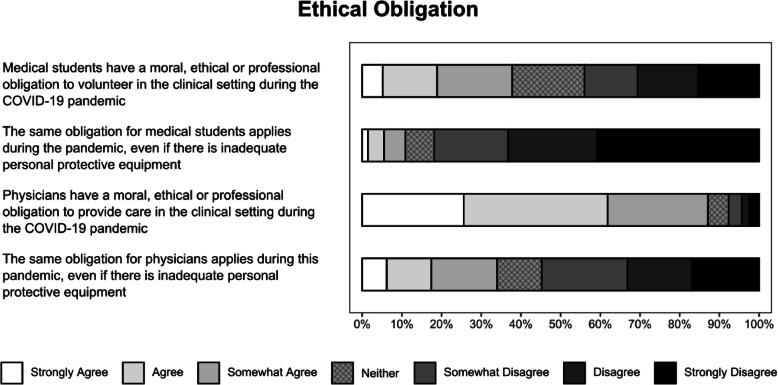
“28 In this study, 87.1% of the population agreed that physicians have an ethical obligation to provide care during the COVID-19 pandemic, possibly reflecting how they view the ethical transition from student to physician.”
BackgroundInfluentialPerspectives of Medical Students on E-Learning in the Surgery Module
Fathuldeen, A. A., Alshammari, A. O., Khalifah, E. M., Alrashid, F. F., Alqahtani, A. S., Alenazi, F., Alruwaili, S. H., Alshmmri, M. A., & Idris, S. A. (2023) · Asian Journal of Pharmaceutical Research and Health Care · doi:10.4103/ajprhc.ajprhc_87_22 · Cited by 1
Effect of the COVID-19 Pandemic on Medical Students at the University of Jeddah, Saudi Arabia
Alesawi, A., Rizk, H. A., Aledrisi, A., Alramadhani, A., Saber, S., & Namenkani, M. (2023) · Cureus · doi:10.7759/cureus.38968 · Cited by 1
“People from all around the world, including medical students, were affected by raising specific concerns for medical schools [4,5].”
BackgroundValue of a UK medical degree for international students (VISION): a cross-sectional study
Li, C., Ganesananthan, S., Pinchemain, T., Godoi, A., Lim, S. M., Baskaran, R., Mukhopadhyay, S., Foo, E. F., Ooi, S. Z. Y., Woo, T., et al. (2023) · BMJ Open · doi:10.1136/bmjopen-2022-065062 · Cited by 1
Murphy, K. J., O’Brien, N., Connolly, M., Iohom, G., Gibson, J., & Shorten, G. (2025) · Journal of Education in Perioperative Medicine · doi:10.46374/volxxvii_issue2_murphy · Cited by 1
McGrath, H., Brennan, E., & Harmon, D. (2026) · Irish Journal of Medical Science (1971 -) · doi:10.1007/s11845-026-04431-x · Cited by 1
COVID-19’s Impact on Residency Applicants
English, M., & Vanstrum, E. B. (2021) · Academic Medicine · doi:10.1097/acm.0000000000004199 · Cited by 1
Special Editorial: Bashing and murder of doctors and health care workers in Myanmar
Pocock, L. (2021) · World Family Medicine Journal/Middle East Journal of Family Medicine · doi:10.5742/mewfm.2021.940104 · Cited by 1
Effect of the COVID-19 pandemic on career perceptions among medical students in (IMSIU)
Almadhi, A. A., Alhorishi, A. H., Alnamshan, A. Z., Alkhamis, F. A., Alosaimi, R., Alassaf, T. Y., & Alateeq, F. A. (2021) · World Family Medicine Journal/Middle East Journal of Family Medicine · doi:10.5742/mewfm.2021.94091 · Cited by 1
Unveiling the Uncertainty-Revolutionizing Medical Education in COVID-19 Era
Saeed, R., Sharif, S. Y., & Amin, F. (2023) · IntechOpen eBooks · doi:10.5772/intechopen.103918 · Cited by 2
Butt, M. K. (2022) · Open Journal of Social Sciences · doi:10.4236/jss.2022.105027 · Cited by 1
Al-Karbi, K., Al-Muhannadi, M., Al-Rabeei, Y., Al-Kubaisi, R. J., Bawazir, A., & Mahmoud, M. H. (2021) · World Family Medicine Journal/Middle East Journal of Family Medicine · doi:10.5742/mewfm.2021.94095 · Cited by 1
Abedi, F., Eghbali, B., Akbari, N., Sadr, E., & Salmani, F. (2022) · Journal of Education and Health Promotion · doi:10.4103/jehp.jehp_1466_21 · Cited by 1
“2 Journal of Education and Health Promotion | Volume 11 | September 2022 examinations with online tests.[3] Although online education and evaluation is not a new phenomenon, the recent epidemic outbreak has drawn scholars’ attention toward it.”
BackgroundBaoum, A. J., Hadidi, E. A., Alharbi, R., Khan, M. A., & Hakami, A. Y. (2023) · BMC Medical Education · doi:10.1186/s12909-023-04340-y · Cited by 1
“Previously published study about US medical students have reported that around 72% of participants received the help they need which was achieved by daily communication updates [14].”
BackgroundMethodInfluentialMartindale, J. M., Carrasquillo, R. A., Otallah, S., Brooks, A. K., Denizard-Thompson, N. M., Pharr, E., Choate, N., Sokolosky, M. C., & Strauss, L. D. (2023) · JMIR Medical Education · doi:10.2196/44240 · Cited by 1
“Only 6 days after declaring a global pandemic, the Association of American Medical Colleges (AAMC) recommended ceasing all medical student clinical rotations [1,2].”
BackgroundThe relationship between anxiety and sleep quality among medical students during Covid-19 pandemic
Salim, Y., Surilena, Widjaja, N. T., & Tjhay, F. (2022) · Jurnal kedokteran dan kesehatan Indonesia · doi:10.20885/jkki.vol13.iss2.art9 · Cited by 1
Khosraviani, V., Ip, E. J., Li, S. A., Khosraviani, A., Cariaga, J., Caballero, J., Lor, K. B., Acree, L., Echibe, C., & Barnett, M. J. (2023) · Exploratory Research in Clinical and Social Pharmacy · doi:10.1016/j.rcsop.2023.100391 · Cited by 2
Hadler, R. A., Shinkunas, L. A., Kaldjian, L. C., & Carlisle, E. M. (2024) · Southern Medical Journal · doi:10.14423/smj.0000000000001660 · Cited by 1
Diachenko, I., Каліщук, С. М., Амеліна, В., Гейко, С. М., & Bulanov, T. (2024) · Current Psychology · doi:10.1007/s12144-024-06028-y · Cited by 2
“Harries et al. (2021) discovered that medical students were eager to return to practice as soon as possible, and that the pandemic had a moderate impact on their stress and anxiety levels.”
Chovanec, P., & Khatri, V. (2025) · MedEdPublish · doi:10.12688/mep.20765.1 · Cited by 1
ALjohani, H. S., & Sulaiman, A. A. (2021) · World Family Medicine Journal/Middle East Journal of Family Medicine · doi:10.5742/mewfm.2021.940103 · Cited by 2
Dzefi‐Tettey, K., Edzie, E. K. M., Brakohiapa, E. K., Acheampong, F., Osei, S. S., Kekessie, K. K., Kusodzi, H., & Asemah, A. R. (2021) · World Journal of Advanced Research and Reviews · doi:10.30574/wjarr.2021.11.3.0478 · Cited by 1
Liu, C., Tang, J., Shen, C., Zhan, X., Bu, E., Shen, B., & Huang, W. (2022) · Frontiers in Psychology · doi:10.3389/fpsyg.2022.891778 · Cited by 1
Mental Health in Postoperative Thyroid Patients During the COVID-19 Pandemic
Yang, S., & Xu, X. (2022) · Frontiers in Endocrinology · doi:10.3389/fendo.2022.875325 · Cited by 2
Lismandasari, L., & Farhan, F. S. (2022) · Jurnal Ilmiah Mandala Education · doi:10.36312/jime.v8i2.3149 · Cited by 3
Perception and attitude of clinical medical students to COVID-19 containment measures
Ohayi, S. R., Chinawa, A. T., Asimadu, I. N., & Chinawa, J. (2022) · International Journal of Medicine and Health Development · doi:10.4103/ijmh.ijmh_10_22 · Cited by 1
Skoczek, A. C., Ruane, P. W., Onley, C., Haydel, T., Ortega, M. V., Sutphin, H. D., & Stoner, A. M. (2022) · International Journal of Medical Students · doi:10.5195/ijms.2022.1616 · Cited by 1
Michenka, P., Fialová, L., Šlegerová, L., & Marx, D. (2022) · International Journal of Public Health · doi:10.3389/ijph.2022.1605187 · Cited by 1
Савка, С. Д., Savka, I. H., & Karvatska, N. S. (2023) · Clinical & experimental pathology · doi:10.24061/1727-4338.xxi.4.82.2022.12 · Cited by 1
Perspectives of medical students towards the prohibition of direct patient contact during a pandemic
Lim, M. J., Wee, C. P. J., Han, D. X. T., & Wong, E. (2023) · The Asia Pacific Scholar · doi:10.29060/taps.2023-8-2/cs2849 · Cited by 1
Community medicine clerkship amidst COVID-19 pandemic: re-designing, implementation, and evaluation
Universitas Islam Negeri Syarif Hidayatullah, I., Tyastuti, D., Kunarisasi, S., Universitas Islam Negeri Syarif Hidayatullah, I., Azwar, A., Universitas Islam Negeri Syarif Hidayatullah, I., Fadhillah, M. F., Universitas Islam Negeri Syarif Hidayatullah, I., Risahmawati, R., Universitas Islam Negeri Syarif Hidayatullah, I., et al. (2023) · International Journal of Practice-based Learning in Health and Social Care · doi:10.18552/ijpblhsc.v11i1.760 · Cited by 3
Are COVID-Era General Surgery Interns Starting Residency Behind on Basic Surgical Skills?
Weaver, L., Pavlova, A., Lunden, M., Brunsvold, M. E., & Kendrick, D. E. (2023) · Journal of surgical education · doi:10.1016/j.jsurg.2023.07.010 · Cited by 1
Adjustment Characteristics in COVID-19 Crisis: A Case of Thai Undergraduate StudentsPreprint
Phimsri, C., & Srisawa, N. (2023) · Research Square · doi:10.21203/rs.3.rs-3055770/v1 · Cited by 1
Nadeem, S., Inam, S., Hayat, U., Imran, S., & Saga, Z. (2021) · Research Square · doi:10.21203/rs.3.rs-677304/v1
Metadata
- Authors
- Harries, A. J., Lee, C., Jones, L., Rodriguez, R. M., Davis, J. A., Boysen-Osborn, M., Kashima, K. J., Krane, N. K., Rae, G., Kman, N., Langsfeld, J. M., & Juarez, M.
- Affiliations
- San Francisco General Hospital (US)
- University of California, San Francisco (US)
- University of Illinois Chicago (US)
- Tulane University (US)
- The Ohio State University (US)
- Donald & Barbara Zucker School of Medicine at Hofstra/Northwell (US)
- Corresponding author
- Harries, Aaron J.
- Juarez, Marianne
- ORCID
- Venue
- BMC Medical Education
- Published
- 2021-01-06
- Volume
- 21
- Issue
- 1
- Pages
- 14-14
- ISSN
- 1472-6920 (ISSN-L)
- PMC
- PMC7786337
- OpenAlex
- W3110329194
- Cited by
- 286
- References
- 14
- Citations by year
- 2026: 8 · 2025: 14 · 2024: 50 · 2023: 66 · 2022: 91 · 2021: 57
- FWCI
- 44.99
- Type
- journal article
- Language
- en
- Open access
- gold
- doi.org
- Licence
- cc-by
- creativecommons.org/licenses/by/4.0/ (tdm)
- creativecommons.org/licenses/by/4.0/ (vor)
- Locations
- BMC Medical Education (publishedVersion, cc-by)
- Research Square (acceptedVersion, cc-by)
- PubMed Central (publishedVersion, cc-by)
- PubMed (publishedVersion)
- DOAJ (DOAJ: Directory of Open Access Journals) (submittedVersion, cc-by-sa)
- eScholarship (California Digital Library) (submittedVersion)
- Funders
- University of California, San Francisco
- Topics
- Social Sciences › Psychology › Clinical Psychology › COVID-19 and Mental Health
- Health Sciences › Health Professions › General Health Professions › Healthcare professionals’ stress and burnout
- Social Sciences › Education › Innovations in Medical Education
- Keywords
- COVID-19 pandemic, medical students, clinical rotations, anxiety, burnout, personal protective equipment, infection risk, medical education policy
- MeSH terms
- Burnout, Psychological, COVID-19, Adult, Anxiety, Cross-Sectional Studies, Curriculum, Education, Medical, Undergraduate, Female, Humans, Male, Middle Aged, Surveys and Questionnaires, Students, Medical, United States, Infection Control, Young Adult
About these checks
Registry, retraction, Cites and statistics results are computed, not judged, with one exception: a printed reference that no index lists is read once by a model before it counts as a citation error. Claims are extracted by a model and kept only when their quote appears verbatim in the text; each cited source is then checked, with a model’s help, for whether it says what the claim relies on. Those verdicts can be wrong — read the claim’s quote and the cited source before relying on one.
Statistics and arithmetic are recomputed, not judged.
Confidence bands are shown only for fields calibrated on our annotated test set. None is calibrated yet, so no band is shown.
What counts as a claim ›How we measure confidence ›How we check this ›
Are you an author, or do you see a problem with this page? Request a review
Data sources
Bibliographic data: Semantic Scholar, OpenAlex, Crossref.
Contains information from the Semantic Scholar Academic Graph Datasets, made available under the ODC Attribution License (ODC-BY 1.0).
Semantic Scholar’s data is described in: Kinney, R., et al. (2023). The Semantic Scholar Open Data Platform. arXiv:2301.10140.
