

Effects of the COVID-19 pandemic on medical students: a multicenter quantitative study
Open accessPublished version of a preprint
The DOI matches its Crossref record; 14 of the 14 references it cites were found in a registry or an index.
Abstract
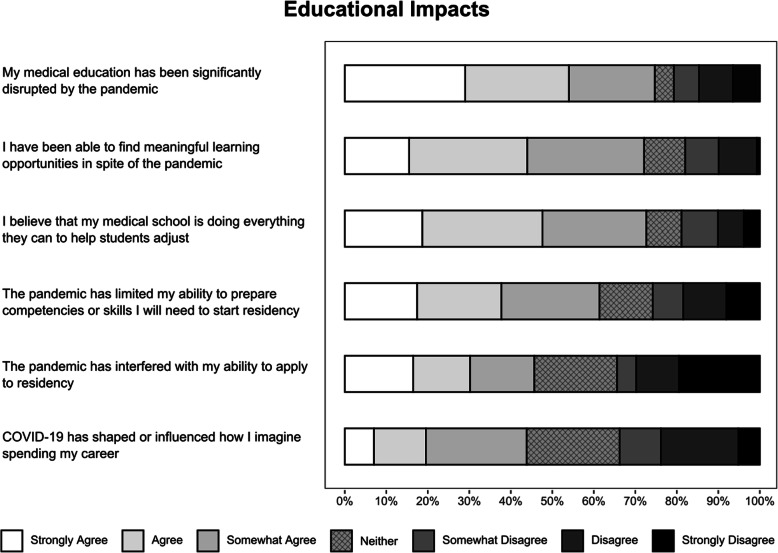
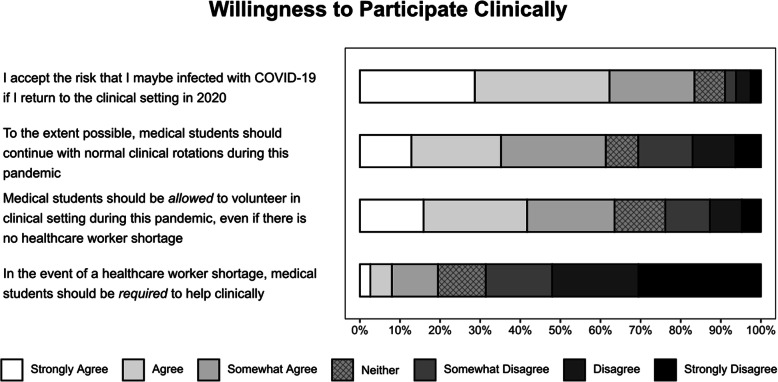
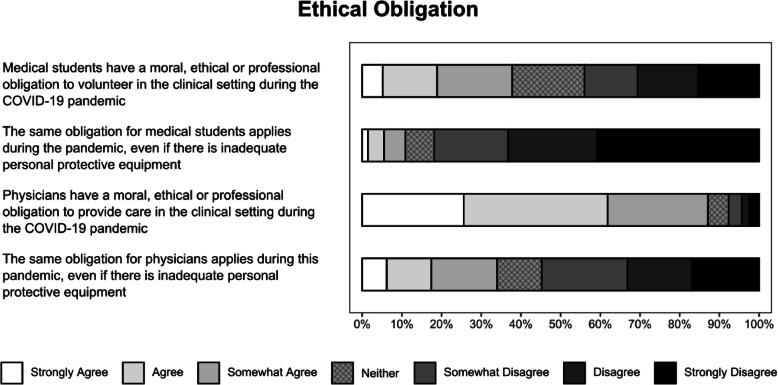
Background: The COVID-19 pandemic disrupted the United States (US) medical education system with the necessary, yet unprecedented Association of American Medical Colleges (AAMC) national recommendation to pause all student clinical rotations with in-person patient care. This study is a quantitative analysis investigating the educational and psychological effects of the pandemic on US medical students and their reactions to the AAMC recommendation in order to inform medical education policy. Methods: The authors sent a cross-sectional survey via email to medical students in their clinical training years at six medical schools during the initial peak phase of the COVID-19 pandemic. Survey questions aimed to evaluate students’ perceptions of COVID-19’s impact on medical education; ethical obligations during a pandemic; infection risk; anxiety and burnout; willingness and needed preparations to return to clinical rotations. Results: Seven hundred forty-one (29.5%) students responded. Nearly all students (93.7%) were not involved in clinical rotations with in-person patient contact at the time the study was conducted. Reactions to being removed were mixed, with 75.8% feeling this was appropriate, 34.7% guilty, 33.5% disappointed, and 27.0% relieved. Most students (74.7%) agreed the pandemic had significantly disrupted their medical education, and believed they should continue with normal clinical rotations during this pandemic (61.3%). When asked if they would accept the risk of infection with COVID-19 if they returned to the clinical setting, 83.4% agreed. Students reported the pandemic had moderate effects on their stress and anxiety levels with 84.1% of respondents feeling at least somewhat anxious. Adequate personal protective equipment (PPE) (53.5%) was the most important factor to feel safe returning to clinical rotations, followed by adequate testing for infection (19.3%) and antibody testing (16.2%). Conclusions: The COVID-19 pandemic disrupted the education of US medical students in their clinical training years. The majority of students wanted to return to clinical rotations and were willing to accept the risk of COVID-19 infection. Students were most concerned with having enough PPE if allowed to return to clinical activities.
Overview
The claims and statistics of this paper haven’t been checked yet.
Free: it reads the open-access text and checks the first 5 claims that cite a source we can check. Create a free account to check every claim.
Integrity signals
Registry
Cites
Statistics
Figures
Verification
Claims the paper makes
The claims and statistics of this paper haven’t been checked yet.
Free: it reads the open-access text and checks the first 5 claims that cite a source we can check. Create a free account to check every claim.
Self-check
Percentages, sums and reported differences re-computed from the paper’s own numbers.
The self-check needs the paper’s full text.
Citations
Cites
The Association of American Medical Colleges
Zapffe, F. C. (1938) · Academic Medicine · doi:10.1097/00001888-193801000-00007 · Cited by 5,533
Dyrbye, L. N., Thomas, M. R., & Shanafelt, T. D. (2006) · Academic Medicine · doi:10.1097/00001888-200604000-00009 · Cited by 2,909
Sahu, P. (2020) · Cureus · doi:10.7759/cureus.7541 · Cited by 2,353
Al-Rabiaah, A., Temsah, M.-H., Al-Eyadhy, A. A., Hasan, G. M., Al-Zamil, F., Al-Subaie, S., Alsohime, F., Jamal, A., Alhaboob, A., Al-Saadi, B., et al. (2020) · Journal of Infection and Public Health · doi:10.1016/j.jiph.2020.01.005 · Cited by 531
Choi, B., Jegatheeswaran, L., Minocha, A., Alhilani, M., Nakhoul, M., & Mutengesa, E. (2020) · BMC Medical Education · doi:10.1186/s12909-020-02117-1 · Cited by 458
Rodriguez, R. M., Medak, A. J., Baumann, B. M., Lim, S., Chinnock, B., Frazier, R., & Cooper, R. J. (2020) · Academic Emergency Medicine · doi:10.1111/acem.14065 · Cited by 169
Self-citationPsychological responses to the SARS outbreak in healthcare students in Hong Kong
Wong, J. G. W. S., Cheung, E. P. T., Cheung, V., Cheung, C., Chan, M. T. Y., Chua, S. E., McAlonan, G. M., Tsang, K. W. T., & Ip, M. S. M. (2004) · Medical Teacher · doi:10.1080/01421590400006572 · Cited by 132
Fear of SARS thwarts medical education in Toronto
Clark, J. (2003) · BMJ · doi:10.1136/bmj.326.7393.784/c · Cited by 90
Senior Medical Students in the COVID‐19 Response: An Opportunity to Be Proactive
Stokes, D. C. (2020) · Academic Emergency Medicine · doi:10.1111/acem.13972 · Cited by 85
Impact of a spreading epidemic on medical students.
Loh, L., ALI, A. M., Ang, T.-H., & Chelliah, A. (2005) · Europe PMC (PubMed Central) · Cited by 56
Cited by
The Effect of COVID-19 on Education
Hoofman, J., & Secord, E. (2021) · Pediatric Clinics of North America · doi:10.1016/j.pcl.2021.05.009 · Cited by 204
“0% feeling relieved.(39) In the same survey, 74.”
BackgroundAn integrative review of resilience among nursing students in the context of nursing education
Aryuwat, P., Asp, M., Lövenmark, A., Radabutr, M., & Holmgren, J. (2022) · Nursing Open · doi:10.1002/nop2.1559 · Cited by 186
“…of course deadlines, extended duration of clinical practice, being under a high level of stress and lockdown of their institutes during new emerging pandemics (Agu et al., 2021; Harries et al., 2021; Huang et al., 2020; Luberto et al., 2020, Roldán- Merino et al., 2022; Usher et al., 2020).”
BackgroundSleep Quality and Mental Health of Medical Students in Greece During the COVID-19 Pandemic
Eleftheriou, A., Rokou, A., Arvaniti, A., Nena, E., & Steiropoulos, P. (2021) · Frontiers in Public Health · doi:10.3389/fpubh.2021.775374 · Cited by 146
SOCIOECONOMIC STATUS SCALE-MODIFIED KUPPUSWAMY SCALE FOR THE YEAR 2022
Kumar, G., Dash, P., Patnaik, J., & Pany, G. (2022) · International Journal of Community Dentistry · doi:10.56501/intjcommunitydent.v10i1.26 · Cited by 106
“Agarwal et al [15,16] (2005), devised a new scale consisting of 22 items based on caste, material possessions, visits abroad, monthly per capita income, income tax paid, highest education in the family and occupation.”
Hao, X., Peng, X., Ding, X., Qin, Y., Lv, M., Li, J., & Li, K. (2021) · Nurse Education Today · doi:10.1016/j.nedt.2021.105183 · Cited by 124
“Therefore, to protect students' education and wellbeing, the Ministry of Education of the People's Republic of China issued a notice postponing the start of the school year, and the Association of American Medical Colleges (AAMC) recommended that health professions schools pause all clinical practicums (Harries et al.…”
COVID-19 mental health consequences on medical students worldwide
Mittal, R., Su, L., & Jain, R. (2021) · Journal of Community Hospital Internal Medicine Perspectives · doi:10.1080/20009666.2021.1918475 · Cited by 87
“3% believed that they should continue with normal clinical rotations during the pandemic [7].”
BackgroundZhu, Y., Wang, H., & Wang, A. (2021) · International Journal of Mental Health Nursing · doi:10.1111/inm.12867 · Cited by 73
“These sudden shocks may cause an increased risk of mental health symptoms (Harries et al., 2021).”
BackgroundAnxiety, PTSD, and stressors in medical students during the initial peak of the COVID-19 pandemic
Lee, C. M., Juarez, M., Rae, G., Jones, L., Rodriguez, R. M., Davis, J. A., Boysen‐Osborn, M., Kashima, K. J., Krane, N. K., Kman, N. E., et al. (2021) · PLoS ONE · doi:10.1371/journal.pone.0255013 · Cited by 66
“Medical students experienced major disruptions to their education as a result of the pandemic, and most experienced increased burnout and stress [8].”
BackgroundSelf-citationSugawara, N., Yasui‐Furukori, N., Fukushima, A., & Shimoda, K. (2021) · Vaccines · doi:10.3390/vaccines9111295 · Cited by 59
“may come in contact individuals infected with this disease, such as healthcare workers [8].”
BackgroundConnolly, N., & Abdalla, M. E. (2022) · Medical Education Online · doi:10.1080/10872981.2022.2040192 · Cited by 56
“7% of this population believed that COVID-19 had significantly disrupted their education [4].”
BackgroundCOVID-19 and mental health: A systematic review of international medical student surveys
Paz, D. C., Bains, M. S., Zueger, M. L., Bandi, V. R., Kuo, V. Y., Cook, K., & Ryznar, R. J. (2022) · Frontiers in Psychology · doi:10.3389/fpsyg.2022.1028559 · Cited by 56
“1% of the participants reporting feeling “at least somewhat anxious” (Harries et al., 2021).”
Wurth, S. M., Sader, J., Cerutti, B., Broers, B., Bajwa, N. M., Carballo, S., Escher, M., Galetto-Lacour, A., Grosgurin, O., Lavallard, V., et al. (2021) · BMC Medical Education · doi:10.1186/s12909-021-03053-4 · Cited by 61
Impact of grit, resilience, and stress levels on burnout and well‐being of dental students
Al‐Zain, A. O., & Abdulsalam, S. (2021) · Journal of Dental Education · doi:10.1002/jdd.12819 · Cited by 66
Dedeilia, A., Papapanou, M., Παπαδόπουλος, Α., Karela, N.-R., Androutsou, A., Mitsopoulou, D., Nikolakea, M., Konstantinidis, C. I., Papageorgakopoulou, M. A., Sideris, M. C., et al. (2023) · Human Resources for Health · doi:10.1186/s12960-023-00799-4 · Cited by 58
“Timely graduation was jeopardized [38], required examinations were canceled [39] and graduates were unable to apply for their next steps [40].”
BackgroundThe Association Between Social Support, COVID-19 Exposure, and Medical Students' Mental Health
Yin, Y., Yang, X., Gao, L., Zhang, S.-Y., Qi, M., Zhang, L., Tan, Y., & Chen, J. (2021) · Frontiers in Psychiatry · doi:10.3389/fpsyt.2021.555893 · Cited by 52
Huarcaya-Victoria, J., Elera-Fitzcarrald, C., Crisol-Deza, D. A., Villanueva-Zúñiga, L., Pacherres-López, A., Torres, A., Huertas, G., Calderón, D., Noriega-Baella, C., Astonitas, E., et al. (2021) · Revista Colombiana de Psiquiatría · doi:10.1016/j.rcp.2021.06.002 · Cited by 62
Rosa, V. L. L., & Commodari, E. (2023) · European Journal of Investigation in Health Psychology and Education · doi:10.3390/ejihpe13080108 · Cited by 47
Umar, T. P., Samudra, M. G., Nashor, K. M. N., Agustini, D., & Syakurah, R. A. (2022) · Frontiers in Medicine · doi:10.3389/fmed.2022.797153 · Cited by 37
Yi, L.-J., Cai, J., Ma, L., Lin, H., Yang, J., Tian, X., & Herrera, M. (2022) · International Journal of Environmental Research and Public Health · doi:10.3390/ijerph192215206 · Cited by 47
Yuan, L., Lu, L., Wang, X., Qu, M., Gao, Y., & Pan, B. (2023) · BMC Psychiatry · doi:10.1186/s12888-023-04638-7 · Cited by 43
“The same may be true for medical students, because, in addition to the same stress experienced by the general population [1] and the students of other subjects [9], medical students may have to face more stress during the pandemic unique to their specialty features such as the interruption of clinical rotation and cle…”
BackgroundTurana, Y., Primatanti, P. A., Sukarya, W. S., Wiyanto, M., Duarsa, A. B. S., Wratsangka, R., Adriani, D., Sasmita, P. K., Budiyanti, E., Anditiarina, D., et al. (2022) · Frontiers in Education · doi:10.3389/feduc.2022.843998 · Cited by 40
Chen, Z., Xiong, J., Ma, H., Hu, Y., Bai, J., Wu, H. L., & Wang, Y. (2023) · SSM - Population Health · doi:10.1016/j.ssmph.2023.101567 · Cited by 35
“Many students reported that the pandemic had seriously affected their capacity to prepare for residency and their ability to further their medical education (Harries et al., 2021).”
BackgroundKaur, W., Balakrishnan, V., Chen, Y. Y., & Periasamy, J. (2022) · International Journal of Environmental Research and Public Health · doi:10.3390/ijerph19158894 · Cited by 45
“Similar concerns were also raised by postgraduate students [34,53,68] and even more so among those postgraduate students who were on scholarships [57,84].”
BackgroundThe impact of COVID‐19 on professional identity
Byram, J. N., Frankel, R. M., Isaacson, J. H., & Mehta, N. (2022) · The Clinical Teacher · doi:10.1111/tct.13467 · Cited by 34
“cal Colleges (AAMC), clinical rotations were halted and the majority of US medical students were removed from in-person clinical placements in March of 2020.(5,8) Removal was necessitated by scarce resources,”
BackgroundPatil, A., Ranjan, R., Kumar, P., & Narang, H. (2021) · Advances in Medical Education and Practice · doi:10.2147/amep.s320524 · Cited by 28
Kumar, R., Beniwal, K., & Bahurupi, Y. A. (2022) · Frontiers in Psychology · doi:10.3389/fpsyg.2022.940544 · Cited by 26
The Impact of COVID-19 on Mental Health in Medical Students: A Cross-Sectional Survey Study in Italy
Carletto, S., Moro, G. L., Lavista, V. Z., Soro, G., Siliquini, R., Bert, F., & Leombruni, P. (2022) · Psychological Reports · doi:10.1177/00332941221127632 · Cited by 29
“These actions were taken to prevent the spread of the virus, but were not without their consequences on the students ’ psychological wellbeing (Akers et al., 2020; Dedeilia et al., 2020; Harries et al., 2021).”
Connolly, M., Iohom, G., O’Brien, N., Volz, J., O’Muircheartaigh, A. C., Serchan, P., Biculescu, A., Gadre, K. G., Soare, C. G., Griseto, L., et al. (2024) · BMC Medical Education · doi:10.1186/s12909-024-05475-2 · Cited by 27
Hani, A. B., Alaridah, N., Abeeleh, M. A. A., Shatarat, A. T., Rayyan, R., Kamal, A., Alhafez, L., Odeh, R., & Al-Taher, R. N. (2021) · Annals of Medicine and Surgery · doi:10.1016/j.amsu.2021.102775 · Cited by 26
“Application of protective measures will potentially prevent transmission of COVID-19 infection to others [22].”
Lin, Y., Kang, Y. J., Lee, H. J., & Kim, D.-H. (2021) · BMC Medical Education · doi:10.1186/s12909-021-03065-0 · Cited by 28
“Numerous studies have focused on student burnout, depression, and anxiety during the COVID-19 [22, 23], but studies on students’ SH are scarce.”
Servin-Rojas, M., Olivas‐Martínez, A., Dithurbide-Hernandez, M., Chavez-Vela, J., Petricevich, V. L., García-Juárez, I., de Moraes, A. G., & Zendejas, B. (2022) · BMC Medical Education · doi:10.1186/s12909-021-03085-w · Cited by 24
Žuljević, M. F., Jeličić, K., Viđak, M., Đogaš, V. G., & Buljan, I. (2021) · BMJ Open · doi:10.1136/bmjopen-2021-049590 · Cited by 30
Naidoo, N. S., Azar, A. J., Khamis, A. H., Gholami, M., Lindsbro, M., Alsheikh-Ali, A. A. A., & Banerjee, Y. (2021) · Frontiers in Public Health · doi:10.3389/fpubh.2021.726814 · Cited by 50
Kaveh, O., Charati, F. G., Kamali, M., & Mojarad, F. A. (2022) · BMC Nursing · doi:10.1186/s12912-022-01029-3 · Cited by 24
“1% of the students believed that electronic learning could be utilized in clinical wards [35].”
BackgroundImpact of the Covid-19 pandemic and ensuing online teaching on pre-clinical medical education
Goudarzi, H., Onozawa, M., & Takahashi, M. (2024) · BMC Medical Education · doi:10.1186/s12909-023-04967-x · Cited by 24
Qu, R., Ding, N., Li, H., Song, X., Cong, Z., Cai, R., Zhu, Y., & Wen, D. (2022) · Frontiers in Public Health · doi:10.3389/fpubh.2022.1011801 · Cited by 34
“3% of the respondents were even willing to take the risk of illness to offset the burnout caused by the change of clinical activities (24).”
BackgroundSulaiman, R., Ismail, S., Shraim, M., Hajj, M. S. E., Kane, T., & El‐Awaisi, A. (2023) · BMC Psychology · doi:10.1186/s40359-023-01132-3 · Cited by 31
Popa-Velea, O., Pristavu, C. A., Ionescu, C. G., Mihăilescu, A. I., & Diaconescu, L. V. (2021) · Education Sciences · doi:10.3390/educsci11080414 · Cited by 26
Holzmann‐Littig, C., Zerban, N. L., Storm, C., Ulhaas, L., Pfeiffer, M., Kotz, A., Wijnen‐Meijer, M., Keil, S., & Huber, J. (2022) · BMC Medical Education · doi:10.1186/s12909-022-03480-x · Cited by 22
Impact of the COVID‐19 pandemic on medical student placements in rural Queensland: A survey study
Martin, P., McGrail, M. R., Fox, J. L., Partanen, R. L., & Kondalsamy‐Chennakesavan, S. (2022) · Australian Journal of Rural Health · doi:10.1111/ajr.12862 · Cited by 19
Zhang, H., Yang, J., Li, Y., Ren, G., Mu, L., Cai, Y., Luo, Q., & Zhou, Y. (2021) · Frontiers in Public Health · doi:10.3389/fpubh.2021.679178 · Cited by 19
Physical Therapy Student Stress During the COVID-19 Pandemic: A Qualitative Study
Anderson, C., & Dutton, L. L. (2022) · Journal of Physical Therapy Education · doi:10.1097/jte.0000000000000218 · Cited by 27
Vollmann, M., Scheepers, R. A., Nieboer, A. P., & Hilverda, F. (2022) · Frontiers in Psychology · doi:10.3389/fpsyg.2022.1056983 · Cited by 20
“Throughout the academic year 2020–2021 in which ERT was the main form of education, Dutch university students reported moderate levels of study-related wellbeing (i.e., academic burnout and study engagement), study effort, and education satisfaction.”
BackgroundResultInfluentialNursing and Midwifery Students’ Mental Health Status and Intention to Leave During Covid-19 Pandemic
Haririan, H., Samadi, P., Lalezari, E., Habibzadeh, S., & Porter, J. E. (2022) · SAGE Open Nursing · doi:10.1177/23779608221120506 · Cited by 18
“In another study that investigated the educational and psychological effects of the COVID-19 pandemic on US medical students, students reported the pandemic had moderate effects on their stress and anxiety levels with 84.1% of respondents feeling at least somewhat anxious (Harries et al., 2021).”
BackgroundInfluentialMayers, T., Mathis, B. J., Ho, C. K., Morikawa, K., Maki, N., & Hisatake, K. (2022) · Education Sciences · doi:10.3390/educsci12090628 · Cited by 18
“7% of the respondents to their survey felt that the pandemic had disrupted their medical education significantly [5].”
BackgroundLei, Z., He, Z., Mei, Y., Qi, X., Yu, P., Xu, G., Cheng, H., Bai, R., & Deng, J. (2023) · Frontiers in Psychology · doi:10.3389/fpsyg.2023.1202122 · Cited by 18
“A large number of people in China and even around the world experienced unprecedented negative emotions of anxiety and depression (Doglietto et al., 2020; Lai et al., 2020; Shi et al., 2020; Wang et al., 2020, 2021; Zhou et al., 2020; Chen et al., 2021; Harries et al., 2021; Hummel et al., 2021; Kassianos et al., 2021…”
BackgroundPrzymuszała, P., Zielińska‐Tomczak, Ł., Kłos, M., Kowalska, A., Birula, P., Piszczek, M., Cerbin‐Koczorowska, M., & Marciniak, R. (2022) · SAGE Open · doi:10.1177/21582440221085016 · Cited by 15
“In a study by Harries et al. (2021), nearly three-quarters of students felt that the COVID-19 pandemic significantly disrupted their medical education.”
BackgroundStanislawski, E. R., Saali, A., Magill, E. B., Deshpande, R., Kumar, V., Chan, C., Hurtado, A., Charney, D. S., Ripp, J., & Katz, C. L. (2022) · Psychiatry Research · doi:10.1016/j.psychres.2022.115030 · Cited by 17
Moral courage of master’s students of nursing during COVID-19
Huang, M., Dong, W., Zhao, Q., & Mo, N. (2023) · Nursing Ethics · doi:10.1177/09697330221146250 · Cited by 18
Roy, S., Bhat, V., & Ozair, A. (2022) · Annals of Global Health · doi:10.5334/aogh.3926 · Cited by 14
Sipos, D., Biro, A. A., Busa, F., Freihat, O., Tollár, J., Pandur, A. A., Kov́acs, Á., Deutsch, K., & Csima, M. (2023) · BMC Medical Education · doi:10.1186/s12909-023-04867-0 · Cited by 17
“The international literature suggests that the vast majority of medical students feel an ethical obligation to participate in the pandemic management and are willing to fight against the current COVID-19 crisis, even if they consider the risk of infection to be high [12, 13].”
BackgroundWomen’s health in Serbia - past, present, and future
Parapid, B. J., Kanjuh, V., Kostić, V., Polovina, S. P., Dinić, M., Loncar, Z. M., Lalic, K. S., Gojnić-Dugalić, M., Nedeljkovic, M. A., Lazic, B., et al. (2021) · Srpski arhiv za celokupno lekarstvo · doi:10.2298/sarh211208105p · Cited by 13
Elshami, W., Abuzaid, M., McConnell, J., Floyd, M. J., Hughes, D., Stewart, S., & McFadden, S. L. (2022) · Radiography · doi:10.1016/j.radi.2022.07.012 · Cited by 14
Prevalence and influencing factors of anxiety in medical students during the COVID-19 pandemic
Liu, H., Liu, X., & Xu, W. (2022) · Heliyon · doi:10.1016/j.heliyon.2022.e10487 · Cited by 16
“The fear of medical resources shortage (Harries et al., 2021), infection risks, and unpracticed medical skills caused anxiety feelings in these students (Gallagher and Schleyer, 2020).”
Vaca‐Cartagena, B. F., Quishpe-Narváez, E., Ulloa, H. C., & Estévez-Chávez, J. P. (2023) · BMC Medical Education · doi:10.1186/s12909-023-04489-6 · Cited by 17
Cerutti, R., Spensieri, V., Amendola, S., Biuso, G. S., Renzi, A., & Tambelli, R. (2022) · Psychology in the Schools · doi:10.1002/pits.22785 · Cited by 14
“…anxiety and depressive symptoms, along with various psychological problems and stress‐related symptoms, have been well documented among the population (Rajkumar, 2020; Torales et al., 2020; Wang et al., 2020), as well as increased anxiety and burnout in university students (Harries et al., 2021).”
BackgroundDietetics Students' Perceptions of Academic and Health Impacts of the COVID-19 Pandemic
Coakley, K. E., & Gonzales‐Pacheco, D. (2022) · Topics in Clinical Nutrition · doi:10.1097/tin.0000000000000291 · Cited by 11
Barche, A., Nayak, V., Pandey, A. K., Bhandarkar, A. M., Nayak, S. G., & Nayak, K. R. (2022) · F1000Research · doi:10.12688/f1000research.123582.1 · Cited by 13
“Quantitative and survey-based studies have emerged evaluating the impact of the COVID-19 pandemic on medical students (Loda et al., 2020; Harries et al., 2021) with the assessment of students attitudes towards remote, distant, and online learning (Al-Balas et al.”
BackgroundThe art of seeing: The impact of a visual arts course on medical student wellbeing
Noorily, A. R., Willieme, A., Belsky, M. S., & Grogan, K. (2023) · Medical Teacher · doi:10.1080/0142159x.2023.2184675 · Cited by 13
“…students suffered from increased levels of guilt during their absence from clinical care in the spring of 2020, as well as stress and burnout caused by working with hospitalized COVID19 patients when they returned to in-person medical education (Kannampallil et al. 2020; Harries et al. 2021).”
BackgroundCernasev, A., Desai, M., Jonkman, L. J., Connor, S. E., Ware, N., Sekar, M. C., & Schommer, J. C. (2021) · Pharmacy · doi:10.3390/pharmacy9040159 · Cited by 10
“A study of medical students [13] reported that almost three-quarters of upper-level students felt that the pandemic significantly disrupted their clinical training, and reported mixed feelings of guilt, relief, and disappointment at the beginning of the pandemic, along with concerns both about their own safety [12], a…”
BackgroundRe-conceptualizing medical education in the post-COVID era
Dimassi, Z., Chaiban, L., Zgheib, N. K., & Sabra, R. (2023) · Medical Teacher · doi:10.1080/0142159x.2023.2290463 · Cited by 12
Almushait, Y. B., Alabdaljabar, M. S., Alkhani, K., Abdalla, H. M., Alhayaza, R., Temsah, M.-H. A., & Alsohaibani, F. (2022) · Healthcare · doi:10.3390/healthcare10030496 · Cited by 11
“found that students recognized significant disruption to their medical education, with many willing to accept the risk of acquiring the infection and return to previous guidelines [21].”
BackgroundOne year of COVID-19 pandemic: a cross sectional study on teaching oral and maxillofacial surgery
Bock, A., Peters, F., Winnand, P., Kniha, K., Heitzer, M., Lemos, M., Hölzle, F., & Modabber, A. (2021) · Head & Face Medicine · doi:10.1186/s13005-021-00304-z · Cited by 10
Ebihara, H., Kasai, H., Shimizu, I., Shikino, K., Tajima, H., Kimura, Y., & Ito, S. (2025) · JMIR Medical Education · doi:10.2196/76702 · Cited by 10
Ethics and Well-Being: The Health Professions and the COVID-19 Pandemic
Hughes, M. T., & Rushton, C. H. (2021) · Academic Medicine · doi:10.1097/acm.0000000000004524 · Cited by 40
“Many medical students desired a return to the clinical environment and would accept the risk of infection even though they acknowledged the stress and anxiety brought on by the pandemic.(30) AC CE PT ED”
BackgroundȘutoi, D., Băzăvan, C. O., Sutoi, M., Petrică, A., Marza, A. M., Trebuian, C. I., Librimir, C., Neagoe, O. C., Ionică, M., Buleu, F. N., et al. (2023) · Advances in Medical Education and Practice · doi:10.2147/amep.s418563 · Cited by 14
Martin, P., McGrail, M. R., Fox, J. L., Ostini, R., Doyle, Z., Playford, D. E., Beattie, J., Isaac, V., Fuller, L., Allen, P., et al. (2022) · BMC Medical Education · doi:10.1186/s12909-022-03927-1 · Cited by 9
“In another COVID-19 study conducted in the United States, students that were newer to clinical learning environments had expressed greater concern around the impact of the pandemic on their medical education [26].”
BackgroundBarriers to Premarital Thalassemia Screening in Asia
Jaffar, N., Khan, L., Ahmed, U. I., Vistro, N. H., Khan, A., & Memon, M. Y. (2021) · World Family Medicine Journal/Middle East Journal of Family Medicine · doi:10.5742/mewfm.2021.94106 · Cited by 16
Learning during the pandemic: Perspectives of medical students in Singapore
Ng, I. K., Zhang, V. R., Tseng, F. S., Tay, D. S. H., Lee, S. S., & Lau, T. C. (2021) · Annals of the Academy of Medicine Singapore · doi:10.47102/annals-acadmedsg.2021136 · Cited by 10
Bolatov, A., Seisembekov, T. Z., Dauyenov, E., Zhorokpayeva, M. D., Smailova, D. S., & Pavalkis, D. (2022) · Frontiers in Education · doi:10.3389/feduc.2022.1025600 · Cited by 9
Huarcaya-Victoria, J., Elera‐Fitzcarrald, C., Crisol-Deza, D. A., Villanueva-Zúñiga, L., Pacherres-López, A., Torres, A., Huertas, G., Calderón-Solano, D., Noriega-Baella, C., Astonitas, E., et al. (2023) · Revista Colombiana de Psiquiatría (English ed ) · doi:10.1016/j.rcpeng.2021.06.014 · Cited by 16
Western Journal of Emergency Medicine
Lam, J. (2022) · Western Journal of Emergency Medicine · doi:10.5811/westjem.2022.8.59370 · Cited by 9
Kwak, G. H., Baek, S., & Kwak, E.-J. (2023) · Journal of Dental Sciences · doi:10.1016/j.jds.2023.07.031 · Cited by 8
Romli, M. H., Yunus, F. W., Adam, S. K., & Salihan, S. (2024) · Medical Science Educator · doi:10.1007/s40670-024-02037-5 · Cited by 8
“Student clinical learning and support were substantially disrupted, impacting personal and academic life and raising concerns for the mental health and well-being of students and staff [2–4].”
Kim, H. W., Hong, J. W., Nam, E. J., Kim, K. Y., Kim, J. H., & Kang, J. I. (2022) · PLoS ONE · doi:10.1371/journal.pone.0277059 · Cited by 10
“courses, which could have been delivered online, preclinical students may have experienced less disruption of education compared to clinical students and, thus, relatively little pandemicrelated uncertainty [27, 28].”
BackgroundThe effect of COVID-19 on medical student clinical skill practice and self-perceived proficiency
Hall, L., Binks, S., & Heal, C. F. (2023) · MedEdPublish · doi:10.12688/mep.19478.1 · Cited by 8
Changqing, S., Han, J., Zhu, Z., Zhang, Q., Wang, P., Zhang, P., Qin, Y., Yang, L., Xue, W., Sun, D., et al. (2025) · BMC Psychology · doi:10.1186/s40359-025-03181-2 · Cited by 9
Primary Health Care in Pandemics: Barriers, Challenges and Opportunities
Khoja, T. A. M., Qidwai, W., Rawaf, S., Alnasir, F. A., Nanji, K., Khoja, A. T., Kurashi, N. Y. A., Saad, N. E. S., Halasa, W., Farahat, T. M., et al. (2021) · World Family Medicine Journal/Middle East Journal of Family Medicine · doi:10.5742/mewfm.2021.94090 · Cited by 10
Paz, D. C., Bains, M. S., Zueger, M. L., Bandi, V. R., Kuo, V. Y., Payton, M. E., & Ryznar, R. J. (2023) · Frontiers in Psychology · doi:10.3389/fpsyg.2023.1076841 · Cited by 9
Creating Alignment: How the Humanities Can Help Heal Physicians and Patients
Cerceo, E. A., & Vasan, N. S. (2023) · Journal of Medical Education and Curricular Development · doi:10.1177/23821205231203487 · Cited by 12
“20 While there are many factors that feed into professional identity formation both clinically and non-clinically, medical humanities comprise only a small fraction of students ’ educational Cerceo and Vasan experiences, these courses still offer a safe space to explore what it means to be a…”
BackgroundSartorão, A. L. V., & Filho, C. I. S. (2024) · International Journal of Environmental Research and Public Health · doi:10.3390/ijerph21121620 · Cited by 11
Microentrepreneurial commitment and perseverance in local communities during the COVID-19 crisis
Haq, M., Ng, W., Budhathoki, T., Davies, J. T., & Dana, L. (2025) · International Journal of Entrepreneurial Behaviour & Research · doi:10.1108/ijebr-12-2023-1324 · Cited by 7
Helland, H. K., Tylleskär, T., Kvernenes, M., & Reikvam, H. (2022) · Healthcare · doi:10.3390/healthcare10010170 · Cited by 7
“Dissatisfaction with the practical teaching offered has been reported in several other studies, and several raise concern that the COVID-19 pandemic has resulted in a serious lack of clinical skills among medical students [14,23].”
BackgroundResultNishimura, A., Miyoshi, T., Otsuka, F., & Matsukawa, A. (2024) · BMC Medical Education · doi:10.1186/s12909-023-05021-6 · Cited by 7
“Consequently, medical education shifted from in-person to online education, and clinical practice was suspended in approximately 90% of medical schools worldwide due to many social constraints [1, 2].”
BackgroundNasr, C., Sanayeh, E. B., Nasr, C., Merheb, G., & Massoud, M. (2022) · Work · doi:10.3233/wor-220243 · Cited by 9
Hunt, S. C., Simpson, J., Letwin, L., & MacLeod, B. (2023) · PLoS ONE · doi:10.1371/journal.pone.0285402 · Cited by 6
“These public restrictions and a move to a virtual learning environment introduced new stressors for medical students and residents, already engaged in a rigorous training program [2].”
BackgroundMorgan, T. L., McFadden, T., Fortier, M., Sweet, S. N., & Tomasone, J. R. (2024) · Canadian Medical Education Journal · doi:10.36834/cmej.79169 · Cited by 12
Chen, Z., Xiong, J., Bai, J., Hu, Y., Wu, H. L., Zhou, B., & Wang, Y. (2025) · Psychology Health & Medicine · doi:10.1080/13548506.2025.2481195 · Cited by 7
“It can discover the bridge symptoms between different disorders to show us how a mental disorder spreads to another mental disorder through certain symptoms (Jones et al., 2021).”
InfluentialMaietti, E., Greco, M., Reno, C., Rallo, F., Treré, D., Savoia, E., Fantini, M. P., Scheier, L. M., & Gori, D. (2021) · Frontiers in Public Health · doi:10.3389/fpubh.2021.746387 · Cited by 7
Dias, A. C., Scavarda, A., Reis, A. D. C., Silveira, H., & Scavarda, A. (2022) · Education Sciences · doi:10.3390/educsci12050354 · Cited by 9
Kasai, H., Saito, G., Ito, S., Kuriyama, A., Kawame, C., Shikino, K., Takeda, K., Yahaba, M., Taniguchi, T., Igari, H., et al. (2022) · BMC Medical Education · doi:10.1186/s12909-022-03525-1 · Cited by 8
“In fact, in the United States, most medical students felt somewhat anxious about the risk of being infected with COVID-19 [10].”
BackgroundProfessional Challenges for United States Hematology/Oncology Trainees during COVID-19
Banerjee, R. K., Kareff, S. A., Leyfman, Y., Dhawan, N., Hammons, L. R., Desai, A. P., Tsang, M., Velázquez, A. I., & Nizam, A. (2023) · Cancer Investigation · doi:10.1080/07357907.2023.2199216 · Cited by 7
“Despite these adaptations, one early study suggests that most medical students would have accepted the risk of COVID-19 infection (assuming adequate PPE availability) in return for the opportunity to return to in-person training (19).”
Backgroundde la Miyar, J. R. B., Prudencio, D., & Silverio‐Murillo, A. (2023) · Journal of Education for Business · doi:10.1080/08832323.2023.2209832 · Cited by 6
“…affected the mental health of college students (Aristovnik, Ker (cid:4) zi (cid:4) c, Rav (cid:4) selj, Toma (cid:4) zevi (cid:4) c, & Umek, 2020; Harries et al., 2021), while, at the same time, opened an opportunity to do more exercise and to eat healthy (Logel, Oreopoulos, & Petronijevic,…”
BackgroundBarbosa‐Camacho, F. J., Rodríguez-Machuca, V. U., Ibarrola‐Peña, J. C., Chejfec‐Ciociano, J. M., Guzmán-Ruvalcaba, M. J., Tavares-Ortega, J. A., Delgado-Hernández, G., Cervantes‐Guevara, G., Cervantes‐Pérez, E., Ramírez-Ochoa, S., et al. (2024) · Medical Education Online · doi:10.1080/10872981.2024.2308360 · Cited by 7
“As a result of the pandemic, medical students suffered significant disruptions to their education and the majority experienced heightened burnout and stress [12].”
BackgroundIdentity Development in Disorientating Times: the Experiences of Medical Students During COVID-19
Brown, M. E. L., Lim, J. H., Horsburgh, J., Pistoll, C., Thakerar, V., Maini, A., Johnson, C., Beaton, L., Mahoney, C., & Kumar, S. (2022) · Medical Science Educator · doi:10.1007/s40670-022-01592-z · Cited by 10
“However, this same study reported that only 38% of students believed they had a moral, ethical, or professional obligation to assist during the pandemic [49], a figure lower than previous hypothetical studies concerning student willingness to volunteer [50].”
BackgroundResultThorne, C. J., Kimani, P., Hampshire, S., Hamilton-Bower, I., Begum-Ali, S., Benson-Clarke, A., Couper, K., Yeung, J., Lockey, A. S., Perkins, G. D., et al. (2023) · Resuscitation Plus · doi:10.1016/j.resplu.2023.100366 · Cited by 6
Fadel, S., Fahda, S., Akel, M., Rahal, M. K., Malhab, S. B., Haddad, C., & Dimassi, A. B. (2023) · Pharmacy Education · doi:10.46542/pe.2023.231.180192 · Cited by 6
Terech, J., Sarnowska, P., Bikowska, K., Guziak, M., & Walkiewicz, M. (2025) · Healthcare · doi:10.3390/healthcare13233049 · Cited by 9
“In the literature, students declared that their medical education had been significantly disrupted by the pandemic [21] and their academic performance had deteriorated [20,22], which could result in gaps in theoretical and practical knowledge.”
Frank, V. G., Doshi, A., Demirjian, N. L., Fields, B. K. K., Song, C., Lei, X., Reddy, S., Desai, B., Harvey, D. C., Cen, S., et al. (2022) · World Journal of Virology · doi:10.5501/wjv.v11.i3.150 · Cited by 5
Luman, A. A., Bagley, M., Colbert‐Getz, J. M., Christensen, T., Lindsley, J. E., & Chow, C. J. (2022) · Medical Science Educator · doi:10.1007/s40670-022-01652-4 · Cited by 6
Metadata
- Authors
- Harries, A. J., Lee, C., Jones, L., Rodriguez, R. M., Davis, J. A., Boysen-Osborn, M., Kashima, K. J., Krane, N. K., Rae, G., Kman, N., Langsfeld, J. M., & Juarez, M.
- Affiliations
- San Francisco General Hospital (US)
- University of California, San Francisco (US)
- University of Illinois Chicago (US)
- Tulane University (US)
- The Ohio State University (US)
- Donald & Barbara Zucker School of Medicine at Hofstra/Northwell (US)
- Corresponding author
- Harries, Aaron J.
- Juarez, Marianne
- ORCID
- Venue
- BMC Medical Education
- Published
- 2021-01-06
- Volume
- 21
- Issue
- 1
- Pages
- 14-14
- ISSN
- 1472-6920 (ISSN-L)
- PMC
- PMC7786337
- OpenAlex
- W3110329194
- Cited by
- 286
- References
- 14
- Citations by year
- 2026: 8 · 2025: 14 · 2024: 50 · 2023: 66 · 2022: 91 · 2021: 57
- FWCI
- 44.99
- Type
- journal article
- Language
- en
- Open access
- gold
- doi.org
- Licence
- cc-by
- creativecommons.org/licenses/by/4.0/ (tdm)
- creativecommons.org/licenses/by/4.0/ (vor)
- Locations
- BMC Medical Education (publishedVersion, cc-by)
- Research Square (acceptedVersion, cc-by)
- PubMed Central (publishedVersion, cc-by)
- PubMed (publishedVersion)
- DOAJ (DOAJ: Directory of Open Access Journals) (submittedVersion, cc-by-sa)
- eScholarship (California Digital Library) (submittedVersion)
- Funders
- University of California, San Francisco
- Topics
- Social Sciences › Psychology › Clinical Psychology › COVID-19 and Mental Health
- Health Sciences › Health Professions › General Health Professions › Healthcare professionals’ stress and burnout
- Social Sciences › Education › Innovations in Medical Education
- Keywords
- COVID-19 pandemic, medical students, clinical rotations, anxiety, burnout, personal protective equipment, infection risk, medical education policy
- MeSH terms
- Burnout, Psychological, COVID-19, Adult, Anxiety, Cross-Sectional Studies, Curriculum, Education, Medical, Undergraduate, Female, Humans, Male, Middle Aged, Surveys and Questionnaires, Students, Medical, United States, Infection Control, Young Adult
About these checks
Registry, retraction, Cites and statistics results are computed, not judged, with one exception: a printed reference that no index lists is read once by a model before it counts as a citation error. Claims are extracted by a model and kept only when their quote appears verbatim in the text; each cited source is then checked, with a model’s help, for whether it says what the claim relies on. Those verdicts can be wrong — read the claim’s quote and the cited source before relying on one.
Statistics and arithmetic are recomputed, not judged.
Confidence bands are shown only for fields calibrated on our annotated test set. None is calibrated yet, so no band is shown.
What counts as a claim ›How we measure confidence ›How we check this ›
Are you an author, or do you see a problem with this page? Request a review
Data sources
Bibliographic data: Semantic Scholar, OpenAlex, Crossref.
Contains information from the Semantic Scholar Academic Graph Datasets, made available under the ODC Attribution License (ODC-BY 1.0).
Semantic Scholar’s data is described in: Kinney, R., et al. (2023). The Semantic Scholar Open Data Platform. arXiv:2301.10140.
