

Low priority of obesity education leads to lack of medical students’ preparedness to effectively treat patients with obesity: results from the U.S. medical school obesity education curriculum benchmark study
Open accessThe DOI matches its Crossref record; 16 of the 16 references it cites were found in a registry or an index.
Abstract
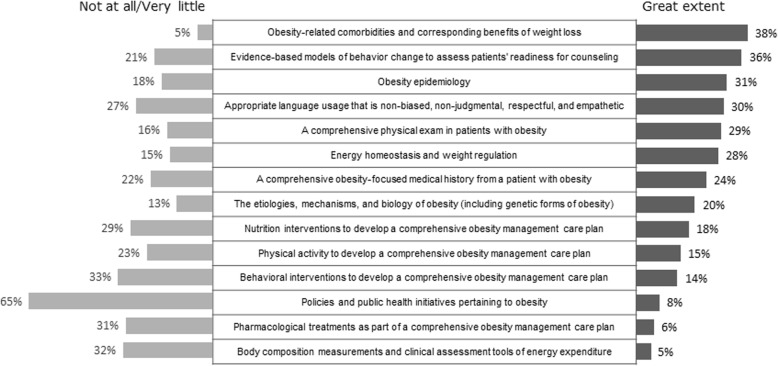
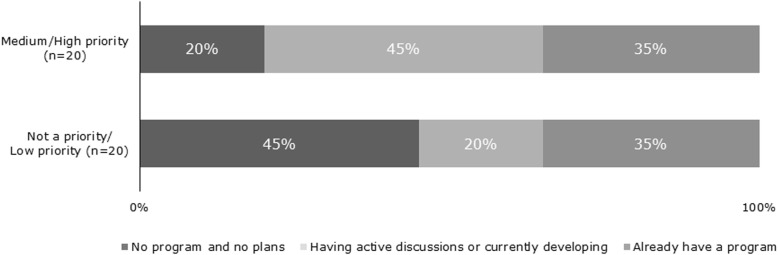
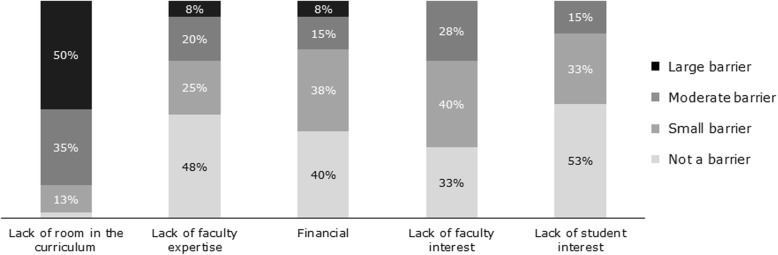
Background: Physicians are currently unprepared to treat patients with obesity, which is of great concern given the obesity epidemic in the United States. This study sought to evaluate the current status of obesity education among U.S. medical schools, benchmarking the degree to which medical school curricula address competencies proposed by the Obesity Medicine Education Collaborative (OMEC). Methods: Invitations to complete an online survey were sent via postal mail to 141 U.S. medical schools compiled from Association of American Medical Colleges. Medical school deans and curriculum staff knowledgeable about their medical school curriculum completed online surveys in the summer of 2018. Descriptive analyses were performed. Results: Forty of 141 medical schools responded (28.4%) and completed the survey. Only 10.0% of respondents believe their students were “very prepared” to manage patients with obesity and one-third reported that their medical school had no obesity education program in place and no plans to develop one. Half of the medical schools surveyed reported that expanding obesity education was a low priority or not a priority. An average of 10 h was reported as dedicated to obesity education, but less than 40% of schools reported that any obesity-related topic was well covered (i.e., to a “great extent”). Medical students received an adequate education (defined as covered to at least “some extent”) on the topics of biology, physiology, epidemiology of obesity, obesity-related comorbidities, and evidence-based behavior change models to assess patient readiness for counseling (range: 79.5 to 94.9%). However, in approximately 30% of the schools surveyed, there was little or no education in nutrition and behavioral obesity interventions, on appropriate communication with patients with obesity, or pharmacotherapy. Lack of room in the curriculum was reported as the greatest barrier to incorporating obesity education. Conclusions: Currently, U.S. medical schools are not adequately preparing their students to manage patients with obesity. Despite the obesity epidemic and high cost burden, medical schools are not prioritizing obesity in their curricula.
Overview
The claims and statistics of this paper haven’t been checked yet.
Free: it reads the open-access text and checks the first 5 claims that cite a source we can check. Create a free account to check every claim.
Integrity signals
Registry
Cites
Statistics
Figures
Verification
Claims the paper makes
The claims and statistics of this paper haven’t been checked yet.
Free: it reads the open-access text and checks the first 5 claims that cite a source we can check. Create a free account to check every claim.
Claims other papers make about this one
Each is checked against this paper’s own text: does it say what the citing paper says it does?
The source backs part of the claim, not all of it — or backs it for a different population, condition or comparison.
In the citing paper
“Academic experts, the U.S. House of Representatives, and clinical societies have called for reform to support and facilitate more robust nutrition education and training in U.S. undergraduate and graduate medical education [[106], [107], [108], [109], [110]].”
From Nutritional priorities to support GLP-1 therapy for obesity: A joint advisory from the American College of Lifestyle Medicine, the American Society for Nutrition, the Obesity Medicine Association, and the Obesity Society (2025) · cites this paper as [106]
Experimental — accuracy not yet measuredIn the citing paper
“Academic experts, the US House of Representatives, and clinical societies have called for reform to support and facilitate more robust nutrition education and training in US undergraduate and graduate medical education [[114], [115], [116], [117], [118]].”
Self-check
Percentages, sums and reported differences re-computed from the paper’s own numbers.
The self-check needs the paper’s full text.
Citations
Cites
Child abuse: Adolescent records vs. adult recall
Femina, D. D., Yeager, C. A., & Lewis, D. O. (1990) · Child Abuse & Neglect · doi:10.1016/0145-2134(90)90033-p · Cited by 8,820
Prevalence of Obesity Among Adults and Youth: United States, 2015-2016.
Hales, C. M., Carroll, M. D., Fryar, C. D., & Ogden, C. L. (2017) · PubMed · Cited by 4,554
Finkelstein, E. A., Trogdon, J. G., Cohen, J. W., & Dietz, W. (2009) · Health Affairs · doi:10.1377/hlthaff.28.5.w822 · Cited by 2,957
Health and economic burden of the projected obesity trends in the USA and the UK
Wang, Y. C., McPherson, K., Marsh, T., Gortmaker, S. L., & Brown, M. (2011) · The Lancet · doi:10.1016/s0140-6736(11)60814-3 · Cited by 2,692
The impact of obesity on health-related quality-of-life in the general adult US population
Jia, H., & Lubetkin, E. I. (2005) · Journal of Public Health · doi:10.1093/pubmed/fdi025 · Cited by 559
Nutrition Education in U.S. Medical Schools: Latest Update of a National Survey
Adams, K. M., Kohlmeier, M., & Zeisel, S. H. (2010) · Academic Medicine · doi:10.1097/acm.0b013e3181eab71b · Cited by 336
The State of Nutrition Education at US Medical Schools
Adams, K. M., Butsch, W. S., & Kohlmeier, M. (2015) · Journal of Biomedical Education · doi:10.1155/2015/357627 · Cited by 200
Self-citationManaging obesity: a survey of attitudes and practices among Israeli primary care physicians
Fogelman, Y., Vinker, S., Lachter, J., Biderman, A., Itzhak, B., & Kitai, E. (2002) · International Journal of Obesity · doi:10.1038/sj.ijo.0802063 · Cited by 173
Mogre, V., Stevens, F. C. J., Aryee, P. A., Amalba, A., & Scherpbier, A. J. J. A. (2018) · BMC Medical Education · doi:10.1186/s12909-018-1130-5 · Cited by 126
Obesity Educational Interventions in U.S. Medical Schools: A Systematic Review and Identified Gaps
Vitolins, M. Z., Crandall, S., Miller, D., Ip, E., Marion, G., & Spangler, J. G. (2012) · Teaching and Learning in Medicine · doi:10.1080/10401334.2012.692286 · Cited by 94
Research works printed but not linked: 2
- Nuttall R AAMC Organizational Characteristics Database (OCD), July 2015, presented in Medical School Revenues and Budgeting Principles 2016
- AMA Adopts New Policies on Second Day of Voting at Annual Meeting [press release]. Chicago, IL., 2013. [file://kjtfsp01/Shared%20Data/Companywide/Jobs/J19XXX/J19025/References/AMA%20Adopts%20Policy%20to%20Help%20Physicians,%20Students%20Prevent,%20Manage%20Obesity%20_%20American%20Medical%20Association_2017.html].
Cited by
Blüher, M. (2025) · Diabetes, Obesity and Metabolism · doi:10.1111/dom.16263 · Cited by 175
Nutter, S., Eggerichs, L. A., Nagpal, T. S., Ramos Salas, X., Chin Chea, C., Saiful, S., Ralston, J., Barata‐Cavalcanti, O., Batz, C., Baur, L. A., et al. (2024) · Obesity Reviews · doi:10.1111/obr.13642 · Cited by 184
“61 This view may also contribute to weight stigma and discrimination in healthcare encounters, 62 with potential significant consequences for health.”
Mozaffarian, D., Agarwal, M., Aggarwal, M., Alexander, L., Apovian, C. M., Bindlish, S., Bonnet, J., Butsch, W. S., Christensen, S., Gianos, E., et al. (2025) · The American Journal of Clinical Nutrition · doi:10.1016/j.ajcnut.2025.04.023 · Cited by 154
“Academic experts, the U.S. House of Represen-tatives, and clinical societies have called for reform to support and facilitate more robust nutrition education and training in U.S. undergraduate and graduate medical education [106 – 110].”
Self-citationMozaffarian, D., Agarwal, M., Aggarwal, M., Alexander, L., Apovian, C. M., Bindlish, S., Bonnet, J., Butsch, W. S., Christensen, S., Gianos, E., et al. (2025) · Obesity · doi:10.1002/oby.24336 · Cited by 143
“The approach to initiating pharmacologic therapy for obesity should be 4 summarizes the components of the original 5As framework applied to obesity care using GLP-1 treatment.”
Self-citationDisparities in Access and Quality of Obesity Care
Washington, T. B., Johnson, V. R., Kendrick, K., Ibrahim, A. A., Tu, L., Sun, K., & Stanford, F. C. (2023) · Gastroenterology Clinics of North America · doi:10.1016/j.gtc.2023.02.003 · Cited by 141
Weight Stigma and Barriers to Effective Obesity Care
Puhl, R. M. (2023) · Gastroenterology Clinics of North America · doi:10.1016/j.gtc.2023.02.002 · Cited by 117
“Recent evidence indicates that current United States medical schools are not adequately training medical students in obesity management or prioritizing obesity in medical education curriculum.(73) Given that education on weight stigma is much more likely to appear in obesity-related curriculum than other”
BackgroundHorn, D. B., Almandoz, J. P., & Look, M. (2022) · Postgraduate Medicine · doi:10.1080/00325481.2022.2051366 · Cited by 114
Protective role of mitoquinone against impaired mitochondrial homeostasis in metabolic syndrome
Yang, J., Suo, H., & Song, J. (2020) · Critical Reviews in Food Science and Nutrition · doi:10.1080/10408398.2020.1809344 · Cited by 66
“By 2030, 33–50% of children and adolescents in the USA will be overweight/obese (Butsch et al. 2020).”
BackgroundCaring for US Children: Barriers to Effective Treatment in Children with the Disease of Obesity
Srivastava, G., Browne, N. T., Kyle, T. K., O’Hara, V. M., Browne, A. F., Nelson, T., & Puhl, R. M. (2020) · Obesity · doi:10.1002/oby.22987 · Cited by 50
“Nutrition and obesity education are rarely taught (<1% of curriculum) in medical or nursing education, and they are not prioritized compared with chronic diseases such as diabetes and cardiovascular disease (33).”
BackgroundGreaney, M. L., Cohen, S. A., Xu, F., Ward‐Ritacco, C. L., & Riebe, D. A. (2020) · BMJ Open · doi:10.1136/bmjopen-2020-039295 · Cited by 53
A qualitative exploration of obesity bias and stigma in Irish healthcare; the patients’ voice
O’Donoghue, G., Cunningham, C., King, M., O’Keefe, C., Rofaeil, A., & McMahon, S. (2021) · PLoS ONE · doi:10.1371/journal.pone.0260075 · Cited by 76
Treating the Chronic Disease of Obesity
Gossmann, M., Butsch, W. S., & Jastreboff, A. M. (2021) · Medical Clinics of North America · doi:10.1016/j.mcna.2021.06.005 · Cited by 33
Self-citationGallagher, C., Corl, A., & Dietz, W. H. (2021) · Obesity · doi:10.1002/oby.23154 · Cited by 32
“Whereas schools and training programs in some disciplines have begun to prioritize training and education in obesity management, the most effective evidence- based approaches for management of obesity are not routinely or widely included in primary care practices (11).”
BackgroundHerbozo, S., Brown, K. L., Burke, N. L., & LaRose, J. G. (2023) · Current Obesity Reports · doi:10.1007/s13679-023-00493-5 · Cited by 36
Physicians certified by the American Board of Obesity Medicine provide evidence‐based care
Gudzune, K. A., Wickham, E. P., Schmidt, S. L., & Stanford, F. C. (2020) · Clinical Obesity · doi:10.1111/cob.12407 · Cited by 29
Medical and Surgical Treatment of Obesity
Reid, T. J., & Körner, J. (2022) · Medical Clinics of North America · doi:10.1016/j.mcna.2022.03.002 · Cited by 41
Mozaffarian, D., Agarwal, M., Aggarwal, M., Alexander, L., Apovian, C. M., Bindlish, S., Bonnet, J., Butsch, W. S., Christensen, S., Gianos, E., et al. (2025) · Obesity Pillars · doi:10.1016/j.obpill.2025.100181 · Cited by 28
Self-citationMozaffarian, D., Agarwal, M., Aggarwal, M., Alexander, L., Apovian, C. M., Bindlish, S., Bonnet, J. P., Butsch, W. S., Christensen, S. M., Gianos, E., et al. (2025) · Obesity Pillars · doi:10.1016/j.obpill.2026.100269 · Cited by 41
Self-citationMedicine, structural racism, and systems
Aaron, D. G., & Stanford, F. C. (2022) · Social Science & Medicine · doi:10.1016/j.socscimed.2022.114856 · Cited by 30
Orjuela‐Grimm, M., Butsch, W. S., Bhatt-Carreño, S., Smolarz, B. G., & Rao, G. (2021) · BMC Family Practice · doi:10.1186/s12875-021-01484-y · Cited by 23
“We based the family medicine survey on a similar survey of medical schools [22] and internal medicine residency programs [16].”
MethodSelf-citationSchumacher, L. M., Ard, J. D., & Sarwer, D. B. (2023) · Frontiers in Public Health · doi:10.3389/fpubh.2023.1205880 · Cited by 26
Comparisons of Explicit Weight Bias Across Common Clinical Specialties of US Resident Physicians
Philip, S. R., Fields, S. A., van Ryn, M., & Phelan, S. M. (2023) · Journal of General Internal Medicine · doi:10.1007/s11606-023-08433-8 · Cited by 21
“26, 27 Objective Various studies have examined patient experiences of stigma within primary care settings 28–31 and biases held by primary care providers.”
Introduction and methodology: Standards of Care in Overweight and Obesity—2025
Bannuru, R. R. (2025) · BMJ Open Diabetes Research & Care · doi:10.1136/bmjdrc-2025-004928 · Cited by 29
“13 14 Additionally, clinicians may not always feel confident about how to sensitively approach the topic of obesity treat-ment with individuals under their care, 15 particularly given the issues of weight bias and stigma.”
Pollack, C. C., Onega, T., Emond, J. A., Vosoughi, S., O’Malley, A. J., McClure, A. C., Rothstein, R. I., & Gilbert-Diamond, D. (2022) · International Journal of Obesity · doi:10.1038/s41366-021-01024-9 · Cited by 17
Capehorn, M., Hinchliffe, N., Cook, D., Hill, A. J., O'Kane, M., Tahrani, A. A., Vincent, A., Williams, S., & Feenie, J. (2022) · Advances in Therapy · doi:10.1007/s12325-022-02108-2 · Cited by 19
Katz, N. J., Lovrics, O., & Zevin, B. (2022) · BMC Medical Education · doi:10.1186/s12909-022-03636-9 · Cited by 17
“A representative survey of American medical schools conducted in 2020 demonstrated a paucity of formal education around management of patients living with obesity; reporting consistently low prioritization to develop obesity curricula, and little to no teaching on fundamental obesity topics (such as nutrition, behavio…”
BackgroundInfluentialKoran-Scholl, J. B., Geske, J., Khandalavala, K. R., & Khandalavala, B. N. (2023) · BMC Medical Education · doi:10.1186/s12909-023-04310-4 · Cited by 22
My Health Advisor is a Robot: Understanding Intentions to Adopt a Robotic Health Advisor
Kim, J., Merrill, K., Xu, K., & Collins, C. (2023) · International Journal of Human-Computer Interaction · doi:10.1080/10447318.2023.2239559 · Cited by 19
“Further, for various reasons and demands, medical schools in the U.S. do not adequately prioritize obesity issues in the medical education curricula (Butsch et al., 2020).”
Johnson, S., Gupta, S., Mackey, E. R., McCarron, K., Fischer, L. K., Panton, D., & Essel, K. D. (2022) · Childhood Obesity · doi:10.1089/chi.2021.0274 · Cited by 15
Elhag, W., & Ansari, W. E. (2025) · Obesity Surgery · doi:10.1007/s11695-024-07654-y · Cited by 15
“Such findings high-light the limited coverage of obesity education and the lack of prioritization to develop expanded curricula in obesity [89].”
InfluentialEssel, K. D., Fotang, J. P., Deyton, L., & Cotter, E. W. (2022) · Teaching and Learning in Medicine · doi:10.1080/10401334.2022.2041421 · Cited by 16
Stoutenberg, M., Lewis, L. K., Jones, R. M., Portacio, F., Vidot, D. C., & Kornfeld, J. (2023) · BMC Medical Education · doi:10.1186/s12909-023-04044-3 · Cited by 16
“This leads to medical students who are, at most, only moderately competent in providing physical activity recommendations and obesity treatment [20, 21].”
BackgroundHildebrand, C. A., Patel, M. B., Tenney, A. B., Logan, J. A., Luong, K. H., Crouch, M. J., Osta, A. E., DeRoo, C., Gilliland, K. O., Harlan, T. S., et al. (2024) · Teaching and Learning in Medicine · doi:10.1080/10401334.2024.2340977 · Cited by 16
Petrizzo, M. C., Block, L., Olvet, D. M., Sheridan, E. M., Dougherty, R., Whitson, M. J., John, J. T., Barilla-LaBarca, M.-L., Figlia-Peck, S. D., & Fornari, A. B. (2020) · Journal of the American College of Nutrition · doi:10.1080/07315724.2020.1737985 · Cited by 13
Katz, N. J., Neary, E., Tang, N., Braund, H., Cofie, N., & Zevin, B. (2021) · Obesity Reviews · doi:10.1111/obr.13329 · Cited by 16
Mojkowska, A., Sobczak, K., Leoniuk, K., Henzler, M., & Jackowski, M. (2023) · Obesity Facts · doi:10.1159/000529266 · Cited by 18
Ryan, L., O’Donoghue, G., Crotty, M., Birney, S., Heary, C., Hanlon, M. L. D., Conlan, O., & Walsh, J. C. (2024) · Obesity Science & Practice · doi:10.1002/osp4.70012 · Cited by 12
“7,37 Obesity was presented as a risk factor for comorbid diseases with latent connotations of it being self - inflicted due to its association with poor nutrition and physical inactivity.”
BackgroundContreras, F., Ko, T. Y. L., le Roux, C. W., & Al‐Najim, W. (2025) · Obesity Pillars · doi:10.1016/j.obpill.2025.100202 · Cited by 13
Survey of Nutrition Education Among Medical Students
Duggan, M. P., Kodali, A. T., Panton, Z. A., Smith, S. M., Riew, G. J., Donaghue, J. F., Leya, G. A., & Briggs, L. G. (2023) · Journal of Wellness · doi:10.55504/2578-9333.1167 · Cited by 12
Team-Based Learning Intervention to Improve Obesity Education in Medical School
Olson, A., Watowicz, R. P., Seeholzer, E. L., Lyons, K., Butsch, W. S., & Croniger, C. M. (2023) · MedEdPORTAL · doi:10.15766/mep_2374-8265.11369 · Cited by 11
Self-citationKhamseh, M. E., Emami, Z., Iranpour, A., Mahmoodian, R., Amouei, E., Tizmaghz, A., Moradi, Y., & Baradaran, H. R. (2023) · Archives of Iranian Medicine · doi:10.34172/aim.2023.78 · Cited by 11
“47,58,59 More Important Concern to Discuss Discussions about the possible impacts of obesity on general health are a potentially disturbing and humiliating topic.”
BackgroundOpportunities for General Internal Medicine to Promote Equity in Obesity Care
Kane, R. M., Nicklas, J. M., Schwartz, J. L., Bramante, C. T., Yancy, W. S., Gudzune, K. A., & Jay, M. R. (2024) · Journal of General Internal Medicine · doi:10.1007/s11606-024-09084-z · Cited by 10
“48 The most commonly reported barriers were lack of faculty expertise and limited curricular time.”
A Survey of Obesity Education and Training in United States Pharmacy Schools
Phillips, E. J., Traina, A. N., & Smolarz, B. G. (2023) · American Journal of Pharmaceutical Education · doi:10.1016/j.ajpe.2023.100109 · Cited by 10
Self-citationPreclinical obesity curriculum: audit, implementation, and evaluation
Olson, A., Watowicz, R. P., Seeholzer, E. L., Lyons, K., Butsch, W. S., & Croniger, C. M. (2024) · BMC Medical Education · doi:10.1186/s12909-024-05606-9 · Cited by 9
“The greatest barrier to incorporating obesity education was lack of room in the curriculum [7] Studies of obesity coverage in graduate medical education have shown that obesity is similarly neglected during residency training [8, 9].”
BackgroundMethodInfluentialSelf-citationObesity preclinical elective: a qualitative thematic analysis of student feedback
Olson, A., Lyons, K., Watowicz, R. P., Loria, M., Meluban, L., Lampkin, S. B., Butsch, W. S., & Seeholzer, E. L. (2023) · International Journal of Obesity · doi:10.1038/s41366-023-01387-1 · Cited by 10
“One-third of schools reported there were no obesity education programs in place and no plans to develop one and half of the schools reported obesity education as a low priority or not a priority at all [4].”
Self-citationDixon, J. B., Ghani, R. A., & Sbraccia, P. (2025) · Obesity Science & Practice · doi:10.1002/osp4.70033 · Cited by 11
Obesity in the USMLE Step 1 examination: A call to action
Olson, A., Stanford, F. C., & Butsch, W. S. (2023) · International Journal of Obesity · doi:10.1038/s41366-023-01308-2 · Cited by 7
“It is often not thought of as a disease but instead attributed to a lack of willpower or moral failing [6].”
BackgroundInfluentialSelf-citationGrunvald, E. L., Wei, J., Lin, T., Yang, K. Y., Tu, X. M., Lunde, O., Ross, E., Cheng, J. S.-C., DeConde, J., & Farber, N. J. (2023) · Journal of Medical Education and Curricular Development · doi:10.1177/23821205231207683 · Cited by 7
“28 Because obesity medicine is rarely covered on licensing and cer-ti fi cation examinations, education and training programs have little incentive to prioritize obesity topics in already crowded curricula.”
BackgroundThe essential role of primary care providers in obesity management
Whigham, L. D., Messiah, S. E., Balasubramanian, B. A., & Dhurandhar, N. V. (2023) · International Journal of Obesity · doi:10.1038/s41366-023-01268-7 · Cited by 7
“Obesity-related training is non-existent or a low priority in most medical school curriculums [5], yet it is the most prevalent chronic disease PCPs will see in their practices.”
BackgroundTenedero, C. B., O'Brien, K. T., Patel, B. P., Strom, M., Deveci, A. C., Chu, L., Jayawardena, S., Noseworthy, R., McPherson, A. C., Walsh, C. M., et al. (2023) · Clinical Obesity · doi:10.1111/cob.12617 · Cited by 6
“9,12,14,19 However, the majority of studies describing the need for educational interventions, focus on improving obesity management skills, such as counselling and motivational interviewing.”
BackgroundGabison, J. G., Palazzolo, B., Saleh, C., Ritchie, O., Sheehan, K., Othman, A., Harper, D. M., & Oshman, L. D. (2024) · Clinical Obesity · doi:10.1111/cob.12654 · Cited by 7
Siddiqui, H., Nearing, G., Regalado, S. M., Delaney, K. Z., & Cameron, E. (2025) · Obesity Reviews · doi:10.1111/obr.13938 · Cited by 7
The American Board of Obesity Medicine
Johnson‐Rabbett, B., Brittan, D., Reid, T. J., Körner, J., & Wickham, E. P. (2024) · Endocrinology and Metabolism Clinics of North America · doi:10.1016/j.ecl.2024.09.002 · Cited by 5
Masud, R., Anjum, A. F., Khokhar, A., Naiyar, I., Ayaz, H., Azhar, R., Azeem, M. W., Irfan, R., Azam, S., Shoaib, S., et al. (2021) · Pakistan Journal of Medical and Health Sciences · doi:10.53350/pjmhs211551482 · Cited by 5
“This shift in habits, involving more and more time spent indoors, with minimal physical activity is contributing to the alarming rate of increase in obesity and general lack of physical well-being amongst medical students.(8) There has been growing scientific evidence highlighting the link between irregularities in bo…”
BackgroundObesity amongst Medical Students - A Cross-Sectional Comparative Study from Lahore, Pakistan, 2022
Khan, R. S., Khan, S. S., & Siddique, R. (2022) · Pakistan Journal of Medical and Health Sciences · doi:10.53350/pjmhs22161018 · Cited by 5
Gill, L. A., Coborn, J., Hoovler, A., & Sherif, K. (2023) · Journal of Women s Health · doi:10.1089/jwh.2022.0471 · Cited by 10
“29,30 Future research will be needed to determine the best way to educate OB/GYNs about obesity management.”
The Effects of Obesity on Health Care Delivery
Velazquez, A., & Apovian, C. M. (2023) · Gastroenterology Clinics of North America · doi:10.1016/j.gtc.2023.03.007 · Cited by 7
Tackling the complexity of obesity in the US through adaptation of public health strategies
Ard, J. D., Huett-Garcia, A., & Bildner, M. E. (2025) · Frontiers in Public Health · doi:10.3389/fpubh.2025.1477401 · Cited by 6
Nagpal, T. S., Pearce, N., Dhaliwal, K. K., & Abraham, J. R. (2023) · Obesity Pillars · doi:10.1016/j.obpill.2023.100086 · Cited by 5
“…in obesity education in the United States as highlighted by a report in 2007 from the Association of American Medical Colleges, a comprehensive review of the medical licensing exams, and numerous papers voicing concerns about the lack of adequate training around obesity care in the country [26].”
BackgroundA Multi-Modality Intervention Improves Obesity Bias among Medical Students
Trofymenko, S., Kutob, R. M., & Algotar, A. M. (2024) · Medicines · doi:10.3390/medicines11020004 · Cited by 6
“Half of the schools reported that expanding obesity education was not a priority [3].”
BackgroundSchumacher, L. M., Bass, S. B., Ard, J. D., Rubin, D. J., Herring, S. J., Rao, A. D., Jones, R. M., & Sarwer, D. B. (2025) · Diabetes Care · doi:10.2337/dci25-0094 · Cited by 7
Ko, T. Y. L., Contreras, F., le Roux, C. W., & Al‐Najim, W. (2026) · BMC Medical Education · doi:10.1186/s12909-025-08236-x · Cited by 4
“There are very few studies looking specifically at obe-sity-training for healthcare professionals [4, 14, 15].”
InfluentialAdvancing Person-Centered Care in the New Era of Obesity Treatment
Schumacher, L. M., Brocq, S. L., Wharton, S., Fox, C. K., Schur, E. A., Sumithran, P., & Ard, J. D. (2025) · Journal of General Internal Medicine · doi:10.1007/s11606-025-09742-w · Cited by 4
“11,12 However, deep-rooted and widespread weight bias also greatly complicates matters.”
Schumacher, L. M., & Sarwer, D. B. (2025) · Plastic & Reconstructive Surgery Global Open · doi:10.1097/gox.0000000000007085 · Cited by 3
“52,53 Even providers who are regularly engaged in obesity management, such as primary care physicians and endocrinologists, report knowledge gaps about GLP-1s and dual agonists.”
Chae, K., German, J., Kendrick, K. N., Tackett, S. A., O’Rourke, P., Gudzune, K. A., & Laudenslager, M. (2024) · Obesity Science & Practice · doi:10.1002/osp4.748 · Cited by 5
Ng, W., Koura, R., Khaider, K. B., Chew, C. S. E., & Davis, C. (2025) · BMC Medical Education · doi:10.1186/s12909-024-06589-3 · Cited by 5
Knowledge and Barriers to a Healthy Lifestyle in Medical Students
Nelson, B., Petushek, E. J., & Teising, S. (2023) · American Journal of Lifestyle Medicine · doi:10.1177/15598276231199057 · Cited by 6
Hammad, N. M., Sonneville, K. R., Shanab, B. M., Khosla, P., Austin, S. B., & Leung, C. W. (2025) · Eating Behaviors · doi:10.1016/j.eatbeh.2025.102010 · Cited by 3
Kyriakoulakou, E., Skouras, A. Z., Tsolakis, C. K., Koulouvaris, P., & Philippou, Α. (2025) · Behavioral Sciences · doi:10.3390/bs15070925 · Cited by 3
“Barriers may include limited curricular space, a lack of faculty with expertise in exercise science, and the underprioritization of preventive health topics (Garry et al., 2002; Butsch et al., 2020).”
Waldrop, S., Osborn, B., Allende‐Richter, S., Gilley, S. P., Maya, J., Floyd, A. L., & Stanford, F. C. (2025) · Obesity Reviews · doi:10.1111/obr.70009 · Cited by 2
Obesity 2021: Rejecting Old Misconceptions and Embracing a New Paradigm to Improve Outcomes
Mangarelli, C. (2021) · Clinical Therapeutics · doi:10.1016/j.clinthera.2021.06.002 · Cited by 2
Ortega, H., Tache, C., Bachtel, G., & Merlo, G. (2023) · American Journal of Lifestyle Medicine · doi:10.1177/15598276231187343 · Cited by 2
Utilization of antiobesity medications within the Military Health System
Neuman, T. J., Corrado, R., Banaag, A. L., & Koehlmoos, T. P. (2024) · Obesity · doi:10.1002/oby.24097 · Cited by 2
“A survey sent to medical schools in 2018 found that one-third of respondent medical schools had no obesity education and no plan to develop one, whereas half of the schools said that obesity education was a low priority or not a priority [28].”
Anderson, M. R., Aronson, K. I., Diamond, J. M., Christie, J. D., & Singer, J. P. (2022) · Annals of the American Thoracic Society · doi:10.1513/annalsats.202201-019rl · Cited by 2
Diet, Exercise, and Behavior Therapy
Schumacher, L. M., Sarwer, D. B., & Allison, K. C. (2023) · Springer eBooks · doi:10.1007/978-3-031-40116-9_43 · Cited by 2
Pendharkar, J. A., Frisard, C., Geller, A. C., Pbert, L. A., Crawford, S. L., Guck, T. P., Stadler, D. D., & Ockene, J. K. (2021) · Preventive Medicine Reports · doi:10.1016/j.pmedr.2021.101411 · Cited by 4
“…in WMC (Kraschnewski et al., 2013; Smith et al., 2015; Ahmed et al., 2016; Vitolins et al., 2012; Butsch et al., 2020) and report low self-efficacy (Block et al., 2003; Forman-Hoffman et al., 2006; Kristeller and Hoerr, 1997; Davis et al., 2008; Adams, 0000) or low confidence in their ability to…”
BackgroundHernandez, R. G., Tanaka, K., McPeak, K. E., & Thompson, D. A. (2022) · Clinical Pediatrics · doi:10.1177/00099228221074776 · Cited by 1
Obesity Education May Not Be Sufficient in US Dietetic Internship Programs
Childress, A., Klobodu, S. S., Chrisman, M., Bailey, D. A., Kerin, A., & Benavides, M. L. (2023) · Nutrition Today · doi:10.1097/nt.0000000000000589 · Cited by 2
Equity in bariatric surgery use: a cohort study
Gershuni, V. M., Wall‐Wieler, E., Liu, Y., Zheng, F., & Altieri, M. S. (2024) · Surgery for Obesity and Related Diseases · doi:10.1016/j.soard.2023.12.017 · Cited by 2
Exploring the Nutrition Care Journey of People Living With Obesity in Acute Care
Elliott, A., Noble, K., Flynn, D., Bauer, J. D., & Gibson, S. (2025) · Journal of Human Nutrition and Dietetics · doi:10.1111/jhn.70003 · Cited by 1
Obesity Medicine Fellowship Education in the United States: A Descriptive Study
Tchang, B. G., Callister, P., Brandt, C., Schmidt, S. L., Srivastava, G., & Butsch, W. S. (2025) · Diabetes Technology and Obesity Medicine · doi:10.1089/dtom.2025.0071 · Cited by 1
Self-citationShortage of Obesity Medicine Specialists in the United States
Bajaj, S. S., Teegala, S., & Stanford, F. C. (2026) · Mayo Clinic Proceedings · doi:10.1016/j.mayocp.2025.10.015 · Cited by 1
Ross, R., Janssen, I., & Després, J. (2026) · Current Obesity Reports · doi:10.1007/s13679-026-00725-4 · Cited by 2
“Recent evidence indicates that training in obesity assessment and management is limited, which may contribute to graduates being inadequately prepared to manage patients with obesity [53, 54].”
Shafer, R., Shapiro, L., Carnavali, F., Andrilli, J. A., Lynch, R., & Goldberg, T. (2026) · Journal of General Internal Medicine · doi:10.1007/s11606-026-10693-z · Cited by 1
Obesity Management and Prevention of Cardiovascular Disease
Gazda, C., & Almandoz, J. P. (2020) · Contemporary cardiology · doi:10.1007/978-3-030-56279-3_7 · Cited by 1
Person-First Treatment Strategies
Crowley, N. M. (2022) · Primary Care Clinics in Office Practice · doi:10.1016/j.pop.2022.10.002 · Cited by 3
Diet, Exercise, and Behavior Therapy
Schumacher, L. M., Sarwer, D. B., & Allison, K. C. (2023) · Springer eBooks · doi:10.1007/978-3-319-12125-3_43-2 · Cited by 1
From Theory to Practice: A Roadmap to Develop Comprehensive Obesity Curricula
Olson, A. (2023) · Academic Medicine · doi:10.1097/acm.0000000000005613 · Cited by 1
Approaches to teaching about mechanisms of obesity in undergraduate pathophysiology courses
Walton, K. L. W. (2024) · AJP Advances in Physiology Education · doi:10.1152/advan.00122.2023 · Cited by 1
BOHLER, H. C. L. (2024) · Nursing Clinics of North America · doi:10.1016/j.cnur.2024.08.005 · Cited by 3
Watowicz, R. P., Krishnan, V., & Butsch, W. S. (2024) · BMC Medical Education · doi:10.1186/s12909-024-06433-8 · Cited by 1
Self-citationTolvanen, L., Mossberg, K., Standen, E. C., Grace, L. M., Lebow, J. R., Phelan, S. M., Andersson, D. P., & Koball, A. M. (2025) · Obesity Science & Practice · doi:10.1002/osp4.70087 · Cited by 3
Christensen, S. M. (2021) · Springer eBooks · doi:10.1007/978-3-030-69311-4_4 · Cited by 1
Knowledge and Barriers to a Healthy Lifestyle in Medical StudentsPreprint
Nelson, B., Petushek, E. J., & Teising, S. (2022) · Research Square · doi:10.21203/rs.3.rs-2307051/v1 · Cited by 1
Training and Medical Systems for Obesity Care
Dietz, W. H. (2022) · Wiley eBooks · doi:10.1002/9781119695257.ch24
A Canadian Survey of Medical Students and Undergraduate Deans on Managing Patients With ObesityPreprint
Katz, N. J., Lovrics, O., & Zevin, B. (2022) · Research Square · doi:10.21203/rs.3.rs-1363401/v1
Grunvald, E. L. (2022) · The Lancet Regional Health - Americas · doi:10.1016/j.lana.2022.100259
Feenie, J., & Hinchliffe, N. (2022) · In clinical practice · doi:10.1007/978-3-030-83399-2_24
The other pandemic: how US physician assistants teach about obesity, a national curriculum survey
Polito, A. (2022) · Digital Repository Service (Northeastern University) · doi:10.17760/d20471063
Weight management practices of health center providers in the United States
Pourat, N., Lu, C. M., Chen, X., Zhou, W., Hoang, H., & Sripipatana, A. (2023) · Journal of Communications In Healthcare · doi:10.1080/17538068.2023.2189378
Metadata
- Authors
- Butsch, W. S., Kushner, R. F., Alford, S., & Smolarz, B. G.
- Affiliations
- Cleveland Clinic (US)
- Northwestern University (US)
- Corresponding author
- Smolarz, B. Gabriel
- Venue
- BMC Medical Education
- Published
- 2020-01-28
- Volume
- 20
- Issue
- 1
- Pages
- 23-23
- ISSN
- 1472-6920 (ISSN-L)
- PMC
- PMC6988262
- OpenAlex
- W3007930653
- Cited by
- 145
- References
- 16
- Citations by year
- 2026: 23 · 2025: 27 · 2024: 20 · 2023: 34 · 2022: 25 · 2021: 10 · 2020: 6
- FWCI
- 28.87
- Type
- journal article
- Language
- en
- Open access
- gold
- doi.org
- Licence
- cc-by
- creativecommons.org/licenses/by/4.0/ (tdm)
- creativecommons.org/licenses/by/4.0/ (vor)
- Locations
- BMC Medical Education (publishedVersion, cc-by)
- PubMed Central (publishedVersion, cc-by)
- PubMed (publishedVersion)
- DOAJ (DOAJ: Directory of Open Access Journals) (submittedVersion, cc-by-sa)
- Funders
- Novo Nordisk (NA)
- Topics
- Health Sciences › Medicine › Public Health, Environmental and Occupational Health › Obesity and Health Practices
- Social Sciences › Education › Innovations in Medical Education
- Health Sciences › Health Professions › General Health Professions › Health and Medical Education
- Keywords
- obesity education, medical curriculum, curriculum benchmarking, nutrition education, obesity pharmacotherapy, patient communication, obesity-related comorbidities, behavior change models
- MeSH terms
- Clinical Competence, Counseling, Curriculum, Humans, Obesity, Schools, Medical, Students, Medical, Time Factors, United States, Health Care Surveys, Benchmarking
About these checks
Registry, retraction, Cites and statistics results are computed, not judged, with one exception: a printed reference that no index lists is read once by a model before it counts as a citation error. Claims are extracted by a model and kept only when their quote appears verbatim in the text; each cited source is then checked, with a model’s help, for whether it says what the claim relies on. Those verdicts can be wrong — read the claim’s quote and the cited source before relying on one.
Statistics and arithmetic are recomputed, not judged.
Confidence bands are shown only for fields calibrated on our annotated test set. None is calibrated yet, so no band is shown.
What counts as a claim ›How we measure confidence ›How we check this ›
Are you an author, or do you see a problem with this page? Request a review
Data sources
Bibliographic data: Semantic Scholar, OpenAlex, Crossref.
Contains information from the Semantic Scholar Academic Graph Datasets, made available under the ODC Attribution License (ODC-BY 1.0).
Semantic Scholar’s data is described in: Kinney, R., et al. (2023). The Semantic Scholar Open Data Platform. arXiv:2301.10140.
