

Emerging trends in gamification for clinical reasoning education: a scoping review
Open accessThe DOI matches its Crossref record; 103 of the 103 references it cites were found in a registry or an index.
Abstract
BACKGROUND: Clinical reasoning is a fundamental skill in healthcare education, crucial for diagnosing and managing patient care effectively. Traditional pedagogical techniques often fall short in fully engaging students or simulating real-life medical decision-making complexities. Gamification, which applies game-design elements in educational settings, has emerged as a promising strategy to enhance learning outcomes by making the educational process more interactive and engaging. This scoping review aims to comprehensively map the existing literature on gamification techniques used to enhance clinical reasoning education, identifying trends, gaps, and opportunities for future research. METHODS: The review followed the Joanna Briggs Institute (JBI) methodology and the Arksey and O'Malley framework for scoping reviews. A systematic search of Medline, Scopus, and Web of science, complemented by hand-searching reference lists. Studies published between 2014 and 2023, focusing on gamification applied to clinical reasoning education for healthcare professionals and trainees, were eligible for inclusion. Two independent reviewers screened and selected studies, and data were extracted using a pre-defined tool. Findings were synthesized using both quantitative summaries and qualitative thematic analysis. RESULTS: Fifty-three studies met the inclusion criteria, representing research from 20 countries, with the United States contributing the largest proportion (28.3%), followed by Germany (9.4%) and France (7.6%). The majority of studies were cross-sectional (28.3%) or pilot studies (22.6%). Gamification was most frequently applied in university and academic settings (37.7%), followed by clinical and hospital-based training (18.9%), and digital platforms and simulations (17.0%). Medicine (28.3%) and nursing (22.6%) were the most targeted disciplines, with pharmacy (13.2%) following. Serious games were the most common gamification technique (45.3%), with additional strategies including escape rooms (11.3%), board and card games (7.5%), and branching case-based games (5.7%). Most studies (88.7%) referenced at least one theoretical framework, predominantly game-based learning theories (34.0%), followed by constructivist learning (13.2%) and experiential learning theories (13.2%). However, cognitive theories, directly relevant to clinical reasoning, were referenced in only 11.3% of studies, highlighting a theoretical gap. CONCLUSIONS: Amification offers diverse and flexible strategies for enhancing clinical reasoning education across healthcare disciplines and settings. However, significant gaps remain, including limited longitudinal evidence, inconsistent use of validated reasoning assessments, underutilization of cognitive reasoning theories, and a lack of standardized design and reporting frameworks. Moreover, research predominantly focuses on medicine and nursing, with limited attention to interprofessional reasoning and underrepresented fields such as dentistry, rehabilitation, and allied health. Future research should prioritize theoretically informed gamification design, apply robust reasoning outcome measures, and explore emerging technologies such as AI-enhanced adaptive gamification and immersive virtual reality simulations to support clinical reasoning development. Addressing these gaps will ensure that gamification evolves from a promising innovation into a rigorously evidence-based strategy for enhancing clinical reasoning competence in healthcare education.
Overview
The claims and statistics of this paper haven’t been checked yet.
Free: it reads the open-access text and checks the first 5 claims that cite a source we can check. Create a free account to check every claim.
Integrity signals
Registry
Cites
Statistics
Figures
Verification
Claims the paper makes
The claims and statistics of this paper haven’t been checked yet.
Free: it reads the open-access text and checks the first 5 claims that cite a source we can check. Create a free account to check every claim.
Claims other papers make about this one
Each is checked against this paper’s own text: does it say what the citing paper says it does?
The source backs part of the claim, not all of it — or backs it for a different population, condition or comparison.
In the citing paper
“Studies and reviews report that gamification, and the use of serious games, can raise student motivation and can improve learning outcomes in various levels of and disciplines within higher education (45–50).”
From Global Health Trade Summit: an AI-enhanced simulation of international trade and global health for undergraduate public health education (2025) · cites this paper as [50]
Experimental — accuracy not yet measured
Self-check
Percentages, sums and reported differences re-computed from the paper’s own numbers.
The self-check needs the paper’s full text.
Citations
Cites
PRISMA Extension for Scoping Reviews (PRISMA-ScR): Checklist and Explanation
Tricco, A. C., Lillie, E., Zarin, W., O'Brien, K. K., Colquhoun, H., Levac, D., Moher, D., Peters, M. D. J., Horsley, T., Weeks, L., et al. (2018) · Annals of Internal Medicine · doi:10.7326/m18-0850 · Cited by 43,565 · cited 1×
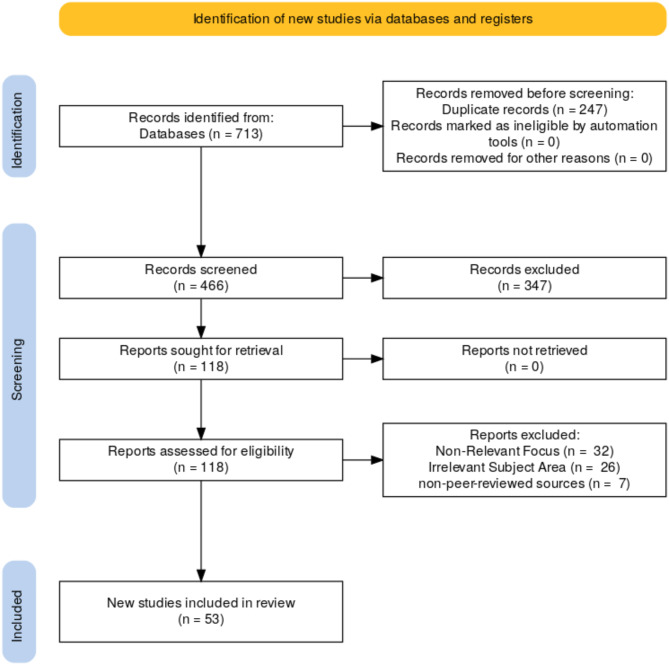
“The study selection process involving search results and details of inclusion is illustrated in the PRISMA-ScR flowchart [31].”
Scoping studies: towards a methodological framework
Arksey, H., & O'Malley, L. (2005) · International Journal of Social Research Methodology · doi:10.1080/1364557032000119616 · Cited by 36,742
Updated methodological guidance for the conduct of scoping reviews
Peters, M. D. J., Marnie, C., Tricco, A. C., Pollock, D., Munn, Z., Alexander, L., McInerney, P., Godfrey, C. M., & Khalil, H. (2020) · JBI Evidence Synthesis · doi:10.11124/jbies-20-00167 · Cited by 9,046 · cited 2×
“The systematic process recommended in the Joanna Briggs Institute methodology and the framework for scoping reviews by Arksey and O’Malley were followed in this scoping review [29, 30].”
From game design elements to gamefulness: defining "gamification"
Deterding, S., Dixon, D., Khaled, R., & Nacke, L. (2011) · Proceedings of the 15th International Academic MindTrek Conference: Envisioning Future Media Environments · doi:10.1145/2181037.2181040 · Cited by 8,402 · cited 1×
“The most applied frameworks were game-based learning and gamification theories (34%), which emphasize using points, badges, leaderboards, and narratives to enhance learner motivation and engagement [95].”
Cognitive load theory, learning difficulty, and instructional design
Sweller, J. (1994) · Learning and Instruction · doi:10.1016/0959-4752(94)90003-5 · Cited by 5,426 · cited 1×
“Cognitive load theory could further guide game complexity, ensuring that reasoning challenges are cognitively stimulating without overwhelming learners [101].”
Does Gamification Work? -- A Literature Review of Empirical Studies on Gamification
Hamari, J., Koivisto, J., & Sarsa, H. (2014) · 2014 47th Hawaii International Conference on System Sciences · doi:10.1109/hicss.2014.377 · Cited by 5,201 · cited 1×
“Gamification, defined as the application of game-based methods and processes in educational or training environments, aims to increase learners’ intrinsic motivation for voluntary learning activities [11–13].”
Dual-Processing Accounts of Reasoning, Judgment, and Social Cognition
Evans, J. S. B. T. (2008) · Annual Review of Psychology · doi:10.1146/annurev.psych.59.103006.093629 · Cited by 5,137 · cited 1×
“Cognitive frameworks such as dual-process theory [100]—which describes the interplay between fast, intuitive (System 1) and slower, analytical (System 2) reasoning—offer valuable insights that could enhance future gamified designs [92].”
The gamification of learning: a meta-analysis
Sailer, M., & Homner, L. (2020) · Educational Psychology Review · doi:10.1007/s10648-019-09498-w · Cited by 2,594 · cited 1×
“A meta-analysis by Sailer and Homner (2020) found that gamification has a moderate positive effect (g ≈ 0.49) on cognitive learning outcomes and a smaller but significant effect (g ≈ 0.26) on motivational outcomes [14].”
InfluentialGamification in theory and action: a survey
Seaborn, K., & Fels, D. I. (2015) · International Journal of Human-Computer Studies · doi:10.1016/j.ijhcs.2014.09.006 · Cited by 2,515
Wang, X., & Cheng, Z. (2020) · CHEST · doi:10.1016/j.chest.2020.03.012 · Cited by 2,214 · cited 1×
“While these designs provide valuable initial insights into feasibility and learner engagement, they offer limited evidence regarding long-term educational impact [85, 86].”
Research works printed but not linked: 5
- Schwartz A, Elstein AS. Clinical reasoning in medicine. Clin Reasoning Health Professions. 2008;3:223–34.
- Caponetto I, Earp J, Ott M, editors. Gamification and education: A literature review. European conference on games based learning; 2014: Academic Conferences International Limited.
- Quesnel A, Soula J, Dufossez F, Beuscart R. POLESAT an innovative e-Geoplatform in health management. Stud Health Technol Inf. 2016;225:907–8. 27332403
- Simonpietri C. Diffusion process of virtual consultations in French medical training: A socio-anthropologic approach. Coll Antropol. 2017;41(3):201–9.
- Boshuizen HP, Schmidt HG. The development of clinical reasoning expertise. Clin Reasoning Health Professions. 2008;3:113–21.
Cited by
Nasri, S. A. E. M., Kavakli, M., Hassan-Smith, Z. K., Salt, A., & Hassan‐Smith, G. (2025) · F1000Research · doi:10.12688/f1000research.172599.1 · Cited by 9
Fagundo-Rivera, J., Garrido-Bueno, M., Romero‐Castillo, R., Badillo-Sánchez, N., & Fernández-León, P. (2025) · Learning and Instruction · doi:10.1016/j.learninstruc.2025.102212 · Cited by 22
Alturaiki, S. M., Gaballah, M. K. F., & Arab, R. A. E. (2025) · Nursing Reports · doi:10.3390/nursrep15090333 · Cited by 7
“Cultivating critical thinking—the purposeful, systematic gathering and evaluation of information to distinguish facts from opinions, appraise evidence, and draw sound conclusions—is central to nursing education and clinical decision-making [11,12].”
Sığırtmaç, İ. C., Türkmen, C., Değerli, Y. İ., & Öksüz, Ç. (2026) · Interactive Learning Environments · doi:10.1080/10494820.2026.2617984 · Cited by 7
“…elements – such as timed case challenges, leaderboards, and interactive quizzes – can heighten short-term engagement, yet systematic reviews show that benefits rarely extend beyond immediate knowledge gains; evidence for lasting improvements in clinical reasoning remains limited (Lee et al., 2025).”
Lee, C.-Y., Lee, C., Lai, H.-Y., Chen, P.-J., Chen, M.-M., & Yau, S. (2026) · Medical Education Online · doi:10.1080/10872981.2026.2614233 · Cited by 10
“The same search strategy as in our prior scoping review was applied [19].”
InfluentialSelf-citationPatil, U., Terada, M., & Nelson-Hurwitz, D. C. (2025) · Frontiers in Public Health · doi:10.3389/fpubh.2025.1681199 · Cited by 3
“Studies and reviews report that gamification, and the use of serious games, can raise student motivation and can improve learning outcomes in various levels of and disciplines within higher education (45–50).”
Stange, L., Hornung, T. P. P., Schuster, T. J., Müller, B., Khatamzas, E., Kraemer, R., Zafar, A., & Baessler, F. (2026) · Medical Science Educator · doi:10.1007/s40670-026-02661-3 · Cited by 3
Жумбей, М., Аpelt, H., Савчук, Н., Акімов, О. О., & Tsymbal, I. V. (2025) · LatIA · doi:10.62486/latia2025345 · Cited by 2
Engaging migrants and immigrants in genetics research
Valdez-Aguilar, M., Conklin, J., & Abebe, D. (2025) · Nature Genetics · doi:10.1038/s41588-025-02373-1 · Cited by 4
“Interactive digital tools, such as genetic ancestry insights, personalized health information and gamified engagement features, can increase participant interest and retention 103–105 .”
Wright, V. M., Joseph, A. R., Pence, P. L., & Watkins, S. M. (2025) · Nurse Education Today · doi:10.1016/j.nedt.2025.106952 · Cited by 2
Tomar, A., Suryavanshi, C., & Nayak, K. R. (2025) · Educación Médica · doi:10.1016/j.edumed.2025.101141 · Cited by 3
Moore‐Lotridge, S. N., & Lewis, B. E. (2026) · Medical Science Educator · doi:10.1007/s40670-025-02635-x · Cited by 2
Moin, H., Zafar, S., Ashraf, R., Majeed, S., & Asad, M. (2026) · BMC Medical Education · doi:10.1186/s12909-026-08766-y · Cited by 3
“In healthcare education specifically, this digital transformation has opened new avenues for incorporating game-based tools that enhance interaction and learner engagement [14].”
Gamificación en la educación médica: una revisión de su impacto en las competencias clínicas
Mancilla-Animas, N. M., Lugo-Jurado, H. A., Salgado-Martínez, J. A., & Martínez-Matías, Á. (2026) · doi:10.35366/121751 · Cited by 1
Clinical reasoning among "Post-00s" generation nursing students in China: A latent profile analysis
Li, Y., Liu, C., Zhou, G., Tang, Y., & Li, L. (2026) · Nurse Education in Practice · doi:10.1016/j.nepr.2026.104811 · Cited by 1
Jeffres, M. N., McCann, T., Salam, M. E., & Brade, K. D. (2026) · Antimicrobial Stewardship & Healthcare Epidemiology · doi:10.1017/ash.2026.10320 · Cited by 1
Mohiyeddini, C. (2026) · Frontiers in Medicine · doi:10.3389/fmed.2026.1810141 · Cited by 2
Wang, A., Ting, F., YiTing, L., Hui, X., Yanyan, Y., & Guanmian, L. (2026) · Nurse Education in Practice · doi:10.1016/j.nepr.2026.104821 · Cited by 1
Zhao, X., Ding, H., Wu, X., Sam, T. H., & Jaya, J. (2026) · Frontiers in Psychology · doi:10.3389/fpsyg.2026.1817477 · Cited by 2
Hernandez, A. L. P., Bachmann, C., Albadry, M., Chen, H., Settmacher, U., Jiřík, M., & Dahmen, U. (2026) · Journal of surgical education · doi:10.1016/j.jsurg.2026.104062 · Cited by 1
Leveraging Gamification to Foster Diversity and Inclusion in Healthcare
Schijven, M. P., & Kikkawa, T. (2025) · Simulation & Gaming · doi:10.1177/10468781251372524
“Super fi cial gami fi cation — with dis-jointed game elements or overemphasis on competition — may increase engagement in some learners but also introduce new inequities or disengagement for others (Lee et al., 2025).”
“Listening” and “Asking”: Activating medical meeting participation through personal “gamification”
Matsubara, S. (2025) · The Asia Pacific Scholar · doi:10.29060/taps.2025-10-4/ii3539
Gamificación y neurociencias cognitivas: Aportaciones y desarrollos técnicos
Lorenzo, M. S., & Parra-Bolaños, N. (2025) · Revistalexenlace · doi:10.63644/1ar6t759 · Cited by 3
“el ámbito de la salud y la medicina cuando se emplea la gamificación, resultando altamente exitosa hasta el momento presente (Lee et al., 2025).”
Investigating the Role of a Gamified Educational Programs for Resilience in Healthcare Leadership
Chen, N., Nguyen, A., Tran, K., Yuan, H., King, N., Warburton, S., Wang, A. P., & Yoo, S. (2025) · Australian Conference on Human-Computer Interaction (OzCHI) · doi:10.1145/3764687.3764690
Murshidi, R., Abdallat, M., Hammouri, M., Al-Huneidy, R., Alenezi, K., Alrajehi, A., Al-Mutairi, N., Alkanderi, W., Alkandari, A., Aldousari, A. H., et al. (2025) · BMC Medical Education · doi:10.1186/s12909-025-08189-1
Ding, Y., Wang, H., Wang, X., Angula, L. N., & Fang, N. (2025) · Advances in Medical Education and Practice · doi:10.2147/amep.s546816
Gamification in Stomatherapy: Virtual Game for Pressure Injury Care
Malheiros, K. M., Alves, L. G., da Costa, R. M. E. M., David, H. M. S. L., de Paula, H. C., Daher, D. V., de Andrade, C. N. D., Werneck, V. M. B., & Faria, M. G. D. A. (2026) · International Journal of Telemedicine and Applications · doi:10.1155/ijta/4526690
Gamification Approaches in Undergraduate Histology Learning
Hasan, N. A., & Savirani, R. (2026) · Academia Open · doi:10.21070/acopen.11.2026.13493
Shivaleela, C., Viveka, S., Umesh, S., & Shankar, N. (2026) · National Journal of Clinical Anatomy · doi:10.4103/njca.njca_174_25
Thind, A., Aggarwal, N., & Pisudde, P. M. (2026) · Cureus · doi:10.7759/cureus.105802 · Cited by 1
“The emerging work in gamification underlines the fact that such interventions may influence not only knowledge but also learners' clinical reasoning strategies and error detection capabilities [36].”
Dafli, E., Kountouratzis, I., Doufexi, I., Nikolaidis, A., Kourpanidis, A., Koniaris, O., Kyriakidis, N., Nikolaidou, M., Gilou, S. C., Antoniou, P. E., et al. (2026) · doi:10.2196/preprints.96011
Guinat, M., Bucher, D.-G., Salnave, Y., Arnold, M., Westermann, L., Glauser, C., & Ben‐Hamouda, N. (2026) · The Clinical Teacher · doi:10.1111/tct.70407
Vernier, T., Chong, M., Tan, J., Gardiner, J., Bogdanovych, A., & Chuan, A. (2026) · Journal of Clinical Anesthesia · doi:10.1016/j.jclinane.2026.112199 · Cited by 1
The Impact of Gamification on Nursing Students’ Academic Performance: An Integrative Review
Azoulay, A., & Lim, F. A. (2026) · Nursing Education Perspectives · doi:10.1097/01.nep.0000000000001525
Beltrán-Sánchez, J. A., Moreno, F. P. H., Nava-Manzo, J. O., & Galicia-Alvarado, M. A. (2026) · Lecture notes in networks and systems · doi:10.1007/978-3-032-18885-4_24
Aalaei, S., Mastour, H., Amiri, F., Emadzadeh, A., & Mehdipour‐Rabori, R. (2026) · BMC Medical Education · doi:10.1186/s12909-026-09138-2
Kellam, H., Cortés, L. E. P., Dange, A., & Sterling, K. (2026) · doi:10.2196/preprints.100513
Enhancing Engagement in Speech Rehabilitation through Gamified Interaction and Emotional Design
Chen, Y., He, Y., Gu, B., He, Y., & Huang, Y. (2026) · Journal of Computing and Electronic Information Management · doi:10.54097/6xz30p55
The Impact of Game-Based Activities on German Language Learning
Bobokhonova, S. (2026) · Academicia Globe: Inderscience Research · doi:10.47134/academicia.v6i3.34
Learning and Teaching Methods to Develop Clinical Skills in Pharmacy
Ngadimon, I. W., Shamsuddin, N., Said, N. A. M., & Wahab, I. A. (2026) · Elsevier eBooks · doi:10.1016/b978-0-443-26472-6.00095-4
Töpfer, J., Fritsch, S., Wollny, A., Romeike, B., Endlicher, D., Schrötter, S., Schmitz, S., & Ciężka, A. (2026) · BMC Medical Education · doi:10.1186/s12909-026-09662-1
“In some cases, they may also support learning outcomes [20–22].”
Caggianelli, G., Iacono, I. D., Nassi, M., Tomasin, R. P., Pilloni, M., Anzini, A., Sortino, G., Petrelli, F., Palomares, S. M., Vanzi, V., et al. (2026) · Journal of Professional Nursing · doi:10.1016/j.profnurs.2026.06.006
del Rio-Martinez, C., Bonastre, C., López-Mínguez, S., Gonzalez-Pastor, C., Aznar, J. L., & Mena, F. J. M. (2026) · Journal of Veterinary Medical Education · doi:10.3138/jvme-2025-0175
Lopatiuk, C., Lopatiuk, C. E., Netto, B. V. S., Teles, R. D. K. A. S., Almeida, A. I. D. M., ARAÚJO, A. E. D., Gusmão, A. D. S., & de Oliveira, A. D. F. R. (2026) · International Journal of Health Management Review · doi:10.47172/ijhmreview.v12i3.552
Dafli, E., Kountouratzis, I., Doufexi, I., Nikolaidis, A., Kourpanidis, A., Koniaris, O., Kyriakidis, N., Nikolaidou, M., Gilou, S. C., Antoniou, P. E., et al. (2026) · JMIR Serious Games · doi:10.2196/96011
“These findings align with prior research demonstrating that collaborative, experiential gamified formats can foster meaningful and engaging learning experiences in health professions education and related fields [11,32,33].”
Gamification as an educational strategy in life sciences
García-Fernández, J. M., González-Ojeda, R., López‐Lozano, A., Muñoz‐Marín, M. D. C., Padilla-Peña, C. A., & Requejo-Aguilar, R. (2026) · Frontiers in Education · doi:10.3389/feduc.2026.1869831
Xue, H., Changjian, L., Xie, B., Fu, M., Jiang, L., 眭玉霞, Wu, X., & Xu, N. (2026) · Medical Science Educator · doi:10.1007/s40670-026-02830-4
“…could be attributed to the structured provision of personalized learning trajec - tories, real-time feedback, and systematic reinforced practice [19]—features that resonated with well-established cognitive principles such as the testing effect and spaced repetition, both known to promote…”
Huang, X., Li, X., Lu, Q., Guo, Z., Wang, N., Zhang, Y., Hu, Y., Li, D., Luo, Y., & Wu, X. (2026) · Medicine · doi:10.1097/md.0000000000050003
“[9,18] This observed shift appears to reflect a movement from task-based measurement toward integrated evaluation of decision-making and authentic performance.”
Re‐Imagining Clinical Reasoning: An Updated Cognitive Framework for Real‐World Medical Practice
Ng, I. K., Long, V., Lee, A. R. Y. B., Lahiri, M., Ko, C. J., Morgan, D. J., & Lim, T. K. (2026) · Journal of Evaluation in Clinical Practice · doi:10.1111/jep.70560
Silva, A. L., Carvalho, N. D. L., Silva, H. G. R., de Almeida, G. F., Andrade, J. N., Lima, M. V. D. A., de Oliveira, S. N. P., & de Oliveira, R. N. L. (2026) · Revista de Geopolítica · doi:10.56238/revgeov17n7-182 · Cited by 1
Lisboa, L. Z., Cavalcante, L. F. F., Camilo, L. P., & Magdalon, J. (2026) · AJP Advances in Physiology Education · doi:10.1152/advan.00328.2025
Momin, R. P. (2026) · Nurse Educator · doi:10.1097/nne.0000000000002308
Innovative teaching-learning methods of pandemic module: A qualitative needs assessment in India
Krishnamoorthy, Y., Barathi, A., Govindan, D., Kannan, S., Elangovan, V., & Kuberan, D. (2026) · The Asia Pacific Scholar · doi:10.29060/taps.2026-11-4/oa4042
Gwenhure, A. K., Umnouyvittayakul, A., Ord, L. L., Nakmangsang, N., & Nam, S. (2026) · Information and Computer Security · doi:10.1108/ics-05-2026-0317
de Ferreira, M. M. B., & López, C. M. V. (2026) · Revista Internacional de Investigación en Gobernabilidad · doi:10.65740/mr8ms592
AI-Powered Digital Escape Rooms for Educational Leadership & Management: A PRISMA Review
Drongiti, E., Kalogeratos, G., Alexandropoulou, A., & Πιερρακέας, Χ. (2026) · International Conference on Information, Intelligence, Systems & Applications (IISA) · doi:10.1109/iisa71656.2026.11705454
Мухсимова, Н., & Динмухаммадиев, Н. (2026) · Бюллетень педагогов нового Узбекистана · doi:10.70413/yopa-v04-i10-s59554
ГЕЙМИФИКАЦИЯ В МЕДИЦИНСКОМ ОБРАЗОВАНИИ, ОБЗОР ЛИТЕРАТУРЫ
Турсунбаев, А., & Динмухаммадиев, Н. (2026) · Бюллетень педагогов нового Узбекистана · doi:10.70413/yopa-v04-i10-s59551
MINI REVIEW OF TRENDS, CHALLENGES AND FUTURE DIRECTIONS OF INTEGRATING GAMIFICATION INTO TVET
MAHMOR, N., & Ubaidullah, N. H. (2026) · International Journal of Modern Education · doi:10.35631/ijmoe.831023
Metadata
- Authors
- Lee, C.-Y., Lee, C.-H., Lai, H.-Y., Chen, P.-J., Chen, M.-M., & Yau, S.-Y.
- Affiliations
- Chang Gung University (TW)
- Chang Gung Memorial Hospital (TW)
- Corresponding author
- Yau, Sze-Yuen
- Venue
- BMC Medical Education
- Published
- 2025-03-25
- Volume
- 25
- Issue
- 1
- Pages
- 435-435
- ISSN
- 1472-6920 (ISSN-L)
- PMC
- PMC11938692
- OpenAlex
- W4408815417
- Cited by
- 60
- References
- 100
- Citations by year
- 2026: 46 · 2025: 14
- FWCI
- 14.86
- Type
- journal article
- Language
- en
- Open access
- gold
- doi.org
- Licence
- cc-by-nc-nd
- creativecommons.org/licenses/by-nc-nd/4.0 (tdm)
- creativecommons.org/licenses/by-nc-nd/4.0 (vor)
- Locations
- BMC Medical Education (publishedVersion, cc-by-nc-nd)
- PubMed Central (publishedVersion, cc-by-nc-nd)
- PubMed (publishedVersion)
- DOAJ (DOAJ: Directory of Open Access Journals) (submittedVersion, cc-by-sa)
- Funders
- National Science and Technology Council (NSTC 112-2410-H-182-024)
- Topics
- Social Sciences › Psychology › Developmental and Educational Psychology › Educational Games and Gamification
- Health Sciences › Medicine › Family Practice › Clinical Reasoning and Diagnostic Skills
- Social Sciences › Education › Innovations in Medical Education
- Keywords
- gamification, clinical reasoning education, serious games, escape rooms, game-based learning, clinical decision-making, health professions education, nursing education, constructivist learning, experiential learning
- MeSH terms
- Clinical Reasoning, Clinical Competence, Education, Medical, Humans
About these checks
Registry, retraction, Cites and statistics results are computed, not judged, with one exception: a printed reference that no index lists is read once by a model before it counts as a citation error. Claims are extracted by a model and kept only when their quote appears verbatim in the text; each cited source is then checked, with a model’s help, for whether it says what the claim relies on. Those verdicts can be wrong — read the claim’s quote and the cited source before relying on one.
Statistics and arithmetic are recomputed, not judged.
Confidence bands are shown only for fields calibrated on our annotated test set. None is calibrated yet, so no band is shown.
What counts as a claim ›How we measure confidence ›How we check this ›
Are you an author, or do you see a problem with this page? Request a review
Data sources
Bibliographic data: Semantic Scholar, OpenAlex, Crossref.
Contains information from the Semantic Scholar Academic Graph Datasets, made available under the ODC Attribution License (ODC-BY 1.0).
Semantic Scholar’s data is described in: Kinney, R., et al. (2023). The Semantic Scholar Open Data Platform. arXiv:2301.10140.
