

The impact of generative artificial intelligence tools on assessment equity for non-native English-speaking medical students: a systematic review
Open accessThe DOI matches its Crossref record; 49 of the 49 references it cites were found in a registry or an index; 38 of the 55 sources its claims cite were checked for support.
Abstract
Background: Generative artificial intelligence (GenAI) has been integrated into medical education assessment, creating concerns about fairness toward linguistically diverse students. This systematic review summarized evidence on the effect of GenAI on assessment validity and systematic bias for non-native English speakers (NNES). This study focused on medical students (NNES) who undergo training within the framework of the modern theory of validity. Methods: PRISMA 2020, ERIC, PubMed, Scopus, and Web of Science databases were searched (2022–2025). The included studies assessed GenAI applications (e.g., LLMs, AI detectors, and automated scoring) in tests administered to medical, nursing, pharmacy, or dental students in English-medium institutions. Two reviewers screened, extracted the data, and independently evaluated the quality of the MMAT and AXIS instruments. Thematic synthesis was based on Kane’s validity framework. Results: A total of 1213 were recorded, screened, and 27 studies were included in the sample ( n = 14 quantitative, n = 8 mixed methods, n = 5 qualitative). Six experimental research studies concluded that AI detectors falsely labeled NNES writing as AI-created in 50.2%–61.3% of all cases (compared to less than 5% among native writers). Four automated scoring studies showed a downward bias of 0.5–1.2 SD of NNES to be systematic for students. According to the student survey, GenAI adoption was lower ( n = 8, total = 2,847), with 79% expressing considerable apprehension (63% said it was an issue of concern) and 71% perceived policy ambiguity. Qualitative research showed tension between GenAI as a linguistic aid and the danger of false misconduct accusations, highlighting the need for clear guidelines and support for NNES students to effectively navigate these challenges. Conclusions: Modern GenAI assessment instruments may cause systematic construct-irrelevant variance, putting NNES medical students at a disadvantage. In high-stakes decisions, equity requires multilingual validation, bias audits, transparent governance, and human supervision.
Overview
CoChat Summary
TL;DR
This systematic review of 27 studies finds that generative AI assessment tools can introduce systematic construct-irrelevant variance against non-native English-speaking (NNES) medical students, especially through AI-detector false positives and automated scoring bias. It concludes that equity in high-stakes assessment requires multilingual validation, bias audits, transparent governance, and human oversight.
Key findings
- Across six experimental studies, AI detectors falsely labeled NNES writing as AI-generated at a median of 55.7% (IQR 51.2–59.3%; abstract range 50.2–61.3%), compared with a median of 3.2% (IQR 1.8–4.7%) for native English speakers; the review states NNES students were approximately 17 times more likely to be falsely accused on a single submission.
- Four automated scoring studies found a systematic downward bias of 0.5–1.2 SD against NNES students, while native English speakers’ scores showed no such bias.
- Among 2,847 medical students across eight survey studies, 79% of NNES students expressed considerable apprehension about GenAI in high-stakes assessments, 63% cited it as a concern, and 71% perceived policy ambiguity; only 12% of native speakers reported similar concerns.
- Qualitative synthesis showed tension between GenAI as a linguistic aid and the danger of false misconduct accusations, with bias attributed to dominant linguistic norms embedded in training corpora rather than to isolated tool bugs.
Methods
- PRISMA 2020 systematic review; searched ERIC, PubMed, Scopus, and Web of Science (2022–2025) for empirical studies of GenAI assessment tools in medical, nursing, pharmacy, or dental students in English-medium institutions.
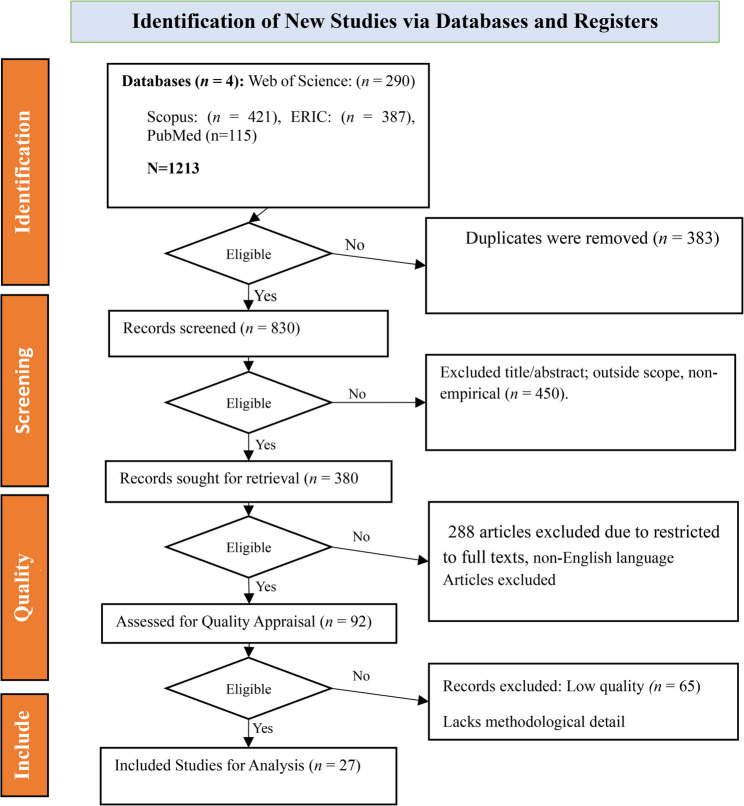
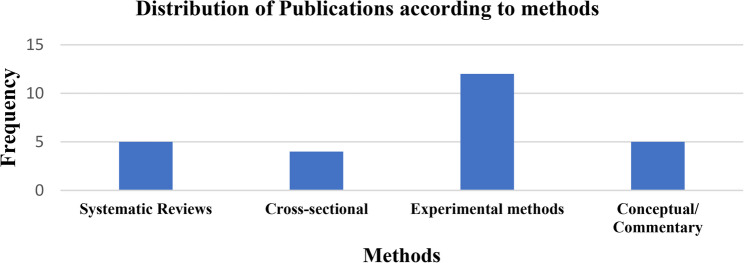
- From 1,213 records, 383 duplicates were removed, 830 were screened, and 27 studies were included (14 quantitative, 8 mixed methods, 5 qualitative); two reviewers screened and extracted data, with 94% agreement on a random 20% sample, and quality was assessed using MMAT and AXIS.
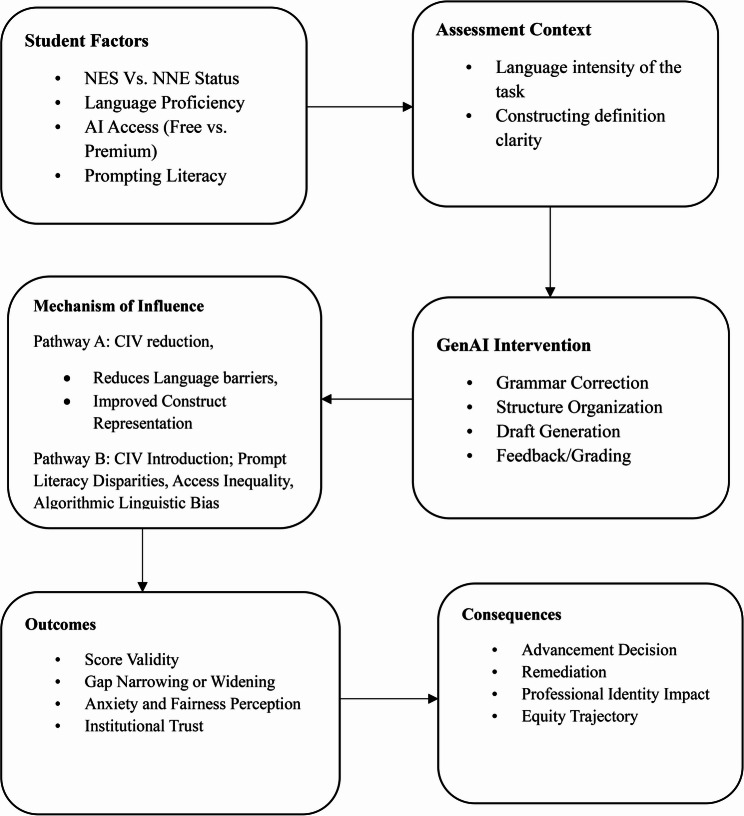
- Thematic synthesis used Kane’s validity framework and the GAI-AEM conceptual model, organized by PICOS and the review’s three research questions.
Limitations
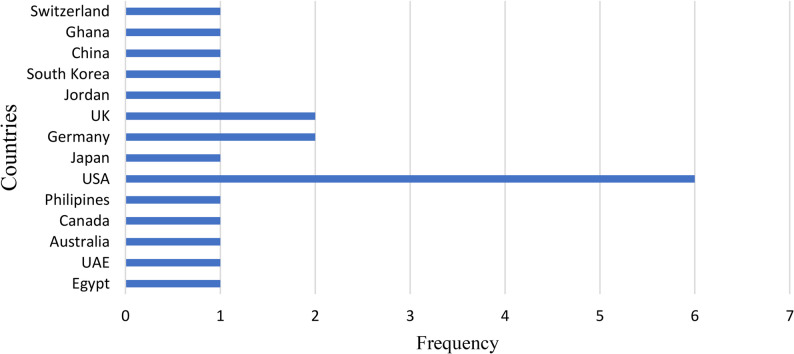
- Stated: no longitudinal studies, so the review cannot determine whether GenAI use improves unassisted English proficiency or creates long-term dependency; only English-language publications were included; studies were heavily skewed toward English-dominant countries (78% from USA, Canada, Australia, UAE), limiting generalizability to non-Western settings; and the 2022–2025 window is short, with most included studies being cross-sectional surveys.
- Stated quality appraisal: 7 studies (25.9%) met only 60–79% of MMAT/AXIS criteria and 2 (7.4%) met less than 60%; common weaknesses were single-institution samples (n = 15), unvalidated instruments (n = 12), no adjustment for confounders (n = 10), and small subgroup samples.
- Evident from the text: the evidence base is small and methodologically fragile, with only six experimental studies and no long-term outcome data linking false positives or scoring bias to progression or attrition; the review itself notes this causal pathway is plausible but not longitudinally tested.
Model-written summary. Check it against the paper before relying on it.
Integrity signals
Registry
Cites
Statistics
Figures
Verification
Claims the paper makes
10 Valid · 18 Not valid · 11 Not checked · 74 Own results and interpretations
At least one cited source doesn’t support this claim or points to a different paper, and none confirmed it — see the verdicts below.
In the paper
“A multicenter study conducted in Canada found that approximately 79% of participating medical students utilized GenAI tools [18].”
§ The impact of generative artificial intelligence tools on assessment equity for non-native English-speaking medical students: a systematic review > Aims of the review > Opportunity and utility as perceived by students
What the sources say
- Disputedcites [18] Alkhaaldi SMI, Kassab CH, Dimassi Z, Alsoud LO, Al Fahim M, Al Hageh C, et al. Medical Student Experiences and Perceptions of ChatGPT and Artificial Intelligence: Cross-Sectional Study. JMIR Med Educ. 2023;9(1). 10.2196/51302. PMC10770787 38133911 sourceExperimental — accuracy not yet measured
The Results report that only 20.4% of respondents used ChatGPT for written assessments and 9.4% used it for patient notes, rather than approximately 79% using it. Table 1 identifies the United Arab Emirates as the medical-school location for most participants (70.6%), and the Discussion describes the survey as taking place in the Middle East, not Canada. No page numbers are provided in our copy. (LLM, conf=0.89)
Checked by a reasoning model — may be wrong.
plain- Asserted: passes — The authors put it forward as true.
- Checkable: passes — It can be checked against evidence.
- Load-bearing: unclear — It is unclear whether the paper’s conclusions depend on it.
- Based: passes — The paper gives a reason why it holds.
- Disputed
The cited sources support only part of this claim — read each source’s verdict below.
In the paper
“Applying contemporary validity theory clarifies that the core issue is not whether GenAI has an accurate aggregate performance but whether it has interpretive fairness across linguistic subgroups [15, 21].”
§ The impact of generative artificial intelligence tools on assessment equity for non-native English-speaking medical students: a systematic review > Aims of the review > Ethical and governance considerations
What the sources say
- Partly supportedcites [15] Liang W, Yuksekgonul M, Mao Y, Wu E, Zou J. GPT detectors are biased against non-native English writers. Patterns. 2023;4(7). 10.1016/j.patter.2023.100779. PMC10382961 37521038 sourceExperimental — accuracy not yet measured
The Discussion (page unavailable) says advertised detector accuracy can be misleading because GPT detectors misclassify non-native English writing far more often than native English writing. This supports examining performance across linguistic subgroups rather than relying on a headline accuracy figure. The paper addresses GPT detectors specifically, however, not the aggregate performance or interpretive fairness of GenAI generally. (LLM, conf=0.83)
- Not checked — no full text of the sourcecites [21] Guo S, Wang Y, Yu J, Wu X, Ayik B, Watts FM et al. Artificial Intelligence Bias on English Language Learners in Automatic Scoring. Lecture Notes in Computer Science. 2025;15881 LNAI:268–75. Available from: http://arxiv.org/abs/2505.10643. Cited 3 Mar 2026. source
boosted- Asserted: passes — The authors put it forward as true.
- Checkable: passes — It can be checked against evidence.
- Load-bearing: passes — The paper’s conclusions depend on it.
- Based: passes — The paper gives a reason why it holds.
- Partly supported
The cited sources that could be checked couldn’t confirm or dispute this claim.
In the paper
“NNES student writing contains different linguistic attributes than NES student writing, such as low lexical diversity and simplified syntactic structures.”
§ The impact of generative artificial intelligence tools on assessment equity for non-native English-speaking medical students: a systematic review > Aims of the review > Internal structural evidence, differential classification, and unstable scores
What the sources say
- Could not verifycites [19] Fleisig E, Smith G, Bossi M, Rustagi I, Yin X, Klein D. Linguistic Bias in ChatGPT: Language Models Reinforce Dialect Discrimination. EMNLP 2024–2024 Conference on Empirical Methods in Natural Language Processing, Proceedings of the Conference. 2024;13541–64. Available from: http://arxiv.org/abs/2406.08818. Cited 3 Mar 2026. sourceExperimental — accuracy not yet measured
The Approach section describes data from English varieties, including social letters, Reddit posts and text messages—not a comparison of NNES and NES student writing. The passages on distinctive linguistic features do not assess lexical diversity or syntactic simplification. Searches for those terms and for non-native student writing found no passage addressing the claim (page numbers unavailable in our copy). (LLM, conf=0.76)
- Could not verifycites [37] Cherrez-Ojeda I, Gallardo-Bastidas JC, Robles-Velasco K, Osorio MF, Velez Leon EM, Leon Velastegui M, et al. Understanding Health Care Students’ Perceptions, Beliefs, and Attitudes Toward AI-Powered Language Models: Cross-Sectional Study. JMIR Med Educ. 2024;10:e51757. 10.2196/51757. PubMed PMID: 39137029. 39137029 PMC11350293 sourceExperimental — accuracy not yet measured
The Methods > Statistical Analysis passage describes a survey of health care students’ AI knowledge and attitudes, not an analysis of their writing. Searches for NNES/NES writing, lexical diversity, and syntactic structure found no passage addressing the claimed comparison; page numbers were not available in our copy. (LLM, conf=0.78)
- Could not verifycites [38] Ajalo E, Mukunya D, Nantale R, Kayemba F, Pangholi K, Babuya J, et al. Widespread use of ChatGPT and other Artificial Intelligence tools among medical students in Uganda: A cross-sectional study. PLoS ONE. 2025;20(1 January). 10.1371/journal.pone.0313776. PubMed PMID: 39787055. PMC11717177 39787055 sourceExperimental — accuracy not yet measured
The Discussion describes how Ugandan medical students use AI tools for assignments and research writing, but it does not compare writing by non-native and native English-speaking students. Searches for NNES writing, lexical diversity, and syntactic complexity found no passage addressing the claimed differences. (LLM, conf=0.76)
- Could not verifycites [39] Ichikawa T, Olsen E, Vinod A, Glenn N, Hanna K, Lund GC, et al. Generative Artificial Intelligence in Medical Education-Policies and Training at US Osteopathic Medical Schools: Descriptive Cross-Sectional Survey. JMIR Med Educ. 2025;11:e58766. doi:10.2196/58766 PubMed PMID: 39934984. 39934984 PMC11835596 sourceExperimental — accuracy not yet measured
The Discussion (Implications for Future Practice; page unavailable) mentions writing only as a possible area for AI-literacy resources. Searches for NNES and NES writing, lexical diversity, and syntactic structure found no comparison of their linguistic attributes in our copy. (LLM, conf=0.76)
plainstates an association- Asserted: passes — The authors put it forward as true.
- Checkable: passes — It can be checked against evidence.
- Load-bearing: passes — The paper’s conclusions depend on it.
- Based: passes — The paper gives a reason why it holds.
- Could not verify
The cited sources support only part of this claim — read each source’s verdict below.
In the paper
“The consequences of bias in AI-supported evaluation in high-stakes medical education settings include more than the interpretation of scores; they also impact the long-term opportunity structure for physicians [19, 20].”
§ The impact of generative artificial intelligence tools on assessment equity for non-native English-speaking medical students: a systematic review > Aims of the review > Ethical and governance considerations
What the sources say
- Partly supportedcites [19] Fleisig E, Smith G, Bossi M, Rustagi I, Yin X, Klein D. Linguistic Bias in ChatGPT: Language Models Reinforce Dialect Discrimination. EMNLP 2024–2024 Conference on Empirical Methods in Natural Language Processing, Proceedings of the Conference. 2024;13541–64. Available from: http://arxiv.org/abs/2406.08818. Cited 3 Mar 2026. sourceExperimental — accuracy not yet measured
Section 2 (Related Work; page unavailable) says prioritizing standard English varieties in NLP could lead to differential performance and opportunity allocation. The paper does not address AI-supported evaluation in medical education, score interpretation, physicians, or their long-term opportunities, so it supports only the broader concern about opportunity allocation. (LLM, conf=0.83)
- Not checked — no full text of the sourcecites [20] Giray L. The Problem with False Positives: AI Detection Unfairly Accuses Scholars of AI Plagiarism. Serials Librarian. 2024;85(5–6):181–9. 10.1080/0361526X.2024.2433256. source
plainstates a cause- Asserted: passes — The authors put it forward as true.
- Checkable: passes — It can be checked against evidence.
- Load-bearing: passes — The paper’s conclusions depend on it.
- Based: passes — The paper gives a reason why it holds.
- Partly supported
The cited sources that could be checked couldn’t confirm or dispute this claim.
In the paper
“Similarly, a study found that GenAI systems comply with the dominant sociolinguistic norms used within their training database [35].”
§ The impact of generative artificial intelligence tools on assessment equity for non-native English-speaking medical students: a systematic review > Aims of the review > Normative linguistic enforcement
What the sources say
- Could not verifycites [35] Bearman M, Ryan J, Ajjawi R. Discourses of artificial intelligence in higher education: a critical literature review. High Educ 2022. 2022;86(2):2. 10.1007/S10734-022-00937-2. sourceExperimental — accuracy not yet measured
The Discourse analysis section (p. 5) examines how higher-education texts describe AI; Debating a new language for AI (p. 13) discusses ambiguity in the term. Neither addresses whether GenAI systems reproduce dominant sociolinguistic norms in their training data. Searches for that claim and for training-data language bias found no passage that does. (LLM, conf=0.76)
plainstates a cause- Asserted: passes — The authors put it forward as true.
- Checkable: passes — It can be checked against evidence.
- Load-bearing: passes — The paper’s conclusions depend on it.
- Based: passes — The paper gives a reason why it holds.
- Could not verify
52 more claims · 11 with their cited sources checked
Create a free account to see all 113 claims and to verify the 7 references still open.
- It may state two separate claims as one. 48
- The quote only partly states this claim. 4
- Probably not a substantial claim. 20
Self-check
Percentages, sums and reported differences re-computed from the paper’s own numbers.
Each contradiction between two passages listed here was confirmed by an independent check.
Rated major: it would touch a result — a value a result rests on, reported and recomputed p-values on opposite sides of the significance level, two passages that conflict with no sign which is right, or a cited work retracted before this paper was published.
In the paper
§ The impact of generative artificial intelligence tools on assessment equity for non-native English-speaking medical students: a systematic review > Aims of the review > Quality appraisal results
“There were 3 experimental, 8 mixed methods, and 5 qualitative.”
§ The impact of generative artificial intelligence tools on assessment equity for non-native English-speaking medical students: a systematic review > Aims of the review > Misclassification and score distortion
“In six experimental studies, AI detectors misclassified NNES student writing as AI-generated in a median of 55.7% of cases (IQR: 51.2–59.3%).”
Rated major: it would touch a result — a value a result rests on, reported and recomputed p-values on opposite sides of the significance level, two passages that conflict with no sign which is right, or a cited work retracted before this paper was published.
In the paper
§ The impact of generative artificial intelligence tools on assessment equity for non-native English-speaking medical students: a systematic review > Conclusion > Limitation of the study
“The time frame for the literature review (2022–2025) covers the rapid growth of GenAI since the launch of ChatGPT at the end of 2022.”
§ The impact of generative artificial intelligence tools on assessment equity for non-native English-speaking medical students: a systematic review > Aims of the review > Distribution of documents by year
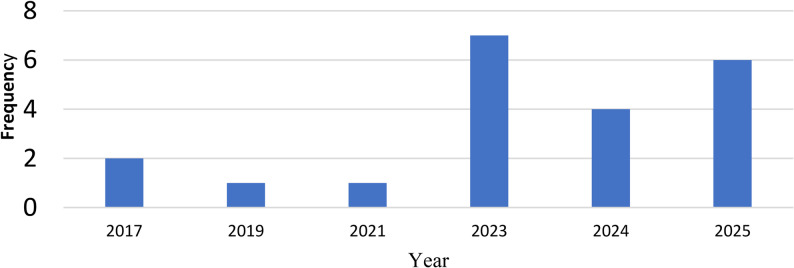
“The linear trend of the research focus on AI in education shows that the relevant literature is published annually between 2017 and 2025, as shown in the bar in Fig. 3.”
Rated minor: it would not touch a result — a value no result rests on, a p-value that stays on the same side of the significance level, or a conflict that is clerical, resolved elsewhere in the paper, or outside its own findings.
In the paper
§ The impact of generative artificial intelligence tools on assessment equity for non-native English-speaking medical students: a systematic review > Aims of the review > Distribution of documents by year
“In 2024 (n = 4), the rates of publication were the largest, and the highest rates were in 2025 (n = 6)”
§ The impact of generative artificial intelligence tools on assessment equity for non-native English-speaking medical students: a systematic review > Aims of the review > Distribution of documents by year
“2023 witnessed a sharp growth (n = 7)”
Rated minor: it would not touch a result — a value no result rests on, a p-value that stays on the same side of the significance level, or a conflict that is clerical, resolved elsewhere in the paper, or outside its own findings.
In the paper
§ The impact of generative artificial intelligence tools on assessment equity for non-native English-speaking medical students: a systematic review > Abstract > Results
“71% perceived policy ambiguity.”
§ The impact of generative artificial intelligence tools on assessment equity for non-native English-speaking medical students: a systematic review > Discussion > Recommendation for practice and policy
“three out of five NNES students claim to have uncertain or missing institutional policies (among 2,847 surveyed students)”
Citations
Cites
DeepSeek-R1: Incentivizing Reasoning Capability in LLMs via Reinforcement Learning
DeepSeek-AI, Guo, D., Yang, D., Zhang, H., Song, J., Wang, P., Zhu, Q., Xu, R., Zhang, R., Ma, S., et al. (2025) · arXiv · doi:10.48550/arxiv.2501.12948 · Cited by 18,918
Zawacki-Richter, O., Marín, V. I., Bond, M., & Gouverneur, F. (2019) · International Journal of Educational Technology in Higher Education · doi:10.1186/s41239-019-0171-0 · Cited by 7,242 · cited 1×
“Until 2023, the literature on the subject was limited until 2023, which can be attributed to the fact that the initial discussions on AI were rather theoretical [9, 29].”
Validating the interpretations and uses of test scores
Kane, M. T. (2013) · Journal of Educational Measurement · doi:10.1111/jedm.12000 · Cited by 2,110 · cited 2×
“The difficulty of drawing conclusions and generalizing language based on [42] framework arises when, in any of the cognitive response processes, we find that groups have different perceptions of risk.”
Exploring the impact of artificial intelligence on teaching and learning in higher education
Popenici, S. A. D., & Kerr, S. (2017) · Research and Practice in Technology Enhanced Learning · doi:10.1186/s41039-017-0062-8 · Cited by 2,019 · cited 2×
“The emergence of Generative AI (GenAI) tools, such as ChatGPT, has intensified the debate around AI in higher education by providing users with concrete evidence [8, 9].”
Meaning and Values in Test Validation: The Science and Ethics of Assessment
Messick, S. (1989) · Educational Researcher · doi:10.3102/0013189x018002005 · Cited by 948 · cited 4×
“Contemporary validity theory considers the effects of how a score can be used [16].”
InfluentialEysenbach, G. (2023) · JMIR Medical Education · doi:10.2196/46885 · Cited by 840 · cited 2×
“There are currently very serious concerns related to the potential for academic dishonesty, the mis-use of AI in assignments, bias in the data upon which AI is trained, and the reliability of the AI-generated outputs, including hallucinations of false or inaccurate information [4, 6, 7].”
Guidance for generative AI in education and research
(2023) · doi:10.54675/ewzm9535 · Cited by 808
GPT detectors are biased against non-native English writers
Liang, W., Yuksekgonul, M., Mao, Y., Wu, E., & Zou, J. (2023) · Patterns · doi:10.1016/j.patter.2023.100779 · Cited by 673 · cited 7×
“According to [15, 34] NNES writing in AI detection has indicated a high rate of false positives.”
InfluentialPreiksaitis, C., & Rose, C. (2023) · JMIR Medical Education · doi:10.2196/48785 · Cited by 552 · cited 1×
“There are currently very serious concerns related to the potential for academic dishonesty, the mis-use of AI in assignments, bias in the data upon which AI is trained, and the reliability of the AI-generated outputs, including hallucinations of false or inaccurate information [4, 6, 7].”
Discourses of artificial intelligence in higher education: a critical literature review
Bearman, M., Ryan, J., & Ajjawi, R. (2023) · Higher Education · doi:10.1007/s10734-022-00937-2 · Cited by 545 · cited 1×
“Similarly, a study found that GenAI systems comply with the dominant sociolinguistic norms used within their training database [35].”
The Impact of Artificial Intelligence (AI) on Students’ Academic Development
Vieriu, A. M., & Petrea, G. (2025) · Education Sciences · doi:10.3390/educsci15030343 · Cited by 493
Techniques for measuring clinical competence: objective structured clinical examinations
Newble, D. (2004) · Medical Education · doi:10.1111/j.1365-2923.2004.01755.x · Cited by 483
Learning to work with the black box: Pedagogy for a world with artificial intelligence
Bearman, M., & Ajjawi, R. (2023) · British Journal of Educational Technology · doi:10.1111/bjet.13337 · Cited by 346 · cited 2×
“The emergence of Generative AI (GenAI) tools, such as ChatGPT, has intensified the debate around AI in higher education by providing users with concrete evidence [8, 9].”
Ethical use of Artificial Intelligence in Health Professions Education: AMEE Guide No. 158
Masters, K. (2023) · Medical Teacher · doi:10.1080/0142159x.2023.2186203 · Cited by 302 · cited 2×
“The internal structure of assessments measures whether scores from different subgroups can function in the same way [24, 34] when examining validity theory.”
Liu, M., Ren, Y., Nyagoga, L. M., Stonier, F., Wu, Z., & Yu, L. (2023) · Future in Educational Research · doi:10.1002/fer3.10 · Cited by 267
Abbass, H. A. (2019) · Cognitive Computation · doi:10.1007/s12559-018-9619-0 · Cited by 200 · cited 1×
“While the use of algorithmic classifiers systematically associates linguistic predictability and artificial authorship, the association introduces CIV [43] is not relevant to CRC.”
Teaching AI Ethics in Medical Education: A Scoping Review of Current Literature and Practices
Weidener, L., & Fischer, M. (2023) · Perspectives on Medical Education · doi:10.5334/pme.954 · Cited by 133 · cited 2×
“This has influenced the training of present-day and future physicians [3].”
Alkhaaldi, S. M. I., Kassab, C. H., Dimassi, Z., Oyoun Alsoud, L., Al Fahim, M., Al Hageh, C., & Ibrahim, H. (2023) · JMIR Medical Education · doi:10.2196/51302 · Cited by 132 · cited 2×
“A multicenter study conducted in Canada found that approximately 79% of participating medical students utilized GenAI tools [18].”
Loh, E. (2024) · BMJ Leader · doi:10.1136/leader-2023-000797 · Cited by 116
Wijaya, T. T., Yu, Q., Cao, Y., He, Y., & Leung, F. K. S. (2024) · Behavioral Sciences · doi:10.3390/bs14111008 · Cited by 103 · cited 1×
“Studies examined preservice mathematics teachers’ adoption of AI chatbots, finding that higher AI literacy did not protect against overreliance; rather, the highest AI literacy profiles exhibited the greatest dependency [48, 49].”
Proposing a Principle-Based Approach for Teaching AI Ethics in Medical Education
Weidener, L., & Fischer, M. (2024) · JMIR Medical Education · doi:10.2196/55368 · Cited by 90 · cited 2×
“The introduction of generative artificial intelligence (AI) built on large language models (LLMs) is shaping a paradigm shift in human intelligence and craftsmanship and how higher education is transformed, particularly in medical education [1, 2].”
Medical students and ChatGPT: analyzing attitudes, practices, and academic perceptions
Abdelhafiz, A. S., Farghly, M. I., Sultan, E. A., Abouelmagd, M. E., Ashmawy, Y. M., & Elsebaie, E. H. (2025) · BMC Medical Education · doi:10.1186/s12909-025-06731-9 · Cited by 84
Wijaya, T. T., Su, M., Cao, Y., Weinhandl, R., & Houghton, T. (2025) · Education and Information Technologies · doi:10.1007/s10639-024-12837-2 · Cited by 80 · cited 1×
“Studies examined preservice mathematics teachers’ adoption of AI chatbots, finding that higher AI literacy did not protect against overreliance; rather, the highest AI literacy profiles exhibited the greatest dependency [48, 49].”
Linguistic Bias in ChatGPT: Language Models Reinforce Dialect Discrimination
Fleisig, E., Smith, G., Bossi, M., Rustagi, I., Yin, X., & Klein, D. (2024) · Proceedings of the 2024 Conference on Empirical Methods in Natural Language Processing · doi:10.18653/v1/2024.emnlp-main.750 · Cited by 64
Zhang, D., Wijaya, T. T., Wang, Y., Su, M., Li, X., & Damayanti, N. W. (2025) · Scientific Reports · doi:10.1038/s41598-025-99127-0 · Cited by 63 · cited 1×
“Their structural equation modeling revealed that dependency mediates the literacy-skill relationship, such that AI literacy’s direct effect on critical thinking is positive only when accompanied by critical engagement; otherwise, its indirect effect through dependency is negative [14, 50].”
The Problem with False Positives: AI Detection Unfairly Accuses Scholars of AI Plagiarism
Giray, L. (2024) · The Serials Librarian · doi:10.1080/0361526x.2024.2433256 · Cited by 60 · cited 1×
“The consequences of bias in AI-supported evaluation in high-stakes medical education settings include more than the interpretation of scores; they also impact the long-term opportunity structure for physicians [19, 20].”
Cherrez-Ojeda, I., Gallardo-Bastidas, J. C., Robles-Velasco, K., Osorio, M. F., Velez Leon, E. M., Leon Velastegui, M., Pauletto, P., Aguilar-Díaz, F. C., Squassi, A., González Eras, S. P., et al. (2024) · JMIR Medical Education · doi:10.2196/51757 · Cited by 46 · cited 2×
“Therefore, these attributes were responsible for the mis-classification and not the act of academic dishonesty [19, 37–39].”
Liu, M., Zhang, L. J., & Zhang, D. (2025) · Computers in Human Behavior · doi:10.1016/j.chb.2025.108569 · Cited by 43
Elhassan, S. E., Sajid, M. R., Syed, A. M., Fathima, S. A., Khan, B. S., & Tamim, H. (2025) · JMIR Medical Education · doi:10.2196/63065 · Cited by 39 · cited 1×
“However, automated systems that reward fluent speech patterns consistent with mainstream language norms provide NNES students with an opportunity to be evaluated based on their similarities to NES-like expressions rather than their clinical or ethical reasoning abilities [37, 45].”
Ataro, G., Worku, S., & Asaminew, T. (2020) · Ethiopian Journal of Health Sciences · doi:10.4314/ejhs.v30i3.13 · Cited by 37 · cited 1×
“If the intended construct is clinical reasoning, biomedical knowledge, or diagnostic synthesis rather than linguistic fluency, CIV can affect NNES assessment outcomes [32, 33].”
Generative AI and the future of connectivist learning in higher education
Liang, E. S., & Bai, S. (2025) · Journal of Asian Public Policy · doi:10.1080/17516234.2024.2386085 · Cited by 34 · cited 2×
“The internal structure of assessments measures whether scores from different subgroups can function in the same way [24, 34] when examining validity theory.”
Ichikawa, T., Olsen, E., Vinod, A., Glenn, N., Hanna, K., Lund, G. C., & Pierce-Talsma, S. (2025) · JMIR Medical Education · doi:10.2196/58766 · Cited by 34
Kapsali, M. Z., Livanis, E., Tsalikidis, C., Oikonomou, P., Voultsos, P. P., & Tsaroucha, A. (2024) · Cureus · doi:10.7759/cureus.54759 · Cited by 32 · cited 2×
“The introduction of generative artificial intelligence (AI) built on large language models (LLMs) is shaping a paradigm shift in human intelligence and craftsmanship and how higher education is transformed, particularly in medical education [1, 2].”
Sallam, M., Al-Mahzoum, K., Almutairi, Y. M., Alaqeel, O., Abu Salami, A., Almutairi, Z. E., Alsarraf, A. N., & Barakat, M. (2024) · International Medical Education · doi:10.3390/ime3040031 · Cited by 30 · cited 1×
“…that using such systems can also cause them to have anxiety due to the lack of a clear understanding of the policies that govern their use or how detection methods work [26], such an ambiguous situation creates a dual experience where GenAI is changing the way that students approach responding.”
Ajalo, E., Mukunya, D., Nantale, R., Kayemba, F., Pangholi, K., Babuya, J., Langoya Akuu, S., Namiiro, A. M., Nsubuga, Y. B., Mpagi, J. L., et al. (2025) · PLOS ONE · doi:10.1371/journal.pone.0313776 · Cited by 29
Perceptions and Use of Generative Artificial Intelligence in Medical Students: A Multicenter Survey
Tran, C., Hryciw, B. N., Moore, S. W., Chaput, A., & Seely, A. J. E. (2025) · Journal of Medical Education and Curricular Development · doi:10.1177/23821205251391969 · Cited by 22 · cited 1×
“False-positive rates of 55.7% for NNES writers translate directly into risk of academic misconduct accusations [15], and survey data confirm that 79% of NNES students experience considerable anxiety about such accusations [27].”
InfluentialHijazi, M., & Downing, S. M. (2008) · Annals of Saudi Medicine · doi:10.5144/0256-4947.2008.192 · Cited by 21 · cited 3×
“Although previous reviews have generally studied AI in medical education [8, 10, 11], none of them have synthesized evidence on the differential impacts of linguistically diverse students in a high-stakes assessment context, which is a critical gap due to the globalization of medical education and…”
Kim, Y., Shin, S., & Yoo, S.-H. (2025) · BMC Medical Ethics · doi:10.1186/s12910-025-01316-z · Cited by 19
Hidding the Ghostwriters: An Adversarial Evaluation of AI-Generated Student Essay Detection
Peng, X., Zhou, Y., He, B., Sun, L., & Sun, Y. (2023) · Proceedings of the 2023 Conference on Empirical Methods in Natural Language Processing · doi:10.18653/v1/2023.emnlp-main.644 · Cited by 16
Hidding the Ghostwriters: An Adversarial Evaluation of AI-Generated Student Essay Detection
Peng, X., Zhou, Y., He, B., Sun, L., & Sun, Y. (2024) · arXiv · doi:10.48550/arxiv.2402.00412 · Cited by 16
Artificial Intelligence Bias on English Language Learners in Automatic Scoring
Guo, S., Wang, Y., Yu, J., Wu, X., Ayik, B., Watts, F. M., Latif, E., Liu, N., Liu, L., & Zhai, X. (2025) · Lecture Notes in Computer Science · doi:10.1007/978-3-031-98462-4_34 · Cited by 14
Reina-Parrado, M., Román-Graván, P., & Hervás-Gómez, C. (2025) · European Journal of Educational Research · doi:10.12973/eu-jer.14.1.249 · Cited by 13 · cited 1×
“Therefore, the impact of emotional distress can be added to the impact of consequential validity [5, 41].”
Yokose, M., Hirosawa, T., Sakamoto, T., Kawamura, R., Suzuki, Y., Harada, Y., & Shimizu, T. (2025) · JMIR Formative Research · doi:10.2196/79465 · Cited by 13 · cited 2×
“1 conceptualizes generative artificial intelligence (GenAI) as a validity moderator [13].”
Namugenyi, E. E., Sansa Otim, J., Zennaro, M., Wolthusen, S., & Nsabagwa, M. (2025) · Frontiers in the Internet of Things · doi:10.3389/friot.2025.1520653 · Cited by 5
Linguistic Bias in ChatGPT: Language Models Reinforce Dialect DiscriminationPreprint
Fleisig, E., Smith, G. M., Bossi, M., et al. (2024) · arXiv (Cornell University) · doi:10.48550/arxiv.2406.08818 · Cited by 3
Charles, K., Zhanjun, W., Rajabu, I. M., Irene, E. C., & Mahmood, A. (2025) · Advances in Computational Intelligence and Robotics · doi:10.4018/979-8-3373-4217-7.ch010 · Cited by 2
Self-citationAccess and Inclusion through Flexible Learning: Re-Orienting Entrepreneurship Education
Rono, A. J., Tarno, E., & Tiony, A. K. (2017) · Africa Journal of Technical and Vocational Education and Training · doi:10.69641/afritvet.2017.2134 · Cited by 1 · cited 1×
“GenAI may also improve the constructive representation of learning because it allows for a more precise expression of reasoning [47].”
Because we have LLMs, we Can and Should Pursue Agentic Interpretability
Kim, B., Hewitt, J., Nanda, N., Fiedel, N., & Tafjord, O. (2025) · arXiv · doi:10.48550/arxiv.2506.12152 · Cited by 1
Artificial Intelligence Bias on English Language Learners in Automatic ScoringPreprint
Guo, S., Wang, Y. H., Yu, J., et al. (2025) · arXiv (Cornell University) · doi:10.48550/arxiv.2505.10643
Research works printed but not linked: 4
- Eysenbach G. The Role of ChatGPT, Generative Language Models, and Artificial Intelligence in Medical Education: A Conversation With ChatGPT and a Call for Papers. JMIR Med Educ. 2023;9(1):e46885. 10.2196/46885. PubMed PMID: 36863937. 36863937 PMC10028514 · DOI · Paper page
- Yokose M, Hirosawa T, Sakamoto T, Kawamura R, Suzuki Y, Harada Y, et al. The Validity of Generative Artificial Intelligence in Evaluating Medical Students in Objective Structured Clinical Examination: Experimental Study. JMIR Form Res. 2025;9:e79465. 10.2196/79465. PubMed PMID: 41343812. 41343812 PMC12715467 · DOI · Paper page
- (PDF). Potential Societal Biases of ChatGPT in Higher Education: A Scoping Review. Available from: https://www.researchgate.net/publication/390805456_Potential_Societal_Biases_of_ChatGPT_in_Higher_Education_A_Scoping_Review. Cited 3 Mar 2026.
- Alkhaaldi SMI, Kassab CH, Dimassi Z, Alsoud LO, Al Fahim M, Al Hageh C et al. Medical Student Experiences and Perceptions of ChatGPT and Artificial Intelligence: Cross-Sectional Study. JMIR Med Educ. 2023;9(1). 10.2196/51302. PubMed PMID: 38133911. PMC10770787 38133911 · DOI · Paper page
Cited by
Charles, K., Lucy, A. C., Irene, E. C., & Fobi, S. (2026) · Educational Point · doi:10.71176/edup/19172 · Cited by 2
“The number of papers rejected because the full text was not available was 242, leaving a total of 110 papers that were evaluated for eligibility (Kangwa et al., 2025b; Yvan et al., 2026).”
Self-citation
Metadata
- Authors
- Ndacyayisenga, J. C. Y., Kidega, C., & Aciro Can, L.
- Venue
- BMC Medical Education
- Published
- 2026-04-29
- Volume
- 26
- Issue
- 1
- ISSN
- 1472-6920 (ISSN-L)
- PMC
- PMC13277128
- OpenAlex
- W7157762857
- Cited by
- 1
- References
- 43
- Citations by year
- 2026: 1
- FWCI
- 0.61
- Type
- journal article
- Language
- en
- Open access
- gold
- doi.org
- Licence
- cc-by
- creativecommons.org/licenses/by/4.0 (tdm)
- creativecommons.org/licenses/by/4.0 (vor, 50 d)
- Locations
- BMC Medical Education (publishedVersion, cc-by)
- PubMed Central (publishedVersion, cc-by)
- PubMed (publishedVersion)
- DOAJ (DOAJ: Directory of Open Access Journals) (submittedVersion)
- Topics
- Health Sciences › Medicine › Health Informatics › Artificial Intelligence in Healthcare and Education
- Social Sciences › Education › Innovations in Medical Education
- Social Sciences › Education › Artificial Intelligence in Education
- Keywords
- generative AI, assessment equity, non-native English speakers, medical students, automated grading, assessment validity, systematic bias, construct-irrelevant variance, artificial intelligence in medical education, bias auditing, student attitudes toward AI
- MeSH terms
- Diversity, Equity, Inclusion, Generative Artificial Intelligence, Educational Measurement, Humans, Students, Medical, Multilingualism
About these checks
Registry, retraction, Cites and statistics results are computed, not judged, with one exception: a printed reference that no index lists is read once by a model before it counts as a citation error. Claims are extracted by a model and kept only when their quote appears verbatim in the text; each cited source is then checked, with a model’s help, for whether it says what the claim relies on. Those verdicts can be wrong — read the claim’s quote and the cited source before relying on one.
The claim verdicts this report counts are experimental: their accuracy is not yet measured.
A language model drew the claims from the paper on 2026-10-10, under version 3 of the claim definition (model deepseek-v4.1-flash, prompt extract-v3).
A second model labelled each claim on 2026-10-10 (model jev-1.13-20260917, definition revision gold-guideline-v0.2).
Cited sources are checked with a language model’s help (gpt-6-sol).
Statistics and arithmetic are recomputed, not judged.
Confidence bands are shown only for fields calibrated on our annotated test set. None is calibrated yet, so no band is shown.
What counts as a claim ›How we measure confidence ›How we check this ›
Are you an author, or do you see a problem with this page? Request a review
Data sources
Bibliographic data: Semantic Scholar, OpenAlex, Crossref.
Contains information from the Semantic Scholar Academic Graph Datasets, made available under the ODC Attribution License (ODC-BY 1.0).
Semantic Scholar’s data is described in: Kinney, R., et al. (2023). The Semantic Scholar Open Data Platform. arXiv:2301.10140.
