

The DOI matches its Crossref record; 52 of the 53 references it cites were found in a registry or an index.
Adherence and factors affecting satisfaction in long-term telerehabilitation for patients with chronic obstructive pulmonary disease: a mixed methods study
Open accessAbstract
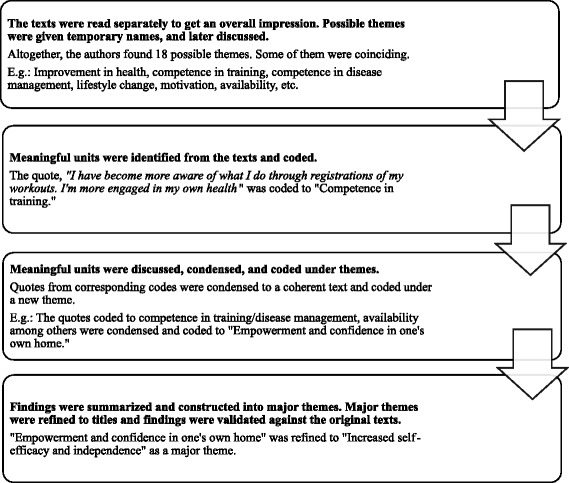
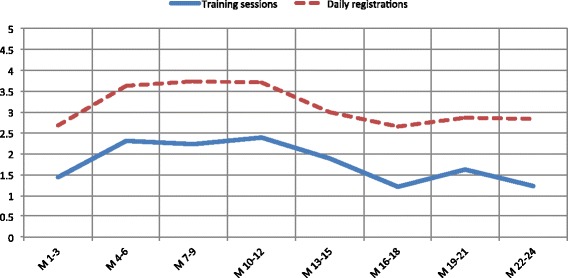
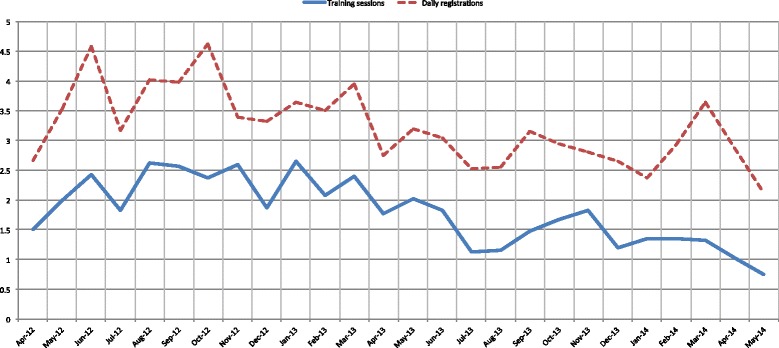
BACKGROUND: Telemedicine may increase accessibility to pulmonary rehabilitation in chronic obstructive pulmonary disease (COPD), thus enhancing long-term exercise maintenance. We aimed to explore COPD patients' adherence and experiences in long-term telerehabilitation to understand factors affecting satisfaction and potential for service improvements. METHODS: A two-year pilot study with 10 patients with COPD was conducted. The intervention included treadmill exercise training at home and a webpage for telemonitoring and self-management combined with weekly videoconferencing sessions with a physiotherapist. We conducted four separate series of data collection. Adherence was measured in terms of frequency of registrations on the webpage. Factors affecting satisfaction and adherence, together with potential for service improvements, were explored through two semi-structured focus groups and an individual open-ended questionnaire. Qualitative data were analysed by systematic text condensation. User friendliness was measured by the means of a usability questionnaire. RESULTS: On average, participants registered 3.0 symptom reports/week in a web-based diary and 1.7 training sessions/week. Adherence rate decreased during the second year. Four major themes regarding factors affecting satisfaction, adherence and potential improvements of the intervention emerged: (i) experienced health benefits; (ii) increased self-efficacy and independence; and (iii) emotional safety due to regular meetings and access to special competence; (iv) maintenance of motivation. Participants were generally highly satisfied with the technical components of the telerehabilitation intervention. CONCLUSIONS: Long-term adherence to telerehabilitation in COPD was maintained for a two-year period. Satisfaction was supported by experienced health benefits, self-efficacy, and emotional safety. Maintenance of motivation was a challenge and might have affected long-term adherence. Four key factors of potential improvements in long-term telerehabilitation were identified: (i) adherence to different components of the telerehabilitation intervention is dependent on the level of focus provided by the health personnel involved; (ii) the potential for regularity that lies within the technology should be exploited to avoid relapses after vacation; (iii) motivation might be increased by tailoring individual consultations to support experiences of good health and meet individual goals and motivational strategies; (iv) interactive functionalities or gaming tools might provide peer-support, peer-modelling and enhance motivation.
Overview
The claims and statistics of this paper haven’t been checked yet.
Run the check — free, no account needed. It reads the open-access text and checks the sources it cites.
Integrity signals
Registry
Cites
Statistics
Figures
Verification
Claims the paper makes
The claims and statistics of this paper haven’t been checked yet.
Run the check — free, no account needed. It reads the open-access text and checks the sources it cites.
Claims other papers make about this one
Each is checked against this paper’s own text: does it say what the citing paper says it does?
The source backs part of the claim, not all of it — or backs it for a different population, condition or comparison.
In the citing paper
“In addition, previous research has found that telerehabilitation may result in lower patient adherence or confidence, which may decrease the treatment’s effectiveness [24].”
From Behavior Modification Techniques on Patients with Chronic Pain in the Context of COVID-19 Telerehabilitation: An Umbrella Review (2022) · cites this paper as [24]
Experimental — accuracy not yet measured
Self-check
Percentages, sums and reported differences re-computed from the paper’s own numbers.
The self-check needs the paper’s full text.
Citations
Cites
Using thematic analysis in psychology
Braun, V., & Clarke, V. (2006) · Qualitative Research in Psychology · doi:10.1191/1478088706qp063oa · Cited by 194,414 · cited 1×
“Analysis of the qualitative data focused on identifying topics rather than on differences and similarities between individual respondents, thus confirming to a thematic analysis technique [38].”
BackgroundSelf-efficacy: The exercise of control
Bandura, A., Freeman, W. H., & Lightsey, R. (1999) · Journal of Cognitive Psychotherapy · doi:10.1891/0889-8391.13.2.158 · Cited by 46,835
Self-efficacy: the exercise of control
(1997) · Choice Reviews Online · doi:10.5860/choice.35-1826 · Cited by 24,451
Vestbo, J., Hurd, S. S., Agustí, A. G., Jones, P. W., Vogelmeier, C., Anzueto, A., Barnes, P. J., Fabbri, L. M., Martinez, F. J., Nishimura, M., et al. (2013) · American Journal of Respiratory and Critical Care Medicine · doi:10.1164/rccm.201204-0596pp · Cited by 15,983
Strategies for ensuring trustworthiness in qualitative research projects
Shenton, A. K. (2004) · Education for Information · doi:10.3233/efi-2004-22201 · Cited by 9,748
SUS: A 'Quick and Dirty' Usability Scale
(1996) · Usability Evaluation In Industry · doi:10.1201/9781498710411-35 · Cited by 8,989
Adherence to Long-Term Therapies: Evidence for Action
Geest, S. D., & Sabate, E. J. (2003) · European Journal of Cardiovascular Nursing · doi:10.1016/s1474-5151(03)00091-4 · Cited by 6,310
The generalizability of the psychoanalytic concept of the working alliance.
Bordin, E. S. (1979) · Psychotherapy: Theory, Research & Practice · doi:10.1037/h0085885 · Cited by 5,238 · cited 1×
“An agreement of goals and methods between the patient and the helper is seen as an important key to the change process [30].”
BackgroundQualitative research: standards, challenges, and guidelines
Malterud, K. (2001) · The Lancet · doi:10.1016/s0140-6736(01)05627-6 · Cited by 5,014
Usability Evaluation In Industry
(1996) · CRC Press eBooks · doi:10.1201/9781498710411 · Cited by 4,445
Research works printed but not linked: 5
- Borg G, Borg E. The Borg CR Scales® folder. Borg Perception: Hasselby, Sweeden; 2010.
- Borg G, Borg E. A new generation of scaling methods: Level-anchored ratio scaling. Psychologia. 2001;28:15–45.
- Flick U. An introduction to qualitative reserach. 4th ed. London: SAGE Publications Ltd; 2009.
- Malterud K. Kvalitative metoder i medisinsk forskning. 3rd ed. Oslo: Universitetsforlaget AS; 2011.
- Bandura A. Self-efficacy. In: Ramachaudran VS, editor. Encyclopedia of human behavior. 4. New York: Academic Press; 1994. p. 71–81.
Cited by
Sorted by citations
Items 101–152 of 152
Tanguay, P., Décary, S., Martineau-Roy, J., Gravel, É., Gervais, I., St-Jean, P., Tousignant, M., & Marquis, N. (2020) · Physiotherapy Canada · doi:10.3138/ptc-2019-0110 · Cited by 4
Llamas‐Ramos, I., González, J. L. S., Llamas‐Ramos, R., Bermejo‐Gil, B. M., Robledo, F. P., & Nogueras, A. M. M. (2022) · Fisioterapia · doi:10.1016/j.ft.2022.02.005 · Cited by 3
Yu, M. K. L., Chiu, A. Y. Y., Chau, S. K., Duque, J. S. R., Wong, W. H. S., & Chan, H. S. (2023) · Muscle & Nerve · doi:10.1002/mus.27982 · Cited by 3
“25 Taken together, in this small, selected group of stable children with hereditary NMDs, an integrated respiratory and motor telereh-abilitation”
BackgroundGhaben, S. J., Ludin, A. F. M., Elkholi, B., Kullab, R., Al-Hour, M. N., & Singh, D. K. A. (2025) · PLoS ONE · doi:10.1371/journal.pone.0324624 · Cited by 4
“It enhances PR program adherence by increasing accessibility [22,23] and facilitating deployment with limited resources [24].”
Preliminary validation of a mobile force Sensing device for clinical and telerehabilitation
Bechard, L., Bell, K. M., & Lynch, A. D. (2020) · Journal of Biomechanics · doi:10.1016/j.jbiomech.2020.109973 · Cited by 3
Disler, R. T., Ly, L., Carter, D. R., Janjua, S., Prigmore, S., & Fortescue, R. (2023) · European Respiratory Society eBooks · doi:10.1183/2312508x.10002023 · Cited by 3
Suivi et évaluation sur une année de projets élaborés en réhabilitation respiratoire
Péran, L., Ber, C. L., Pichon, R., Cabillic, M., & Beaumont, M. (2018) · Revue des Maladies Respiratoires · doi:10.1016/j.rmr.2018.08.002 · Cited by 4
Orientación de las huellas de dinosaurios en la Sierra de Cameros
Escorza, C. M. (2001) · DIGITAL.CSIC (Spanish National Research Council (CSIC)) · Cited by 3
Borgnis, F., Isernia, S., Rossetto, F., Pagliari, C., Tavanelli, M., Brambilla, L., & Baglio, F. (2024) · Heliyon · doi:10.1016/j.heliyon.2024.e40436 · Cited by 2
“Most studies have focused on the patient ’ s perspective, supporting the good satisfaction, usability, and acceptability of TR systems [14,15].”
Minartz, P., Vondeberg, C., Obert, L., Bleck, C., Hemming, B., Vöcking, M., Ose, C., Znotka, M., Cürlis, D., Karrenbrock, A., et al. (2025) · Das Gesundheitswesen · doi:10.1055/a-2560-1100 · Cited by 2
“Conversely, feeling safe can influence attitudes towards technological innovations and their implementation [15], which are perceived differently depending on the target group in question [9].”
A Review in Biomechanics Modeling
LET, A.-M., Filip, V., LET, D. D., & Mihai, S. (2020) · Lecture notes in networks and systems · doi:10.1007/978-3-030-53973-3_17 · Cited by 2
Mise au point sur la téléréadaptation respiratoire dans la BPCO
Hayot, M., Saey, D., Costes, F., Bughin, F., & Chambellan, A. (2022) · Revue des Maladies Respiratoires · doi:10.1016/j.rmr.2021.12.005 · Cited by 2
Rodríguez‐Núñez, I., Monsalve-Campos, K., Bretti, M. J., Otzen, T., & A, D. Z. (2023) · Andes pediatrica · doi:10.32641/andespediatr.v94i3.4494 · Cited by 2
Amin, R., Suvarna, V., Neelapala, Y. V. R., Parmar, S. T., & Vaishali, K. (2024) · Current Medical Research and Opinion · doi:10.1080/03007995.2024.2380006 · Cited by 2
“Telerehabilitation is the use of electronic information and communications technology to provide and support health-care when distance separates the participants 15 .”
Patients' perspectives on a nurse led self-management intervention after acute exacerbation of COPD
Uehlinger, L., Händler‐Schuster, D., Hübsch, C., Clarenbach, C. F., & Schmid‐Mohler, G. (2024) · Central European Journal of Nursing and Midwifery · doi:10.15452/cejnm.2024.15.0016 · Cited by 2
Telemedicine Programs in Respiratory Diseases
Segrelles‐Calvo, G., & Padilla, D. E. L. (2016) · InTech eBooks · doi:10.5772/64705 · Cited by 2
Telehealth in Pulmonary Rehabilitation
Vitacca, M., & Holland, A. E. (2017) · Springer eBooks · doi:10.1007/978-3-319-65888-9_23 · Cited by 2
Tsuchida, Y., & Vorrink, S. (2019) · Journal of Cardiology and Cardiovascular Sciences · doi:10.29245/2578-3025/2019/3.1169 · Cited by 2
“Hoaas et al. (2016) conducted a pilot study which had no control group to investigate the adherence of a longterm self-exercise program in 10 patients with moderate to severe COPD27.”
BackgroundFactors which influence participation in telerehabilitation – A scoping review of the literature
Candy, S., Reeve, J., & Taylor, D. (2023) · New Zealand Journal of Physiotherapy · doi:10.15619/nzjp.v51i3.345 · Cited by 2
Malema, M. P., & Frantz, J. M. (2025) · Health SA Gesondheid · doi:10.4102/hsag.v30i0.2891 · Cited by 1
“Therefore, there is a need to establish policies and guidelines in sub-Saharan Africa to facilitate the adoption of telerehabilitation as a complementary healthcare service (Sarfo et al. 2017 (Hoaas et al. 2016; Tsai et al. 2016).”
Carpallo‐Porcar, B., Jiménez‐Sánchez, C., Varela, I. L., Franch, L. B., Córdova-Alegre, P., Pérez‐Palomares, S., Gómez-Barrera, M., & Calvo, S. (2025) · Annals of Medicine · doi:10.1080/07853890.2025.2573148 · Cited by 1
“Self-efficacy has been demonstrated to be particularly relevant in telerehabilitation in individuals with pulmonary [13,14] and cardiovascular diseases [15,16], as it enhances satisfaction, confidence, motivation, and adherence.”
Arora, P., Quach, P. T. M., Lai, B. W., Yohannes, A. M., Bhatt, S. P., & Rimmer, J. H. (2026) · Respiratory Care · doi:10.1177/19433654251401473 · Cited by 1
“9 The second mixed-method study reported improvements in health outcomes, including dyspnea, muscle strength, endurance, fatigue, emotional function, and lower extremity performance.”
Stoustrup, A. L., Christensen, K. K., Weinreich, U. M., & Andreasen, J. (2026) · Disability and Rehabilitation Assistive Technology · doi:10.1080/17483107.2025.2611104 · Cited by 1
Cinkavuk, E., Çalık, E., & Vardar‐Yağlı, N. (2026) · International Journal of Medical Informatics · doi:10.1016/j.ijmedinf.2026.106336 · Cited by 1
PULMONER HASTALIKLARDA TELEREHABİLİTASYON
Ergan, M., & Başkurt, Z. (2020) · SDÜ Tıp Fakültesi Dergisi · doi:10.17343/sdutfd.762367 · Cited by 1
Al‐Worafi, Y. M. (2022) · CRC Press eBooks · doi:10.1201/9781003230458-20 · Cited by 1
Liu, N., Wu, W., Chen, Z., Hu, J., Yang, F., Yu, Z., Chen, R., Zheng, Z., & Li, Y. (2023) · Journal of Thoracic Disease · doi:10.21037/jtd-23-779 · Cited by 1
“As such, it is important to consider compliance with long-term pulmonary rehabilitation in patients with COPD (19,20).”
BackgroundSociotechnical Challenges of eHealth Technology for Patient Self-Management: A Systematic Review
Hochwarter, S. (2021) · arXiv (Cornell University) · doi:10.48550/arxiv.2102.07119 · Cited by 2
“The lack of personal contact and personal support is the most mentioned challenge (Rollo et al., 2016; Hoaas et al., 2016; Rollo et al., 2016; Firet et al., 2019; Wake et al., 2016; Östlund et al., 2015).”
BackgroundInfluentialThe Feasibility of a Home Telenutrition Intervention for Weight Reduction in Men in West Virginia
Campion, M. (2016) · The Research Repository @ WVU (West Virginia University) · doi:10.33915/etd.5305 · Cited by 1
“As also demonstrated in recent research by Hoaas et al.(61) in their study on telerehabilitation for patients with chronic obstructive pulmonary disease, self-efficacy is important because having a”
ResultImproving the Use of Mobile Medical Alert Devices in the Elderly
Conway, J. L. (2019) · UA Campus Repository (The University of Arizona) · Cited by 1
The role of pulmonary rehabilitation in the prevention of exacerbations of chronic lung diseases
Rodrigues, F. M. M., Loeckx, M., Troosters, T., & Janssens, W. (2017) · European Respiratory Society eBooks · doi:10.1183/2312508x.10016916 · Cited by 1
Telerehabilitation assessment domains and process in chronic diseases: a scoping meta-reviewPreprint
Chapel, B., Alexandre, F., Héraud, N., Ologeanu‐Taddei, R., Cases, A.-S., Bughin, F., & Hayot, M. (2021) · Research Square · doi:10.21203/rs.3.rs-568354/v1
“TR is emerging as an innovative approach to providing remote care and to deploying rehabilitation [8][9–12] to improve accessibility and continuity of care and to educate patients about adherence and long-term maintenance of the bene cial effects of rehabilitation [13, 14].”
BackgroundRobinson, H. (2020) · Lincoln Repository (University of Lincoln) · doi:10.24385/lincoln.24326446
Organização e oferta da assistência fisioterapêutica em resposta a pandemia da COVID-19 no BrasilPreprint
Souza, T. S., Aleluia, Í. R. S., Pinto, E. B., Pinto, E. P., Pedreira, R. B. S., Fraga-Maia, H., & Pinto, J. M. (2021) · doi:10.1590/scielopreprints.2538
Jirasakulsuk, N., Saengpromma, P., & Khruakhorn, S. (2022) · doi:10.2196/preprints.36028
Chapel, B., Alexandre, F., Héraud, N., Ologeanu‐Taddei, R., Cases, A.-S., Bughin, F., & Hayot, M. (2022) · Research Square · doi:10.21203/rs.3.rs-568354/v2
Stavric, V., Kayes, N. M., Rashid, U., & Saywell, N. L. (2021) · doi:10.2196/preprints.27279
Weck, C. E. (2023) · Springer eBooks · doi:10.1007/978-3-662-64118-7_24
Braake, E. T., Vaseur, R. M. E., Grünloh, C., & Tabak, M. (2024) · Research Square · doi:10.21203/rs.3.rs-3787842/v1
Moura, E. D. F., Makiya, I. K., & da Silva, M. B. D. O. (2024) · Reciis · doi:10.29397/reciis.v18i1.3572
Ye, W., Danye, L., Jingjing, C., Siyu, Z., Jiaxi, W., Wang, S., Zhao, H., & Chen, W. (2024) · ERJ Open Research · doi:10.1183/23120541.00995-2023
“…treatment, the patient should promptly register the completion time and status, summarise the number of completion times during the entire follow-up period and calculate the ratio of the actual number of completed rehabilitation times to the specified number of rehabilitation times [14].”
Reviewing the Raters: A Study of Orthopedic Oncology Rating Outcomes During COVID-19
Panchbhavi, M. A., Yu, A. K.-T., Chen, J., Hagedorn, J. C., Janney, C., & Jupiter, D. C. (2024) · Cureus · doi:10.7759/cureus.70829
Rodríguez-Bagó, M., Martı́nez, J. M., González, J. C. G., Sampere-Valero, M., & Ronda, E. (2025) · Informatics for Health and Social Care · doi:10.1080/17538157.2025.2595029
Chapel, B., Alexandre, F., Heraud, N., Ologeanu‐Taddei, R., Cases, A.-S., Bughin, F., & Hayot, M. (2022) · Figshare · doi:10.6084/m9.figshare.20423695
Ryan, D., Rio, E., O’Donoghue, G., & O'Sullivan, C. M. (2023) · Figshare · doi:10.6084/m9.figshare.22625726
Chapel, B., Alexandre, F., Heraud, N., Ologeanu‐Taddei, R., Cases, A.-S., Bughin, F., & Hayot, M. (2022) · Figshare · doi:10.6084/m9.figshare.20423692
Chapel, B., Alexandre, F., Heraud, N., Ologeanu‐Taddei, R., Cases, A.-S., Bughin, F., & Hayot, M. (2022) · Figshare · doi:10.6084/m9.figshare.20423689
Chapel, B., Alexandre, F., Heraud, N., Ologeanu‐Taddei, R., Cases, A.-S., Bughin, F., & Hayot, M. (2022) · Figshare · doi:10.6084/m9.figshare.20423698
Chapel, B., Alexandre, F., Heraud, N., Ologeanu‐Taddei, R., Cases, A.-S., Bughin, F., & Hayot, M. (2022) · Figshare · doi:10.6084/m9.figshare.20423701
Chéhère, B. (2017) · doi:10.70675/8dd0e9c7z1a2dz4994zb913z5f359264b7c3
“Hoaas et al. (2016) indique que le maintien de la motivation est un défi pertinent dans le maintien des activités physique à long terme (Hoaas et al. 2016).”
BackgroundKaur, P., Bindra, S., Singh, P., & Kaur, H. D. (2026) · Indian Journal of Physical Therapy and Research · doi:10.4103/ijptr.ijptr_109_26
Önal, Ş. N., & Kutukcu, E. C. (2026) · Physiotherapy Theory and Practice · doi:10.1080/09593985.2026.2750205
Metadata
- Authors
- Hoaas, H., Andreassen, H. K., Lien, L. A., Hjalmarsen, A., & Zanaboni, P.
- Affiliations
- University Hospital of North Norway (NO)
- Corresponding author
- Hoaas, Hanne
- Venue
- BMC Medical Informatics and Decision Making
- Published
- 2016-02-25
- Volume
- 16
- Issue
- 1
- Pages
- 26-26
- ISSN
- 1472-6947 (ISSN-L)
- PMC
- PMC4766676
- OpenAlex
- W2285434670
- Cited by
- 152
- References
- 53
- Citations by year
- 2026: 5 · 2025: 13 · 2024: 13 · 2023: 24 · 2022: 29 · 2021: 18 · 2020: 11 · 2019: 8 · 2018: 12 · 2017: 12 · 2016: 6
- FWCI
- 12.56
- Type
- journal article
- Language
- en
- Open access
- gold
- doi.org
- Licence
- cc-by
- Locations
- BMC Medical Informatics and Decision Making (publishedVersion, cc-by)
- Europe PMC (PubMed Central) (publishedVersion, cc-by)
- PubMed Central (publishedVersion, cc-by)
- PubMed (publishedVersion)
- NORA - Norwegian Open Research Archives (submittedVersion, other-oa)
- Funders
- Helse Nord RHF (HST1014-11)
- Topics
- Health Sciences › Medicine › Public Health, Environmental and Occupational Health › Telemedicine and Telehealth Implementation
- Health Sciences › Medicine › Pulmonary and Respiratory Medicine › Chronic Obstructive Pulmonary Disease (COPD) Research
- Health Sciences › Health Professions › General Health Professions › Mobile Health and mHealth Applications
- Keywords
- chronic obstructive pulmonary disease, telerehabilitation, pulmonary rehabilitation, exercise adherence, patient satisfaction, remote patient monitoring, self-management, self-efficacy, motivation, emotional safety, videoconferencing, usability, service improvement
- MeSH terms
- Telerehabilitation, Female, Humans, Male, Middle Aged, Outcome and Process Assessment, Health Care, Patient Compliance, Pilot Projects, Self Care, Patient Satisfaction, Pulmonary Disease, Chronic Obstructive
About these checks
Registry, retraction, Cites and statistics results are computed, not judged, with one exception: a printed reference that no index lists is read once by a model before it counts as a citation error. Claims are extracted by a model and kept only when their quote appears verbatim in the text; each cited source is then checked, with a model’s help, for whether it says what the claim relies on. Those verdicts can be wrong — read the claim’s quote and the cited source before relying on one.
Statistics and arithmetic are recomputed, not judged.
Confidence bands are shown only for fields calibrated on our annotated test set. None is calibrated yet, so no band is shown.
What counts as a claim ›How we measure confidence ›How we check this ›
Are you an author, or do you see a problem with this page? Request a review
